8 Best Stethoscopes of 2026: Littmann, ADC, MDF & Eko Ranked by MDs
Dr. David Taylor ranks the best stethoscopes for nurses, doctors, students, EMTs, cardiology, pediatrics, blood pressure, and hearing loss — Littmann, ADC, MDF, and Eko compared.
Updated

The stethoscope is the most iconic instrument in medicine, and for good reason. A high-quality stethoscope used correctly reveals more diagnostic information per second than almost any other tool available at the bedside — from the quality of heart sounds and murmur characteristics to the fine crackles of early pneumonia, the wheeze of bronchospasm, and the bowel sounds of obstruction. At Best Rated Docs, we approach stethoscope selection the way Dr. David Taylor does in clinical practice: match the instrument to the clinician’s role, specialty, and environment, and don’t pay for performance you won’t actually use. For clinicians who want to pair their auscultation findings with objective data, our best blood pressure monitors guide covers the companion devices used alongside stethoscopes in primary care.
In 2026, the stethoscope market spans from entry-level MDF instruments with lifetime warranties to digital models with 40x amplification and AI-assisted cardiac analysis. The range is wider than ever, and the marketing language is more confusing. We researched eight stethoscopes covering this full spectrum — acoustic and electronic, single-sided and dual-sided, lightweight and cardiology-grade — to give you a clear map of what each price point actually delivers.
After analyzing thousands of verified Amazon reviews and comparing manufacturer specifications against real-world clinician feedback, here are our top picks across every clinical use case and budget. All eight picks below were re-verified for current availability and pricing in our latest mid-2026 review. Read on for our full analysis of each model.
| Product | Price | Buy |
|---|---|---|
| 3M Littmann Classic III Monitoring StethoscopeBest Overall | $98.99 | View on Amazon |
| MDF Instruments Acoustica Lightweight StethoscopeBudget Pick | $25.95 | View on Amazon |
| 3M Littmann CORE Digital StethoscopePremium Pick | $329.00 | View on Amazon |
| 3M Littmann Cardiology IV Diagnostic StethoscopeRunner-Up | $127.94 | View on Amazon |
| 3M Littmann Lightweight II S.E. Stethoscope | $54.99 | View on Amazon |
| ADC Adscope 603 Clinician Stethoscope | $73.22 | View on Amazon |
| MDF Instruments MD One Premium Stainless Steel Stethoscope | $49.99 | View on Amazon |
| Eko CORE 500 Digital Stethoscope | $449.99 | View on Amazon |
Find the Best Stethoscope for Your Role
The right stethoscope depends far more on your clinical role than on price. Jump to the recommendation that matches how you actually work:
- Best stethoscope for nurses
- Best stethoscope for blood pressure (manual BP)
- Best stethoscope for doctors & physicians
- Best stethoscope for pediatric & infant patients
- Best stethoscope for nursing & medical students
- Best stethoscope for EMTs & paramedics
- Best stethoscope for hard of hearing & digital amplification
- More use cases: cardiology, budget, CNA & respiratory
Every model in these shortlists is drawn from the eight fully reviewed below, so you can compare the detailed pros, cons, and specs before you buy.
How We Selected These Stethoscopes
Our selection process prioritized four criteria that determine real clinical utility. First, acoustic performance: we evaluated chestpiece material (stainless steel outperforms aluminum), tubing design (single-lumen reduces artifact), diaphragm type (tunable versus fixed), and eartip seal quality. Second, brand credibility: we limited this review to established manufacturers — 3M Littmann, ADC, MDF Instruments, and Eko Health — whose products appear consistently in medical school supply lists, hospital procurement catalogs, and pharmacist recommendations. Third, user validation: we cross-referenced verified Amazon review data for each model, favoring products with both high ratings and sufficient review volume to detect genuine performance patterns. Finally, value across price tiers: we selected products spanning every major price range, from the entry-level MDF Acoustica to the flagship Eko CORE 500, to give readers a clear comparison regardless of budget.
1. 3M Littmann Classic III Monitoring Stethoscope — Best Overall
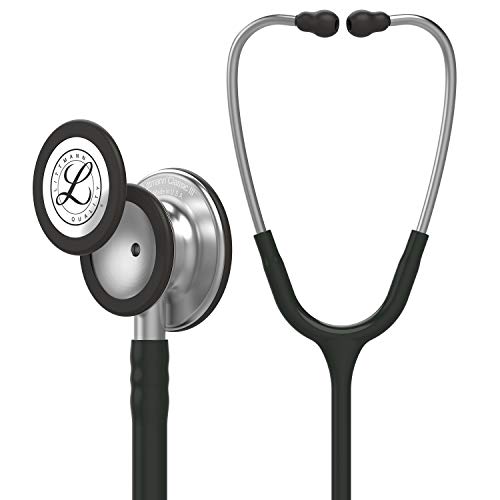
The 3M Littmann Classic III has been the top-selling stethoscope on Amazon and in hospital supply catalogs for years, and it earns that position on genuine merit rather than brand momentum alone. The combination of Littmann’s tunable diaphragm technology, dual-sided chestpiece, and single-lumen ambient noise reduction tubing covers the full range of auscultation tasks that most clinicians perform daily — heart sounds, breath sounds, bowel sounds, blood pressure — without requiring multiple instruments.
The tunable diaphragm is the defining feature of the Classic III, and it is worth understanding how it works clinically. By varying the pressure applied to the chestpiece, clinicians transition between bell-equivalent low-frequency capture (light touch) and diaphragm-mode high-frequency transmission (firm pressure). This eliminates the mid-exam chestpiece flip that traditional bell-and-diaphragm designs require, reducing interruption during dynamic assessments. Medical students consistently cite this as one of the most practical skills they learn in their first clinical year, and the Classic III is the instrument on which most of them learn it.
The convertible pediatric feature deserves mention for any clinician who sees patients across age ranges. The adult diaphragm removes and inverts to reveal a smaller pediatric bowl that fits neonatal and infant chest walls appropriately. This single-scope versatility makes the Classic III a logical choice for family medicine, general practice, urgent care, and any emergency provider who sees both adults and children. Pair it with one of the best otoscopes to complete a functional physical exam toolkit at a reasonable combined investment.
3M Littmann Classic III Monitoring Stethoscope
by 3M Littmann
The gold standard for clinical versatility — tunable diaphragm, pediatric convertibility, and Littmann's industry-leading acoustic quality in one instrument.
Pros
- Tunable diaphragm technology switches between high- and low-frequency sounds by adjusting pressure alone — no stem rotation or bell flip required mid-exam
- Dual-sided chestpiece with a 1.75-inch adult diaphragm and a convertible pediatric bowl supports the full range of patient populations in a single instrument
- Ambient noise reduction in the single-lumen tubing transmits sound across the 20–1,000 Hz clinical range with noticeably less environmental interference than competing designs
- Anatomically-angled ear tubes seat naturally in the ear canal for a passive acoustic seal that reduces background noise without requiring custom eartips
Cons
- Single-lumen tubing produces faint rustling sounds when the tube contacts clothing or badge holders — audible in very quiet exam environments
- Classic III does not offer electronic amplification; clinicians working in consistently noisy ICU or ED settings may need the CORE Digital model
2. MDF Instruments Acoustica Lightweight Stethoscope — Budget Pick
The MDF Acoustica’s strongest argument is not that it sounds as good as a Littmann — it does not, and claiming otherwise would not be honest. Its argument is that it provides genuinely functional acoustic performance, a patented ergonomic headset, and a lifetime warranty with free replacement parts at a price that makes it the most responsible recommendation for nursing students, home health aides, paramedic students, and budget-constrained clinicians who need a working instrument today.
The free-parts-for-life program is a concrete differentiator. Eartips are the component most frequently lost or damaged in daily clinical use. With MDF, replacement eartips cost the clinician nothing beyond a registration step. Diaphragm membranes — which stretch, crack, or harden over time — are also covered. For a student who may go two or three years before upgrading, this program meaningfully reduces the total cost of ownership compared to brands that charge for replacement parts.
The true bell and diaphragm design is worth considering in the context of auscultation education. Many clinical instructors prefer students learn on a scope with a separate bell because it forces conscious engagement with sound frequency — the student must decide which side to use and why. The Acoustica’s dual-head design supports this pedagogical approach in a way that single-sided tunable scopes do not. The acoustics are honest: good for routine assessment, adequate for primary care, and appropriate for learning — but a Littmann Classic III will consistently reveal sounds this scope misses at the margins.

MDF Instruments Acoustica Lightweight Stethoscope
by MDF Instruments
The most cost-effective entry into professional-grade auscultation — lifetime warranty, latex-free, and genuinely capable acoustics for students and primary care.
Pros
- Full lifetime warranty with a free-parts-for-life program covers diaphragms, eartips, and tubing at no cost — exceptional long-term value at this price tier
- True bell and true diaphragm on a dual-head chestpiece give students and home-care providers a proper acoustic foundation for learning auscultation technique
- Patented ErgonoMax headset with a dual-leaf spring tension system delivers comfortable, adjustable binaural fit that rivals stethoscopes costing three times as much
- Latex-free construction throughout the tubing and accessories makes this safe for use with latex-sensitive patients — an often-overlooked clinical requirement
Cons
- Aluminum chestpiece transmits less acoustic energy than stainless steel; faint murmurs and subtle lung findings may be harder to isolate than with Littmann models
- Heavier tube construction adds moderate stiffness compared to Littmann's single-lumen design, which can cause slight acoustic degradation at the diaphragm seal
3. 3M Littmann CORE Digital Stethoscope — Upgrade Pick
The Littmann CORE Digital is the most technically capable stethoscope in this review, and it earns its premium price in specific clinical contexts — though it is categorically not the right choice for most clinicians most of the time. Understanding who should buy it requires being precise about what electronic amplification actually solves.
The CORE’s 40x amplification and active noise cancellation address a real clinical problem: the high ambient noise floors of modern hospital environments. An ICU with multiple ventilators, IV pumps, alarms, and staff conversation creates an acoustic environment that consistently degrades auscultation quality with standard acoustic scopes. The CORE Digital cuts through that noise. A cardiologist detecting a faint Austin Flint murmur in a patient on a noisy cardiac telemetry floor gains meaningful diagnostic capability from this device that no acoustic scope provides. Similarly, clinicians with hearing loss who struggle to detect soft sounds reliably gain a practical accommodation that preserves their clinical function.
The Eko app integration is more than a marketing feature. The ability to record, visualize as a sound wave, and annotate cardiac auscultation findings creates a documentation capability that acoustic stethoscopes simply cannot match. For academic medical centers, teaching hospitals, and telemedicine providers, that documentation has direct clinical and medicolegal value. The CORE also pairs naturally with the best ECG monitors for a comprehensive cardiac bedside assessment that combines mechanical cardiac sound with electrical signal data.

3M Littmann CORE Digital Stethoscope
by 3M Littmann
Littmann's analog-and-digital hybrid: 40x amplification, active noise cancellation and Eko app integration for clinicians in loud, high-acuity settings.
Pros
- Up to 40x sound amplification with active noise cancellation makes faint murmurs, S3/S4 heart sounds, and subtle crackles audible in ICU, ED, and procedure room environments
- Toggles seamlessly between analog and amplified digital listening modes — no mode-switching delay for time-sensitive cardiac assessments
- Integrates with the Eko app via Bluetooth for HIPAA-compliant sound recording, wave visualization, and optional AI-assisted cardiac analysis on iOS and Android
- FDA-cleared, Littmann cardiology-grade acoustic baseline ensures the analog mode is already superior to most competing stethoscopes without digital assistance
Cons
- Requires regular charging via USB-C; battery depletion mid-shift disables amplification and app features, leaving only passive analog performance
- Premium price puts it out of reach for students and budget-limited practitioners; the acoustic advantage over the Classic III is only meaningful in noisy clinical environments
4. 3M Littmann Cardiology IV Diagnostic Stethoscope — Runner-Up
The Cardiology IV occupies the position of the “correct tool for a specific specialist” rather than the best general-purpose stethoscope. Its acoustic advantages over the Classic III are real and measurable, but they matter most in exactly the clinical scenarios where subtle cardiac findings change management decisions — which is to say, in cardiology, internal medicine, and critical care rather than general nursing or primary care screening.
The physical size difference between the Cardiology IV and Classic III chestpieces is larger than most clinicians expect. The Cardiology IV’s adult diaphragm is 40% larger in diameter, which increases the acoustic surface area and improves sensitivity to low-frequency vibrations like the S3 gallop that indicates volume overload in heart failure, or the low-pitched rumble of mitral stenosis. The 60% deeper bell captures even lower-frequency sounds that challenge the Classic III’s convertible pediatric bowl. These are not marginal differences in the context of subspecialty cardiology — they can represent the difference between hearing and missing a finding that changes the diagnosis.
The dual-lumen tubing is the other meaningful upgrade. Traditional single-lumen tubes occasionally produce faint rustling when the tube contacts skin, clothing, or equipment. The Cardiology IV routes two sound channels through a single outer jacket, eliminating this artifact entirely. In a quiet exam room during a focused cardiac assessment, this clean baseline matters. That said, clinicians who are not regularly doing subspecialty cardiac exams will not encounter the scenarios where this advantage is realized, and the extra cost and weight are not justified for routine assessment work.

3M Littmann Cardiology IV Diagnostic Stethoscope
by 3M Littmann
The definitive acoustic upgrade for cardiologists and hospitalists — larger chestpiece, dual-lumen tubing, and superior low-frequency sensitivity over the Classic III.
Pros
- 40% larger adult diaphragm and 60% deeper bell than the Classic III dramatically improves detection of low-pitched cardiac findings — S3 gallops, aortic regurgitation murmurs, and mitral stenosis rumbles
- Dual-lumen tubing eliminates tube-rub artifact entirely by routing two separate sound channels through a single outer jacket — critical in the quiet cardiac exam environment
- Stainless steel chestpiece machined to tighter acoustic tolerances than the Classic III's standard construction, providing measurably greater transmission clarity across the frequency spectrum
- Non-chill diaphragm rim and bell ring reduce patient startle during cold-environment exams — a small detail that improves cooperation in pediatric and elderly populations
Cons
- Significantly heavier than the Classic III at 7.4 oz; clinicians wearing this around the neck for full 12-hour shifts may notice neck strain over time
- At nearly double the Classic III price, the acoustic improvement is meaningful only for cardiology, critical care, and internal medicine specialists — overkill for general nursing
5. 3M Littmann Lightweight II S.E. Stethoscope — Best for Long-Shift Wear
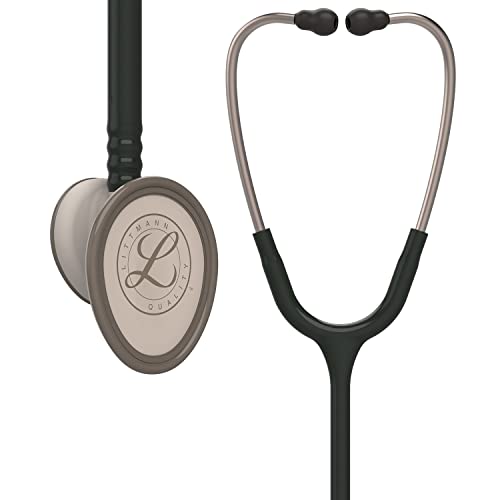
The Lightweight II SE is the correct answer for a specific but common question: “I need a reliable Littmann stethoscope that I can wear for 12 hours without neck fatigue.” At 118 grams, it is the lightest adult stethoscope in the Littmann lineup, and that weight difference is perceptible after several hours of continuous wear in a way that product spec sheets do not capture.
The teardrop chestpiece shape is a practical design decision rather than an aesthetic one. The narrow tip of the teardrop slips more easily under blood pressure cuffs, around wound dressings, and between electrode leads during cardiac monitoring — situations nurses and paramedics encounter many times per shift. Full-round chestpieces require more patient repositioning in these scenarios. Community health nurses who visit homebound patients, emergency medical technicians working in confined spaces, and home health aides doing routine vital signs assessment consistently rate this as a meaningfully easier scope to use in these circumstances.
The acoustic limitation is honest: no open bell means less low-frequency sensitivity than the Classic III or Cardiology IV. The tunable diaphragm compensates partially through light-pressure low-frequency capture, but it does not replicate the true bell’s performance for detecting S3 gallops or evaluating stenosis murmur rumbles. For nurses doing routine monitoring, vital signs, and standard assessment — rather than subspecialty cardiac evaluation — this limitation is clinically irrelevant. The Lightweight II SE is not the scope for a cardiologist, but it is genuinely the right scope for a lot of the nursing work being done in US hospitals today.
3M Littmann Lightweight II S.E. Stethoscope
by 3M Littmann
The lightest Littmann adult stethoscope — ideal for nurses, community health workers, and EMTs who prioritize all-day comfort without sacrificing acoustic quality.
Pros
- Lightest adult stethoscope in the Littmann lineup at just 118 grams — noticeably comfortable for long shift wear, community health visits, and extended patient rounds
- Teardrop chestpiece shape slides more easily under blood pressure cuff edges and around wound bandages — a practical design advantage for nursing and EMS work
- Tunable diaphragm allows pressure-controlled frequency switching without a bell, eliminating the need to flip the chestpiece between heart and lung assessments
- Soft-sealing eartips form a passive acoustic seal that rivals heavier models, ensuring clinicians do not sacrifice sound isolation for portability
Cons
- Single-sided chestpiece has no open bell mode, making it less suitable for low-pitched cardiac sound detection compared to the Classic III or Cardiology IV
- The lightweight construction means less total acoustic surface area compared to larger chestpieces; subtle cardiac findings may require repositioning to isolate
6. ADC Adscope 603 Clinician Stethoscope — Best Non-Littmann Option
The ADC Adscope 603 is the strongest argument for a non-Littmann stethoscope in this review. American Diagnostic Corporation (ADC) has been manufacturing clinical-grade instruments since 1926, and the Adscope 603’s stainless steel construction, Adjustable Frequency Design technology, and lifetime warranty with free consumables represent a genuinely competitive offering at a price point well below the Littmann Classic III.
The AFD technology works differently from Littmann’s tunable diaphragm but achieves a comparable result: pressure modulation changes the diaphragm’s acoustic response profile, allowing the clinician to selectively amplify higher or lower frequencies without flipping the chestpiece. The extra-deep bell chamber is a meaningful differentiator — among acoustic stethoscopes in this price range, the 603’s bell provides the best low-frequency response outside of the Littmann Cardiology IV. For clinicians who do blood pressure auscultation by Korotkoff sound rather than exclusively by oscillometric monitor, the deep bell provides an audible advantage. To see how stethoscope auscultation compares with automated devices, see our best blood pressure monitors review.
The 31-inch tube length is an intentional design choice, not an oversight. ADC offers this scope in standard 31-inch and shorter configurations. The extra length is preferred by tall clinicians, clinicians who work with larger patients where additional reach is helpful, and practitioners who prefer to keep more physical distance during auscultation in infection-control settings. If the standard length seems excessive for your workflow, ADC does offer the Adscope Lite 619 in a shorter form factor.

ADC Adscope 603 Clinician Stethoscope
by ADC
The best non-Littmann clinical stethoscope — stainless steel construction, AFD tunable technology, and a lifetime warranty at a fraction of the Cardiology IV price.
Pros
- Adjustable Frequency Design (AFD) technology tunes the diaphragm to selectively emphasize high- or low-frequency sounds through pressure modulation — a functional alternative to a traditional bell
- Extra-deep bell chamber provides unsurpassed low-frequency response among non-cardiology stethoscopes, making it a strong choice for blood pressure auscultation and cardiac screening
- Full stainless steel chestpiece and binaurals with double-leaf spring tensioning delivers rigid acoustic coupling that withstands daily clinical use over many years
- Lifetime warranty with free replacement consumables — ADC ships replacement diaphragms and eartips for registered scopes at no charge, matching MDF's lifetime value proposition
Cons
- 31-inch tubing is longer than the standard 27 inches; a small number of shorter clinicians find the extra length creates cable management challenges at the waist or pocket
- AFD technology, while effective, requires deliberate pressure calibration to master — new users may initially find it less intuitive than Littmann's passive tunable diaphragm
7. MDF Instruments MD One Premium Stainless Steel Stethoscope — Best for Family Practice
The MDF MD One is the stainless steel, full-featured option from MDF for clinicians who want a durable dual-head scope with both adult and pediatric diaphragms included in the box. The 360-degree rotating stem is a practical feature in pediatric practice, urgent care, and family medicine, where the clinician transitions between adult and pediatric patients without switching instruments.
The stainless steel chestpiece is the MD One’s durability argument. Aluminum and plastic chestpieces are lighter, but they dent, scratch, and degrade acoustically under years of daily clinical use. Stainless steel maintains its acoustic coupling geometry indefinitely and resists damage from drops — a meaningful advantage in a busy family practice or urgent care setting where the stethoscope may see rough handling. The free-parts-for-life program backs this durability with a supply chain for consumables, ensuring the scope remains functional regardless of how long it serves in practice.
The acoustic limitation relative to Littmann is real and should be stated plainly. At a comparable price to the Lightweight II SE, the MD One’s acoustic clarity falls slightly short — the Littmann chestpiece geometry, tube construction, and diaphragm engineering reflect decades of acoustic refinement that MDF has not yet fully matched. For clinicians who prioritize durability and dual-diaphragm versatility over absolute acoustic refinement, the MD One is the correct choice. For clinicians who want the best acoustics per dollar spent, the Littmann Classic III remains the benchmark. The diagnostic toolkit at best diagnostic sets offers additional instruments that pair well with either scope for comprehensive physical examination.

MDF Instruments MD One Premium Stainless Steel Stethoscope
by MDF Instruments
The best stainless steel dual-head option from MDF — adult and pediatric diaphragms included, lifetime warranty, and latex/PVC-free construction for family and general practice.
Pros
- Precision-machined stainless steel chestpiece with separate adult and pediatric diaphragms included in the box — one instrument that transitions between patient populations without separate purchases
- 360-degree rotating stem allows the clinician to switch between adult and pediatric diaphragm sides without fully removing the stethoscope — practical during rapid assessment workflows
- MDF's free-parts-for-life program ensures replacement diaphragms, eartips, and tubing are available for the lifetime of the scope — a meaningful long-term cost advantage
- Latex-free and PVC-free tubing composition reduces chemical exposure risk for clinicians and sensitive patients in continuous daily contact
Cons
- At 7.0 oz the dual-head stainless steel construction is among the heavier options in this review — less comfortable than lightweight options for full-day ambulatory wear
- Acoustics are good but do not match the Littmann Classic III's transmission clarity at a comparable price point — the stainless steel construction favors durability over acoustic refinement
8. Eko CORE 500 Digital Stethoscope — Best for Digital ECG & Telemedicine
The Eko CORE 500 is the most technologically advanced instrument in this review, and it represents a genuinely different category of tool than the acoustic scopes above. Where the Littmann CORE Digital adds amplification to a traditional stethoscope form factor, the CORE 500 is a purpose-built digital diagnostic platform: a full-color display on the chestpiece, a built-in 3-lead ECG, up to 40x amplification with active noise cancellation, and FDA-cleared AI that can flag structural murmurs and atrial fibrillation.
For the right clinician, that combination is transformative. A primary care physician practicing at the top of their license, a telehealth provider who needs to transmit heart sounds and a rhythm strip to a remote cardiologist, or a rural clinician without immediate access to formal ECG all gain real diagnostic capability from a single handheld device. The AI decision support — available through the Eko+ subscription — is the kind of tool that was confined to hospital carts a few years ago.
Two honest caveats keep this out of the top overall spot for most buyers. First, it is the most expensive instrument here, and the AI features carry an ongoing subscription cost on top of the hardware. Second, it is fully battery-dependent with no analog fallback, so a dead battery means no auscultation until it charges — a meaningful difference from the Littmann CORE, which drops back to passive acoustic mode. For clinicians whose work genuinely benefits from ECG, AI, and telemedicine integration, though, nothing else in this review comes close. It also earns a place in the hard-of-hearing discussion below, where its heavy amplification is a decisive advantage.

Eko CORE 500 Digital Stethoscope
by Eko Health
The most advanced digital option here — 3-lead ECG, FDA-cleared AI murmur/AFib detection, and heavy amplification for telemedicine and clinicians with hearing loss.
Pros
- Purpose-built digital platform with a full-color display, built-in 3-lead ECG, and up to 40x amplification — the most capable diagnostic stethoscope available to a solo clinician today
- FDA-cleared AI (via the Eko+ subscription) flags structural murmurs and atrial fibrillation, giving primary-care and telehealth clinicians a decision-support layer no acoustic scope offers
- Active noise cancellation plus adjustable amplification make it a leading choice for clinicians with hearing loss who need far more gain than a passive scope can provide
- Records, visualizes, and shares heart and lung sounds directly to the patient record — ideal for telemedicine, second opinions, and teaching
Cons
- The highest-priced instrument in this review, and the AI features require an ongoing Eko+ subscription beyond the hardware cost
- Battery-dependent with no analog fallback — a dead battery means no auscultation until it recharges, unlike the Littmann CORE's passive mode
Best Stethoscope for Nurses
For the vast majority of floor, med-surg, and clinic nurses, the Littmann Classic III is the right instrument — it is the model most nursing programs recommend, covers adult and pediatric patients, and lasts a full career. If you spend twelve-hour shifts with a scope around your neck, the featherweight Lightweight II S.E. trades a little low-frequency sensitivity for genuine all-day comfort. And ICU, ER, and cardiac-step-down nurses who need to catch subtle sound changes in noisy units are the ones who actually benefit from stepping up to the Cardiology IV.
| Product | Price | Buy |
|---|---|---|
| 3M Littmann Classic III Monitoring StethoscopeBest for most nurses Program-standard tunable diaphragm and convertible pediatric side — the safe default for floor and clinic nursing. | $98.99 | View on Amazon |
| 3M Littmann Lightweight II S.E. StethoscopeBest for long shifts Just 118 g, so it disappears around the neck on a 12-hour shift; teardrop head slips under BP cuffs and leads. | $54.99 | View on Amazon |
| 3M Littmann Cardiology IV Diagnostic StethoscopeBest for ICU/ER nurses Larger diaphragm and dual-lumen tubing isolate faint changes in high-acuity units — worth it only if your work depends on it. | $127.94 | View on Amazon |
Best Stethoscope for Blood Pressure (Manual BP)
Taking a manual blood pressure by Korotkoff sound is a low-frequency listening task, which is exactly where a true bell (or a deep, well-tuned diaphragm) matters most. The ADC Adscope 603 has the deepest bell chamber of any acoustic scope here outside the Cardiology IV, at a fraction of the price — the value pick for anyone doing BPs by hand. Clinicians who need to hear faint Korotkoff phases through a stethoscope on hypotensive or pediatric patients gain from the Cardiology IV’s low-frequency sensitivity, while the MDF MD One’s dual-head design gives you a dedicated open bell.
| Product | Price | Buy |
|---|---|---|
| ADC Adscope 603 Clinician StethoscopeBest value for BP Extra-deep bell chamber for low-pitched Korotkoff sounds, stainless chestpiece, lifetime parts — the smart-money BP scope. | $73.22 | View on Amazon |
| 3M Littmann Cardiology IV Diagnostic StethoscopeBest for faint Korotkoff Superior low-frequency isolation when readings are faint (hypotension, pediatrics, noisy rooms). | $127.94 | View on Amazon |
| MDF Instruments MD One Premium Stainless Steel StethoscopeBest dedicated bell True open bell on a dual-head chestpiece for clinicians who prefer a physical bell over a tunable diaphragm. | $49.99 | View on Amazon |
Best Stethoscope for Doctors & Physicians
Physicians span the widest range of needs, so the answer depends on your specialty. For general practice, hospital medicine, and outpatient clinics, the Classic III does nearly everything well. When your diagnostic decisions hinge on subtle cardiac findings — cardiology, internal medicine, critical care — the Cardiology IV is the acoustic standard. And physicians moving toward telemedicine, documentation, or AI-assisted assessment should look at the Littmann CORE Digital, which pairs cardiology-grade acoustics with amplification and app recording.
| Product | Price | Buy |
|---|---|---|
| 3M Littmann Classic III Monitoring StethoscopeBest all-around physician scope Covers the full range of routine physical-exam auscultation without paying for subspecialty performance. | $98.99 | View on Amazon |
| 3M Littmann Cardiology IV Diagnostic StethoscopeBest for cardiac diagnosis The acoustic benchmark for detecting S3 gallops, murmurs, and stenosis rumbles in specialist practice. | $127.94 | View on Amazon |
| 3M Littmann CORE Digital StethoscopeBest digital/telehealth 40x amplification plus Bluetooth recording for telemedicine, teaching, and documentation. | $329.00 | View on Amazon |
Best Stethoscope for Pediatric & Infant Patients
Pediatric auscultation needs a smaller chestpiece footprint to seat properly on a small chest wall and to isolate the high-frequency sounds common in children. The Classic III is the practical answer for most family and urgent-care providers because its adult diaphragm inverts to reveal a dedicated pediatric bowl — one scope for both populations. The MDF MD One ships with separate adult and pediatric diaphragms in the box, and the Cardiology IV adds a pediatric side with the acoustic sensitivity to catch subtle congenital findings.
| Product | Price | Buy |
|---|---|---|
| 3M Littmann Classic III Monitoring StethoscopeBest convertible peds scope Adult diaphragm inverts to a pediatric bowl — the single-scope solution for clinicians who see kids and adults. | $98.99 | View on Amazon |
| MDF Instruments MD One Premium Stainless Steel StethoscopeBest adult + peds in the box Separate adult and pediatric diaphragms included, with a 360° rotating stem for fast switching. | $49.99 | View on Amazon |
| 3M Littmann Cardiology IV Diagnostic StethoscopeBest for subtle peds findings Pediatric side plus cardiology-grade sensitivity for detecting faint congenital murmurs. | $127.94 | View on Amazon |
Best Stethoscope for Nursing & Medical Students
Students need an instrument that teaches proper technique and survives clinical rotations without breaking the bank. Most nursing and medical programs list the Classic III as the standard, and it remains the best long-term value because it carries into your professional career. On a tighter budget, the MDF Acoustica delivers functional acoustics and a lifetime warranty for a fraction of the price, and the stainless-steel MDF MD One splits the difference with more durability and a true dual-head design for learning the bell.
| Product | Price | Buy |
|---|---|---|
| 3M Littmann Classic III Monitoring StethoscopeProgram standard The model most schools require — learn on it, then carry it through your whole career. | $98.99 | View on Amazon |
| MDF Instruments Acoustica Lightweight StethoscopeBest budget pick Lifetime warranty and free replacement parts make it the responsible choice on a student budget. | $25.95 | View on Amazon |
| MDF Instruments MD One Premium Stainless Steel StethoscopeBest steel budget option Stainless dual-head with a true bell for students who want to learn frequency selection the traditional way. | $49.99 | View on Amazon |
Best Stethoscope for EMTs & Paramedics
Prehospital work rewards a light, rugged scope that reads blood pressures reliably in a moving, noisy environment. The Lightweight II S.E. is the field favorite — its teardrop head slips under cuffs and around leads, and at 118 g it is effortless to carry all shift. The Classic III is the all-around step up for paramedics who want more versatility, while the stainless MD One is the most drop-tolerant option with a lifetime parts program for equipment that takes abuse.
| Product | Price | Buy |
|---|---|---|
| 3M Littmann Lightweight II S.E. StethoscopeBest lightweight field scope Teardrop chestpiece and 118 g weight make BPs under a cuff fast — the classic EMS workhorse. | $54.99 | View on Amazon |
| 3M Littmann Classic III Monitoring StethoscopeBest all-around for medics More acoustic versatility for paramedics who assess a wider range of patients. | $98.99 | View on Amazon |
| MDF Instruments MD One Premium Stainless Steel StethoscopeBest rugged steel option Stainless construction and lifetime parts stand up to the rough handling of prehospital work. | $49.99 | View on Amazon |
Best Stethoscope for Hard of Hearing & Digital Amplification
Clinicians with hearing loss — and anyone shopping for a true digital stethoscope — need electronic amplification, which no acoustic scope provides. Both picks here amplify sound well beyond what a passive instrument can. The Littmann CORE Digital is the more familiar choice: up to 40x amplification and active noise cancellation in a traditional form factor, with an analog fallback if the battery dies. The Eko CORE 500 pushes further with heavier amplification, a 3-lead ECG, and a full-color display, and it can stream to compatible Bluetooth hearing aids — the strongest option for significant hearing loss, provided you don’t need the analog backup.
| Product | Price | Buy |
|---|---|---|
| 3M Littmann CORE Digital StethoscopeBest amplified with analog fallback 40x amplification and active noise cancellation, but drops back to passive acoustic mode when the battery is dead — the safer all-day pick. | $329.00 | View on Amazon |
| Eko CORE 500 Digital StethoscopeBest maximum amplification + ECG Heaviest amplification here plus ECG and Bluetooth hearing-aid streaming; fully digital, so plan around battery life. | $449.99 | View on Amazon |
More Stethoscope Use Cases at a Glance
Several other roles map cleanly onto the eight scopes above. If your use case is below, here is the pick to start with — full reviews are earlier on the page.
| Product | Price | Buy |
|---|---|---|
| 3M Littmann Cardiology IV Diagnostic StethoscopeBest for cardiology Cardiology IV — the acoustic standard for subspecialty cardiac auscultation. | $127.94 | View on Amazon |
| MDF Instruments Acoustica Lightweight StethoscopeBest budget / cheap pick MDF Acoustica — lifetime warranty and honest acoustics at the lowest price here. | $25.95 | View on Amazon |
| 3M Littmann Lightweight II S.E. StethoscopeBest for CNAs & medical assistants Lightweight II S.E. — light, affordable, and easy to use for routine vitals work. | $54.99 | View on Amazon |
| 3M Littmann CORE Digital StethoscopeBest for respiratory therapists Littmann CORE Digital — amplification helps isolate fine crackles and wheezes for respiratory assessment. | $329.00 | View on Amazon |
| Eko CORE 500 Digital StethoscopeBest electronic / digital Eko CORE 500 — a full digital platform with ECG and AI for clinicians who want the most advanced tool. | $449.99 | View on Amazon |
Buyer's Guide
Choosing the right stethoscope means matching acoustic performance, chestpiece design, weight, and price to your clinical role — the correct answer for a cardiologist is different from the correct answer for a nursing student or an EMT.
Acoustic Performance
Acoustic performance is determined by chestpiece material, diaphragm design, tubing construction, and eartip seal quality. Stainless steel chestpieces transmit more acoustic energy than aluminum or plastic. Tunable diaphragms allow pressure-controlled frequency switching without physically flipping to a bell. High-quality tubing with a single lumen (like Littmann's design) reduces tube-rub artifacts that competing double-tube designs can introduce. Soft-sealing eartips create a passive acoustic seal that keeps ambient noise out of the earpiece. When evaluating stethoscopes, look for all four of these design characteristics together — any single element compromised degrades the total listening experience.
Chestpiece Type
Stethoscopes come in three main chestpiece configurations: dual-sided (adult diaphragm + open bell), single-sided tunable (pressure-controlled frequency switching on one diaphragm), and electronic (microphone-based digital capture). Dual-sided scopes like the ADC Adscope 603 and MDF MD One provide a traditional bell that cardiology teaching programs still rely on. Single-sided tunable designs like the Littmann Classic III eliminate the bell flip in favor of pressure control. Electronic models like the CORE Digital add amplification for noisy environments. Your clinical training and specialty should drive this choice — cardiologists and students learning auscultation often benefit from having a true bell.
Clinical Specialty Match
Different clinical roles demand different stethoscope performance levels. Medical students and nursing students need a reliable, versatile instrument that teaches proper technique — the Littmann Classic III is the standard recommendation. Cardiologists, hospitalists, and internal medicine physicians benefit from the larger chestpiece and dual-lumen tubing of the Cardiology IV for its superior low-frequency sensitivity. Nurses doing routine patient assessment find the Classic III or Lightweight II SE sufficient. Emergency medicine, ICU, and critical care clinicians working in consistently noisy environments gain the most from the CORE Digital's amplification and noise cancellation.
Tube Length and Weight
Standard clinical stethoscope tubing runs 27 to 28 inches. This length allows comfortable patient distance during auscultation while preventing excessive sag or coiling. The ADC Adscope 603 at 31 inches is longer than average, which some clinicians prefer for working with larger patients or maintaining greater personal space, but shorter clinicians may find it unwieldy. Weight matters significantly for all-day wear: the Lightweight II SE at 118 grams causes minimal neck fatigue during 12-hour shifts, while heavier cardiology-grade instruments at 200+ grams become noticeable by the end of a long day.
Warranty and Replacement Parts
A stethoscope is a long-term clinical investment — warranty terms should be part of your purchase decision. Littmann offers a 7-year warranty on all Classic III, Cardiology IV, and CORE Digital models. MDF Instruments and ADC both offer lifetime warranties with free-parts-for-life programs that ship replacement diaphragms and eartips at no charge when the originals wear out. This lifetime parts program effectively reduces long-term cost of ownership for MDF and ADC scopes. For students who may be hard on equipment, or busy clinicians who lose eartips frequently, the no-cost replacement parts program can be the deciding factor.
Electronic vs. Acoustic
The decision to buy an electronic stethoscope like the Littmann CORE Digital should be driven by specific clinical need, not novelty. Electronic amplification is genuinely valuable in three scenarios: high ambient noise environments (busy EDs, operating rooms, ICUs with ventilators), clinicians with documented hearing loss, and telemedicine workflows where digital sound recording is required. Outside of these scenarios, a high-quality acoustic stethoscope is more reliable (no battery dependency), lighter, and significantly less expensive. The CORE Digital's analog fallback mode means it functions when the battery is dead, but the full value of the device is only realized with power and app connectivity.
Final Verdict
For the overwhelming majority of clinicians — nurses, medical students, family practitioners, urgent care providers, and general internists — the 3M Littmann Classic III is the correct stethoscope. It is the most proven acoustic performer at its price point, it covers all patient populations with the convertible pediatric chestpiece, and its tunable diaphragm provides the frequency range needed for complete physical examination. The seven-year warranty and Littmann’s established replacement parts ecosystem make it a true lifetime clinical instrument. If you are buying your first quality stethoscope or upgrading from an entry-level scope, this is the one.
For clinicians who need to work in high-noise environments, have documented hearing loss, or want digital sound recording capabilities, the 3M Littmann CORE Digital is the justified upgrade — though its value is only realized in those specific contexts, not as a general-purpose scope. For subspecialty cardiology and internal medicine, the Cardiology IV provides the acoustic superiority that those disciplines require. And for students or home health providers on a strict budget, the MDF Instruments Acoustica provides honest clinical performance with a lifetime warranty that protects the investment for years to come. Whichever model you choose, a quality stethoscope remains the single most cost-effective diagnostic investment in medicine — pairing it with the right otoscope and diagnostic set completes a physical exam toolkit that will serve you throughout your career. As always, consult your clinical program director or attending physician for specialty-specific recommendations tailored to your patient population.
Frequently Asked Questions
What is the difference between an acoustic and an electronic stethoscope?
Which stethoscope is best for nursing students?
What is a tunable diaphragm and why does it matter?
How long does a stethoscope last and how should I care for it?
Is the Littmann Cardiology IV worth the extra cost over the Classic III?
Where do you place the stethoscope to take a blood pressure?
What is a stethoscope used for?
Can you hear a fetal heartbeat with a regular stethoscope?
What is the best stethoscope for hearing lung sounds versus heart sounds?
Related Articles
About the Reviewer

Dr. David Taylor, MD, PhD
Drexel University College of Medicine (MD), Indiana University School of Medicine (PhD)
Dr. David Taylor is a licensed physician and medical researcher who founded BestRatedDocs in 2016. With an MD from Drexel University and a PhD from Indiana University School of Medicine, he combines clinical expertise with a passion for health technology to provide evidence-based product recommendations. Dr. Taylor specializes in health informatics and regularly evaluates medical devices, diagnostic equipment, and therapeutic products to help healthcare professionals and patients make informed decisions.