7 Best OTC Hearing Aids of 2026
Dr. David Taylor reviews the best over-the-counter hearing aids on Amazon — top OTC devices for mild to moderate hearing loss, compared by sound quality, fit, and value.
Updated
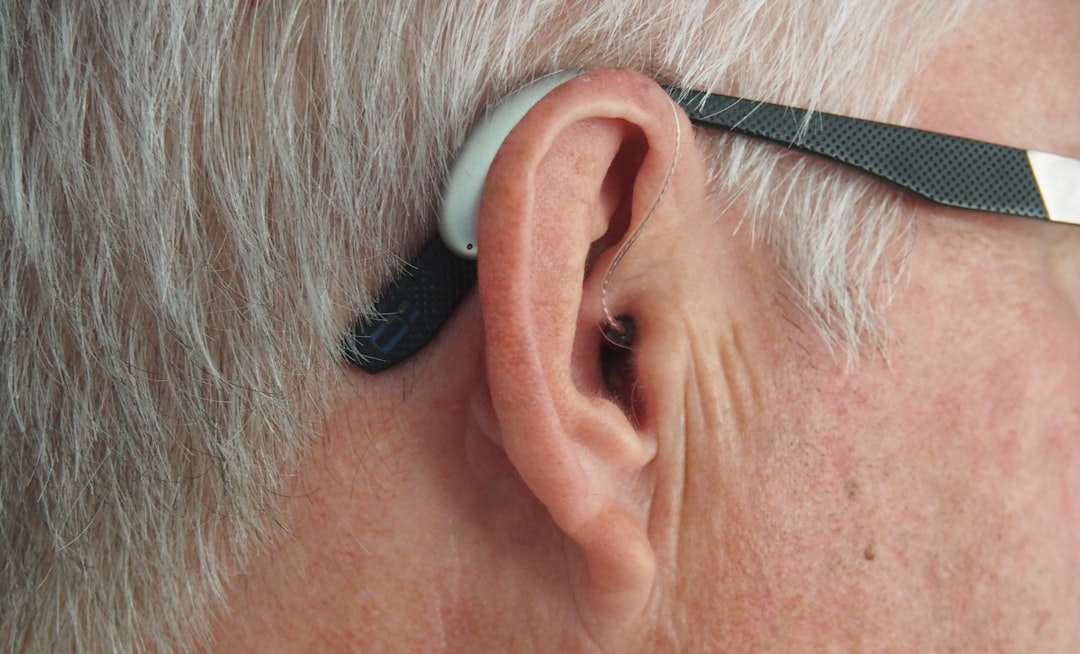
Over 30 million American adults have clinically significant hearing loss, yet fewer than one in three who could benefit from hearing aids actually uses them. The barrier has historically been cost and access: prescription hearing aids require an audiologist appointment, a custom fitting, and an average purchase price in the thousands of dollars per pair. That changed in 2022 when the FDA formally established an over-the-counter hearing aid category for adults with mild to moderate hearing loss — eliminating the prescription requirement and opening the market to consumer electronics brands. By 2026, that market has done something interesting: it has matured in capability while thinning sharply in choice. The best devices now combine guided fitting, Bluetooth audio streaming, AI-powered noise reduction, and bundled audiology services in a single purchase — but several of the high-profile listings that launched the category have since been pulled. Sony has stepped back from the Amazon OTC space, the Lexie and Bose collaboration is no longer purchasable there, Eargo’s flagship has gone unavailable, and Jabra has replaced its Enhance Select 700 with a new M-series led by the Select M3 Aureon. As the field has thinned, the clearest dividing line is no longer brand prestige but fitting method: devices that shape amplification to your own frequency thresholds consistently outperform fixed-preset amplifiers at the same price, which is the single factor we weighted most heavily in this guide.
At BestRatedDocs.com, Dr. David Taylor and our editorial team reviewed seven of the top-rated OTC hearing aids currently available and in stock on Amazon, evaluating each on clinical performance indicators, sound processing capability, fitting flexibility, Bluetooth connectivity, battery life, form factor, water resistance, and real-world user outcomes. If you’re navigating which stethoscope or diagnostic device to pair with your broader health monitoring setup, the same evidence-based approach applies here. Our goal is to match you with the right device for your specific hearing loss profile — among the models you can actually buy today — not simply to recommend the most expensive option on the shelf.
| Product | Price | Buy |
|---|---|---|
| ELEHEAR Beyond OTC Hearing Aids with AI Speech EnhancementBest Overall | $399.00 | View on Amazon |
| Audien Atom One OTC Hearing AidsBudget Pick | $98.00 | View on Amazon |
| Jabra Enhance Select M3 Aureon OTC Hearing AidsPremium Pick | $1,795.00 | View on Amazon |
| ELEHEAR Beyond Pro Hearing AidsRunner-Up | $599.00 | View on Amazon |
| Vivtone Xpure 2.0 Bluetooth OTC Hearing Aids with App Fitting | $489.00 | View on Amazon |
| Vivtone Lucid508 Rechargeable BTE Hearing Aids | $259.00 | View on Amazon |
| Audien Atom X OTC Hearing Aids with Touchscreen Control | $389.00 | View on Amazon |
Find the Best OTC Hearing Aid for Your Need
Jump straight to the pick that matches your situation:
- Overall best OTC hearing aids — our top picks reviewed
- Best OTC hearing aids for tinnitus
- Best behind-the-ear OTC hearing aids
- Best affordable OTC hearing aids
How We Selected These Hearing Aids
Our selection criteria prioritized clinical transparency, real-world validation, and — critically in 2026 — current availability. We required that every device be either FDA-cleared as an OTC hearing aid or FDA-registered as a medical device, excluding the amplifier-only products that crowd Amazon search results. We confirmed that each listing is live and purchasable at the time of this update, because the OTC category has seen severe attrition: several brands that launched the category have gone unavailable on Amazon, and a glowing review is useless if the device can no longer be bought. That check is not a formality. Over recent updates we have removed four devices from this guide, including a former top pick, because their listings had gone dead or lost their purchase button entirely. At this update the Jabra Enhance Select 700 went unavailable as Jabra moved to its new M-series, so its successor, the Select M3 Aureon, takes the upgrade slot.
Where independent benchmarking exists, we consider it: HearAdvisor publishes the most comprehensive standardized OTC hearing aid lab data available, evaluating speech clarity in quiet, speech clarity in noise, and feedback management. We treat that data as a useful directional signal rather than a single ranking to chase, since lab grades shift as devices update their firmware and as the test panel changes. We also required representation across form factors — RIC, BTE, and ITE styles — and across price tiers from under one hundred dollars to the upper end of the OTC range, ensuring this guide is useful regardless of budget. Disposable battery devices were excluded; the rechargeable segment now represents the clear market direction for OTC devices.
One honest note on ratings in this category: average star ratings across OTC hearing aids run lower than in almost any other health product category we cover, clustering in the high threes and low fours even for well-regarded devices. That is not a sign that every option is poor. It reflects how many buyers purchase without understanding that hearing aids require weeks of neural adaptation, and how many people with moderate-to-severe loss buy an OTC device that was never cleared for their degree of loss. Read the ratings here in that context, and weigh the fitting method more heavily than the star average.
Best OTC Hearing Aids Overall
These are the seven OTC hearing aids that earned a place in this guide, each reviewed in full below. The ELEHEAR Beyond is our best overall pick for most adults with mild to moderate loss; the use-case sections after the reviews then match specific needs — tinnitus relief, behind-the-ear styling, and tight budgets — to the right device from this same lineup.
1. ELEHEAR Beyond — Best Overall
The ELEHEAR Beyond earns our best overall designation because it does the most things well at a price most buyers can justify, and because it is one of the few capable OTC devices that has stayed reliably purchasable while the category churned around it. The VocClear AI speech enhancement engine is built specifically to sharpen conversational speech, and it delivers up to 50 dB of gain, which is meaningful headroom for the upper end of moderate loss. For users whose hearing loss is primarily conversational — difficulty following speech in a quiet room, then losing the thread entirely in a restaurant — the Beyond’s core performance is what you actually feel day to day.
Connectivity is full rather than partial: Bluetooth works across both iOS and Android, streaming phone calls through both hearing aids simultaneously, with app control over programs and volume. The built-in tinnitus masking feature is unusual at this tier, since most OTC devices reserve masking for premium models, but ELEHEAR includes adjustable white noise, pink noise, and nature sounds in the app. Remote audiologist support comes with the purchase, which matters more than the spec sheet suggests for a first-time buyer who is not sure whether what they are hearing is correct. The RIC form factor accommodates a wide range of ear canal shapes and is easier to handle than in-canal designs. The IPX5 water resistance rating is the principal hardware limitation, adequate for daily sweat and rain but not a submersion rating. Its average rating sits just under four stars, which is typical for this category rather than a red flag. For the typical adult with mild to moderate hearing loss who wants genuine capability without clinic pricing, the ELEHEAR Beyond is the clearest recommendation in this guide. For comparison, our diagnostic device reviews apply the same value-per-dollar framework across clinical tools.

ELEHEAR Beyond OTC Hearing Aids with AI Speech Enhancement
by ELEHEAR
Best overall OTC hearing aid — the ELEHEAR Beyond combines AI speech processing, full Bluetooth, tinnitus masking, and remote audiologist support at a mid-market price.
Pros
- AI-powered VocClear speech enhancement sharpens conversational speech and delivers up to 50 dB of gain, enough headroom for the upper end of moderate loss
- Bluetooth streaming to both iOS and Android — phone calls route through both hearing aids simultaneously, with full app control over programs and volume
- Built-in tinnitus masking with adjustable white noise, pink noise, and nature sound options in the companion app, a feature most brands reserve for premium tiers
- Remote audiologist support is included with purchase, and the RIC form factor fits a wide range of ear canal shapes without custom molds
Cons
- IPX5 water resistance is adequate for everyday sweat and rain but is not a submersion rating
- Smaller brand recognition than the legacy names means less long-term community validation, and the average rating sits below four stars
2. Audien Atom One — Budget Pick
The Audien Atom One is the lowest-priced FDA-registered hearing aid in this roundup by a wide margin, and it fills a specific role: letting an adult with very mild hearing loss find out whether amplification helps at all before committing real money. It is also the device we would hand to someone who has said, plainly, that they are not going to use an app. Two analog dials sit on the housing, one for volume and one for frequency emphasis. Turn clockwise for more, counterclockwise for less. There is nothing to pair, nothing to download, and no account to create.
The rest of the design follows the same logic. The aids power on when lifted from the USB-C dock and off when replaced, so there is no switch to find. A single charge runs about a full day, and the dock refills them in roughly three hours. Three silicone dome sizes ship in the box, the nano housing sits discreetly in the ear, and either aid fits either ear, which removes the left-and-right sorting problem that frustrates a lot of new users. Audien includes a guided setup call with a specialist, and the pair is FSA and HSA eligible. The honest limitation is fitting: analog dials adjust overall emphasis but cannot shape amplification band by band the way a guided hearing check can, so a buyer with a steep high-frequency loss will not get the targeted correction that the Vivtone Xpure 2.0 or ELEHEAR Beyond can provide. There is no Bluetooth either. As a low-risk entry point rather than a long-term solution for moderate loss, it is the most accessible option here.
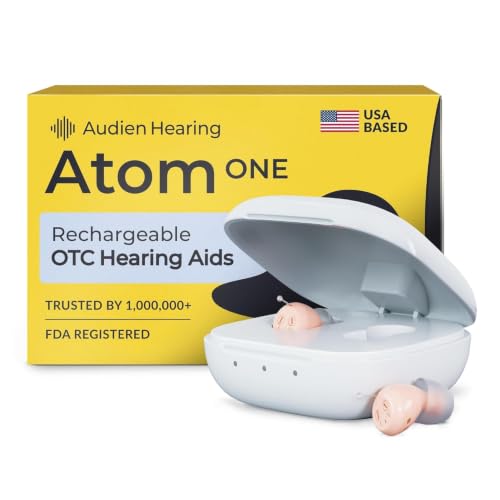
Audien Atom One OTC Hearing Aids
by Audien Hearing
Best budget pick — the Audien Atom One is the most accessible FDA-registered OTC device here, with dial controls that suit users who want nothing to do with an app.
Pros
- Lowest price of any FDA-registered OTC hearing aid in this roundup, which makes it the least risky way to find out whether amplification helps you
- Two analog dials control volume and frequency directly on the device — no app, no smartphone, and no tiny buttons to locate by feel
- 24-hour rechargeable battery in a USB-C dock that powers the aids on when removed and off when docked, so there is no switch to fumble with
- Nano in-ear housing ships with three silicone dome sizes and a pull-wire for removal, and the pair is FSA and HSA eligible
Cons
- Analog dials cannot shape amplification by frequency band the way a self-fitting hearing check does, so it cannot personalize to your audiogram
- No Bluetooth and no app, which rules out call or media streaming and any remote fine-tuning
3. Jabra Enhance Select M3 Aureon — Upgrade Pick
The Select M3 Aureon is the direct successor to the Jabra Enhance Select 700, which went unavailable on Amazon this autumn as Jabra moved its OTC range to a new M-series. It keeps the thing that made the 700 our upgrade pick: it is the strongest argument that an OTC device can close the gap with prescription-level care without an in-person clinic visit. The hardware is Jabra’s smallest yet, a receiver-in-ear design of about 2 grams per aid, with Bluetooth LE Audio and Auracast support on both iOS and Android, TapControl call answering with a double tap, and a charging case that holds three full charges of more than 24 hours each. The new processing is SoundScape with Auto Focus, which locks onto the voice in front of you and turns down background noise automatically, the situation where most OTC devices struggle.
The defining feature is still what comes with the hardware. You can program the aids yourself with the FDA-cleared in-app hearing test, or send Jabra an audiogram, and the licensed audiology team then fine-tunes the clinical settings remotely, with unlimited adjustments and appointments 7 days a week. Basic self-fitting apps cannot replicate that. The three-year warranty with loss and damage protection matters for a purchase at this level. Be clear about the trade-offs. This is the most expensive device in the guide by a wide margin, close to entry-level prescription pricing. It is also a new listing: Jabra first sold it on Amazon in September 2026, so the review pool is still a handful of buyers and tells you very little yet, and Jabra does not publish an IP water-resistance rating for it. For the buyer who wants the best OTC performance backed by real professional support, it is the appropriate recommendation.

Jabra Enhance Select M3 Aureon OTC Hearing Aids
by Jabra Enhance
Best upgrade OTC hearing aid: the Jabra Enhance Select M3 Aureon pairs licensed audiology programming with LE Audio and a 3-year loss-and-damage warranty.
Pros
- Licensed Jabra audiologists program the aids from your in-app hearing test or an uploaded audiogram, with unlimited remote adjustments and appointments 7 days a week
- Bluetooth LE Audio with Auracast on iOS and Android, plus TapControl: double-tap the ear to answer a call
- Jabra's smallest rechargeable receiver-in-ear design at about 2 grams per aid, with a case that holds three full charges of 24-plus hours each
- 3-year warranty with loss and damage protection, the broadest coverage in this guide
Cons
- Premium pricing approaches entry-level prescription device cost, a significant investment for mild hearing loss
- A new listing (first sold in September 2026), so the Amazon review pool is still tiny and no IP water-resistance rating is published
4. ELEHEAR Beyond Pro — Runner-Up
The ELEHEAR Beyond Pro is the natural step up from our best overall pick, and it earns the runner-up spot by adding capability without leaving the value tier. Where the standard ELEHEAR Beyond is the balanced everyday device, the Beyond Pro is the upgraded sibling: it runs ELEHEAR’s newer VocClear 2.0 processing, which the manufacturer claims delivers roughly 30% clearer speech versus the prior generation, paired with AI noise reduction that helps in crowded, reverberant rooms. The feature that distinguishes it most is a dedicated Music Mode — a broadened frequency response tuned for listening rather than speech, which most OTC devices simply do not offer. For someone who wants their hearing aids to double as a satisfying way to enjoy music, that is a genuinely uncommon inclusion at this price.
Bluetooth works on both iOS and Android for calls and music, with full app control over programs, volume, and the tinnitus masking sounds carried over from the standard Beyond. The Beyond Pro uses a true behind-the-ear form factor, which is slightly more visible than a RIC or in-canal style but is well regarded for comfort, stability during long wear, and larger controls that are easier to operate with stiff or numb fingers. The one specification ELEHEAR does not publish is an IP water and dust rating, so we’d treat it as everyday splash protection only. Its review base is still thin, which is the main reason it sits at runner-up rather than the top spot: the standard Beyond has years of accumulated feedback behind it, and the Pro does not yet. If your budget can absorb the difference and you value music playback or easier handling, the Pro is the better long-term buy.
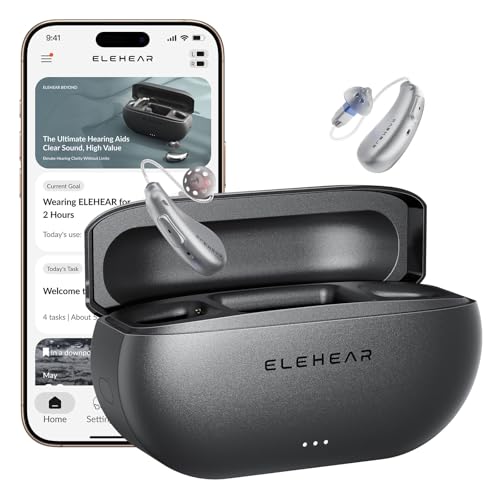
ELEHEAR Beyond Pro Hearing Aids
by ELEHEAR
Strong runner-up — the ELEHEAR Beyond Pro steps up to VocClear 2.0 and a dedicated Music Mode for buyers who want more than the entry Beyond.
Pros
- VocClear 2.0 processing claims roughly 30% clearer speech versus the prior generation, with AI noise reduction for crowded, reverberant rooms
- Dedicated Music Mode broadens the frequency response for listening, a feature most OTC devices reserve for speech only
- Bluetooth on iOS and Android streams calls and music, with full app control over programs, volume, and tinnitus masking sounds
- Behind-the-ear housing gives larger, easier-to-grip controls than in-canal designs, which helps anyone with reduced finger dexterity
Cons
- IP water and dust rating is not published by the manufacturer — treat it as everyday splash protection only
- Newest listing in the ELEHEAR line with a thin review base, so there is little long-term field feedback yet
5. Vivtone Xpure 2.0 — Best App-Guided Fitting
The Vivtone Xpure 2.0 earns its place here on one specific strength rather than on broad acclaim: Vivtone put its effort into the part of the experience that determines whether a hearing aid works for an individual, which is the fit. The companion app walks through a guided setup and then lets you adjust individual frequency bands rather than cycling through fixed presets, so a buyer whose loss is concentrated in the upper frequencies can lift exactly that region without making everything else uncomfortably loud. The app is free to use, not a subscription tier bolted onto the hardware.
Be clear-eyed about the reception, though. Its average rating sits in the middle of a category that rates low across the board, and the review base is modest — a few hundred buyers rather than the thousands behind the Audien devices. Amazon also appears to have separated this listing’s reviews from a previously pooled set, so the count is smaller than it was at our last review. Buy this one for the band-level fitting control, not because the crowd has validated it.
The receiver-in-canal design keeps distortion and feedback low, which matters most for anyone who has tried a cheap amplifier and given up on the whistle. Multiple preset modes cover quiet conversation, noisy restaurants, and outdoor settings for the times you would rather not open the app. Bluetooth handles phone calls and music streaming on both major platforms. Charging takes about two and a half hours for roughly a day of hearing use, though be aware that streaming consumes battery far faster than amplification alone, so a heavy streaming day will need a top-up. Vivtone provides real-human phone support for setup questions, which is a meaningful differentiator against brands that route everything through email. There is no published IP rating, so treat it as splash-resistant rather than weatherproof. For the buyer who wants genuine personalization without the Jabra’s price, this is the pick.

Vivtone Xpure 2.0 Bluetooth OTC Hearing Aids with App Fitting
by Vivtone
The most adjustable device here — Vivtone's Xpure 2.0 pairs genuine app-guided band fitting with call and music streaming for buyers who want personalization without clinic pricing.
Pros
- Band-by-band app fitting rather than fixed presets, so amplification can be shaped to where your loss actually sits
- Companion app performs a guided fitting and lets you fine-tune each band, and the app itself is free rather than subscription-gated
- Receiver-in-canal design minimizes distortion and feedback, with multiple preset modes for quiet rooms, noisy restaurants, and outdoors
- Charges fully in about 2.5 hours for up to 24 hours of hearing use, and real-human phone support is included rather than email-only
Cons
- Bluetooth streaming drains the battery far faster than hearing use alone, so heavy streamers will charge more than once a day
- No published IP rating, so treat it as splash-resistant rather than something to wear in heavy rain
6. Vivtone Lucid508 — Best Value Behind-the-Ear
The Vivtone Lucid508 is the amplification workhorse of this lineup. Its peak gain reaches up to 41 dB, the most headroom of any device reviewed here, which makes it the right choice at the upper end of moderate loss where lighter in-ear devices start to run out of range. The behind-the-ear housing is what allows that: a larger shell holds a bigger receiver and a bigger battery, and modern BTE designs like this one are considerably slimmer than the beige units most people picture when they hear the term.
The charging case is the other standout. It holds enough power to refill both aids four times over, roughly 125 hours of backup, which makes this the device to take on a long trip or to keep for hurricane season when an outlet is not guaranteed. Operation is deliberately simple: the aids switch on when removed from the case and off when returned, and a quiet mode and a noisy mode cover most of daily life without a menu to learn. The rating is strong and the review base is substantial, which is a rarer combination in this category than it should be. The trade-offs are the absence of Bluetooth and of any companion app, so amplification is shaped by the onboard controls rather than a personalized frequency profile, and the behind-the-ear tubing needs regular cleaning to keep wax and condensation from blocking sound. For a buyer who wants real amplification and long battery life more than they want streaming, it is the best value here.

Vivtone Lucid508 Rechargeable BTE Hearing Aids
by Vivtone
The value behind-the-ear choice — the Lucid508 pairs the highest gain ceiling here with a charging case that keeps going for days away from an outlet.
Pros
- Peak gain of up to 41 dB is the most amplification headroom in this roundup, which suits the upper end of moderate loss
- Charging case holds four full recharges for roughly 125 hours of backup power — the best untethered runtime here for travel
- Auto on and off when the aids leave or enter the case, with a simple quiet mode and noisy mode rather than a menu to learn
- Strong rating from a substantial review base, and the slim behind-the-ear housing is far less visible than older BTE designs
Cons
- No Bluetooth and no companion app, so amplification is set by onboard controls rather than a personalized frequency profile
- Behind-the-ear tubing needs regular cleaning to prevent wax and moisture blockages, which is more upkeep than a sealed in-ear design
7. Audien Atom X — Best App-Free Smart Control
The Audien Atom X solves a problem the rest of the smart-hearing-aid field mostly ignores. Feature-rich OTC devices almost all require a smartphone app, and for a large share of the people who need hearing aids most, that requirement is the reason the device ends up in a drawer. The Atom X moves the controls onto a touchscreen built into the charging case: modes, volume, and settings are adjusted on a screen you can see and press, with no phone, no pairing, and no account.
Four pre-programmed listening environments cover television, restaurants, one-on-one conversation, and general use, which handles the bulk of daily listening for someone with straightforward mild-to-moderate loss. Battery life is the longest in this roundup when counting the case, at over 48 hours, so a two-day trip needs no outlet. Bluetooth streaming is included for calls, music, and television audio, and the case sanitizes the aids with UV light during charging, a real hygiene benefit for a device that sits in the ear canal all day. Audien includes a guided setup session with a specialist for every purchase. The limitation is the fitting method: four presets target average loss curves and cannot be shaped to your individual thresholds, and its average rating trails the app-fitted devices here, which is a fair reflection of how much fitting method drives satisfaction. Choose it when the person wearing it will genuinely never open an app — in that scenario it outperforms a better-specified device that never gets configured. Anyone managing a chronic ear condition should consult an ENT and review our otoscope guide before choosing any in-canal device.
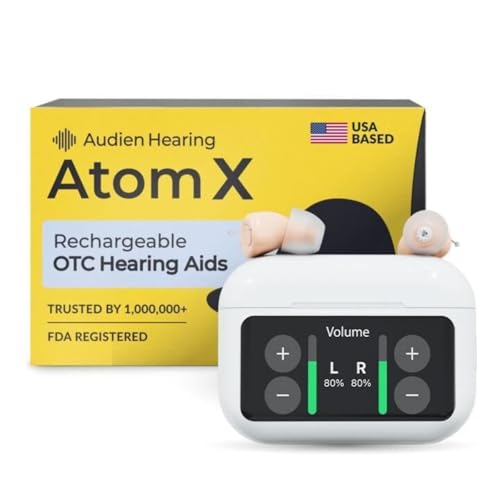
Audien Atom X OTC Hearing Aids with Touchscreen Control
by Audien Hearing
The app-free smart pick — the Atom X puts a touchscreen on the charging case so users get modes and streaming without ever opening a phone.
Pros
- Touchscreen charging case handles every adjustment — no smartphone app required, which removes the biggest usability barrier for non-technical users
- Four pre-programmed listening environments cover television, restaurants, one-on-one conversation, and general use
- 48-plus hours of battery life with the portable case, enough to cover a two-day trip without finding an outlet
- Bluetooth streaming for calls, music, and television audio, plus UV sanitizing in the case during charging
Cons
- Preset environments cannot be shaped to your individual frequency thresholds the way an app-based self-fitting check can
- Average rating trails the app-fitted devices here, which reflects how much the fitting method matters to real-world satisfaction
Best OTC Hearing Aids for Tinnitus
For the large number of people whose tinnitus accompanies mild-to-moderate hearing loss, a hearing aid often helps in two ways at once: amplifying ambient sound reduces the contrast that makes ringing stand out, and a built-in sound generator can mask the tinnitus directly. Prescription brands dominate the high end of this category, but for OTC buyers the key feature is an in-app tinnitus masking program with adjustable white noise, pink noise, or nature sounds. Both picks below are from ELEHEAR, the OTC line that builds tinnitus masking into its companion app — one the balanced everyday device, the other a step up with refined processing and a broader sound palette. Sudden, one-sided, or pulsatile tinnitus warrants a medical evaluation before self-treating.
| Product | Price | Buy |
|---|---|---|
| ELEHEAR Beyond OTC Hearing Aids with AI Speech EnhancementBest for tinnitus overall Built-in app tinnitus masking with white, pink, and nature sounds plus AI speech clarity | $399.00 | View on Amazon |
| ELEHEAR Beyond Pro Hearing AidsBest tinnitus upgrade VocClear 2.0 processing and a music mode that broadens the masking sound options | $599.00 | View on Amazon |
Best Behind-the-Ear OTC Hearing Aids
Behind-the-ear (BTE) styling places the electronics in a housing that rests behind the ear, which makes the controls larger and easier to handle — a genuine advantage for anyone with reduced dexterity — and drives amplification more comfortably than tiny in-canal designs because there is room for a bigger receiver. Both picks below are true behind-the-ear devices rather than receiver-in-canal models that merely rest a slim module behind the ear. They split cleanly by priority: one adds Bluetooth streaming, app control, and a music mode; the other trades all of that for the highest gain ceiling here and days of backup power.
| Product | Price | Buy |
|---|---|---|
| ELEHEAR Beyond Pro Hearing AidsBest behind-the-ear with streaming BTE housing with larger controls, a dedicated music mode, and full Bluetooth streaming | $599.00 | View on Amazon |
| Vivtone Lucid508 Rechargeable BTE Hearing AidsBest value behind-the-ear Highest gain ceiling in this guide and a case holding roughly 125 hours of backup power | $259.00 | View on Amazon |
Best Affordable OTC Hearing Aids
The whole point of the OTC category, created by the FDA in 2022, was to break the multi-thousand-dollar price barrier of prescription devices — and the budget end is where that promise is most visible. The trade-off at the low end is fitting: the cheapest devices use dials or fixed presets rather than a guided hearing check, which is adequate for straightforward mild loss but cannot shape amplification to your exact thresholds. The two picks below anchor the value tier: the lowest-priced FDA-registered option for basic amplification, and a mid-budget behind-the-ear device that adds far more gain and battery life for buyers who want real capability without premium pricing.
| Product | Price | Buy |
|---|---|---|
| Audien Atom One OTC Hearing AidsMost affordable overall Lowest price of any FDA-registered device here — dial-controlled digital amplification, no app needed | $98.00 | View on Amazon |
| Vivtone Lucid508 Rechargeable BTE Hearing AidsBest budget with real amplification Steps up to 41 dB peak gain and a case with roughly 125 hours of backup power | $259.00 | View on Amazon |
How to Choose the Best OTC Hearing Aid
The buyer’s guide factors below cover the six dimensions most relevant to OTC hearing aid selection in 2026. One additional consideration deserves emphasis: the adjustment period. Hearing aids — even well-fitted prescription devices — require neural adaptation time. The auditory cortex must relearn how to process amplified sound, and this process typically takes two to six weeks of consistent daily wear. New hearing aid wearers commonly experience fatigue, sound echoing, or an overly loud perception of background noise in the first week or two. These effects diminish significantly with continued wear. The most common reason OTC hearing aids are returned is insufficient trial time — not poor device performance. Commit to consistent daily use for at least three to four weeks before evaluating whether the device is working for you.
Another practical consideration is ear canal compatibility. All the devices reviewed here use generic dome tips or sleeves in multiple sizes. Standard dome fit covers the majority of ear canal geometries, but some individuals have unusually narrow, curved, or wide canals where generic tips cannot achieve a stable, comfortable seal. If a device consistently feels loose, occluded, or provides inconsistent amplification after trying all available dome sizes, canal geometry may be the issue — a factor that typically requires custom mold fabrication from an audiologist.
A final point specific to buying OTC hearing aids on Amazon in 2026: check that the listing you are looking at is still purchasable before you get attached to a model. This category has an unusually high rate of listings going unavailable, and review articles across the web still recommend devices that cannot be bought. If a product page shows no add-to-cart button, the model is effectively gone regardless of how well it reviewed.
Buyer's Guide
Choosing an OTC hearing aid in 2026 means navigating a market that has both matured and consolidated since the FDA established the category in 2022. Several major-brand listings have come and gone as manufacturers rationalized their lineups, so availability now matters as much as specifications. The surviving range still spans from sub-$100 dial-controlled devices to clinic-quality hearing aids with bundled audiology services. Matching the right device to your specific hearing loss profile and daily lifestyle is more important than selecting the most expensive option.
Degree and Pattern of Hearing Loss
OTC hearing aids are FDA-approved only for adults with perceived mild to moderate hearing loss. Mild loss means difficulty hearing soft speech or whispered conversation. Moderate loss involves routinely asking people to repeat themselves during normal conversation. If your loss is severe, affects only one ear, is rapidly progressing, or is accompanied by other symptoms, see an audiologist before purchasing. Additionally, the pattern of your loss matters: high-frequency loss (the most common age-related pattern) responds well to app-fitted OTC devices that shape amplification by frequency band. Flat loss responds to almost any digital amplifier, which is why a preset device can be perfectly adequate for some buyers and useless for others.
App-Guided Fitting vs. Preset Amplification
The most clinically meaningful distinction among OTC devices is between guided fitting and fixed presets. App-fitted devices — the Vivtone Xpure 2.0, the ELEHEAR Beyond and Beyond Pro, and the Jabra Enhance Select M3 Aureon — walk users through a hearing check or band-by-band adjustment and configure amplification to individual thresholds. This is meaningfully more effective than preset profiles that target an average loss curve, like those in the Audien Atom X and the dial-controlled Atom One. If you want performance approaching prescription quality, prioritize devices that personalize by frequency over those offering only fixed programs. If you will never open the app, however, a preset device you actually wear beats a self-fitting device that sits in a drawer.
Bluetooth Connectivity and Streaming
Bluetooth-enabled hearing aids stream audio directly from a smartphone, tablet, or television — functioning simultaneously as hearing aids and wireless earbuds for calls, podcasts, and media. This is a significant quality-of-life feature for active users, but implementation varies widely. The ELEHEAR Beyond, ELEHEAR Beyond Pro, Vivtone Xpure 2.0, Jabra Enhance Select M3 Aureon, and Audien Atom X all stream to both ears. The Vivtone Lucid508 and Audien Atom One do not stream at all and require separate earbuds for any audio. Be aware that streaming draws far more power than amplification alone, so a device rated for a full day of hearing use may need a midday top-up if you stream for hours. Choose a full-Bluetooth device if you make frequent phone calls, watch television, or listen to audio content throughout the day.
Form Factor and Physical Handling
OTC hearing aids come in three styles reviewed here: RIC (receiver-in-canal, like the ELEHEAR Beyond, Vivtone Xpure 2.0, and Jabra Enhance Select M3 Aureon) places a small unit behind the ear with a thin wire into the canal; BTE (behind-the-ear, like the ELEHEAR Beyond Pro and Vivtone Lucid508) houses the electronics in a slightly larger behind-ear shell; and ITE (in-the-ear, like the Audien Atom X and Atom One) sits at the canal entrance. In-the-ear models are the most discreet but also the most challenging to handle, insert, and clean, particularly for users with reduced finger dexterity. RIC and BTE models offer the easiest handling and the longest battery life. Choose an in-the-ear design only if a low profile is a genuine priority, and check the dome sizes included before assuming a comfortable seal.
Battery Life and Charging System
All seven devices reviewed here are rechargeable — disposable zinc-air battery models have been largely displaced at the OTC tier. Battery life in this roundup ranges from about 20 hours (ELEHEAR Beyond) to 48-plus hours with the case (Audien Atom X), with the Vivtone Lucid508 stretching to roughly 125 hours of total runtime including its charging case. If you wear hearing aids 16 or more hours per day or are frequently away from power outlets, prioritize devices with longer battery life or charging cases that provide multiple on-the-go recharges. Also check how the device charges: a magnetic dock that seats correctly by feel is far easier for users with tremor or low vision than a case that requires precise alignment.
Professional Support and Trial Period
OTC hearing aids vary significantly in the level of professional support included with purchase. The Jabra Enhance Select M3 Aureon bundles licensed audiologist programming plus unlimited remote adjustments and a three-year warranty with loss and damage protection. ELEHEAR includes remote audiologist support and a 30-day return window. Vivtone provides real-human phone support for setup questions, and Audien includes a guided setup session with a specialist plus a one-year warranty. For first-time hearing aid users, a longer trial period and access to professional guidance significantly improves the probability of a successful fit. Factor the cost and terms of included support into your total value assessment — a hearing aid with expert fitting assistance is worth more than raw hardware specifications suggest.
Final Verdict
For the majority of adults with mild to moderate hearing loss seeking the best OTC hearing aid you can actually buy today, the ELEHEAR Beyond is our best overall recommendation. AI-driven speech enhancement with up to 50 dB of gain, Bluetooth streaming on both iOS and Android, in-app tinnitus masking, and included remote audiologist support make it the most complete package in the in-stock 2026 field at a price that does not require a financing plan.
For buyers who want to test whether amplification helps before spending real money — or who will never open a smartphone app — the Audien Atom One offers dial-controlled amplification at the lowest price here, while the Audien Atom X delivers modes, streaming, and long battery life through a touchscreen case instead of a phone. Buyers who want genuine personalization at a mid-market price should look at the Vivtone Xpure 2.0 for its band-by-band app fitting, and those who need maximum gain and days of untethered battery should consider the Vivtone Lucid508. For the buyer seeking the closest OTC approximation of prescription-quality care, the Jabra Enhance Select M3 Aureon, with its bundled licensed-audiologist programming, unlimited remote adjustments, LE Audio connectivity, and loss-and-damage warranty, remains the most complete hearing health investment available outside a clinical setting. As with any hearing health decision, if your hearing loss is significant, rapidly progressive, or accompanied by ear pain, drainage, or dizziness, consult an audiologist or ENT physician before purchasing any OTC device. For readers building out a broader home health toolkit, our diagnostic set reviews cover the companion instruments worth keeping on hand.
Frequently Asked Questions
Who qualifies to buy OTC hearing aids without a prescription?
What is the difference between an OTC hearing aid and a prescription hearing aid?
Are OTC hearing aids as good as prescription devices?
How long does it take to adjust to a new hearing aid?
Can I return a hearing aid if it does not work for me?
What are the best OTC hearing aids for seniors?
Related Articles
About the Reviewer

Dr. David Taylor, MD, PhD
Drexel University College of Medicine (MD), Indiana University School of Medicine (PhD)
Dr. David Taylor is a licensed physician and medical researcher who founded BestRatedDocs in 2016. With an MD from Drexel University and a PhD from Indiana University School of Medicine, he combines clinical expertise with a passion for health technology to provide evidence-based product recommendations. Dr. Taylor specializes in health informatics and regularly evaluates medical devices, diagnostic equipment, and therapeutic products to help healthcare professionals and patients make informed decisions.