Best Nebulizers 2026: Why I No Longer Recommend Buying One on Amazon
Dr. David Taylor's honest 2026 update: Amazon's nebulizer catalog has collapsed under FDA enforcement, and the machines still listed are not ones I can recommend. Here is what happened, and exactly how to source a real nebulizer instead.
Updated
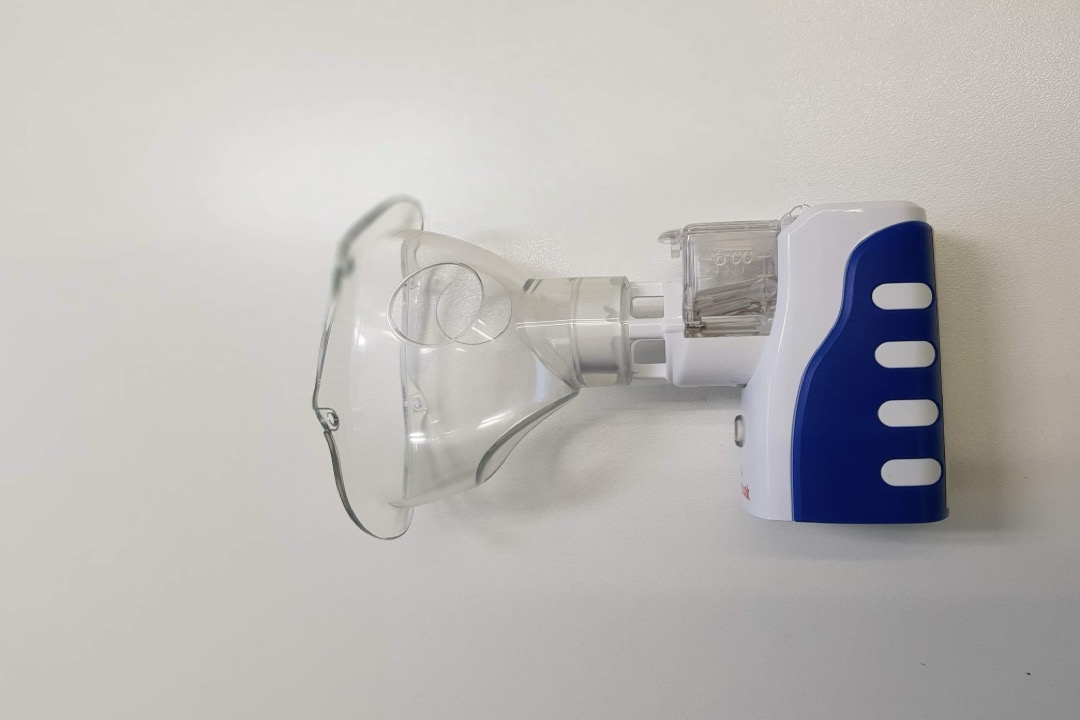
This guide used to recommend nebulizers on Amazon. As of July 14, 2026, it does not — because there is no longer a nebulizer on Amazon US that I am willing to put my name on, and I would rather tell you that plainly than sell you something I would not give a patient.
That is an unusual thing for a review site to say, so let me show you exactly how I got here.
What Happened to Amazon’s Nebulizer Catalog
Three regulatory events gutted this category, and they compounded.
In January 2024, Philips Respironics entered a federal consent decree that halted all US CPAP, BiPAP, and nebulizer sales. Philips is not selling these devices in the US consumer channel at all.
In March 2025, an FDA warning letter classified Amazon’s FBA fulfillment as “active distribution” of Class II medical devices rather than neutral marketplace listing. Amazon responded the way any platform facing device liability responds: it over-removed. OMRON’s nebulizer line, PARI Medical’s portable and desktop compressors, DeVilbiss nebulizers, and Drive Medical units were largely swept out of Amazon’s direct-to-consumer listings — not because those devices are unsafe, but because the compliance burden of listing them stopped being worth it.
Then the generic OEM units that rushed into the vacuum started churning every few weeks. This is the part that finally ended the category for me. In the July 6, 2026 version of this guide — eight days before this update — I recommended three machines, each verified in stock with a working Add to Cart button on the day of publication. When I re-checked them for this refresh:
- Two of the three now return hard 404 errors. The listings were removed outright.
- The third is still purchasable — but Amazon now files it under “Sexual Wellness › Adult Toys & Games › Sex Toys › Machines & Devices,” and the seller has scrubbed the word “nebulizer” from the title and hyphenated it in the product description to slip past keyword filters.
Read that last one again. The best-reviewed nebulizer machine left on Amazon US survives by disguising itself as something else. That is not a device I can route a parent to for a child’s asthma treatment, and it tells you everything about where this category is going: on Amazon, the nebulizers that survive are increasingly the ones that hide from the platform’s own compliance filters.
What I Found When I Searched the Category Again
I did not take the delistings at face value — I re-searched the entire category from scratch, through Amazon’s own US catalog, sorted several different ways, including the euphemistic wording (“atomizer,” “inhaler machine”) sellers now use to dodge enforcement.
Across roughly sixty results, here is what an Amazon search for a nebulizer machine actually returns in July 2026:
- Carrying cases and travel bags (by a wide margin the most common result)
- Replacement air filters for PARI compressors — machines you can no longer buy on Amazon
- Steam inhalers (Vicks, MyPurMist, MABIS) — these are not nebulizers, they do not deliver medication to the lower airways, and presenting them as such would be a clinical safety problem
- Essential-oil “nebulizing” diffusers
- Inhaler spacers, saline sprays, and oxygen masks
- An equine nebulizer — for horses
- A 3M respirator fit-testing nebulizer — industrial PPE, not a medical device
- One institutional 4-pack compressor with zero reviews
Not one consumer drug-delivery nebulizer machine that I would recommend to a patient. The category has not thinned out. It has effectively ceased to exist as a consumer market on this platform.
What To Do Instead: Sourcing a Real Nebulizer
The good news, and I want to be clear about this because the section above is bleak: nebulizers themselves are not scarce. OMRON, PARI, and DeVilbiss are all still manufacturing, still shipping, and still fully supported. They simply do not live on Amazon anymore. Nebulization is not optional for patients with asthma, COPD, cystic fibrosis, or bronchiectasis — so here is exactly where the equipment actually is.
In most cases, your insurance covers a DME nebulizer with a prescription, and your out-of-pocket cost is comparable to — often lower than — the Amazon generics. You are not paying a premium for going the right way here. You are usually paying less.
OMRON NE-U100 MicroAir Portable Mesh Nebulizer
The clinical-grade portable mesh standard — 360-degree operation (it works lying down, which matters for COPD patients), 10 mL capacity, AA battery operation, and 23 dBA near-silent running, backed by a 2-year OMRON Healthcare warranty. Source it from the OMRON Healthcare website directly, JustNebulizers.com, or VitalityMedical.com.
OMRON NE-C801 / NE-C28 CompAir Desktop Compressor
OMRON’s basic desktop compressor — the workhorse used in pediatric clinics worldwide. AC-powered, 5 μm MMAD, FDA 510(k) cleared, and reliable enough that units routinely last a decade in clinic use. If you want the machine most pediatricians actually have in the room, this is it. Available from JustNebulizers.com, VitalityMedical.com, or as a special order through CVS, Walgreens, or Walmart pharmacy counters.
PARI Trek S Portable Compressor
The portable compressor PARI builds specifically for CF patients who need viscous-medication compatibility while traveling. Battery-powered, with full PARI LC Plus cup compatibility — meaning it delivers dornase alfa and tobramycin, which no mesh device can. Available from pari.com or your DME provider.
PARI Vios / LC Plus Desktop Compressor
The desktop compressor most CF and bronchiectasis pulmonologists prescribe, paired with PARI’s LC Plus reusable cup. The cup is the part that matters — it is the validated delivery system for hypertonic saline, tobramycin, and dornase alfa. From pari.com or through DME; PARI also sells LC Plus cups separately for use with other compressors.
DeVilbiss Pulmo-Aide Compact
A reliable mid-range compressor bridging the gap between cheap generics and the OMRON/PARI tier. Available from DeVilbiss.com, VitalityMedical.com, and through hospital DME partners — it is often the unit hospitals send home with patients who need home nebulization after discharge.
We have no affiliate relationship with any of these channels and earn nothing if you use them. We are pointing you to where the equipment actually lives in 2026.
Buyer's Guide
The clinical principles for choosing a nebulizer have not changed, even though the Amazon catalog has collapsed. Use this framework when you order through a DME supplier, a specialty pharmacy, or directly from OMRON or PARI — the criteria are the same, you are simply applying them in a channel where the answers are actually published.
Compressor vs. Mesh Technology
The most important decision in this category. Compressor nebulizers are AC-powered, work with all medications including viscous drugs, and are the clinical standard. Mesh nebulizers are silent, rechargeable, and portable — but cannot handle CF medications and require careful mesh cleaning. Most patients using standard bronchodilators can use either. Patients prescribed specialty medications like dornase alfa or tobramycin must use a compressor with a validated cup — a PARI Vios with an LC Plus cup, or an OMRON CompAir, both sourced through DME.
Noise Level
Noise level matters more than most buyers anticipate — particularly for pediatric treatments where a loud compressor can cause treatment refusal. Mesh nebulizers operate at 20-25 dB, virtually inaudible, which makes them the practical choice for bedside and nighttime treatments. Desktop compressors with internal muffling reach ≤50 dB; basic models run at 55-65 dB. For young children, noise-sensitive patients, or shared spaces, favor a mesh device such as the OMRON MicroAir NE-U100 (23 dBA), or a clinical-brand compressor rated under 50 dB.
Portability and Power Source
AC-powered compressors require a wall outlet — appropriate for home-only use where medication compatibility and consistent performance matter most. Battery and USB-rechargeable mesh devices are practical for commuters, travelers, and patients who nebulize at work or school. Clinical-brand portables like the OMRON NE-U100 (AA batteries, 360-degree operation so it works lying down) and the PARI Trek S (battery-powered, LC Plus compatible) are the reliable versions of this form factor — and unlike the Amazon generics, they publish the specifications that justify the price.
Medication Compatibility
Standard bronchodilators — albuterol, levalbuterol, ipratropium, and budesonide — are compatible with both compressor and mesh nebulizers. Viscous medications prescribed in cystic fibrosis and some bronchiectasis protocols (dornase alfa, tobramycin, aztreonam) require compressor nebulizers with validated cups (PARI LC Plus or equivalent). As a rule: if your medication is a standard thin-solution bronchodilator vial, either type works. If your medication comes in a specialized formulation, confirm compatibility with your pharmacist before purchasing.
Review Count, FDA Clearance, and Brand Credibility
This is the criterion that ended Amazon as a viable channel for this category. The nebulizer listings that remain are dominated by generic OEM brands with fewer than 50 reviews, no published FDA 510(k) clearance, no named manufacturer, and no MMAD specification — and they are delisted or recategorized within weeks. Clinical brands sold through DME (OMRON, PARI, DeVilbiss) provide documented specifications, 510(k) clearance, and warranty support. For a Class II device delivering prescription medication to your lower airways, that documentation is the product.
Cleaning and Maintenance
Nebulizer hygiene directly affects infection risk and device longevity. Compressor cups require rinsing after each treatment, daily washing, and replacement every 6 months. Mesh nebulizers require careful cleaning of the micro-mesh plate after every treatment — protein buildup clogs the apertures and reduces output. Detachable parts should be hand-washed and fully air-dried between uses to keep both mesh and compressor devices performing over months of use.
Respiratory Monitoring You Can Still Buy Well
While the nebulizer machines have left Amazon, the equipment you use to monitor a respiratory condition is still a healthy, well-documented category — and it is worth getting right.
If you or a family member nebulizes regularly, a pulse oximeter is the single most useful companion device: it lets you confirm that a treatment actually achieved its intended bronchodilatory effect, rather than guessing from how the patient feels. To interpret those readings correctly — COPD shifts the normal SpO2 bands by roughly 5% — use our free pulse oximeter reading chart, which logs readings over time and exports a clinician-ready PDF for your next pulmonology appointment.
For patients managing COPD or overlapping heart-lung disease, cardiac monitoring matters alongside respiratory monitoring; our roundup of the best ECG monitors covers the home devices worth owning. And a good stethoscope remains the cheapest way to track breath sounds — wheeze, crackles, diminished air entry — between clinical visits, which is often what tells you a flare is starting before the oximeter does.
How to Choose a Nebulizer in 2026
The channel changed. The clinical decision tree did not.
If your prescription is a standard bronchodilator — albuterol, levalbuterol, ipratropium, budesonide — either a compressor or a mesh nebulizer will deliver it effectively, and your choice should be driven by noise tolerance and portability.
If your prescription is anything specialty — dornase alfa, tobramycin, aztreonam, or hypertonic saline at therapeutic dose — you need a compressor with a validated nebulizer cup, and you should source it through DME. Mesh devices physically cannot deliver these medications.
If you are treating children, prioritize quiet. A loud compressor triggers the crying and mask-fighting that ends treatments early, and a treatment refused is a treatment not delivered. A mesh device, or a compressor rated under 50 dB, is worth the difference.
If you nebulize while traveling, mesh is the only practical form factor — but confirm your specific medication is mesh-compatible with your pharmacist first.
Final Verdict
My recommendation in July 2026 is to buy your nebulizer through a DME supplier or specialty pharmacy, not on Amazon. For desktop use, the OMRON CompAir NE-C801 or a PARI Vios with an LC Plus cup. For portable use, the OMRON MicroAir NE-U100 or the PARI Trek S. With a prescription from your pulmonologist or primary care physician, insurance most likely covers these, and your out-of-pocket cost is often lower than the unverifiable generics still floating around Amazon.
I am aware that a review site telling you not to buy anything is a strange thing to read. But the entire value of a recommendation is that it can be withheld. The nebulizer listings still standing on Amazon carry single-digit review counts, no published MMAD, no 510(k), no accountable manufacturer, and a habit of vanishing within weeks — and the best-reviewed one among them is currently filed under sex toys. For a Class II device whose whole job is depositing prescription medication into your lower airways at a validated particle size, that is not a close call.
As always, consult your pulmonologist or respiratory therapist before changing your nebulizer device or protocol — medication compatibility, particle size, and treatment frequency are clinical decisions your provider is best positioned to guide. If the clinical brands return to Amazon, I will refresh this guide immediately and say so. Until then, this page will keep telling you the truth about a category that no longer deserves your click.
Frequently Asked Questions
Why does this guide no longer recommend any nebulizer on Amazon?
What happened to the machines this guide recommended in early July 2026?
If I need an OMRON, PARI, or DeVilbiss nebulizer, where should I buy it?
What is the difference between a compressor nebulizer and a mesh nebulizer?
Can I just buy one of the cheap generic nebulizers still listed on Amazon?
What particle size should a nebulizer produce for effective lung delivery?
How should I clean my nebulizer to prevent infection?
Related Articles
About the Reviewer

Dr. David Taylor, MD, PhD
Drexel University College of Medicine (MD), Indiana University School of Medicine (PhD)
Dr. David Taylor is a licensed physician and medical researcher who founded BestRatedDocs in 2016. With an MD from Drexel University and a PhD from Indiana University School of Medicine, he combines clinical expertise with a passion for health technology to provide evidence-based product recommendations. Dr. Taylor specializes in health informatics and regularly evaluates medical devices, diagnostic equipment, and therapeutic products to help healthcare professionals and patients make informed decisions.