Home Recovery Essentials After Surgery: An MD's Guide to What You Actually Need
Dr. David Taylor, MD walks through the home setup, medications, mobility aids, and red flags that determine whether post-surgery recovery goes smoothly or ends in the emergency room.
Updated
Most of the medical decisions that meaningfully change a post-surgical recovery are made before the patient ever comes home. Where the recliner is positioned, whether the bathroom has a raised toilet seat installed, whether someone remembered to fill the stool softener prescription, whether the compression stockings actually fit — these details, set up in the 48 hours before surgery, do more to determine whether recovery ends in a normal post-op visit or in the emergency room than almost any single decision made during the recovery itself.
I have practiced internal medicine long enough to know which post-surgical complications were preventable and which were not. The preventable ones — falls in the bathroom, deep vein thrombosis from immobility, opioid-induced constipation that became a 10-day misery, acetaminophen overdoses from stacking Tylenol on top of prescription combination opioids, infections caught on day 8 that should have been caught on day 4 — these account for a substantial fraction of all post-op ER visits. This guide is what I tell my patients to set up before they leave for the hospital, what to monitor when they get home, when to call the surgeon, and when to bypass the surgeon and call 911. It is updated for 2026 and reflects current ACS, AAOS, AHA, and ASRA guidance.
Before You Come Home: The 24-Hour Prep Window
The single biggest mistake I see is treating recovery setup as a problem to solve after discharge. By the time you are stepping out of a hospital transport van on pain medication, the items you need most — a functional path through the house, a working bathroom, the right medications in the right location, food in the kitchen — are not the things you want to be improvising.
Do these the day before surgery, not the day after:
- Map a clear, low-friction path from the front door to your primary recovery spot (recliner or bed) and to the nearest bathroom. Remove throw rugs, extension cords, pet bowls, low coffee tables, anything you could trip over on opioid analgesics. Falls in the first 72 hours are the leading cause of preventable readmission after lower-extremity surgery.
- Pre-position your “command center” within arm’s reach of where you will spend the first 48 hours: phone and charger, water bottle with a straw, tissues, prescription medications, a thermometer, a fingertip pulse oximeter, a notebook and pen for documenting temperature/oxygen/pain levels twice daily, the TV remote, a small trash bin, and whatever entertainment will survive the first three foggy days.
- Install bathroom modifications before discharge, not after the first fall. A raised toilet seat and at least two grab bars (one beside the toilet, one in the tub or shower) take 30 minutes to install and prevent the single most common post-op injury. A shower chair plus a handheld showerhead is a 15-dollar add-on with outsized benefit.
- Fill prescriptions on discharge day morning so they are home before you are. Confirm specifically that your discharge regimen includes a stool softener (almost always docusate) and an osmotic laxative like polyethylene glycol — both should be started Day 1, not after constipation has set in.
- Stock the kitchen with 5 to 7 days of prepared meals, a meal-delivery subscription, or family commitments. Cooking from scratch on day 2 of recovery is not a plan; it is an aspiration.
- Identify one named driver — by name, by phone number, by availability — who can be at your door within an hour for an unexpected surgeon visit or ER trip in the first two weeks.
The patients who do all six of those before they leave for the hospital recover at home. The patients who skip them recover at home too — they just do it more painfully, with more falls, more phone calls, and a higher chance of unplanned medical contact.
Your Recovery Zone: Recliner vs. Bed, and Why It Matters
The bed-vs-recliner debate has a clinical answer that depends on the surgery, and most patients get bad advice on it.
For lower-extremity orthopedic surgery (total knee replacement, total hip replacement, ankle surgery, lower-leg fractures), a recliner is often superior to a flat bed for the first 5 to 7 days. The semi-Fowler position (30 to 45 degrees of head elevation) reduces venous pooling and post-op edema in the operative leg, makes it dramatically easier to transition to standing without bending the surgical hip past 90 degrees (a hip precaution after posterior-approach total hip), and reduces the work of breathing in patients who developed post-anesthesia atelectasis. A wedge pillow can convert a regular bed into an equivalent setup, but a true power recliner with leg elevation is the gold standard for the first week after knee or hip replacement.
For abdominal surgery and C-section, the same logic applies but for a different reason. Sitting up from a fully flat bed requires engaging the abdominal wall, which after laparotomy or laparoscopy is precisely the maneuver you want to avoid. A recliner or a bed with the head elevated 30 to 45 degrees lets the patient transition to standing by extending the legs over the side, rather than crunching forward.
For cardiac and thoracic surgery, head elevation is essential — flat positioning worsens dyspnea, increases the risk of aspiration, and is uncomfortable on a fresh sternotomy.
For upper-extremity surgery (shoulder, elbow, wrist), the operative arm should be elevated above the heart whenever possible to reduce hand and finger swelling. A recliner with a pillow under the operative arm achieves this; a flat bed does not.
A few additional recovery-zone details worth getting right:
- Side-sleepers after lower-extremity surgery need a pillow between the knees. A knee pillow prevents the operative leg from crossing midline, which violates hip precautions after total hip and stresses the surgical site after knee replacement.
- A bed rail dramatically simplifies the transition from lying to sitting after abdominal, cardiac, or hip surgery. The patient can pull rather than push, which protects the surgical site.
- Ice and heat have specific roles. Ice packs reduce swelling and pain at the surgical site for the first 48 to 72 hours (20 minutes on, 20 minutes off, with a barrier so the skin does not get a cold burn). Heating pads are generally avoided in the first week — they vasodilate and worsen swelling — but become useful around day 7 to 10 for muscle tightness adjacent to the incision. Never apply heat over a numb area or an incision with a dressing.
Bathroom Safety: The Highest Fall-Risk Room in Your Home
Fully one-third of post-surgical falls happen in the bathroom, and the reason is mechanical: a small, hard-surfaced room with a slippery floor, a transition from sitting to standing, low lighting at night, and a patient who is on opioids, dehydrated, and often disoriented from anesthesia.
The four modifications that matter most:
- A raised toilet seat. A standard toilet seat sits at roughly 15 inches. After hip replacement, the patient is under hip precautions that prohibit flexing the hip past 90 degrees, which is essentially impossible from a standard-height toilet. A toilet seat riser that adds 3 to 5 inches makes the difference between safely independent toileting and either a fall or a hip dislocation. Useful for any abdominal, lower-extremity, or back surgery — not just hip replacement.
- Grab bars. Two minimum: one beside the toilet for sit-to-stand, one in the tub or shower for transfers. Grab bars must be screwed into wall studs, not stuck on with suction cups — suction-cup bars give way at the worst possible moment. If a contractor is not available, a stud-mounted bar can be installed by a family member in under 30 minutes with a drill and a stud finder.
- A shower chair plus handheld showerhead. Standing in a wet shower on the third day after abdominal surgery is an unforced error. A simple plastic shower chair (or, for patients with significant mobility limitations, a bath lift) eliminates the standing requirement; a handheld showerhead lets the patient direct water away from incisions or dressings.
- Non-slip mats. One inside the tub, one immediately outside the tub on the bathroom floor.
A nightlight in the bathroom and the hallway between bedroom and bathroom is the single cheapest fall-prevention intervention available. Most post-op falls happen between 2 and 5 AM, when the patient is half-asleep, the medications are at their nadir, and the bladder demands cannot wait. Put a nightlight on a motion sensor.
Mobility Aids: Matching the Right Aid to Your Surgery
The right mobility aid depends on the surgery, the weight-bearing status the surgeon has ordered, and the home layout. The wrong aid causes either falls or premature non-use.
- Crutches work well for short-term non-weight-bearing on a single lower extremity in patients with adequate upper-body strength and good balance — typically younger patients with ankle or foot fractures, ACL repair, or minor orthopedic procedures. Crutches are poorly tolerated by older adults and patients with shoulder, wrist, or back problems. See the crutches guide for proper sizing and pad selection.
- Knee scooters (knee walkers) are the better choice for most patients with isolated foot, ankle, or lower-leg injuries who need to be non-weight-bearing for more than 2 weeks. They are dramatically easier than crutches, work on most flooring, and free up the hands. The knee scooters guide covers the steerable vs. non-steerable distinction and the all-terrain models for outdoor use.
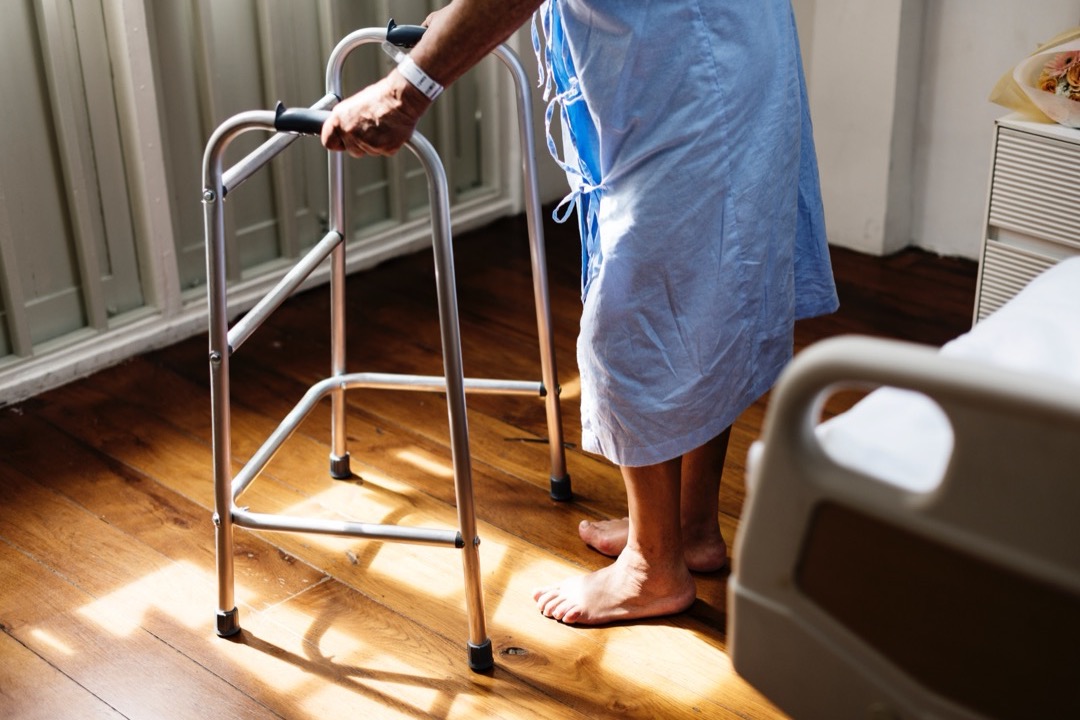
- Walkers and rollators are the right choice for patients who can bear partial weight on both legs but need stability — most total hip and total knee replacements, abdominal surgery patients in the first 7 to 10 days, and older patients regardless of the procedure. The rollator vs. walker breakdown covers when a four-wheeled rollator (with brakes and a seat) is appropriate vs. when a standard front-wheeled walker is safer.
- Wheelchairs are appropriate for patients who cannot bear weight, for longer distances even in patients who can ambulate short distances, and for the discharge transfer from car to house. A lightweight folding wheelchair is the most common rental for a 2-to-6-week recovery; the manual vs. electric wheelchair decision is generally moot for short-term post-surgical use, but our wheelchairs guide covers the durable medical equipment options.
Insurance often covers walker, wheelchair, and crutches rental with a surgeon’s order — ask the discharge planner specifically. Most patients overpay by buying outright what their insurance would have rented for free.
Medication Safety: The Two Traps That Send People to the ER
Two specific medication errors account for a meaningful fraction of preventable post-op ER visits. Both are avoidable with information.
Trap 1: The acetaminophen stacking trap. Most post-operative pain regimens include a combination opioid like Percocet (oxycodone 5 mg + acetaminophen 325 mg) or Vicodin (hydrocodone + acetaminophen). Patients in pain reach for OTC Tylenol on top, not realizing that each tablet of Percocet already contains 325 mg of acetaminophen — and the maximum safe daily dose of acetaminophen from all sources combined is 3,000 mg for sustained use (4,000 mg short-term in healthy adults, less in patients with liver disease or active alcohol use). Six Percocet tablets in a day plus three “extra-strength” Tylenol is approximately 5,400 mg of acetaminophen in 24 hours — a dose that can cause acute liver injury in a fasting, dehydrated post-op patient. The single rule: before you take any OTC analgesic, look at the active ingredients on your prescription bottle and add them up. If the prescription contains acetaminophen (APAP), the OTC Tylenol is off the table.
Trap 2: Skipping the stool softener until it’s too late. Opioids cause constipation in nearly 100 percent of post-surgical patients. The standard preventive regimen — started on Day 1 of opioid use, not Day 4 — is a stool softener like docusate (100 mg twice daily) plus an osmotic laxative like polyethylene glycol (Miralax) 17 grams daily, with senna (a stimulant) added on Day 2 if no bowel movement has occurred. Patients who wait for constipation to develop before starting these end up with impaction, abdominal pain so severe it is mistaken for a surgical complication, and occasionally ER visits for manual disimpaction. Start the regimen the moment the first opioid dose is taken, and continue it for as long as the opioids continue.
A few additional medication-safety habits matter:
- A pill organizer with AM/PM compartments and a weekly layout prevents the most common medication error after discharge — double-dosing because the patient cannot remember whether the morning dose was taken. Fill it for the week on a Sunday with a clear-headed family member.
- Track every dose in a paper notebook or phone notes app — drug, dose, time. This is what the surgeon’s office will ask about if you call with a complication.
- NSAIDs are usually held for the first 1 to 2 weeks after orthopedic surgery because they can interfere with bone healing in spine fusion and fracture cases. Confirm with the surgeon before taking any ibuprofen, naproxen, or aspirin in the first 14 days.
DVT and Blood Clot Prevention: What Your Surgeon May Not Have Time to Explain
Deep vein thrombosis (DVT) — a blood clot in the deep veins of the leg — is the most preventable serious complication of surgery, and the conversation about it routinely gets compressed in the discharge meeting. The mechanism is simple: surgery itself activates the clotting cascade, post-op immobility eliminates the calf muscle pump that normally moves blood through the deep veins, and the combination creates a 6-to-12-week window of elevated clot risk.
The interventions that reduce that risk, in order of importance:
- Get up and walk at least every 2 hours during waking hours, starting on Day 1 (or as cleared by your surgeon). Even short ambulation — to the bathroom and back — restarts the calf muscle pump.
- Ankle pumps every hour while sitting or lying down: 10 to 15 dorsiflexion-plantarflexion cycles per hour. This is the single highest-leverage habit, and it is free.
- Graduated compression stockings (compression socks or TED hose) for the duration prescribed by your surgeon — typically 2 weeks for outpatient surgery and 2 to 6 weeks for major orthopedic, abdominal, or cardiac procedures.
- Anticoagulation as prescribed — direct oral anticoagulants (apixaban, rivaroxaban) or low-molecular-weight heparin (enoxaparin) are standard after total hip and knee replacement, and the regimen typically runs 14 to 35 days.
- Hydrate aggressively. Dehydration thickens the blood and worsens clot risk. Aim for clear, pale-yellow urine.
Recognize the DVT warning signs — and recognize the pulmonary embolism (PE) warning signs that mean DVT has migrated to the lungs:
DVT in the leg: unilateral calf or thigh swelling (one leg measurably larger than the other), calf pain or tightness that is new and reproducible on flexing the foot upward, warmth and redness over the affected area, sometimes a palpable cord along the deep vein. Call the surgeon’s office the same day. If access is delayed or the symptoms are severe, go to the ER — DVT is diagnosed quickly with a venous Doppler ultrasound and treated with anticoagulation; delay risks PE.
PE in the lungs: sudden shortness of breath, chest pain that worsens with deep inspiration, rapid heart rate, coughing up blood, or sudden loss of consciousness. Call 911. Do not drive yourself, do not wait for a call back. PE is a leading cause of post-surgical mortality and is time-sensitive in a way that DVT alone is not.
Highest-DVT-risk surgeries include total hip replacement, total knee replacement, hip fracture repair, major abdominal oncology surgery, and cardiac surgery. Patients undergoing these procedures should expect a structured anticoagulation regimen and should have an explicit conversation about it with their surgeon before discharge.
Wound Care at Home: What’s Normal vs. What Needs a Call
Most surgical wounds heal without complication, and most wound concerns called into the surgeon’s office turn out to be normal post-op inflammation. The reason for the calls is that nobody tells patients clearly what normal looks like.
Normal in the first 5 to 7 days: mild redness along the wound edges (not extending outward), warmth at the incision, swelling around the surgical site, light pink or clear serous drainage in the first 48 to 72 hours, mild itching as the wound starts to close, a thin scab forming along the suture or staple line.
Not normal at any point: redness that spreads outward from the wound margins after day 5; warmth that is increasing rather than decreasing day over day; thick, opaque, yellow-green, or foul-smelling drainage; the wound edges visibly separating after they had been approximated; firm tender lumps under the skin near the incision; or any of the above paired with a fever above 100.4°F or systemic symptoms (chills, malaise, confusion).
A few practical wound-care habits:
- Photograph the wound daily from the same angle and the same distance. Trajectory matters more than any single snapshot, and a clinician reviewing 7 days of photos can identify worsening that a single description cannot capture.
- Keep the wound dry until your surgeon specifically clears showering — usually 48 to 72 hours for surgical glue or steri-strips, longer for staples or external sutures.
- Do not pick at scabs, glue, or steri-strips. They fall off when they are ready. Premature removal restarts the inflammatory cycle and increases scar formation.
- Document temperature twice daily in the first 7 days. A fever above 100.4°F before day 3 may represent atelectasis (lung re-expansion difficulty) and is often benign; a new fever appearing after day 3 is more concerning for wound, urinary, or bloodstream infection. The single rule patients should remember: a fever above 101.5°F at any point warrants same-day surgeon contact.
- Have a first aid kit stocked with non-stick gauze pads, paper tape, saline rinse, and clean scissors. The discharge instructions will tell you when to change the dressing; the supplies should be home before you are.
Surgery-Type Specifics: What’s Different by Procedure
Joint replacement (hip or knee). Raised toilet seat, walker (rolling or front-wheeled), grab bars, ice machine or large reusable ice packs, knee pillow for side-sleeping, compression socks, anticoagulation for 14 to 35 days, hip precautions (no hip flexion past 90 degrees, no crossing midline, no internal rotation) for posterior-approach total hip. Patients undergoing direct anterior total hip have fewer precautions but still benefit from the raised toilet seat.
Abdominal surgery or C-section. Body pillow for log-rolling out of bed (do not sit up using the abdominal wall), abdominal binder if your surgeon ordered one, stool softener and laxative from Day 1, a wedge pillow for semi-Fowler positioning, ice pack for incisional pain in the first 48 hours, loose clothing with no waistband at the incision level. C-section recovery specifically benefits from a peri-bottle and witch-hazel pads for perineal care, even after operative delivery.
Cardiac or sternotomy. Sternal precautions for 6 to 8 weeks: no lifting more than 10 pounds, no pushing or pulling with both arms, no lifting arms overhead, no driving. A recliner is often essential because the patient cannot push up from a flat bed safely. Compression socks for leg edema. A “heart pillow” or small firm pillow held against the chest while coughing or sneezing reduces incisional pain and protects the sternum. Cardiac rehab starts 2 to 6 weeks post-op and is one of the highest-evidence interventions in modern medicine.
Upper extremity (shoulder, elbow, wrist). Sling fit and use as prescribed (often 4 to 6 weeks for rotator cuff repair, less for arthroscopy), shower cast cover for keeping a cast or splint dry, arm elevation on a pillow to reduce hand and finger swelling, one-handed tools for the first 2 to 4 weeks (electric toothbrush, slip-on shoes, button hooks). Ice over the surgical site for the first 72 hours.
When to Call Your Surgeon vs. When to Call 911
Patients err in both directions. The framework below is what I give my patients before they go in for any major procedure.
Call 911 or go directly to the ER for: sudden shortness of breath; chest pain or chest pressure; coughing up blood; sudden severe unilateral calf pain with swelling, warmth, and redness; fever above 101.5°F with shaking chills; wound drainage that is thick, opaque, foul-smelling, or rapidly increasing; bleeding that soaks through dressings within an hour; sudden mental confusion, slurred speech, or one-sided weakness; severe new abdominal pain different from the post-op baseline; inability to urinate for more than 8 hours; or fainting/syncope.
Call the surgeon’s office (same day, even after hours) for: low-grade fever 100.4 to 101.5°F without other red flags; gradually increasing wound redness, warmth, or drainage that does not yet meet ER criteria; pain that is not controlled by the prescribed regimen; persistent nausea preventing hydration; constipation lasting more than 4 days despite stool softeners and osmotic laxatives; calf tightness or unilateral leg swelling without other DVT signs; questions about medication interactions; or anything that does not fit cleanly into “wait until the post-op visit.”
Manage at home with monitoring for: typical recovery on the expected timeline; mild incisional pain controlled by the prescribed regimen; normal wound appearance; temperature below 100.4°F; oxygen saturation above 95%; tolerating food and fluids; and the expected day-3 plateau or mild worsening before improvement.
When uncertain, call the surgeon’s after-hours line. Surgeons would rather field a Saturday-night call than meet a patient in the ER on Sunday morning.
Caregiver Guide: How to Help Without Overhelping
The caregiver role is harder than it looks, and most spouses, adult children, and friends do too much in the first week and too little in weeks 2 to 4 — the exact opposite of what helps recovery. A few rules:
- Take over what the patient cannot do safely, not what they can. The patient should be doing their own ankle pumps, taking their own medications (with you double-checking), and getting up to walk every 2 hours. Doing those things for the patient slows recovery.
- Manage the medication schedule actively for the first week. Sit down on the night before discharge and build a written or app-based schedule of every medication, every dose, every time. Reconcile it nightly. Most post-op medication errors happen because the patient is foggy and the caregiver is winging it.
- Be the photo and temperature tracker. Take the daily wound photo, log temperature twice a day, write down anything the patient reports about pain, sleep, bowel movements, and oxygen saturation. This is the data the surgeon’s office will want if a complication develops.
- Drive for at least 2 weeks — longer for any surgery that involved the right leg or the abdomen, and as long as the patient is taking any opioid. Reaction time on opioids is impaired in ways the patient cannot self-assess.
- Build in rest for yourself. The single most common caregiver mistake is collapsing in week 2. Use family, neighbors, meal delivery, and (if covered by insurance) home health aides. The patient cannot recover well if the caregiver is exhausted.
- Know the escalation criteria yourself. Re-read the “call 911” list above. Caregivers see the patient’s deterioration before the patient does.
The Bottom Line
Post-surgical recovery is overwhelmingly determined by preparation rather than reaction. Set up the grab bars, the raised toilet seat, the recovery zone with elevated head support (a wedge pillow or a recliner), and the mobility aid that matches your surgery — crutches, knee scooter, walker, or lightweight wheelchair — before you go in. Fill the prescriptions on discharge morning, including the stool softeners and the laxative you start on Day 1 of opioids, not Day 4. Use compression socks for the duration your surgeon prescribes, do ankle pumps every hour, and know the DVT and PE warning signs cold. Watch the wound, document temperature and oxygen saturation twice daily, and remember that day 3 is the expected nadir, not a complication. Read the active ingredients on every prescription and every OTC product, organize medications in a pill organizer, and never stack acetaminophen on top of a combination opioid. Know the difference between calling the surgeon and calling 911 — the framework above is the version I give my patients. Most post-surgical complications that send patients to the ER were preventable in the home setup phase. The household that prepared the week before surgery does not have to figure that out from inside the recovery.
Frequently Asked Questions
Why is day 3 after surgery usually the hardest?
What should I set up at home before my surgery date?
How long should I wear compression stockings after surgery?
When should I call my surgeon vs. go to the emergency room after surgery?
How do I know if my incision is infected?
Related Articles
Manual vs Electric Wheelchair: An MD's Clinical Guide to Choosing the Right Chair
mobility-aids
Rollator vs Walker: An MD's Guide to Choosing the Right Mobility Aid
mobility-aids
7 Best Bed Rails for Elderly of 2026
mobility-aids
8 Best Crutches of 2026
mobility-aids
7 Best Knee Scooters of 2026
mobility-aids
About the Reviewer

Dr. David Taylor, MD, PhD
Drexel University College of Medicine (MD), Indiana University School of Medicine (PhD)
Dr. David Taylor is a licensed physician and medical researcher who founded BestRatedDocs in 2016. With an MD from Drexel University and a PhD from Indiana University School of Medicine, he combines clinical expertise with a passion for health technology to provide evidence-based product recommendations. Dr. Taylor specializes in health informatics and regularly evaluates medical devices, diagnostic equipment, and therapeutic products to help healthcare professionals and patients make informed decisions.