7 Best Grab Bars of 2026
Dr. David Taylor reviews the best bathroom grab bars on Amazon. Compare wall-mount, clamp-on, and suction models by weight capacity, mounting type, ADA compliance, and finish.
Updated
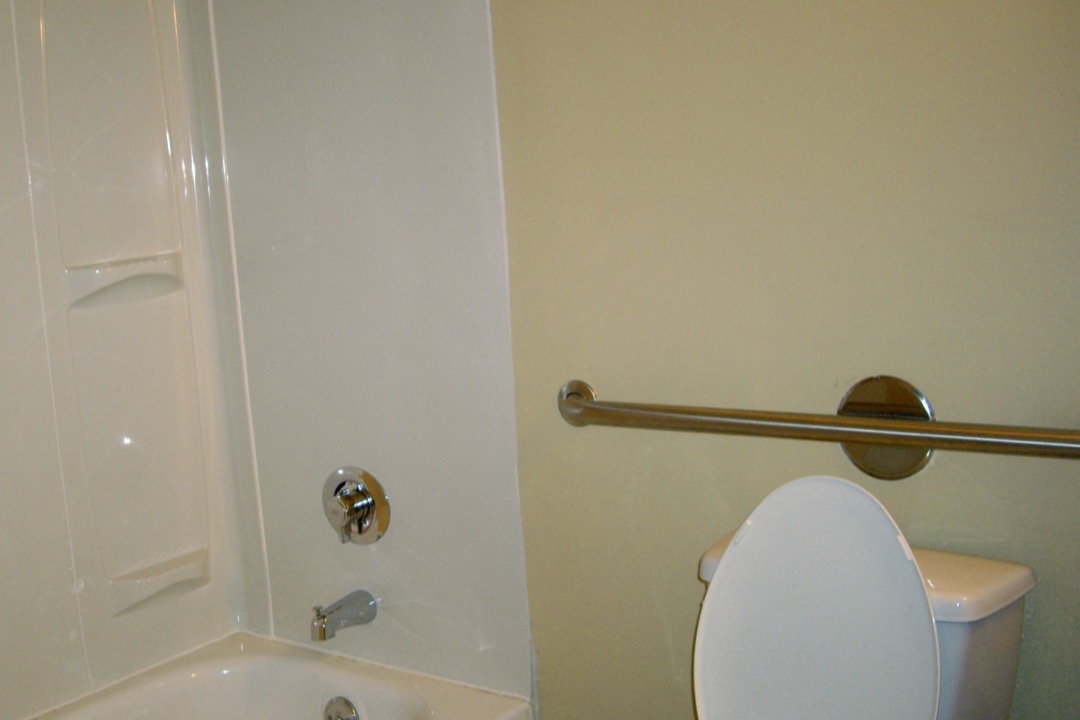
Falls are the leading cause of injury and accidental death in adults over 65, and the bathroom is the single highest-risk room in the house. The CDC reports that one in four adults aged 65 and older falls each year, contributing to roughly three million emergency department visits annually — and a disproportionate share of those falls happen during the half-dozen brief transfers we make every day in the bathroom. Stepping over a tub rim onto a wet surface, rotating from the toilet to standing, reaching for a towel while still off-balance from a shower — each is a high-risk moment, and each is the moment a properly installed grab bar would have caught the fall before it became an injury.
In this review I evaluate seven of the most popular grab bars on Amazon for 2026, drawn from three structurally distinct categories: wall-mount bars anchored to studs (the only category appropriate as a primary fall-arrest device), clamp-on tub rails (the renter-friendly compromise), and suction-cup bars (balance aids only, never load-bearing). The recommendations are calibrated for several distinct buyers — adult children planning a parent’s bathroom, seniors managing their own purchase after a near-fall, occupational therapists building a discharge equipment list, and renters who cannot drill into tile. If you are building a broader fall-prevention plan, this guide pairs naturally with our reviews of the best bath lifts for users who can no longer step over the tub rim safely, and the best medical alert systems for the moments a grab bar still cannot prevent.
Our top picks at a glance: the Moen Home Care 24-Inch Stainless Grab Bar earns Best Overall — Moen’s structural engineering, 500 lb load rating, and brushed stainless finish make it the bar I most often write into discharge plans. The Amazon Basics 36-Inch Grab Bar wins Best Budget by delivering the same 500 lb ADA rating and a 1.5-inch arthritis-friendly grip at the lowest price per inch on Amazon. For homes where aesthetics determine whether a bar gets installed at all, the Moen R8936W Glacier White Concealed-Screw bar is the upgrade pick — its hidden hardware and white finish let it disappear into the bathroom rather than announce itself as medical equipment.
| Product | Price | Buy |
|---|---|---|
| Moen Home Care 24-Inch Stainless Grab BarBest Overall | $27.29 | View on Amazon |
| Amazon Basics Bathroom Safety Grab Bar 36-InchBudget Pick | $28.99 | View on Amazon |
| Moen R8936W Home Care 36-Inch Glacier White Concealed Screw Grab BarPremium Pick | $49.24 | View on Amazon |
| Drive Medical Adjustable Bathtub Grab Bar & Safety RailRunner-Up | $35.08 | View on Amazon |
| Vaunn Medical Adjustable Bathtub Safety RailRunner-Up | $36.99 | View on Amazon |
| Reyiu Suction Grab Bars with Indicator, 2-PackRunner-Up | $35.99 | View on Amazon |
| Delta Contemporary 18-Inch Grab Bar in Matte BlackRunner-Up | $70.00 | View on Amazon |
Find the Best Grab Bar for Your Need
Jump straight to the pick that matches where and how you need support:
- Best grab bars overall — our seven picks reviewed
- Best grab bars for the shower
- Best ADA-compliant grab bars for handicap access
- Best no-drill grab bars for renters & bathtubs
How We Selected These Grab Bars
I evaluated grab bars available on Amazon with substantial verified-review pools — from several hundred ratings up to more than 12,000 — focusing on six clinically meaningful criteria: load rating in pounds, mounting type, ADA compliance against the 250 lb structural standard, grip diameter against the 1.25 to 1.5 inch ADA window, length against common installation points, and finish quality and corrosion resistance. I prioritized bars from established plumbing and medical-equipment brands (Moen, Drive Medical, Delta) and supplemented them with the strongest performers in each structural category. Each bar in this review serves a specific user profile: wall-mount permanent installations (Moen 24-inch, Amazon Basics 36-inch, Delta 18-inch, Moen R8936W white), renters and short-term solutions (Drive Medical clamp-on, Vaunn clamp-on), and ambulatory users needing a balance aid only (Reyiu suction).
Before deciding which bars to install where, it is worth scoring overall fall risk using the CDC’s 12-question Stay Independent screener — our free fall risk assessment tool runs it interactively in about 90 seconds and surfaces which household risk factors (medications, balance, vision, footwear) deserve attention alongside bathroom safety upgrades.
Best Grab Bars Overall
These are the seven grab bars that earned a place in this guide, each reviewed in full below. The Moen Home Care 24-inch stainless bar is my best overall pick for a permanent, wall-anchored installation; the use-case sections after the reviews then match a specific placement or constraint — shower, ADA/handicap compliance, or a no-drill renter-friendly mount — to the right pick from this same lineup.
Moen Home Care 24-Inch Stainless Grab Bar — Best Overall
The Moen 24-inch stainless bar is the bar I most often write into a discharge equipment list, and the reason is consistency. Moen has been engineering grab bars to ADA structural standards for decades; the 500 lb load rating is verified, the 1.25-inch grip diameter matches what an average hand can wrap fully around, and the brushed stainless finish holds up to years of high-humidity bathroom exposure without pitting or corroding. For most permanent home installations, this is the default bar — and it is the bar most occupational therapists default to as well.
The 24-inch length is the most versatile size in the standard line. It is long enough for a horizontal mount beside the toilet to support sit-to-stand transfers, short enough to fit between studs in most homes (16-inch on-center spacing), and the right length for a vertical mount at the tub or shower entry to assist the step-over transfer. The 1.25-inch grip diameter is the smaller of Moen’s two ADA-compliant options and is the right choice for users with average grip strength; users with arthritis, reduced hand spans, or post-stroke weakness benefit from the 1.5-inch alternative (the Moen R8936W below).
Honest limitations are minor. The exposed mounting flanges are visible after installation — if cosmetics matter, the concealed-screw R8936W is the better pick at a premium. The bar must be anchored to studs or solid blocking; drywall anchors alone, even toggle bolts, will not hold the rated load. And it is sold in fixed lengths only, so buyers needing 16, 18, 32, or 36 inches must select a different SKU. None of this disqualifies the bar — it is the standard against which competitors are measured for a reason.

Moen Home Care 24-Inch Stainless Grab Bar
by Moen
The standard against which other grab bars are measured — Moen's 500 lb stainless bar is ADA-compliant, durable, and the bar I most often recommend for wall-anchored installations.
Pros
- 500 lb load rating with stainless-steel construction — meets and exceeds ADA structural requirements when properly anchored to studs
- 1.25-inch grip diameter is ADA-compliant and matches the standard most occupational therapists recommend for users with average grip strength
- Brushed stainless finish hides fingerprints and resists corrosion in a high-humidity bathroom environment far better than chrome or painted bars
- 24-inch length is the most versatile size — long enough for transfer assistance at the toilet or tub but short enough to fit between studs in most homes
Cons
- Exposed mounting flanges are visible after installation — concealed-screw bars (like the Moen R8936W) are slightly more discreet
- Requires anchoring directly into wall studs or solid blocking; will not hold full rated capacity in drywall alone
- Single fixed length — buyers needing 16, 18, or 36 inches must select a different SKU
Amazon Basics Bathroom Safety Grab Bar 36-Inch — Best Budget
The Amazon Basics 36-inch grab bar is the strongest budget pick on the platform because it makes no compromise on the specifications that matter clinically. The 500 lb weight capacity matches the Moen line. The 1.5-inch grip diameter is on the larger end of the ADA window and is genuinely easier to grasp for users with arthritis or reduced grip strength than 1.25-inch bars. The brushed stainless finish hides fingerprints and resists corrosion. The price per inch is the lowest in this review, which means a family can install three or four bars throughout the bathroom — beside the toilet, inside the tub, at the entry, and at any third high-value transfer point — for less than the cost of a single premium bar from a designer line.
The 36-inch length is the right length for the two highest-value horizontal mounts: along the long wall of a tub for support during bathing, and beside a toilet for sit-to-stand transfers. The trade-off with longer bars is stud spacing — 36 inches typically spans more than two studs (at 16-inch on-center spacing), which means the installer must locate at least three studs and align the mounting flanges to two of them. This is straightforward with a stud finder but requires planning.
The honest limitation is brand maturity. Amazon Basics is a private-label line without the parts-availability and warranty network of Moen or Drive Medical. For a piece of equipment as structurally simple as a grab bar — there are no moving parts to fail — this matters less than it would for a powered medical device. The 4,000-plus verified reviews and 4.8-star aggregate rating provide meaningful real-world validation that the bar performs as specified.

Amazon Basics Bathroom Safety Grab Bar 36-Inch
by Amazon Basics
The strongest budget grab bar on Amazon — full 500 lb ADA rating and a 1.5-inch arthritis-friendly grip at a price most patients can stock multiple bars at.
Pros
- 500 lb weight capacity at the lowest price per inch in this review — matches the structural rating of premium brands at roughly half the cost
- 1.5-inch grip diameter is easier to grasp for users with arthritis, reduced grip strength, or smaller hand spans than 1.25-inch bars
- 36-inch length is ideal for horizontal mounting along a tub wall or beside a toilet for sit-to-stand transfers
- Brushed stainless finish with concealed mounting flange covers — discreet appearance once installed
Cons
- Mounting hardware is included but anchors alone are not sufficient for full load capacity — must be screwed into studs
- Amazon-direct brand without the long-term parts and warranty network of established medical-equipment manufacturers
- 36 inches requires careful stud-spacing planning; not every wall has studs at the right intervals
Moen R8936W Home Care 36-Inch Glacier White Concealed Screw Grab Bar — Upgrade Pick
The Moen R8936W exists for one specific reason that I will state plainly: in the homes that most need grab bars, the patient or family member often refuses to install one because the standard bar looks medical. The R8936W solves this problem. The concealed-screw mounting flange hides the hardware behind a snap-on cover, and the Glacier White finish blends into the white tile, tub surrounds, and fiberglass shower walls that dominate most bathrooms. Instead of drawing the eye the way a metallic bar does, it visually disappears — from across a room, most visitors cannot identify it as a grab bar at all.
The structural specifications are identical to the standard Moen line: 500 lb load rating, ADA-compliant 1.5-inch grip diameter (the larger of the two ADA options, and easier for arthritic hands), stainless-steel construction under the white finish, and Moen’s limited lifetime warranty. The 36-inch length supports the same horizontal mounting applications as the Amazon Basics bar — alongside a tub or beside a toilet. The buyer is paying a premium over the standard Moen 24-inch for the cosmetic upgrade, not for any structural improvement.
Two limitations to flag. The white coated finish can show scuffs and soap-scum buildup sooner than bare brushed stainless — the bar will need a quick wipe-down a few times per week to keep it looking like part of the bathroom rather than an afterthought. And the concealed-screw cover requires careful alignment during installation; an installer who rushes this step leaves a visible gap between the cover and the wall. Take the extra five minutes during install to align the cover before tightening final torque.

Moen R8936W Home Care 36-Inch Glacier White Concealed Screw Grab Bar
by Moen
The grab bar to buy when aesthetics matter — Moen's concealed-screw Glacier White bar delivers the same 500 lb rating as the standard line in a finish that disappears into a white bathroom instead of reading as medical equipment.
Pros
- Concealed-screw mounting flange hides the hardware behind a snap-on cover — significantly more discreet than exposed-flange bars and more acceptable to homeowners resistant to medical-looking equipment
- Glacier White finish blends into white shower surrounds and tile so the bar visually disappears instead of announcing itself as medical equipment
- 1.5-inch grip diameter is the larger of Moen's two standard sizes — easier for arthritic hands and recommended for users with reduced grip strength
- 500 lb capacity with the same ADA-compliant structural engineering as Moen's standard line, backed by Moen's limited lifetime warranty
Cons
- White coated finish can show scuffs and soap-scum buildup sooner than bare brushed stainless and needs regular wipe-downs to stay clean-looking
- Concealed-screw cover requires careful alignment during installation; sloppy installs leave a gap
- Higher price than exposed-flange Moen models reflects the cosmetic upgrade rather than additional structural strength
Drive Medical Adjustable Bathtub Grab Bar & Safety Rail — Best Clamp-On
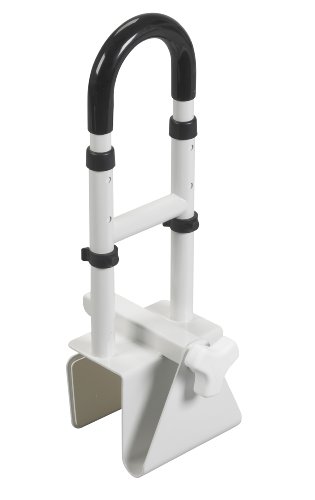
The Drive Medical adjustable tub rail is the right answer to a specific question: how does a renter, or a homeowner not yet ready to drill into tile, get a real handhold at the tub edge? The clamp-on design adjusts to fit tub walls between 3 and 7 inches thick — covering essentially every standard cast-iron, fiberglass, and acrylic tub on the market — and provides a meaningful handhold for the step-over transfer without permanent installation. For renters protected under the Fair Housing Act’s reasonable-modification provision, this rail is a credible interim solution while pursuing landlord approval for permanent bars; for homeowners awaiting a remodel, it bridges the gap.
The powder-coated steel construction is more rust-resistant than untreated steel and the rubber-padded clamp jaws protect the tub finish from scratching. The Drive Medical brand provides parts availability and a service network newer Amazon-only brands cannot match — the clamp screws and rubber pads are user-replaceable parts.
The structural trade-offs are real and worth understanding. The 300 lb weight capacity is meaningfully lower than the 500 lb wall-mount bars, and the rail is not appropriate for full body-weight catch loads — it is a transfer aid, not a fall-arrest device. The clamp-on mounting also means the rail is explicitly not ADA-compliant; ADA structural standards require permanent anchoring to building structure. And the clamp must be retorqued periodically, since hand-tightened clamps loosen with vibration over weeks of use. Users should grip and pull on the rail at the start of every bath to verify firmness — if it shifts, retorque the clamp before bathing.
Drive Medical Adjustable Bathtub Grab Bar & Safety Rail
by Drive Medical
The best clamp-on tub rail for renters and short-term solutions — Drive Medical's adjustable rail provides a real handhold without drilling into tile.
Pros
- Clamps onto the tub wall with no permanent installation — the only practical solution for renters or for users awaiting a permanent bathroom remodel
- Adjusts to fit tub walls between 3 and 7 inches thick, accommodating standard cast-iron, fiberglass, and acrylic tubs alike
- Powder-coated steel construction with rubber-padded clamp jaws that protect the tub finish from scratching during installation
- Drive Medical brand reputation provides parts availability and a service network newer Amazon-only brands cannot match
Cons
- 300 lb weight capacity is lower than wall-mount bars and not appropriate for full body-weight catch loads
- Not ADA compliant — clamp-on bars are explicitly excluded from ADA structural requirements because they are not permanently anchored
- Clamp must be retorqued periodically; users should verify firmness at the start of every bath
Vaunn Medical Adjustable Bathtub Safety Rail — Most-Tested Clamp-On
The Vaunn Medical tub safety rail occupies the same niche as the Drive Medical clamp-on at a slightly lower price point and with the largest verified review pool in the category — over 12,000 ratings on Amazon, the most-tested clamp-on tub rail on the platform. For buyers who weight aggregate review data heavily, this is the rail with the deepest real-world validation. The structural specifications match the Drive Medical: 300 lb weight capacity, tool-free hand-tightening clamp, fits standard tub walls.
The aesthetic difference is the one practical reason to choose the Vaunn over the Drive Medical. The Vaunn pairs a stainless-steel handle with a white powder-coated clamp, which coordinates more naturally with a standard white acrylic tub than the all-steel Drive Medical alternative. In an upgraded bathroom where the tub itself is white, the Vaunn rail visually disappears better. For function the two rails are interchangeable.
Honest limitations match the Drive Medical: not ADA-compliant (clamp-on bars cannot be), 1.25-inch grip diameter is fine for average hands but harder for arthritic ones than 1.5-inch wall-mount bars, and the hand-tightening knobs require periodic retorqueing. Verify firmness before each use and inspect the clamp jaws for wear every few months.

Vaunn Medical Adjustable Bathtub Safety Rail
by Vaunn
The most-reviewed clamp-on tub rail on Amazon — a renter-friendly handhold with a cleaner aesthetic than all-steel competitors.
Pros
- Largest verified review pool in the clamp-on category at over 12,000 ratings — the most-tested clamp-on tub rail on Amazon
- Stainless-steel handle paired with a white powder-coated clamp; coordinates more naturally with white acrylic tubs than the all-steel Drive Medical alternative
- Tool-free clamp adjustment with hand-tightening knobs — most users can install or remove the rail in under five minutes
- 300 lb weight capacity matches the Drive Medical clamp-on at a slightly lower price point
Cons
- Not ADA compliant; clamp-on bars are not appropriate as a primary fall-arrest device
- Hand-tightening knobs can loosen with regular use — verify firmness before each bath
- 1.25-inch grip diameter is fine for average grip strength but harder to grasp than 1.5-inch wall-mount bars for users with significant arthritis
Reyiu Suction Grab Bars with Indicator (2-Pack) — Balance Aid Only
I want to state this in the plainest possible terms: a suction-cup grab bar is a balance aid for ambulatory users, not a fall-arrest device. The occupational-therapy consensus is unambiguous on this point — suction cups release instantly under sudden body-weight loads, which is exactly the load they would face if a user actually fell. A user reaching for a suction bar mid-fall will pull it off the wall and continue falling. Do not buy or install a suction grab bar with the expectation that it will catch a fall. It will not.
That said, the Reyiu bars have legitimate uses within their actual capability envelope. As a steadying aid for an ambulatory user who needs a moment of balance support — stepping into a tub, turning under a shower, reaching for a soap dish — they work well on smooth, non-porous tile or fiberglass. Each base carries a suction indicator that confirms the seal is secure before you put weight on it, which is genuinely useful. The bars install in seconds, reposition easily, and pack well for travel or hotel stays. They also ship as a two-pack, so you can place one at the tub entry and a second on the interior wall in a single low-cost purchase.
The application limits are real. The cups will not adhere to textured tub bottoms, tile grout lines, or any porous surface. The seal degrades over hours, so the bar must be re-seated daily and inspected before every use. The 1.0-inch grip diameter is below the ADA window and harder to grasp than purpose-built bars. For permanent home installations where a fall is a real possibility, install a wall-anchored bar instead. For travel, hotel stays, or balance support for fully ambulatory users, this is the right product.

Reyiu Suction Grab Bars with Indicator, 2-Pack
by Reyiu
The only style of suction grab bar I will recommend, and only as a balance aid for ambulatory users — never as a fall-arrest device. The indicator and two-pack value make it the pick of the suction category; weight-bearing still requires a wall-mounted bar.
Pros
- Installs in seconds with no tools, drilling, or permanent modification — useful as a balance aid for ambulatory users in any smooth-tile bathroom
- Suction indicator on each base shows when the seal is secure before you put weight on it — a thoughtful pre-use safety check
- Ships as a two-pack, so you can place one at the tub entry and one on the interior wall in a single purchase
- Lightweight and removable — easy to reposition or pack for travel and hotel stays
Cons
- BALANCE AID ONLY — not weight-bearing and not safe to catch a falling user; a strong pull or full body-weight load will release the suction cups instantly
- Will not adhere to textured tub bottoms, tile grout lines, or any porous surface — works only on smooth, non-porous tile or fiberglass
- Suction degrades over hours; cups must be re-seated daily and inspected before every use
Delta Contemporary 18-Inch Grab Bar in Matte Black — Best Designer Finish
The Delta Contemporary line in matte black is the most aesthetically successful ADA-compliant grab bar I have specified for an upscale bathroom. The 450 lb load rating is only slightly below the 500 lb Moen standard — meaningful safety margin remains for any reasonable adult user. The concealed-screw mounting hides the hardware behind a clean cover, and the matte black finish coordinates with the dark-metal designer bathroom fixtures that have become the dominant look in many newer homes. Delta also offers the same bar in chrome, brushed nickel, and stainless, making it possible to match the existing bathroom hardware exactly — a meaningful win for the family member resistant to anything that looks medical.
For the right buyer, this is the bar that gets installed when a stainless one would not. I have seen multiple cases where an adult child arrives with a Moen bar in hand and the parent refuses to permit installation; the conversation pivots when a finish-matched designer bar is presented as an alternative. From a clinical standpoint, the bar that gets installed and used is infinitely more valuable than the bar that gets returned because the patient finds it ugly.
The trade-offs reflect what the buyer is paying for. The price is significantly higher than functionally equivalent stainless bars — the premium is for the finish and the brand, not for additional structural strength. The 18-inch length is shorter than ideal for some applications; verify the length matches your specific installation point before ordering. And the matte black finish requires gentler cleaning than stainless or chrome — abrasive cleaners can mar the powder coat over time, so use mild soap and water for routine maintenance.

Delta Contemporary 18-Inch Grab Bar in Matte Black
by Delta Faucet
The grab bar to buy when the user refuses to install anything that looks medical — Delta's Contemporary line in matte black is the most aesthetically successful ADA-compliant grab bar on Amazon.
Pros
- Matte black finish coordinates with modern designer bathroom fixtures and is the most aesthetically successful grab bar in this review for upscale homes
- 450 lb weight capacity with concealed-screw mounting; structural rating only slightly below the 500 lb Moen bars
- ADA-compliant 1.25-inch grip diameter and dimensional standards; safe to use as a primary fall-arrest device when anchored to studs
- Same Delta Contemporary line is also available in chrome, brushed nickel, and stainless to match existing bathroom hardware exactly
Cons
- Significantly more expensive than functionally equivalent stainless bars — buyers are paying for the finish and brand
- 18-inch length is shorter than ideal for some transfer applications; verify the length matches your installation point
- Matte black finish requires gentler cleaning than chrome — avoid abrasive cleaners that can mar the powder coat
Best Grab Bars for the Shower
The shower is where most bathroom falls happen, and it is where a permanent, stud-anchored bar earns its keep. For a wet, weight-bearing environment you want a screw-mounted stainless or coated bar rated to 300+ pounds — not a suction cup. Place a horizontal bar at 33 to 36 inches on the long wall for balance while bathing, and add a vertical bar at the entry for the step-over. These three screw-mount bars cover the full range from a workhorse stainless bar to a finish-matched designer option.
| Product | Price | Buy |
|---|---|---|
| Moen Home Care 24-Inch Stainless Grab BarBest overall shower bar A 500 lb stainless bar with a 1.25-inch grip diameter that meets ADA spec — the bar I most often anchor into a shower stud for durable, no-compromise support | $27.29 | View on Amazon |
| Amazon Basics Bathroom Safety Grab Bar 36-InchBest long budget bar 36 inches of horizontal rail at the lowest cost here, giving a taller or unsteady bather more hand-travel along the long shower wall without paying a premium | $28.99 | View on Amazon |
| Delta Contemporary 18-Inch Grab Bar in Matte BlackBest designer finish A concealed-screw matte-black bar that reads as designer hardware rather than medical equipment — the bar that actually gets installed when a stainless one would be refused | $70.00 | View on Amazon |
Best ADA-Compliant Grab Bars for Handicap Access
For wheelchair users and anyone needing code-compliant access, the ADA specification is precise: a 1.25-to-1.5-inch grip diameter, exactly 1.5 inches of clearance between the bar and the wall, and secure blocking that supports a 250-pound point load. Every bar in this section meets that standard. The decision is about geometry — a 36-inch horizontal bar for transfers and balance, a shorter bar for the entry, and a finish that the user will accept.
| Product | Price | Buy |
|---|---|---|
| Amazon Basics Bathroom Safety Grab Bar 36-InchBest 36-inch horizontal ADA bar The 36-inch length is the workhorse dimension for ADA transfers and toilet-side support, meeting grip-diameter and clearance spec at the lowest price | $28.99 | View on Amazon |
| Moen Home Care 24-Inch Stainless Grab BarBest 24-inch transfer bar A 500 lb stainless bar at a compact 24 inches for the entry wall and tight placements where a 36-inch bar will not fit — full ADA compliance in less space | $27.29 | View on Amazon |
| Delta Contemporary 18-Inch Grab Bar in Matte BlackBest ADA designer bar Meets ADA spec in a matte-black concealed-screw finish, so an accessible bathroom does not have to look institutional to be code-compliant | $70.00 | View on Amazon |
Best No-Drill Grab Bars for Renters and Bathtubs
If you cannot drill into the wall — a rental, a tiled surround you will not breach, or a temporary need after surgery — you have two honest options: a clamp-on rail that bolts onto the side of the tub, or a suction bar. The clamp-on tub rails are genuinely weight-bearing and are what I recommend for renters; suction bars are strictly a light balance aid on smooth, non-porous tile and must never be trusted to catch a fall.
| Product | Price | Buy |
|---|---|---|
| Drive Medical Adjustable Bathtub Grab Bar & Safety RailBest clamp-on tub rail Clamps onto the tub wall with no drilling and adjusts to 3-to-7-inch rims, giving renters a genuine 300 lb weight-bearing handhold for stepping into the tub | $35.08 | View on Amazon |
| Vaunn Medical Adjustable Bathtub Safety RailMost-tested clamp-on rail A widely reviewed clamp-on rail that mounts on standard tub walls tool-free — the most validated no-drill option for tub entry and exit | $36.99 | View on Amazon |
| Reyiu Suction Grab Bars with Indicator, 2-PackBest suction bar (balance only) A suction bar with a red/green seal indicator for a light balance touch on smooth tile only — never a fall-arrest handhold, and it must be re-checked before every use | $35.99 | View on Amazon |
Buyer's Guide
A grab bar is a load-bearing safety device used at the moments of highest fall risk — transferring on and off the toilet, stepping into and out of the tub, steadying yourself in a wet shower. Choosing the right bar means matching weight capacity, mounting type, length, and grip dimensions to the bathroom layout and to the physical limitations of the user.
Weight Capacity
ADA requires a minimum 250 lb load rating in any direction; well-engineered bars are rated 450 to 500 lbs to provide meaningful safety margin during sudden fall loads. Wall-mount bars in this review (Moen, Amazon Basics, Delta) carry 450 to 500 lb ratings; clamp-on tub rails carry 300 lb ratings; and suction-cup bars are explicitly not weight-bearing. Always select a bar rated for at least 1.5 times the user's body weight, and never substitute a towel bar — towel bars rated 40 to 60 lbs pull out of drywall under fall loads and have caused secondary injuries when users grab them mid-fall.
Mounting Type
Three mounting types address three distinct situations. Wall-mount bars screwed into studs or solid blocking are the only ADA-compliant option and the only appropriate choice for permanent home installations. Clamp-on tub rails (Drive Medical, Vaunn) provide a real handhold without drilling and are the right choice for renters or short-term solutions, with the trade-off of a lower 300 lb rating. Suction-cup bars are balance aids only — never load-bearing — and should be used only for steadying ambulatory users on smooth, non-porous tile. Do not confuse the three categories at purchase.
ADA Compliance
The ADA structural standards specify 33 to 36 inches mounting height above the floor, 1.25 to 1.5 inches grip diameter, 1.5 inches of clearance between the bar and the wall, and a 250 lb minimum load rating in any direction. ADA compliance matters because these dimensions are the result of decades of human-factors research on what hand sizes can grip, what mounting heights match the seated-to-standing transfer arc, and what clearances allow a hand to wrap fully around the bar. A non-compliant bar may be perfectly serviceable for some users; an ADA-compliant bar is the right default unless there is a specific reason to deviate.
Grip Texture and Slip Resistance
Brushed stainless steel bars provide modest grip-friction even when wet — better than polished chrome, which becomes very slippery with soapy water. Powder-coated bars (like the clamp-on tub rails reviewed here) provide excellent grip-friction but the coating can chip or wear over years of use. Some manufacturers offer textured-grip bars with a knurled or ribbed surface specifically for users with reduced grip strength; these are available from medical-equipment dealers but less common on Amazon. Test any bar with wet hands before relying on it daily.
Length and Orientation
Standard grab bars come in 12, 16, 18, 24, 32, 36, and 42-inch lengths. The 24-inch Moen reviewed here is the most versatile single bar — long enough for transfer assistance at the toilet or tub but short enough to fit between most stud spacings. The 36-inch bars (Amazon Basics, Moen R8936W) are right for horizontal mounting along a tub wall or beside a toilet for sit-to-stand transfers. Orient horizontally for support during seated or balance applications, vertically at entry/exit points for the step-over transfer. For a comprehensive plan, install one bar at each of the four high-value placement points: beside the toilet, inside the tub, at the tub entry, and beside the shower.
Finish and Aesthetics
The reason grab bars are under-installed in homes that need them is almost always aesthetics — older patients refuse to add anything that looks medical to their bathroom. The cosmetic upgrade options are real and worth the price for the right buyer. Brushed stainless (Moen, Amazon Basics) is the workhorse finish and hides fingerprints. Glacier white (Moen R8936W) disappears against white tile and shower surrounds, with the same concealed-screw mounting. Champagne bronze, brushed nickel, and matte black (Delta line) all coordinate with modern designer bathrooms. The Delta line in particular is the bar I recommend when patient or family resistance to the medical look is the obstacle to installation. The right finish is the one that actually gets installed.
How to Choose the Best Grab Bar
The buyer’s guide factors above cover the six most important variables. The single most actionable piece of advice I give patients is to walk through the bathroom and identify the four high-value placement points before selecting any specific product. First, beside the toilet — a horizontal bar at 33 to 36 inches above the floor on the side wall supports sit-to-stand transfers, which is the single most-repeated movement of the day. Second, inside the tub or shower — a horizontal bar on the long wall at 33 to 36 inches supports balance during bathing, and a vertical bar at the wet-floor entry assists the step-over. Third, at the tub or shower entry — a vertical bar on the side wall just outside the tub gives the user something to hold while stepping in or out. Fourth, anywhere else the user identifies as a recurring near-fall location.
Once the placement points are mapped, the bar selection follows. Wall-mount bars (Moen, Amazon Basics, Delta) are the right choice for any permanent installation; clamp-on rails (Drive Medical, Vaunn) are the right choice for tub-edge transfers in rental properties; and suction-cup bars (Reyiu) are appropriate only as supplementary balance aids for ambulatory users on smooth tile.
Condition-Specific Clinical Guidance
The right grab bar configuration depends substantially on the user’s specific medical history. A few patterns I see often enough to call out individually.
Post-hip-replacement. The orthopedic standard is no hip flexion past 90 degrees during the first six to twelve weeks post-surgery, which makes the standard sit-to-stand transfer at a low toilet genuinely high-risk. The right configuration is a raised toilet seat paired with a horizontal grab bar mounted at 33 to 36 inches above the floor on the side wall — high enough that the patient can pull themselves up without bending the hip past the surgical limit. A second bar mounted vertically in front of the toilet provides a forward pull-up handhold for users who need additional leverage.
Post-stroke. Mount the grab bar on the user’s strong (unaffected) side. Stroke patients typically have unilateral weakness, and the strong-side bar lets them pull themselves up with their preserved muscle group while the affected side stabilizes against the wall. Mounting on the affected side asks the weaker arm to do the load-bearing work — a configuration that can actually increase fall risk. Confirm with the patient’s physical therapist before installation.
Parkinson’s disease. Grab bars help with transfers but do not address the freezing-of-gait that drives many Parkinson’s falls. A grab bar near the toilet and one inside the tub are both still indicated, but they should be part of a broader plan that includes a physical therapy gait program, environmental decluttering of the bathroom, and a medical alert system the user wears in the bathroom. Grab bars are necessary but not sufficient for this population.
Arthritis or reduced grip strength. Choose 1.5-inch grip diameter bars rather than 1.25-inch — the larger diameter is meaningfully easier to grasp for arthritic hands. The Amazon Basics 36-inch and Moen R8936W reviewed here both meet this standard. A textured-grip bar (knurled or ribbed surface) is even better but typically requires sourcing from a medical-equipment dealer rather than Amazon.
Renter Rights and the Fair Housing Act
A practical note for renters who need grab bars but do not own the property. The federal Fair Housing Act requires landlords to permit reasonable modifications to a rental unit at the tenant’s expense when the modification is necessary for the tenant to fully use the dwelling — and grab bar installation is explicitly recognized as a reasonable modification. The landlord is entitled to require that the work be done professionally, that drilled holes be filled at lease end, and that the modification not damage the structure. The landlord cannot refuse the modification outright if it meets these criteria. State and local laws frequently extend these protections further.
In practice, the request is straightforward: write to the landlord, explain the medical need (a physician or occupational therapist letter is helpful), specify the proposed installation locations, and offer to use a professional installer at the tenant’s expense. Most landlords approve. For tenants whose landlords refuse or delay, the clamp-on tub rails reviewed here (Drive Medical, Vaunn) are a credible interim solution while pursuing the matter further.
Does Medicare Cover Grab Bars?
This is the most-asked question in my practice on this topic, and the short answer is that Original Medicare generally does not cover grab bars. Medicare classifies bars as home modifications rather than Durable Medical Equipment, and the classification has been consistent for years. Several alternative funding paths are worth pursuing:
- Medicare Advantage (Part C) plans increasingly cover grab bars under supplemental home-safety benefits. Coverage varies dramatically by plan and region — call your plan’s member services line and ask specifically about “home safety equipment” or “OTC supplemental benefits,” then request the response in writing.
- State Medicaid Home and Community-Based Services (HCBS) waivers cover grab bar installation in many states for users at risk of nursing-home placement. Application is through the state Medicaid office.
- VA HISA (Home Improvements and Structural Alterations) grant covers up to $6,800 for service-connected veterans for home safety modifications including grab bars and bathroom adaptations. The SAH (Specially Adapted Housing) grant covers higher amounts for certain disability ratings.
- Local Area Agencies on Aging (AAA) in most counties administer small grants for fall-prevention equipment. Find your local AAA at eldercare.acl.gov.
- FSA and HSA accounts — grab bars are eligible expenses, allowing payment with pre-tax dollars. Depending on the buyer’s marginal tax rate, this is effectively a 22 to 32 percent discount.
Always verify coverage in writing before purchase. A phone confirmation that is later contradicted in writing leaves the buyer holding the bill.
ADA Installation Specifications
For any wall-mount grab bar to function as designed, the installation must meet ADA structural requirements. The bar must be mounted between 33 and 36 inches above the finished floor — this range matches the seated-to-standing transfer arc and is the result of decades of human-factors research on what mounting heights work for the broadest range of body sizes. The grip diameter must be 1.25 to 1.5 inches; outside this window, the hand cannot wrap fully around the bar. There must be at least 1.5 inches of clearance between the bar and the wall — this ensures the hand can fully wrap rather than trapping the fingers between the bar and the wall surface.
The bar must be anchored to a wall stud (typically 2x4 or 2x6 framing) or to solid wood blocking installed during construction or remodeling. Drywall alone, even with toggle bolts or molly anchors, will not reliably hold a 250 lb pull load over time. Use a stud finder to locate framing, mark the stud centers with a pencil, and pre-drill pilot holes at the marked locations. On tile walls, use a carbide-tipped tile bit and apply blue painter’s tape over the drill point to prevent the tile from cracking — the tape distributes the bit’s initial impact and dramatically reduces tile failure. If your bathroom is being remodeled, ask the contractor to install solid plywood blocking behind the tile in advance of grab-bar installation; this provides a continuous anchor surface that is independent of stud spacing and dramatically simplifies later bar placement.
Towel Bars Are Not Grab Bars
This warning matters enough to give its own section. Standard towel bars sold in home-improvement stores are typically rated for 40 to 60 pounds of static load, mounted with drywall anchors only, and engineered for the weight of a wet bath towel — not the 250 lb fall-arrest load a grab bar must handle. When a falling user reaches for what they assume is a handhold, the towel bar pulls out of the drywall, the user continues falling, and the broken bar contributes a secondary injury (typically lacerations from the broken anchor or the bar itself).
I have seen this case in my emergency department experience more often than I would like. The fix is straightforward: remove towel bars from any high-fall-risk location in the bathroom and replace them with proper grab bars. If the household needs a towel bar for actual towels, mount it well away from the toilet, tub, and shower — at a distance the user is not tempted to grab during a balance loss. When in doubt, default to a grab bar; the towel can be hung from the grab bar without compromising its function.
What Caregivers Need to Know
A few practical notes for the caregiver — adult child, spouse, in-home aide — installing or maintaining grab bars.
Have the bars professionally installed if there is any doubt about your ability to find studs. A grab bar that pulls out of the wall under load is worse than no bar at all, because the user has built-in expectations about what the bar will catch. Most handyman services install grab bars for a modest hourly rate and verify stud anchoring properly. The cost is low; the safety upside is meaningful.
Test every bar before relying on it. After installation, grip the bar and pull hard in the direction the user will most likely load it during a fall. If the bar shifts at all, the anchoring is inadequate — fix it before allowing routine use. Repeat this test annually; mounting screws can loosen over years of use.
Match the bar’s diameter to the user’s grip. Users with arthritis or reduced grip strength benefit meaningfully from 1.5-inch grip diameter bars over 1.25-inch. The Amazon Basics 36-inch and Moen R8936W reviewed here are the right choice for these users. Watch the user actually grasp the bar — if their hand cannot fully close around it, the bar is the wrong diameter.
Combine grab bars with non-slip surfaces. A grab bar reduces fall risk during transfer; a non-slip bath mat reduces fall risk during the bath itself. Pair the bar with a textured anti-slip mat appropriate for the tub surface — this combination is more effective than either intervention alone.
Have a fall plan independent of the bar. Even a perfectly installed grab bar cannot prevent every fall. Pair the bars with a medical alert system the user wears in the bathroom, and keep a first-aid kit within reach of the tub for minor cuts and abrasions. Grab bars are necessary but not sufficient for comprehensive bathroom fall prevention.
Final Verdict
For most buyers, the Moen Home Care 24-Inch Stainless Grab Bar is the right choice. Its 500 lb load rating, ADA-compliant 1.25-inch grip, brushed stainless finish, and Moen’s decades of structural engineering make it the bar I most often write into discharge equipment plans. Install one beside the toilet, one inside the tub, and one at the tub or shower entry, and the household is meaningfully safer than it was before.
For budget-constrained buyers, the Amazon Basics 36-Inch Grab Bar delivers the same 500 lb ADA rating, a 1.5-inch arthritis-friendly grip, and a price low enough to install three or four bars throughout the bathroom for the cost of a single premium bar. For homes where aesthetics determine whether a bar gets installed at all, the Moen R8936W Glacier White Concealed-Screw bar is the upgrade pick — its hidden hardware and blend-into-the-wall white finish are often the difference between a bar being installed and a bar being refused. For renters who cannot drill into tile, the Drive Medical adjustable tub rail is the credible interim solution; for ambulatory users needing a balance aid only, the Reyiu suction bars have their place — but never as a primary fall-arrest device.
As with all medical equipment, consult your physician, occupational therapist, or physical therapist for a personalized recommendation based on the user’s specific diagnosis, mobility limitations, and bathroom layout. A grab bar is one of the highest-value safety investments a senior household can make — but only when properly selected, properly installed, and combined with the broader fall-prevention plan that includes appropriate bathing equipment, a medical alert system, and posture and core strength support for the underlying balance issues that drive most falls.
Frequently Asked Questions
Are suction grab bars safe for elderly people?
Where should grab bars be placed in the bathroom?
Does Medicare cover bathroom grab bars?
Do grab bars need to be screwed into studs?
What weight capacity grab bar do I need?
Related Articles
About the Reviewer

Dr. David Taylor, MD, PhD
Drexel University College of Medicine (MD), Indiana University School of Medicine (PhD)
Dr. David Taylor is a licensed physician and medical researcher who founded BestRatedDocs in 2016. With an MD from Drexel University and a PhD from Indiana University School of Medicine, he combines clinical expertise with a passion for health technology to provide evidence-based product recommendations. Dr. Taylor specializes in health informatics and regularly evaluates medical devices, diagnostic equipment, and therapeutic products to help healthcare professionals and patients make informed decisions.