7 Best Knee Scooters of 2026
Dr. David Taylor reviews the best knee scooters on Amazon. Compare steerable, all-terrain, and bariatric models for non-weight-bearing recovery after foot, ankle, or Achilles surgery.
Updated
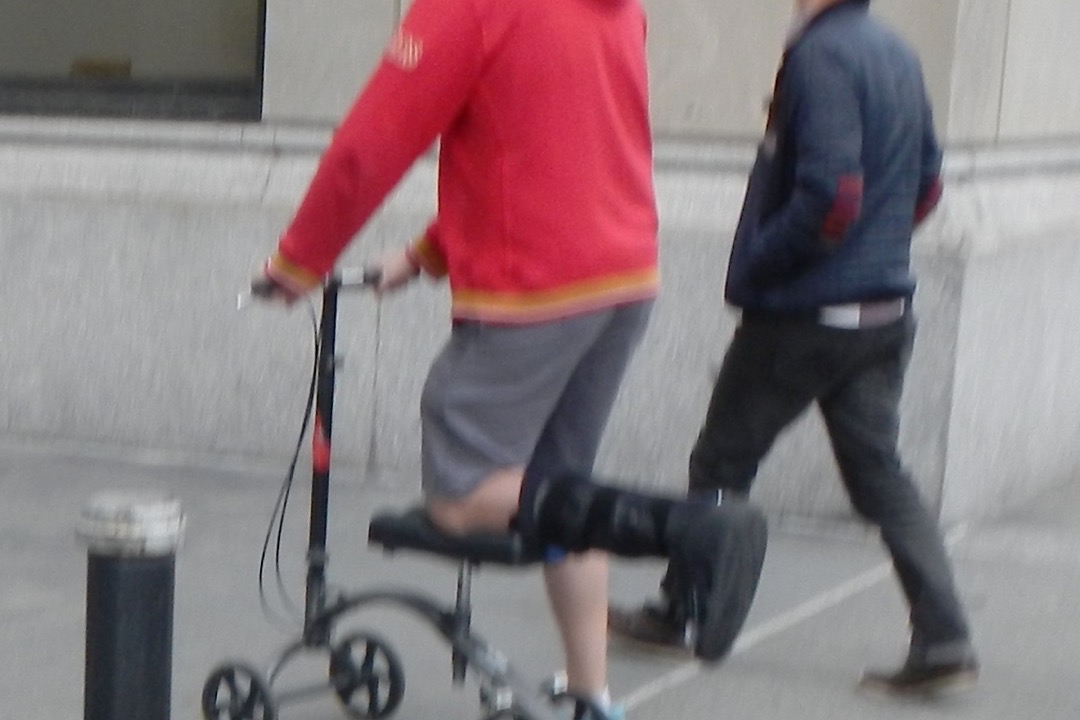
Knee scooters have become the dominant mobility solution for non-weight-bearing recovery after foot, ankle, Achilles, and lower-leg surgery, and for good reason. Compared to crutches — the historical default — knee scooters allow the patient to rest body weight on a padded platform rather than lifting it through the upper extremities on every step, dramatically reducing fatigue and removing the well-documented axillary nerve risk of poorly fitted axillary crutches. For elderly patients, overweight or bariatric patients, anyone with upper-body weakness, and any recovery extending beyond a few weeks, the knee scooter is the safer and more practical choice. The challenge is that the consumer market is crowded with models ranging from $80 budget devices to $300 hospital-grade scooters, and the differences that matter clinically are not always obvious from the product listings.
At Best Rated Docs, I take mobility-aid selection seriously because the stakes during the post-surgical period are real. I have evaluated knee scooters through the lens of post-surgical patient care — the combination of injury type, body weight, home environment, recovery duration, and outdoor mobility needs that determines which device is genuinely appropriate. For this guide, I evaluated seven knee scooters across the major categories: standard steerable, premium steerable, all-terrain pneumatic, bariatric, clinical DME-supplier, mid-priced all-terrain, and compact-space designs. If you are reading this in the days after a surgical consultation or in the evening before a procedure, the seven products in this review cover essentially every legitimate patient profile. If your situation is more complex — bilateral injuries, balance impairment, severe peripheral neuropathy, or a tibial plateau fracture — please skip directly to the “Who Should Not Use a Knee Scooter” section before purchasing anything.
A note on scope: always follow your surgeon’s specific non-weight-bearing orders. This guide is general information, not medical advice for your specific case. Final decisions on duration of use, equipment selection, and the transition to weight-bearing should involve your surgeon and physical therapist.
After analyzing product specifications, weight ratings, and thousands of verified user reviews, here are our top picks across knee scooter categories. Read on for the complete clinical evaluation of each model, the buyer’s guide, and a frank comparison of knee scooters against the crutches and iWalk alternatives.
| Product | Price | Buy |
|---|---|---|
| BlessReach Economy Steerable Knee ScooterBest Overall | $96.99 | View on Amazon |
| KneeRover Deluxe KneeCycle Steerable Knee WalkerRunner-Up | $164.99 | View on Amazon |
| KneeRover Economy Knee Scooter Steerable Knee WalkerBudget Pick | $114.99 | View on Amazon |
| KneeRover Original Steerable All-Terrain Knee ScooterPremium Pick | $279.99 | View on Amazon |
| KneeRover Steerable Knee Scooter with BasketRunner-Up | $149.99 | View on Amazon |
| Vive Mobility All-Terrain Knee Scooter WalkerRunner-Up | $219.99 | View on Amazon |
| BodyMed Knee WalkerRunner-Up | $106.24 | View on Amazon |
Find the Best Knee Scooter for Your Need
Jump straight to the pick that matches your situation:
- Overall best knee scooters — our top picks reviewed
- Best all-terrain knee scooter
- More use cases: heavy users, small spaces, basket, foldable
How We Chose These Knee Scooters
Selection began with clinical appropriateness — every product in this review is a legitimate medical device with documented weight ratings, a true steering mechanism, and dual locking brakes (or in the budget case, a single locking brake of acceptable build quality). I evaluated each product on six criteria: structural integrity and weight capacity ratings, tire type and outdoor suitability, steering responsiveness and turning radius, knee pad design and height-adjustment range, brake system safety, and the volume and quality of verified Amazon user reviews as a proxy for real-world reliability. Products were selected to represent the full spectrum of legitimate patient profiles: short recovery, long recovery, indoor-only use, mixed indoor/outdoor use, all-terrain outdoor use, bariatric requirements, compact-living environments, and clinical DME-supplier compatibility. No fabrication, no marketing claims accepted at face value — only specifications I could verify and review patterns I could read.
Best Knee Scooters Overall
These are the seven knee scooters that earned a place in this guide, each reviewed in full below. The BlessReach Economy is our best overall pick for a typical foot or ankle recovery; the use-case section and table after the reviews then match specific situations — outdoor terrain, bariatric weight, small spaces, and carrying needs — to the right scooter from this same lineup.
1. BlessReach Economy Steerable Knee Scooter — Best Overall
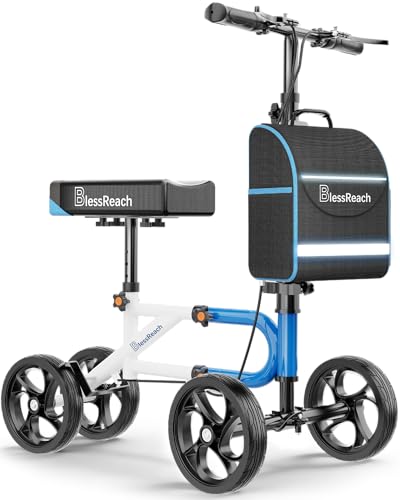
The BlessReach Economy is the default best-overall recommendation for a simple reason: it pairs the lowest price in the steerable category with one of the highest sales-rank positions among rolling walkers, and it ships from Amazon’s own fulfillment. For patients making this purchase under time pressure during the immediate pre- or post-surgical period, a high-velocity, in-stock economy scooter at the lowest entry price removes the product-lottery risk of an unfamiliar listing — you get a steerable scooter with the core safety features without overpaying or waiting on a backordered premium model.
The clinical fundamentals are sound. The steerable front wheel allows true navigation of doorways, hallways, and bathrooms — the daily-use reality of in-home recovery, where patients ambulate from bed to bathroom to kitchen to living room dozens of times per day. The dual braking system delivers the safety architecture that matters most: the ability to engage a positive parking position before every transfer to a chair, toilet, or bed, eliminating the rollaway risk that is the leading cause of in-home knee scooter falls. The padded knee platform adjusts across a range that fits most adult patients, allowing the 90-degree knee angle that distributes weight correctly through the tibia rather than concentrating it on the patella.
The honest limitations are what they are. The solid 7.5-inch tires are adequate for indoor use and smooth pavement but transmit vibration uncomfortably on cracked sidewalks, gravel, and outdoor terrain — patients who must spend significant time outdoors should select an all-terrain alternative. The 300-lb weight capacity is the standard rating but limits suitability for bariatric users; anyone within 30 lbs of this threshold should select the all-terrain model. And the omitted basket is a small but real frustration — plan to budget another $15-25 for the aftermarket accessory if you want to carry water, phone, or personal items. None of these limitations disqualifies the device for the majority of post-surgical patients, which is why it earns the best-overall designation.
BlessReach Economy Steerable Knee Scooter
by BlessReach
The best-value steerable knee scooter on Amazon — the lowest price in the steerable category plus true steerability and dual brakes make this the safe primary recommendation for a typical foot or ankle recovery.
Pros
- Lowest price in the steerable category paired with a top-ranked sales position — a high-velocity, in-stock pick that removes the product-lottery risk patients face when choosing quickly under post-surgical time pressure
- Steerable front wheel mechanism with intuitive handlebar pivot allows the scooter to navigate doorways, hallways, and tight bathroom spaces that fixed-wheel walkers cannot manage — a critical capability for in-home use after foot or ankle surgery
- Dual braking system gives a positive parking position for transfers to chairs, toilets, and beds, eliminating the rollaway risk that is the leading cause of knee scooter falls in the home environment
- Padded knee platform adjusts to match a wide range of user heights, allowing the patient to achieve the 90-degree knee angle that distributes weight correctly through the tibia rather than concentrating it on the patella
Cons
- Solid 7.5-inch tires perform well on level indoor surfaces and smooth pavement but transmit vibration noticeably on cracked sidewalks, gravel driveways, and grass — patients who must navigate outdoor terrain regularly should consider an all-terrain alternative
- Weight capacity of 300 lbs is the standard rating but limits suitability for bariatric users; anyone within 30 lbs of this threshold should select the all-terrain or bariatric model rather than risk frame deflection
- Storage basket is sold separately as an aftermarket accessory — a frustrating omission given the practical necessity of carrying personal items, water bottles, and phone during multi-week recovery
2. KneeRover Deluxe KneeCycle Steerable Knee Walker — Runner-Up
The KneeRover Deluxe is an incremental upgrade over the Economy model rather than a fundamentally different device, and that framing matters when evaluating whether the additional cost is justified for your specific situation. The improvements are real but modest: a thicker, more contoured knee pad that accommodates a CAM walking boot more comfortably; a reinforced steering column and tighter turning radius for compact-space navigation; heavier-duty wheel bearings that resist the wobble that develops in budget scooters after extended use; and an integrated factory-included basket that eliminates the aftermarket purchase the Economy model requires.
The thicker contoured knee pad is the most clinically meaningful upgrade. Patients wearing a CAM boot — which describes most patients with ankle ORIF, Lisfranc fixation, or significant ankle sprains — load the knee pad asymmetrically, with the boot adding approximately one to two inches of effective height and shifting the contact point backward toward the proximal tibia. The Deluxe pad accommodates this shift with notably better contact-point cushioning than the flat Economy pad. For patients facing an 8-week or longer recovery in a CAM boot, this comfort difference becomes meaningful over hundreds of hours of accumulated use.
The case for the Deluxe is strongest for patients with a known long recovery, those wearing a CAM boot, those living in compact spaces where the tighter turning radius matters, and those who prefer the convenience of a factory-included basket. The case for the Economy model remains stronger for short recoveries of four to six weeks, for cost-sensitive buyers, and for patients with average builds and average home layouts — the Economy delivers the same structural fundamentals at meaningfully lower cost.

KneeRover Deluxe KneeCycle Steerable Knee Walker
by KneeRover
An incremental upgrade over the BlessReach Economy — better knee pad contour, integrated basket, and tighter steering for patients who want refinement without paying all-terrain pricing.
Pros
- Upgraded contoured knee platform with thicker high-density foam padding accommodates the deeper knee flexion required when patients wear a CAM walking boot — most standard knee scooters position the boot awkwardly against the frame
- Reinforced steering column and handlebar geometry deliver more responsive turning than the Economy model, with a noticeably tighter turning radius for navigating compact apartments, RV interiors, and narrow office cubicles
- Heavy-duty wheel bearings and reinforced rear axle reduce the wheel wobble that develops in budget knee scooters after several hundred miles of use — a worthwhile durability upgrade for patients facing 8-week or longer recovery
- Includes integrated front basket from the factory, eliminating the separate aftermarket purchase that the Economy model requires for any patient who needs to carry water, phone, or personal items during ambulation
Cons
- Approximately 40 percent more expensive than the Economy model without delivering proportionate improvements for the average post-surgical patient — most users with standard recovery needs will find the Economy model entirely adequate
- Solid PU tires retain the same vibration profile as the Economy model on uneven outdoor surfaces — the upgrade does not include pneumatic tires, which is the single most impactful change for outdoor comfort
- Slightly heavier at 23 lbs makes car loading marginally more strenuous for elderly users or those with upper extremity weakness — a meaningful consideration when the scooter must be transported daily
3. KneeRover Economy Knee Scooter — Budget Pick
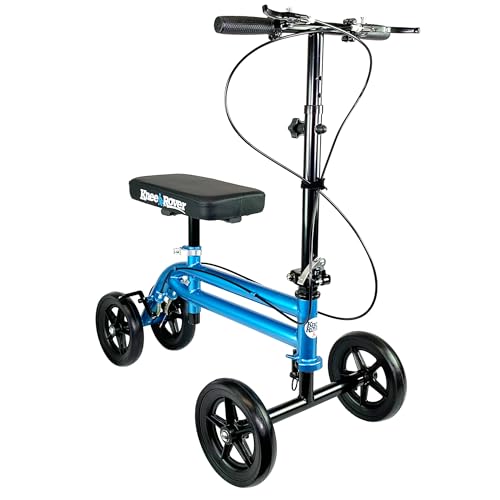
The KneeRover Economy is the right choice for a clearly defined patient profile: short recovery durations of four weeks or less, cost-sensitive buyers who prefer purchase to rental, and patients who want a true steerable knee scooter from a recognized brand at the lowest defensible price point. The structural fundamentals are intact — 300-lb weight capacity matching the more expensive KneeRover and Drive Medical models, tie-rod steerable front wheels rather than a basic pivot, and dual rear brakes with a locking handbrake that deliver the parking-position safety required for transfers. KneeRover does not cut corners on the load rating, which is the structural specification that matters most for safety.
Its real distinction is social proof: with more than 21,000 ratings at 4.5 stars, it is by a wide margin the most-reviewed budget knee walker on Amazon. That volume is the reassurance a value buyer most needs — confirmation the design holds up across thousands of real recoveries rather than a few dozen. The tool-free folding mechanism collapses in under a minute to a footprint that fits in compact-sedan trunks, supporting the daily transport needs of patients being driven to physical therapy and follow-up appointments.
The honest tradeoffs reflect the price point. The knee pad foam is thin out of the box and develops compression points after several weeks of daily use, so patients facing extended recovery should plan to add an aftermarket gel knee pad cover. No storage basket is included — it must be purchased separately. And the 7.5-inch wheels, while smooth on indoor flooring, transmit more vibration over thresholds, sidewalk cracks, and uneven outdoor terrain than the larger-wheeled all-terrain models. For patients whose recovery is short and whose budget is constrained, the KneeRover Economy delivers genuine brand-name value; for patients with extended recoveries or rougher terrain, the small additional spend on the BlessReach Economy or an all-terrain model is a better total-cost decision.
KneeRover Economy Knee Scooter Steerable Knee Walker
by KneeRover
The most-reviewed budget knee scooter on Amazon — KneeRover's Economy model delivers the brand's steerable mobility and full 300-lb capacity at the lowest price in the KneeRover line, the right choice for short recoveries and buyers who want a known brand.
Pros
- By far the most-reviewed budget knee walker on Amazon — over 21,000 ratings at 4.5 stars, the strongest social-proof signal of any value-tier unit and reassurance the design holds up across a wide range of recoveries
- Lowest-priced unit from KneeRover, the most recognized US knee-scooter brand — you get the brand's steering and brake engineering at the entry price point rather than from an unknown importer
- Standard 300-lb weight capacity matches the more expensive KneeRover and Drive Medical models — the budget positioning does not compromise the load rating, which is the structural specification that matters most for safety
- Tool-free folding mechanism collapses in under a minute to a compact footprint that fits the trunk of compact sedans and SUVs, supporting transport to physical therapy and follow-up appointments
Cons
- Knee pad foam is thin out of the box and develops compression points after several weeks of daily use — patients facing extended recovery should plan to add an aftermarket gel knee pad cover
- No storage basket is included — it must be purchased separately, unlike some competing units that bundle one
- The 7.5-inch wheels handle smooth indoor floors well but transmit more vibration over thresholds, sidewalk cracks, and uneven outdoor terrain than larger-wheeled all-terrain models
4. KneeRover Original Steerable All-Terrain Knee Scooter — Upgrade Pick
The KneeRover Original is the all-terrain gold standard, and it earns the upgrade designation because it solves three distinct problems simultaneously: outdoor terrain capability, bariatric weight rating, and lateral stability on slopes. The 12-inch pneumatic air-filled tires absorb vibration from cracked sidewalks, gravel driveways, brick pavers, and packed grass — outdoor surfaces that are functionally impassable on solid-tire scooters. For working-age patients who refuse to be housebound during a multi-week recovery, this difference between “I can leave the house” and “I cannot” is enormous.
The 350-lb reinforced weight capacity matters for two distinct populations: bariatric users above the 300-lb standard rating, and average-weight users who want a structural reserve for safety. The standard 300-lb rating is appropriate for users up to roughly 270 lbs once a margin for dynamic loading is included; users between 270 and 350 lbs should select this model rather than risk frame deflection on a standard-rated scooter. The long-wheelbase frame geometry with a wider stance also delivers notably greater lateral stability on slopes, ramps, and outdoor terrain — patients navigating driveway slopes or curb cuts will feel the difference immediately.
The honest tradeoffs are weight and footprint. At approximately 36 lbs, the KneeRover Original is substantially heavier than the 21-23 lb standard models, making sedan-trunk loading challenging for elderly users, petite caregivers, or anyone with upper extremity injuries. The longer wheelbase makes navigation of compact bathrooms and narrow hallways more cumbersome — some indoor environments are functionally too tight for this model. Pneumatic tires also require occasional pressure checks and can develop slow leaks, an unfamiliar maintenance requirement compared to maintenance-free solid tires. For the patient population that genuinely needs outdoor mobility, bariatric capacity, or both, these tradeoffs are entirely worth it.

KneeRover Original Steerable All-Terrain Knee Scooter
by KneeRover
The clinical gold standard for outdoor mobility during recovery — pneumatic tires, 350-lb capacity, and an automotive-style steering system make this the right choice for active patients and bariatric users.
Pros
- True 12-inch pneumatic air-filled tires absorb vibration from cracked sidewalks, gravel driveways, brick pavers, packed grass, and the irregular outdoor surfaces that are functionally impassable on solid-tire scooters — the single biggest comfort upgrade available in this category
- Reinforced 350-lb weight capacity accommodates bariatric users who exceed the 300-lb limit of standard knee scooters, eliminating the structural failure risk that arises when heavier patients use a standard-rated frame
- Long-wheelbase frame geometry with a wider stance provides notably greater lateral stability on slopes, ramps, and outdoor terrain — patients who must navigate driveway slopes or curb cuts will feel the difference immediately
- Heavy-duty steel frame construction tolerates the sustained outdoor use, accidental impacts, and weather exposure that destroy lighter aluminum scooters within a single recovery cycle — the durability tier appropriate for working-age patients who refuse to be housebound
Cons
- Substantially heavier at approximately 36 lbs makes car loading challenging for elderly users, petite caregivers, or anyone with upper extremity injuries — a sedan trunk lift is significantly more demanding than for the 23-lb Economy model
- Pneumatic tires require occasional pressure checks and can develop slow leaks — patients should keep a basic bike pump and patch kit on hand, an unfamiliar maintenance requirement compared to maintenance-free solid tires
- Larger overall footprint with the longer wheelbase makes navigation of compact bathrooms, narrow hallways, and crowded retail aisles more cumbersome than the standard Economy KneeRover — some indoor environments are functionally too tight for this model
5. KneeRover Steerable Knee Scooter with Basket — Runner-Up
The KneeRover Steerable with Basket occupies a useful niche directly above the Economy: patients who want the same trusted KneeRover platform but need a carrying basket included from day one rather than purchased separately. For recovery that will span several weeks, the ability to move a phone, water bottle, and medications from room to room hands-free is not a luxury — it is the difference between an independent recovery and one that requires a helper for every transfer. The basket clips on and off in seconds, and the scooter arrives almost fully assembled, which matters when the device is needed the same day as a surgery discharge.
The practical advantage over the Economy is the included basket; the practical caution is the turning radius. Like most compact steerable walkers, it requires multi-point turns in tight bathrooms and narrow hallways, so patients in small spaces should plan for the maneuver. The 7.5-inch solid wheels are tuned for indoor and smooth-pavement use — they jar on sidewalk seams, gravel, and grass, so this is not an all-terrain device. Within those limits it earns a 4.6-star average across more than 2,200 reviews, with buyers consistently describing stable, confidence-inspiring rides on hardwood and tile.
The case for selecting this model over the bare Economy is straightforward: if you know you will need to carry items during recovery, the included basket and the few extra dollars are worth it over buying the Economy plus an aftermarket basket separately. Patients who want the firmer, tie-rod precision of automotive-style steering should look instead at the KneeRover KneeCycle above; this model uses simpler basic-pivot steering. For anyone who plans extended outdoor use, neither this nor the standard Economy is the right answer — select a pneumatic-tire alternative.

KneeRover Steerable Knee Scooter with Basket
by KneeRover
The basket-included runner-up from the category's leading US brand — a practical step up from the bare-bones Economy for patients who need to carry essentials hands-free during recovery.
Pros
- Wire carrying basket is included in the box and clips on and off in seconds — a genuine practical advantage over the Economy, letting patients carry a phone, water bottle, or medications hands-free from day one
- Backed by KneeRover's standing as the category's leading US knee-scooter brand, with 2,200-plus reviews reporting stable, confidence-inspiring rides on hardwood and tile through multi-week recoveries
- Adjustable handlebar and knee platform fit users from roughly 5'3" to 6'5", and a reliable locking rear hand brake delivers the positive parking position needed for safe transfers
- Arrives almost fully assembled — most patients complete the snap-and-pin setup in under ten minutes, which matters when the device is needed immediately after surgery
Cons
- Tight indoor turning radius means compact bathrooms and narrow hallways often require multi-point turns — patients in small spaces should plan for the maneuver
- Small 7.5-inch solid wheels jar on sidewalk seams, gravel, and grass — this is an indoor and smooth-pavement device, not an all-terrain one
- Standard 300-lb weight capacity is matched by less expensive models — bariatric users should select an all-terrain or higher-capacity frame instead
6. Vive Mobility All-Terrain Knee Scooter Walker
The Vive All-Terrain is the right compromise for patients who need pneumatic-tire outdoor capability but cannot justify the premium pricing of the KneeRover Original gold-standard option. Pneumatic 9.5-inch tires deliver meaningful outdoor terrain absorption at a price meaningfully below the KneeRover Original. For patients whose outdoor mobility needs are real but not extreme — neighborhood sidewalks rather than gravel driveways, smooth parking lots rather than rough trails — this model captures most of the clinical benefit of the all-terrain category at lower cost.
The dual-pad knee platform deserves specific clinical attention. Most knee scooters use a single continuous knee pad, which is adequate for patients without complications. The dual-pad design — with separate cushioning for the patella and the proximal tibia — accommodates the asymmetric loading pattern that develops when patients wear a CAM walking boot, when residual surgical-site swelling persists, or when the injury creates pressure-tolerance differences along the lower leg. For patients combining outdoor terrain capability with a CAM boot or significant residual swelling, this dual-pad design is the clinically preferred configuration.
Vive Health’s customer service responsiveness is consistently strong across the durable medical equipment category, with proactive replacement-part shipping and easy warranty claims. This matters disproportionately during a time-sensitive recovery when problems arise. The honest limitation is the 300-lb weight capacity rather than the 350 lbs offered by the KneeRover Original — bariatric users who specifically need outdoor capability should select the KneeRover instead. The slightly limited turning radius is also a real consideration for compact-space navigation, though it is a marginal difference rather than a disqualifying one.

Vive Mobility All-Terrain Knee Scooter Walker
by Vive Health
The mid-priced all-terrain option — pneumatic tires and a dual-pad knee platform at a price meaningfully below the KneeRover Original, backed by Vive's strong customer service track record.
Pros
- Pneumatic 9.5-inch tires deliver outdoor capability at a meaningfully lower price than the KneeRover Original All-Terrain — the right compromise for patients who need outdoor mobility but cannot justify the premium pricing of the gold-standard option
- Dual-pad knee platform with separate cushioning for the patella and proximal tibia accommodates the asymmetric loading pattern that develops when patients wear a CAM walking boot or have residual swelling around the surgical site
- Vive Health's customer service responsiveness, easy warranty claims, and proactive replacement-part shipping consistently rank among the best in the durable medical equipment category — meaningful when problems arise during a time-sensitive recovery
- Lighter at 28 lbs than the KneeRover All-Terrain at 36 lbs while preserving most of the outdoor capability — a real advantage for elderly patients, petite caregivers, or anyone who must repeatedly load the scooter into a vehicle
Cons
- Standard 300-lb weight capacity is lower than the 350 lbs offered by the KneeRover Original All-Terrain — bariatric users who specifically need outdoor capability should not select this model
- Tighter turning radius is somewhat limited compared to the KneeRover steerable models — navigating compact bathrooms and tight retail aisles requires more multi-point turns
- Around 2,200 reviews, fewer than the KneeRover Deluxe and All-Terrain models at 4,000 to 5,000 each, so the social validation signal is weaker, though Vive's overall brand reputation partially compensates
7. BodyMed Knee Walker
The BodyMed is the right knee scooter for an important and often-overlooked patient profile: patients living in compact spaces where indoor maneuverability is the dominant constraint. The compact frame geometry produces the tightest turning radius in this review, which is the right primary criterion for patients in small apartments, RVs, mobile homes, or any environment where doorway clearances and corridor widths constrain mobility. For these living environments, an all-terrain scooter with a long wheelbase is functionally too large regardless of its other strengths — the scooter simply cannot complete turns in the available space.
The lightest weight in this review at approximately 21 lbs is the second meaningful advantage. Substantially easier to lift into a vehicle trunk than the 28-36 lb all-terrain models, this matters particularly for elderly users, petite caregivers, and patients with upper extremity weakness or injuries. The combination of compact footprint and low weight makes the BodyMed the most genuinely portable knee scooter in this review.
BodyMed sources from clinical rehabilitation channels, with materials specifications that approach Drive Medical and Medline standards. The brake hardware, wheel bearings, and frame welds are consistently above the budget-tier baseline, which justifies the price premium over the KneeRover Economy for buyers prioritizing build quality. The honest tradeoff is that the structural advantages — 300-lb capacity, solid tires, indoor-focused design — match the lower-priced BlessReach Economy at a higher price point. Buyers paying the BodyMed premium are paying for compactness, weight, and clinical pedigree, not for incremental safety or capability beyond the budget options. For the patients who specifically need that combination, it is the right choice.

BodyMed Knee Walker
by BodyMed
The right knee scooter for small spaces — tightest turning radius in this review, lightest weight for car loading, and clinical-grade build at a mid-tier price.
Pros
- Compact frame geometry produces the tightest turning radius in this review — the right primary criterion for patients living in small apartments, RVs, mobile homes, or any environment where indoor maneuverability is the dominant constraint
- Lightest steerable model in this review at approximately 21 lbs — substantially easier to lift into a vehicle trunk than the 28-36 lb all-terrain models, an important practical consideration for elderly users and petite caregivers
- BodyMed sources from clinical rehabilitation channels with materials specifications that approach Drive Medical and Medline standards — the brake hardware, wheel bearings, and frame welds are consistently above the budget-tier baseline
- Strong review profile with over 3,000 verified purchases reflects predictable real-world reliability — the social validation signal is meaningfully stronger than for the lower-volume newer brands in this category
Cons
- Standard 300-lb weight capacity matches lower-priced models — buyers paying the BodyMed premium are paying for compactness and clinical pedigree, not increased load rating
- Solid tires confine this scooter primarily to indoor and short-distance smooth-pavement use — outdoor terrain compatibility is limited compared to all-terrain alternatives
- Knee pad height range is narrower than the Drive Medical 796 — patients at the extremes of the height distribution should verify fit against the specifications carefully before purchase
Best All-Terrain Knee Scooter
If your recovery means leaving the house — sidewalks with cracks, gravel driveways, packed grass, brick pavers, or curb cuts — the single specification that matters is the tire. Solid-tire scooters transmit jarring vibration on anything but smooth indoor floors, while pneumatic (air-filled) tires absorb it and roll cleanly over thresholds and rough surfaces. The two all-terrain picks below both use pneumatic tires; the difference is capacity and price. The KneeRover Original is the gold standard with 12-inch tires and a 350-lb bariatric rating, while the Vive delivers most of the outdoor benefit at a lower price for standard-weight users. Pneumatic tires need an occasional pressure check, so keep a bike pump on hand.
| Product | Price | Buy |
|---|---|---|
| KneeRover Original Steerable All-Terrain Knee ScooterBest all-terrain overall 12-inch pneumatic tires + 350-lb capacity and automotive-style steering for rough terrain and bariatric users | $279.99 | View on Amazon |
| Vive Mobility All-Terrain Knee Scooter WalkerBest value all-terrain 9.5-inch pneumatic tires and a dual-pad knee platform at a price below the gold standard | $219.99 | View on Amazon |
Best Knee Scooters by Use Case
Beyond outdoor terrain, a few situations come up often during recovery. Here is the quick-decision pick for each — every one drawn from the seven scooters reviewed above, with a live Amazon link so you can check the current price:
| Product | Price | Buy |
|---|---|---|
| KneeRover Original Steerable All-Terrain Knee ScooterBest for heavy users 350-lb steel frame with the structural reserve bariatric users need | $279.99 | View on Amazon |
| BodyMed Knee WalkerBest for small spaces Tightest turning radius here for compact apartments, RVs, and narrow halls | $106.24 | View on Amazon |
| KneeRover Steerable Knee Scooter with BasketBest with basket included Wire basket included from day one to carry phone, water, and medications hands-free | $149.99 | View on Amazon |
| BodyMed Knee WalkerBest foldable for transport Lightest model at ~21 lbs and folds compact for daily car loading | $106.24 | View on Amazon |
What to Look for in a Knee Scooter: A Physician’s Buying Guide
The buyer’s guide factors above address the six core selection criteria that determine clinical appropriateness and safety. Two additional considerations bridge the gap between specification analysis and real-world use.
The first is the distinction between the acute phase and the rehabilitation phase. In the immediate post-surgical period — typically the first one to two weeks — pain, swelling, narcotic analgesia, and limited weight-bearing create specific knee scooter demands: stability over everything, simple mechanism, dual locking brakes, and the ability for a caregiver to set up the device with minimal patient input. As patients transition to longer ambulation distances and begin formal physical therapy, the requirements change: smoother outdoor ride quality, the ability to carry items in a basket, and lighter weight for transport become priorities. Patients who can anticipate this transition often find that the right initial purchase is a steerable indoor model, with an option to add aftermarket accessories or transition to a rental for the outdoor phase.
The second consideration is fall prevention as an explicit design criterion. Knee scooter falls — primarily forward over the handlebars when the front wheel hits an obstacle, or sideways during transfers — are a significant cause of secondary injury. The single most impactful safety practice is engaging the parking brake before every transfer to a chair, toilet, or bed, and verifying it holds before shifting weight. Brake levers should be tested weekly and adjusted if cable stretch develops slack. Outdoor use during winter conditions on icy or snowy surfaces should be avoided entirely — there is no all-terrain knee scooter that is safe on ice. Patients who must navigate winter outdoor conditions during recovery should plan for in-home isolation or arrange transport assistance rather than risk a fall.
Buyer's Guide
Choosing the right knee scooter depends on your injury type, body weight, the terrain you will navigate, your home layout, and the duration of your non-weight-bearing recovery. The wrong choice is not just uncomfortable — it can extend recovery, cause secondary injuries, or leave you housebound during a multi-week recovery.
Weight Capacity & Frame Material
Standard knee scooters carry a 300-lb weight capacity, which is appropriate for users up to roughly 270 lbs once a margin for dynamic loading is included. Bariatric users above 270 lbs should select a model explicitly rated to 350 lbs or higher and built on a steel rather than aluminum frame — the structural reserve is non-negotiable for safety. Steel frames are heavier and harder to lift into a vehicle but tolerate sustained outdoor use, accidental impacts, and weight near the rated capacity meaningfully better. Aluminum frames are lighter for transport but have less safety margin and develop fatigue cracks at frame welds when used near capacity. Never assume a standard 300-lb scooter is appropriate for a large-frame user without verifying the rating against actual body weight plus 10% for dynamic loading.
Tire Type: Pneumatic vs Solid
Tire type is the single most consequential decision for outdoor comfort. Pneumatic (air-filled) tires absorb vibration from cracked sidewalks, gravel driveways, brick pavers, packed grass, and the irregular outdoor surfaces that are functionally impassable on solid tires. They also roll more smoothly over door thresholds and small obstacles. The tradeoffs are weight, occasional maintenance (pressure checks, rare flat repairs), and cost. Solid PU tires are maintenance-free, lighter, and adequate for indoor use and smooth pavement — the right choice for primarily indoor recoveries. Patients who must navigate any meaningful outdoor terrain — driveways, sidewalks with cracks, parks, parking lots with curb cuts — should select pneumatic tires regardless of price.
Steering System
Genuine steerability is the difference between a usable in-home knee scooter and one that is functionally a narrow walker. Basic pivot steering, found on the cheapest models, allows only large-radius turns and cannot navigate doorways or compact bathrooms reliably. Tie-rod automotive-style steering systems, found on the KneeRover and Drive Medical models in this review, deliver responsive turning with a tight turning radius that allows the user to navigate hallways, doorframes, and household furniture without multi-point turns. For homes with corridors under 36 inches wide, compact bathrooms, or significant furniture density, true steerability is mandatory rather than optional.
Knee Pad Design & Adjustability
The knee pad must position the user with the knee bent at approximately 90 degrees, the hip relaxed, and the shoulders neutral at the handlebars. Pads with insufficient height adjustment cannot achieve this position for patients at the extremes of the height distribution. Single-pad designs are adequate for patients without a CAM boot or significant lower-leg swelling; dual-pad designs with separate cushioning for the patella and proximal tibia are clinically preferred for patients wearing a CAM walking boot, those with residual surgical-site swelling, or any patient facing an extended recovery beyond six weeks. Pad thickness and density affect comfort over multi-hour use — thin foam compresses and creates pressure points within several weeks; thicker memory foam or gel padding maintains comfort across the recovery period.
Braking System
The brake system is a primary safety feature, not a convenience. Dual locking hand brakes — one on each side of the handlebar — allow the user to engage either brake during transfer to a chair, toilet, or bed, eliminating the rollaway risk that is the leading cause of in-home knee scooter falls. A locking parking brake that holds the device stationary on a slope is essential before transfers; users should explicitly engage the parking brake before every transfer and verify it holds before shifting weight. Single-lever brake designs are acceptable for users with normal grip strength and short recovery durations but are more fatiguing for patients with arthritis or grip weakness.
Portability & Folding
If the scooter must be transported regularly to physical therapy, follow-up appointments, or work, folded dimensions and total weight matter substantially. The lightest scooters in this review are roughly 21 lbs (BodyMed), making them a manageable trunk lift for most caregivers; heavy-duty all-terrain models reach 36 lbs, which is challenging for elderly users or petite caregivers without assistance. Most knee scooters fold by collapsing the steering column forward to roughly half their full height; verify the folded dimensions against your vehicle's trunk before purchasing. For airline travel, knee scooters generally require gate-checking and may be subject to mobility-aid policies that vary by carrier — call ahead and document the policy in writing before relying on it.
Knee Scooter vs. Crutches vs. iWalk: A Clinical Decision Matrix
The three primary mobility solutions for non-weight-bearing recovery — knee scooters, crutches, and the iWalk hands-free crutch — are not interchangeable. Each is appropriate for a specific patient profile, and choosing the wrong tool creates real clinical risk.
Crutches are the right choice for younger, fit patients with strong upper extremities, normal balance, and short recovery durations of four weeks or less. Crutches are inexpensive (typically $30-50 for a standard pair), highly portable, and can navigate stairs and tight spaces that defeat knee scooters. The clinical limitations are real: full non-weight-bearing crutch ambulation is physically demanding, requires the patient to lift their entire body weight through the upper extremities on every step, and creates well-documented axillary nerve risk if the crutches are fitted too tall and weight is borne through the armpit. Patients who are deconditioned, elderly, overweight, have shoulder pathology, or have previous upper-extremity injuries should not be relying on crutches as their primary device.
The iWalk hands-free crutch is the right choice for patients with isolated below-ankle injuries, normal BMI, intact knee function, and good baseline balance. It returns daily functional independence completely — both hands free for cooking, working, and parenting — but has a five-to-ten-day learning curve and is absolutely contraindicated for above-knee injuries, hip pathology, or any condition involving knee instability. Patients with significant balance impairment, peripheral neuropathy, or anticoagulant therapy with high fall risk should not select the iWalk.
The knee scooter is the safest default choice for elderly patients, overweight or bariatric patients, anyone with upper-body weakness, and any recovery extending beyond four to six weeks. The ability to rest on the device rather than lifting body weight on every step is a substantial fatigue advantage that crutches cannot replicate. The knee scooter also tolerates patient profiles that disqualify both crutches and the iWalk: moderate balance impairment, significant hand or wrist arthritis, and recovery durations measured in months. For most patients with foot, ankle, or Achilles surgery requiring multi-week non-weight-bearing recovery, the knee scooter is the right primary device.
How Long Will You Need a Knee Scooter? Recovery Timelines by Surgery Type
Recovery duration varies substantially by procedure and surgeon protocol, but typical non-weight-bearing periods are: Achilles tendon repair, six to eight weeks, often followed by additional weeks of partial weight-bearing in a CAM boot; Jones fracture (fifth metatarsal) fixation, four to eight weeks; ankle ORIF (open reduction internal fixation), four to eight weeks of strict non-weight-bearing followed by graduated weight-bearing in a boot; Lisfranc midfoot injury fixation, six to eight weeks of strict non-weight-bearing because of the high stakes of disrupted healing; calcaneal (heel) fracture fixation, eight to twelve weeks given the severity and healing demands of these injuries; bunion or hallux valgus correction, two to six weeks depending on technique and surgeon protocol; and ankle arthrodesis (fusion), eight to twelve weeks. Tibial plateau fractures are typically a contraindication to knee scooter use because the device requires the patient to kneel directly on the injured limb — patients with these fractures need a wheelchair or specialized seated mobility device.
These ranges are general and your surgeon’s specific written non-weight-bearing order supersedes any general guidance. The order may extend or shorten based on imaging at follow-up appointments. The transition off complete non-weight-bearing typically progresses through toe-touch weight-bearing (the foot is allowed to contact the ground for balance but not to bear actual load), partial weight-bearing (specified percentage, often 25%, 50%, 75%), weight-bearing as tolerated, and full weight-bearing. Many patients use a knee scooter through the strict non-weight-bearing phase and transition to a single crutch or cane during the partial weight-bearing phase. During the partial-weight-bearing phase, an ankle brace or supportive walking boot is typically prescribed to protect the healing structures while allowing graduated load.
As a practical purchasing decision, most patients use a knee scooter for four to ten weeks total, including the partial-weight-bearing transition period. Patients facing recoveries on the longer end of this range should select a model with a thicker, more comfortable knee pad and pneumatic tires for outdoor mobility — the comfort and capability features become more meaningful with extended use.
Should You Rent or Buy?
Rental prices for knee scooters from durable medical equipment suppliers typically run $50-75 per month plus delivery and pickup fees. Purchase prices range from $100 for a budget steerable model to $300 for a premium all-terrain bariatric scooter. The break-even math is straightforward: for recoveries of fewer than 6 weeks, rental is generally less expensive after accounting for delivery fees; for recoveries of 6-10 weeks, the choice is roughly a wash and depends on whether you value the lower upfront cost (rental) or the option to keep the device for future use (purchase); for recoveries beyond 10 weeks, purchase is meaningfully less expensive and is the clear right choice.
Three additional factors weigh in favor of purchase even for shorter recoveries. First, owning the device eliminates the time pressure of return logistics — patients who heal slightly slower than expected or who develop complications do not face additional rental fees or scrambling to extend the rental. Second, knee scooter ownership is occasionally needed in the future for the patient or another family member; orthopedic injuries are common across the lifespan, and a stored knee scooter is a useful household asset. Third, used knee scooters retain meaningful resale value on Facebook Marketplace, Craigslist, or local consignment channels — patients who own the device can typically recover $50-80 of the purchase price by selling at the end of recovery, which improves the rent-vs-buy math meaningfully.
Patients who need a scooter for less than two weeks (rare in clinical practice but possible for minor procedures) should rent rather than buy. Patients facing any standard post-surgical recovery of 4 weeks or more should generally purchase. Patients who can find a used scooter from a friend, family member, or local marketplace at $50-80 should take that option regardless of recovery duration — the cost-benefit math favors used equipment overwhelmingly. For patients pursuing the crutches route as a complement during the partial-weight-bearing phase, those are inexpensive enough that purchase is essentially always the right choice.
Does Insurance or Medicare Cover a Knee Scooter?
Knee scooters are classified under HCPCS code E0990 as a covered durable medical equipment item under Medicare Part B, which generally pays 80% of the Medicare-approved amount after the annual Part B deductible. The practical reality is more complicated. Many DME suppliers do not accept Medicare assignment for knee scooters because the reimbursement rate is below their cost, which means patients are often quoted out-of-pocket prices despite theoretical coverage. Patients who specifically want to pursue insurance coverage should: obtain a written physician order documenting medical necessity (typically a non-weight-bearing order following foot, ankle, or lower-leg surgery); ensure the order is issued and dated before the equipment is delivered (Medicare requires written orders prior to delivery for DME); verify the supplier is Medicare-enrolled and accepts assignment for E0990 specifically; and request a written cost estimate before equipment delivery.
Knee scooters are also FSA and HSA eligible without a separate prescription in most plans, which is often the most practical financing route. Patients with FSA balances expiring at year-end may find this is an efficient use of remaining funds. Private insurance coverage is more variable than Medicare and depends on plan-specific DME riders — patients with commercial insurance should call the member services line, request the specific DME benefit terms for HCPCS E0990, and document the response before purchasing.
For most patients, the practical reality is that purchasing a knee scooter directly on Amazon at $100 to $300 is faster and less expensive than navigating the insurance approval process, particularly given that the entire recovery duration is often shorter than the time required to obtain DME approval through traditional channels. The insurance route makes sense primarily for patients with extended recoveries, patients who already have an established relationship with a DME supplier, and patients who specifically need the Drive Medical 796 model for plan compatibility.
Who Should Not Use a Knee Scooter
Several patient profiles are absolute contraindications to knee scooter use, and recognizing these scenarios prevents serious injury. The clinical contraindications include: proximal tibia fractures including tibial plateau fractures, where the device requires the patient to kneel directly on the injured limb and bearing weight through the proximal tibia is precisely what the patient must avoid; bilateral lower-extremity injuries, where the user cannot safely bear weight on either leg and therefore cannot operate the scooter; severe peripheral neuropathy, where the patient cannot reliably sense knee pad pressure and may develop pressure injuries without awareness; significant balance impairment of any cause, where the upright dynamic posture required to operate a knee scooter creates an unacceptable fall risk; anticoagulant therapy combined with high baseline fall risk, where any fall could produce a major bleeding complication; and severe upper extremity weakness or injury that prevents the patient from controlling the handlebars and brakes.
For patients with bilateral injuries or significant balance impairment, alternatives to discuss with the surgical and rehabilitation team include manual or power wheelchairs, hospital beds with mobility transfer assistance, and seated mobility devices designed for bilateral non-weight-bearing recovery. Patients with stable balance who simply lack the upper-body strength for crutches but can tolerate the upright posture of a knee scooter often benefit from the comparison framework in our rollator vs. walker guide, which addresses several of the alternative seated and supported-standing devices used during complex recoveries.
The decision tree is simple: if any of the absolute contraindications apply, do not use a knee scooter. Discuss alternative mobility devices with your surgeon and physical therapist before discharge from the surgical facility — substituting a knee scooter for a clinically appropriate device because of cost or convenience is precisely the kind of decision that produces secondary injuries and prolonged recoveries. Patients with knee pathology on the contralateral (non-injured) side that limits weight-bearing on either knee are also poor candidates and should explore alternatives.
Final Verdict
The BlessReach Economy Steerable Knee Scooter is my best-overall recommendation for patients across the broadest range of typical post-surgical recoveries. The combination of strong sales-rank velocity, true steerability, dual brakes, and the lowest price point in the steerable category makes this the safe primary recommendation for most patients with foot, ankle, or Achilles surgery. The clinical fundamentals are sound, the listing ships from Amazon’s own fulfillment, and the price point makes it an easy decision under time pressure during the immediate pre- or post-surgical period.
For cost-sensitive buyers with short recoveries of four weeks or less, the KneeRover Economy Knee Scooter delivers true steerability and a 300-lb weight capacity at the lowest defensible price point in this review — backed by the largest review base of any budget unit on Amazon, the right choice for patients whose budget genuinely matters and whose recovery is brief. For patients who need outdoor terrain capability, bariatric weight rating up to 350 lbs, or both, the KneeRover Original Steerable All-Terrain is the gold-standard upgrade and is worth the meaningful price premium for the patient population that genuinely needs outdoor mobility during recovery.
As always, knee scooter selection should be guided by your specific surgery, your home environment, your body weight and physical capabilities, and your surgeon’s specific non-weight-bearing orders. Self-selection without clinical guidance is generally fine for the routine post-surgical patient, but anyone with the contraindications discussed above should involve their surgeon and physical therapist in the device selection before purchase. A 30-minute consultation that leads to the right device is a much better investment than a $200 device that turns out to be inappropriate for your specific situation.
Frequently Asked Questions
Does Medicare or insurance cover a knee scooter?
Knee scooter vs. crutches vs. iWalk: which should I choose?
How long will I need a knee scooter after foot or ankle surgery?
Can I use a knee scooter with a walking boot (CAM boot)?
What are the risks and disadvantages of a knee scooter?
Related Articles
About the Reviewer

Dr. David Taylor, MD, PhD
Drexel University College of Medicine (MD), Indiana University School of Medicine (PhD)
Dr. David Taylor is a licensed physician and medical researcher who founded BestRatedDocs in 2016. With an MD from Drexel University and a PhD from Indiana University School of Medicine, he combines clinical expertise with a passion for health technology to provide evidence-based product recommendations. Dr. Taylor specializes in health informatics and regularly evaluates medical devices, diagnostic equipment, and therapeutic products to help healthcare professionals and patients make informed decisions.