Manual vs Electric Wheelchair: An MD's Clinical Guide to Choosing the Right Chair
Dr. David Taylor compares manual and electric wheelchairs — who benefits from each, cost and Medicare coverage, airline battery rules, shoulder injury risk, and the power-assist middle option.
Updated
As a physician who has counseled hundreds of patients through the transition from walking to wheeled mobility, I can tell you that the manual-versus-electric decision is rarely about preference. It is a clinical prescription that interacts with shoulder anatomy, cognitive function, cardiovascular endurance, progressive disease trajectory, and the realities of housing, transportation, and insurance. Getting it wrong — choosing a chair that undermatches or overmatches the patient’s actual capacity — produces years of frustration, accumulated injuries, and in too many cases a slow withdrawal from community life. Getting it right preserves independence and function for decades.
This guide applies the same decision framework I use in practice. We will cover how the two chair types actually differ mechanically, who benefits from each, the shoulder-injury data that most consumer guides omit, the power-assist middle path that almost nobody mentions, the real cost and Medicare picture, and the airline-travel rules that matter more than readers expect. If you are still earlier in the mobility-aid progression and evaluating walking aids rather than wheelchairs, our guide on rollators versus walkers covers that decision in equivalent depth.
How Manual and Electric Wheelchairs Actually Differ
The two chair categories share the word “wheelchair” but are otherwise very different devices designed for different bodies and different mobility needs.
A manual wheelchair is a user-propelled or caregiver-pushed frame, most commonly with two large rear wheels the user grips and pushes, two smaller front caster wheels, footrests, and either a folding or rigid frame. Standard manual chairs weigh 28 to 40 pounds; lightweight models 15 to 25 pounds; ultralight active rigid-frame chairs as little as 11 to 14 pounds. Most fold compactly enough to fit in a car trunk without mechanical assistance.
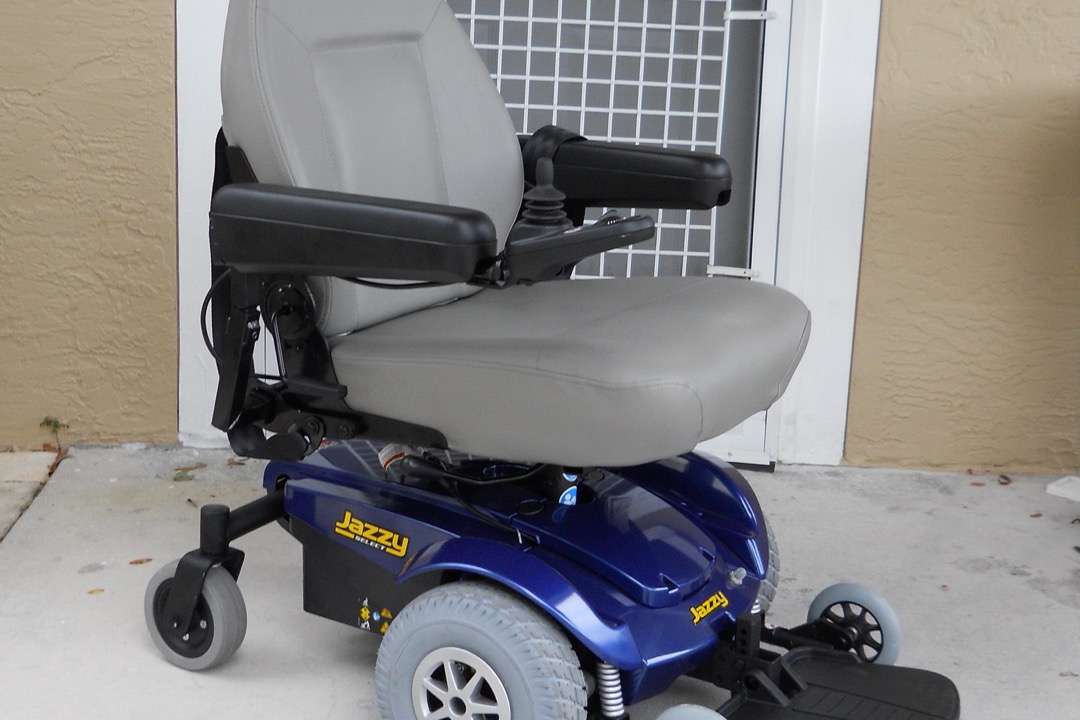
An electric (power) wheelchair replaces user propulsion with an electric motor driving the rear or center wheels under battery power. The standard control input is a joystick mounted on the armrest, though alternative controls — sip-and-puff, head arrays, chin controls — are available for patients without reliable hand function. Power chairs typically weigh 150 to 300 pounds, travel 3 to 5 mph, and provide 8 to 20 miles per charge depending on battery and drive configuration. Most do not fold; transport requires a wheelchair-accessible vehicle or a lift-equipped van.
Manual Wheelchair Subtypes
There are three clinically distinct types of manual chair, and choosing the right one matters more than most patients realize.
A self-propelled manual wheelchair is the traditional design, with large 22- or 24-inch rear wheels and handrims the user grips to propel and turn. Most Medicare-covered manual chairs are in this category. Frame weights range from 35 to 45 pounds in standard models.
A transport or companion chair has small 8- to 12-inch rear wheels and is designed exclusively for caregiver propulsion — the user cannot self-propel. These chairs are lighter (typically 15 to 25 pounds) and fold flat, making them ideal for occasional transport use. They are the appropriate choice for patients who cannot self-propel due to cognitive impairment, severe upper-extremity weakness, or limited mobility needs where caregiver assistance is consistently available. Our roundup of the best wheelchairs includes transport chair options as well as self-propelled models.
An ultralight or active-user rigid-frame wheelchair is designed for full-time manual wheelchair users who need maximum propulsion efficiency. These chairs weigh 11 to 18 pounds, use rigid non-folding frames for better energy transfer, and are typically custom-fitted to body dimensions. They are prescribed primarily for younger patients with stable conditions (spinal cord injury, amputation) who will rely on manual propulsion for decades. Our best lightweight wheelchairs guide covers the folding ultralights that most patients can benefit from without the custom-fit requirement.
Power Wheelchair Drive Configurations
Power wheelchairs come in three drive configurations that dramatically affect how the chair handles — and this is a decision most buyers never think to ask about.
Rear-wheel drive (RWD) is the traditional configuration, with drive wheels at the back and casters at the front. RWD chairs track straight at speed, climb moderate inclines well, and feel stable outdoors. The trade-off is a larger turning radius, which can be limiting indoors in small bathrooms or narrow hallways.
Mid-wheel drive (MWD) places the drive wheels under the seat’s center of gravity, with small casters at both front and rear. MWD chairs offer the tightest turning radius — often pivoting within their own footprint — which makes them the best choice for cramped indoor environments. The drawback is reduced performance on grass, gravel, or sloped terrain, where the front or rear casters can catch.
Front-wheel drive (FWD) places the drive wheels at the front of the chair, which creates a lower seat height and strong obstacle-climbing ability. FWD chairs are well-suited to outdoor use and to patients who need the lowest seat-to-floor height (for transfers from a bed or couch). They can feel less intuitive to steer at speed because the drive wheels are ahead of the user.
If your home is small and your primary need is indoor navigation, MWD is usually best. If you split time between indoor and outdoor and need range, RWD is typically the right answer. If you have transfer challenges or significant outdoor use, FWD is worth evaluating. Most electric wheelchair options we review are RWD or MWD.
The Case for a Manual Wheelchair
Manual wheelchairs remain the right answer for a large population of users, and the reasons matter beyond cost.
Portability. A folding manual chair collapses in under ten seconds and fits in the trunk of a standard sedan. No vehicle modification, no lift, no ramp van. For patients who ride in cars driven by family, who take rideshare, who travel frequently, or who move between multiple homes or care settings, this is often the deciding factor. Power chairs require wheelchair-accessible transportation, which can cost $20,000 to $50,000 to retrofit and adds a layer of logistical complexity to every trip.
Cost. A basic self-propelled manual wheelchair can be purchased for $150 to $600 retail; a quality mid-range folding manual chair runs $600 to $1,500; an ultralight custom-configured manual chair $2,500 to $4,500. A basic power chair starts around $1,500 to $3,000, a Group 2 standard power chair $3,500 to $8,000, and a Group 3 or Group 4 rehab power chair $10,000 to $30,000 or more for complex seating configurations. Replacement batteries add $200 to $600 every one to two years for power chairs; manual chairs have no equivalent recurring cost.
Maintenance. Manual chairs require periodic tire inflation, brake adjustment, and caster bearing service — mechanically simple and inexpensive. Power chairs add motors, batteries, controllers, wiring, joystick electronics, and charger systems to the maintenance list. Annual service costs for power chairs typically run $300 to $800; manual chairs $50 to $150.
Upper-body conditioning. For patients with good arm function and a stable condition, manual propulsion provides cardiovascular and upper-body strength training that power chair use does not. This is a genuine clinical benefit for otherwise healthy patients who use a wheelchair for lower-limb disability (lower-limb amputation, completed spinal cord injury with preserved upper function).
Best candidates. Patients with good bilateral upper-extremity strength, no shoulder pathology, stable or slowly progressing condition, modest daily distances (under 1 to 2 miles), frequent car travel, strong caregiver support for inclines or long distances, and a home environment where manual propulsion is feasible indoors. For post-surgical or short-term recovery use, manual chairs are almost always the right answer. Patients with borderline walking capacity who are still ambulating most of the time should also consider whether a rollator or walker is a more appropriate starting device.
The Case for an Electric Wheelchair
The clinical case for a power wheelchair rests primarily on energy conservation, functional range, and positioning capabilities — not on the fact that the user “can’t push themselves,” which is a surface-level and often misleading framing.
Energy conservation. The most important clinical argument for a power chair in conditions like heart failure, COPD, pulmonary fibrosis, chronic fatigue syndromes, post-polio syndrome, cardiac cachexia, and advanced cancer is that manual propulsion consumes energy the patient does not have. A power chair does not just increase mobility range — it preserves the limited energy budget for bathing, meal preparation, social interaction, and rehabilitation activities that would otherwise be crowded out by the exertion of propulsion.
Functional range. A power chair with 12 to 20 miles of single-charge range lets a patient navigate a full day — medical appointments, errands, community activities — without the range limitation that fatigue imposes on manual users. For working-age patients with progressive conditions or retirees who want to remain socially engaged, this difference determines whether they stay connected to their community.
Terrain and inclines. Power chairs handle inclines, ramps, and uneven surfaces that manual propulsion cannot. Ramps that are code-compliant for wheelchair access are still genuinely difficult to push up, particularly when the user is fatigued or has shoulder issues. Power chairs make these transitions automatic.
Powered positioning. Mid-range and high-end power chairs offer powered tilt, recline, leg elevation, and seat elevation. These are not luxury features — they are clinically important for pressure injury prevention (regular weight shifts), orthostatic hypotension management (tilt to dump fluid into the central circulation), edema control (leg elevation), and functional reach at kitchen counters and bathroom sinks (seat elevation). Manual chairs can only provide these with manual caregiver-operated mechanisms, which are rarely used consistently.
Alternative controls. For patients with severe motor impairment — late-stage ALS, high-level spinal cord injury, severe cerebral palsy — power chairs can be driven by sip-and-puff pneumatic controls, head-array switches, chin joysticks, or eye-gaze systems. There is no manual chair equivalent. For these patients, power mobility is the difference between independent movement and complete dependence.
Best candidates. Patients with weak, painful, or absent upper-extremity function; chronic cardiopulmonary or fatigue conditions; progressive neurological disease; pressure injury history or active prevention needs; cognitive status sufficient to operate the chair safely; transportation infrastructure (ramp van, home access) to accommodate a power chair; and willingness to navigate the more complex Medicare authorization process.
The Shoulder Injury Factor — The Long-Term Consequence Most Guides Skip
Here is the data point that changes many decisions when I share it with patients: more than 70 percent of long-term manual wheelchair users develop rotator cuff pathology over time. This is not my estimate — it is documented in the Paralyzed Veterans of America Clinical Practice Guidelines on preservation of upper limb function following spinal cord injury, which synthesizes decades of research on shoulder injury in manual wheelchair users.
The mechanism is repetitive overhead loading. Each manual propulsion stroke requires the shoulder to internally rotate and adduct against resistance, and at the end of each stroke the arm reaches back and up to recover for the next push. Over thousands of strokes per day and years of daily use, this cumulative loading produces rotator cuff tendinopathy, eventual tears, biceps tendinopathy, shoulder impingement syndromes, and in advanced cases full-thickness rotator cuff rupture. Wrist injuries — carpal tunnel syndrome especially — are similarly common from handrim propulsion mechanics.
The consequence of these injuries is not just pain. Once a manual wheelchair user develops a significant rotator cuff tear, they often cannot complete basic transfers (from chair to bed, chair to toilet, chair to car), which cascades into dependence, institutionalization, and loss of independence that a power chair would have prevented. Rotator cuff repair surgery costs $20,000 to $50,000 or more including rehabilitation, and outcomes in wheelchair users are often poorer than in ambulatory patients because the postoperative immobilization is extremely difficult to maintain.
Framed as an economic decision, a Group 2 power wheelchair at $5,000 to $10,000 — particularly if partially covered by Medicare — is often less expensive than the downstream cost of shoulder surgery and the functional decline that follows. Framed as a clinical decision, preserving shoulder function by transitioning to power mobility earlier is the single most important long-horizon consideration for patients who will use a wheelchair for decades.
This consideration does not apply equally to all manual chair users. Patients using a manual chair for short-term post-surgical recovery, occasional use, or for a disability that will resolve do not accumulate the same risk. The shoulder injury concern is most relevant for full-time manual wheelchair users who will be propelling for many years. If you are in that population and you are starting to notice shoulder or elbow pain, do not ignore it — the trajectory from mild discomfort to rotator cuff pathology is well-trodden and largely preventable.
The Middle Option Most Guides Ignore — Power-Assist Add-Ons
Between the folding simplicity of a manual chair and the infrastructure demands of a full power chair sits a category that few consumer guides discuss: power-assist devices that attach to a manual wheelchair frame and add motorized propulsion without converting the chair to a power chair.
The two main configurations are drive units and power-assist wheels. A drive unit, such as the Permobil SmartDrive MX2+, is a motorized wheel roughly the size of a paint can that mounts to the back of the manual wheelchair frame. The user activates it by tapping the chair’s pushrim twice; the motor then propels the chair at a user-set speed until the user taps again to stop. The SmartDrive weighs about 12.5 pounds, detaches in seconds for car transport, and preserves the manual chair’s folding portability. Typical costs are $5,000 to $8,000.
Power-assist wheels, such as the Alber e-motion M25 or the Quickie Xtender, replace the standard 24-inch rear wheels with motorized equivalents that add proportional assist to each manual push. The user still pushes the rim as they would with a conventional wheel, but each push moves the chair farther with less effort. These wheels are heavier than standard wheels but maintain the general feel of manual propulsion. Costs are in a similar $5,000 to $8,000 range.
The clinical value of power-assist is that it preserves everything good about a manual chair — portability, car transportability, maneuverability, independence — while providing the energy conservation and shoulder protection that power chairs deliver. For three specific populations, this is often the correct answer:
- Patients with early-stage upper-extremity fatigue or emerging shoulder pain who want to preserve manual chair use but need assistance for inclines or long distances.
- Patients with progressive conditions (multiple sclerosis, muscular dystrophy, Parkinson’s disease) who currently propel independently but are likely to need more support as the disease advances.
- Patients whose caregivers cannot safely push on inclines, ramps, or across long distances.
Medicare covers power-assist devices under HCPCS codes K0010 through K0013 when medical necessity is documented, though prior authorization is typically required and the approval process parallels that for power wheelchairs. The documentation must show why a standard manual chair is insufficient and why a full power chair is not yet needed.
The fact that competitor guides ignore this category leaves many patients unaware that it exists. If you are sitting in the difficult middle ground between “still mostly propelling fine” and “need a full power chair,” ask your physiatrist or seating specialist about power-assist specifically.
Cost, Insurance, and Medicare Coverage
Both chair categories qualify for Medicare Part B coverage as Durable Medical Equipment (DME), but the coverage processes differ substantially.
Manual Wheelchair Coverage
A manual wheelchair is typically the most straightforward DME claim in the mobility category. The requirements are:
- A written prescription from a Medicare-enrolled physician documenting medical necessity for use inside the home.
- Purchase through a Medicare-enrolled DME supplier (purchases from non-enrolled retailers forfeit Medicare coverage).
- After the annual Part B deductible, Medicare pays 80 percent of the approved amount; the patient pays 20 percent.
Medicare pays for manual wheelchairs at one of several HCPCS code tiers (K0001 through K0005), with K0001 being the standard weight chair, K0003 the lightweight chair (under 34 pounds), K0004 the high-strength lightweight chair (under 30 pounds with higher weight capacity), and K0005 the ultralight chair (under 30 pounds, adjustable axle, custom fit) for full-time manual users. Documentation requirements increase at each tier — ultralights (K0005) in particular require justification that the patient is a full-time manual wheelchair user for whom propulsion efficiency is clinically necessary.
Power Wheelchair Coverage
Power wheelchair coverage is materially harder to obtain and requires all of the manual chair requirements plus:
- Face-to-face evaluation with the prescribing physician within six months of the prescription.
- Specialty evaluation by a physical or occupational therapist (or other eligible specialist) that documents the patient’s mobility limitations and the specific reasons a manual wheelchair cannot meet their needs inside the home.
- Prior authorization before the supplier can deliver the chair (mandatory for most power chairs since 2020).
The most common reason for denial is insufficient documentation that the patient cannot use a manual wheelchair inside the home for mobility-related activities of daily living — reaching the bathroom, the kitchen, the bedroom. The documentation must be specific and must tie each limitation to the medical condition. “Weakness” is not sufficient; “cannot self-propel from bed to bathroom (15 feet) without rest due to NYHA Class III heart failure, causing 2 falls in past 6 months” is.
Group 1 power chairs are basic models covered for essentially indoor use. Group 2 chairs add better performance, terrain capability, and some positioning options. Group 3 chairs provide programmable electronics and alternative controls. Group 4 and higher-tier chairs are specialty rehab chairs for complex medical needs. Coverage and documentation requirements escalate with each group.
Medicare Advantage Plans
Medicare Advantage (Part C) plans are required to cover the same DME categories as Original Medicare but set their own prior-authorization rules and supplier networks. In practice, Advantage plan approvals for power wheelchairs are often slower and more restrictive than Original Medicare, though specific plans vary widely. If you are in a Medicare Advantage plan and anticipating a power chair evaluation, call the member services line and ask specifically what documentation they require and which DME suppliers are in-network. The extra planning up front saves significant delay.
Supplemental Insurance
Medigap supplemental plans (including Plans G and N, the most common current enrollments) cover the 20 percent coinsurance that Original Medicare leaves to the patient, making out-of-pocket costs for covered equipment close to zero. Medicare Advantage plans typically have copays or coinsurance that you pay directly; these vary by plan.
Traveling by Air — What the FAA Actually Requires
Air travel with a power wheelchair follows specific rules under the Air Carrier Access Act and FAA battery regulations. No consumer guide I reviewed covered these concretely, yet they determine whether your travel plans are feasible.
Battery classification. Non-spillable sealed lead-acid batteries (found in most entry-level and mid-range power chairs) may travel installed in the chair as checked baggage, with terminals protected against short-circuit and the battery secured to the frame. Lithium-ion batteries up to 300 watt-hours (Wh) may also remain installed; above 300 Wh requires airline approval and is sometimes refused. Most consumer and mid-range power chair batteries fall below the 300 Wh threshold, but confirm the rating on your chair’s battery label before booking.
Spare batteries. Removable lithium-ion batteries, when carried separately, must be transported in the aircraft cabin — never checked. Terminals must be protected (original packaging or taped terminals), and most airlines require the spare to be carried in a clear bag for inspection. Non-spillable lead-acid batteries generally cannot be carried in the cabin because of weight and acid-containment requirements.
Advance notification. Call the airline at least 48 hours before your flight and declare the power wheelchair. Provide battery type and Wh rating. Major U.S. airlines maintain dedicated accessibility lines specifically for this coordination. Failure to notify in advance can result in refusal at the gate — this is not theoretical; it happens regularly.
Airport navigation. You remain in your power chair until the aircraft door, where you transfer to an aircraft-specific aisle chair to reach your seat. The airline is responsible for stowing and returning your chair. Document the chair’s condition (including photos) before checking it; damage during handling is common and the airline’s liability is capped by the Air Carrier Access Act — but claims succeed much more often when you have documentation.
The manual wheelchair alternative. A manual wheelchair travels with none of this complexity. It is checked (often gate-checked) at no charge, with no battery rules, no advance notification required beyond wheelchair-assistance booking, and standardized handling procedures. For patients who travel by air frequently, the simpler manual-chair logistics can be a genuine decision factor — which is a consideration I rarely see addressed elsewhere.
The Decision Matrix
The table below is the clinical decision framework I use with patients. Run your situation across each row; the choice that wins more rows is typically correct.
| Factor | Favors Manual | Favors Power (or Power-Assist) |
|---|---|---|
| Upper-body strength | Good bilateral strength, no shoulder pain | Weak, painful, or impaired upper extremities |
| Condition trajectory | Stable or improving | Progressive (MS, ALS, MD, late-stage arthritis) |
| Daily distance | Short distances, mostly indoor/flat | Long distances, inclines, varied outdoor terrain |
| Cardiopulmonary status | Good cardiovascular and respiratory reserve | Heart failure, COPD, cardiac cachexia, chronic fatigue |
| Caregiver situation | Reliable caregiver OR fully independent self-propeller | Solo user, or caregiver cannot push safely on inclines |
| Transportation | Frequent car travel in standard vehicle | Has access to ramp van or wheelchair-accessible transport |
| Housing | Standard home layout, narrow doorways manageable | Home accessible, or willing to modify |
| Positioning needs | Basic cushion sufficient | Pressure injury risk, need tilt/recline for medical reasons |
| Cognitive status | Any (manual tolerates cognitive variability) | Must be intact — not suitable for moderate/severe dementia |
| Budget and insurance | Modest budget, prefer simpler authorization | Willing to navigate prior authorization, higher cost tolerance |
| Air travel | Frequent flyer | Primarily ground transport |
| Shoulder injury history | No history, low risk | History of rotator cuff or overuse injury |
If your profile shows several rows in the “favors power” column but you also want portability and lower cost, the power-assist middle option deserves serious consideration.
How to Get a Proper Evaluation
Neither a manual nor a power wheelchair should be purchased without professional evaluation for anything beyond short-term recovery use. The process that produces the best outcomes is:
- Start with your primary care physician or specialist (neurologist, physiatrist, rheumatologist, or cardiologist depending on your condition). Request a referral for a wheelchair evaluation.
- Seating and mobility assessment with a physical therapist or occupational therapist who specializes in wheelchair seating. This is a one- to two-hour evaluation that measures your body dimensions, tests functional reach and propulsion capacity, assesses cognitive status, evaluates home environment, and produces a clinical recommendation. This evaluation is covered by Medicare Part B and most private insurance.
- DME supplier involvement. A Medicare-enrolled DME supplier who specializes in complex rehab technology will work with the therapist to configure the specific chair model, seating components, and any alternative controls needed. Not all DME suppliers have this capability — for complex needs, look for suppliers certified through the Rehabilitation Engineering and Assistive Technology Society of North America (RESNA) as Assistive Technology Professionals (ATPs).
- Home trial. For power chairs especially, many suppliers offer in-home trials before purchase. Use this. A chair that performs well in a showroom can feel completely different in your actual hallways, doorways, and bathroom.
- Follow-up fitting. After delivery, a follow-up appointment with the therapist and the supplier confirms the configuration is correct and makes adjustments to cushions, armrests, and footrests.
Cutting corners on this process — buying a chair online without evaluation, accepting whatever the DME supplier suggests without therapist input, or skipping the home trial — is the single most common reason patients end up with chairs that do not serve them well. The evaluation is worth the time it takes.
The Bigger Picture
The manual-versus-electric wheelchair question is not a choice between independence and dependence, or between active and passive. It is a clinical matching problem: the right chair for your body, your condition, your trajectory, and your life circumstances right now. The best outcomes come from honest assessment of upper-extremity capacity (including the shoulder-injury risk that comes with years of propulsion), realistic evaluation of daily distance and terrain, consideration of the power-assist middle path, and willingness to transition as needs change rather than waiting for a crisis.
If you are earlier in the mobility-aid progression and still walking with device assistance, our rollator versus walker guide covers that earlier decision. If you have decided on a manual chair and need help choosing a specific model, start with our best wheelchairs roundup for standard models and best lightweight wheelchairs for folding ultralights. If you have decided on a power chair, our best electric wheelchairs guide covers consumer and mid-range models. For patients recovering from lower-extremity surgery who need short-term support, crutches are often more practical than a wheelchair during the weight-bearing-restricted phase.
Whichever direction the clinical picture points, the right chair — properly fitted and matched to the actual person using it — is one of the most functionally important interventions available in modern medicine. It is worth the effort to get it right.
Frequently Asked Questions
Can you fly on an airplane with a power wheelchair?
Does Medicare cover a power wheelchair?
What is a power-assist wheelchair and who is it for?
When should someone transition from a manual to a power wheelchair?
Can a person with dementia safely use a power wheelchair?
Related Articles
About the Reviewer

Dr. David Taylor, MD, PhD
Drexel University College of Medicine (MD), Indiana University School of Medicine (PhD)
Dr. David Taylor is a licensed physician and medical researcher who founded BestRatedDocs in 2016. With an MD from Drexel University and a PhD from Indiana University School of Medicine, he combines clinical expertise with a passion for health technology to provide evidence-based product recommendations. Dr. Taylor specializes in health informatics and regularly evaluates medical devices, diagnostic equipment, and therapeutic products to help healthcare professionals and patients make informed decisions.