7 Best Toilet Seat Risers of 2026
Dr. David Taylor reviews the best toilet seat risers on Amazon for seniors, hip replacement recovery, and aging in place. Compare lift height, weight capacity, and bowl fit.
Updated
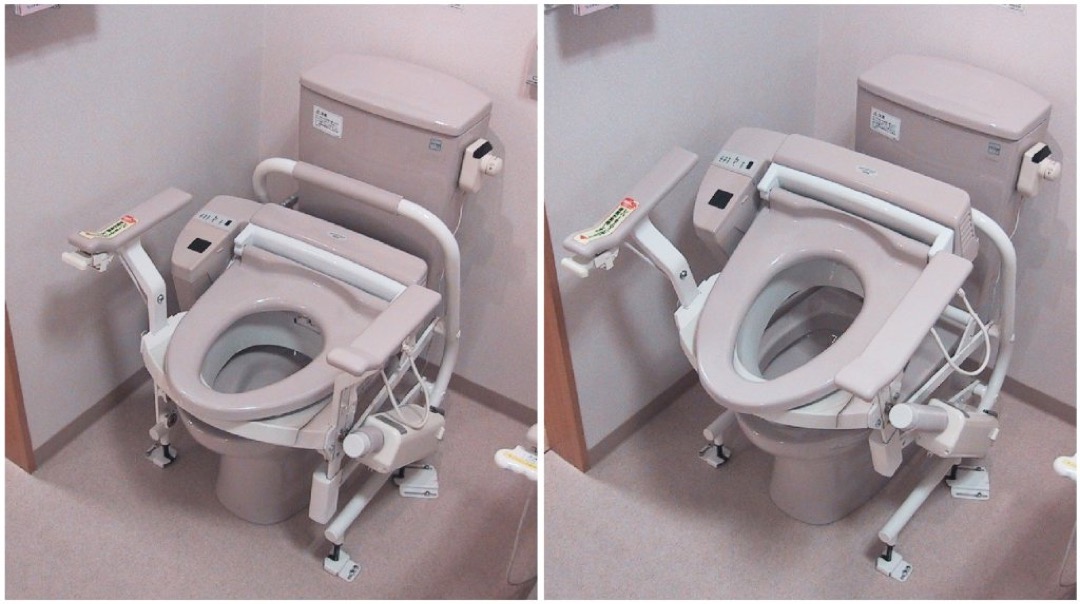
The CDC estimates that more than 230,000 emergency department visits each year stem from falls in or around the bathroom, and roughly four out of five of those involve adults over 65. The toilet itself is one of the highest-risk fixtures in the room — a standard US toilet seat sits at roughly 14 to 15 inches above the floor, which forces nearly every adult of average height to flex the hip past 90 degrees during sit-to-stand. For older adults with reduced quadriceps strength, for patients in the early weeks of hip or knee replacement recovery, and for anyone managing balance limitations, this single height is the difference between routine toileting and a meaningful fall risk. A toilet seat riser raises the seat by 3.5 to 6 inches and brings the hip closer to neutral, which both reduces the work required to stand and protects post-surgical joints from exceeding their safe range of motion.
In this guide I review seven of the top-selling toilet seat risers on Amazon for 2026, evaluated against the criteria that matter clinically: installation type and stability, lift height relative to the user’s anatomy, bowl-shape compatibility, weight capacity, hinged versus fixed cleaning hygiene, and the trade-off between integrated armrests and wall-anchored grab bars. The recommendations are aimed at three audiences — patients recovering from hip or knee surgery, seniors and adult children planning long-term aging in place, and home-care nurses or occupational therapists evaluating equipment. A toilet riser is most effective as part of a broader bathroom safety plan; this guide pairs naturally with our reviews of the best grab bars, the best bath lifts for users who also want a safer sit-down bath, and the best medical alert systems for solo-living seniors.
Our top picks at a glance: the Drive Medical 2-in-1 Raised Toilet Seat earns Best Overall for its mechanical clamp lock, removable padded armrests, FSA/HSA eligibility, and the largest review pool on Amazon — though it fits round bowls only. The HealthSmart Enhanced Comfort 5-inch Riser wins Best Budget by delivering the standard 5-inch lift at the lowest price in this review with FSA/HSA eligibility. For elongated-bowl households (roughly 70 percent of US toilets installed after 2000), the Carex E-Z Lock is the right elongated-bowl counterpart. And for the most stable configuration available — particularly when the toilet itself wobbles or when household members have differing needs — the Platinum Health Ultimate floor-standing frame is the upgrade pick.
| Product | Price | Buy |
|---|---|---|
| Drive Medical 2-in-1 Raised Toilet Seat with Removable Padded ArmsBest Overall | $30.00 | View on Amazon |
| HealthSmart Enhanced Comfort 5" Raised Toilet Seat RiserBudget Pick | $27.99 | View on Amazon |
| Carex E-Z Lock Raised Toilet Seat with Handles, 4.5 InchRunner-Up | $46.08 | View on Amazon |
| Carex Health Brands Hinged Elongated Toilet Seat RiserRunner-Up | $38.39 | View on Amazon |
| Drive Medical Raised Toilet Seat with Lock and Lid, 4-Inch, 400 lb CapacityRunner-Up | $41.48 | View on Amazon |
| Vive Raised Toilet Seat Riser for Seniors (with Handles) - ElongatedRunner-Up | $79.99 | View on Amazon |
| Platinum Health Ultimate Raised Toilet Seat with HandlesPremium Pick | $88.99 | View on Amazon |
Find the Right Toilet Seat Riser for Your Situation
Jump straight to the pick that matches your bowl shape, weight needs, and mobility:
- Best toilet seat risers overall — our top picks reviewed
- Best raised toilet seat with handles
- Best raised toilet seat for elderly and seniors
- Best raised toilet seat for elongated toilets
- Best heavy-duty and bariatric toilet seat riser
- Best hinged riser for easy cleaning
- More use cases: round bowls, portable, tall lift, commode conversion
How We Selected These Toilet Seat Risers
I evaluated toilet risers available on Amazon with at least 300 verified reviews, focusing on six clinically meaningful criteria: installation type and the resulting stability profile, lift-height range relative to typical adult anatomy, toilet-bowl-shape compatibility, weight capacity (with a particular focus on the 300 lb versus 400 lb division), hinged-versus-fixed cleaning behavior, and the presence and adjustability of integrated armrests. Where possible I prioritized products from established medical-equipment brands (Drive Medical, Carex, Vive, Platinum Health) and supplemented them with the strongest budget-tier option (HealthSmart) where the price-to-feature trade-off justified inclusion. Each riser here serves a distinct user profile: standard round-bowl households (Drive Medical), budget-constrained or renter scenarios (HealthSmart), elongated-bowl households (Carex E-Z Lock, Vive), long-term hygiene-focused permanent installs (Carex hinged), handle-leverage on elongated bowls (Vive), bariatric users above the 300 lb ceiling (Drive Medical lock-and-lid, Platinum Health Ultimate), and users wanting the most stable configuration regardless of the underlying toilet (Platinum Health Ultimate).
Best Toilet Seat Risers Overall
These are the seven risers that earned a place in this guide, each reviewed in full below. The Drive Medical 2-in-1 is the best overall pick for the most common scenario — a standard round-bowl toilet — while the use-case sections after the reviews match specific situations (handles, elderly, elongated bowls, bariatric, easy cleaning) to the right pick from this same lineup.
Drive Medical 2-in-1 Raised Toilet Seat with Removable Padded Arms — Best Overall
The Drive Medical 2-in-1 is the right default pick for most households with a standard round-bowl toilet, and the reasons are both technical and practical. The front-clamp lock mechanism creates a positive mechanical engagement with the toilet rim rather than relying on friction alone — when the user pushes off the armrests during sit-to-stand, the riser does not shift. The removable padded armrests provide leverage at the right height and can be detached for users who do not need them, or to allow clear lateral access for a caregiver assisting with transfers. Either configuration is available without buying a different product.
The review pool is what cements this as the default recommendation. Over 17,000 verified Amazon ratings make this the most-vetted toilet riser available — a sample size that surfaces failure modes that smaller-review products simply have not been used enough to reveal. The aggregate 4.2 rating across that sample is consistent with the strongest performers in the category. FSA and HSA eligibility at point of purchase is also meaningfully more than a small detail: depending on the buyer’s marginal tax rate, pre-tax payment is effectively a 22 to 32 percent discount, which closes most of the price gap to the cheaper HealthSmart option below.
The one significant limitation is bowl compatibility. The Drive Medical 2-in-1 fits round bowls only — roughly 16.5 inches from the front of the rim to the seat bolt holes. If your toilet bowl is closer to 18.5 inches front-to-bolt, the bowl is elongated and this riser will leave a gap at the front of the bowl that the user can fall through. The Carex E-Z Lock below is the elongated-bowl equivalent. Measure before buying.

Drive Medical 2-in-1 Raised Toilet Seat with Removable Padded Arms
by Drive Medical
The #1 best-selling toilet riser on Amazon with the most reliability data, a positive-engagement clamp lock, and FSA/HSA eligibility — the safest default pick for round-bowl toilets.
Pros
- Over 17,000 verified reviews make this the most-vetted toilet riser on Amazon — the best long-term reliability data of any model in this review
- Front-clamp lock mechanism creates a positive mechanical engagement with the toilet rim, eliminating the wobble common in friction-only risers
- Removable padded armrests provide leverage during sit-to-stand and detach for cleaning or for users who do not need them
- FSA and HSA eligible at point of purchase, allowing payment with pre-tax dollars — a meaningful effective discount most competitors lack
Cons
- Fits standard round toilet bowls only — incompatible with the elongated bowls found on 70 percent of post-2000 US toilets
- Hard plastic seat surface is less comfortable for extended seating than padded alternatives
- 300 lb weight capacity is standard but inadequate for bariatric users — heavier patients need the 400 lb Drive Medical lock-and-lid model below
HealthSmart Enhanced Comfort 5-Inch Raised Toilet Seat Riser — Best Budget
The HealthSmart Enhanced Comfort is the strongest budget pick because it delivers the same 5-inch lift height as more expensive clamp-on risers without compromising on review-pool depth. Over 13,000 verified ratings make this one of the most-vetted budget options in the category — most budget risers sell under a few hundred ratings and lack the long-term reliability data that comes with a larger sample. The 4.3 aggregate rating slightly edges the Drive Medical pick, at meaningfully lower cost. FSA and HSA eligibility is included at point of purchase, which is uncommon at this price point and represents real out-of-pocket savings.
The trade-off that makes the price possible is the mounting system: slip-resistant pads only, with no mechanical clamp lock. In practical terms this means the riser will not shift if the user sits down and stands up gently, but it can shift if the user pushes off forcefully — for example, in an unexpected near-fall recovery. For short-term use during the first six weeks of post-surgical recovery, for renters who cannot modify the bathroom, or for any household where a strict budget is the limiting factor, this trade-off is acceptable. For permanent long-term installation on a daily-use toilet, the mechanical-lock options (Drive Medical, Carex E-Z Lock) are worth the price difference.
The HealthSmart also lacks integrated armrests. This is a meaningful gap for users who rely on upper-body leverage during sit-to-stand, but it is the correct gap to accept at the budget tier because the right substitute is a wall-anchored grab bar — which is more stable than any riser armrest and serves multiple uses across the bathroom. Pair this riser with a properly installed grab bar and the combined cost is still lower than the next tier of risers up.

HealthSmart Enhanced Comfort 5" Raised Toilet Seat Riser
by HealthSmart
Cheapest 5-inch toilet riser on Amazon with FSA/HSA eligibility — the right pick for renters, short-term post-op use, or households on a tight budget.
Pros
- The lowest-priced 5-inch riser in this review with over 12,000 verified ratings — the strongest review pool at the budget tier
- Drop-in installation with slip-resistant pads requires no tools and takes under a minute, ideal for renters or short-term post-surgical use
- FSA and HSA eligible at point of purchase for pre-tax payment, uncommon at this price point
- Lightweight at under 3 lbs — easy for a caregiver with limited grip or shoulder strength to lift on and off for cleaning
Cons
- Slip-resistant pads only — no mechanical lock, so the riser can shift if the user pushes off forcefully during sit-to-stand
- Fits round toilet bowls only — incompatible with elongated bowls
- Hard plastic seat with no padding; for users who sit for extended periods this is meaningfully less comfortable than padded options
Carex E-Z Lock Raised Toilet Seat with Handles — Best for Elongated Bowls
The Carex E-Z Lock is the elongated-bowl counterpart to the Drive Medical pick — the right choice for the roughly 70 percent of US toilets installed after 2000 that have elongated bowls. The same mechanical-lock principle applies: a front-clamp E-Z Lock engages the toilet rim and prevents shifting during use, rather than relying on friction or slip-resistant pads. The width-adjustable padded armrests are a feature most competitors lack — they span 18 to 20 inches between the arms, so they accommodate both narrower and broader users without requiring a different product, and they detach for cleaning or to clear lateral access for a caregiver.
The useful difference from the Drive Medical 2-in-1 is that bowl shape stops being a purchasing risk. This model locks to round, standard, and elongated bowls alike, so a household that has not measured — or that may move the riser to a second bathroom with a different toilet — cannot buy the wrong shape. If you want the exact measurement anyway, take it from the front of the rim to the center of the bolt holes at the back: 16.5 inches indicates round, 18.5 inches indicates elongated. The 9-inch center opening and 15.5-inch seat width are shared across both fits.
Two limitations worth noting. First, the lift is 4.5 inches rather than the 5-inch standard — half an inch sounds trivial, but if a surgeon has set a strict hip-flexion precaution or the user’s popliteal height needs the full 5 inches, the Drive Medical 2-in-1 is the better match. Second, this is the smallest review pool in the guide at roughly 315 ratings, against thousands on the Drive Medical and Carex hinged picks. The 4.1 aggregate sits at the bottom of the range here, and on a sample this small a handful of poor experiences moves it — the design is a decade old and mechanically sound, but there is simply less long-term Amazon-specific data behind it than behind any other pick on this page.

Carex E-Z Lock Raised Toilet Seat with Handles, 4.5 Inch
by Carex Health Brands
An E-Z Lock clamp and width-adjustable padded armrests on the one riser here that fits every common bowl shape — the elongated-bowl counterpart to the Drive Medical pick, without the measure-first risk.
Pros
- Locks to elongated, standard, and round bowls alike — the only riser here that fits every common bowl shape, so a mismeasured bowl cannot make it the wrong purchase
- E-Z Lock front-clamp mechanism creates a positive mechanical lock to the toilet rim rather than relying on friction alone
- Width-adjustable padded armrests span 18 to 20 inches between the arms, accommodating both narrower and broader users without buying a different unit
- Removable armrests detach for cleaning or for caregivers who need clear lateral access during transfers
Cons
- 4.5-inch lift is half an inch short of the 5-inch standard — check the popliteal measurement first if strict hip-replacement precautions apply
- Smallest review pool in this guide at roughly 300 ratings — less long-term reliability data than the thousands behind the Drive Medical and Carex hinged picks
- Hard plastic seat surface rather than padded, despite the higher price point
Carex Hinged Elongated Toilet Seat Riser — Best Hinged Design for Long-Term Use
The Carex hinged riser solves a problem that fixed clamp-on risers cannot: long-term bathroom hygiene. A fixed riser sits on top of the toilet bowl and must be removed entirely for cleaning underneath, which is inconvenient enough that most households simply do not do it. Over months of use this creates a real hygiene problem, particularly in shared bathrooms. The Carex hinged riser lifts up like a standard toilet seat and allows full-surface cleaning underneath without removing any hardware — the configuration any household using a riser permanently should choose.
The installation approach is unusual and worth understanding. The Carex hinged riser fits underneath the existing toilet seat — you remove the existing seat bolts, drop the hinged riser onto the bowl with slip-resistant pads underneath, and reinstall the existing seat on top of the riser using the original bolts. The finished appearance preserves the look of the original toilet seat and lid, which is a meaningful aesthetic upgrade for permanent installations and a frequent objection in households that resist visible medical equipment. Over 8,500 verified Amazon ratings make this the most-vetted hinged riser available.
The two limitations are lift height and stability mechanism. At 3.5 inches the lift is meaningfully less than the 5-inch standard, which may be inadequate for tall users, for strict hip-replacement precautions, or for users whose popliteal measurement requires more than 4 inches of additional height. And the mounting relies on slip-resistant pads rather than a positive mechanical lock; for users who push off forcefully during sit-to-stand the Vive bolt-on riser below offers a more stable bolt-secured alternative with handles. For most users in a permanent installation where 3.5 inches is sufficient and forceful push-off is not expected, the Carex is the right pick.

Carex Health Brands Hinged Elongated Toilet Seat Riser
by Carex Health Brands
The only hinged riser with strong review data — preserves the existing toilet seat and supports long-term bathroom hygiene for permanent installation.
Pros
- Hinged design lifts up like a standard toilet seat for cleaning underneath — the only configuration that supports good long-term bathroom hygiene
- Installs under the existing toilet seat without removing it, preserving the original seat and lid for a more finished appearance
- Fits elongated bowls with a contoured underside, addressing the most common installation problem on modern toilets
- Over 8,500 verified ratings give this the strongest reliability data of any hinged riser on Amazon
Cons
- Only 3.5 inches of lift — meaningfully less than the 5-inch standard, and may be inadequate for tall users or strict hip-replacement precautions
- Slip-resistant pads only, with no mechanical lock — relies on the existing seat bolts indirectly for stability
- Does not include integrated armrests — pair with a wall-mounted grab bar or a separate toilet safety frame for leverage
Drive Medical Raised Toilet Seat with Lock and Lid, 4-Inch — Best for Bariatric Users
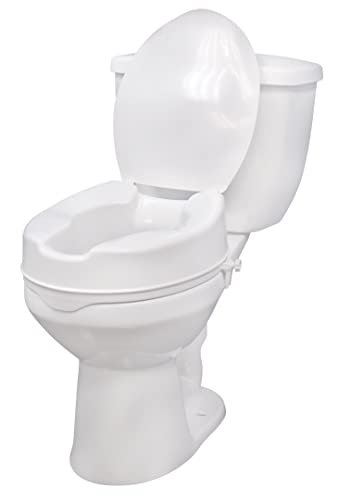
This Drive Medical lock-and-lid riser is the only standard-size riser in this review rated to 400 lbs, which makes it the right choice for any user above roughly 270 lbs, the practical ceiling for 300 lb-rated risers once you apply the 10 percent safety margin needed for the dynamic load of sit-to-stand. It comes from the same medical-equipment maker as our Best Overall pick, it has been on Amazon for well over a decade, and it is sold and shipped by Amazon itself. For equipment that may be used daily for years, that track record matters.
Two rear locks fix the seat to the bowl so it does not rely on friction alone, and it goes on without tools. The included lid keeps the bathroom looking like a bathroom rather than a clinic, and the hygiene cutouts at the front and back make cleaning easier, though the seat does not hinge up.
Three limitations are worth understanding, and the first is the one to weigh hardest. This riser has no armrests. A heavier user is precisely the user who benefits most from something to push against, so treat it as the seat and plan the leverage separately: a wall-anchored grab bar beside the toilet is more stable than any riser armrest and is what most occupational therapists install first, and the Platinum Health frame below is the alternative if the leverage has to come from the riser itself. Second, it fits round bowls only, so measure front-to-bolt before ordering. Third, the lift is 4 inches rather than 5. For most adults that is enough, but if a surgeon has set a strict hip-flexion limit or the user is tall, check the popliteal measurement first. Check that both rear locks are fully engaged every few days, since a loosened lock is what turns a stable riser into a rocking one.
Drive Medical Raised Toilet Seat with Lock and Lid, 4-Inch, 400 lb Capacity
by Drive Medical
The 400 lb-rated standard-size riser in this review, from the same medical brand as our Best Overall pick: the seat for bariatric users, or for any household where the 300 lb ceiling sits too close to the user's weight.
Pros
- 400 lb weight capacity, the bariatric rating that 300 lb consumer risers cannot offer
- Two rear locks fix the seat to the bowl mechanically rather than relying on friction, and it installs without tools
- A long-running Drive Medical model sold and shipped by Amazon, with well over a thousand ratings behind it
- Includes a matching lid, and hygiene cutouts give cleaning access
Cons
- No armrests; bariatric users who want push-off leverage should pair it with a wall-anchored grab bar or choose the Platinum Health frame
- Fits round bowls only; an elongated bowl will leave a front gap, so measure before ordering
- 4-inch lift is an inch below the 5-inch standard, which may fall short for tall users or strict hip precautions
Vive Raised Toilet Seat Riser for Seniors with Handles — Best Bolt-On with Handles
The Vive riser is the right pick for the user on an elongated bowl who needs the leverage of integrated handles but wants a more secure mount than a clamp-on or slip-pad design. Rather than sitting on slip-resistant pads, the Vive bolts down through the existing toilet seat bolt holes — the same mounting hardware that holds the original toilet seat in place — so the riser does not shift, slide, or rotate during sit-to-stand. On top of that stable base it adds removable soft-grip foam handles on corrosion-resistant aluminum arms, giving the user something to push against on the way up that a bare hinged riser does not provide.
The review pool is what separates it from the pack in this configuration. At more than 8,500 verified ratings and a 4.4 aggregate, it carries by far the largest sample of any bolt-on riser in this guide — meaningful reliability data for a product a user will lean on daily. Installation is genuinely tool-free: the included wing nuts thread onto the existing seat bolts and tighten by hand, and reviewers consistently report a solo install in under five minutes. FSA and HSA eligibility plus a lifetime warranty from a family-owned healthcare brand round out the value.
The two trade-offs are cleaning access and fit width. Unlike a hinged riser, the Vive does not flip up — cleaning the bowl surface underneath means unbolting and removing it, so households that prioritize lift-up hygiene should look at the Carex hinged unit instead. And the 10-inch interior seat opening with fixed 19-inch handle spacing can feel narrow for larger-framed users, since the handles are not width-adjustable the way the Carex E-Z Lock’s are. A subset of reviewers also note the mounting screws can loosen with repeated use, so a periodic re-tightening check is worth building into the routine. For an elongated-bowl user who wants handle leverage on a bolt-secured base, it is the strongest pick here.

Vive Raised Toilet Seat Riser for Seniors (with Handles) - Elongated
by Vive
A bolt-on elongated riser with removable foam-grip handles and a lifetime warranty — the highest-reviewed bolt-on riser in its class and a stronger runner-up for elongated bowls, at the cost of no lift-up cleaning access.
Pros
- Installs under the existing toilet seat using the original bolt holes with no tools — hardware is included and reviewers consistently report a solo install in under 5 minutes
- Bolt-secured mounting is far more stable than slip-pad designs — reviewers explicitly note it does not shift during sit-to-stand, unlike friction-only risers
- Removable soft-grip foam handles on corrosion-resistant aluminum arms give active leverage with 19 inches of clearance, and pull out with a single pin press when not needed
- Lifetime warranty from a family-owned healthcare brand, FSA and HSA eligible, with the largest verified review pool of any bolt-on riser in this review
Cons
- Not hinged — the riser cannot flip up for cleaning underneath; it must be unbolted and removed entirely to access the bowl surface below
- Fixed 10-inch interior width and 19-inch fixed handle spacing may feel narrow for larger-framed users; the handles are not width-adjustable
- A subset of reviewers report the mounting screws can loosen with repeated use — a periodic re-tightening check every few weeks is recommended
Platinum Health Ultimate Raised Toilet Seat with Handles — Upgrade Pick
The Platinum Health Ultimate is structurally different from every other riser in this review. Rather than sitting on or clamping to the toilet bowl, it is a floor-standing safety frame with a padded seat that fits over the existing toilet. The user’s weight transfers through the four legs of the frame into the bathroom floor, not through the toilet bowl. This matters in several specific scenarios. If the existing toilet is wobbly — common with older wax-ring seals or with wall-mounted toilets that have loosened over time — a frame-supported riser is meaningfully more stable than any bowl-mounted option, because the toilet itself is the structural weak point. If household members have meaningfully different physical needs, the frame’s adjustable height accommodates them without buying multiple products.
The padded seat surface is the other significant differentiator. Every other riser in this review has a hard plastic seat — fine for short sit-to-stand cycles but uncomfortable for users who sit for extended periods due to constipation, hemorrhoids, or simply slower toileting routines common in older adults. The Platinum Health Ultimate’s padded surface is the only riser in this review that addresses that comfort gap. The universal fit works on round, elongated, and ADA-height toilets without bowl-shape compatibility concerns, and the included bucket converts the frame into a bedside commode for illness, post-surgery recovery, or any scenario where bathroom access becomes temporarily unsafe.
The limitations are size and aesthetics. The floor-standing frame requires open clearance around the toilet that small powder rooms may not have — measure the available floor space before purchase. The fixed front crossbar can interfere with standing male urination; male users will need to sit. The unit ships in blue rather than white, which is visually noticeable in most bathrooms and is the most common cosmetic objection in reviews. For users prioritizing maximum stability, comfort, and configurability over those trade-offs, the Platinum Health Ultimate is the most capable product in this review.

Platinum Health Ultimate Raised Toilet Seat with Handles
by Platinum Health
Floor-standing safety frame with a padded universal-fit seat and bedside commode conversion — the most stable and comfortable pick, and the right choice when the toilet itself is the structural weak point.
Pros
- Floor-standing frame supports the user's weight independently of the toilet — the most stable lift configuration available and the appropriate choice when the toilet itself is wobbly or wall-mounted
- Universal fit works on round, elongated, and ADA-height toilets without bowl-shape-specific compatibility concerns
- Padded seat surface — meaningfully more comfortable than the hard plastic on every other riser in this review and important for users who sit for extended periods
- Converts to a bedside commode by adding the included bucket — a meaningful safety feature during illness, post-surgery recovery, or overnight when bathroom access is unsafe
Cons
- Large floor footprint requires open space around the toilet — measure clearances before purchase, particularly in small powder rooms
- Fixed front crossbar can interfere with standing male urination for some users; the user must sit to urinate
- Sold in blue rather than white — visually noticeable in the bathroom and a frequent point of complaint in reviews
- Higher 4.5 rating reflects strong satisfaction but the unit is heavier and more involved to assemble than clamp-on risers
Best Raised Toilet Seat with Handles
Integrated handles give the user something to push against during sit-to-stand — the single most requested feature on a riser. These three pair grab-handles with a stable mount; for the most secure leverage, combine any of them with a wall-anchored grab bar.
| Product | Price | Buy |
|---|---|---|
| Carex E-Z Lock Raised Toilet Seat with Handles, 4.5 InchBest handles overall Padded armrests that adjust from 18 to 20 inches apart, on a mechanical E-Z Lock clamp that fits any bowl shape — the most adaptable handle setup here | $46.08 | View on Amazon |
| Vive Raised Toilet Seat Riser for Seniors (with Handles) - ElongatedBest bolt-on with handles Removable foam-grip handles on a bolt-secured base that will not shift — the highest-reviewed bolt-on option | $79.99 | View on Amazon |
| Platinum Health Ultimate Raised Toilet Seat with HandlesMost stable with handles Floor-standing frame carries the load independently of the toilet, with fixed padded arms — the most stable handles for a wobbly toilet | $88.99 | View on Amazon |
Best Raised Toilet Seat for Elderly and Seniors
For aging-in-place, prioritize a mechanical lock over slip pads and match the bowl shape. Round-bowl and elongated-bowl households get different picks.
| Product | Price | Buy |
|---|---|---|
| Drive Medical 2-in-1 Raised Toilet Seat with Removable Padded ArmsBest for seniors (round bowls) Clamp-locked 5-inch lift, removable padded arms, and the largest review pool on Amazon — the safest default for a standard round bowl | $30.00 | View on Amazon |
| Carex E-Z Lock Raised Toilet Seat with Handles, 4.5 InchBest for seniors (elongated bowls) The elongated-bowl counterpart: an E-Z Lock clamp plus width-adjustable armrests, and it fits round bowls too if the shape is uncertain | $46.08 | View on Amazon |
Best Raised Toilet Seat for Elongated Toilets
Elongated bowls (roughly 18.5 inches front-to-bolt) need an elongated-specific riser — a round riser leaves a dangerous front gap. All three fit elongated bowls; choose by whether you prioritize cleaning access, a mechanical lock, or handle leverage.
| Product | Price | Buy |
|---|---|---|
| Carex Health Brands Hinged Elongated Toilet Seat RiserBest elongated for cleaning Hinged design lifts up like a standard seat for cleaning underneath — 8,500+ reviews and preserves the existing seat | $38.39 | View on Amazon |
| Carex E-Z Lock Raised Toilet Seat with Handles, 4.5 InchBest elongated with a lock E-Z Lock mechanical clamp plus width-adjustable padded arms — the most secure elongated clamp-on | $46.08 | View on Amazon |
| Vive Raised Toilet Seat Riser for Seniors (with Handles) - ElongatedBest elongated with handles Bolt-secured base with removable foam-grip handles — the most stable handled option for elongated bowls | $79.99 | View on Amazon |
Best Heavy-Duty and Bariatric Toilet Seat Riser
Standard risers are rated for 300 lbs, which is only safe up to roughly 270 lbs once the dynamic load of sit-to-stand is accounted for. These two are the 400-lb-rated options for heavier users.
| Product | Price | Buy |
|---|---|---|
| Drive Medical Raised Toilet Seat with Lock and Lid, 4-Inch, 400 lb CapacityBest bariatric riser (400 lb) The only 400 lb-rated standard-size riser here, with two rear locks and a lid; round bowls only, and you supply the leverage with a wall grab bar | $41.48 | View on Amazon |
| Platinum Health Ultimate Raised Toilet Seat with HandlesBest bariatric frame (400 lb) Floor-standing 400 lb frame that carries weight independently of the toilet — the safest choice when the toilet itself may not hold | $88.99 | View on Amazon |
Best Hinged Riser for Easy Cleaning
If lift-up cleaning access matters — shared bathrooms, permanent installs — you want a design that either hinges up or lifts off cleanly rather than one bolted permanently in place.
| Product | Price | Buy |
|---|---|---|
| Carex Health Brands Hinged Elongated Toilet Seat RiserBest hinged (lifts up) True hinge lifts the riser like a standard seat for full-surface cleaning — the strongest hygiene pick for a permanent install | $38.39 | View on Amazon |
| HealthSmart Enhanced Comfort 5" Raised Toilet Seat RiserBest set-on (lifts off) Drops on and lifts off in seconds at under 3 lbs — the easiest to remove for cleaning or short-term use, round bowls only | $27.99 | View on Amazon |
More Toilet Riser Use Cases
The remaining common scenarios, each matched to the best pick from the lineup above:
| Product | Price | Buy |
|---|---|---|
| Drive Medical 2-in-1 Raised Toilet Seat with Removable Padded ArmsBest for round toilets Clamp-locked round-bowl riser with the largest review pool — the default for standard round toilets | $30.00 | View on Amazon |
| HealthSmart Enhanced Comfort 5" Raised Toilet Seat RiserBest lightweight / portable Under 3 lbs and tool-free — the simplest to move between bathrooms or take along for short-term recovery | $27.99 | View on Amazon |
| Platinum Health Ultimate Raised Toilet Seat with HandlesBest commode conversion Converts to a bedside commode with the included bucket — a genuine safety feature for overnight or post-surgery use | $88.99 | View on Amazon |
| Carex E-Z Lock Raised Toilet Seat with Handles, 4.5 InchBest tall 5-inch lift A full 5 inches of lift with a mechanical lock — the right height for taller users and strict hip precautions on elongated bowls | $46.08 | View on Amazon |
Buyer's Guide
A toilet seat riser is the most common bathroom safety modification in US homes after grab bars, but the wrong product can introduce more fall risk than it prevents. The right riser is matched to the user's bowl shape, weight, height needs, and mounting preferences — not to whatever happens to be the bestseller at the moment.
Installation Type (Set-On, Clamp-On, Bolt-On)
Set-on risers use slip-resistant pads only and are the simplest to install — drop the riser onto the bowl and use it. They are appropriate for short-term post-surgical use but will shift over time and are not safe for permanent installation. Clamp-on risers add a mechanical front-clamp lock that engages the toilet rim, providing meaningful additional stability and acceptable safety for long-term use as long as the clamp torque is inspected weekly. Bolt-on hinged risers install through the existing toilet seat bolt holes and are the most stable mounting available — they do not shift, they lift up for cleaning, and they are the right choice for permanent aging-in-place installations.
Lift Height (3.5 inches vs. 5 inches vs. Adjustable)
Measure the user's popliteal height — floor to the back of the knee with the user seated and feet flat — and select a riser that brings the toilet seat to within an inch of that number. For most adults of average height, this means a 5-inch riser is the right choice; the 3.5-inch hinged options are typically inadequate for adults over 5 feet 8 inches tall. Post-hip-replacement patients almost universally need at least 5 inches to maintain the 90-degree precaution. The 3.5-inch hinged risers are appropriate for shorter users, for users without strict hip precautions, or for users who only need a modest assist. Frame-supported risers (Platinum Health Ultimate) offer adjustable height and are the right choice when household members have meaningfully different needs.
Toilet Bowl Shape (Round vs. Elongated vs. Universal)
Measure the existing toilet bowl from the front of the rim to the center of the bolt holes at the back. Roughly 16.5 inches indicates a round bowl; roughly 18.5 inches indicates an elongated bowl. About 70 percent of US toilets installed after 2000 are elongated. Most risers are bowl-shape-specific — buying the wrong shape creates either a front gap (round riser on elongated bowl) or unsafe overhang (elongated riser on round bowl). Only the Platinum Health Ultimate floor-standing frame is truly universal-fit, which makes it the right choice when bowl shape is uncertain, when the user has multiple bathrooms with different toilets, or when the existing toilet may be replaced during the user's tenure.
Weight Capacity (300 lbs vs. 400 lbs vs. Bariatric)
The 300 lb rating shared by most consumer risers is adequate for users up to roughly 270 lbs — always leave a 10 percent margin between user weight and rated capacity to account for the dynamic load during sit-to-stand, which can briefly exceed body weight by 30 to 50 percent. The 400 lb Drive Medical lock-and-lid and Platinum Health Ultimate models are the right choices for users above 270 lbs. True bariatric risers rated for 1000 lbs (Bemis sells one) are available but are typically purchased through medical-equipment dealers rather than Amazon. Never use a riser at or above its rated capacity — the mounting hardware and seat shell are not engineered for it and the failure mode is sudden seat collapse.
Hinged vs. Fixed Design
Hinged risers lift up like a standard toilet seat and allow full-surface cleaning underneath, which matters for long-term bathroom hygiene and for households with multiple users sharing the toilet. Fixed risers must be removed entirely for cleaning underneath, which is inconvenient enough that many households simply do not do it — creating a hygiene problem over months of use. For short-term post-surgical use this is a non-issue. For permanent installations or shared bathrooms, a hinged design is meaningfully better. The Carex hinged riser is the most-reviewed hinged option and lifts up for cleaning; if you need a bolt-secured mount with handles rather than a hinge, the Vive bolt-on riser is the more stable choice at the cost of lift-up access.
Integrated Armrests vs. External Grab Bars
Integrated padded armrests on the riser provide convenient leverage during sit-to-stand and are always positioned correctly relative to the seat. They transfer the user's body weight through the riser-to-toilet attachment, however, and are rated for the riser's weight capacity only — not for a user pulling hard against them during a near-fall. A wall-anchored grab bar transfers load into the wall framing and is significantly more stable. Most occupational therapists install a wall grab bar as the primary stability tool and treat riser armrests as secondary convenience. The ideal setup is both: a riser with removable padded armrests plus a vertical or angled grab bar mounted on the side wall next to the toilet.
After Hip or Knee Replacement Surgery
The single most common reason patients buy a toilet seat riser is post-surgical recovery from hip or knee replacement, and the clinical guidance is specific enough to be worth a dedicated section. Most orthopedic surgeons place patients on a 90-degree precaution for the first six weeks after total hip replacement: do not flex the operated hip past 90 degrees relative to the torso. The reason is biomechanical — flexion beyond 90 degrees, particularly when combined with internal rotation or adduction, places the prosthetic head in a position where it can dislocate from the cup component. Dislocation in the first six weeks is the highest-risk surgical complication outside of infection, and it almost universally requires emergency-room reduction and sometimes revision surgery.
A standard US toilet seat sits at roughly 14 to 15 inches above the floor. The hip flexion angle at sit-to-stand depends on the user’s leg length, but for an adult of average height (5’8” to 5’10”), seating on a standard toilet places the hip at roughly 100 to 110 degrees of flexion — well past the 90-degree precaution. Adding a 5-inch riser raises the seat to roughly 19 to 20 inches and brings the hip closer to 85 to 95 degrees, depending on the patient’s anatomy. This is why 5 inches is the recommended height for most hip-replacement patients and why 3.5 inches is typically inadequate.
The correct way to verify the right height for an individual patient is to measure the popliteal height — floor to the back of the knee when the patient is seated with feet flat on the floor — and match the toilet seat height to within an inch of that measurement. For a patient with a popliteal height of 18 inches, a 4-inch riser on a 14-inch toilet hits 18 inches and is correct; a 6-inch riser overshoots to 20 inches and forces hip extension, which is its own problem. Confirm the specific recommendation with your surgeon or physical therapist, particularly if you had an anterior versus posterior surgical approach — anterior-approach patients typically have less strict precautions, and the recommended riser height may be lower.
Total knee replacement recovery is less precaution-driven but follows similar logic: knee flexion past 90 degrees during sit-to-stand requires quadriceps strength the patient has not yet rebuilt, and a higher seat reduces the muscular work required. Most knee-replacement patients use a riser for the first two to four weeks of recovery. For both hip and knee patients, pair the riser with a grab bar or a toilet safety frame for the leverage needed to transfer from seated to standing safely during the period when leg strength is most compromised. The bath-and-shower equivalent guidance is covered in our best bath lifts review.
How to Measure for the Right Toilet Riser
Three measurements determine whether a riser will work in a specific bathroom, and getting them wrong is the leading cause of returns.
Bowl shape (round versus elongated). Measure from the front of the toilet bowl rim to the center of the seat bolt holes at the back of the bowl. Approximately 16.5 inches indicates a standard round bowl; approximately 18.5 inches indicates an elongated bowl. Most risers are bowl-shape-specific — buying the wrong shape creates either a front gap (round riser on elongated bowl) that the user can fall through, or unsafe overhang (elongated riser on round bowl) that destabilizes the seating surface.
Popliteal height (floor to back of knee). Have the user sit in a firm chair with feet flat on the floor and measure the vertical distance from the floor to the back of the knee. This is the target seat height for the toilet after the riser is added. For most adults of average height, popliteal height is in the 16 to 19 inch range. Subtract the existing toilet seat height (typically 14 to 15 inches; ADA-height toilets are 16.5 to 17.5 inches) to determine the riser height needed. A user with an 18-inch popliteal height on a 14-inch toilet needs a 4-inch riser; on an ADA toilet they may need only a 1- to 2-inch riser or none at all.
Bathroom clearance. Measure the floor space available around the toilet — particularly the distance from the front of the toilet to the opposite wall, and the lateral clearance on each side. Floor-standing frames like the Platinum Health Ultimate require open clearance that small powder rooms may not have; clamp-on risers require essentially no additional floor space. Verify clearance before purchase.
What Caregivers Need to Know
The adult children and in-home aides I work with consistently raise the same questions before a toilet riser arrives. A few worth addressing directly.
Inspect the clamp torque weekly on clamp-on risers. The screw mechanism on clamp-on risers loosens slightly with normal use as the user pushes off the seat during sit-to-stand. A weekly check — finger-tighten the clamp until firm resistance — prevents the slow drift to looseness that creates rocking. This is a 15-second task and the single most important maintenance behavior on clamp-on risers.
Plan the cleaning routine before installation. Fixed clamp-on risers require removing the riser entirely for cleaning underneath, which most households do not do consistently. If the user is in a shared bathroom or the installation is permanent rather than short-term, choose a hinged design (the Carex hinged riser) or a bolt-secured mount (the Vive riser) from the outset. The cleaning hygiene difference over six months of daily use is meaningful.
Pair the riser with a grab bar, not just armrests. Riser-integrated armrests are convenient but transfer the user’s pull-up load through the riser-to-toilet attachment, which is rated for the riser’s stated capacity only. A wall-anchored grab bar transfers the same load into the wall framing and is significantly more stable in a near-fall scenario. Install both when possible; install a grab bar if you can only install one. Our grab bars guide covers placement and stud-anchor requirements in detail.
Maintain a fall plan independent of the riser. Even with the right riser correctly installed, the highest-risk moment is the transfer from seated to standing during the first week post-surgery or for any user managing balance limitations. Pair the riser with a medical alert system the user wears in the bathroom, keep a phone within reach of the toilet, and store a first-aid kit in the bathroom for the cuts and abrasions that accompany minor falls.
Recognize that a riser alone is not fall prevention. A toilet riser reduces the work required to stand and protects post-surgical joints from exceeding their range of motion. It does not prevent falls caused by orthostatic hypotension, peripheral neuropathy, or sudden balance loss. A complete bathroom safety plan combines the riser with a grab bar, non-slip flooring, and adequate lighting — particularly motion-activated nightlights for overnight bathroom trips, when most bathroom falls occur.
Does Medicare Cover Toilet Seat Risers?
This is the question I am asked most often, and the answer is unfortunately no — at least not for Original Medicare. Medicare Part A and Part B do not cover raised toilet seats. Medicare classifies them as personal convenience items rather than medically necessary Durable Medical Equipment, even when prescribed after hip replacement, stroke, or other qualifying procedures. This classification has been consistent for years and is not affected by a physician’s prescription or letter of medical necessity.
Several alternative funding paths are worth pursuing:
- Bedside commodes — which are a different product category — are covered under Medicare Part B as DME when prescribed by a physician. Many patients use a bedside commode positioned over the toilet bowl as a functional substitute for a riser-with-frame. The Platinum Health Ultimate in this review converts to a bedside commode with the included bucket, blurring this distinction usefully.
- Medicare Advantage (Part C) plans frequently include over-the-counter or home-safety benefits that can be applied to toilet risers. Coverage varies by plan and region — call your plan administrator’s member services line and ask specifically about “home safety equipment” or “OTC supplemental benefits.”
- State Medicaid Home and Community-Based Services (HCBS) waivers cover home modifications including toilet risers in many states, particularly for users at risk of nursing-home placement. Application is through your state Medicaid office.
- VA Specially Adapted Housing (SAH) grants cover bathroom adaptive equipment for veterans with service-connected disabilities. The HISA (Home Improvements and Structural Alterations) grant specifically covers bathroom modifications.
- FSA and HSA accounts — raised toilet seats are eligible expenses, allowing payment with pre-tax dollars. The Drive Medical 2-in-1, HealthSmart Enhanced Comfort, and several other models in this review are sold pre-verified for FSA/HSA point-of-sale purchase.
Always verify coverage in writing before purchase. A phone confirmation that is later contradicted in writing leaves the buyer holding the bill.
Toilet Riser vs. Bedside Commode vs. Toilet Safety Frame
Three commonly considered alternatives address different problems and are worth distinguishing.
A toilet seat riser raises the existing toilet seat by 3.5 to 6 inches without otherwise modifying the bathroom. It is the right choice when the existing toilet is structurally sound, the user can walk to the bathroom, and the only issue is sit-to-stand height. Most users of this review fall in this category.
A toilet safety frame is a free-standing frame with arms that surrounds the toilet without raising the seat. It provides leverage for sit-to-stand without changing the seat height. Frames are the right choice when the user does not need a higher seat (for example, an ADA-height toilet is already in place) but does need armrests for leverage. Some products (like the Platinum Health Ultimate in this review) combine a frame with a riser into a single unit.
A bedside commode is a free-standing portable toilet with a bucket. It is the right choice when the user cannot safely walk to the bathroom — typically during acute illness, immediate post-surgery recovery, or overnight when bathroom access creates unacceptable fall risk. Medicare Part B covers bedside commodes; it does not cover raised toilet seats. Many patients use a bedside commode during the acute recovery phase and transition to a toilet riser once they can safely walk to the bathroom.
For most users this review’s target — long-term aging in place, post-surgical recovery beyond the acute phase, or daily fall-risk reduction — a toilet riser is the right category of equipment. For acute scenarios where walking to the bathroom is itself unsafe, prioritize a bedside commode first.
Troubleshooting Common Toilet Riser Problems
A few patterns I see often enough to warrant naming.
The riser rocks during use. On clamp-on risers, the most common cause is loose clamp torque — finger-tighten the clamp screw until firm resistance and the rocking should resolve. If the rocking persists with a fully tightened clamp, the bowl rim may be incompatible with the specific riser; check that the bowl shape matches the riser specification (round versus elongated). On slip-pad risers, rocking indicates the pads are not seating cleanly on the bowl rim — clean the bowl rim with isopropyl alcohol and verify the pads are not detached or hardened.
Water collects between the riser and the bowl rim. This is the normal consequence of seating a separate riser on a bowl rim and is the strongest argument for a hinged design (which fits underneath the existing seat and channels water back into the bowl). For clamp-on risers, dry the bowl rim weekly and inspect for mold or scale buildup — these accelerate riser-to-bowl friction degradation.
The user feels unstable despite the riser. A riser raises the seat but does not provide lateral stability. Pair the riser with a wall-anchored grab bar or a toilet safety frame for leverage during sit-to-stand. If lateral stability remains a concern, the floor-standing frame design (Platinum Health Ultimate) provides three-point support that no clamp-on riser can match.
The riser will not fit the toilet bowl. The most common cause is bowl-shape mismatch — measuring 16.5 inches front-to-bolt confirms round; 18.5 inches confirms elongated. Other less common causes are ADA-height toilets (16.5- to 17.5-inch bowls) with non-standard rim profiles, and Toto/Kohler luxury toilets with proprietary rim shapes that some risers do not accommodate. When in doubt, the Platinum Health Ultimate floor-standing frame is universal-fit and avoids the compatibility question entirely.
Final Verdict
For most buyers with a standard round-bowl toilet, the Drive Medical 2-in-1 Raised Toilet Seat with Removable Padded Arms is the right choice. Its mechanical clamp lock, removable padded armrests, FSA/HSA eligibility, and 17,000-plus verified reviews make it the safest default — the riser whose performance is the most extensively documented and whose feature set covers the most common use cases. For elongated bowls (roughly 70 percent of US toilets installed after 2000), the Carex E-Z Lock Raised Toilet Seat with Handles is the counterpart with the same mechanical-lock design — and because it locks to round bowls as well, it is also the safer buy when nobody has measured the toilet yet.
For budget-constrained buyers, the HealthSmart Enhanced Comfort 5-Inch Riser delivers the standard 5-inch lift with FSA/HSA eligibility at the lowest price in this review, accepting the slip-pad mounting trade-off in exchange. For users above the 300 lb capacity ceiling, the Drive Medical Raised Toilet Seat with Lock and Lid is the only standard-size 400 lb-rated option here. Pair it with a wall grab bar, since it has no armrests of its own, and confirm your bowl is round. For long-term permanent installations where bathroom hygiene matters, the Carex hinged riser (slip-pad, lifts up for cleaning) is the right hinged choice, while the Vive bolt-on riser with handles (bolt-secured, most stable, no lift-up access) is best when leverage and a shift-free mount matter more than cleaning access. And for users wanting the most stable configuration available — particularly when the toilet itself is the structural weak point — the Platinum Health Ultimate floor-standing frame is the upgrade pick.
As with all medical equipment purchases, consult your physician, occupational therapist, or physical therapist for a personalized recommendation based on your specific diagnosis, anatomy, and bathroom layout. A toilet riser is a valuable safety tool when correctly matched to the user and bowl; the wrong riser in the wrong bathroom creates new fall risk rather than reducing it. Pair the riser with a grab bar for leverage, a medical alert system for fall recovery, and a first-aid kit kept within reach, and the bathroom can remain a safe and independent space.
Frequently Asked Questions
How tall should a raised toilet seat be after hip replacement surgery?
Are raised toilet seats covered by Medicare or Medicaid?
Will a toilet seat riser fit my toilet?
Is it better to get a raised toilet seat with handles or install a wall-mounted grab bar?
Can I leave a toilet seat riser on the toilet permanently?
Related Articles
About the Reviewer

Dr. David Taylor, MD, PhD
Drexel University College of Medicine (MD), Indiana University School of Medicine (PhD)
Dr. David Taylor is a licensed physician and medical researcher who founded BestRatedDocs in 2016. With an MD from Drexel University and a PhD from Indiana University School of Medicine, he combines clinical expertise with a passion for health technology to provide evidence-based product recommendations. Dr. Taylor specializes in health informatics and regularly evaluates medical devices, diagnostic equipment, and therapeutic products to help healthcare professionals and patients make informed decisions.