Senior Fall Prevention: An MD's Room-by-Room Guide to What Actually Works
Dr. David Taylor, MD walks through the medication risks, home modifications, and clinical self-tests that prevent falls in older adults — the depth your doctor doesn't have time to explain in a 15-minute visit.
Updated
About one in four adults over the age of 65 falls every year. That is roughly 14 million falls annually in the United States, leading to around three million emergency-department visits and, in 2021, some 38,000 deaths — making falls the leading cause of injury death in this age group. And the trend is not improving: the age-adjusted fall death rate among older adults rose 21% between 2018 and 2024. Yet fewer than half of the people who fall ever mention it to their doctor.
I want to start with those numbers because the most damaging misconception about falls is that they are accidents — random, unpredictable, a matter of bad luck. They are not. In my clinical practice, the falls I see are almost always the predictable product of a handful of risk factors stacking on top of one another: a couple of medications that cause lightheadedness, a little muscle weakness, glasses that distort the ground, a dark hallway, and no grab bar in the bathroom. None of those alone would put someone on the floor. Together, they do.
The good news that follows from this is the entire point of this guide: if falls are multifactorial, they are also preventable, because every risk factor you subtract lowers the total. This is what your doctor would tell you if a 15-minute visit allowed for it. It rarely does, so here is the longer version — what actually drives falls, how clinicians assess your risk, and exactly what to change, room by room.
Who Is Most at Risk: Understanding Your Fall Risk Factors
Fall risk is the sum of many smaller risks. Some you cannot change — age itself, a prior stroke, Parkinson’s disease, advanced osteoarthritis. But most of the factors that actually tip someone over are modifiable, and those are where to spend your effort.
The physical drivers are muscle weakness, poor balance, slow gait, and impaired vision. The medical conditions that quietly raise risk include diabetes (through nerve damage in the feet, discussed below), Parkinson’s disease, inner-ear and balance disorders, low blood pressure, and any condition that causes dizziness. And then there is the single most overlooked category of all.
Medication: the most treatable cause of falls
Every competitor article tells you to “review your medications.” Almost none of them tell you which drugs to look for, so here is the clinical detail.
The American Geriatrics Society’s Beers Criteria — the standard reference for risky medications in older adults — flags specific classes that raise fall risk: benzodiazepines (lorazepam, alprazolam), the “Z-drug” sleep aids (zolpidem/Ambien), first-generation antihistamines like diphenhydramine — the active ingredient in Benadryl and in nearly every over-the-counter “PM” sleep product — antipsychotics, tricyclic antidepressants like amitriptyline, opioids, and muscle relaxants such as cyclobenzaprine. Many blood-pressure medications and diuretics belong on this list too, for a reason I will come back to.
The rule worth memorizing: five or more medications of any kind is the recognized threshold for polypharmacy, and fall risk tends to climb with each additional drug. The action is simple and safe: gather every bottle — prescription drugs, over-the-counter sleep aids, and supplements alike — and ask your doctor or pharmacist directly, “Which of these raises my fall risk, and is there a safer alternative or a lower dose?” Never stop a medication on your own; some are dangerous to discontinue abruptly. A weekly pill organizer makes that review far easier and prevents the double-dosing that itself causes falls.
Orthostatic hypotension: the missed cause of nighttime and morning falls
Here is a mechanism almost no consumer article explains, and one I check for in every older patient who reports “dizzy spells.” Orthostatic hypotension is a drop in blood pressure when you stand up — clinically, a fall of at least 20 mmHg in the top number within a few minutes of rising. The brain is briefly under-perfused, you feel lightheaded, and you go down. It is responsible for a large share of falls that happen on getting out of bed at night or first thing in the morning.
It is frequently caused or worsened by the very medications above — antihypertensives, diuretics, tricyclics, alpha-blockers, and some antipsychotics. And the non-drug fixes are remarkably effective: when getting out of bed, sit on the edge for a full 30 seconds and let your legs dangle before standing; rise from chairs slowly; stay well hydrated; and, for stubborn cases, graduated compression socks reduce the blood pooling in the legs that triggers the drop. If you feel lightheaded on standing, this is a conversation to have with your doctor — it is one of the most fixable causes of falls there is.
The STEADI Framework: How Doctors Assess Your Fall Risk — and a Test You Can Do at Home
The CDC built a clinical fall-prevention program for physicians called STEADI — Stopping Elderly Accidents, Deaths & Injuries. It follows a simple logic: Screen for risk, Assess the specific causes, and Intervene. You do not need to be a clinician to run the most useful screening test yourself.
It is called the Timed Up and Go, and it takes 30 seconds. Sit in a standard chair with armrests. On “go,” stand up, walk 10 feet at your normal pace, turn around, walk back, and sit down. Time the whole thing.
- Under 12 seconds: lower fall risk.
- 12 to 20 seconds: moderate risk — bring it up at your next doctor’s visit.
- Over 20 seconds: higher risk that warrants a formal medical evaluation and likely a physical-therapy referral.
If you struggled, felt unsteady, or had to use your arms to push out of the chair, those are themselves meaningful findings. Mention them to your doctor and ask specifically for a fall-risk assessment — Medicare covers exactly this as part of the annual wellness visit.
Exercise: The Highest-ROI Fall Prevention Intervention
If I could prescribe one thing to every older adult, it would be exercise — because it treats the physiological root of most falls. After about age 75, adults lose roughly 5 to 8% of their muscle mass per year without resistance training. That process, called sarcopenia, is why people feel “wobbly,” and it is reversible at any age. Resistance training twice a week measurably rebuilds that muscle, and it starts working within 8 to 12 weeks.
The best-studied programs train strength and balance together:
- Tai Chi has the strongest balance-specific evidence; the “Tai Chi: Moving for Better Balance” program is widely used and shows an excellent return in reduced medical costs.
- The Otago Exercise Program — 17 strength and balance exercises originally delivered by physical therapists — has repeatedly cut falls in adults over 65, and it works especially well for frailer individuals.
- Stepping On, a structured group workshop, has shown roughly a 31% reduction in falls.
If you have not exercised in years, do not begin with a balance challenge. Start with sit-to-stand repetitions from a sturdy chair, working toward standing without using your arms, and supported heel-to-toe walking while holding a kitchen counter. The point is to break the most dangerous cycle in geriatric medicine: a fall (or the fear of one) leads people to move less, which weakens muscle, which raises fall risk — a downward spiral that exercise reverses.
Vision, Hearing, and Foot Health
Eyes: it is not just about updating your prescription
Get an eye exam every year, but know one counterintuitive hazard: progressive and bifocal lenses can increase outdoor fall risk. The reading segment at the bottom of the lens distorts depth perception when you look down at curbs, steps, and uneven pavement. The American Geriatrics Society guidance suggests a dedicated pair of single-vision distance glasses for outdoor walking. It is a small change that addresses a real, measurable risk.
Hearing: a surprisingly strong link
People with hearing loss are nearly three times more likely to fall, and the data suggest that wearing a hearing aid can cut that elevated risk roughly in half. The inner ear is also the organ of balance, so hearing and steadiness are more connected than most people realize. If you have been putting off a hearing evaluation, fall prevention is another reason not to.
Feet: footwear and the proprioception problem
Your feet send your brain constant information about the surface beneath you — flat floor, curb, carpet, slope. This sense, called proprioception, is how you stay upright without looking at your feet. Two things degrade it. First, diabetic peripheral neuropathy: nerve damage in the feet means a diabetic patient may literally be unable to feel whether their foot is level, which is why diabetes carries a fall risk well beyond blood sugar. Seamless, non-binding diabetic socks help protect the at-risk foot. Second, footwear: thick, soft foam soles feel comfortable but actually worsen proprioceptive feedback. Older adults — and neuropathy patients especially — do better in shoes with firm, thin, non-slip soles. Supportive orthotic insoles can improve stability inside an otherwise good shoe. Avoid walking in socks alone or in backless slippers, two of the most common footwear-related fall scenarios I see.
Vitamin D and Bone Health
Vitamin D supports both muscle function and bone strength — the two systems that determine whether you stay up and what happens if you don’t. The evidence supports a minimum of 800 IU per day for fall-risk reduction in older adults; many clinicians prescribe 1,000 to 2,000 IU, targeting a blood level (25-hydroxyvitamin D) above 30 ng/mL. Vitamin D works alongside calcium for bone health, which is why falls and fractures must be addressed together — preventing the fall matters most, but strong bone determines whether a fall becomes a hip fracture.
Watch vitamin B12 too. Low B12 causes neuropathy and gait instability and is common in older adults because B12 absorption declines with age and with long-term use of acid reducers and metformin. Unexplained unsteadiness plus foot numbness is worth a B12 blood test.
Fall-Proofing Your Home: Room by Room
Most serious falls happen at home, and the highest-risk room is the bathroom. Work through your house with the eyes of someone looking for what could go wrong.
Bathroom — the highest-risk room
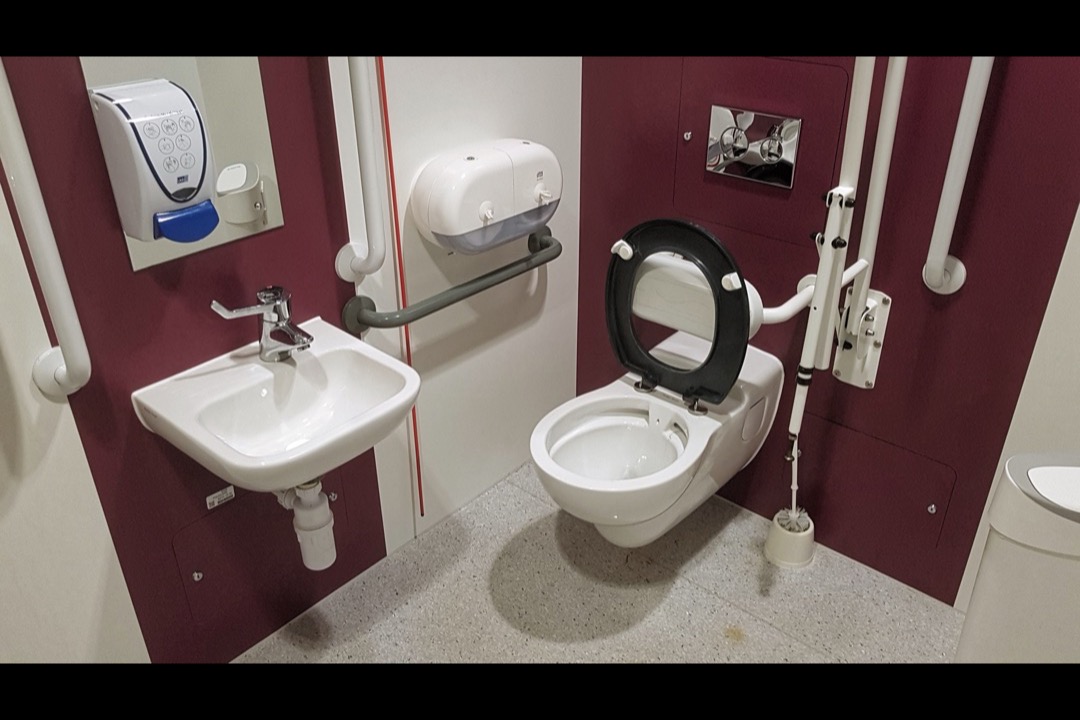
Wet, hard surfaces and the act of lowering and rising from the toilet make this the most dangerous room in the house. Install grab bars beside the toilet and inside the tub or shower — anchored into studs or with heavy-duty hardware, never suction-cup units for weight bearing. Use a shower chair so no one bathes standing on a slick surface, and a raised toilet seat to reduce the deep, unstable squat that throws people off balance. Add non-slip mats inside and outside the tub. For anyone with significant mobility limits, a bath lift lowers and raises a person into the tub safely.
Bedroom — where nighttime falls happen
This is orthostatic-hypotension territory. Sit on the edge of the bed for 30 seconds before standing. Keep a plug-in, motion-sensor night light between the bed and the bathroom so you are never walking in the dark. Keep a phone or a medical alert button within arm’s reach of the bed. For those who struggle to reposition or rise, a bed rail provides a stable handhold for getting in and out.
Kitchen
Store everyday items at waist height so you are neither reaching overhead nor bending to the floor. Never use a chair as a step stool — use a stable step stool with a handrail, or better, a reacher grabber. Clean up spills immediately; a wet kitchen floor is a classic fall site.
Living areas, hallways, and stairs
Remove throw rugs entirely — they are the single most common indoor trip hazard. Tape down or reroute electrical cords. Arrange furniture so there is a clear, wide walking path, and add lighting so no route through the house is dim. On stairs, install secure handrails on both sides, ensure bright lighting at the top and bottom, and add non-slip treads. Mark the edge of the top and bottom steps if depth perception is a concern.
Outdoors
Uneven pavement, wet leaves, ice, and poor lighting cause outdoor falls. Keep entry paths lit, address surface hazards, and wear surface-appropriate footwear. This is also where those single-vision distance glasses earn their keep.
Assistive Devices: Use Them Early, and Use Them Correctly
Many people resist canes and walkers as a symbol of decline and end up falling for want of one. Used correctly, they prevent far more falls than they ever cause — but fit matters enormously. A walking cane set too high or too low actually increases instability; the top of the cane should sit at the crease of your wrist when you stand with your arm relaxed at your side, putting a gentle bend in the elbow. The cane goes in the hand opposite the weaker leg and moves forward with it.
When a cane is not enough, the choice is usually between a standard walker and a wheeled rollator — a decision with real trade-offs in stability versus mobility that I break down in rollator vs. walker. If you are recovering from surgery, my home recovery essentials guide covers how to stage these devices before you ever come home. Whatever the device, ask a physical therapist to fit it — Medicare covers both the therapy visit and, with a prescription, the device itself.
Medical Alert Systems: Why the “Long Lie” Makes This a Medical Issue
For anyone who lives alone, a medical alert system is not a convenience product — it addresses a genuine medical danger called the “long lie.” If a person falls, cannot get up, and lies on the floor for an hour or more, they face dehydration, hypothermia, muscle breakdown that can injure the kidneys, and pressure injuries — and the long lie independently worsens outcomes even when the fall itself caused no major injury. A wearable button or an automatic fall-detection pendant collapses that hour to minutes. If you or a family member lives alone and has any of the risk factors above, treat this as the safeguard it is.
What To Do After a Fall
Even an uninjured fall is important medical information. Falling once roughly doubles the risk of falling again, so every fall is a signal to re-examine your risk factors. Two things matter most in the moment:
- Do not rush to stand. Pause, check for pain — hip, wrist, head, back — and confirm you can move all four limbs. If you suspect a fracture or head injury, or feel faint, stay put, call for help, and keep warm. To get up safely when you can: roll to your side, push up onto hands and knees, crawl to a sturdy chair, plant one foot flat, and rise slowly into the seat. Rest before walking.
- Tell your doctor — every time. This is the step nearly everyone skips, and it is the most consequential. A reported fall triggers the medication review, the balance assessment, and the referrals that prevent the next one.
Finally, do not let a fall shrink your life. The “fear of falling” is real and understandable, but withdrawing from activity weakens the very muscles that keep you upright, making the next fall more likely. Staying active — safely, with the right modifications and devices — is not the riskier path. It is the safer one. The patients who do best after a fall are not the ones who stop moving. They are the ones who fix the risk factors and keep going.
Frequently Asked Questions
What is the most common cause of falls in the elderly?
What medications increase fall risk in older adults?
How do I fall-proof my home on a budget?
What exercises are best for fall prevention?
What should I do immediately after a fall?
Does Medicare cover fall prevention?
What vitamin deficiency causes falls in older adults?
Related Articles
Home Recovery Essentials After Surgery: An MD's Guide to What You Actually Need
mobility-aids
7 Best Grab Bars of 2026
safety-supplies
7 Best Medical Alert Systems for Seniors of 2026
safety-supplies
8 Best Pill Organizers of 2026
safety-supplies
Rollator vs Walker: An MD's Guide to Choosing the Right Mobility Aid
mobility-aids
About the Reviewer

Dr. David Taylor, MD, PhD
Drexel University College of Medicine (MD), Indiana University School of Medicine (PhD)
Dr. David Taylor is a licensed physician and medical researcher who founded BestRatedDocs in 2016. With an MD from Drexel University and a PhD from Indiana University School of Medicine, he combines clinical expertise with a passion for health technology to provide evidence-based product recommendations. Dr. Taylor specializes in health informatics and regularly evaluates medical devices, diagnostic equipment, and therapeutic products to help healthcare professionals and patients make informed decisions.