7 Best Shower Chairs of 2026
Dr. David Taylor reviews the best shower chairs and transfer benches on Amazon. Compare weight capacity, seat height, and clinical fit for fall prevention and post-surgery recovery.
Updated
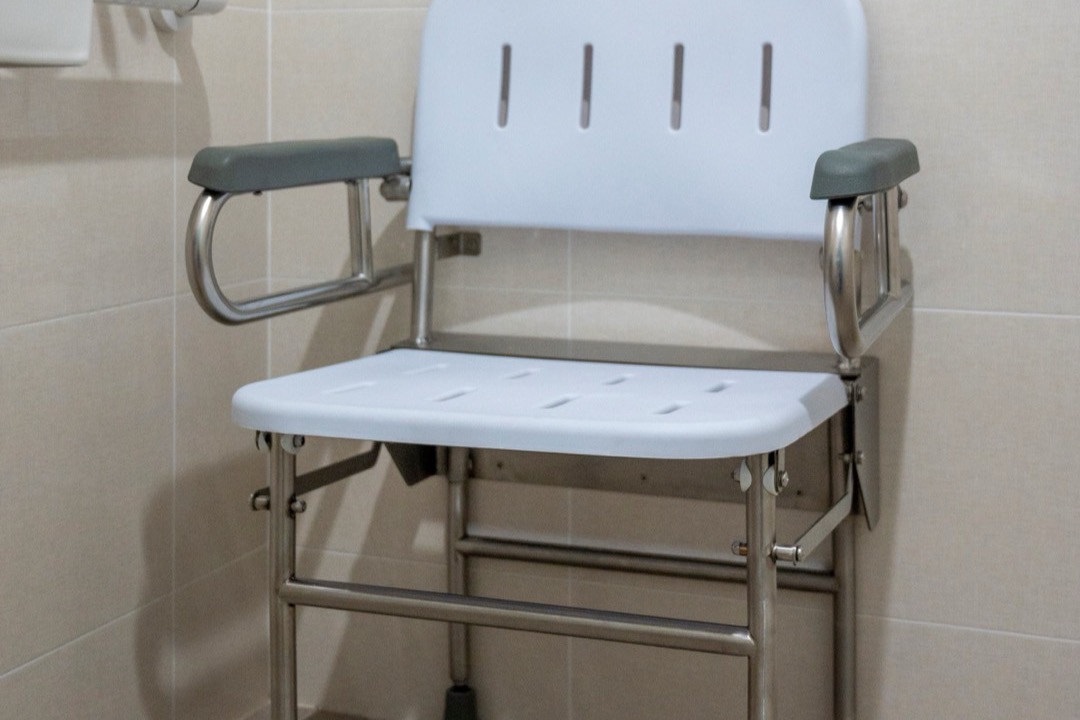
The bathroom is the single most dangerous room in the home for older adults, and the numbers make the case starkly. The CDC estimates that roughly 234,000 people aged 15 and older are treated in U.S. emergency departments each year for injuries sustained in or around the bathtub, shower, and toilet — and the risk climbs sharply with age. For adults 65 and older, injury rates are highest of any group, and the great majority of bathing-related injuries — close to 80 percent — happen in the tub or shower itself, not at the sink or toilet. A wet surface, a slick tub floor, a high tub wall to climb over, and the act of standing on one leg to wash all combine into a hazard that a single well-chosen piece of equipment can largely neutralize. The best shower chairs are not comfort items; they are among the most cost-effective fall-prevention devices in home health.
At Best Rated Docs, Dr. David Taylor evaluates bathroom safety equipment through the lens of how falls actually happen and how a specific chair design interrupts the chain of events that leads to one. For this guide we reviewed seven of the most-validated shower chairs and tub transfer benches on Amazon — spanning the full clinical range from a backless stool for an independent user, to chairs with a back and padded arms for users who need standing support, to a tub transfer bench for users who cannot safely clear the tub wall. The right answer depends entirely on the user’s mobility level, and below we lay out a clinical decision framework to match the chair type to the need. Whether you are setting up a bathroom for a recovering surgical patient, an aging parent, or yourself, this guide and our companion reviews of bath lifts and toilet seat risers cover the equipment that keeps the bathroom safe.
After analyzing product specifications and tens of thousands of verified user reviews, here are our top picks across chair types and use cases. Read on for the complete clinical evaluation of each model, plus the measurement method, the Medicare and FSA/HSA documentation pathways, and the cleaning protocol that prevents mold.
| Product | Price | Buy |
|---|---|---|
| Medline Shower Chair Seat with Padded Armrests and BackBest Overall | $41.98 | View on Amazon |
| Hiqufet Backless Adjustable Shower Stool (500 lb)Budget Pick | $34.98 | View on Amazon |
| Medline Tub Transfer Bench with Reversible Backrest (400 lb)Premium Pick | $63.09 | View on Amazon |
| Drive Medical Shower Chair with Back and Padded ArmsRunner-Up | $40.99 | View on Amazon |
| Drive Medical Folding Bath Bench (Backless)Runner-Up | $40.49 | View on Amazon |
| Medline Shower Chair Bath Seat with Padded Armrests (No Back)Runner-Up | $30.79 | View on Amazon |
| Drive Medical Shower Chair with Back (No Arms)Runner-Up | $33.16 | View on Amazon |
Find the Best Shower Chair for Your Situation
Jump straight to the pick that matches the user’s mobility level and bathroom:
- Best shower chairs overall — our top picks reviewed
- Best for the elderly
- Best with arms (sit-to-stand support)
- Best folding shower chair
- Best for a bathtub
- Best bariatric / heavy-duty
- Best backless shower stool
A note on two related searches: a rolling shower chair with wheels and a swivel shower chair are different products — a wheeled shower commode or a rotating-seat unit — rather than the fixed in-tub seats reviewed here. If the user needs to be wheeled into a roll-in shower, or needs to rotate to face a caregiver, that is a distinct category we cover separately.
A Clinical Decision Framework: Matching Chair Type to Mobility Level
The most consequential decision in this category is not which brand to buy — it is which type of seat the user actually needs. Buy a type below the user’s real mobility level and the chair becomes a fall hazard rather than a fall preventer. Use this framework before looking at any specific product.
Independent user, good balance and trunk control — a backless stool. If the user can walk into the shower, stand briefly, and balance well but simply tires or needs to sit to conserve energy, a backless stool is sufficient. It takes up the least space, fits the narrowest tubs, and keeps the user mobile. The budget Hiqufet stool is built for exactly this user.
Needs supervision or some support — a chair with back and arms. If the user has reduced balance, gets short of breath, or occasionally needs a hand, step up to a chair with both a backrest (to prevent a backward fall) and armrests (to push up from when standing). This is the most broadly safe configuration and the reason it is our best-overall category. The Medline padded chair is the reference standard here.
Cannot safely clear the tub wall — a transfer bench. This is the dividing line that sends a user to a different device entirely. If lifting a leg over the tub rim is unsafe — because of weakness, poor balance, or hip precautions after surgery — no in-tub chair solves the problem, because the danger is the step over the wall, not the sitting. A tub transfer bench straddles the wall so the user sits outside and slides in. The Medline transfer bench is purpose-built for this.
Cannot transfer or weight-bear safely even with a bench — a powered bath lift. When a user cannot lower themselves to a seat or rise from one under their own power, a manual chair is not enough and a powered bath lift that gently lowers and raises the user is the appropriate device. That is a separate category, and our guide to bath lifts covers the lowering-and-raising powered options for maximum-assist users.
How We Chose These Shower Chairs
Every product in this review is a legitimate bathing-safety device suitable for a specific user population, not a cosmetically restyled version of the same seat. We evaluated each on six criteria: structural integrity and rated weight capacity, seat height range and the precision of its adjustment, the presence and removability of a backrest and armrests, seat width and stability, non-slip feet and seat drainage, and the volume and quality of verified Amazon reviews as a proxy for real-world reliability. We deliberately selected across the full clinical spectrum — backless stool, folding bench, wide seat with arms, back-only chair, full chair with back and arms, and tub transfer bench — so that the framework above maps to a concrete recommendation. Every ASIN was verified as live and in stock as of the update date above.
Best Shower Chairs Overall
These are the seven seats that earned a place in this guide, each reviewed in full below. The Medline padded chair with back and arms is our best overall pick for the widest range of users; the use-case sections after the reviews then match specific situations — the elderly, chairs with arms, folding chairs, bathtub use, bariatric users, and backless stools — to the right pick from this same lineup.
1. Medline Shower Chair with Padded Armrests and Back — Best Overall
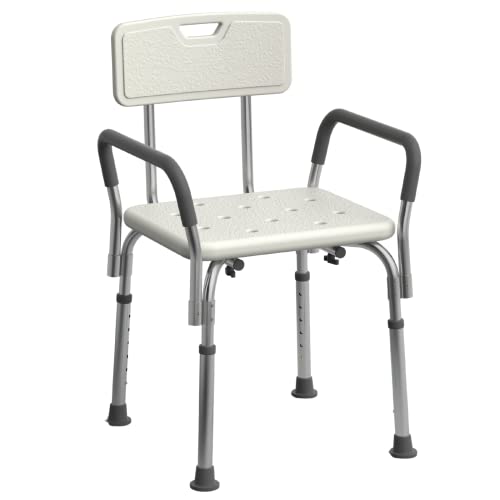
The Medline padded shower chair earns the best overall designation because it covers the broadest swath of users safely and is backed by a validation pool no competitor approaches — more than 35,000 verified reviews at a 4.7-star average. For the most common scenario in home health, a user who needs both a backrest to prevent a backward fall and armrests to push up from when standing, this chair is the reference standard. The padded back and padded arms make longer sits more comfortable, which matters for users who bathe slowly or need a caregiver’s help.
The feature that elevates this chair above a simple back-and-arms design is that both the back and the arms are removable. That means one purchase adapts to two different mobility levels and to changing needs over time. A user recovering from surgery may need the full back-and-arms configuration during the early weeks, then strip the arms as strength returns and the tub feels cramped. A household buying ahead for an aging parent gets a chair that grows with the need rather than one that must be replaced. The 350 lb weight capacity provides an appropriate margin for the majority of adult users, the legs assemble tool-free with twist locks, and the seat’s drainage holes keep water from pooling.
The honest limitations are minor. The padded armrests are fixed rather than flip-up, so a user transferring sideways from a wheelchair will find them slightly in the way — a wide seat with no arms or a flip-arm commode would suit that specific transfer better. The seat is a standard width rather than extra-wide, and the padded surfaces need more diligent drying than bare plastic to keep mildew out of the foam seams. For the largest single group of shower-chair buyers, none of those caveats outweigh the combination of safety, adaptability, and overwhelming review validation.
Medline Shower Chair Seat with Padded Armrests and Back
by Medline
The most-reviewed shower chair on Amazon and our best overall pick — a removable padded back and arms let one chair adapt to changing mobility, backed by 35,000-plus reviews and FSA/HSA eligibility.
Pros
- Over 35,000 verified Amazon reviews at 4.7 stars — by a wide margin the most validated shower chair in the category, providing real-world reliability data that no single clinical endorsement can replicate for an FSA/HSA-eligible device under $60
- Removable padded back and removable padded armrests let one chair serve two distinct mobility levels — keep the arms and back for a user who needs push-up assistance to stand, or strip them for a more independent user in a smaller tub
- Tool-free assembly with twist-lock legs and a 350 lb weight capacity that covers the large majority of adult users with an appropriate safety margin
- Drainage holes in the seat prevent water pooling, and the angled non-slip rubber feet are sized for both standard tubs and walk-in shower floors
Cons
- Padded armrests are fixed in position and do not flip up or swing away, which makes lateral (sideways) transfers from a wheelchair more awkward than on an arm-free stool
- The seat is a standard width — users who need the widest possible seating surface should size up to a dedicated wide-seat model
- Padded surfaces require more diligent drying than bare plastic to prevent mildew at the foam seams over months of daily use
2. Hiqufet Backless Adjustable Shower Stool — Best Budget
The Hiqufet backless stool is the best budget pick, and it is the right purchase for one specific and common user: someone with good balance and trunk control who simply needs a stable place to sit while bathing. For that independent user, a backless stool is not a compromise — it is the correct clinical choice, because it conserves energy, takes up the least tub space, and keeps the user mobile without features they do not need.
What makes the Hiqufet stand out beyond price is its weight capacity. At 500 pounds it carries the highest rating of any seat in this review, exceeding chairs that cost several times as much — the maker sensibly recommends a 350-pound comfort range, which still leaves a wide dynamic-load buffer over the 50-pound margin described in the buyer’s guide below. That headroom makes it the natural budget choice for a heavier or bariatric user, not just a low-cost one. The compact U-shaped seat and 4.35-pound aluminum frame fit inside narrow tubs and corner shower stalls where a full chair with arms and a back simply will not, and the five tool-free height levels from 14.8 to 18.7 inches assemble in about three minutes without tools — a real advantage for a user or caregiver with limited hand strength — to hit the floor-to-knee-crease target for most adults. It is FSA/HSA eligible at checkout, and the anodized frame resists rust in a wet environment.
The limitations follow directly from the design and must be respected. There is no backrest and there are no armrests, which means this stool is appropriate only for an independent user — it offers no fall protection if the user loses balance backward and no leverage for someone who needs help standing. A high-fall-risk user, anyone recovering from hip or knee surgery, or anyone who needs supervision should choose a chair with a back and arms instead. The U-shaped seat is also shallower front-to-back than the wide bath seats here, so a broad-framed user who wants the largest surface should look at the 21-inch Medline wide seat. Within its intended population, though, the Hiqufet delivers more weight capacity and a lower price than anything else here.

Hiqufet Backless Adjustable Shower Stool (500 lb)
by Hiqufet
The best budget pick and the highest weight capacity in this review — a 500 lb-rated, FSA/HSA-eligible backless stool that assembles tool-free in minutes and fits the narrowest tubs, ideal for an independent user (or a heavier user) who needs a stable seat but not back or arm support.
Pros
- 500 lb weight capacity is the highest of any seat in this review — a genuine bariatric-grade margin that exceeds chairs costing far more, while the maker's recommended 350 lb comfort range leaves a wide dynamic-load safety buffer
- Compact backless footprint at just 4.35 pounds tucks into narrow tubs and tight corner stalls where a full chair with a back and arms will not fit, and lifts out easily for cleaning
- Five tool-free height levels from 14.8 to 18.7 inches assemble in about three minutes with no tools — genuinely doable for a user with limited hand strength — covering the floor-to-knee-crease target for users roughly 5 foot 2 to 6 foot 2
- FSA/HSA eligible at checkout, with an anodized rust-resistant aluminum frame, a U-shaped ergonomic seat, eight drainage holes, and non-slip suction feet on reinforced cross-braces for stability
Cons
- No backrest and no armrests — appropriate only for an independent user with good trunk control and balance, and not suitable for anyone who needs push-up assistance to stand or back support while seated
- The U-shaped seat is shallower front-to-back (about 10 inches deep) than the wide bath seats here, so broad-framed users who want the largest surface should size up to the 21-inch Medline wide seat
- Backless design offers no fall protection if the user loses balance backward, so it should not be a first choice for a high-fall-risk user
3. Medline Tub Transfer Bench — Upgrade Pick
The Medline tub transfer bench is the upgrade pick, and it is the single most important product in this review for a particular user: anyone who cannot safely lift a leg over the tub wall. That step — standing on one leg while swinging the other over a high, wet tub rim — is where a large share of serious bathroom falls happen, and no in-tub chair addresses it, because the chair only helps once you are already inside. The transfer bench solves the actual problem. With two legs inside the tub and two on the bathroom floor outside, the user sits on the outboard portion of the bench and slides across into the tub without ever stepping over the wall.
The build is where Medline earns the slot. The frame is rust-resistant aluminum rated to 400 pounds, so it carries a heavier user than any other backed seat in this review, and it assembles with push-button locks and no tools. The backrest reverses to either side of the seat, which matters because bathroom layouts are not standardized and the bench has to face the right way for the tub it sits in. The seat height sets anywhere from 17.5 to 22 inches, enough range to match most adults’ knee-crease height and to raise it for post-surgical hip precautions. Suction-cup feet hold the inside legs on the tub floor while slip-resistant feet grip the bathroom floor, and a fixed armrest on one side gives the user something to push against during the slide.
The trade-offs are inherent to the form factor. A transfer bench needs more bathroom floor space than an in-tub chair and requires a tub wall to span, so it does not fit a curbless walk-in shower. The armrest does not move with the backrest, so decide which side it needs to be on before you set the bench up, and at about 12.6 pounds it is a heavier lift out of the tub for cleaning than the in-tub chairs. None of that changes the core value: for a user who cannot clear the tub wall, this is the device that makes tub bathing safe again. For users beyond what a bench can assist, our bath lift guide covers the powered next step.

Medline Tub Transfer Bench with Reversible Backrest (400 lb)
by Medline
The upgrade pick and the right answer for any user who cannot clear the tub wall: a 400 lb aluminum bench with a reversible backrest that lets the user sit and slide into the tub instead of stepping over it.
Pros
- Spans the tub wall with two legs inside the tub and two outside, so a user who cannot safely lift their leg over the tub rim can sit and slide across rather than step over, the single most important safety feature for fall prevention in a standard bathtub
- The backrest reverses to either side of the seat, so the same bench works whether the tub faucet sits on the left or the right, and a fixed armrest gives something to push against during the slide across
- Push-button legs set the seat anywhere from 17.5 to 22 inches, which covers the knee-crease height of most adults and leaves room to raise it for post-surgical hip precautions
- Rated to 400 lb on a rust-resistant aluminum frame, the highest capacity of any seat with a backrest in this review, with suction-cup feet inside the tub and slip-resistant feet on the bathroom floor
Cons
- Requires more bathroom floor space than an in-tub chair (about 32 inches overall width) and will not fit a walk-in shower without a tub wall to span; it is purpose-built for the over-the-tub-wall transfer problem
- The armrest is stationary and stays on one side when you move the backrest, so check that it lands on the side the user needs before settling on an orientation
- At roughly 12.6 lb it is noticeably heavier to lift out of the tub for cleaning than the lightweight aluminum in-tub chairs
4. Drive Medical Shower Chair with Back and Padded Arms — Runner-Up
The Drive Medical back-and-padded-arms chair is the runner-up to the Medline best-overall pick, and it is clinically equivalent in configuration — a backrest plus removable padded armrests, the broadly safe setup for a user who needs both fall protection and standing leverage. It earns its spot through two practical advantages: it is light and it carries Drive Medical’s hospital-supply pedigree. At about 8.5 pounds the aluminum frame is the easiest full chair here to lift out of the tub for cleaning or to carry between bathrooms, which matters more than buyers expect when a chair has to be moved and rinsed regularly.
The padded armrests remove cleanly when a user transitions to needing less support, mirroring the adaptability of the Medline. Height adjusts in 1-inch increments, the back is removable, and the tubing gauge and tip compound match what a patient would receive at hospital discharge. The chair is FSA/HSA eligible at checkout. The only reason it sits behind the Medline is review volume — under 2,000 reviews versus more than 35,000 — though the 4.7-star average is identical, and for many buyers the lighter weight is reason enough to prefer it. As with the Medline, the fixed (non-flip) arms make sideways wheelchair transfers a little awkward, and the seat is standard rather than extra-wide.

Drive Medical Shower Chair with Back and Padded Arms
by Drive Medical
A lightweight, clinically equivalent alternative to the best-overall pick — the same back-and-padded-arms configuration at 8.5 pounds, easiest to move and clean, from a major hospital supplier.
Pros
- Lightweight aluminum frame at about 8.5 pounds makes this the easiest full chair to lift in and out of the tub for cleaning or to move between bathrooms
- Removable padded armrests provide push-up leverage for sit-to-stand transitions and remove cleanly when a user transitions to needing less support
- Height adjusts in 1-inch increments with a removable back, and Drive Medical's hospital-supply pedigree means the tubing gauge and tip compound match discharge-issue equipment
- 350 lb weight capacity and FSA/HSA eligibility at checkout for pre-tax cost recovery
Cons
- Under 2,000 reviews — a smaller validation pool than the Medline best-overall pick, though the 4.7-star average is identical
- Standard seat width rather than a wide seat, so broad-framed users may prefer a dedicated wide-seat model
- Padded arms are fixed rather than flip-up, which makes wheelchair-to-chair lateral transfers less convenient
5. Drive Medical Folding Bath Bench (Backless) — Folding Pick for Shared Bathrooms
The Drive Medical folding bath bench fills a niche the other seats cannot: it folds flat without tools, which makes it the right choice for a shared bathroom where the chair must come down between uses, or for travel and temporary recovery where a permanent fixture is not wanted. A household with one bathroom serving both an independent adult and a recovering family member can set it up when needed and tuck it behind the door otherwise — a real convenience that a fixed chair does not offer.
The seat is a wide 19.25 inches with drainage holes, giving a broad and stable surface across a standard tub floor, and the tool-free setup and breakdown make it genuinely practical to pack for a trip or move to a guest bathroom. The two caveats are straightforward. First, the 300 lb capacity is the lowest in this review and must be checked against the user’s body weight with the 50-pound margin in mind. Second, it is backless and armless, so like the budget stool it suits an independent user only and provides no back support or push-up help. The folding mechanism also adds a slight amount of flex compared to a fixed-frame chair, which a user who shifts weight aggressively will notice. For the right user who needs a stowable seat, it is the only folding option here.

Drive Medical Folding Bath Bench (Backless)
by Drive Medical
The folding pick for shared or small bathrooms — a wide backless bench that collapses flat without tools, ideal for travel or temporary recovery where the seat cannot stay set up permanently.
Pros
- Folds flat without tools for storage behind a door or in a closet, the only folding seat in this review and the right choice for shared bathrooms where the chair must be removed between uses
- Wide 19.25-inch seat with drainage holes provides a broad, stable surface that fits comfortably across a standard tub floor
- Tool-free setup and breakdown make it practical for travel, guest use, or temporary post-surgical recovery where the chair is not a permanent fixture
- Aluminum frame with non-slip feet at a mid-budget price point
Cons
- 300 lb weight capacity is the lowest in this review and must be verified against the user's body weight before purchase
- Backless and armless, so it suits an independent user only and offers no back support or push-up assistance
- Folding mechanism introduces a small amount of flex compared to a fixed-frame chair, noticeable to users who shift weight aggressively
6. Medline Wide Bath Seat with Padded Armrests (No Back) — Widest Seat Pick
The Medline wide bath seat occupies the comfortable middle ground between a bare stool and a full chair, and it is the pick for broad-framed users who want the largest possible seating surface plus standing leverage but do not need a backrest. At 21 inches wide by 13.5 inches deep, this is the widest seat in the review by a clear margin — meaningfully more stable for a larger user shifting weight while washing than the narrower stools and standard chairs.
The padded wide armrests are the key feature: they provide the same push-up leverage for sit-to-stand that a full chair’s arms do, but without a backrest taking up tub space. For a user who can support their own back but needs help rising, that is an efficient configuration. Push-button height adjusts from 16 to 21 inches, covering a wide range of leg lengths and accommodating the raised seating useful for hip precautions, and the 350 lb capacity with drainage holes and non-slip feet rounds out a safe, FSA/HSA-eligible package. The limitation is simply the absence of a back — a user who needs back support while seated should choose a chair with a backrest, and the wide footprint will not fit the narrowest tubs where the compact budget stool fits.

Medline Shower Chair Bath Seat with Padded Armrests (No Back)
by Medline
The widest-seat pick with arms but no back — 21 inches of seating surface plus padded push-up arms make this the most comfortable choice for broad-framed users who need standing leverage but not back support.
Pros
- The widest seat in this review at 21 inches by 13.5 inches deep, giving broad-framed users the most stable and comfortable seating surface for shifting weight while washing
- Padded wide armrests provide push-up leverage for sit-to-stand without a backrest taking up tub space, a good middle ground between a bare stool and a full chair
- Push-button height adjustment from 16 to 21 inches covers a wide range of leg lengths and accommodates raised seating for hip precautions
- 350 lb weight capacity and FSA/HSA eligibility, with drainage holes and non-slip feet
Cons
- No backrest, so it is not appropriate for a user who needs back support while seated, even though the armrests provide standing leverage
- Wide footprint may not fit the narrowest tubs or corner stalls where the compact budget stool fits
- Padded arms are fixed rather than flip-up, limiting lateral transfer convenience
7. Drive Medical Shower Chair with Back (No Arms) — Lightest Back-Supported Pick
The Drive Medical back-only chair is the lightest full chair in this review at about 7 pounds, and it serves a specific and common need: a user who needs a backrest for support and fall protection but does not need armrests, especially in a narrow tub where a full chair with arms simply will not fit. Removing the arms reclaims valuable tub width while keeping the most important safety feature — a back that prevents a backward fall and supports upright posture.
More than 16,000 verified reviews at 4.6 stars confirm the reliability of this widely used configuration. The removable contoured back, aluminum frame, drainage holes, and FSA/HSA eligibility make it an easy, inexpensive choice for the right user. The two limits to weigh: the 300 lb capacity should be verified against body weight, and because there are no armrests, the chair offers no push-up leverage for a user who needs help rising — anyone in that situation should step up to a chair with arms. At 7 pounds it is the easiest chair here to lift over the tub wall for cleaning, which, combined with its low price, makes it a strong value for a back-supported user in a tight tub.

Drive Medical Shower Chair with Back (No Arms)
by Drive Medical
The lightest back-supported pick at 7 pounds — a removable contoured back gives fall protection in narrow tubs without armrests eating up width, validated by 16,000-plus reviews at a budget price.
Pros
- At about 7 pounds the lightest full chair in this review, easiest to lift over the tub wall for cleaning and to move between bathrooms
- Over 16,000 verified reviews at 4.6 stars, a deep validation pool confirming reliability for the back-but-no-arms configuration
- A removable contoured back provides seated support and fall protection without armrests taking up tub width, ideal for narrow tubs where a full chair with arms will not fit
- Aluminum frame with drainage holes, height adjusts from 15.5 inches and up, and FSA/HSA eligible at checkout
Cons
- 300 lb weight capacity that should be verified against the user's body weight before purchase
- No armrests, so it does not provide push-up leverage for users who need help rising from the seated position
- Narrower 11.5-inch seat depth than the wide-seat models, less surface for broad-framed users
Best Shower Chair for the Elderly
For an older adult, the priority is a seat that both prevents a backward fall and gives leverage to stand — most bathroom falls in seniors happen in the tub or shower, and a chair with a back and arms interrupts the chain of events that leads to one. If stepping over the tub wall has become unsafe, skip the in-tub chair entirely and use a transfer bench.
| Product | Price | Buy |
|---|---|---|
| Medline Shower Chair Seat with Padded Armrests and BackBest overall for seniors Removable padded back and arms give both fall protection and push-up leverage, backed by 35,000+ reviews | $41.98 | View on Amazon |
| Drive Medical Shower Chair with Back and Padded ArmsLightest chair to move & clean Same back-and-arms safety at 8.5 lb, so a caregiver can lift it out to rinse between uses | $40.99 | View on Amazon |
| Medline Tub Transfer Bench with Reversible Backrest (400 lb)Best if the tub wall is unsafe Straddles the tub wall so a frail user sits and slides in instead of lifting a leg over the rim | $63.09 | View on Amazon |
Best Shower Chair with Arms
Armrests are the feature that protects a healing or weak joint during the sit-to-stand transition — they let the user push down through the arms instead of loading the knees and hips. All three picks below provide that leverage; they differ in whether you also want a full back or the widest possible seat.
| Product | Price | Buy |
|---|---|---|
| Medline Shower Chair Seat with Padded Armrests and BackBest overall with arms Padded back plus removable padded arms — the broadly safe configuration for anyone who needs standing leverage | $41.98 | View on Amazon |
| Drive Medical Shower Chair with Back and Padded ArmsLightest with arms Same back-and-arms setup at 8.5 lb, easiest to move between bathrooms | $40.99 | View on Amazon |
| Medline Shower Chair Bath Seat with Padded Armrests (No Back)Widest seat with arms 21-inch-wide seat with padded push-up arms for a broad-framed user who does not need a backrest | $30.79 | View on Amazon |
Best Folding Shower Chair
A folding seat is the answer for a shared bathroom where the chair has to come down between uses, or for travel and temporary recovery. Only one seat here truly folds flat; the compact budget stool is the packable alternative when storage — not fold-flat — is the goal.
| Product | Price | Buy |
|---|---|---|
| Drive Medical Folding Bath Bench (Backless)Best folding — stows flat The only seat here that folds flat without tools, ideal for shared bathrooms and travel | $40.49 | View on Amazon |
| Hiqufet Backless Adjustable Shower Stool (500 lb)Most compact & portable alternative At 4.35 lb with tool-free 3-minute assembly it packs down for trips, though it does not fold flat | $34.98 | View on Amazon |
Best Shower Chair for the Bathtub
A standard bathtub adds a hazard a walk-in shower does not: the high wall you must step over. Match the seat to whether the user can still clear that wall, and to how much tub width you have to work with.
| Product | Price | Buy |
|---|---|---|
| Medline Tub Transfer Bench with Reversible Backrest (400 lb)Best for a standard tub Transfer bench spans the tub wall — the single most protective feature for bathtub bathing | $63.09 | View on Amazon |
| Medline Shower Chair Seat with Padded Armrests and BackBest in-tub chair with support Sits inside the tub with a back and padded arms for a user who can still clear the wall | $41.98 | View on Amazon |
| Drive Medical Shower Chair with Back (No Arms)Best for a narrow tub 7 lb back-only chair reclaims tub width where a full chair with arms will not fit | $33.16 | View on Amazon |
Best Bariatric & Heavy-Duty Shower Chair
A heavier user needs a seat rated well above their body weight — the 50-pound margin matters most here, because a sit-to-stand transition briefly drives peak force above static body weight. These three carry the highest capacities and review volumes in the review.
| Product | Price | Buy |
|---|---|---|
| Hiqufet Backless Adjustable Shower Stool (500 lb)Highest capacity (500 lb) 500 lb-rated backless stool, the highest capacity of any seat here | $34.98 | View on Amazon |
| Medline Shower Chair Seat with Padded Armrests and BackMost-reviewed heavy-duty chair 350 lb padded chair with back and arms, validated by 35,000+ reviews | $41.98 | View on Amazon |
| Medline Tub Transfer Bench with Reversible Backrest (400 lb)Heavy-duty transfer bench 400 lb transfer bench for a heavier user who also cannot clear the tub wall | $63.09 | View on Amazon |
Best Backless Shower Stool
A backless stool suits an independent user with good balance who just needs a stable seat — it takes the least space and keeps the user mobile. These three cover the value, widest-seat, and folding versions of the backless form.
| Product | Price | Buy |
|---|---|---|
| Hiqufet Backless Adjustable Shower Stool (500 lb)Best value stool 500 lb-rated, FSA/HSA-eligible stool that fits the narrowest tubs | $34.98 | View on Amazon |
| Medline Shower Chair Bath Seat with Padded Armrests (No Back)Widest backless seat (with arms) 21-inch seat with push-up arms but no back — the most comfortable backless option | $30.79 | View on Amazon |
| Drive Medical Folding Bath Bench (Backless)Best folding backless bench Backless bench that folds flat for storage in a shared bathroom | $40.49 | View on Amazon |
Buyer's Guide
Choosing a shower chair is not a matter of picking the most comfortable seat — it is a clinical decision that should be matched to the user's mobility level, body weight, and bathroom geometry. The wrong choice is not merely uncomfortable; in a bathroom, where most household falls in older adults occur, it can be dangerous.
Mobility Level and Chair Type
Match the chair type to how much help the user needs. An independent user with good balance and trunk control needs only a backless stool to conserve energy and reduce standing time. A user who needs supervision or support should have a chair with both a back and armrests — the back prevents a backward fall and the arms provide push-up leverage for standing. A user who cannot safely lift a leg over the tub wall needs a tub transfer bench, which lets them sit and slide across rather than step over. For users who need maximum assistance and cannot weight-bear or transfer safely even with a bench, a powered bath lift is the appropriate next step; our guide to bath lifts covers those options. Picking a type below the user's actual need is the most common and most dangerous mistake.
Weight Capacity and the 50-Pound Margin
Select a chair rated for at least 50 pounds above the user's body weight. Bathing is a dynamic activity — the peak force through the seat and arms during a sit-to-stand transition briefly exceeds static body weight, and a 50-pound margin absorbs that dynamic load instead of running the chair at its limit. The budget Hiqufet stool in this review is rated to 500 pounds and the Medline and several Drive Medical chairs to 350 pounds, while the folding and back-only Drive Medical seats cap at 300 pounds. Verify the user's weight against the rating and never operate a chair at or near its maximum, where structural failure becomes a fall hazard.
Seat Height and Adjustability
The correct seat height equals the distance from the floor to the back of the user's knee crease (the popliteal fossa) measured standing barefoot. At that height the feet rest flat and the hips and knees form a right angle, the most stable position for standing up. Favor a chair with a generous adjustment range and fine increments so the height can be dialed in exactly and re-adjusted as recovery progresses. The Medline transfer bench spans 17.5 to 22 inches on push-button legs, enough range for most adults. After hip or knee replacement, set the seat slightly higher than baseline to keep hip flexion at or below 90 degrees.
Armrests and Backrest
Armrests and a backrest are not luxuries — they are clinical features that determine whether a chair is safe for a given user. A backrest prevents a backward fall and supports upright posture for users with limited trunk control. Armrests provide the push-up leverage that protects healing joints during sit-to-stand and is essential after hip or knee surgery. Removable arms and backs, as on the Medline and Drive Medical chairs here, let one chair adapt as the user's mobility changes. An independent, strong user can forgo both and use a stool; anyone who needs help standing should not.
Transfer Bench vs In-Shower Chair
This is the pivotal geometry decision and it comes down to one question: can the user safely clear the tub wall? In a standard bathtub, lifting a leg over the high rim is where many bathroom falls happen. If that step is unsafe, a transfer bench that straddles the wall lets the user sit and slide across without ever stepping over — the single most protective feature for tub bathing. If the user has a curbless walk-in shower or can reliably step over the tub edge, an in-shower chair is sufficient, takes up far less floor space, and is easier to clean. Measure your tub and shower opening before deciding.
Non-Slip Safety and Drainage
The chair's contact with the floor is the last line of defense against a fall. Insist on non-slip rubber feet and inspect them monthly, replacing any that are worn, cracked, or have lost tread. Drainage holes in the seat prevent water from pooling and keep the surface from becoming slick. Pair the chair with a non-slip bath mat, a grab bar anchored into a stud or with proper hardware, and adequate lighting. These environmental measures reduce fall risk more than any single product feature, and they are inexpensive relative to the cost of a fall.
How to Choose the Best Shower Chair
The buyer’s guide factors above cover the six core selection criteria. Three measurement and documentation details, often skipped, make the difference between a chair that fits and one that gets returned.
Measure the seat height correctly. The target height is the distance from the floor to the back of the user’s knee crease — the popliteal fossa, the soft hollow behind the knee — measured while standing barefoot. Set the chair to that number and the user’s feet will rest flat with hips and knees at a right angle, the most stable position for standing back up. After a hip or knee replacement, set the seat slightly higher than this baseline so hip flexion stays at or below 90 degrees, honoring the standard post-operative precaution. A low stool forces deep hip flexion and is exactly what to avoid during that recovery.
Apply the 50-pound capacity margin. Choose a chair rated at least 50 pounds above the user’s body weight. The rated number is a static load, but a sit-to-stand transition briefly drives peak force above body weight, and the margin absorbs that dynamic loading instead of running the chair at its limit. The Hiqufet stool (500 lb) and the 350 lb Medline and Drive Medical chairs give the most headroom; the folding and back-only Drive Medical seats cap at 300 lb, so check the user’s weight against that.
Understand the Medicare and FSA/HSA pathway. Standard shower chairs and transfer benches are generally not covered by Medicare, which treats them as comfort items rather than durable medical equipment. There is one route worth knowing: a 3-in-1 bedside commode chair (HCPCS code E0163) can be Medicare-covered with a physician order documenting medical necessity, and some commode models are rated for in-shower use — so for certain patients the commode route covers a seat that also works in the shower. For a dedicated shower chair, the reliable cost recovery is through an FSA or HSA, for which these chairs are typically eligible. If your administrator asks for substantiation, a brief Letter of Medical Necessity from your physician will satisfy nearly every plan. Pairing the chair with other bathroom safety equipment — a toilet seat riser for the same hip precautions, a walking cane for the path to and from the bathroom, or bed rails for safe transfers — often qualifies under the same accounts.
A final note on cleaning. Mold and mildew are the most common long-term complaint with any shower chair, and a simple layered protocol prevents nearly all of it: rinse and dry the chair daily, wash with mild soap weekly, disinfect with a 1-to-10 bleach solution monthly, descale hard-water buildup with diluted white vinegar quarterly, and inspect the rubber feet for wear every month — worn feet are a slip hazard. Padded chairs need more diligent daily drying than bare plastic because foam seams trap moisture.
Final Verdict
For the most common shower-chair scenario — a user who needs both a backrest to prevent a backward fall and armrests to push up from when standing — the Medline Shower Chair with Padded Armrests and Back is our best overall recommendation. Its removable back and arms let one chair adapt across mobility levels, the 350 lb capacity suits the majority of adults, and more than 35,000 verified reviews make it the most-validated chair in the category. Measure the seat to the user’s knee-crease height, raise it slightly for post-surgical hip precautions, and it will serve safely for years.
For an independent user who needs a seat but not assistance, the Hiqufet Backless Adjustable Shower Stool is the budget pick — a 500 lb-rated, FSA/HSA-eligible stool that fits the narrowest tubs. For the user who cannot safely clear the tub wall, the Medline Tub Transfer Bench is the upgrade pick and the single most protective device in this review, because it eliminates the over-the-wall step where so many bathroom falls occur. As mobility needs change, plan ahead: a user who can no longer lower or raise themselves under their own power has moved past what any manual chair can do, and our guide to bath lifts and our overview of home recovery after surgery cover the next steps. As always, match the equipment to the user’s actual mobility level rather than to convenience or cost — and when in doubt, ask a physical or occupational therapist to confirm the fit. A 30-minute consultation can prevent a fall that takes months to recover from.
Frequently Asked Questions
What is the difference between a shower chair and a tub transfer bench?
Does Medicare cover shower chairs?
Are shower chairs FSA or HSA eligible?
What height should I set a shower chair to?
What weight capacity shower chair do I need?
How do I clean a shower chair to prevent mold and mildew?
What is the best shower chair after a hip or knee replacement?
Related Articles
About the Reviewer

Dr. David Taylor, MD, PhD
Drexel University College of Medicine (MD), Indiana University School of Medicine (PhD)
Dr. David Taylor is a licensed physician and medical researcher who founded BestRatedDocs in 2016. With an MD from Drexel University and a PhD from Indiana University School of Medicine, he combines clinical expertise with a passion for health technology to provide evidence-based product recommendations. Dr. Taylor specializes in health informatics and regularly evaluates medical devices, diagnostic equipment, and therapeutic products to help healthcare professionals and patients make informed decisions.