8 Best Orthotic Insoles of 2026
Dr. David Taylor reviews the best orthotic insoles for plantar fasciitis, flat feet, and overpronation. Compare top arch support insoles by rigidity, heel cup, and FSA eligibility.
Updated
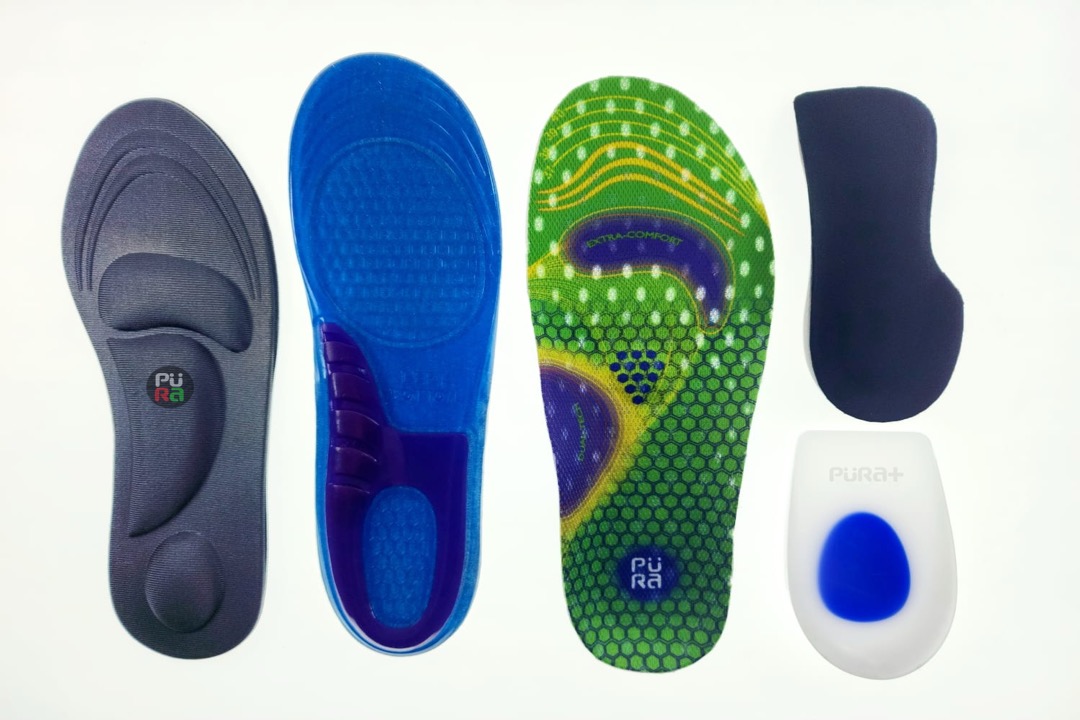
Plantar fasciitis alone accounts for approximately 2.1 million physician office visits per year in the United States and affects roughly 10% of the population at some point in their lifetime. The condition arises from repetitive microtearing of the plantar fascia — the thick fibrous band running from the calcaneus (heel bone) to the metatarsal heads — producing the characteristic stabbing pain with the first steps of the morning as the fascia tightens overnight and is suddenly loaded at wake-up. Beyond plantar fasciitis, flat-foot overpronation and high-arch supination collectively affect an estimated 20–30% of adults and contribute to a cascade of downstream pathology: tibial stress, knee valgus loading, IT band syndrome, and lower back pain. Orthotic insoles address this cascade at the source by controlling subtalar joint mechanics — and in 2026, the best orthotic insoles for plantar fasciitis and best arch support insoles represent one of the highest-evidence, most cost-effective interventions in musculoskeletal medicine.
BestRatedDocs.com is founded by Dr. David Taylor (MD, Drexel University; PhD, Indiana University), and we approach every product category with the same standard we apply in clinical practice: evidence first, then real-world validation. For this orthotic insoles roundup, we analyzed the published clinical literature on OTC versus custom orthotic outcomes, reviewed more than 200,000 combined Amazon user ratings across seven products, and cross-referenced our picks with independent expert rankings from Forbes Health, Wirecutter, and the American Podiatric Medical Association. We also examined a specific angle no competitor in this space covers: FSA and HSA eligibility — a practical financial consideration that can reduce your out-of-pocket cost by 25–40%.
Whether you are managing active plantar fasciitis, seeking the best insoles for flat feet, correcting overpronation to protect your knees, or simply reducing work-boot fatigue after ten-hour shifts, this guide identifies the optimal choice for each presentation. We also cover when OTC orthotics are sufficient versus when a podiatrist referral for custom devices is clinically warranted — a question the competing roundups from Wirecutter and Forbes conspicuously fail to address with clinical precision. One maintenance point buyers routinely overlook: even a semi-rigid orthotic loses meaningful support as its EVA foam compresses, so a daily-wear insole should be replaced roughly every 6 to 12 months — sooner for heavier users or those on their feet all day — rather than worn until it visibly falls apart.
Find the Best Orthotic Insole for Your Foot
Jump straight to the pick that matches your situation:
- Overall best orthotic insoles — every pick reviewed in full
- Best insoles for flat feet
- Best orthotic insoles for overpronation
- Best orthotic insoles for high arches
- Orthotic insoles by use case — heel spurs, metatarsalgia, supination, work boots
How We Selected These Orthotic Insoles
Our selection process required each product to meet four criteria. First, verified structural design — we excluded foam-only products marketed as “orthotics” that provide zero biomechanical correction. Second, meaningful Amazon review volume — we require real-world validation beyond manufacturer claims and give preference to products with thousands of reviews, with one deliberate exception noted in the upgrade pick below. Third, category differentiation — each pick serves a distinct clinical or demographic need rather than duplicating another pick at a different price. Fourth, honest clinical context — we selected products we can describe accurately in terms of mechanism of action, not just marketing language. The result is a set of eight insoles spanning the full spectrum from a trim-to-fit budget option to a premium upgrade with a lifetime guarantee on its shell.
At this update we re-verified every listing directly on Amazon, and the upgrade pick had to change again. Tread Labs has relaunched its whole Amazon catalogue under new listings, so the Pace kit we previously linked is gone and the upgrade slot now points at the Pace 2, the current version of the same insole. The design, the four arch heights, the replaceable top cover and the Million Mile Guarantee all carry over; the review history does not, because the listing is new. We say more about that in the pick itself.
Best Orthotic Insoles Overall
These are the eight orthotic insoles that earned a place in this guide, each reviewed in full below. The PowerStep Pinnacle is our best overall pick for most buyers; the use-case sections after the reviews then match specific presentations — flat feet, overpronation, high arches, plantar fasciitis — to the right insole from this same lineup.
1. PowerStep Pinnacle Insoles — Best Overall
The PowerStep Pinnacle is the most clinically credentialed OTC orthotic on the market. It is the only insole in this guide carrying the American Podiatric Medical Association Seal of Acceptance — a designation requiring independent review of the product’s claims, materials, and clinical utility. That credential is not merely symbolic: it is why the Pinnacle appears in more podiatrist recommendations, physical therapy discharge summaries, and post-surgical orthotic protocols than any comparable OTC product. The dual-layer construction places a semi-rigid polypropylene shell beneath a dual-density EVA foam top layer, achieving the two goals that most insoles sacrifice one for the other: structural arch support and shock absorption within the same device.
The polypropylene shell is the functional core. Unlike foam alone, which compresses and deforms progressively under load, polypropylene maintains its geometry through the gait cycle, preventing the arch collapse that drives plantar fascia tension, posterior tibial tendon strain, and metatarsal stress. The medium-profile arch is calibrated for the largest patient segment — neutral-to-mild pronators — which is why it is appropriate as the first OTC insole recommendation for most patients with undifferentiated foot pain. The pre-sized construction (available in half-size increments) allows clean transfer between shoes without cutting, which is a practical advantage for patients who alternate between work shoes and casual footwear. Pairing the Pinnacle with compression socks is a common clinical recommendation for patients managing plantar fasciitis, as graduated compression reduces venous pooling and morning stiffness that exacerbates fascial pain.
The 31,000+ Amazon reviews provide validation at scale that laboratory testing cannot replicate. The most instructive pattern in the review data is the distribution of negative feedback: the majority of low ratings cite a break-in period of one to two weeks during which the semi-rigid arch causes discomfort as the foot adapts to corrected position. This is a normal orthotic adaptation response — not a product defect — and should be communicated to patients beginning their first orthotic trial. Users who push through the adaptation period consistently report sustained relief.

PowerStep Pinnacle Insoles, Orthotics for Plantar Fasciitis Relief, Made in USA Orthotic Insoles, Arch Support Inserts with Moderate Pronation
by PowerStep
Gold standard in OTC orthotics — APMA-accepted, podiatrist-prescribed, and backed by 30,000+ verified reviews.
Pros
- #1 podiatrist-recommended OTC orthotic with APMA Seal of Acceptance — clinical endorsement no generic insole can match
- Dual-layer EVA foam atop a semi-rigid polypropylene shell delivers cushioning and structural arch support simultaneously
- Pre-sized in standard shoe sizes — no trimming needed, transfers cleanly between shoes without refit
- Made in USA with over 30,000 Amazon reviews and 1,000+ units sold monthly, trusted by physical therapists nationwide
Cons
- Requires a 1–2 week break-in period as the polypropylene shell conforms to your foot geometry
- Semi-rigid arch can compress after 3–6 months under heavy daily use — plan for annual replacement
- Higher price than generic alternatives with comparable cushioning but not comparable structural support
2. Dr. Scholl’s Heavy Duty Support Insole — Budget Pick
The Dr. Scholl’s Heavy Duty Support Insole occupies a specific and well-defined clinical niche: workers in the 200+ pound range who spend 8–10 hours daily on hard surfaces in work boots. Its 87,000+ Amazon reviews represent the largest real-world validation dataset of any single orthotic insole on the platform, and the patterns in that data are consistent: users praise the deep heel cup, the shock absorption on concrete and warehouse floors, and the FSA eligibility. The deep heel cup is the structural highlight — while the insole lacks the semi-rigid polypropylene arch of the PowerStep Pinnacle, the calcaneal cradle provides meaningful rearfoot control that translates to reduced metatarsal pressure and lower back fatigue under sustained load.
The FSA and HSA eligibility makes this the most financially accessible clinical-quality insole in the category. For a working adult in a 24% federal tax bracket, FSA-eligible purchase of the Dr. Scholl’s Heavy Duty effectively reduces the cost by approximately one-quarter. At that price point, quarterly replacement — which is appropriate given the expected compression timeline under daily heavy-use conditions — costs less annually than a single pair of custom orthotics. For patients whose primary complaint is work-related foot fatigue, lower back pain from prolonged standing, and heel soreness rather than structural overpronation, this insole delivers the indicated relief without overprescribing biomechanical correction.
The known limitation is genuine: this is a cushioning and shock-absorption device, not a structural corrective orthotic. Users with documented moderate-to-severe overpronation, tibial stress syndrome, or IT band pathology driven by subtalar eversion need the semi-rigid shell of the PowerStep Pinnacle or Maxx to address the mechanical root cause. For the large population of workers who simply need effective heel and arch cushioning in heavy footwear, the Dr. Scholl’s Heavy Duty remains the most validated, most affordable, and most tax-advantaged option available.

Dr. Scholl's Heavy Duty Support Insole Orthotics, Big & Tall, 200lbs+, Wide Feet, Shock Absorbing, Arch Support, Distributes Pressure, Trim to Fit Inserts, Work Boots & Shoes, Men Size 8-14
by Dr. Scholl's
Most battle-tested budget insole for big and tall workers — 86,000 reviews confirm it delivers real-world relief under heavy daily use.
Pros
- 86,000+ Amazon reviews — the most-reviewed OTC orthotic in the category, providing a massive real-world validation dataset
- FSA/HSA eligible at under $15 — the lowest cost entry point for tax-advantaged orthotic coverage
- Deep heel cup and reinforced arch zone engineered for users 200+ lbs and wide feet in work boots
- Shock-absorbing EVA foam base distributes metatarsal pressure and reduces lower back and foot fatigue on hard surfaces
Cons
- A subset of users report squeaking in certain shoe types — primarily work boots with hard insole beds
- Cushioning-focused design lacks the semi-rigid structural shell needed for correcting severe overpronation
- Durability under heavy daily use is mediocre — typical lifespan of 3–4 months before compression sets in
3. Tread Labs Pace 2 Insoles — Upgrade Pick
The Tread Labs Pace 2 addresses the core limitation of every other OTC orthotic: the assumption that all users of a given shoe size share the same arch height. In clinical practice, arch height varies substantially within a shoe size — two patients wearing a Men’s 10 may have flat feet, medium arches, or high arches, each requiring a different support geometry for effective biomechanical correction. The Pace solves this with four distinct arch height configurations (Low, Medium, High, Extra High), each built on the same moulded shell platform but with different arch elevation profiles. The correct arch height delivers support that meets the foot where it naturally sits; the incorrect arch height — which is what every fixed-arch insole provides for some percentage of its users — either fails to support (arch too low) or creates painful upward pressure (arch too high).
The replaceable top cover system is the most compelling durability innovation in the OTC orthotic category. The moulded arch shell — the structural, therapeutically active component — is covered by the Million-Mile Guarantee, meaning Tread Labs will replace it if it ever fails under normal use. The foam top cover, which provides the cushioning and comfort layer, wears out on the same timeline as any foam insole (6–12 months under daily use), but the replacement cost is a fraction of a new complete insole. For a patient planning to use orthotics daily for years — which is appropriate for structural flat feet or chronic plantar fasciitis — this system reduces long-term cost materially while maintaining consistent therapeutic support.
A note on this listing, because it has now changed twice. Tread Labs relaunched its Amazon catalogue under new listings, so the Pace kit this guide previously pointed at is gone and we link the Pace 2, the current version of the same insole. We confirmed on the listing itself that the four arch heights, the replaceable top cover and the Million Mile Guarantee all carry over. What does not carry over is the review history: the new listing is sitting in the low tens of reviews, and we would rather say that plainly than quietly reuse an old review count. It is also the priciest pick here by some margin. Treat this pick as recommended on its design and its guarantee rather than on crowd validation. If you have already tried the PowerStep Pinnacle or Walk Hero and found the arch position wrong for your foot, the Pace’s multi-height system is the logical next step before committing to custom orthotics. For patients weighing custom devices that run several hundred dollars a pair, trying the Pace first is clinically reasonable per current podiatric guidelines.

Tread Labs Pace 2 Insoles — Extra Firm Clinical-Grade Arch Support, Four Arch Heights
by Tread Labs
The precision-fit upgrade — the only insole here sold in four distinct arch heights, with a replaceable top cover and a lifetime shell guarantee.
Pros
- Four arch heights (Low, Medium, High, Extra High) allow a precise biomechanical fit that one-size-per-shoe-size orthotics cannot match
- Replaceable foam top covers extend the insole lifespan indefinitely — replace the wear surface, keep the structural shell
- Million-Mile Guarantee on the moulded arch shell — the strongest warranty commitment in the OTC orthotic category
- Extra-firm clinical-grade support built specifically for plantar fasciitis relief and limiting overpronation
Cons
- This kit listing carries a very small review count, so there is far less user validation than the mainstream picks in this guide
- Firm shell polarizes first-time users, and the buyer has to pick the correct arch height or the precision advantage is lost
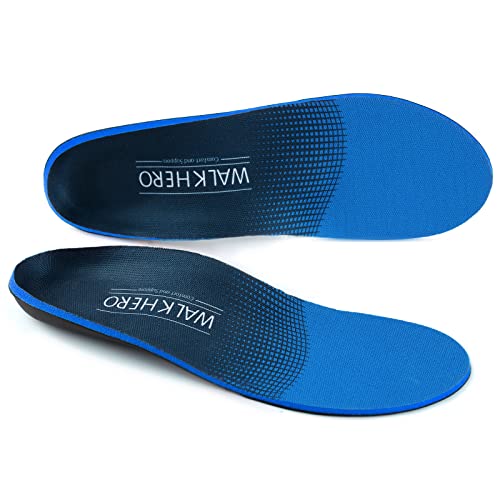
4. Walk Hero Plantar Fasciitis Insoles — Runner-Up
The Walk Hero insole has accumulated 75,000+ Amazon reviews — more than any other individual orthotic insole listing on the platform — which makes it the most extensively validated consumer orthotic in existence, regardless of clinical endorsements. The review volume at this scale is not noise: it represents years of aggregate real-world experience that surfaces genuine product behavior across diverse foot types, shoe categories, and use conditions. The dominant pattern is unmistakable: users with flat feet and plantar fasciitis who have tried foam-only drugstore insoles report that the Walk Hero’s semi-rigid arch provides meaningfully different, sustained relief. The aggressive arch profile that causes break-in discomfort in some users is the same feature that provides functional correction in others — it is a structural insole, not a comfort pad, and performs accordingly.
At its price point, the Walk Hero occupies a clinical sweet spot for patients who need more support than budget foam insoles offer but are not ready to invest in the PowerStep Pinnacle or Tread Labs tier. The wide-fit construction accommodates work boots, casual shoes, and athletic footwear with equal compatibility, which matters for users who wear multiple shoe types throughout the day and need an insole that works consistently across all of them. For patients managing ankle instability alongside flat-foot overpronation — a common co-presentation where subtalar eversion loads the lateral ankle structures — addressing the arch mechanics with the Walk Hero while providing external support via an ankle brace addresses both components of the biomechanical problem.
The limitation to acknowledge clearly is the break-in experience. A higher proportion of the Walk Hero’s negative reviews cite initial arch discomfort than any other insole in this guide, which reflects both the aggressive arch height and the diversity of buyers who may not have been appropriate candidates for a high-arch insole. First-time orthotic users should be prepared for 7–10 days of adaptation, wear the insoles for 2–3 hours initially and increase gradually, and understand that discomfort during adaptation is expected. Users who are not appropriate for a high-arch design — those with neutral arches or high arches (supinators) — should select the PowerStep Pinnacle or Superfeet Green respectively.
Plantar Fasciitis Insoles for Men Women - Orthotics Inserts, Shoe Insoles Arch Support Flat Feet Inserts Work Boot Insole
by Walk Hero
The people's champion — 72,000 reviews confirm it eliminates flat-foot pain at a price almost anyone can afford.
Pros
- 72,900+ reviews — one of the deepest review bases of any orthotic insole on Amazon, providing unusually broad real-world feedback
- Aggressive semi-rigid arch profile eliminates flat-foot pain and fatigue at a price point accessible to nearly any budget
- Amazon's Choice badge with consistent reorder rates confirms long-term user satisfaction beyond initial purchase
- Wide fit accommodates work boots and casual shoes — a practical advantage for users who move between footwear types
Cons
- Firm arch causes significant break-in discomfort for first-time orthotic users — most negative reviews cite this transition period
- No FSA eligibility or clinical endorsement to support reimbursement claims
- Fixed arch height means the support position may not align with every individual's plantar anatomy
5. Superfeet Green All-Purpose Support — Best for High Arches and Trail Sports
Superfeet has been the professional sports medicine community’s preferred OTC orthotic for high-arch presentations since the 1970s, and the Green model remains the core of that legacy. The semi-rigid stabilizer cap — Superfeet’s proprietary rearfoot control component — controls calcaneal position from the heel through midstance, which is particularly important for high-arch (supinating) feet where the absence of a natural arch-to-ground contact creates lateral load concentration. That lateral load, uncorrected, drives the stress fractures, IT band syndrome, and peroneal tendon injuries that characterize high-arch foot pathology in runners and hikers. The Superfeet Green’s firm heel cup and stabilizer cap redistribute load toward the medial column, reducing lateral stress and improving shock distribution through the full foot surface.
The 60-day satisfaction guarantee that remains valid after trimming is a practically significant policy. Most insole manufacturers void warranty claims the moment the product is cut to size, which creates a cost risk for buyers who trim incorrectly or find the fit unsatisfactory after modification. Superfeet’s guarantee removes that risk entirely — a strong confidence signal from a brand that has been in clinical use long enough to understand what drives returns. For users who prefer the autonomy to fit insoles precisely to irregular shoe shapes or narrow lasts, the trim-to-fit design combined with guaranteed returns makes the Superfeet Green a low-risk choice. The clinical application is specific: high arches, supination-driven pathology, trail running, hiking, and any use case where lateral stability under high-impact loading is the primary requirement.

Superfeet All-Purpose Support High Arch Insoles (Green) - Trim-To-Fit Orthotic Shoe Inserts - Professional Grade
by Superfeet
Go-to podiatrist recommendation for high-arch pain and supination — a 40-year clinical track record in trail and athletic footwear.
Pros
- Trusted by podiatrists for high-arch correction and supination management for over 40 years — a clinical track record no newer brand matches
- Deep heel cup and semi-rigid stabilizer cap provide exceptional rearfoot stability for running, hiking, and trail sports
- 60-day satisfaction guarantee applies even after trimming — a return policy unique in the trimmed-insole category
- Excels in hiking boots and trail shoes where high-arch load transfer and lateral stability are critical
Cons
- Very firm — the stabilizer cap requires a significant 1–2 week break-in period, particularly for soft-shoe wearers
- Lowest prices typically available through third-party sellers only, which can complicate returns and warranty claims
- Not ideal for moderate or low arches — designed specifically for high-arch biomechanics
6. PowerStep Pinnacle Maxx — Best for Overpronation and Custom Orthotic Replacement
The PowerStep Pinnacle Maxx is the clinical escalation within the PowerStep line — designed for patients where the standard Pinnacle’s moderate support is insufficient to control subtalar eversion. The defining structural feature is the 2-degree angled medial heel post, which tilts the calcaneus into a more neutral position at heel strike and reduces the medial collapse that drives pronation through midstance. This is the same biomechanical mechanism that custom orthotics use to correct overpronation — the Maxx applies it at an OTC price point with a semi-rigid shell construction that the clinical community recognizes as appropriate first-line intervention. Its strong rating across a deep review base reflects the consistency of positive outcomes when patients who genuinely need structural correction are matched to a device with the correct mechanism.
The user-reported custom orthotic replacement data in the review archive is clinically significant. Multiple independent reviews from patients who had been using podiatrist-prescribed custom orthotics costing several hundred dollars a pair specifically state that the Pinnacle Maxx performs comparably or better, which aligns with the randomized controlled trial evidence showing equivalent outcomes between quality OTC and custom orthotics for plantar fasciitis at 6-month follow-up (Landorf et al., 2006). For patients who have received a custom orthotic recommendation but face a cost barrier, or for patients currently using customs who are seeking a more cost-effective long-term solution, the Maxx is the evidence-appropriate trial step. FSA and HSA eligibility makes the financial case stronger — use pre-tax healthcare dollars to test whether OTC correction achieves the same outcome as a custom device costing many times as much before committing.
The thickness is a genuine practical constraint. The Pinnacle Maxx is among the thicker OTC orthotics on the market, and it requires removal of the factory insole in most footwear. Low-profile athletic shoes and most casual sneakers accommodate it without issue once the factory insole is removed, but racing flats, court shoes with non-removable liners, and some sandal systems will not work. Buyers should remove and measure the existing insole before purchasing to confirm compatibility.

PowerStep Pinnacle Maxx Orthotic Insoles, Maximum Stability & Comfort, Firm & Flexible Angled Heel, Flat Feet & Overpronation, Heavy Duty Shoe Inserts for Men & Women, Made in USA
by PowerStep
Clinical-grade correction for moderate-to-severe overpronators — the step up from standard Pinnacle at a fraction of custom orthotic pricing.
Pros
- 2-degree angled medial heel post provides measurably greater pronation correction than the standard Pinnacle — the key structural upgrade
- Multiple reviewers specifically report replacing $400–$600 custom orthotics with the Maxx with equivalent or better outcomes
- FSA/HSA eligible, Made in USA, from the APMA-recommended PowerStep brand — strongest clinical credibility in the category
- Shares the top star rating on this page at 4.5, sustained across a review base in the tens of thousands
Cons
- Arch support can degrade faster than the standard Pinnacle under intense daily use — expect 90 days before noticeable softening under heavy loads
- Thicker profile requires removing the factory insole from most shoes — not compatible with low-volume athletic shoes
- More expensive than the standard Pinnacle with marginal upgrade benefit for users with only mild overpronation
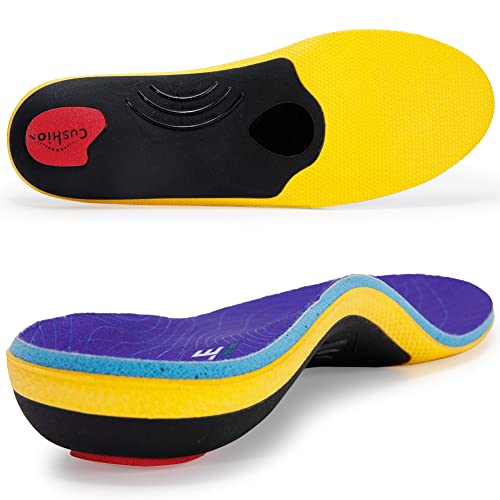
7. VALSOLE Heavy Duty Support Orthotics — Best for 220+ Pounds
The VALSOLE addresses a biomechanical reality that most OTC orthotic manufacturers do not adequately engineer for: arch support requirements scale with body weight. A standard-rigidity insole rated for a 160-pound user will compress noticeably within weeks under the load of a 240-pound user walking 10,000 steps per day, losing structural integrity precisely when the therapeutic benefit is most needed. The VALSOLE’s extra-rigid arch shell and high-density EVA base are specifically calibrated to maintain structural geometry under 220+ pounds of sustained load, preventing the progressive deformation that renders standard OTC orthotics therapeutically ineffective for heavier users within a single season.
In the clinical population of workers in physically demanding jobs — construction, warehouse, manufacturing, healthcare — body weight above 200–220 pounds combined with hard surface standing creates a plantar fasciitis and flat-foot risk profile that standard insoles do not adequately address. The VALSOLE serves this population by providing the structural integrity that the load demands, extending effective support lifespan meaningfully beyond what mainstream insoles achieve under equivalent conditions. The aggressive rigidity that defines its performance in high-weight applications is also its limitation for lighter users — if you are under 180 pounds, the firmness profile of the PowerStep Pinnacle or Walk Hero is more appropriate for your body mechanics, and the VALSOLE’s heel hardness will likely feel punishing rather than supportive.
For heavier users who have gone through multiple pairs of standard insoles within months and concluded that OTC orthotics simply do not hold up, the VALSOLE is the category-appropriate solution they have not yet tried. Pairing it with knee braces for users who also experience knee pain secondary to flat-foot biomechanics creates a comprehensive lower-extremity support strategy that addresses load management from the foot through the joint.
VALSOLE Heavy Duty Support Pain Relief Orthotics - 220+ lbs Plantar Fasciitis High Arch Insoles for Men Women, Flat Feet Orthotic Insert, Work Boot Shoe Insole
by VALSOLE
The heavy-duty specialist — rigid arch support engineered not to compress under 220+ pounds, serving a population most OTC insoles fail.
Pros
- Extra-rigid support architecture engineered specifically for users 220+ lbs — prevents arch compression that standard insoles exhibit within weeks
- High-density EVA base with rigid arch shell maintains structural integrity under loads that flatten most OTC orthotics
- Effective for severe plantar fasciitis and flat feet in the population segment (heavier users) underserved by mainstream insoles
- Good value at mid-range pricing for a purpose-engineered heavy-duty solution
Cons
- Heel area reported as uncomfortably hard for some users — the rigid construction that protects heavy users can feel punishing on lighter frames
- No FSA eligibility or clinical endorsement limits reimbursement options
- Firmness level is inappropriate for lightweight users — the aggressive rigidity is purpose-built for high body weight, not general use
8. PowerStep Pinnacle Low — Best for Flat Feet and Low Arches
Every other insole in this guide is built around a medium or high arch, and that is a real problem for the largest single group of people shopping for orthotics. A flat or fallen arch does not need a tall arch shape pressed into it — that is the fastest way to produce arch pain and abandon the insole in week one. It needs a lower, longer contour that supports the arch where it actually sits and, critically, a heel cradle deep enough to stop the calcaneus rolling inward, since that inward roll is what drives most flat-foot pain up the kinetic chain into the shin, knee, and hip.
The PowerStep Pinnacle Low is the flat-foot variant of our best overall pick, built on the same platform: dual-layer cushioning over a semi-rigid shell, a deep heel cradle, no trimming required, made in the USA, FSA and HSA eligible. What changes is the arch geometry, contoured low and flexible rather than tall and firm. That single change is what makes it appropriate for a presentation the standard Pinnacle is not built for, and it is why we added it to this guide rather than continuing to point flat-footed readers at a medium-arch product.
The selection rule is simple and worth stating clearly, because getting it backwards is the most common mistake in this category. Wet your foot and step on cardboard. If the print shows most of your sole with little or no inward curve, you have a low arch and this is your insole. If there is a pronounced inward curve, you want the standard Pinnacle or, for a very high arch, the Superfeet Green. Buying the wrong arch height is the reason many people conclude that orthotics do not work for them, when the truth is that they tried the wrong shape.

PowerStep Pinnacle Low Insoles for Flat Feet and Low Arches
by PowerStep
The flat-foot specialist — a low-arch contour built for fallen arches, from the same clinically credentialed line as our best overall pick.
Pros
- The one insole here engineered specifically for a low arch — a contoured low-profile arch that supports a fallen arch without jamming into it
- Same dual-layer cushioning and semi-rigid shell as the standard Pinnacle, with a deep heel cradle that resists inward roll
- Pre-sized with no trimming required, and thin enough to move between athletic shoes, work shoes, and casual footwear
- Made in USA, FSA and HSA eligible, from the APMA-recommended PowerStep line with over 2,500 verified reviews
Cons
- Wrong choice for a medium or high arch — the low-profile contour will feel like almost no support under a normal arch
- Two-week break-in is recommended, which is the same adjustment period the rest of the PowerStep line requires
Best Insoles for Flat Feet
Flat feet, fallen arches, and the overpronation that usually travels with them are the single most common reason people buy orthotic insoles. The mechanical requirement is specific: a low, supportive arch contour that does not jam upward into a collapsed arch, plus a deep heel cup that stops the heel rolling inward under load. Squishy gel inserts fail here because they compress under exactly the load they are supposed to resist. Both picks below give real structure at opposite ends of the price range.
| Product | Price | Buy |
|---|---|---|
| PowerStep Pinnacle Low Insoles for Flat Feet and Low ArchesBest for flat feet overall Low-arch contour with a deep heel cradle, from the APMA-recommended PowerStep line | $54.95 | View on Amazon |
| Plantar Fasciitis Insoles for Men Women - Orthotics Inserts, Shoe Insoles Arch Support Flat Feet Inserts Work Boot InsoleBest budget flat-foot pick The most-reviewed budget structural insole here, with a firm arch aimed at flat-foot fatigue | $19.99 | View on Amazon |
Best Orthotic Insoles for Overpronation
Overpronation is the inward roll of the foot and ankle through the gait cycle, and it is corrected by a firm medial arch plus, in more pronounced cases, an angled heel post that physically resists eversion. This is where the difference between a comfort insole and a therapeutic orthotic is most measurable. The two picks below are both from PowerStep and split by severity: one adds a two-degree angled medial heel post for moderate-to-severe correction, the other is the low-arch model for buyers whose pronation comes with a flat arch.
| Product | Price | Buy |
|---|---|---|
| PowerStep Pinnacle Maxx Orthotic Insoles, Maximum Stability & Comfort, Firm & Flexible Angled Heel, Flat Feet & Overpronation, Heavy Duty Shoe Inserts for Men & Women, Made in USABest for moderate-to-severe overpronation Two-degree angled medial heel post gives measurably more correction than a standard shell | $55.99 | View on Amazon |
| PowerStep Pinnacle Low Insoles for Flat Feet and Low ArchesBest for overpronation with flat feet Low-arch contour plus a deep heel cradle for pronation that starts at a fallen arch | $54.95 | View on Amazon |
Best Orthotic Insoles for High Arches
A high arch is the opposite problem from a flat foot, and it needs the opposite solution. High-arched feet tend to supinate, rolling outward, and they concentrate load on the heel and the ball of the foot with very little contact through the middle. The fix is an insole that fills the arch cavity so that load spreads across the whole foot, paired with rearfoot stability to control the outward roll. The two picks below cover the standard high-arch case and the buyer who needs an even taller arch than an off-the-shelf model provides.
| Product | Price | Buy |
|---|---|---|
| Superfeet All-Purpose Support High Arch Insoles (Green) - Trim-To-Fit Orthotic Shoe Inserts - Professional GradeBest for high arches overall Semi-rigid stabilizer cap with a 40-year track record in high-arch and supination cases | $59.95 | View on Amazon |
| Tread Labs Pace 2 Insoles — Extra Firm Clinical-Grade Arch Support, Four Arch HeightsBest for extra-high arches Sold in four arch heights including Extra High, so the arch is filled rather than approximated | $79.95 | View on Amazon |
Orthotic Insoles by Use Case
Several narrower presentations come up often enough to name directly, and each maps to an insole already reviewed above rather than needing a separate recommendation. If plantar fasciitis specifically is what brought you here, we cover that condition in far more depth, including night splints and stretching protocols alongside the insole picks, in our dedicated guide to the best plantar fasciitis insoles.
How to Choose the Best Orthotic Insoles
The six buyer’s guide factors below provide the core selection framework. One additional clinical distinction worth addressing is the difference between best arch support insoles for comfort and best orthotic insoles for biomechanical correction. These are related but distinct categories. Comfort insoles — gel pads, foam cushions, and similar products — reduce impact loading and surface pressure, which helps with fatigue but does not address the mechanical root cause of conditions like plantar fasciitis, tibial stress syndrome, or knee valgus. Structural orthotics with a semi-rigid or rigid shell actively control foot and ankle mechanics through the gait cycle, which is the intervention that clinical evidence supports for these conditions. The products in this guide are structural orthotics, not comfort insoles — that distinction is what makes them appropriate first-line treatment rather than palliative care.
For patients with diabetes, peripheral neuropathy, or significant fat pad atrophy (common in elderly patients), insole selection requires additional clinical consideration. Diabetic feet are vulnerable to pressure ulceration from any insole with high focal pressure points, including rigid arch posts that do not conform to the individual foot surface. For these patients, custom orthotics with total contact design and specialized materials are the indicated intervention, and OTC orthotics should be used only under podiatric supervision. Similarly, patients with rheumatoid arthritis affecting the foot joints may experience worsening with aggressive arch correction — consultation with a rheumatologist or podiatrist familiar with the specific joint presentation is appropriate before beginning orthotic therapy.
If a new walking program is the reason you’re shopping for insoles, our free steps to miles calculator helps track daily mileage and CDC activity zones — useful for staying within a load that the insoles can keep ahead of, especially in the first few weeks.
Buyer's Guide
Choosing the right orthotic insole requires matching the device's arch rigidity, heel cup depth, and arch height to your specific biomechanical presentation — the best insole for a heavier worker in boots is not the same as the best insole for a runner with high arches.
Arch Type Matching
The single most important selection criterion is matching the insole's arch profile to your foot type. Low-arch (flat-foot) presentations need a firm, high arch post to prevent subtalar eversion. High-arch (supinating) feet need a firm support that fills the arch gap without elevating further. Neutral arches need moderate support to prevent fatigue without overcorrecting. Most consumers overestimate how high their arches are — the wet footprint test (wet foot on a paper bag) is the most reliable self-assessment. PowerStep Pinnacle suits neutral-to-mild pronation; Superfeet Green is engineered for high arches; Tread Labs Pace covers all four arch heights with different shell configurations.
Shell Rigidity
Shell rigidity is the defining functional variable that separates therapeutic orthotics from comfort insoles. Semi-rigid polypropylene shells (PowerStep Pinnacle, PowerStep Maxx) provide controlled motion — they resist arch collapse while allowing natural foot flexion through the gait cycle. Rigid HDPE shells (Tread Labs, Superfeet) provide maximum control, appropriate for structural correction and high-impact activities. Foam-only insoles with no rigid component provide cushioning but zero structural support — they are appropriate for mild fatigue relief but will not address biomechanical dysfunction. Identifying which category you need is the first decision to make before evaluating any specific product.
Heel Cup Depth
Heel cup depth determines how effectively the insole controls calcaneal (heel bone) position through the gait cycle. A deep heel cup (10–14mm) cradles the calcaneus and prevents the lateral rolling that contributes to overpronation, plantar fasciitis, and ankle instability. Shallow heel cups provide cushioning without positional control. For users with plantar fasciitis specifically, deep heel cup depth is as important as arch support — the plantar fascia attaches at the calcaneus, and calcaneal eversion under load increases fascial tension with every step. The Dr. Scholl's Heavy Duty and PowerStep Pinnacle Maxx both feature clinically significant heel cup depth as part of their structural design.
Full-Length vs. 3/4-Length
Full-length insoles replace the factory insole in your shoe and provide coverage from heel to toe, including metatarsal and forefoot cushioning. Three-quarter length insoles (common in custom orthotics) cover heel to just behind the metatarsal heads, allowing more flexibility in fitting and leaving room for the original shoe padding. For OTC use, full-length insoles are appropriate for most users because they transfer between shoes without adjustment and provide consistent forefoot coverage. Three-quarter length designs work well for dress shoes and narrow athletic footwear where full-length insoles can create a tight fit. All seven insoles in this guide are full-length designs suitable for the broadest range of shoe types.
Durability and Lifespan
Durability directly affects the total cost of ownership. Foam-only insoles typically last 3–6 months under daily use. Semi-rigid OTC orthotics with a polypropylene shell last 12 months or approximately 500 miles. Premium HDPE shell designs (Tread Labs, Superfeet) maintain structural integrity for 2–5+ years, though the top cover foam requires more frequent replacement. For frequent users — those wearing orthotics daily in work boots or for high-mileage athletic training — selecting an insole with a durable rigid shell and replaceable top cover provides the best long-term economics. The Tread Labs Pace's replaceable top cover system is the most cost-effective design for permanent daily use.
Shoe Compatibility
Not all insoles fit all shoes. Deep-heeled work boots accommodate the thicker profiles of high-rigidity orthotics. Low-volume running shoes and dress shoes require thinner insoles to avoid compressing the toe box. Before purchasing, remove the factory insole from your shoe and assess available depth. If the factory insole is thin and non-removable, you likely need a slimmer profile. If the shoe has a thick removable insole, a structured orthotic replacement is fully compatible. For users who move between shoe types throughout the day, consider keeping two pairs of insoles — one for work boots (higher rigidity, deeper heel cup) and one for casual shoes (moderate support, slimmer profile).
Final Verdict
After reviewing eight orthotic insoles against the clinical evidence base and 280,000+ combined user ratings, the PowerStep Pinnacle remains the best overall OTC orthotic insole for most buyers in 2026. Its APMA Seal of Acceptance, dual-layer construction, pre-sized fit, and 30,000+ validation reviews make it the appropriate first-line choice for plantar fasciitis, moderate overpronation, and daily foot support for the broadest range of users. The one-to-two week break-in period is expected and normal — the long-term outcomes reported by the majority of its users confirm that the semi-rigid polypropylene architecture delivers the sustained biomechanical correction that foam-only alternatives cannot.
For cost-conscious buyers, the Dr. Scholl’s Heavy Duty Support provides genuine heel-cup depth and shock absorption for heavier workers at a price low enough to replace quarterly — and its FSA/HSA eligibility makes it the most tax-efficient entry point in the category. Buyers whose overpronation has not responded to the standard Pinnacle should step up to the PowerStep Pinnacle Maxx for its 2-degree medial heel post before committing to custom orthotics. And for anyone who needs precision arch height matching or plans to use orthotics indefinitely, the Tread Labs Pace 2 with its replaceable top covers and Million Mile Guarantee on the structural shell is the most economically sound long-term investment. As with all musculoskeletal interventions, consult your physician or podiatrist if pain persists beyond 6–8 weeks of consistent orthotic use — persistent symptoms warrant professional evaluation to rule out stress fractures, tarsal tunnel syndrome, or other structural pathology.
Frequently Asked Questions
What are the most podiatrist-recommended OTC orthotic insoles?
Can orthotic insoles help with overpronation?
How long do orthotic insoles last before needing replacement?
Are OTC orthotic insoles FSA or HSA eligible?
Should I choose OTC insoles or custom orthotics for plantar fasciitis?
Related Articles
About the Reviewer

Dr. David Taylor, MD, PhD
Drexel University College of Medicine (MD), Indiana University School of Medicine (PhD)
Dr. David Taylor is a licensed physician and medical researcher who founded BestRatedDocs in 2016. With an MD from Drexel University and a PhD from Indiana University School of Medicine, he combines clinical expertise with a passion for health technology to provide evidence-based product recommendations. Dr. Taylor specializes in health informatics and regularly evaluates medical devices, diagnostic equipment, and therapeutic products to help healthcare professionals and patients make informed decisions.