How to Get Rid of Plantar Warts: A Doctor's Guide
By Dr. David Taylor, MD, PhD Updated
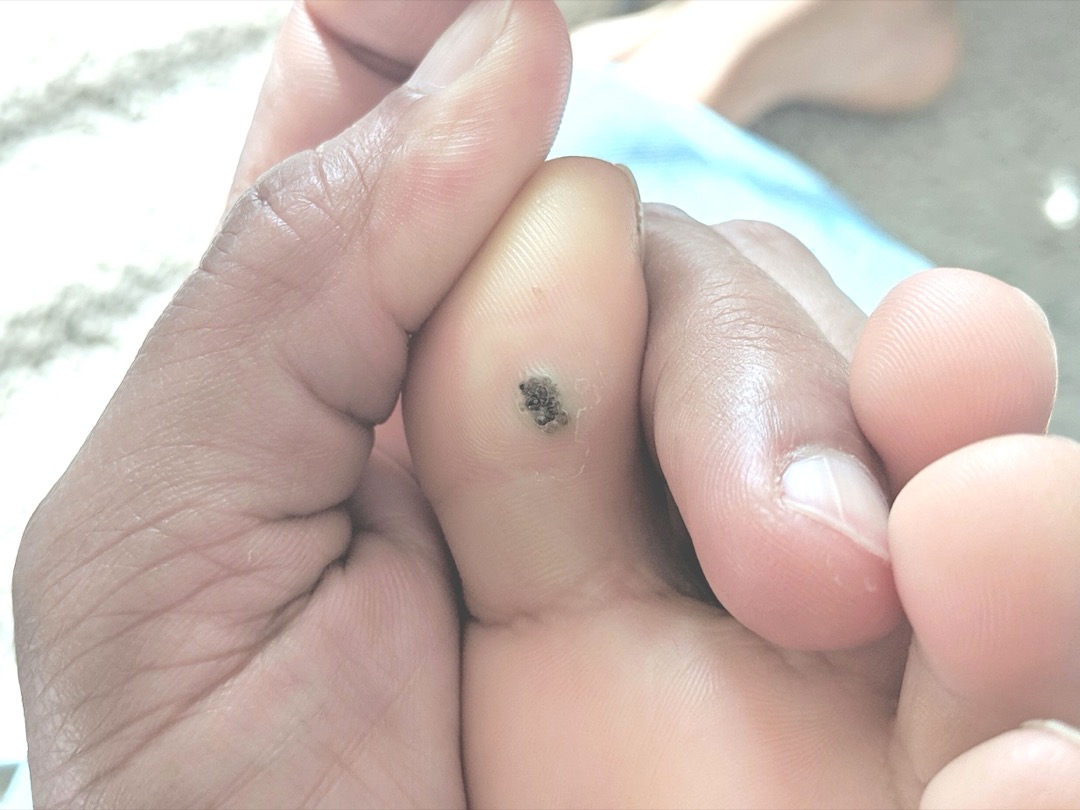
A plantar wart is a wart on the sole of the foot, and the honest answer to getting rid of one is less exciting than the packaging on the pharmacy shelf. Most plantar warts clear on their own eventually, but slowly, often over a year or more. The home treatment with the best evidence is salicylic acid applied every day, and the trials show it works less well on feet than on hands. Give it a fair run of 12 weeks. If the wart has not shrunk by then, or it hurts to walk, see a doctor rather than trying a third product.
Feet are harder for a mechanical reason. Body weight pushes the wart inward under a thick cap of callus, and any treatment has to get through that cap first. Preparing the skin matters as much as the product.
Below I cover how to tell a wart from a callus, what each treatment achieved in controlled trials, and who should not treat one at home. If you already know it is a wart, our guide to the best wart removers compares the products.
Is It a Plantar Wart or a Callus?
Both are hard, thickened patches on the sole. A few checks usually separate them.
| Sign | Plantar wart | Callus |
|---|---|---|
| Surface | Tiny black or brown dots | Smooth, even, yellowish skin |
| Skin lines | Lines go around it | Lines run straight through it |
| Pain | Worse when squeezed from side to side | Worse with direct pressure |
| When pared | Pinpoint bleeding | Layers of pale dead skin, no bleeding |
| Location | Anywhere, including low-pressure spots | Over high-pressure points |
The black dots are clotted capillaries, small blood vessels the wart has drawn up to feed itself. People call them seeds, but they are not. They are also why a wart bleeds in tiny points when filed, while a callus does not. The skin-line test is the most useful: the ridges of your footprint continue across a callus but flow around a wart.
A cluster of small warts can merge into one flat patch, called a mosaic wart, which is harder to clear because the area is larger. If you cannot tell what you have, a doctor or podiatrist can usually decide with a quick look.
What Causes Plantar Warts and How They Spread
Plantar warts are caused by human papillomavirus (HPV), mainly types 1, 2, 4, 27 and 57, according to the Cleveland Clinic and American Family Physician. These are not the HPV types behind genital warts or cervical cancer, and a plantar wart is not a sexually transmitted infection. The HPV vaccine does not help here either. bpac NZ, the New Zealand prescribing guidance service, notes that the vaccine targets types 6, 11, 16 and 18 and is not active against the types that cause plantar warts.
The virus enters through tiny breaks in the skin and survives well on warm, wet surfaces. Pool decks, communal showers and changing-room floors are the classic sources, and skin softened by water or sweat lets it in more easily.
Once you have one wart, you can give yourself more. Picking it, shaving over it or using the same file on the wart and on healthy skin can carry the virus elsewhere. This is called autoinoculation, and it is why a file used on a wart should never be used anywhere else.
Do Plantar Warts Go Away on Their Own?
Usually, given enough time. The best figures we have are for skin warts in general rather than plantar warts alone, so treat them as a rough guide:
- A 2011 review in American Family Physician by Mulhem and Pinelis reported that about half of skin warts clear without treatment within a year, and about two-thirds within two years.
- A cohort study of Dutch primary schoolchildren, published in the Annals of Family Medicine in 2013, found that half of the children with warts were free of them within a year.
- Mayo Clinic notes that warts can take a year or two to go in children, and longer in adults.
Plantar warts may sit at the slower end. The practical point is that treatment is optional. A small wart that does not hurt and is not spreading can reasonably be left alone, provided you avoid passing it on. A wart that hurts when you walk, is multiplying or bothers you is worth treating.
Treatments Ranked by Evidence
Most of what we know comes from a Cochrane review of topical treatments for skin warts by Kwok and colleagues, updated in 2012, which pooled 85 trials with 8,815 participants. Two large trials reported results for plantar warts separately, and I cover both below.
1. Salicylic Acid: The Best-Evidenced Home Treatment
Salicylic acid breaks down thickened skin layer by layer, and its mild irritation may help the immune system notice the virus. In the Cochrane review, salicylic acid cleared warts more often than placebo, with a risk ratio of 1.56 across all body sites. Split by location, the benefit was large on hands (risk ratio 2.67) and modest on feet (risk ratio 1.29). That gap is why technique matters so much on the sole.
How to use it properly:
- Soak the foot in warm water for 5 to 10 minutes to soften the skin.
- Pare the white, dead skin off the top of the wart with an emery board or pumice stone that you use for nothing else. Stop before it bleeds or hurts.
- Apply a 17–40% salicylic acid product to the wart only. Liquids and gels usually contain up to 17%, and medicated pads and plasters made for the feet usually contain 40%. A thin layer of petroleum jelly on the surrounding skin protects it from the acid.
- Cover it with a plaster or tape, which keeps the acid in contact with the wart.
- Repeat every day for up to 12 weeks. If the surrounding skin becomes sore or red, pause for a day or two, then resume.
For a wart on the weight-bearing part of the sole, the 40% pads are often easier than a liquid because they stay put under a sock. We compare the options in our section on the best wart remover for plantar and foot warts.
2. Freezing: Home Kits vs the Doctor’s Liquid Nitrogen
Cryotherapy freezes the wart and raises a blister that lifts it off. Temperature matters. Mulhem and Pinelis note in American Family Physician that liquid nitrogen, used in clinics, reaches −196°C (−321°F), while over-the-counter freezing products reach about −70°C (−94°F). A 2007 laboratory study in the Journal of the American Academy of Dermatology found that none of the home coolants it tested got as cold as liquid nitrogen, and they cooled more slowly. The trials in the Cochrane review used clinic liquid nitrogen, so the review cannot tell us whether home kits work as well.
Home kits contain dimethyl ether and propane, both flammable, so keep them away from any flame or heater.
Clinic freezing is not clearly better than salicylic acid for plantar warts either. The EVerT trial (Cockayne and colleagues, BMJ, 2011) randomised 240 people aged 12 and over with plantar warts to daily salicylic acid at home or liquid nitrogen in a clinic. At 12 weeks, complete clearance was 14% in both groups, and cryotherapy cost more. A Dutch trial by Bruggink and colleagues in the Canadian Medical Association Journal in 2010 found the same pattern: among the 124 participants with plantar warts, cure rates did not differ between cryotherapy, salicylic acid and simply waiting.
The combination did better. In the Cochrane review, salicylic acid plus cryotherapy beat salicylic acid alone, with a risk ratio of 1.24. If you do have a wart frozen, keep up the daily acid between sessions rather than relying on the freezing alone.
3. Duct Tape
The idea comes from a small, much-criticised 2002 trial by Focht and colleagues, in which 85% of common warts cleared with duct tape against 60% with cryotherapy. Later trials did not repeat it: de Haen and colleagues (2006, 103 children) found 16% versus 6% with placebo, not statistically significant, and Wenner and colleagues (2007, adults) found 21% versus 22%. Cochrane pooled two clear-tape trials with 193 participants and found no advantage over placebo. None studied plantar warts on their own. American Family Physician judged the evidence insufficient for tape as a sole treatment, though some experts use it as a cover over salicylic acid, which is sensible.
4. Home Remedies Without Trials
Apple cider vinegar, tea tree oil and garlic have no controlled trial evidence for warts, and vinegar held under a plaster can cause a chemical burn.
One newer idea is more interesting. A 2026 study in the Journal of the American Academy of Dermatology tried soaking warts in saturated salt water and reported that 15 of 17 people cleared at 8 weeks. With no control group, we cannot tell how many would have cleared anyway, and the authors said randomised trials are needed. Interesting, and unproven.
What a Dermatologist or Podiatrist Can Do
If home treatment has not worked after 12 weeks, a clinic has stronger options:
- Repeated liquid nitrogen, typically every 2 to 3 weeks, usually after the wart has been pared down.
- Stronger acids applied in the clinic.
- Cantharidin, a blistering agent painted on the wart and covered, which lifts it off with the blister.
- Immunotherapy, such as injecting candida antigen into the wart to prompt the immune system to clear it.
- Minor surgery or laser for warts that resist everything else.
Cutting is a last resort because a scar on the sole takes your full weight with every step and can stay painful for years.
The American Academy of Dermatology advises having a growth on the foot examined, and sometimes biopsied, if it grows quickly, looks like an open sore, or does not clear with treatment.
Who Should Not Treat a Plantar Wart at Home
Between them, the American Academy of Dermatology and Mayo Clinic advise seeing a doctor rather than self-treating if you have:
- Diabetes
- Poor sensation in your feet (peripheral neuropathy)
- Poor circulation
- A weakened immune system
Both acid and freezing damage skin on purpose. bpac NZ warns that over-application of salicylic acid in someone with reduced sensation can cause ulceration, because the person does not feel the skin breaking down. In diabetes, a foot ulcer can become infected and is slow to heal. If that applies to you, let a clinician treat the wart, and protect your feet day to day with daily checks and seam-free, non-binding diabetic socks that reduce friction and pressure.
There is one rare but important lookalike. Melanoma can occur on the sole of the foot and can be mistaken for a wart. See a doctor if a spot on your foot changes, bleeds, or itches, if you have many warts, or if you have any doubt about what it is.
Making Walking Hurt Less While It Clears
A wart under the ball of the foot or the heel can make every step hurt. A few measures help while it clears:
- A ring or doughnut-shaped cushion pad around the wart takes pressure off it while you walk.
- A hydrocolloid dressing over a wart you have just pared cushions it, keeps it covered and reduces the chance of spreading virus. Our guide to the best blister bandages covers the cushioned types that stay put on the sole.
- Insoles can shift load away from a painful spot. A supportive insole spreads pressure across more of the foot; see our picks for the best orthotic insoles. For a wart right under the heel, the extra heel cushioning in plantar fasciitis insoles can help.
Keeping pads, tape and dressings with your first aid kit makes the daily routine easier to stick to.
How to Stop It Spreading or Coming Back
The same habits protect you and everyone who shares your shower:
- Wear flip-flops or pool shoes in communal showers, on pool decks and in gym changing rooms.
- Keep feet dry, and change socks daily or whenever they get damp.
- Do not share towels, socks, shoes, nail files or pumice stones.
- Do not pick at the wart or shave over it.
- Cover the wart with a waterproof plaster when you swim.
- Wash your hands after touching or treating it. If you are treating a child’s wart, disposable medical gloves make that easier.
These are also the habits that cut athlete’s foot and fungal nail infections, which spread on exactly the same wet floors. For itchy, peeling skin between the toes, see our best antifungal creams; for thick, discoloured nails, our toenail fungus treatments guide.
A Simple Plan
- Week 0: confirm it is a wart. Check for black dots, skin lines that go around it and pain on squeezing. If you are in one of the groups above, or the spot looks unusual, see a doctor.
- Weeks 1 to 12: salicylic acid every day. Soak, pare, apply, cover, and pad it for walking.
- Week 12: review. If it has gone, continue for a week or two more. If it has not changed, or it hurts, see a doctor or podiatrist.
Most plantar warts give way eventually, and patience with one well-chosen treatment beats rotating through several. Our wart remover guide compares the salicylic acid and freezing products available without a prescription. This article is general information, so check with your own healthcare provider before treating a wart, especially if you have any of the health conditions above.
Frequently Asked Questions
How long does it take to get rid of a plantar wart?
What kills a plantar wart fastest?
Does duct tape work on plantar warts?
Are plantar warts contagious, and can I still swim?
Why do plantar warts keep coming back?
Related Articles
About the Reviewer

Drexel University College of Medicine (MD), Indiana University School of Medicine (PhD)
Dr. David Taylor is a licensed physician and medical researcher who founded BestRatedDocs in 2016. With an MD from Drexel University and a PhD from Indiana University School of Medicine, he combines clinical expertise with a passion for health technology to provide evidence-based product recommendations. Dr. Taylor specializes in health informatics and regularly evaluates medical devices, diagnostic equipment, and therapeutic products to help healthcare professionals and patients make informed decisions.