11 Best Blister Bandages of 2026
Dr. David Taylor, MD, PhD reviews the best blister bandages on Amazon. Hydrocolloid pads, moleskin, and prevention tape compared for heels, toes, fingers, hiking, and waterproof wear.
Updated
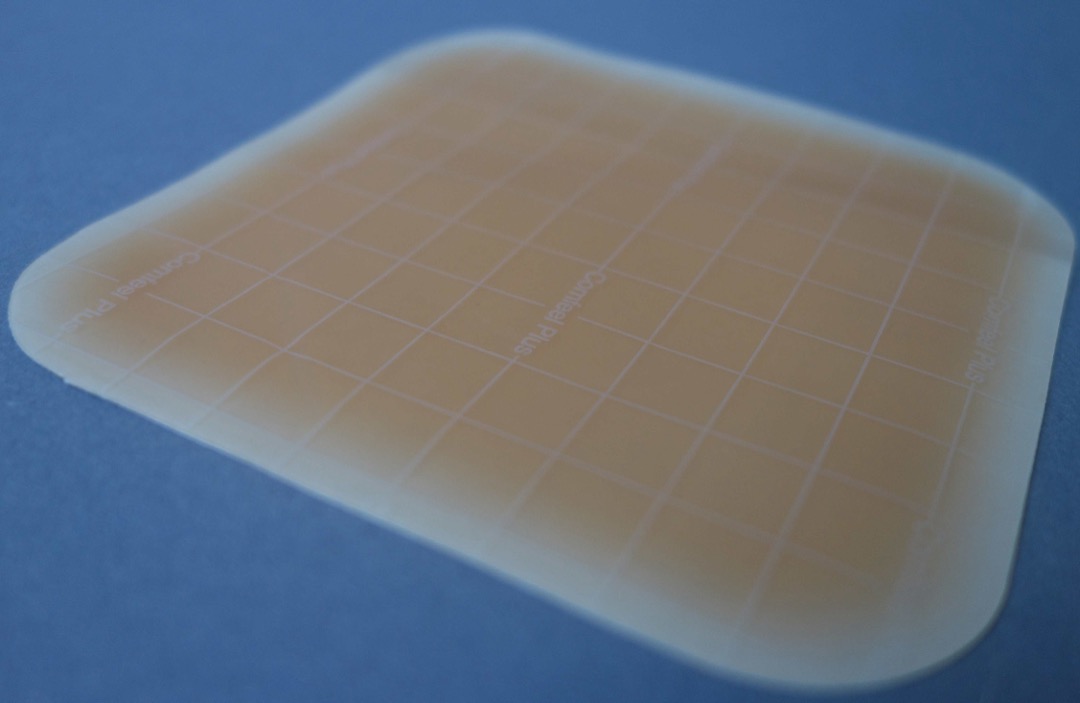
A friction blister is not a minor irritation that happens to be painful. It is a mechanical injury: repeated shear force separates the epidermis from the dermis beneath it, and the resulting space fills with serum. Left uncushioned inside the same shoe that caused it, that separation keeps widening. The reason this matters clinically is that an intact blister roof is a sterile biological dressing, and once it tears you have an open wound on a part of the body that spends all day inside a warm, damp, closed environment. Getting the dressing right is the difference between three comfortable days and a fortnight of limping.
In my practice the question I get is almost never “what is a blister.” It is “why did the bandage fall off.” That question has a real answer, and it is the reason this guide is organised around anatomy and mechanism rather than around brands. A pad built for a heel fails on a toe because it has to bend in two planes at once. A prevention product does nothing for an injury that already exists. Most disappointment in this category traces back to one of those two mismatches rather than to a bad product.
For this guide I reviewed eleven products across the full category: hydrocolloid pads that treat an existing blister, and moleskin, foam tape, shoe-applied film, and anti-friction balm that prevent one. Every price, rating, and availability figure below was verified against Amazon’s own product data on the date of publication. If you are assembling broader supplies, our guides to the best first aid kits and how to build a complete home first aid kit cover what else belongs alongside these. If your blisters trace back to how your foot loads inside the shoe, the best orthotic insoles guide addresses the underlying cause rather than the symptom.
Find the Best Blister Bandage for Your Need
Jump straight to the situation that matches yours:
- Overall best blister bandages and every pick reviewed in full
- Best blister bandages for toes
- Best blister bandages for heels
- Best waterproof blister bandages for showering and swimming
- Best blister bandages for hands and fingers
- Best blister bandages for the ball and bottom of the foot
- Best blister prevention bandages and anti-friction products
- Best blister bandages for hiking and running
- More sizes and shapes: large, small, and thick cushions
How We Selected These Blister Bandages
Every product here was checked live against Amazon’s product API for price, availability, and listing identity on the publication date, and cross-checked in a browser session so the figure shown is the one a reader actually pays rather than a stale cached number. Ratings and review counts are reported as Amazon displays them.
Selection weighted four things. First, mechanism: the product has to plausibly do what its category claims, which ruled out several “blister” listings that are ordinary fabric bandages with a foot photograph. Second, review depth, with a deliberate tilt toward products with thousands of verified ratings rather than dozens. Third, anatomical coverage, because a guide that recommends seven heel pads is useless to someone with a blister on a finger. Fourth, honesty about adhesion, which is the universal weak point in this category and which I have flagged product by product rather than glossing over.
Two products were found and rejected during research. One popular “blister medic” kit listing carries feature text describing an aluminium fracture splint, a listing-content defect rather than a real product description, so it is excluded. A second, a cooling gel dressing aimed at backpackers, has clean listing data but fewer than a hundred reviews, which is too thin to headline a recommendation. It is worth revisiting once its review base matures.
Best Blister Bandages Overall
These eleven picks are reviewed in full below, starting with the three that define the price and performance ladder: the best overall, the budget option, and the premium upgrade.
1. BAND-AID Pro Heal 5 Day Protect Hydrocolloid Bandages, 14 ct: Best Overall
Band-Aid’s Pro Heal line is the product most people should buy first, and the reasoning is less about any single feature than about coverage of the unknown. The assorted box mixes regular and extra-large shapes, so whether the blister turns up on a heel, a toe, or the side of a finger, something in the box fits it. For a household first-aid drawer, where you cannot predict the injury in advance, that flexibility matters more than a specialist shape.
The construction is standard hydrocolloid done well. The gel core absorbs exudate and swells into the familiar white dome, the waterproof border holds through showering and swimming, and the pad sits flat enough that it does not become a new pressure point inside a dress shoe. The manufacturer rates it for up to five days of continuous wear, which in practice means two to four on a foot that sweats.
Two caveats worth stating plainly. The adhesive draws genuinely mixed feedback, with a consistent minority reporting early lifting, and the fix is almost always preparation: clean, bone-dry skin and a full sixty seconds of finger pressure. Second, this listing shares its rating and review count with its smaller six-count sibling, because Amazon pools reviews across pack sizes of the same parent product. The rating is real, but it reflects the product family rather than this specific box.

BAND-AID Brand Pro Heal 5 Day Protect Hydrocolloid Bandages, Assorted, 14 ct
by Band-Aid
The most trusted and most reviewed hydrocolloid blister bandage on Amazon, and the right default for anyone who does not yet know exactly where their blisters form.
Pros
- Backed by the largest verified review pool of any hydrocolloid blister bandage on Amazon
- Fully waterproof seal holds through showers, swimming, and sweat
- Sits nearly flat under socks and dress shoes, so it does not create a new pressure point
- Assorted regular and extra-large shapes cover heels, toes, and fingers from one box
Cons
- A meaningful minority of reviewers report the adhesive lifting early on damp or hairy skin
- Costs more per pad than generic multi-packs with the same hydrocolloid construction
2. Dr. Scholl’s Blister Cushions Seal and Heal, 12 ct: Budget Pick
If the Band-Aid box is the safe default, the Dr. Scholl’s cushions are the value-conscious version of the same idea from a brand that has been in foot care longer than almost anyone. At the lowest price of any major-brand hydrocolloid pad here, it delivers the same core mechanism: a hydrogel-hydrocolloid pad that cushions the blister and maintains a moist healing environment underneath.
What sets it apart at this price is that the manufacturer rates it for hands as well as feet. Most budget foot pads are shaped and sized purely for heels, which makes them useless when the blister is on a palm or a finger. The skin-tone profile also stays genuinely discreet, which matters more than it sounds if you are wearing sandals.
The compromises are real but modest. The peel-off backing is fiddly, and a number of reviewers crease the pad before it lands. Adhesion around the ankle bone, where the skin curves sharply and moves constantly, is noticeably weaker than on flat skin. For a blister on the flat of a heel or the ball of a foot, neither issue is likely to affect you.

Dr. Scholl's Blister Cushions Seal & Heal, Blister Prevention Pads, 12 ct
by Dr. Scholl's
Genuine hydrocolloid performance from a household foot-care name at the lowest name-brand hydrocolloid price in this guide.
Pros
- Lowest price of any major-brand hydrocolloid pad reviewed here
- Rated by the manufacturer for hands as well as feet, so one box covers both
- Skin-tone profile stays discreet under sandals and low-cut shoes
- Long-standing foot-care brand with a consistent multi-thousand-review track record
Cons
- Several reviewers find the backing awkward to peel without creasing the pad
- Adhesion around the ankle bone is called out as weaker than on flat skin
3. Compeed Advanced Blister Care Pads, Mixed Sizes: Upgrade Pick
Compeed is the brand European pharmacists have handed across the counter for decades, and it carries the highest average rating of anything in this guide. It earns that in two ways. The wear-time claim is the longest in the category at up to seven days, and the mixed-size pack spans fingers, toes, heels, and the ball of the foot in one purchase rather than committing you to a single anatomy.
For a specific kind of buyer this is clearly the right choice: someone going on a trip where replacing a dressing is inconvenient, or someone whose blister sits somewhere that a heel-shaped pad simply will not fit. Seven days of adhesion through showers means one application can reasonably cover a week-long walking holiday.
The price is the obvious objection, since this is the most expensive box of hydrocolloid pads reviewed here. The listing structure does it no favours either, arriving as two separate ten-count packs in a way that reads confusingly on the product page. If your blisters are routine and you are treating them at home near a drawer full of spares, the premium buys you little. If you are away from that drawer, it buys you a lot.

Compeed Advanced Blister Care Pads, Mixed Sizes, 10 Ct (2 Packs)
by Compeed
The original clinical-grade hydrocolloid brand, worth its premium for the longest wear time and the highest satisfaction scores in the category.
Pros
- Highest average rating of any product in this guide
- Longest manufacturer wear claim in the category at up to seven days
- Mixed sizing covers fingers, toes, heels, and the ball of the foot in a single purchase
- The original European hydrocolloid blister brand, with decades of pharmacy distribution behind it
Cons
- Highest cost per pad of anything reviewed here
- Sold as two separate ten-count packs, which reads confusingly on the listing
4. Welnove Gel Blister Bandages for Feet, 21 ct: Best for Heels
The heel is where the majority of foot blisters form, because it is where the shoe’s counter grips and slides against a bony prominence with every stride. That zone needs cushioning thickness more than it needs anything else, and the Welnove pads are the thickest heel cushions in this lineup.
Twenty-one pads across four shapes at a mid-tier price is a genuinely good ratio, and the pads peel away without leaving adhesive residue behind, which is a small thing that becomes a large thing when you are removing one from raw skin. Usefully, the manufacturer rates these for swimming rather than only showering, a meaningfully harder test that involves prolonged submersion and the drag of moving water.
Adhesion feedback splits more sharply here than on the legacy brands, with repeat reports of early peeling, and the practical reading is that surface preparation matters more with this pad than with others. It is also sold through a third-party merchant rather than a brand storefront, which is common for challenger brands and not a defect, but worth knowing.

Welnove Gel Blister Bandages for Feet, 21 ct, Heel and Toe
by Welnove
The thickest, best-cushioned option for heel blisters, which is where the highest-friction damage usually happens.
Pros
- Thickest heel cushion of any pad reviewed here, which matters most at the back of the shoe
- Twenty-one pads across four shapes at a mid-tier price
- Peels away without leaving adhesive residue on the skin
- Rated by the manufacturer for swimming, not just showering
Cons
- Adhesion feedback is genuinely split, with repeat reports of early peeling
- Sold through a third-party merchant rather than a brand storefront
5. Promifun Hydrocolloid Gel Blister Bandages, 32 ct Variety Pack: Best Value
For anyone who gets blisters regularly enough to keep a stock, Promifun’s thirty-two-count box is the most economical way to do it. The cost per pad is the lowest here, and the box splits across four distinct shapes covering heel, toe, forefoot, and finger.
That shape variety is the real argument, not just the price. Toe-contoured pads are hard to buy on their own, since almost no brand sells a toe-only box at meaningful volume. Variety packs are where toe shapes actually live, and this is the best-value one available. Individually wrapped pads also mean a few can live permanently in a hiking pack, a gym bag, or a glovebox without degrading.
The trade-offs are the ones you would expect from a challenger brand. The review pool is one of the smaller ones among the hydrocolloid pads reviewed here, and adhesion feedback is mixed in the same way it is across this entire category. Neither is disqualifying at this price, but a first-time buyer wanting maximum certainty should start with one of the legacy brands above.

Promifun Hydrocolloid Gel Blister Bandages, 32 ct Variety Pack
by Promifun
The best pad-per-dollar value available, and the simplest way to have the right shape on hand wherever a blister turns up.
Pros
- Lowest cost per pad in this guide
- Four distinct shapes cover heel, toe, forefoot, and finger from one box
- Every pad is individually wrapped, so a few can live in a pack or glovebox
- The only pick here that includes a genuine toe-contoured shape at real volume
Cons
- One of the smaller review pools among the hydrocolloid pads reviewed here
- Adhesion and edge-durability feedback is mixed, as it is across this whole category
6. Dr. Frederick’s Original Ultra Sport Blister Bandages, Heel Pack: Best for Sport
Standard hydrocolloid pads share a specific failure mode during sustained activity: the pad is a flat disc, the heel flexes and rolls through every stride, and the mismatch creases the pad until an edge lifts. Dr. Frederick’s addresses that directly with a hexagonal cut pattern that lets the pad articulate with the foot rather than fight it.
The rest of the design follows the same brief. It holds through sweat and rain rather than only a stationary shower, and the brand markets to runners and hikers specifically, so the listing claims match the actual use case instead of being generic foot-care copy. It ships from the manufacturer’s own medical supply arm.
The honest limitation is track record. This has the smallest review pool of any product in this guide, and while the feedback is positive, a few hundred reviews is a thinner evidence base than the thousands behind the picks above. Some high-mileage users still report migration late in long runs, which suggests the flex pattern reduces the problem rather than eliminating it.

Dr. Frederick's Original Ultra Sport Blister Bandages, Heel Pack, 10 ct
by Dr. Frederick's Original
A hydrocolloid heel pad engineered to flex with an active foot, which is the exact failure point of flat pads during a long run.
Pros
- Hexagonal cut pattern lets the pad flex with the heel instead of creasing and lifting
- Built and marketed specifically for running, hiking, and long days on foot
- Holds through sweat and rain rather than only through a shower
- Fulfilled by the manufacturer's own medical supply arm
Cons
- Smallest review pool of any product in this guide, so its track record is the least established
- Some high-mileage users still report the pad migrating late in a long run
7. All Health Hydrocolloid Gel Bandages, Fingers and Toes: Best for Hands
Blisters are not exclusively a foot problem. Guitarists, rowers, gymnasts, gardeners, and anyone who has spent a weekend with an unfamiliar tool gets them on the hands, and that is where the standard product range collapses. Foot-sized pads bunch and lift on a finger because a digit’s circumference is far too small for them.
All Health’s finger and toe pads are the only well-reviewed product solving this properly, with a small footprint that wraps a digit without folding. They double as a moist-healing cover for minor cuts and torn calluses, which extends their usefulness well beyond blisters, and they are priced alongside the budget foot pads despite being a specialty shape.
The main complaint is an unusual one: they adhere so firmly that several reviewers struggle to remove them cleanly. The technique that solves this is the same one that should be used on every hydrocolloid pad, which is to stretch it sideways along the skin rather than pulling it upward. The thinner construction also tears more easily than a heavy heel cushion.

All Health Hydrocolloid Gel Bandages, Fingers and Toes, 8 Count
by All Health
The best answer for guitarists, rowers, gardeners, and anyone whose blisters form on their hands rather than their feet.
Pros
- The only well-reviewed bandage sized specifically for fingers and small toes
- Small footprint wraps a digit without bunching the way a foot-sized pad does
- Doubles as a moist-healing cover for minor cuts and torn calluses
- Priced alongside the budget foot pads despite being a specialty shape
Cons
- Adheres so firmly that several reviewers struggle to remove it cleanly
- Thinner construction tears more easily than the heavy heel cushions
8. ENGO Blister Prevention Patches, Oval Starter 6-Pack: Best Shoe-Side Prevention
Every other product in this guide either sticks to your skin or rubs against it. ENGO does neither. The patch bonds to the inside of the shoe at the contact point and lowers the friction there, which means the thing solving your problem is not attached to you at all and therefore cannot peel off mid-activity. For anyone whose adhesive pads keep failing, that is the structural fix.
The economics work differently too. Each patch is rated for roughly three hundred miles, an order of magnitude beyond any skin-applied product, so a recurring hot spot in one specific pair of boots gets solved once rather than managed every outing. The film trims to fit trail shoes, dress shoes, skates, and ski boots.
Two real limits. It needs a reasonably smooth lining to bond to and does not hold reliably on soft mesh, which rules out some running uppers. And the up-front cost for six patches is steep if you are only dealing with a one-off problem. This is a product for a known, repeating hot spot, not for general first-aid stock.

ENGO Blister Prevention Patches, Oval Starter 6-Pack
by ENGO
A mechanically different approach to prevention: it removes the friction at its source inside the shoe, so nothing ever has to stick to your skin.
Pros
- Applies to the shoe rather than the skin, so it cannot peel off mid-activity
- Rated for roughly three hundred miles per patch, far beyond any skin-applied product
- Trims to fit trail shoes, dress shoes, skates, and ski boots alike
- Solves a recurring hot spot permanently instead of one outing at a time
Cons
- Does not bond reliably to soft mesh or fabric shoe linings
- Steep up-front cost for a six-patch starter kit
9. SpecOps Biosciences Ultra-Thin Moleskin, 15 ft Roll: Best Moleskin
Moleskin is the oldest prevention method in this guide and still the most adaptable, because it is the only one you shape yourself. Pre-cut pads assume your hot spot matches their outline. A roll does not care: you cut the exact shape for the exact spot, which matters for the irregular friction zones along the arch or the side of the forefoot that no standard pad fits.
SpecOps makes a notably thin version, which is the detail that matters most in a fitted boot where added bulk becomes its own pressure problem. Reviewers report it surviving twenty-mile hikes without lifting, and it holds its bond even on a soaked foot, both of which are the conditions that defeat lesser prevention products.
The cost per application is higher than pre-cut pads once you account for the offcuts, and some buyers expecting traditional thick moleskin find it thinner and less padded than they wanted. That thinness is a deliberate design choice rather than a defect, but it is worth knowing which trade you are making.

SpecOps Biosciences Ultra-Thin Moleskin for Blister Prevention, 15 ft Roll
by SpecOps Biosciences
The classic moleskin format done thin and durable, for backpackers who need to shape their own coverage on the trail.
Pros
- Cuts to any shape, which pre-cut pads cannot do for an irregular hot spot
- Reviewers report it surviving twenty-mile hikes without lifting
- Holds its bond even when the foot is soaked
- Thin enough that it does not change how a fitted boot sits
Cons
- Higher cost per application than pre-cut pads once you account for waste
- Thinner and less padded than some buyers expect from moleskin
10. Nexcare Blister Prevention Tape, 1 in x 5 yds: Best Budget Prevention
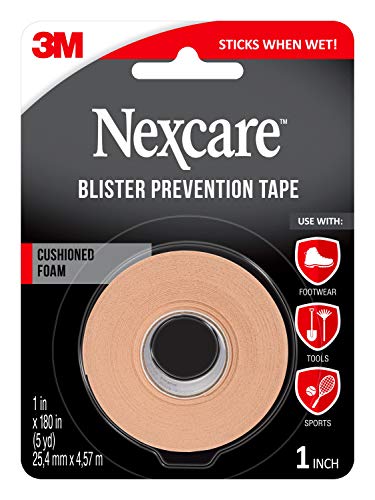
Nexcare is 3M’s consumer first-aid line, and this foam tape is the cheapest way into blister prevention. The roll format is the point: instead of a fixed number of pads in fixed shapes, you cut exactly the length you need, so one roll covers many applications across toes, fingers, and the back of a heel.
It earns its place specifically for breaking in new shoes. That is a finite, predictable period where you know friction is coming and you know roughly where, and taping the area pre-emptively for a week or two is both cheap and effective. Reviewers report it holding through beach days, which is a reasonable proxy for sand, water, and heat together.
Two limitations to be clear about. Adhesion reports swing widely, from excellent to barely sticking, more so than for the hydrocolloid pads. And foam tape is a prevention product: it takes friction off the skin but does not cushion or hydrate an existing blister the way a gel pad does. If the blister has already formed, this is the wrong item.
Nexcare Blister Prevention Tape, Waterproof Foam Medical Tape, 1 in x 5 yds
by Nexcare
The least expensive way to stop friction before it breaks skin, from a first-aid brand most households already keep.
Pros
- Cheapest prevention option here, from 3M's established first-aid line
- A single roll covers many applications, unlike a fixed count of pads
- Foam layer takes the rub during a new-shoe break-in period
- Cuts to length for toes, fingers, or the back of a heel
Cons
- Adhesion reports are genuinely inconsistent, from excellent to barely sticking
- Foam tape does not cushion an already-formed blister the way a gel pad does
11. Body Glide Original Anti Chafe Balm, 1.5 oz: Best Anti-Friction Balm
Body Glide carries by far the largest verified review base of anything in this guide, and it has been sold since 1996, which in a category full of newly launched import brands counts for something. It is a wax-based balm you apply before the friction starts, and it is the only product here that works where no adhesive will stay put.
That last point is the real argument. Bandages, tape, and moleskin all need a flat, dry, relatively hairless surface to bond to. The balm has no such requirement, so it covers skin-to-skin chafing zones and awkward contours that no pad can address. It goes on dry with no petroleum or oil, so it does not leave residue in socks, and it washes out of fabric with ordinary soap.
The limitations are inherent to the format rather than to this product. The stick depletes quickly under daily high-mileage use, and it does nothing whatsoever for a blister that has already formed. Treat it as the first layer of a prevention strategy, not as a treatment.

Body Glide Original Anti Chafe Balm, 1.5 oz
by Body Glide
The best-selling anti-friction balm on Amazon and the simplest prevention step there is: apply before the friction starts.
Pros
- By far the largest verified review pool of any product in this guide
- Works on feet and on skin-to-skin chafing zones that no bandage can cover
- Goes on dry and clean, with no petroleum or oil residue in socks
- Washes out of fabric with ordinary soap and water
Cons
- The stick depletes quickly with daily high-mileage use
- Does nothing for a blister that has already formed, since it is purely preventive
Best Blister Bandages for Toes
Toes are the hardest place on the body to keep a bandage attached. A toe bends at two joints, its circumference is small, and the adjacent toe rubs the pad from the side. What works is a narrow contoured shape, not a shrunken heel pad. Almost no brand sells a toe-only box at real volume, so the practical answer is a variety pack that includes a genuine toe shape.
| Product | Price | Buy |
|---|---|---|
| Promifun Hydrocolloid Gel Blister Bandages, 32 ct Variety PackBest for toe blisters overall The four-shape box includes a true toe-contoured pad, which is the shape that is almost impossible to buy on its own | $16.99 | View on Amazon |
| All Health Hydrocolloid Gel Bandages, Fingers and Toes, 8 CountBest for pinky toes and small blisters Sized for fingers and small toes, so it wraps a pinky toe without folding over on itself | $7.99 | View on Amazon |
| Welnove Gel Blister Bandages for Feet, 21 ct, Heel and ToeBest toe and heel combination Twenty-one pads covering both toe and heel shapes, with the thickest cushion if the toe blister is under pressure | $11.88 | View on Amazon |
Best Blister Bandages for Heels
The heel is the most common blister site, because the shoe counter grips a bony prominence and slides against it with every stride. Thickness matters more here than anywhere else on the foot: the pad has to absorb shear that the shoe is still applying. A thin pad on a heel transmits the force straight through.
| Product | Price | Buy |
|---|---|---|
| Welnove Gel Blister Bandages for Feet, 21 ct, Heel and ToeThickest heel cushioning The deepest cushion reviewed here, which is what a heel under constant shoe pressure actually needs | $11.88 | View on Amazon |
| BAND-AID Brand Pro Heal 5 Day Protect Hydrocolloid Bandages, Assorted, 14 ctBest trusted-brand heel option Extra-large assorted shapes cover a heel well, backed by the category's largest review pool | $12.99 | View on Amazon |
| Dr. Frederick's Original Ultra Sport Blister Bandages, Heel Pack, 10 ctBest heel pad for activity The hexagonal flex cut is designed for a heel that is rolling through a stride rather than sitting still | $13.99 | View on Amazon |
Best Waterproof Blister Bandages for Showering and Swimming
Waterproof claims in this category are not equivalent, and the distinction is worth understanding before you buy. Shower-rated means the seal survives brief warm water with the pad largely stationary. Swim-rated means it survives prolonged submersion plus the mechanical drag of moving water, which is a much harder test. If you swim or work wet, look for the stronger claim specifically.
| Product | Price | Buy |
|---|---|---|
| BAND-AID Brand Pro Heal 5 Day Protect Hydrocolloid Bandages, Assorted, 14 ctBest fully waterproof pick A full 100 percent waterproof rating with the deepest verified review base behind it | $12.99 | View on Amazon |
| Welnove Gel Blister Bandages for Feet, 21 ct, Heel and ToeBest for swimming Explicitly swim-rated rather than shower-rated, which is the harder of the two tests | $11.88 | View on Amazon |
| Compeed Advanced Blister Care Pads, Mixed Sizes, 10 Ct (2 Packs)Best long-wear waterproof option Waterproof with the longest wear claim in the category at up to seven days | $18.25 | View on Amazon |
Best Blister Bandages for Hands and Fingers
Hand blisters come from tools, oars, barbells, and guitar strings, and the products aisle largely ignores them. The problem is geometric: a pad sized for a heel cannot wrap a finger without bunching. You need either a purpose-made small pad or a mixed-size pack that includes one.
| Product | Price | Buy |
|---|---|---|
| All Health Hydrocolloid Gel Bandages, Fingers and Toes, 8 CountBest for fingers The only well-reviewed pad sized specifically for fingers, with a small footprint that will not fold | $7.99 | View on Amazon |
| Compeed Advanced Blister Care Pads, Mixed Sizes, 10 Ct (2 Packs)Best mixed-size pack for hands Mixed sizing explicitly covers hands and fingers alongside feet in a single purchase | $18.25 | View on Amazon |
| Dr. Scholl's Blister Cushions Seal & Heal, Blister Prevention Pads, 12 ctBest budget option for hands Rated by the manufacturer for hands as well as feet at the lowest name-brand price here | $7.99 | View on Amazon |
Best Blister Bandages for the Ball and Bottom of the Foot
Blisters under the forefoot and along the arch behave differently from heel blisters. They sit under your full body weight rather than against a shoe wall, the area is broad and flat, and the hot spots are often irregularly shaped. Broad flat pads work here, and so does cut-to-shape coverage when the spot does not match any standard outline.
| Product | Price | Buy |
|---|---|---|
| Promifun Hydrocolloid Gel Blister Bandages, 32 ct Variety PackBest shaped pads for the forefoot Includes a dedicated broad forefoot shape alongside heel, toe, and finger pads | $16.99 | View on Amazon |
| SpecOps Biosciences Ultra-Thin Moleskin for Blister Prevention, 15 ft RollBest custom-cut coverage A roll you cut to the exact outline of an irregular arch or forefoot hot spot | $19.98 | View on Amazon |
| BAND-AID Brand Pro Heal 5 Day Protect Hydrocolloid Bandages, Assorted, 14 ctBest large pad for broad areas Extra-large shapes in the assorted box cover the widest area of any pre-cut pad here | $12.99 | View on Amazon |
Best Blister Prevention Bandages and Anti-Friction Products
Prevention is a different product category from treatment, and it is the one most people skip until they have been burned twice. These four work by different mechanisms, and the right one depends on whether your hot spot is tied to a specific shoe, a specific activity, or a body zone no adhesive will hold.
| Product | Price | Buy |
|---|---|---|
| ENGO Blister Prevention Patches, Oval Starter 6-PackBest shoe-side prevention Bonds inside the shoe rather than to your skin, so it cannot peel off mid-activity and lasts roughly 300 miles | $16.99 | View on Amazon |
| Body Glide Original Anti Chafe Balm, 1.5 ozBest anti-friction balm The only option that works on skin-to-skin zones and contours where no adhesive will stay put | $10.99 | View on Amazon |
| Nexcare Blister Prevention Tape, Waterproof Foam Medical Tape, 1 in x 5 ydsBest budget prevention tape The cheapest entry point, cut to length, and ideal for a defined new-shoe break-in period | $7.82 | View on Amazon |
| SpecOps Biosciences Ultra-Thin Moleskin for Blister Prevention, 15 ft RollBest moleskin Cut-to-shape cotton flannel that survives long wet hikes, for hot spots no pre-cut pad fits | $19.98 | View on Amazon |
Best Blister Bandages for Hiking and Running
Sustained activity defeats products that work fine on a walk to the shops. The foot swells, sweat saturates the adhesive, and the heel flexes through thousands of cycles. For long mileage the strategy that actually works is preventing friction first and carrying a flexible hydrocolloid pad for when prevention fails.
| Product | Price | Buy |
|---|---|---|
| Dr. Frederick's Original Ultra Sport Blister Bandages, Heel Pack, 10 ctBest hydrocolloid for activity The hexagonal flex cut is built for a heel articulating through a running stride, and it holds through sweat | $13.99 | View on Amazon |
| SpecOps Biosciences Ultra-Thin Moleskin for Blister Prevention, 15 ft RollBest trail prevention Thin enough not to change boot fit, and reviewers confirm it holding through 20-mile hikes and soaked feet | $19.98 | View on Amazon |
| ENGO Blister Prevention Patches, Oval Starter 6-PackBest for long-mileage prevention Rated for roughly 300 miles per patch, so one application covers an entire training block | $16.99 | View on Amazon |
Best Blister Bandages by Size and Shape
A few remaining requests come up often enough to answer directly: the largest pads for a blister that has spread, the smallest for a pinky toe or fingertip, and the thickest cushions for a blister you still have to walk on.
| Product | Price | Buy |
|---|---|---|
| BAND-AID Brand Pro Heal 5 Day Protect Hydrocolloid Bandages, Assorted, 14 ctBest large blister bandages The assorted box includes extra-large shapes, the biggest pre-cut pads reviewed here | $12.99 | View on Amazon |
| All Health Hydrocolloid Gel Bandages, Fingers and Toes, 8 CountBest small blister bandages The smallest pads in this guide, sized for fingertips and pinky toes | $7.99 | View on Amazon |
| Welnove Gel Blister Bandages for Feet, 21 ct, Heel and ToeBest thick blister cushions The deepest gel cushion here, for a blister that has to keep taking weight | $11.88 | View on Amazon |
How Hydrocolloid Blister Bandages Work
Hydrocolloid is worth understanding because it explains nearly every piece of advice in this guide. The pad contains gel-forming polymers, typically carboxymethylcellulose, bonded to a waterproof outer film. When it contacts wound fluid, the polymer absorbs that fluid and swells into a soft gel that sits directly against the damaged skin. The outer film seals the whole thing from water, dirt, and bacteria.
The clinical principle behind this is moist wound healing, and it is not a recent marketing idea. George Winter’s 1962 research in Nature demonstrated that wounds kept moist under an occlusive film re-epithelialised roughly twice as fast as wounds left to form a dry scab, because epithelial cells migrate readily across a moist surface but must burrow beneath dry crust. That finding reshaped wound care and is the reason occlusive dressings are standard in clinical practice today. A conventional fabric bandage does the opposite of this: it wicks moisture away and encourages exactly the scab that slows healing down.
This also explains the white dome. As the gel absorbs fluid it turns opaque and swells, which looks like pus to almost everyone the first time they see it and is the most common reason a perfectly good dressing gets pulled off early. It is saturated gel, not infection. Leave it until the dome reaches the pad’s edge or the border lifts.
One important consequence follows from all of this. Occlusion is a benefit over a clean wound and a liability over an infected one, because sealing bacteria beneath a warm moist gel is close to ideal growth conditions. Never apply hydrocolloid over a wound showing the infection signs described below.
Hydrocolloid, Moleskin, Tape, or Balm: Which Should You Use?
The five mechanisms in this guide are not interchangeable, and matching them to your situation resolves most purchasing confusion.
Choose hydrocolloid when the blister already exists. It is the only category here that both cushions the injury and actively supports healing, and it is what belongs in a first-aid drawer for reactive use. Choose moleskin when you know where your hot spot is but it does not match any pre-cut shape, or when you are on a multi-day trip and need to improvise coverage. Choose foam tape when you are breaking in new footwear over a defined period and want the cheapest per-application option. Choose shoe-applied friction film when the same pair of shoes has raised the same blister more than once, because that is a recurring mechanical problem worth solving permanently. Choose balm when the friction is somewhere no adhesive will hold, or when you want a fast pre-activity step that requires no fitting at all.
The common error is buying prevention while holding a blister, or buying hydrocolloid to stop one that has not appeared. A useful rule: if you are shopping because of pain you feel right now, buy hydrocolloid. If you are shopping because of something on the calendar, buy prevention.
While we are separating similar-looking products: hydrocolloid blister bandages and acne pimple patches genuinely are the same base material, which is why the comparison circulates so persistently online. The differences are thickness, adhesive strength, sterility handling, and size. A blister pad is thicker and far more aggressively adhesive than anything intended for facial skin, so the substitution is a poor idea in that direction even though the chemistry is shared.
Signs a Blister Is Infected, and When to See a Doctor
Most blisters need no medical attention at all. The ones that do tend to announce themselves, and knowing the signals is more valuable than any product recommendation in this guide.
Seek medical care if you see expanding redness spreading outward from the blister, particularly if you can watch it advance over hours. Yellow or green pus, as distinct from the clear or faintly straw-coloured serum a normal blister contains, indicates infection. So does skin that is hot to the touch well beyond the blister margin, increasing rather than decreasing pain after the first day, a fever, swollen lymph nodes in the groin or behind the knee, or red streaks tracking up the leg or arm. Red streaking warrants same-day assessment: it can indicate lymphangitis, an infection spreading through the lymphatic vessels.
Do not dress an infected blister with hydrocolloid. Occlusion works against you once bacteria are established.
Two groups should not self-treat foot blisters at all. If you have diabetes, see a clinician for any foot blister, however minor it looks. Peripheral neuropathy means the usual warning signal, pain, may be absent entirely, and impaired circulation means a trivial-seeming break in the skin can progress to a non-healing ulcer. No over-the-counter hydrocolloid product in this guide is designed or validated to manage a diabetic foot wound, and none should be used as a substitute for assessment. Our guide to the best diabetic socks covers the seamless, non-constricting hosiery that helps prevent this situation arising. The same caution applies to anyone with peripheral arterial disease, an immunosuppressive condition, or an immunosuppressive medication regimen.
Also see someone if a blister appears without obvious friction, if blisters appear in clusters or spread across the body, or if a burn blister is large, deep, or in a functionally important location. Those patterns point away from simple friction injury and toward causes that need a diagnosis. If the surrounding skin becomes itchy, scaling, and persistent rather than settling, a fungal infection may be involved alongside the mechanical damage, which our guide to the best antifungal creams addresses. Once a blister has healed and left discoloured or raised skin, the best scar treatment creams guide covers the options for that stage.
Buyer's Guide
Choosing a blister bandage starts with one question that the packaging rarely asks you directly: are you treating a blister that already exists, or preventing one that has not formed yet? Those are different products with different mechanisms, and buying the wrong category is the most common mistake in this aisle. The factors below work through that decision and then through the details that determine whether the product stays on long enough to do its job.
Treatment or Prevention
Hydrocolloid pads treat. They cushion an existing blister and hold a moist healing environment against the wound bed, and they are what you want once the damage is done. Moleskin, foam tape, shoe-applied friction film, and anti-friction balm prevent. They reduce or redirect the shear force before the skin separates, and they do very little for a blister that has already formed. Most people who deal with blisters repeatedly end up owning one of each. If you are buying reactively, with a blister on your foot right now, buy hydrocolloid. If you are buying because you know a specific pair of boots or a specific race is coming, buy prevention.
Material and Mechanism
Hydrocolloid is a gel-forming matrix that absorbs exudate and swells, giving both cushioning and moist wound healing. Hydrogel products behave similarly with a higher water content and a cooler feel. Moleskin is adhesive-backed cotton flannel that takes friction on its own surface instead of your skin, and it cushions without absorbing anything. Foam medical tape works the same way with a thinner profile and a lower price. Friction-reduction film is different again: it bonds to the inside of the shoe and lowers the coefficient of friction at the contact point, so nothing is stuck to you at all. Balm is a wax-based barrier that reduces friction on skin directly and is the only option that works in places no adhesive will stay.
Shape and Location Fit
This is where most purchases go wrong. A pad designed for a heel will crease, tent, and lift within an hour if you wrap it around a toe, because the pad has to bend in two directions at once. Toes need a narrow contoured shape, fingers need a small pad with wings, heels need the largest cushion you can find, and the ball of the foot needs a broad flat pad. If your blisters do not appear in a consistent place, a four-shape variety pack removes the guesswork for roughly the price of a single-shape box. Buy for the anatomy you actually blister on, not for the picture on the front of the package.
Adhesion and Wear Time
Adhesion is the single most common complaint across every product in this category, at every price point and from every brand, and no manufacturer has solved it. Expect that honestly rather than expecting a perfect product. Preparation drives most of the outcome: the skin must be clean, completely dry, and free of balm or lotion, and the pad should be warmed under finger pressure for a good sixty seconds after application to let the adhesive bond. Manufacturer wear claims run from three to seven days, but those are ceilings measured under ideal conditions, not averages. A sweating foot inside a running shoe will always get less than the number on the box.
Waterproofing
Nearly every hydrocolloid product in this category is marketed as waterproof, but the claims are not equivalent. Shower-rated means the seal survives brief warm water exposure with the pad mostly stationary. Swim-rated means it survives prolonged submersion plus the mechanical drag of moving water, which is a substantially harder test. If you swim, work wet, or your job involves standing in water, check for the stronger claim specifically. Foam tape and moleskin are water-resistant rather than waterproof, and a balm offers no water protection at all and must be reapplied after any water exposure.
Pad Count and Cost Per Application
Sticker price is misleading here because pack sizes range from six patches to a fifteen-foot roll. Divide the price by the number of applications you actually get. A thirty-two-count variety pack near the middle of the price range works out cheaper per pad than a six-count box of a premium brand, and a roll of tape or moleskin is cheaper still on a per-use basis because you cut only what you need. Weigh that against how often you genuinely get blisters. Buying a large multi-pack for one bad pair of shoes is false economy, and so is buying a six-count box if you hike every weekend.
Final Verdict
For most people the BAND-AID Pro Heal 5 Day Protect assorted box is the right purchase. Its mix of regular and extra-large shapes covers whatever turns up, and its review base is the deepest in the category, which is what you want from a product bought before you know precisely what you will need it for.
If price is the deciding factor, the Dr. Scholl’s Blister Cushions Seal and Heal deliver the same hydrocolloid mechanism from a long-established foot-care brand at the lowest name-brand price here, with the useful addition of a manufacturer rating for hands as well as feet.
If you want the best regardless of cost, Compeed Advanced Blister Care Pads hold the highest rating in this guide, the longest wear claim at up to seven days, and a mixed-size assortment that fits more of the body than any single-shape box. For a walking holiday or any situation where re-dressing is inconvenient, that combination justifies the premium.
For volume buying, Promifun’s 32-count variety pack is the best value per pad and the most reliable way to have a genuine toe shape on hand. And if your blisters recur in the same shoes, stop treating and start preventing: ENGO patches fix the friction inside the shoe for roughly three hundred miles, which is the only approach here that addresses the cause rather than the injury.
One closing note in the spirit of honest advice. Adhesion is the weak point of this entire product category, at every price and from every brand, and no manufacturer has solved it. Most of the outcome is in your hands rather than the product’s: apply to clean, completely dry, lotion-free skin, and hold firm finger pressure over the pad for a full sixty seconds so the adhesive bonds before you put a sock on. That single habit resolves the majority of the failures people blame on the bandage.
This guide is intended for general education and does not constitute medical advice or replace individual clinical assessment. If you have diabetes, peripheral arterial disease, peripheral neuropathy, or a compromised immune system, consult a clinician about any foot blister rather than self-treating. Product prices, ratings, and availability were verified on the publication date and are subject to change.
Frequently Asked Questions
Do blister bandages actually work, or is a regular bandage just as good?
Can you put a hydrocolloid bandage on an open or popped blister?
Why does my blister bandage turn white and puff up?
How long should you leave a blister bandage on?
Can you use a blister bandage on a burn blister?
Related Articles
About the Reviewer

Dr. David Taylor, MD, PhD
Drexel University College of Medicine (MD), Indiana University School of Medicine (PhD)
Dr. David Taylor is a licensed physician and medical researcher who founded BestRatedDocs in 2016. With an MD from Drexel University and a PhD from Indiana University School of Medicine, he combines clinical expertise with a passion for health technology to provide evidence-based product recommendations. Dr. Taylor specializes in health informatics and regularly evaluates medical devices, diagnostic equipment, and therapeutic products to help healthcare professionals and patients make informed decisions.