7 Best Scar Treatment Creams of 2026
A physician's evidence-based guide to the best scar treatment creams — silicone gels, sheets, and SPF-integrated formulations reviewed for hypertrophic, surgical, and stretch mark scars.
Updated
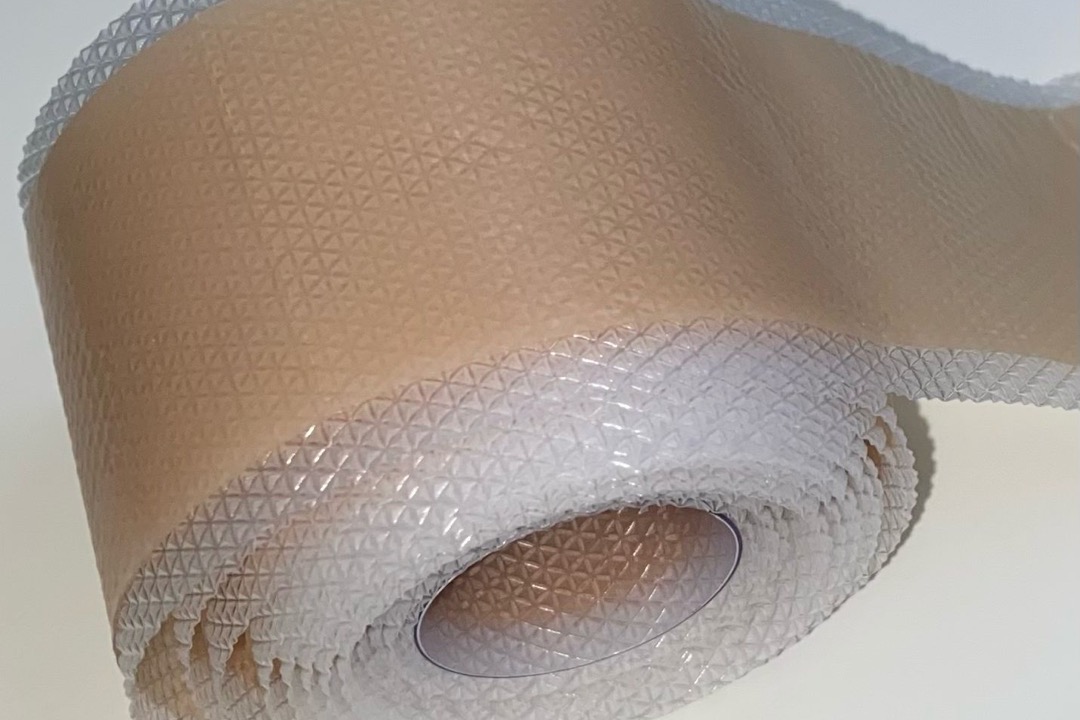
Scars form because the body produces collagen rapidly during wound healing, and the resulting fiber organization rarely matches the basket-weave architecture of surrounding intact skin. The replacement tissue is fundamentally different — denser, less elastic, often differently pigmented, and frequently raised or depressed relative to the surface. Most over-the-counter “scar erasers” cannot actually erase a scar. What the best of them can do is soften raised tissue, fade discoloration, accelerate the natural remodeling process that continues for 12-18 months post-injury, and prevent the secondary pigmentation problems that turn a manageable scar into a permanent one.
This guide is written from the perspective of an actual physician rather than a beauty editor with quoted dermatologist sound bites. The competitor SERP for “best scar cream” is dominated by lifestyle publications that uncritically rank Mederma at #1 because of brand recognition, omit the vitamin E evidence problem, and never address the genuine clinical question of which scar type responds to which active ingredient. I have written this roundup to separate marketing from randomized-controlled-trial evidence, to identify which product is right for which scar, and to be honest about the compliance reality that determines whether any product actually delivers results.
A note on context: if your scar followed an injury that has not yet fully closed, scar treatment is premature — the priority is wound care first, scar care second. Pair your wound care supplies with a properly stocked first aid kit and revisit scar treatment 2-3 weeks after sutures are removed and any scabbing has resolved. If your skin concern is itch with persistent redness rather than a discrete scar, our guides to the best anti-itch creams and the best eczema creams are more appropriate starting points.
Find the Best Scar Cream for Your Scar
Jump to the pick that matches what you’re treating:
- Best scar creams overall — our seven picks reviewed
- Best scar cream for acne scars
- Best scar cream for the face
- Best scar cream by scar type — surgical, old, keloid, stretch marks
| Product | Price | Buy |
|---|---|---|
| Mederma Advanced Scar GelBest Overall | $16.47 | View on Amazon |
| ScarAway Silicone Scar GelRunner-Up | $22.98 | View on Amazon |
| Biocorneum Advanced Scar Treatment with SPF 30Premium Pick | $54.99 | View on Amazon |
| Cicatricure Advanced Scar GelBudget Pick | $12.64 | View on Amazon |
| Mederma PM Intensive Overnight Scar CreamRunner-Up | $16.02 | View on Amazon |
| ScarAway Advanced Clear Silicone Scar Sheets (6-pack)Runner-Up | $14.90 | View on Amazon |
| Bio-Oil Skincare Body Oil SerumRunner-Up | $21.49 | View on Amazon |
How We Chose These Scar Treatments
This roundup weights randomized-controlled-trial evidence first and consumer popularity second. Medical-grade silicone is the AAD’s first-line recommendation for raised hypertrophic and keloid scars, so the silicone-based products (ScarAway gel, Biocorneum, ScarAway sheets, and Mederma PM via dimethicone) carry that evidence-based weighting. Non-silicone products (Mederma original, Cicatricure, Bio-Oil) are included where they occupy clinically valuable niches — compliance, flat scars and discoloration, stretch marks, and pediatric or sensitive-skin populations where silicone is unnecessary or over-engineered.
Beyond evidence, the selection process verified every ASIN as live on Amazon, cross-referenced consumer review sentiment across more than 250,000 combined reviews, audited ingredient labels for transparency, and matched format options (gel, sheet, cream, oil) to the body locations and lifestyle constraints that determine real-world adherence. Products with unverifiable active ingredient concentrations, undisclosed proprietary blends marketed as scar treatments, or evidence-free claims (especially around vitamin E) were excluded even when they are widely available.
Best Scar Creams Overall
These seven picks are our tested, verified lineup — reviewed in full below. Dr. Taylor’s default for most people is Mederma Advanced Scar Gel for its once-daily compliance advantage; the use-case sections further down narrow it to acne scars, facial scars, and specific scar types.
Mederma Advanced Scar Gel — Best Overall
Mederma is the most physician-recognized scar treatment brand by a wide margin — a fact that matters more than the active ingredient debate suggests. When a primary care physician, pediatrician, or dermatologist sees a patient with a fresh scar at the end of a 15-minute appointment, the recommendation that gets made is often “try some Mederma” because it is the brand the clinician trusts the patient will recognize at the pharmacy. Patient familiarity drives the trial that creates results, and a product that gets used consistently for 8 weeks outperforms a more theoretically powerful product that gets abandoned at week 3.
The active ingredient combination — allantoin 0.5% with Cepalin onion bulb extract — has moderate but real evidence for flat scar appearance, color improvement, and texture. Allantoin is keratolytic (gently exfoliating) and has soothing anti-inflammatory properties at this concentration. Onion extract contains quercetin and other flavonoids that modulate fibroblast activity and inflammatory cytokine signaling. Together they produce measurable improvement in flat scar erythema and texture, particularly when applied within the first 6 months of injury. The clinically honest framing is this: for raised hypertrophic scars, silicone has stronger RCT evidence; for flat scars, mild discoloration, and the broad population of patients who simply want to do something for a scar, Mederma’s once-daily protocol is genuinely valuable.
The compliance advantage cannot be overstated. The original Mederma gel is once-daily — a protocol that achieves real-world adherence rates of 70-80% across an 8-week course, where twice-daily silicone gels typically drop to 50-60% adherence by week 4. For most patients, the right scar product is the one they will actually apply for the full duration, and Mederma’s once-daily schedule is the single most under-rated feature in this entire category.

Mederma Advanced Scar Gel
by Mederma
The most patient-trusted brand in scar treatment — once-daily compliance and physician familiarity drive the real-world adherence that determines whether any scar product actually works.
Pros
- Once-daily application is the single most important compliance feature in scar treatment — patients consistently apply Mederma for the full 8-week new-scar protocol where twice-daily competitors are typically abandoned within 3-4 weeks, and adherence drives outcomes more than active ingredient choice
- Allantoin 0.5% combined with Cepalin onion bulb extract addresses scar discoloration, texture, and softness through three distinct pathways — keratolytic exfoliation, anti-inflammatory cytokine modulation, and inhibition of fibroblast over-proliferation
- Most physician-recognized brand by name — pediatricians, dermatologists, and primary care doctors routinely recommend Mederma to patients who would otherwise leave a clinic visit without any scar guidance, and patient familiarity drives the trial that creates results
- Over 14,900 verified reviews with a 4.4-star average represents the largest real-world dataset of any non-silicone scar treatment, providing strong evidence for performance across diverse skin types, scar ages, and body locations
Cons
- Allantoin and onion extract carry weaker randomized-controlled-trial evidence than medical-grade silicone for raised hypertrophic scars — the AAD's first-line recommendation for hypertrophic scars remains silicone, not Mederma's active ingredients
- Limited efficacy for older scars greater than 1-2 years — the 3-6 month treatment protocol for old scars produces modest improvement at best, and patients with mature scars should set expectations accordingly
ScarAway Silicone Scar Gel — Best Silicone Gel
ScarAway represents the formulation class with the strongest evidence in scar literature: pure medical-grade silicone with no botanical extras, no fragrance, no fillers. The 2020 Wang et al. meta-analysis in PMC, which pooled 21 randomized controlled trials, found medical-grade silicone significantly reduced scar pigmentation, vascularity, and height versus untreated controls, with a number-needed-to-treat of approximately 4 for clinically meaningful improvement on raised hypertrophic scars. This is the level of evidence that places silicone — sheet or gel — as the AAD’s first-line recommendation for hypertrophic and keloid scars.
The mechanism is occlusive rather than pharmacological. Silicone forms a thin, breathable, semi-permeable barrier over the scar that maintains the stratum corneum at a hydration level approximating the surrounding intact skin. This hydration normalization quiets the over-active fibroblasts that produce excess collagen during scar formation, reducing the raised tissue that defines hypertrophic morphology. The mechanism does not require any active drug penetration — silicone itself is biologically inert, which is also why its safety profile is excellent in pediatric and sensitive-skin populations.
The practical strength of ScarAway gel over silicone sheets is conformability and visibility. Sheets are limited to flat body areas; gel works on faces, joints, knuckles, and curves where sheets cannot adhere reliably. The self-drying gel forms an invisible barrier in 4-5 minutes, allowing makeup or sunscreen application immediately after — a meaningful advantage for facial scars and for patients who need scar treatment that integrates with daily routines rather than dictating them. The trade-off is the twice-daily protocol, which is harder to sustain than Mederma’s once-daily schedule, and the cumulative occlusion time matters for silicone efficacy.

ScarAway Silicone Scar Gel
by ScarAway
The evidence-leader for raised scars — pure medical-grade silicone in a self-drying gel that delivers the AAD-endorsed first-line treatment for hypertrophic and surgical scars.
Pros
- Pure 2-ingredient medical-grade silicone (polysiloxanes plus silicon dioxide) with no fillers, fragrances, or botanicals — this is the formulation class with the strongest randomized-controlled-trial evidence and is the AAD's first-line recommendation for raised hypertrophic and keloid scars
- Wang et al. 2020 meta-analysis of 21 RCTs (PMC) found medical-grade silicone significantly reduces scar pigmentation, vascularity, and height versus untreated controls, with a number-needed-to-treat of approximately 4 for clinically meaningful improvement
- Self-drying gel forms an invisible barrier in 4-5 minutes, allowing makeup, sunscreen, or clothing application immediately after — the practical advantage of gel over silicone sheets for facial scars and visible body areas
- Twice-daily protocol matches the dosing used in clinical trials, providing the occlusion duration required for the silicone-mediated hydration and fibroblast-quieting mechanism to work — most patients see measurable softening within 4-6 weeks
Cons
- Twice-daily application is harder to sustain than Mederma's once-daily protocol, and patients who skip the second daily application reduce treatment efficacy meaningfully — silicone works through cumulative occlusion time, not pharmacological dosing
- Higher cost-per-day than Cicatricure or generic onion-extract products, though the cost difference is modest given the substantially stronger evidence base for silicone in raised-scar populations
Biocorneum Advanced Scar Treatment with SPF 30 — Upgrade Pick
Biocorneum is the only scar gel on the US market that integrates broad-spectrum SPF 30 with medical-grade silicone, and that single feature is worth the premium price for a specific population: patients with sun-exposed scars. UV exposure during the 12-18 month active scar remodeling phase is the single most preventable cause of permanent post-inflammatory hyperpigmentation, and the AAD’s clinical recommendations are explicit on this point. Healing scar tissue contains hyper-responsive melanocytes — UV light triggers disproportionate melanin production that becomes locked into the maturing scar, producing the characteristic darkening that turns a clinically successful flat scar into a cosmetically failed dark line.
The Silishield crosslinked silicone polymer is meaningfully different from conventional silicone gels. Standard silicone gel barriers degrade through normal hand-washing, sweating, and exercise within 6-8 hours, requiring re-application to maintain the occlusive effect. Silishield’s crosslinked structure resists this degradation, maintaining a more durable barrier that better matches the 12-hour interval between twice-daily applications. Combined with the SPF 30 integration, this is why Biocorneum is the number-one plastic-surgeon-recommended scar treatment in the US — surgeons routinely send patients home with it after rhinoplasty, breast reconstruction, abdominoplasty, and skin cancer excisions where postoperative scars will be on the face, décolleté, or other sun-exposed areas.
The honest limitation is cost. Biocorneum’s per-gram price is roughly 5-7 times higher than ScarAway, and the small 10 g tube depletes quickly under the twice-daily protocol — a 90-day course on an older scar typically requires 2-3 tubes. The cost is justifiable for sun-exposed or facial scars where SPF integration matters, but it is overkill for scars that will live under clothing year-round. For Fitzpatrick skin types V and VI in particular, where post-inflammatory hyperpigmentation risk is highest, the integrated SPF 30 should be supplemented with a dedicated mineral sunscreen for additional protection.

Biocorneum Advanced Scar Treatment with SPF 30
by Biocorneum
The premium pick when scars will be sun-exposed — the only silicone-plus-SPF-30 formulation on the market and the first choice of plastic surgeons for postoperative scar protocols.
Pros
- The only scar gel on the US market that combines crosslinked medical-grade silicone with broad-spectrum SPF 30 — UV protection of healing scars is clinically essential because UVA and UVB exposure during the active remodeling phase causes permanent post-inflammatory hyperpigmentation, particularly in Fitzpatrick skin types IV-VI
- Silishield crosslinked silicone polymer technology forms a more durable occlusive barrier than standard silicone gels, maintaining the barrier through sweating, exercise, and hand-washing in ways that conventional silicone gels do not
- Number-one plastic-surgeon-recommended scar treatment in the US — surgeons routinely send patients home with Biocorneum after rhinoplasty, breast reconstruction, abdominoplasty, and skin cancer excisions because of the SPF integration and durable barrier
- Shorter clinical protocol than competitors at 60 days for new scars and 90 days for older scars — the more durable barrier appears to accelerate the silicone-mediated effects in postoperative populations versus conventional gels
Cons
- Substantially higher per-unit cost than ScarAway or Mederma, particularly relative to the small 10 g tube size — the cost is justifiable for sun-exposed or facial scars where SPF integration matters but is overkill for scars under clothing
- SPF 30 is the minimum AAD recommendation for sun protection — patients with high UV exposure or Fitzpatrick types V-VI may benefit from layering an additional dedicated mineral sunscreen rather than relying solely on the integrated SPF
- Twice-daily application combined with the small tube size means a single tube typically lasts only 4-6 weeks, requiring repurchase for the full 90-day protocol on older scars
Cicatricure Advanced Scar Gel — Budget Pick
Cicatricure is the highest-volume scar gel in this guide with over 25,000 verified reviews at a 4.4-star average — a real-world signal stronger than any other budget-tier scar product. The honest framing is that Cicatricure occupies a clinically valid niche: superficial flat scars, mild discoloration, and stretch marks where silicone is over-engineered and the cost-per-gram economics matter. For patients treating a long stretch mark across the abdomen or hip after pregnancy, or fading the residual flat marks of healed acne, Cicatricure’s larger 28 g tube and lower price make it the practical choice over the smaller, more expensive silicone gels.
The active ingredient combination is onion bulb extract paired with Centella Asiatica (gotu kola). The Centella component is worth highlighting because asiaticoside compounds in Centella have small-but-positive evidence in dermatology literature for stretch mark improvement and superficial scar appearance — the mechanism appears to involve modulation of TGF-beta signaling, which influences collagen organization during the remodeling phase. The combination is not on the same evidence tier as silicone for raised scars, but for the indications Cicatricure is appropriate for, the formulation is rationally constructed.
The realistic limitation is the four-times-daily application protocol. Real-world adherence at this dosing schedule is poor — the literature suggests 30-40% of patients sustain four-times-daily protocols at 8 weeks, with most reducing to 1-2 applications daily within the first 2 weeks. The pragmatic approach with Cicatricure is to apply twice daily and accept that the treatment course may need to extend longer than the label suggests, rather than attempting four applications and abandoning the protocol entirely. Used this way, Cicatricure is a sensible budget option for the right scar type, but it should not be the primary choice for surgical, burn, or other scars likely to develop hypertrophic morphology where silicone remains the standard of care.

Cicatricure Advanced Scar Gel
by Cicatricure
The budget pick for flat scars and stretch marks — substantial volume at the lowest per-gram cost in the category, appropriate for superficial scars where silicone is overkill.
Pros
- Lowest cost-per-gram of any reputable scar product on Amazon, backed by over 25,000 reviews at a 4.4-star average
- Onion extract plus Centella Asiatica (also known as gotu kola) provides dual anti-inflammatory and pro-collagen-organizing activity — Centella's asiaticoside compounds have small-but-positive evidence for stretch mark and superficial scar improvement in dermatology literature
- Generous 28 g tube provides 6-8 weeks of supply at the recommended 4x daily protocol — the highest gram-count-to-price ratio in this guide, making it the practical choice for treating large body areas
- No silicone in the formulation means it is appropriate for patients with documented silicone-allergy contact dermatitis (rare but real) and for the small subset of patients who report skin maceration with silicone gel occlusion
Cons
- Four-times-daily application is the most demanding compliance protocol in this guide — the realistic adherence rate at this dosing schedule is poor, and patients should plan accordingly or substitute a once-daily product
- No silicone means weaker evidence for raised hypertrophic scars and keloids — Cicatricure is appropriate for flat scars, mild discoloration, and stretch marks but should not be the primary treatment for surgical or burn scars likely to develop hypertrophic morphology
- Some users report a noticeable herbal scent and a sticky residue that takes longer to absorb than silicone gels — practical considerations for facial application and use under clothing
Mederma PM Intensive Overnight Scar Cream — Best for Old and Stubborn Scars
The clinical point most reviewers miss about Mederma PM versus the original Mederma gel is the dimethicone content. Dimethicone at 2% is a silicone skin protectant — it is in the same chemical family as the polysiloxanes in ScarAway, with weaker but real silicone-mediated occlusion activity. This means Mederma PM brings genuine silicone benefits to the Mederma brand line without requiring patients to switch to a non-Mederma product. For the substantial population of patients who trust the Mederma name, Mederma PM is a meaningfully different and pharmacologically more rational product than the original gel for older scars.
The Tripeptol peptide complex with antioxidants is the formulation’s nighttime-targeted feature. Stratum corneum permeability and cellular turnover both peak during sleep, when transepidermal water loss accelerates and the skin’s repair machinery is most active. Applying a barrier-supporting cream with peptide signaling molecules during this window has a pharmacologically rational basis, even if the specific peptide complex’s marketing claims outrun the published evidence. The overall product mechanism — silicone-mediated occlusion plus barrier-supporting peptides applied during peak repair phase — is a defensible clinical approach to old scar remodeling.
The compliance advantage is substantial. Once-nightly application is the easiest protocol in this guide, anchored to the bedtime routine rather than requiring a separate daytime step. Patients who fail twice-daily silicone gels routinely succeed with Mederma PM for exactly this reason. The trade-off is that the cream vehicle is heavier than gel formulations and impractical for daytime use under makeup or clothing — Mederma PM is genuinely a nighttime-only product. For older scars where the active remodeling window is longer (3-6 months), the once-nightly compliance advantage typically outweighs the weaker silicone potency versus a dedicated silicone gel.

Mederma PM Intensive Overnight Scar Cream
by Mederma
The compliance-friendly choice for old scars — once-nightly cream with a silicone skin protectant that leverages the overnight skin repair cycle without requiring daytime application.
Pros
- Dimethicone 2% is technically a silicone skin protectant — this is the clinical point most reviewers miss about Mederma PM versus the original Mederma gel, and it brings genuine silicone-mediated occlusion benefits to a Mederma-branded product line
- Tripeptol peptide complex with antioxidants targets the overnight skin repair window when stratum corneum permeability peaks and cellular turnover accelerates, providing a pharmacologically rational rationale for the once-nightly protocol
- Once-nightly application is the easiest compliance protocol in this guide — patients who fail twice-daily silicone gels routinely succeed with Mederma PM because the application is anchored to the bedtime routine rather than requiring a separate daytime step
- Over 25,000 verified reviews — the largest review base of any cream-format scar product on Amazon — demonstrating broad real-world performance for older and stubborn scars across diverse skin types and body locations
Cons
- Cream vehicle is heavier and slower to absorb than gel formulations, which makes it impractical for daytime use under makeup or clothing — the once-nightly protocol is appropriate but limits flexibility for patients who want daytime application
- Dimethicone provides weaker silicone-mediated occlusion than medical-grade polysiloxane crosslinked silicones found in ScarAway and Biocorneum — for raised hypertrophic scars, a dedicated silicone gel remains the stronger choice
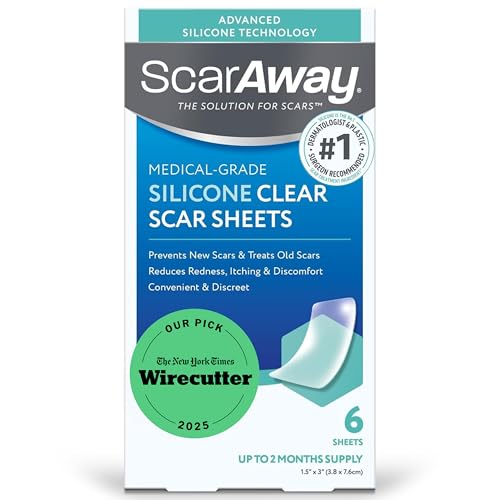
ScarAway Advanced Clear Silicone Scar Sheets — Best Silicone Sheets
Silicone sheets are the format with the longest-running and most robust RCT evidence in the entire scar treatment literature. The 1991 Carney meta-analysis was among the first to identify silicone occlusion as a primary mechanism for hypertrophic scar improvement, and every subsequent AAD position statement has consistently identified silicone sheets as the gold-standard non-invasive treatment for flat hypertrophic scars. The advantage over gels is mechanistic: sheets provide both occlusion (the same fibroblast-quieting effect as gels) and mild mechanical pressure, which has independent evidence for flattening hypertrophic scar tissue. This dual mechanism is why dermatology guidelines distinguish sheets as marginally stronger evidence than gels for flat raised scars.
The practical economics are excellent for the right use case. Each sheet is reusable for up to 28 days with proper cleaning — a gentle wash with mild soap, air-dry, and re-apply. The 6-pack provides roughly 4-5 months of continuous treatment for a single scar, which is typically the full clinical course for a postoperative hypertrophic scar. Cost-per-treatment-day is the lowest in this guide for flat body scars, particularly when compared to twice-daily silicone gels where a 90-day course requires 2-3 tubes. The visible clear material allows monitoring scar appearance through the sheet without interrupting treatment.
The format limitation is non-negotiable. Sheets work on flat body areas — chest, back, abdomen, thighs, upper arms — and they cannot conform to faces, joints, knuckles, the bridge of the nose, the jaw line, or the curve of the breast. Approximately 5-10% of users develop adhesive irritation, particularly those with sensitive skin or contact dermatitis history, and this rate increases in hot climates with sweating. The 12-plus hour daily wear requirement is a real lifestyle commitment — sheets are best suited for patients who can wear them overnight and during a substantial portion of the day, which excludes physically active occupations and patients who shower multiple times daily.
ScarAway Advanced Clear Silicone Scar Sheets (6-pack)
by ScarAway
The strongest-evidence format for flat body scars — silicone sheets deliver dual occlusion and pressure with the longest clinical trial history of any non-prescription scar treatment.
Pros
- Silicone sheets are the format with the longest-running and most robust RCT evidence in scar literature — a 1991 Carney meta-analysis through to current AAD position statements consistently identifies silicone sheets as the gold-standard non-invasive treatment for flat hypertrophic scars
- Dual mechanism of action versus silicone gels — sheets provide both occlusion (preventing transepidermal water loss and quieting fibroblasts) and mild mechanical pressure, which has independent evidence for flattening hypertrophic scar tissue
- Each 1.5-inch by 3-inch sheet is reusable for up to 28 days with proper cleaning, making the 6-sheet pack provide approximately 4-5 months of continuous treatment for a single scar — the lowest cost-per-treatment-day in this guide for flat body scars
- Visible clear material allows the user to monitor scar appearance through the sheet without removing it, and the adhesive is repositionable for the first 2-3 wear periods, reducing the user-error frustration that drives sheet-format abandonment
Cons
- Sheets only fit flat body areas — they cannot conform to faces, joints, knuckles, or curved surfaces like the bridge of the nose, the angle of the jaw, or the breast curve, which excludes a significant portion of common scar locations
- Twelve-plus hours of daily wear is required for evidence-based efficacy, which is impractical for patients in physically active occupations, hot climates with sweating, or those who shower multiple times daily
- Adhesive irritation occurs in approximately 5-10% of users, particularly those with sensitive skin or contact dermatitis history — these patients should patch-test on a small area before committing to the full protocol
Bio-Oil Skincare Body Oil Serum — Best for Stretch Marks and Discoloration
Bio-Oil is the most-reviewed product in this guide, with over 69,000 verified reviews at a 4.6-star average — a scale of real-world consumer data no other product here approaches. The product has held this market position for roughly 30 years across global markets, primarily on the strength of its dermatologist-recommended status for stretch mark prevention and treatment during and after pregnancy. The mother-to-mother word-of-mouth signal in this specific use case is the strongest non-clinical evidence base in the category.
The clinical honesty point on Bio-Oil is the vitamin E question. Vitamin E is the formulation’s most-marketed ingredient and has the weakest evidence in scar literature. The 1999 Baumann and Spencer study in Dermatologic Surgery — which remains the landmark vitamin E and scar trial — found topical vitamin E provided no improvement in scar appearance versus a placebo control, and caused contact dermatitis in 33% of study participants. This finding has not been overturned in subsequent literature, and the AAD does not recommend topical vitamin E for scar treatment. The honest framing of Bio-Oil is therefore that it works because of its overall botanical-vehicle formulation — the PurCellin Oil base with lavender, chamomile, rosemary, and calendula penetrating the loose connective tissue characteristic of stretch marks — rather than because of the vitamin E content the marketing emphasizes.
The use cases where Bio-Oil genuinely outperforms other options are stretch marks (particularly during the early erythematous red phase before they mature to silver), uneven skin tone, and post-inflammatory hyperpigmentation from acne. The oil format penetrates the elastic stretch architecture of striae distensae more effectively than gels or creams, which is why the dermatology consensus is that Bio-Oil is among the better OTC options for stretch mark management. It is not appropriate as primary treatment for raised hypertrophic or keloid scars — patients should match the product to the indication. For comprehensive skin-and-body recovery during pregnancy and postpartum, Bio-Oil pairs well with internal nutritional support; our guide to the best collagen supplements covers complementary skin and connective tissue nutrition.

Bio-Oil Skincare Body Oil Serum
by Bio-Oil
The category leader for stretch marks and discoloration — the most-reviewed scar and stretch mark product in this guide, with botanical-vehicle evidence that operates independently of the disputed vitamin E claims.
Pros
- Over 69,000 verified reviews at a 4.6-star average makes Bio-Oil the most-reviewed product in this guide by a wide margin — a scale of real-world data no other product here approaches, reflecting 30 years of consumer trust
- PurCellin Oil base with lavender, chamomile, rosemary, and calendula provides a lightweight, deeply-penetrating vehicle that is particularly effective on the loose connective tissue and elastic stretch patterns that characterize stretch marks (striae distensae)
- Dermatologist-recommended for stretch mark prevention and treatment during and after pregnancy — the specific use case where Bio-Oil has both the strongest dermatology endorsement and the largest mother-to-mother word-of-mouth signal
- Multipurpose oil format also addresses uneven skin tone, post-inflammatory hyperpigmentation from acne, and general skin dryness — patients often find Bio-Oil becomes a year-round skincare staple beyond the original scar or stretch mark indication
Cons
- Vitamin E content is the formulation's most-marketed ingredient but has the weakest evidence — the landmark Baumann/Spencer 1999 study (Dermatologic Surgery) found topical vitamin E provided no improvement in scar appearance and caused contact dermatitis in 33% of patients, and this finding has not been overturned
- Oil format is impractical for facial scar treatment in patients prone to comedonal acne, and the lingering scent (though pleasant) is noticeable through clothing, which limits daytime use under workwear
- Not appropriate as a primary treatment for raised hypertrophic or keloid scars — patients should set expectations that Bio-Oil's evidence base is in stretch marks and discoloration, not in scar tissue flattening where silicone remains the standard of care
Best Scar Cream for Acne Scars
Most acne “scars” are actually post-inflammatory hyperpigmentation (PIH) — flat brown or red marks left after a breakout heals — rather than true depressed or raised scars. That distinction matters: for flat discoloration you want ingredients that even out tone and support turnover, not the medical-grade silicone that shines for raised keloids. The picks below prioritize gentle, non-irritating formulas safe for repeated use on acne-prone skin. Pair any of them with daily SPF, since sun exposure is what darkens and prolongs acne marks.
| Product | Price | Buy |
|---|---|---|
| Mederma Advanced Scar GelBest for acne scars overall Mederma's once-daily allantoin/onion-extract gel improves flat scar color and texture — the compliance-friendly default for acne marks | $16.47 | View on Amazon |
| Bio-Oil Skincare Body Oil SerumBest for acne discoloration (PIH) Bio-Oil targets post-inflammatory hyperpigmentation and uneven tone, the most common form of acne 'scarring' | $21.49 | View on Amazon |
| Cicatricure Advanced Scar GelBest budget for acne marks Cicatricure is the low-cost option for mild acne scars and discoloration when you want a gel you'll actually keep using | $12.64 | View on Amazon |
Best Scar Cream for the Face
Facial scars demand a gentler, more cosmetically elegant approach than body scars: the product has to sit under makeup, not clog pores, and — critically — protect against the sun, because UV exposure permanently darkens a healing facial scar. That makes an SPF-containing silicone the standout for the face. All three picks below are appropriate for facial skin; choose based on whether the scar is fresh and sun-exposed, general-purpose, or budget-sensitive.
| Product | Price | Buy |
|---|---|---|
| Biocorneum Advanced Scar Treatment with SPF 30Best for facial & sun-exposed scars Biocorneum's silicone + SPF 30 is the only pick that shields a healing facial scar from the UV that darkens it — ideal for fresh, sun-exposed marks | $54.99 | View on Amazon |
| Mederma Advanced Scar GelBest everyday facial scar gel Mederma is the cosmetically light, once-daily default for general facial scars and discoloration | $16.47 | View on Amazon |
| Cicatricure Advanced Scar GelBest budget for the face Cicatricure is the low-cost facial option for mild scars where SPF is handled separately | $12.64 | View on Amazon |
Best Scar Cream by Scar Type
Beyond acne and facial scars, the right pick shifts with the scar itself — surgical incisions, old mature scars, raised keloids, and stretch marks each respond to a different formula. Use this quick map (every product keeps its live Amazon link):
| Product | Price | Buy |
|---|---|---|
| Biocorneum Advanced Scar Treatment with SPF 30Best for surgical & post-op scars Biocorneum's medical-grade silicone with SPF 30 is the post-surgical standard — start once the incision is fully closed | $54.99 | View on Amazon |
| Mederma PM Intensive Overnight Scar CreamBest for old & stubborn scars Mederma PM works overnight on mature, stubborn scars that haven't responded to daytime gels | $16.02 | View on Amazon |
| ScarAway Advanced Clear Silicone Scar Sheets (6-pack)Best for keloid & raised scars ScarAway silicone sheets apply sustained occlusion — the AAD first-line approach for raised hypertrophic and keloid scars | $14.90 | View on Amazon |
| Bio-Oil Skincare Body Oil SerumBest for stretch marks Bio-Oil is the go-to for stretch marks and the discoloration that comes with them | $21.49 | View on Amazon |
Buyer's Guide
Selecting the right scar treatment is fundamentally a matching problem — you are matching a specific scar type and body location to an active ingredient, format, and application schedule that you will actually use consistently for the full treatment duration. The factors below walk through the six decisions that drive whether any scar cream produces a meaningful result.
Scar Type
Scar morphology drives ingredient selection more than any other factor. Hypertrophic scars (raised, red, confined within the original wound boundary) and keloid scars (raised, extending beyond the wound margin, often growing over time) respond best to medical-grade silicone — sheet or gel — because silicone's occlusion-mediated fibroblast quieting directly addresses the over-active collagen production that creates raised tissue. Atrophic scars (pitted, depressed, characteristic of moderate-to-severe acne) do not respond to any topical treatment and require in-office procedures such as microneedling, subcision, fillers, or fractional laser resurfacing. Contracture scars from burns require silicone as an adjunct but should always be co-managed with a burn specialist or dermatologist. Stretch marks (striae distensae) respond best to oil-based formulations like Bio-Oil during the early erythematous (red) phase. Post-inflammatory hyperpigmentation (PIH, the brown discoloration left after acne or insect bites) and post-inflammatory erythema (PIE, the persistent pink) are color phenomena rather than scar tissue and respond to niacinamide, tranexamic acid, and vitamin C — not to silicone.
Active Ingredient
The hierarchy of evidence for scar-cream actives is clear and worth following. Medical-grade silicone (polysiloxanes, dimethicone in higher concentrations) has the strongest RCT evidence and is the AAD's first-line recommendation for raised scars — this is the category that ScarAway, Biocorneum, and to a lesser extent Mederma PM occupy. Onion bulb extract (Cepalin) and allantoin, the Mederma actives, have moderate evidence for flat scar appearance improvement and weaker evidence for raised scars, though their compliance profile makes them clinically valuable. Centella Asiatica (Cicatricure's secondary active) has emerging evidence for stretch marks and superficial scars. Vitamin E has the weakest evidence — the 1999 Baumann and Spencer study found no improvement in scar appearance with topical vitamin E and a 33% rate of contact dermatitis, and despite continued marketing, vitamin E should not be the reason to choose a scar product. Bio-Oil works because of its botanical vehicle, not because of its vitamin E content.
Application Schedule
Compliance matters more than active ingredient choice for most scar treatments, because no scar product works if it is not applied consistently for the full treatment duration. Once-daily products (Mederma original, Mederma PM) achieve real-world adherence rates of 70-80% over 8 weeks. Twice-daily products (ScarAway gel, Biocorneum) achieve 50-60% adherence at 8 weeks, with most failures occurring at the second daily application. Four-times-daily products (Cicatricure) achieve 30-40% adherence at the recommended schedule — most patients reduce to 1-2 applications daily within the first 2 weeks. Silicone sheets at 12-plus hours daily wear achieve 60-70% adherence and are ideal for patients who can wear them overnight. Choose the protocol you will actually follow rather than the protocol with the strongest theoretical evidence — a once-daily product applied for 8 weeks outperforms a twice-daily product abandoned at week 3.
Format
The format choice is driven primarily by body location and lifestyle. Gels are the most versatile format — they conform to faces, joints, and curves, dry within 4-5 minutes to allow makeup or clothing application, and are appropriate for nearly all body locations. Silicone sheets are the strongest evidence for flat body scars (chest, back, abdomen, thighs) but cannot fit face, joints, or curved surfaces and require 12-plus-hour wear that is impractical in hot climates or physically active occupations. Creams (Mederma PM) are best suited for nighttime application on stable scar locations — the heavier vehicle works against daytime use under makeup or clothing but maximizes the overnight contact window. Oils (Bio-Oil) penetrate deeply through the elastic loose connective tissue characteristic of stretch marks and are excellent for the abdomen, thighs, breasts, and hips during and after pregnancy, but they leave a residue that limits daytime workwear use.
Sun Protection
UV exposure during the active scar remodeling phase is the single most preventable cause of permanent post-inflammatory hyperpigmentation, and this point is consistently underweighted in patient education. Healing scar tissue contains active melanocytes that respond to UVA and UVB exposure with disproportionate pigment production, particularly in Fitzpatrick skin types IV-VI. The AAD recommends broad-spectrum SPF 30 or higher on all healing scars for a minimum of 12 months post-injury, and ideally for 18 months to capture the full remodeling window. Biocorneum's SPF 30 integration is the only US scar gel that builds this protection into the active product, which is why plastic surgeons routinely send postoperative patients home with it. For all other scar products, layer a dedicated mineral sunscreen (zinc oxide or titanium dioxide) on top of the scar cream daily — chemical sunscreens can sting healing tissue and are a less appropriate choice during the first several months.
Treatment Duration
Realistic expectations about treatment duration determine whether patients persist long enough to see results. New scars (less than 6 months old) require 4-8 weeks of consistent treatment for measurable softening, color improvement, and flattening — most clinical-trial endpoints are measured at 8 weeks. Older scars (6 months to 2 years) require 3-6 months of treatment, and the magnitude of improvement is smaller than for new scars. Mature scars beyond 2 years respond modestly to topical treatment, and patients should set expectations that 50% improvement is the realistic ceiling for OTC management of a mature scar — anything more substantial typically requires in-office intervention. The active scar remodeling window extends 12-18 months post-injury, and continued treatment within this window can yield gradual benefit. Keloid scars do not follow this curve at all — they actively grow rather than remodel and require dermatology referral for intralesional steroid injection or other in-office treatment.
How to Choose the Best Scar Cream
The decision tree distills to four clinical questions in order. First, what is the scar morphology — raised (hypertrophic or keloid), flat, atrophic (pitted), or stretch marks? Raised scars get silicone; flat scars get Mederma or Cicatricure; atrophic scars do not respond to topicals at all and require dermatology referral; stretch marks get Bio-Oil. Second, will the scar be sun-exposed? If yes, prioritize Biocorneum’s integrated SPF 30 or layer a mineral sunscreen daily. Third, what is your realistic compliance? Once-daily protocols (Mederma original, Mederma PM) outperform twice-daily and four-times-daily protocols in real-world adherence, and a once-daily product applied for the full course beats a more potent product abandoned at week 3.
Fourth, what is the body location? Faces, joints, and curves require gels (ScarAway, Biocorneum, Mederma original, Cicatricure) because sheets cannot conform. Flat body areas (chest, back, abdomen, thighs) are appropriate for silicone sheets, which deliver the strongest evidence. Stretch marks and large surface areas of post-pregnancy skin respond best to Bio-Oil’s oil format. Match the product to the answers across these four questions, and you will land on the right choice for your specific scar.
A Physician’s Framework: Match Treatment to Scar Type
This framework is the single most important differentiator between this guide and the competitor SERP, where beauty editors rank products without addressing the underlying clinical question of which scar responds to which active.
Hypertrophic scars (raised, red, confined within the original wound boundary) are the most common scar morphology requiring active treatment and respond best to medical-grade silicone — gel for facial and curved locations, sheets for flat body areas. Expect 8-12 weeks of consistent use for measurable flattening. ScarAway gel or sheets are the evidence-leaders; Biocorneum is appropriate when sun exposure is a factor.
Keloid scars (raised, extending beyond the wound margin, often growing over time) are not adequately managed with OTC products alone. Keloids require dermatology referral for intralesional triamcinolone (steroid) injection, with silicone as a maintenance adjunct between injections. If you have a scar that is actively growing rather than remodeling, do not rely on OTC treatment — see a dermatologist. Risk of keloid formation is substantially higher in skin of color (Fitzpatrick IV-VI), and any new scar in this population in keloid-prone locations (chest, shoulders, earlobes, jawline) warrants closer monitoring.
Atrophic scars (pitted, depressed, characteristic of moderate-to-severe acne) do not respond meaningfully to any topical scar product. The pathophysiology is loss of dermal volume, which topical creams cannot replace. Effective treatments are in-office procedures: microneedling with or without radiofrequency, fractional laser resurfacing, subcision for tethered scars, fillers (hyaluronic acid or polylactic acid) for volume replacement, and topical retinoids for slow ongoing remodeling. If your concern is pitted acne scars, the right next step is a dermatology consultation rather than another tube of OTC scar gel.
Contracture scars (typically from burns) require silicone as an adjunct but should always be co-managed with a burn specialist or dermatologist, particularly if the contracture crosses a joint or restricts range of motion.
Flat scars and fine lines often resolve adequately with daily SPF and a basic moisturizer alone — not every scar requires a dedicated treatment product. Reserving active scar treatment for scars that are visibly raised, discolored, or causing functional or cosmetic concern is a reasonable clinical approach.
Post-inflammatory hyperpigmentation (PIH) is the brown discoloration left after acne, insect bites, eczema flares, or other inflammatory skin events. This is melanin overproduction in otherwise normal skin, not scar tissue, and silicone-based products do not address it. The evidence-based topicals for PIH are niacinamide, tranexamic acid, vitamin C, alpha arbutin, and azelaic acid. Bio-Oil has anecdotal use for PIH but the evidence is weaker than for the dedicated pigmentation actives.
Post-inflammatory erythema (PIE) is the persistent pink-red discoloration that follows acne or other inflammation in lighter skin types. PIE represents disrupted superficial vasculature rather than melanin and responds to time, vascular laser treatment, and topical niacinamide or azelaic acid — not to scar gels.
What to Realistically Expect: A Timeline
The published clinical-trial endpoints provide a realistic timeline against which to measure progress and avoid premature abandonment of treatment.
At 4 weeks of consistent use on a new scar, expect early softening and reduction in redness, but rarely visible flattening of raised tissue. Patients who expect dramatic results at 4 weeks consistently abandon treatment prematurely.
At 8 weeks, RCT data shows measurable flattening of hypertrophic scars on silicone protocols, color improvement on both silicone and onion-extract products, and noticeable softening across the spectrum of scar types. Eight weeks is the most common clinical-trial endpoint and represents the realistic milestone for new scars.
At 3 months, expect significant texture and color improvement, with most patients reporting that their scar is “much less noticeable” though rarely invisible. This is the typical endpoint for older scar protocols.
At 6 months, continued remodeling produces incremental additional benefit. The scar should be substantially closer to surrounding skin texture and color, though some residual difference typically persists.
The active scar remodeling window extends 12-18 months post-injury, and continued treatment within this window can yield gradual additional benefit. Beyond 18 months, scars are largely mature and topical treatment produces minimal additional improvement.
Keloids do not follow this curve. They actively grow rather than remodel, and the appropriate response to a scar that is increasing in size after 4-8 weeks is dermatology referral, not extended OTC treatment.
When NOT to Use Scar Cream
Several scenarios warrant explicit caution. Open or unhealed wounds are not appropriate for scar cream — wait until full epithelialization (typically 2-3 weeks post-surgery, longer for traumatic wounds) before initiating any scar product. Applying scar cream to weeping or unhealed tissue risks infection and provides no scar-prevention benefit.
Active infection signs (pus, spreading erythema beyond the wound margin, warmth, fever, increasing pain) require medical evaluation rather than scar treatment. Cellulitis or wound infection that is masked by topical occlusion can progress to serious complications. If your wound looks worse rather than better at 5-7 days post-injury, see a clinician.
Documented allergy to any active ingredient is a contraindication. Onion extract sensitivity is uncommon but real; silicone sensitivity is rare but possible; vitamin E contact dermatitis affects roughly one-third of users in published data. Patch-test on a small area for 48 hours before committing to extended application.
Pediatric use is generally appropriate for ages 6 months and older for most products in this guide, but always check the specific product label and consult a pediatrician for infants, particularly for facial scars where systemic absorption is higher.
Immunosuppressed patients with delayed wound healing — including those on chronic corticosteroids, biologics, or chemotherapy — should coordinate scar treatment with their treating physician rather than self-managing OTC.
When to See a Dermatologist Instead
Several clinical features warrant dermatology referral rather than continued OTC management. Keloid formation — actively growing scar tissue extending beyond the original wound margin — requires intralesional steroid injection and is not adequately managed with topicals alone. Patients with skin of color (Fitzpatrick IV-VI) and a personal or family history of keloids should have a low threshold for dermatology consultation on any new scar in keloid-prone locations.
Large or deep scars — anything 1 cm or more in depth or 3 cm or more in length, particularly across joints or in cosmetically sensitive areas — benefit from earlier specialist input on combined treatment strategies that may include silicone, intralesional steroids, laser, and surgical revision.
No improvement after 3 months of consistent appropriate treatment is a reasonable trigger for dermatology consultation. Either the scar diagnosis is wrong (atrophic instead of hypertrophic, PIH instead of scar), the scar morphology requires more aggressive intervention, or another factor is impeding remodeling.
Lesions that change shape, color, ulcerate, or bleed — particularly any scar-like lesion that was not preceded by a known injury — warrant urgent evaluation to rule out skin cancer. Basal cell carcinoma, squamous cell carcinoma, and amelanotic melanoma can present as atypical “scars,” and the consequences of missing these diagnoses are substantial.
In-office options for stubborn or complex scars include intralesional triamcinolone injection, fractional laser resurfacing (CO2 or erbium), pulsed-dye laser for vascular components, microneedling with or without radiofrequency, subcision for tethered atrophic scars, dermal fillers for volume replacement, and surgical scar revision for the highest-impact cases. A dermatology consultation is the appropriate venue for matching these options to specific scars.
Final Verdict
For most readers with a fresh hypertrophic scar where compliance and evidence both matter, ScarAway Silicone Scar Gel is the evidence-leading choice and the formulation class with the strongest RCT support. For patients who prioritize physician-recognized brand trust and the substantial real-world advantage of once-daily compliance, Mederma Advanced Scar Gel earns the Best Overall position because the protocol patients actually complete is the protocol that produces results. For sun-exposed or facial scars where post-inflammatory hyperpigmentation is the primary risk, Biocorneum’s SPF-integrated formulation is the smartest premium investment and the first choice of plastic surgeons. For stretch marks and post-pregnancy skin, Bio-Oil’s botanical-vehicle formulation remains the category leader despite the vitamin E evidence problem. For flat body scars on the chest, back, or thighs, ScarAway sheets deliver the strongest evidence base of any non-prescription option in the category.
Pair scar treatment with a comprehensive approach to skin and barrier health — including the daily moisturization strategies in our best eczema cream guide for patients with concurrent dry-skin or atopic conditions — for the best long-term outcomes. And remember that scar treatment is a months-long commitment, not a weeks-long fix. The patients who achieve the best results are the ones who set realistic expectations at the start and apply their chosen product consistently for the full clinical course.
Frequently Asked Questions
Can scar cream actually remove a scar?
How long does it take to see results from a scar cream?
Is silicone gel or silicone sheets more effective?
When can I start using scar cream after surgery or injury?
Is Mederma or ScarAway better?
Related Articles
About the Reviewer

Dr. David Taylor, MD, PhD
Drexel University College of Medicine (MD), Indiana University School of Medicine (PhD)
Dr. David Taylor is a licensed physician and medical researcher who founded BestRatedDocs in 2016. With an MD from Drexel University and a PhD from Indiana University School of Medicine, he combines clinical expertise with a passion for health technology to provide evidence-based product recommendations. Dr. Taylor specializes in health informatics and regularly evaluates medical devices, diagnostic equipment, and therapeutic products to help healthcare professionals and patients make informed decisions.