7 Best Toenail Fungus Treatments of 2026
A physician's evidence-based review of the best OTC toenail fungus treatments — antifungal drugs, keratolytic appearance products, and combination protocols, with realistic timelines and when to escalate.
Updated
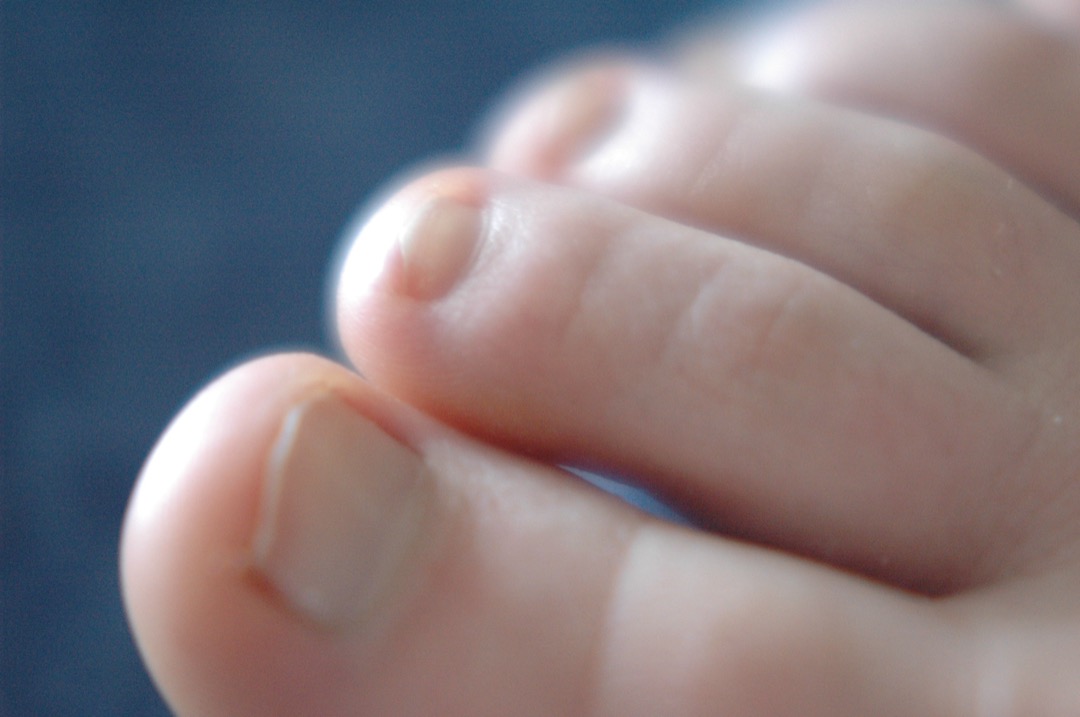
Onychomycosis — fungal infection of the toenail — affects roughly 10 percent of the general adult population and approximately 50 percent of adults over the age of 70, making it one of the most common conditions that drives patients to the OTC pharmacy aisle in search of a self-directed solution. The aisle they walk into is also one of the most clinically misleading on the shelf. Bottles labeled “fungal nail treatment” sit next to bottles labeled “fungal nail renewal” and bottles labeled “antifungal pen,” and a reasonable consumer would assume these are interchangeable products with a common mechanism of action. They are not. The category contains three pharmacologically distinct product types — FDA OTC antifungal drugs, keratolytic appearance products, and cosmetic clarifiers — that work through entirely different mechanisms and produce entirely different outcomes.
At BestRatedDocs.com, our reviews are informed by Dr. David Taylor’s clinical experience and a strict commitment to FDA-compliant claims. Before we go any further, the most important sentence in this entire guide: no OTC product available in the United States can legitimately claim to cure onychomycosis, and any marketing copy you see that suggests otherwise is overstating the regulatory reality. The FDA OTC antifungal monograph permits OTC tolnaftate and undecylenic acid products to claim treatment of fungal skin infections — including the periungueal skin around the toenail — but does not permit any OTC product to claim cure of fungal nail infection through the nail plate. Genuine mycological cure of confirmed onychomycosis requires either prescription topical efinaconazole, tavaborole, or ciclopirox 8 percent lacquer formulated to penetrate the nail plate, oral terbinafine 250 mg daily for 12 weeks, oral itraconazole pulse therapy, or partial nail avulsion combined with topical therapy.
In 2026, we reviewed the seven most clinically defensible OTC toenail fungus products on Amazon, organized by product type and matched to specific use cases. For users with mild early-stage involvement willing to commit to a 6 to 12 month combination protocol, OTC therapy plus rigorous footwear and sock hygiene can produce meaningful visible improvement and may slow progression. For users with moderate to advanced disease, diabetic patients, or anyone who has already tried OTC therapy without improvement, a podiatrist visit is the right next step rather than another bottle from the antifungal aisle. If you are dealing with a fungal skin infection on the foot that has not yet involved the nail — classic interdigital athlete’s foot — our best antifungal cream guide covers the FDA-cleared treatments that genuinely cure that distinct skin condition.
After evaluating seven products across three pharmacological categories, here are our top OTC toenail fungus picks for 2026. The summary table below highlights the key differentiators at a glance.
| Product | Price | Buy |
|---|---|---|
| Kerasal Fungal Nail Renewal Treatment + FilesBest Overall | $17.97 | View on Amazon |
| Foot Cure Extra Strength Nail RepairRunner-Up | $19.97 | View on Amazon |
| NONYX Fungal Nail Clarifying GelRunner-Up | $18.95 | View on Amazon |
| DERMATOOL Toenail Fungus TreatmentRunner-Up | $25.00 | View on Amazon |
| Fungi-Nail Anti-Fungal Pen ApplicatorBudget Pick | $9.42 | View on Amazon |
| Kerasal Nighttime Fungal Nail Renewal PatchesRunner-Up | $17.93 | View on Amazon |
| Approved Science Fungix Extra Strength Nail SerumPremium Pick | $44.95 | View on Amazon |
Find the Best Toenail Fungus Treatment for Your Situation
Every product below is fully reviewed once, in order. If you already know your situation, jump to the section that fits — the use-case comparisons toward the end pair the best two or three picks for specific needs:
- Best overall appearance restoration — Kerasal Fungal Nail Renewal, the most evidence-backed keratolytic
- Fastest-acting, strongest antifungal — 25 percent undecylenic acid for the periungueal reservoir
- Thick, severely damaged nails — dissolve the hardened, lifted keratin debris
- Hands-free and mess-free formats — overnight patches and a click-pen for limited dexterity
- Budget pick — the lowest-cost FDA antifungal active
- Premium clean-label long course — a botanical serum made in the USA
- If you have diabetes, read this first — why self-treating is riskier
How We Selected These Toenail Fungus Treatments
Our selection criteria prioritized regulatory clarity, mechanistic diversity, and honest disclosure of OTC treatment limitations. Rather than reviewing seven undifferentiated bottles of brush-on liquid, we deliberately included products from each of the three OTC categories — FDA-monograph antifungal drugs (tolnaftate, undecylenic acid), keratolytic appearance products (urea/lactic acid, ethanoic acid, urea/glycerin patches), and combination formulations — so readers can build an evidence-grounded combination protocol rather than picking based on packaging. We required a minimum of 5,000 verified Amazon reviews to ensure adequate real-world tolerability data over the long treatment courses these products require, and we gave preference to products with documented FDA OTC monograph compliance, podiatrist or dermatologist recommendation history, and full ingredient transparency on the label. There are two deliberate exceptions to that review threshold. The Kerasal bottle is now sold new only as a bundle with nail files, and that bundle listing carries its own shorter review history even though the formula inside is unchanged. The other is the premium Approved Science Fungix serum, which sits at roughly 2,000 ratings. We included it because it fills a genuine use case that the budget actives do not — a clean-label, made-in-USA formulation pairing the maximum-strength 25 percent undecylenic acid active with a botanical carrier for buyers who prioritize formulation transparency over price on a product they will use daily for many months.
Kerasal Fungal Nail Renewal Treatment — Best Overall
Kerasal Fungal Nail Renewal is the most clinically grounded keratolytic on the OTC shelf and earns the Best Overall pick precisely because the marketing claim and the mechanism of action are aligned. The product contains propylene glycol, urea, and lactic acid — three keratolytic actives that work synergistically to soften the dense keratin of a fungus-damaged nail plate, dissolve subungual debris, and reduce the yellow-brown discoloration that characterizes onychomycosis. The precision applicator tip delivers product into the lifted plate edges and fissures where damage accumulates, and consistent daily application produces visible improvement in nail clarity and surface smoothness within 2 weeks for most users.
What Kerasal does not do is eradicate the underlying fungal infection, and the product label and packaging are appropriately careful in how they describe the product’s effect — they speak in terms of nail renewal and appearance restoration rather than in terms of fungicidal activity. This honest framing is itself a useful signal for OTC consumers: a brand that describes its keratolytic as a cosmetic improvement product is communicating accurately about a real product category, while brands that describe similar formulations as fungal-killing therapies are overstating. For users who pair Kerasal with one of the FDA-monograph antifungal drugs reviewed below — Foot Cure, DERMATOOL, or Fungi-Nail applied to the periungueal skin twice daily — the keratolytic action of Kerasal also modestly improves the antifungal’s ability to reach the nail-bed organisms it targets, which is the published clinical rationale for urea-augmented topical antifungal protocols.
Amazon now sells the single bottle new only in this bundle with five nail files, and the files are a genuine addition rather than filler: debriding the thickened plate before each application is the step most people skip, and it is the one that lets the solution reach the damaged keratin. The formula inside is the same propylene glycol, urea and lactic acid solution Kerasal has sold for years, and the long owner record on it is informative: users who set realistic 6 to 12 month appearance-improvement expectations and who pair Kerasal with footwear and sock hygiene report consistent satisfaction; users who expected complete cure of a confirmed onychomycosis from a single bottle predictably did not see that result. Kerasal earns Best Overall for the right reasons — it does what it says, it pairs cleanly with the antifungal protocols below, and its compliance burden is low enough to sustain across the multi-month window a damaged nail needs to grow out.

Kerasal Fungal Nail Renewal Treatment + Files
by Kerasal
The most clinically grounded keratolytic for fungus-damaged nails — softens, clarifies, and smooths the visible nail plate while you address the underlying infection through other means.
Pros
- Propylene glycol, urea, and lactic acid form the most evidence-supported keratolytic complex for visibly improving the appearance of fungus-damaged nails — softening hyperkeratotic nail plate, reducing yellow-brown discoloration, and smoothing surface roughness within 2 weeks of consistent daily application
- Ships with five nail files alongside the 0.33 fl oz bottle, which covers the debriding step: gently filing down thickened plate before each application lets the keratolytic reach more of the damaged keratin
- Precision applicator tip delivers product into the lifted plate edges, fissures, and subungual debris pockets where fungal damage accumulates — and the keratolytic action enhances penetration of any concurrent prescription topical antifungal applied to the nail bed
- Compact 0.33 fl oz bottle and a clear one-step routine improve real-world compliance during the 12 to 18 months a damaged toenail needs to grow out fully — adherence is the dominant variable in any toenail therapy outcome
Cons
- Kerasal is NOT an antifungal drug — it contains no terbinafine, tolnaftate, or other antimycotic active. It improves nail APPEARANCE through keratolysis and does not eradicate the underlying fungal infection on its own
- 0.33 fl oz bottle is small relative to multi-month treatment timelines, and visible improvement reverses if daily application is discontinued before a healthy replacement nail has grown in
Foot Cure Extra Strength Nail Repair — High-Strength Antifungal Pick
Foot Cure Extra Strength carries the highest documented concentration of undecylenic acid in the OTC toenail category at 25 percent, paired with tea tree oil and oregano oil in a 0.5 fl oz brush bottle. Undecylenic acid is one of two FDA-recognized OTC antifungal monograph actives appropriate for topical fungal skin infection (the other is tolnaftate), and at 25 percent concentration it is well above the typical 10 percent strength found in older formulations. The mechanism is fatty-acid disruption of the fungal cell membrane — fungistatic against both dermatophytes (Trichophyton, Microsporum, Epidermophyton) and Candida species, broader-spectrum than tolnaftate’s dermatophyte-only activity.
The clinical use case for Foot Cure is the periungueal skin treatment that complements a nail-plate keratolytic. The skin around and beneath the proximal and lateral nail folds harbors a fungal reservoir that reseeds the nail plate after partial treatment cycles, and aggressively treating this reservoir is how OTC therapy contributes to the larger antifungal strategy. Foot Cure’s 0.5 fl oz size provides adequate volume for 8 to 12 weeks of twice-daily periungueal application, the brush delivers product into the nail folds with reasonable precision, and the botanical adjuvants (terpinen-4-ol from tea tree, carvacrol from oregano) add membrane-disrupting activity that complements the undecylenic acid.
What Foot Cure does not do — and what no OTC topical liquid does — is reliably penetrate an intact toenail plate to reach the nail-bed dermatophyte hyphae. This is the universal limitation of OTC antifungal liquids and it is the reason all such products are positioned for periungueal skin involvement rather than for through-the-nail mycological cure. Foot Cure earns the runner-up pick for users who want the strongest available OTC antifungal active for the skin component of their treatment protocol.

Foot Cure Extra Strength Nail Repair
by Foot Cure
The strongest OTC antifungal active in the toenail category — undecylenic acid 25 percent with botanical adjuvants, ideal for treating the periungueal skin reservoir that drives toenail reinfection.
Pros
- Undecylenic acid 25 percent is the highest-concentration OTC antifungal active in the toenail category — undecylenic acid is FDA-recognized in the OTC antifungal monograph and is fungistatic against dermatophytes and Candida through fatty-acid disruption of the fungal cell membrane
- Botanical adjuvants tea tree oil and oregano oil add membrane-disrupting terpenes (terpinen-4-ol, carvacrol) that complement undecylenic acid's mechanism — useful for the periungueal skin where fungal load reseeds the nail plate
- 0.5 fl oz bottle is roughly 50 percent larger than the standard 0.33 fl oz competitors, with brush applicator that reaches the lateral nail folds and proximal nail fold where infection often persists between treatment cycles
- Made in USA with full ingredient disclosure on the label, and over 30,000 verified Amazon reviews demonstrate strong real-world tolerability across long treatment courses
Cons
- Like all OTC antifungal liquids, undecylenic acid does not reliably penetrate an intact toenail plate — its meaningful activity is on the periungueal skin and on superficial fungal involvement of the nail surface, not the deep nail bed where dermatophyte hyphae reside
- Tea tree oil and oregano oil are recognized contact allergens — patch testing on a small area of skin for 48 hours before initiating periungueal application is appropriate for users with a history of plant-allergy contact dermatitis
NONYX Fungal Nail Clarifying Gel — Best Long-Course Keratolytic
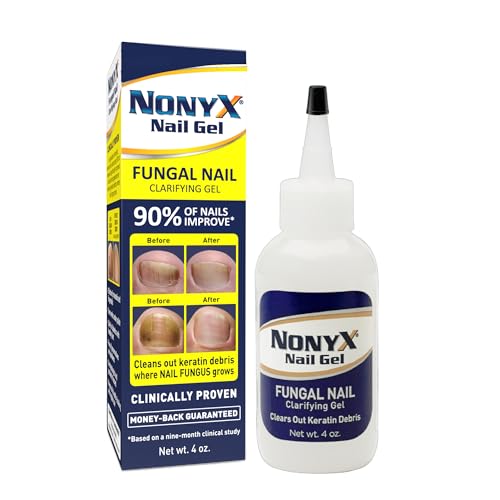
NONYX is the longest-running professionally recommended keratolytic in the toenail category and earns its place in this guide on the strength of three differentiating features: a 4 fl oz bottle that is more than ten times the size of typical 0.33 fl oz competitors, a podiatrist and dermatologist recommendation history dating to 2004, and an ethanoic acid (acetic acid) gel mechanism that dissolves fungus-discolored keratin debris through low-pH disruption of the damaged keratin matrix. A single 4 fl oz bottle covers approximately 6 months of twice-daily application across multiple toenails, dramatically reducing per-month cost relative to the smaller bottles dominant in the category.
The clinical positioning of NONYX has been consistent for two decades: a clarifying adjunct used alongside prescription antifungal therapy or after professional debridement to address the visible discoloration that persists in the nail plate even after the underlying infection is controlled. The published 90 percent visible nail improvement figure cited in NONYX’s professional materials reflects this combination context — patients who use NONYX as part of a broader protocol that includes appropriate antifungal therapy see consistent appearance improvement over the multi-month nail regrowth window. Patients who use NONYX in isolation against confirmed onychomycosis see slower and less complete results, which is consistent with NONYX’s keratolytic mechanism and not a defect in the product.
The gel format is a meaningful practical advantage over liquid keratolytics — NONYX stays on the nail surface long enough for the acetic acid to do its keratolytic work without running off into the surrounding skin or socks, which improves both efficacy and tolerability. For users running a long combination protocol with prescription topical efinaconazole or oral terbinafine, NONYX is the most cost-effective keratolytic adjunct on the OTC shelf and the one with the strongest professional-recommendation track record.
One buying note, checked on 12 September 2026: this listing currently has no default buy box, so the product page opens with a “See All Buying Options” button instead of the usual Add to Cart. It is still in stock and still shipped by Amazon — select the Xenna Corporation offer, which is the manufacturer’s own, and it adds to the cart normally. Prices from the other sellers in that list run several dollars higher, so it is worth reading the panel rather than taking the first row. Pair it with a foot massager routine that improves circulation to the toes, and the combination supports both the cosmetic and the structural-health components of long-running toenail care.
NONYX Fungal Nail Clarifying Gel
by NONYX
The longest-running professionally recommended keratolytic in the toenail category — a 6-month supply of acetic-acid gel that clarifies discolored keratin alongside whatever antifungal protocol you are running.
Pros
- Ethanoic acid (acetic acid) is a low-pH keratolytic that dissolves the fungus-discolored keratin debris trapped under and within the dystrophic nail plate — published podiatrist-cited data describes 90 percent visible nail improvement with consistent twice-daily application over a multi-month course
- 4 fl oz bottle is more than ten times the size of the typical 0.33 fl oz toenail product — a single bottle covers a full 6-month treatment course on multiple toenails, dramatically reducing per-month cost and the friction of repeat purchases
- Recommended by podiatrists and dermatologists since 2004 with consistent professional positioning as a clarifying adjunct used alongside prescription antifungal therapy or post-debridement to address visible discoloration
- FSA/HSA eligible, gel format stays on the nail surface longer than brush-applied liquids, and the clean odor profile makes the long daily routine more sustainable than vinegar soaks or tea-tree-heavy alternatives
Cons
- Like all keratolytics, NONYX clarifies appearance rather than eradicating fungal infection — patients with confirmed onychomycosis still need a parallel antifungal strategy (oral terbinafine, prescription topical efinaconazole or tavaborole, or partial nail avulsion) to achieve mycological cure
- Twice-daily application is required for the cited clinical results — once-daily users typically see slower and less complete improvement, and the consistency burden over 6+ months is the primary reason patients discontinue prematurely
DERMATOOL Toenail Fungus Treatment — Tolnaftate Plus Botanical Carrier
DERMATOOL packages tolnaftate 1 percent — the only thiocarbamate-class FDA OTC monograph antifungal — with tea tree oil, vitamin E, and omega 3-6 fatty acids in a 0.5 fl oz brush bottle. Tolnaftate has been the workhorse OTC antifungal active for the dermatophyte species responsible for the majority of toenail fungal infections since the 1960s, with a long safety record and consistent fungistatic activity at the 1 percent concentration. DERMATOOL is one of the few OTC formulations to deliver tolnaftate specifically formatted for periungueal toenail application rather than as a foot cream or spray.
The lipid carriers in DERMATOOL — vitamin E and omega 3-6 fatty acids — improve nail-surface contact and reduce the cracking and fissuring of periungueal skin that often accompanies long-running toenail infection. Cracked, fissured periungueal skin is itself a source of infection persistence and of bacterial superinfection risk, so the moisturizing carrier delivers a clinical benefit beyond the antifungal active. The brush applicator delivers product into the lateral and proximal nail folds, and the 0.5 fl oz bottle covers an 8 to 12 week treatment course at twice-daily application.
DERMATOOL’s positioning relative to Fungi-Nail is straightforward: same active ingredient (tolnaftate 1 percent), different format (brush bottle versus pen applicator), and different supporting carrier (lipid-rich versus minimal). Users who prefer a brush format with moisturizing carrier and who are treating multiple toes with periungueal involvement will find DERMATOOL the better fit; users who prioritize precision dispensing, travel convenience, or the lower entry-level price will find Fungi-Nail more appropriate. Both work through the same fungistatic mechanism on the same target tissue.

DERMATOOL Toenail Fungus Treatment
by DERMATOOL
The only FDA-monograph tolnaftate solution formatted for toenail use — an established antifungal active paired with botanical and lipid carriers that improve real-world tolerability.
Pros
- Tolnaftate 1 percent is an FDA OTC monograph antifungal — the only thiocarbamate-class drug available without prescription, with a long safety record and proven fungistatic activity against the dermatophyte species (Trichophyton, Microsporum, Epidermophyton) responsible for the majority of toenail fungal infections
- Combines tolnaftate with tea tree oil, vitamin E, and omega 3-6 fatty acids — the lipid carriers improve nail-surface contact and the supporting botanicals address the periungueal skin reservoir while the tolnaftate handles the dermatophyte targets
- Brush applicator with 0.5 fl oz bottle delivers a full 8-12 week treatment course for affected toenails, and the moisturizing carrier reduces the cracking and fissuring of the surrounding skin that often accompanies long-running nail-bed infections
- 4.2-star average across more than 5,800 verified reviews, with consistent reports of improvement when used as part of a multi-modal protocol that includes shoe and sock hygiene
Cons
- Tolnaftate is fungistatic rather than fungicidal — it halts fungal growth but relies on the immune system and nail regrowth to clear the residual organisms, making it a slower path to visible change than systemic prescription therapy
- Like other topical OTC antifungals, the active does not reliably penetrate an intact dystrophic nail plate — periungueal skin coverage is where most of the clinical benefit accrues, and severe nail-bed involvement requires escalation
Fungi-Nail Anti-Fungal Pen Applicator — Best Budget
Fungi-Nail is Amazon’s Choice in the toenail antifungal category and the entry-level FDA-monograph antifungal in this guide. The active ingredient is tolnaftate 1 percent — the same dermatophyte-active OTC antifungal as DERMATOOL — and the differentiator is the click-pen twist applicator that dispenses a controlled amount of solution onto the periungueal skin without dripping or product loss. The pen format is the cleanest and most travel-friendly delivery mechanism on the OTC shelf, and it suits users who find brush bottles inconvenient at the office or while traveling.
The Fungi-Nail label includes an honest disclosure that distinguishes it from less candid competitors: the product is described as treating the fungal skin infection on and around the nail rather than penetrating the nail plate. This is consistent with the universal limitation of OTC topical antifungals and with current FDA OTC monograph guidance, and it reflects regulatory accuracy rather than a product defect. The pen reservoir is small at 0.101 fl oz, which means users treating multiple toes for the full 8 to 12 week course will likely purchase two or three pens — at the entry-level price point this remains the lowest-total-cost FDA antifungal protocol in the category.
For users with mild early-stage periungueal involvement on one or two toes, Fungi-Nail is the most budget-friendly and most convenient starting point in the OTC antifungal category. The click-twist mechanism is also easier for users with arthritic hands or limited fine-motor dexterity than brush bottles that require unscrewing a cap and managing a separate applicator. As infection severity increases or as the number of involved toes grows, scaling up to the larger DERMATOOL brush bottle or a full-course serum becomes more cost-effective than buying multiple Fungi-Nail pens, but for the right use case Fungi-Nail is a sensible first-line choice.

Fungi-Nail Anti-Fungal Pen Applicator
by Fungi-Nail
The best-value FDA-monograph antifungal in the toenail category — Amazon's Choice tolnaftate in a precision click-pen, ideal for periungueal skin treatment when budget and convenience matter.
Pros
- Tolnaftate 1 percent in a precision click-pen applicator — the same FDA OTC monograph antifungal active as DERMATOOL but in a no-mess delivery format that improves twice-daily compliance, particularly for users who find brush bottles inconvenient at the office or while traveling
- Amazon's Choice in the toenail antifungal category with broad retail availability, FSA/HSA eligibility, and the lowest entry-level price of any FDA antifungal active in this guide — a sensible starting point for early-stage periungueal involvement
- Click-twist mechanism dispenses a controlled amount onto the periungueal skin without dripping, reducing waste and making consistent application easier for users with arthritic hands or limited dexterity
- Long market presence (since the 1970s) means broad pharmacist and podiatrist familiarity — users asking for a recommendation in a US drugstore will frequently be pointed at Fungi-Nail before brand-newer entrants
Cons
- The Fungi-Nail label explicitly states the product is not effective on the nails themselves — it treats the fungal skin infection on and around the nail rather than penetrating the nail plate, which is consistent with all OTC topical antifungal pharmacology and is honest disclosure rather than a defect
- 0.101 fl oz pen is a small reservoir relative to the 8-12 week treatment course required — heavy users or those treating multiple toes will need two or three pens to complete the full regimen
Kerasal Nighttime Fungal Nail Renewal Patches — Best Hands-Free Format
Kerasal Patches are the most compliance-friendly keratolytic in the toenail category and solve a specific failure mode that derails brush-applied routines: the friction of the daily application step itself. The patch delivers urea and glycerin in an occlusive overnight format — eight to ten hours of continuous keratolytic contact while the user sleeps — and the application step is a single one-action commitment at bedtime. There is no brush to clean, no spillage to manage, no waiting for the product to dry before putting on socks.
For users who have already failed Kerasal liquid or NONYX gel routines on adherence grounds, the patch is the most likely format to actually be used consistently across the multi-month window the nail needs. The 14-patch pack supports a 2-week consecutive treatment cycle that aligns with the published initial protocol, and additional packs can be sequenced to extend the keratolytic effect across the 12 to 18 month nail-regrowth period. The mechanism is the same urea-driven keratolysis that powers the Kerasal liquid, but the occlusive overnight format delivers more sustained contact per dose than air-drying brush-on liquids.
The patch format also creates a clean structural fit with daytime antifungal therapy — apply Foot Cure, DERMATOOL, or Fungi-Nail to the periungueal skin in the morning when the patch is removed, and the two products operate on different target tissues without competing for the same application window. This is the textbook combination protocol that the OTC category supports best, and the Kerasal patch is the format most likely to make it a sustained habit. Users with hyperhidrotic feet or active periungueal skin maceration may need to dry the foot thoroughly before patch application and avoid occlusive socks at bedtime to maintain adhesion through the night.

Kerasal Nighttime Fungal Nail Renewal Patches
by Kerasal
The most compliance-friendly keratolytic in the toenail category — a hands-free overnight patch that delivers eight hours of occlusive urea-glycerin contact while you sleep, complementing daytime antifungal therapy.
Pros
- Urea-glycerin keratolytic patch delivers occlusive overnight contact with the nail plate — eight to ten hours of continuous keratolytic exposure delivers more visible softening per dose than brush-on liquids that air-dry within minutes of application
- Hands-free overnight format eliminates the friction that derails brush-applied routines — a patch applied at bedtime is a single one-step action versus the cleaning, drying, and brushing required by liquid keratolytics, dramatically improving long-course compliance
- Amazon's Choice in the toenail patch category with consistent reports of reduced nail thickness and improved smoothness within 2 weeks of nightly use, complementing daytime antifungal therapy without competing for the same application window
- Fourteen patches per pack supports a 2-week consecutive treatment cycle — the recommended initial protocol — and additional packs can be sequenced over the multi-month nail-regrowth window for sustained appearance improvement
Cons
- Like Kerasal liquid, the patch is keratolytic rather than antifungal — it does not eradicate fungal infection and is best used alongside an OTC or prescription antifungal active that addresses the underlying organism
- Patch adhesion can fail in users with hyperhidrotic feet or active periungueal skin maceration — drying the foot thoroughly before application and avoiding occlusive socks at bedtime improves adhesion meaningfully
Approved Science Fungix Extra Strength — Upgrade Pick for Long-Course Use
Approved Science Fungix pairs the maximum-strength OTC antifungal active — 25 percent undecylenic acid — with a clean-label botanical serum base (manuka, tea tree, lavender, jojoba, vitamin E). It occupies the upgrade slot not because of bottle size but because of formulation quality: manufactured in a US cGMP-certified facility, GMO-free, vegan, and free of parabens and preservatives. For buyers who are deliberately moving away from harsh single-active liquids and want the strongest antifungal active delivered in a gentler, transparency-forward formula, it is the most differentiated product in this guide.
The clinical case for Fungix rests on the same mechanism as Foot Cure — 25 percent undecylenic acid disrupts the fungal cell membrane and is FDA-recognized in the OTC antifungal monograph — but the botanical carrier adds two practical advantages. First, reviewers consistently note that the skin and cuticle around the nail improve alongside the nail plate, which matters because the periungueal skin is the reservoir that reseeds nail infection. Second, the lavender-manuka scent and once-daily brush application are markedly more pleasant than the sharp chemical odor of plain tolnaftate or undecylenic-acid liquids — and in a treatment that must be sustained for months, adherence is the single dominant variable in the outcome.
The honest limitation is price and the universal OTC ceiling. At a 0.5 fl oz size, Fungix is the most expensive product in this guide, and the premium buys formulation quality and botanical breadth rather than any documented ability to penetrate an intact, dystrophic nail plate — no topical can reliably do that. The 4.1-star average across roughly 2,000 reviews shows the same pattern as every OTC antifungal: users with mild, early, periungueal involvement report the new nail coming in clear over 3 to 6 months, while users with established subungual infection see less. Buyers who want the same 25 percent active at a lower price should choose Foot Cure Extra Strength; buyers who specifically value the clean-label, made-in-USA botanical formulation and are willing to commit to a genuine long course will find Fungix the most defensible upgrade.

Approved Science Fungix Extra Strength Nail Serum
by Approved Science
A premium clean-label undecylenic acid serum made in the USA — the upgrade pick that earns its price through cGMP formulation quality and a botanical base that nourishes the skin around the nail through a long course.
Pros
- 25 percent undecylenic acid — the maximum-strength FDA-recognized OTC antifungal active — carried in a botanical serum base (manuka, tea tree, lavender, jojoba) that reviewers report brings the new nail in clear over a consistent 2 to 6 month course
- Clean-label formulation manufactured in a US cGMP-certified facility: GMO-free, vegan, paraben- and preservative-free — the transparency-forward profile that suits buyers moving away from harsh single-active liquids toward a gentler long-course product
- Botanical support blend visibly improves the cuticle and periungueal skin alongside the nail plate, and the precision brush applicator reaches the lateral nail folds where the periungueal fungal reservoir persists between cycles
- Pleasant lavender-manuka scent and easy once-daily application improve real-world adherence versus the harsh chemical odor of tolnaftate alternatives — adherence being the dominant variable in any multi-month nail outcome
Cons
- At a 0.5 fl oz size it is the most expensive product in this guide — the premium reflects clean-label formulation and botanical breadth rather than any documented penetration advantage over the intact nail plate
- Like every OTC topical, it works on the periungueal skin and nail surface and requires 3 to 6 months of consistent daily use — impatient users and those with deep nail-bed involvement report disappointing results, consistent with the category's penetration ceiling
Best Treatment for Thick, Severely Damaged Nails
A thick, crumbling, lifted nail is the hardest presentation to treat because the dense, dystrophic keratin blocks any active from reaching the nail bed and traps discolored debris underneath. The most productive OTC strategy here is not a stronger antifungal — it is a keratolytic that dissolves and softens the hardened keratin so the nail thins, clears, and lets any concurrent antifungal work. Debriding (gently filing) the nail surface before each application meaningfully improves results. Pair a keratolytic on the nail plate with a high-strength antifungal on the surrounding skin.
| Product | Price | Buy |
|---|---|---|
| NONYX Fungal Nail Clarifying GelBest for dissolving thick keratin debris Acetic-acid gel breaks down the hardened, discolored keratin that creates the thick, lifted-nail look; the 4 fl oz bottle carries a full 6-month course for multiple large toenails | $18.95 | View on Amazon |
| Kerasal Fungal Nail Renewal Treatment + FilesBest for softening and clarifying Urea and lactic acid soften and smooth the thickened plate within weeks and improve penetration of any antifungal applied alongside it | $17.97 | View on Amazon |
| Foot Cure Extra Strength Nail RepairBest strong antifungal to pair 25 percent undecylenic acid on the periungueal skin addresses the reservoir that keeps reinfecting the thick nail — the antifungal half of the combination protocol | $19.97 | View on Amazon |
Best Fast-Acting Toenail Fungus Treatment
No OTC product clears a nail quickly — the nail must grow out over 12 to 18 months — but the products that act fastest against the living fungus on and around the nail are the maximum-strength antifungal actives. If your goal is to hit the periungueal reservoir hard while a healthy nail grows in, prioritize a 25 percent undecylenic acid formula and apply it twice daily to clean, dry skin. File the nail first so more of the active reaches the surface.
| Product | Price | Buy |
|---|---|---|
| Foot Cure Extra Strength Nail RepairFastest-acting, best value Maximum 25 percent undecylenic acid plus tea tree and oregano oils — the strongest, best-reviewed fast-acting active in the category at a budget price | $19.97 | View on Amazon |
| Approved Science Fungix Extra Strength Nail SerumFastest-acting, clean label The same 25 percent undecylenic acid in a gentler botanical serum for buyers who want the strongest active without the harsh chemical odor | $44.95 | View on Amazon |
| DERMATOOL Toenail Fungus TreatmentEstablished fungistatic alternative Tolnaftate 1 percent halts dermatophyte growth and is FDA-monograph compliant — a slower but well-established alternative for early superficial involvement | $25.00 | View on Amazon |
Best Hands-Free and Mess-Free Formats
Adherence over a six-month course is the real determinant of success, and format is what makes a routine sustainable. For anyone who has abandoned brush-on liquids — the elderly, people with arthritis or limited dexterity, anyone who shares a bed and does not want liquid transferring to sheets — a hands-free or controlled-dispense format is the most likely to actually be used every day.
| Product | Price | Buy |
|---|---|---|
| Kerasal Nighttime Fungal Nail Renewal PatchesBest hands-free overnight An adhesive patch delivers eight to ten hours of occlusive urea-glycerin softening while you sleep — a single one-step bedtime action with no drying time or daytime residue | $17.93 | View on Amazon |
| Fungi-Nail Anti-Fungal Pen ApplicatorBest mess-free click-pen A click-twist pen dispenses a controlled amount of tolnaftate onto the periungueal skin with no dripping — the easiest format for arthritic hands and the lowest entry price | $9.42 | View on Amazon |
How OTC Toenail Fungus Treatments Actually Work
Understanding the mechanisms of action behind the products on the OTC shelf is the difference between using them rationally and rotating through bottles for years without progress. Four distinct mechanisms are represented in this guide, and each has a specific clinical rationale and a specific limitation.
Allylamines and benzylamines (terbinafine, butenafine) — the active ingredients in OTC Lamisil cream and Lotrimin Ultra — inhibit squalene epoxidase, an enzyme required for fungal ergosterol synthesis. Blocking squalene epoxidase causes toxic squalene accumulation inside the fungal cell while simultaneously starving the cell membrane of ergosterol, producing fungicidal action. These drugs are highly effective against dermatophytes and are FDA-cleared for athlete’s foot, jock itch, and ringworm. They are not effective against toenail fungus when applied as creams or solutions because they cannot penetrate the nail plate. Oral terbinafine 250 mg daily for 12 weeks is effective against onychomycosis because the drug reaches the nail bed via systemic circulation rather than topical penetration.
Azoles (clotrimazole, miconazole, ketoconazole) inhibit lanosterol 14-alpha-demethylase (CYP51) to halt ergosterol synthesis, producing fungistatic action. They are broad-spectrum and widely used as OTC antifungals for skin infections. The OTC azoles are not formulated for nail penetration. Prescription azole solutions specifically engineered for nail penetration — efinaconazole 10 percent (Jublia) — are different formulations from the OTC azole creams and have published clinical cure rates of approximately 17 to 18 percent for mild to moderate onychomycosis with 48 weeks of daily use.
Thiocarbamates (tolnaftate) inhibit squalene epoxidase like the allylamines but only against dermatophytes and only fungistatically. Tolnaftate is the workhorse FDA OTC monograph antifungal in the toenail category and the active ingredient in DERMATOOL and Fungi-Nail. It treats periungueal skin infection effectively but does not penetrate the nail plate.
Fatty acids (undecylenic acid) disrupt fungal cell membranes through a different mechanism than the squalene-epoxidase or CYP51 inhibitors. Undecylenic acid is FDA-recognized in the OTC antifungal monograph and is broader-spectrum than tolnaftate, with activity against both dermatophytes and Candida species. It is the active in Foot Cure Extra Strength and Approved Science Fungix.
Keratolytics (urea, lactic acid, propylene glycol, ethanoic acid, glycerin) work through an entirely different mechanism than any of the antifungal drugs above. Keratolytics soften and dissolve damaged keratin, improving the visible appearance of the dystrophic nail without antifungal activity. Urea additionally has a documented penetration-enhancing effect on the nail plate that modestly improves the delivery of any concurrent antifungal active applied to the same nail. This is the mechanistic basis for the combination protocols this guide recommends.
Why OTC Lamisil Cream Cannot Treat Toenail Fungus
This is the single most common consumer error in OTC antifungal therapy, and it deserves its own section. Terbinafine cream — the active ingredient in OTC Lamisil cream and TARO generic terbinafine — is FDA-approved for athlete’s foot, jock itch, and ringworm, and it cures those skin infections through a fungicidal mechanism with a 1-week treatment course. It is not approved for and does not work against toenail fungus, and the American Academy of Dermatology has explicitly clarified that OTC terbinafine cream cannot penetrate the dense keratin of the nail plate to reach the fungal hyphae living in the nail bed.
The published cure rates make the limitation concrete: topical creams applied to fungal nails have less than 10 percent cure rates in clinical studies, regardless of how potent the antifungal active is, because the drug never reaches its target tissue. Oral terbinafine 250 mg daily for 12 weeks achieves approximately 76 percent mycological cure for toenail onychomycosis because the drug reaches the nail bed through systemic circulation. The specific formulations of terbinafine that work against toenail fungus are oral tablets or prescription topical solutions specifically engineered for nail penetration — not the OTC cream.
If you have already been applying drugstore Lamisil cream to a fungal toenail for weeks without improvement, the lack of result is not a failure of the medication. It is a use-case mismatch — the right drug applied to the wrong target. Switch to one of the OTC protocols described in this guide for symptom and appearance management of mild involvement, or escalate to a podiatrist for prescription-strength options if your involvement is moderate to advanced.
Realistic Timelines and Success Rates
Setting accurate timeline expectations is the single most important compliance lever in toenail fungus therapy. Toenails grow at approximately 1 to 1.5 millimeters per month, and the great toenail requires roughly 12 to 18 months to fully replace itself. Any therapy — OTC or prescription — operates within that biological constraint, and patients who expect visible cure in 4 weeks abandon treatment at week 6 and seed their own relapse.
The published efficacy data from the Cochrane review and IQWiG-cited studies establishes the realistic ceiling for each treatment modality. Oral terbinafine 250 mg daily for 12 weeks achieves approximately 76 percent mycological cure at 1 year. Prescription topical ciclopirox 8 percent lacquer applied daily for 48 weeks achieves approximately 30 percent cure. Prescription topical efinaconazole 10 percent solution achieves 17 to 18 percent cure with 48 weeks of daily use. OTC topical regimens — the products in this guide used consistently for 6 to 12 months in mild to moderate involvement — deliver 40 to 60 percent visible improvement in nail appearance per podiatrist-cited summary data, with the best results in patients who pair the topical with footwear and sock hygiene and who treat both the periungueal skin and the nail plate.
Visible cosmetic improvement from keratolytic products like Kerasal typically begins within 2 to 8 weeks of consistent daily application — softer, less yellow, smoother nail surface — but the new healthy nail plate emerging from the proximal nail fold takes much longer to occupy the visible nail bed. The realistic OTC outcome is appearance improvement and slowed progression, not mycological cure. Patients who understand this distinction and who set 12 to 18 month expectations are the ones who actually complete the course and see results.
When OTC Has Failed — Escalation to Prescription Treatment
If you have been using a consistent OTC protocol for 3 months without any visible improvement, if the infection is spreading to additional toenails or to surrounding skin, if the nail is detaching from the bed or causing pressure pain in footwear, or if you have any underlying condition that increases your stakes — diabetes, peripheral arterial disease, immunosuppression — the next step is podiatry or dermatology evaluation rather than another OTC bottle.
The prescription escalation options have meaningfully higher cure rates and require proper monitoring. Oral terbinafine 250 mg daily for 12 weeks remains the gold standard for confirmed toenail onychomycosis with the highest mycological cure rate of any single therapy at approximately 76 percent. It requires baseline liver function tests and follow-up testing at 6 weeks because of a small risk of hepatotoxicity — generally well-tolerated but not casually prescribed. Oral itraconazole pulse therapy (200 mg twice daily for 1 week per month for 3 months) is an effective alternative but with substantial drug interactions including statins, proton pump inhibitors, many cardiac medications, and most benzodiazepines; itraconazole also has a black-box warning for negative inotropic effects. Both oral terbinafine and oral itraconazole are contraindicated in pregnancy.
Prescription topical options avoid the systemic exposure of oral therapy. Efinaconazole 10 percent solution (Jublia) and tavaborole 5 percent solution (Kerydin) are formulated specifically for nail-plate penetration and are applied daily for 48 weeks. Ciclopirox 8 percent nail lacquer (Penlac) is an older option with similar long-course application requirements. Cure rates for prescription topicals are lower than for oral terbinafine — roughly 17 to 30 percent — but the side effect profile is essentially limited to local application reactions. For severe single-nail involvement, partial nail avulsion combined with topical therapy can produce results when other approaches have failed.
The right escalation path depends on your specific clinical picture, your comorbidities, and your medication list. A KOH preparation or fungal culture in the office takes 5 minutes and confirms the diagnosis before initiating any of these therapies — which is essential because roughly half of dystrophic toenails attributed to fungus are actually traumatic, psoriatic, or related to other conditions.
Diabetic Foot — Why the Stakes Are Higher
Diabetic patients have approximately three times the prevalence of toenail fungus compared with the general population, and the consequences of an untreated or under-treated infection are far worse. The clinical pathway that creates the elevated risk is well-established and important to understand: diabetic peripheral neuropathy reduces or eliminates the pain signal that would normally prompt a non-diabetic patient to attend to a thickened, fissured, or splitting toenail. Without that pain signal, micro-cracks in the periungueal skin go unnoticed and become entry points for bacterial superinfection — most commonly Staphylococcus aureus or Streptococcus pyogenes — which can progress to cellulitis, abscess, osteomyelitis, and in advanced peripheral arterial disease, lower-extremity amputation.
The practical management differences for diabetic patients with toenail fungus follow directly from this risk profile. A podiatrist should be involved from the start rather than after OTC treatment failure, because the time cost of OTC trial-and-error is much higher in a foot that cannot signal pain. Daily foot inspection — visual or with a hand mirror — to detect skin breakdown early is non-negotiable; partner support is appropriate for patients who cannot reach or see their feet adequately. Aggressive prescription antifungal therapy is generally favored over slow OTC approaches because of the consequences of treatment failure, with appropriate consideration of liver function and drug interactions.
Footwear and sock hygiene become structural rather than optional in the diabetic foot. Moisture-wicking diabetic socks reduce the periungueal moisture environment that supports fungal persistence, and properly fitted footwear with adequate toe-box volume reduces nail trauma that creates entry points for both fungal and bacterial infection. Graduated compression socks appropriate to the patient’s circulatory status support venous return and reduce edema-related skin breakdown. None of these supportive measures replace medical management, but all of them meaningfully reduce the rate of complications when paired with appropriate antifungal therapy.
Differential Diagnosis — What Looks Like Fungus But Isn’t
Roughly half of dystrophic toenails attributed to fungus are caused by something else, and applying antifungal therapy to a non-fungal nail wastes months of treatment time without addressing the underlying problem. The three most common non-fungal causes of dystrophic toenails are nail psoriasis, traumatic nail dystrophy, and lichen planus.
Nail psoriasis affects roughly 50 percent of patients with cutaneous psoriasis and presents with pitting, oil-drop discoloration, onycholysis, and subungual hyperkeratosis that closely mimics fungal infection. The distinguishing features are usually elsewhere on the body — scalp, elbow, knee plaques — but isolated nail psoriasis without skin involvement does occur and requires KOH preparation or fungal culture to differentiate. Treatment is dermatologist-directed with topical corticosteroids, vitamin D analogs, or systemic biologic therapy in severe cases — not antifungal therapy.
Traumatic nail dystrophy from chronic footwear pressure, particularly in runners and patients with hallux valgus or hammertoe deformities, produces thickening, discoloration, and onycholysis indistinguishable from onychomycosis on visual inspection. The clue is usually unilateral involvement of the nail subjected to the most footwear pressure and improvement when footwear is corrected — though established traumatic dystrophy may persist even after the underlying mechanical issue is addressed.
Lichen planus, less commonly, produces nail thinning, ridging, and pterygium formation that can be mistaken for fungal infection but requires entirely different treatment. Subungual melanoma — rare but life-threatening — is the differential diagnosis that absolutely cannot be missed. A new pigmented streak, particularly in a single toenail in an older patient, warrants dermatology referral rather than antifungal therapy.
The practical implication for OTC users: if you are uncertain whether your nail discoloration is fungal, a 5-minute KOH preparation in a podiatrist or dermatologist office confirms or refutes the diagnosis before you commit to a 6 to 12 month treatment course. The visit cost is substantially less than the cumulative cost of multiple OTC bottles applied to the wrong condition.
Prevention and Recurrence
Toenail fungal infections recur in approximately 40 percent of treated patients, and prevention is the structural complement to any active treatment. The recurrence pathway is well-characterized: fungal organisms persist in shoes, socks, and bath surfaces for months after the original infection clears, and reinfection from these reservoirs is more common than relapse from incomplete eradication. Prevention strategy targets these reservoirs directly.
Footwear hygiene is the single highest-yield prevention measure. Rotate at least two pairs of shoes with at least 24 hours of drying between wears so that each pair has time to dry fully before the next use. Replace footwear that has hosted active fungal infection rather than disinfecting it — fungal spores in shoe linings are difficult to eradicate completely and the cost of new shoes is less than the cost of recurrent treatment. UV shoe sanitizers (devices that emit germicidal UV-C light into the interior of the shoe) have published in vitro efficacy against dermatophyte spores and are a reasonable adjunct for footwear that cannot be replaced. Antifungal shoe sprays containing tolnaftate or undecylenic acid applied weekly to the shoe interior reduce reservoir load.
Sock hygiene matters for the same reservoir reason. Wear moisture-wicking synthetic or wool-blend socks rather than 100 percent cotton during active treatment and as a long-term prevention strategy — cotton socks retain moisture and create the warm humid environment that fungal organisms exploit. Wash socks worn during active infection in hot water with bleach when appropriate, and replace heavily worn socks rather than cycling them indefinitely.
Locker room and public shower precautions reduce primary acquisition risk. Wear shower sandals in gym, pool deck, and hotel shower environments. Dry feet thoroughly — particularly the interdigital web spaces — after showering, before putting on socks. Apply prophylactic antifungal powder (tolnaftate or miconazole) inside socks and shoes during gym season or in the summer when foot perspiration is heaviest.
Pair with a routine that supports overall foot health — daily inspection, moisturizing the heel and plantar surface (not the interdigital spaces, which should stay dry), and a regular foot massager routine that improves circulation to the toes. None of these prevention measures eliminate recurrence risk, but in aggregate they shift the probability from the 40 percent baseline meaningfully downward.
Buyer's Guide
Selecting the right toenail fungus product requires understanding that no OTC treatment can claim to cure onychomycosis — your decision is between FDA-monograph antifungal drugs that target the periungueal skin, keratolytic products that visibly improve the appearance of the damaged nail, and combination protocols that pair the two. Matching the product type to your infection severity, your willingness to commit to a 6 to 12 month routine, and your underlying health status is the foundational decision.
Active Ingredient Type — Antifungal Drug, Keratolytic, or Cosmetic
OTC toenail products fall into three distinct regulatory and pharmacological categories that are easy to confuse on a busy pharmacy shelf. FDA OTC antifungal drug actives — tolnaftate 1 percent (DERMATOOL, Fungi-Nail) and undecylenic acid (Foot Cure Extra Strength, Approved Science Fungix) — are regulated as drugs and are evidence-supported for treating the fungal skin infection on and around the nail. They do not reliably penetrate the intact nail plate. Keratolytic products — propylene glycol/urea/lactic acid (Kerasal liquid), urea/glycerin patches (Kerasal patches), and ethanoic acid gel (NONYX) — are regulated as cosmetic or device products that visibly soften, clarify, and smooth the damaged nail without antifungal activity. They improve appearance but do not eradicate fungus. The most clinically grounded OTC strategy combines the two: a periungueal-skin antifungal in the morning, a nail-plate keratolytic at night. Neither alone replicates the nail-penetrating prescription topicals (efinaconazole, tavaborole, ciclopirox lacquer) or the systemic oral terbinafine cure rate, but the combination approach is the most defensible OTC posture.
Infection Severity Match — Mild and Early-Stage vs. Moderate and Advanced
OTC therapy is most appropriate for mild distal subungual onychomycosis affecting less than 50 percent of a single toenail with no nail-bed pain, no detachment, and no surrounding skin breakdown. Mild involvement matches the realistic ceiling of OTC topical penetration, and the 40 to 60 percent published improvement rates with 6 to 12 month consistent use are clinically reasonable. Moderate to advanced involvement — multiple toenails, more than 50 percent of nail surface affected, proximal nail fold involvement, total dystrophic onychomycosis, or any matrix involvement — is unlikely to respond to OTC therapy alone and warrants podiatry evaluation for prescription topical or oral therapy. The honest framing for severe cases is that 6 months of OTC therapy with minimal improvement is 6 months that could have been spent on a more effective prescription regimen, and the time cost of OTC trial-and-error in advanced disease is substantial.
Applicator Format — Brush, Pen, Patch, or Gel
The applicator format dictates real-world compliance more than ingredient differences across a 6 to 12 month course. Brush applicators (Foot Cure, DERMATOOL, Approved Science Fungix, NONYX) deliver the most product per application and reach the lateral nail folds and lifted plate edges where infection persists, but the brushes can fray and harbor product over time and require careful cleaning. Kerasal liquid uses a precision tip instead, which lays down a thinner coat but places it cleanly under the free edge of the nail. Pen applicators (Fungi-Nail) are the most travel-friendly and the cleanest single-step delivery, with controlled dispensing that suits arthritic hands or limited dexterity, but the smaller reservoir means more frequent purchases. Overnight patches (Kerasal) eliminate the daily-routine friction entirely and deliver eight to ten hours of occlusive contact while you sleep — for users who have already failed liquid routines on adherence grounds, the patch is the most likely format to actually be used consistently. Gel format (NONYX) stays on the nail surface longer than liquids and resists running, which suits users who apply and immediately put on socks. The format that you will actually use twice daily for 6 months is the right format, regardless of which is theoretically optimal.
Treatment Frequency, Bottle Size, and Total Cost Over a 12 to 18 Month Course
Toenail fungus treatment is a multi-month investment, and per-bottle pricing is misleading without accounting for total course economics. NONYX delivers the most cost-effective per-month economics in the keratolytic category — a single 4 fl oz bottle covers approximately 6 months of twice-daily use, dramatically reducing per-month cost relative to the 0.33 fl oz Kerasal bottle. Foot Cure Extra Strength offers the strongest value among the antifungal actives, while the premium Approved Science Fungix serum is priced for its clean-label formulation quality rather than for volume. Twice-daily protocols (NONYX, DERMATOOL) consume product faster than once-daily protocols (Kerasal liquid as a once-daily routine, Kerasal patches with 14-night cycles), and the realistic treatment course of 6 to 18 months means most users will purchase multiple bottles regardless of which option they choose. Calculating projected 12-month total cost — bottle size, application frequency, and number of toes treated — is more useful than comparing single-bottle prices, particularly when budgeting for a combination antifungal-plus-keratolytic protocol.
Urea and Keratolytic Inclusion as a Combination-Protocol Penetration Aid
Urea and other keratolytic actives serve a specific clinical purpose beyond cosmetic clarification: they soften and partially break down the dense keratin of the nail plate, modestly improving the penetration of any concurrent antifungal active applied to the same nail. Dermatology and podiatry literature has explored urea-augmented topical antifungal protocols for onychomycosis with the rationale that urea pretreatment increases nail-bed drug delivery. For OTC users, this means that pairing a keratolytic (Kerasal liquid in the morning, Kerasal patches overnight, or NONYX gel) with an antifungal (Foot Cure, DERMATOOL, Fungi-Nail, or Approved Science Fungix) is more clinically rational than using either alone — the keratolytic improves the nail surface conditions for the antifungal active to do its work on the periungueal reservoir and any superficial nail involvement. If your OTC strategy is to use only one product, a keratolytic addresses the visible appearance issue that drove most patients to seek treatment in the first place; if your strategy is to address the underlying organism, the antifungal is essential — and the combination is the most clinically defensible posture.
FSA/HSA Eligibility, Origin, and Professional Recommendation
All FDA OTC monograph antifungal drugs (tolnaftate and undecylenic acid products in this guide) are FSA and HSA eligible under current US tax-advantaged account rules — the antifungal indication qualifies as a treatment for a specific medical condition. Keratolytic products marketed as cosmetic appearance treatments have variable FSA/HSA eligibility depending on the specific manufacturer's labeling and the administrator's interpretation; Kerasal and NONYX have generally been recognized as eligible by major HSA portals when paired with a treating-condition note. Made in USA labeling, full ingredient disclosure, and longstanding professional recommendation history (NONYX has been podiatrist-recommended since 2004; Kerasal has decades of dermatology familiarity) are reasonable secondary signals when comparing similar products in the keratolytic category. Foot Cure and Approved Science Fungix both make Made in USA claims with full undecylenic acid concentration and botanical disclosure on the label, which suits buyers who prioritize supply-chain transparency in a product they will use daily for many months.
How to Choose the Best Toenail Fungus Treatment
If you have mild early-stage involvement and you want a single starting product, Kerasal Fungal Nail Renewal addresses the visible cosmetic problem most users came in with and pairs cleanly with any antifungal you add later. If you want to actually treat the periungueal skin reservoir at the lowest entry-level price, Fungi-Nail Anti-Fungal Pen Applicator delivers FDA-monograph tolnaftate in the most travel-friendly format. If you are committing to the clinically grounded combination protocol, Kerasal in the morning and Foot Cure Extra Strength on the periungueal skin at night is the strongest OTC posture available and the one most likely to produce visible improvement over a 6 to 12 month course. If liquid routines have already failed you on adherence grounds, switch to the Kerasal Patches at night and Fungi-Nail or DERMATOOL on the periungueal skin in the morning — the patch format eliminates the friction that derailed the previous attempt.
If you are diabetic, immunosuppressed, or notice infection spreading or nail detaching, do not run a 6-month OTC trial. Make a podiatry or dermatology appointment. Confirm the diagnosis with a KOH preparation, and if confirmed, escalate to oral terbinafine, prescription efinaconazole, or partial nail avulsion as appropriate to your clinical picture and comorbidities.
Final Verdict
Kerasal Fungal Nail Renewal Treatment is our Best Overall pick because it is the most clinically grounded keratolytic on the OTC shelf, the brand communicates honestly about what the product does and does not do, and it pairs cleanly with whatever antifungal protocol you add to it. A long owner record on the same formula, now sold with the nail files that make the debriding step easy, backs the choice for the most common use case in the OTC toenail aisle: a user with visible nail damage who wants meaningful cosmetic improvement over a multi-month window.
For the user who wants the lowest-entry-cost FDA-monograph antifungal active to address the periungueal skin reservoir, Fungi-Nail Anti-Fungal Pen Applicator is our Best Budget pick — Amazon’s Choice tolnaftate in a precision pen format that is the cleanest and most travel-friendly delivery in the category. Build a combination protocol around either pick, set a 12 to 18 month expectation aligned with how toenails actually grow, pair with footwear and sock hygiene, and escalate to a podiatrist if you see no improvement at 3 months or if your stakes are elevated by diabetes or immunosuppression. For users whose primary fungal concern is the skin around the nail or the foot itself rather than the nail plate, our best antifungal cream guide covers the FDA-cleared treatments that genuinely cure those distinct skin conditions in 1 to 4 week courses.
— Dr. David Taylor, MD, PhD
Frequently Asked Questions
What is the most effective OTC ingredient for toenail fungus?
How long does it actually take for OTC toenail fungus treatment to work?
Can I use Lamisil cream from the drugstore to treat my toenail fungus?
When should I stop OTC treatment and see a podiatrist?
Is treating toenail fungus different if I have diabetes?
Do home remedies like vinegar, Vicks VapoRub, or tea tree oil actually work for toenail fungus?
What is the fastest way to get rid of toenail fungus?
Related Articles
About the Reviewer

Dr. David Taylor, MD, PhD
Drexel University College of Medicine (MD), Indiana University School of Medicine (PhD)
Dr. David Taylor is a licensed physician and medical researcher who founded BestRatedDocs in 2016. With an MD from Drexel University and a PhD from Indiana University School of Medicine, he combines clinical expertise with a passion for health technology to provide evidence-based product recommendations. Dr. Taylor specializes in health informatics and regularly evaluates medical devices, diagnostic equipment, and therapeutic products to help healthcare professionals and patients make informed decisions.