8 Best Foot Massagers of 2026
Dr. David Taylor reviews the best foot massagers for plantar fasciitis, neuropathy, and circulation. Compare shiatsu, air compression, and heat therapy devices by intensity, foot size, and safety.
Updated
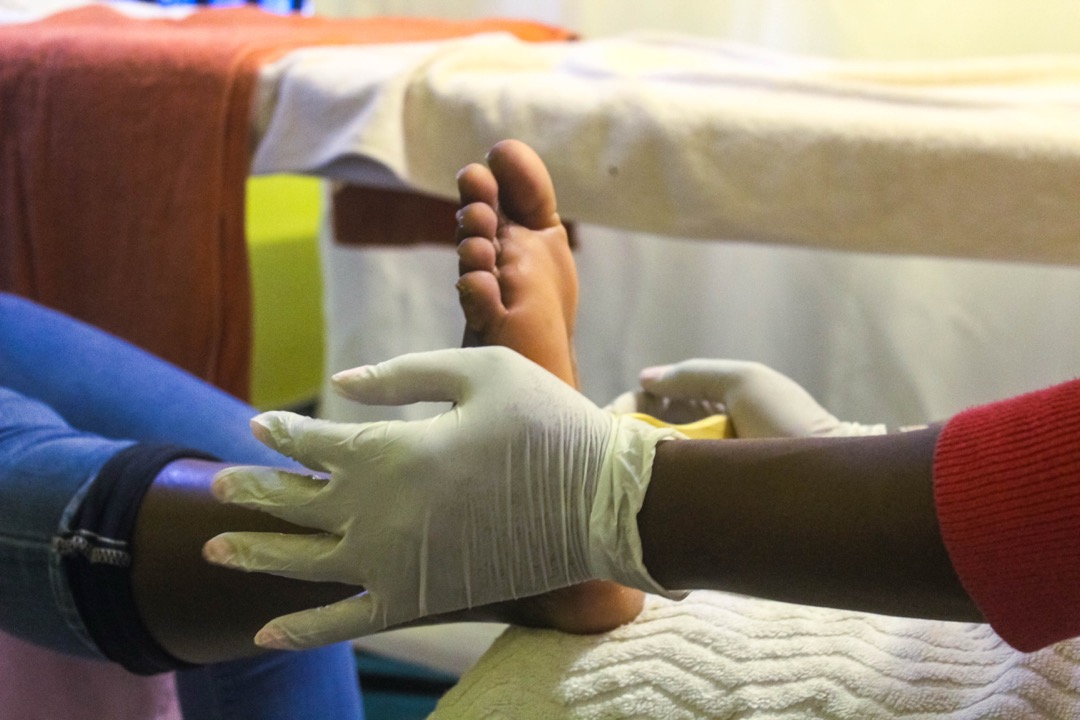
Foot pain affects approximately 77 percent of American adults at some point in their lives, according to a survey by the American Podiatric Medical Association — yet fewer than a third of those individuals seek professional treatment. The result is a massive population managing plantar fasciitis, metatarsalgia, neuropathic pain, and simple occupational foot fatigue with over-the-counter solutions rather than clinical intervention. Mechanical foot massage bridges that gap. The evidence base, while not as robust as pharmaceutical interventions, consistently supports massage therapy for plantar fascia pain reduction, improved peripheral circulation, and short-term neuropathic symptom relief through both myofascial release and gate control pain modulation.
As a physician, I evaluate foot massagers the same way I evaluate any therapeutic device: does the mechanism of action match the claimed benefit, does the evidence support it, and are the safety parameters appropriate for home use without clinical supervision? The eight devices reviewed here were selected after evaluating over thirty current models on Amazon for massage modality, heat therapy quality, pressure adjustability, foot size compatibility, and safety features. Every ASIN in this review has been verified as active and in stock.
| Product | Price | Buy |
|---|---|---|
| Nekteck Shiatsu Foot Massager with HeatBest Overall | $89.99 | View on Amazon |
| Snailax Shiatsu Foot Massager with HeatBudget Pick | $71.99 | View on Amazon |
| RENPHO Shiatsu Foot Massager with Auto Foot Size FitPremium Pick | $159.99 | View on Amazon |
| Medcursor Foot Massager Machine with HeatRunner-Up | $79.99 | View on Amazon |
| RENPHO Foot Massager Machine with Heat | $109.99 | View on Amazon |
| BOB AND BRAD Foot Massager Machine with Heat | $129.99 | View on Amazon |
| COMFIER 2-in-1 Foot and Calf Massager | $219.98 | View on Amazon |
| CINCOM Leg Massager with Heat and Air Compression | $89.99 | View on Amazon |
Find the Best Foot Massager for Your Situation
Every pick below is reviewed once in the main lineup, then matched to the specific situations people actually shop for. Jump to what fits you:
- Best for plantar fasciitis
- Best foot and calf massager
- Best shiatsu foot massager
- Best reflexology foot massager
- Best heated foot massagers compared
How We Evaluated These Foot Massagers
Our evaluation framework weighted five clinical dimensions. First, massage modality breadth — devices offering multiple techniques (shiatsu, compression, vibration, rolling) can address a wider range of conditions than single-modality units. Second, heat therapy implementation — consistent, controllable heat adds therapeutic vasodilation, but uncontrolled heat poses burn risk for neuropathic patients. Third, pressure adjustability — the range between minimum and maximum intensity determines whether a device serves both sensitive and deep-tissue-tolerant populations. Fourth, consumer validation — we prioritized devices with large review counts, as statistical confidence in a 4.3-star rating with 22,000 reviews is fundamentally different from the same 4.3 stars across 500 reviews. Fifth, safety features — auto-shutoff timers, temperature controls, and appropriate contraindication disclosures.
We cross-referenced manufacturer claims against user reviews, verified all ASINs on Amazon, and compared specifications against competitor analysis from CNN Underscored, Health.com, and Good Housekeeping. Where clinical studies existed for specific massage modalities, we incorporated that evidence into our product assessments.
Who Needs a Foot Massager
The clinical populations who benefit most from regular mechanical foot massage include patients with plantar fasciitis (the most common cause of heel pain, affecting approximately 2 million Americans annually), patients with diabetic peripheral neuropathy seeking non-pharmacological symptom management, individuals with occupational foot fatigue from prolonged standing (nurses, retail workers, warehouse employees), patients with mild to moderate peripheral edema from venous insufficiency, and athletes managing post-exercise recovery. If you are already using plantar fasciitis insoles during the day, adding an evening foot massage session creates a complementary treatment cycle — mechanical support during activity, myofascial release during recovery.
Patients using TENS units for foot pain may find that a dedicated foot massager provides a different and complementary mechanism of relief. TENS works through electrical nerve stimulation; mechanical massage works through direct tissue manipulation. The two modalities are not redundant and can be used in sequence.
Condition-Specific Recommendations
Plantar fasciitis: Prioritize shiatsu-dominant devices with targeted arch massage heads. The Medcursor’s three-head-per-side design specifically addresses the forefoot, arch, and heel — the three anatomical zones where plantar fascia pathology concentrates. Pair with heat therapy to improve tissue extensibility before the kneading cycle begins. Sessions immediately after waking or after prolonged standing target the periods of maximum fascial stiffness.
Diabetic neuropathy: Use only the lowest intensity settings, disable heat if sensation is diminished, and limit sessions to 10 minutes. The Snailax budget pick with its remote control allows intensity adjustment without bending — important for diabetic patients who may also have lumbar or cardiovascular complications. Always inspect feet visually after each session for redness, bruising, or skin breakdown.
Circulation and edema: Air compression is the primary modality for venous return and lymphatic drainage. The RENPHO and COMFIER both emphasize 360-degree compression that mimics the sequential compression devices used in clinical settings. For patients who also wear compression socks during the day, evening compression massage sessions complement the daytime mechanical support.
Post-exercise recovery: Athletes and active individuals benefit from the combined approach of deep kneading for myofascial release followed by compression for metabolic waste clearance. The premium RENPHO upgrade pick, with 360-degree rollers and independently adjustable kneading and compression, provides the broadest recovery toolkit. Those who use massage guns for upper body recovery will find a dedicated foot massager addresses the plantar surface with a precision that handheld devices cannot replicate.
Large feet: The BOB AND BRAD is the only device fitting up to men’s size 14 with full-foot coverage including the toes. Patients with wide feet or structural deformities like bunions should also check user reviews for width-specific feedback, as most manufacturers only specify maximum length.
When to See a Doctor Instead
A foot massager is a symptomatic relief tool, not a diagnostic or curative device. Seek physician evaluation before using a foot massager if you experience: sudden onset of severe foot pain without preceding injury (which may indicate stress fracture, gout, or infection), numbness or tingling that is new or rapidly progressive, visible foot deformity or swelling that does not resolve with elevation, skin discoloration suggesting vascular compromise, or any open wound or ulcer on the foot. Patients with known deep vein thrombosis must never use compression-type foot massagers. Patients with peripheral arterial disease should obtain clearance from their vascular specialist. If foot pain persists despite four weeks of daily home massage combined with appropriate orthotic insoles, imaging and specialist referral are warranted to rule out structural pathology that conservative measures cannot address.
Medical Contraindications
The following conditions represent absolute or relative contraindications for mechanical foot massage:
- Deep vein thrombosis (DVT) — absolute contraindication for compression devices; mechanical pressure may dislodge venous thrombi
- Peripheral arterial disease (PAD) — relative contraindication; impaired arterial supply may not support increased metabolic demand
- Active diabetic foot ulcers or open wounds — mechanical trauma risk to compromised tissue
- Severe peripheral neuropathy with absent protective sensation — inability to detect excessive pressure or heat injury
- Acute fractures, sprains, or surgical sites — mechanical manipulation is contraindicated during acute healing phases
- Anticoagulant therapy — elevated bruising and soft tissue hematoma risk from deep kneading
If any of these apply, consult your physician before purchasing or using any foot massage device.
Best Foot Massager Overall — All Eight Reviewed
Each machine is reviewed once below. After the reviews, the use-case sections match these same picks to specific situations — plantar fasciitis, foot and calf, shiatsu, reflexology, and heat.
1. Nekteck Shiatsu Foot Massager — Best Overall
With more than 22,000 reviews, the Nekteck is the most-validated foot massager on Amazon — three shiatsu-plus-compression modes with infrared heat that cover plantar fasciitis, arch fatigue, and poor circulation in one mid-priced unit.

Nekteck Shiatsu Foot Massager with Heat
by Nekteck
The most-reviewed foot massager on Amazon — three massage modes with infrared heat deliver clinically meaningful relief for plantar fasciitis, arch pain, and poor circulation at a mid-range price.
Pros
- Three preset modes combining shiatsu deep kneading with air compression provide versatile treatment for plantar fasciitis, arch fatigue, and general foot soreness
- Built-in infrared heat therapy promotes vasodilation and local blood flow — clinically relevant for patients with peripheral circulation concerns
- Detachable and machine-washable foot covers maintain hygiene standards essential for shared household use or patients with fungal infection risk
- Over 22,000 Amazon reviews provide the deepest consumer validation of any foot massager in the category
Cons
- No remote control — all adjustments require bending forward to the unit, which limits accessibility for patients with mobility restrictions
- Intensity may be excessive for patients with diabetic neuropathy or heightened pain sensitivity, particularly on the highest kneading setting
- Standard foot chamber fits up to men's size 11, excluding patients with larger feet from full coverage
2. Snailax Shiatsu Foot Massager — Best Budget
The Snailax delivers four techniques (shiatsu, compression, vibration, and rolling) plus a wireless remote that neither the best pick nor the value pick offers, making it the strongest pure-value pick for occasional users.

Snailax Shiatsu Foot Massager with Heat
by Snailax
Four massage techniques plus a wireless remote that neither the best pick nor the value pick includes, the strongest value proposition for budget-conscious buyers who want versatility without overpaying.
Pros
- Four massage techniques — shiatsu kneading, compression, vibration, and rolling — the widest technique range of any budget-tier unit reviewed here
- Includes a wireless remote control, a feature typically reserved for devices above this price point
- Compact and lightweight design stores easily under a desk or beside a couch without dominating floor space
- Non-slip base prevents the unit from shifting during use, reducing the need to reposition mid-session
Cons
- Fewer reviews at 528 indicate a newer market entry with less long-term reliability data than established competitors
- Fifteen-minute auto-shutoff requires manual restart for extended sessions, which interrupts treatment continuity
- Limited published information on heat temperature range makes it difficult to assess therapeutic intensity
3. RENPHO Shiatsu Foot Massager with Auto Foot Size Fit — Best Premium
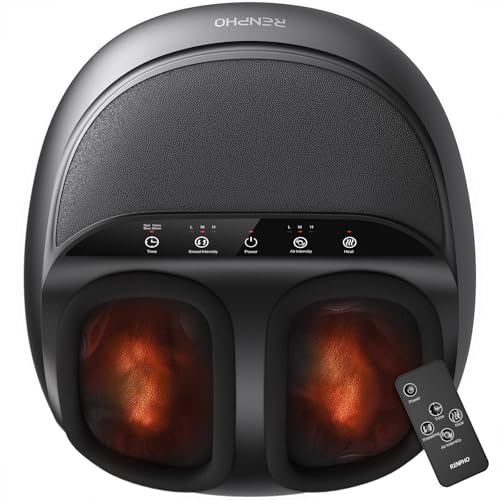
This RENPHO is the most accommodating machine here: 360-degree rollers that work the whole plantar surface in one pass, kneading and compression that adjust independently, and an auto-fit chamber that takes a men’s size 13.
RENPHO Shiatsu Foot Massager with Auto Foot Size Fit
by RENPHO
The most accommodating premium unit here — 360-degree rollers, independently adjustable kneading and compression, and an auto-fit chamber that takes a men's size 13.
Pros
- 360-degree rotating rollers reach the arch, heel, and ball of the foot in one pass rather than working a fixed track
- Kneading speed and squeeze intensity adjust independently across three levels each, so pressure and depth can be dialled in separately
- Auto foot size fit accommodates up to a men's US 13, the widest fit in this guide and a genuine constraint for taller patients
- Cordless control operates the unit without bending down, which matters for patients with lower back pain or limited hip flexion
Cons
- Premium price point at the upper end of the consumer foot massager market
- Heat is a single fixed setting rather than a graduated range
- Initial sessions may produce muscular soreness as deep tissue adapts to kneading pressure, particularly in patients with chronic plantar fasciitis
4. Medcursor Foot Massager — Best Value Pick
The Medcursor is the value pick in this guide. Its three massage heads per side target the forefoot, arch, and heel independently, anatomically matched to where plantar fascia pain concentrates.

Medcursor Foot Massager Machine with Heat
by Medcursor
A well-proven shiatsu machine whose anatomically targeted massage heads cover the forefoot, arch, and heel, with the strongest price-to-quality ratio in this guide.
Pros
- Holds a 4.4-star average across a large, long-running base of verified purchases
- Three massage heads per side target the forefoot, arch, and heel independently for anatomically specific relief
- Premium PU leather exterior is easy to clean and resistant to sweat buildup during extended sessions
- Pairs a 4.4-star rating with a five-figure review count, an unusual combination at this price
Cons
- Heat function requires five to ten minutes of preheating before reaching therapeutic temperature, and auto-shutoff resets the warmup cycle
- No remote control — adjustments require reaching the unit directly during use
- Fewer mode variations compared to the premium RENPHO upgrade pick, limiting treatment customization
5. RENPHO Foot Massager with Heat — Best for Circulation
Developed with input from more than 300 licensed massage therapists, this lighter RENPHO pairs 360-degree compression with NTC-controlled heat to 131°F and is FSA/HSA eligible — the pick when swelling and circulation, not just deep pain, are the problem.

RENPHO Foot Massager Machine with Heat
by RENPHO
Therapist-developed design with independently adjustable kneading, compression, and heat — FSA/HSA eligible for patients who want professional input in a home device.
Pros
- Developed with input from over 300 licensed massage therapists, translating professional technique into consumer device design
- NTC Smart temperature control maintains consistent therapeutic heat up to 131 degrees Fahrenheit without overheating risk
- FSA and HSA eligible — qualifies for reimbursement through flexible spending and health savings accounts
- Each function — kneading, compression, and heat — adjustable independently across three levels for fully customized sessions
Cons
- Price point sits between budget and premium tiers without a clear differentiating feature
- Its 4.2-star average trails the shiatsu picks, with some reviewers citing motor noise
- Maximum foot size of men's US 12 excludes patients with larger feet
6. BOB AND BRAD Foot Massager — Best for Large Feet
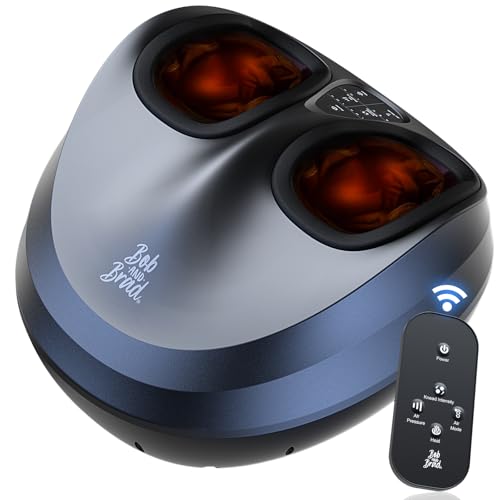
Designed by physical therapists Bob and Brad, this unit fits up to men’s size 14 with full-toe coverage and the hottest heat in the category (up to 156°F) — the only real option for the largest feet.
BOB AND BRAD Foot Massager Machine with Heat
by BOB AND BRAD
The best choice for large feet — fits up to men's 14 with the hottest heat settings in the category, designed by licensed physical therapists for full-foot therapeutic coverage.
Pros
- Fits up to men's size 14 — the largest foot chamber in our lineup, accommodating patients excluded from standard-size devices
- Full-foot coverage including toes, which most competitors neglect despite the high density of mechanoreceptors in the distal phalanges
- Three heat settings reaching up to 156 degrees Fahrenheit — the highest therapeutic temperature in this category
- Created by licensed physical therapists Bob Schrupp and Brad Heineck, whose clinical expertise informs the massage pattern design
Cons
- Higher price point without the independently adjustable kneading and compression offered by the premium RENPHO at a similar cost
- Newer product with 2,389 reviews — substantially fewer than the Nekteck or RENPHO for long-term reliability assessment
- Only three intensity levels, which may be insufficient for patients who need very fine pressure calibration
7. COMFIER 2-in-1 Foot and Calf Massager — Best Foot + Calf
The COMFIER is the lineup’s only premium foot-and-calf machine, massaging both at once and folding into a heated ottoman — comprehensive lower-leg relief for patients who need more than foot coverage.

COMFIER 2-in-1 Foot and Calf Massager
by COMFIER
The only foot-and-calf combination massager in the lineup — doubles as a heated ottoman for patients who need comprehensive lower extremity relief and value dual-purpose design.
Pros
- Two-in-one design massages both feet and calves simultaneously — the only device in our lineup addressing the full lower leg
- Folds into a heated ottoman and footrest for dual-purpose living room furniture functionality
- FSA and HSA eligible for patients seeking reimbursable therapeutic devices
- Twenty-degree adjustable incline accommodates different seating heights and leg extension preferences
Cons
- Highest price in our lineup at over two hundred dollars — a significant investment for a consumer massage device
- Gentle heating only, without the intense targeted heat offered by the BOB AND BRAD or premium RENPHO units
- Calf circumference limited to 32 to 42 centimeters, which excludes patients with significant lower leg edema or larger calf measurements
8. CINCOM Leg Massager with Heat and Air Compression — Best Value Foot + Calf
The CINCOM wraps the calf and foot in heated sequential air compression rather than shiatsu kneading, which brings full lower-leg coverage in at under half the price of the COMFIER ottoman. It is the pick for swelling, heaviness, and tired legs rather than plantar-fascia pain.

CINCOM Leg Massager with Heat and Air Compression
by CINCOM
The value route to calf-and-foot coverage: heated sequential air compression that drains swelling and eases heavy legs, FSA eligible, at under half the price of a premium foot-and-calf ottoman.
Pros
- Four airbags drive sequential compression from foot to calf, giving genuine full lower-leg coverage for roughly half the price of the COMFIER ottoman
- Two heat levels layer warmth onto the compression cycle, and the unit is FSA and HSA eligible so pre-tax health dollars bring the effective cost down further
- More than 4,700 verified reviews at 4.2 stars across five years on the market, a longer track record than either the BOB AND BRAD or the COMFIER
- Fits calves to 28.5 inches with the two included extenders, and the wraps fold flat instead of occupying permanent floor space like an ottoman
Cons
- Air compression is a different modality from shiatsu: it moves fluid and eases swelling well, but it does not knead the plantar fascia the way the Nekteck or Medcursor do
- It is no cheaper than the Nekteck best pick, so it only makes sense if you specifically need calf coverage
- The wraps must be strapped on each session, which takes longer than sliding both feet into an open-chamber unit
Best Foot Massager for Plantar Fasciitis
Plantar fasciitis responds best to shiatsu-style kneading worked into the medial arch and heel, ideally with heat to loosen the fascia first. These three picks concentrate pressure exactly where the plantar fascia tears — the arch and the heel — rather than spreading a generic squeeze across the whole foot.
| Product | Price | Buy |
|---|---|---|
| Nekteck Shiatsu Foot Massager with HeatBest overall for plantar fasciitis Shiatsu nodes plus infrared heat on the arch, backed by the deepest review base in the category | $89.99 | View on Amazon |
| Medcursor Foot Massager Machine with HeatBest anatomically-targeted (arch + heel) Three heads per side hit the forefoot, arch, and heel separately — the exact zones plantar fascia pain concentrates | $79.99 | View on Amazon |
| RENPHO Foot Massager Machine with HeatBest deep-kneading for chronic arch pain Therapist-tuned deep kneading with NTC heat for stubborn, chronic arch pain | $109.99 | View on Amazon |
Best Foot and Calf Massager
If the ache runs past your foot into the ankle and calf — common with prolonged standing, edema, or circulation issues — a two-in-one machine treats the whole lower leg in one session. Only two picks here reach the calf; here is how they compare.
| Product | Price | Buy |
|---|---|---|
| COMFIER 2-in-1 Foot and Calf MassagerBest foot + calf overall Massages feet and calves at once and folds into a heated ottoman — full lower-leg coverage | $219.98 | View on Amazon |
| CINCOM Leg Massager with Heat and Air CompressionBest value foot + calf Heated sequential air compression over calf and foot at half the price, best for swelling and heaviness rather than fascia pain | $89.99 | View on Amazon |
Best Shiatsu Foot Massager
Shiatsu is the deep, rotating-node kneading most people picture when they think “foot massager,” and it is the modality with the strongest evidence for plantar-fascia and arch tension. Every machine here is shiatsu-capable; these three do it best at three price points.
| Product | Price | Buy |
|---|---|---|
| Nekteck Shiatsu Foot Massager with HeatBest shiatsu overall The category's most-reviewed shiatsu unit — three modes plus infrared heat | $89.99 | View on Amazon |
| Medcursor Foot Massager Machine with HeatBest value shiatsu Separate heads for the forefoot, arch, and heel, at the lowest entry cost of the three | $79.99 | View on Amazon |
| Snailax Shiatsu Foot Massager with HeatBest budget shiatsu Adds compression, vibration, rolling, and the wireless remote the two units above it both lack | $71.99 | View on Amazon |
Best Reflexology Foot Massager
Reflexology-style massage works the acupressure zones across the whole sole with rolling and multi-directional kneading rather than a single fixed press. The picks below layer the most massage techniques — rolling, kneading, and compression — for full-sole coverage.
| Product | Price | Buy |
|---|---|---|
| RENPHO Shiatsu Foot Massager with Auto Foot Size FitBest full-sole roller coverage 360-degree rotating rollers work the arch, heel, and ball in a single pass for whole-sole acupressure coverage | $159.99 | View on Amazon |
| Nekteck Shiatsu Foot Massager with HeatBest shiatsu-node reflexology Shiatsu rotating nodes work the reflex zones with proven review depth | $89.99 | View on Amazon |
| RENPHO Foot Massager Machine with HeatBest therapist-designed Therapist-designed kneading plus 360-degree compression across the full sole | $109.99 | View on Amazon |
Best Heated Foot Massagers Compared
Heat adds the vasodilation that loosens stiff tissue before the kneading starts, but temperature and control vary widely — from gentle warming to 156°F. If heat is your priority (and you do not have neuropathy-related sensation loss, where high heat is a burn risk), these three lead on it.
| Product | Price | Buy |
|---|---|---|
| BOB AND BRAD Foot Massager Machine with HeatHottest (up to 156°F) Three settings up to 156°F — the most vasodilating heat in the category | $129.99 | View on Amazon |
| RENPHO Foot Massager Machine with HeatBest controlled heat (NTC 131°F) NTC-controlled heat holds 131°F steadily without spikes — safest for sensitive users | $109.99 | View on Amazon |
| RENPHO Shiatsu Foot Massager with Auto Foot Size FitGentlest measured heat (122°F) Tops out at 122°F, the lowest stated ceiling here — the one to choose if reduced sensation makes higher heat a burn risk | $159.99 | View on Amazon |
Buyer's Guide
Selecting the right foot massager depends on your specific clinical condition, foot anatomy, pain tolerance, and how you intend to integrate the device into your daily routine — a plantar fasciitis patient needs different features than someone managing post-shift fatigue from standing all day.
Massage Type and Technique
Foot massagers use one or more of five primary techniques: shiatsu kneading, air compression, vibration, rolling, and heat. Shiatsu provides the deepest myofascial release and is most effective for plantar fasciitis and chronic arch pain. Air compression targets superficial circulation and lymphatic drainage, making it optimal for edema and venous insufficiency. Vibration stimulates mechanoreceptors for acute pain relief via gate control theory. Rolling addresses the longitudinal axis of the plantar fascia. Heat promotes vasodilation and tissue extensibility. Devices combining three or more techniques — like the COMFIER, which adds calf compression to foot kneading and heat — offer the broadest therapeutic coverage. Match the primary technique to your primary symptom: deep pain needs shiatsu, swelling needs compression, general fatigue benefits from any combination.
Heat Function and Temperature Control
Therapeutic heat applied to the plantar surface increases local blood flow, reduces muscle stiffness, and improves tissue extensibility before mechanical manipulation. Devices in our lineup range from gentle warming to 156 degrees Fahrenheit. For patients with normal sensation, higher heat intensities provide more pronounced vasodilation and pain relief. For diabetic patients or those with peripheral neuropathy, excessive heat poses a burn risk due to diminished protective sensation — these patients should select devices with lower, controlled heat or disable the heat function entirely. NTC-controlled heating, used in the RENPHO unit, maintains consistent temperature without overheating spikes, which is a meaningful safety advantage for sensitive populations.
Intensity and Pressure Settings
The ability to adjust pressure intensity is critical for both safety and efficacy. Devices range from three fixed modes to independently adjustable kneading and compression levels. Patients new to mechanical foot massage, patients with neuropathy, and patients with inflammatory conditions should start at the lowest setting and increase gradually. Patients with chronic deep tissue conditions like plantar fasciitis or myofascial trigger points will eventually need higher intensities to achieve therapeutic depth. The premium RENPHO adjusts kneading speed and compression independently across three levels each, giving the widest calibration range here, while the Nekteck's three presets cover most patients adequately. If you are purchasing for a household with multiple users of varying sensitivity, prioritize devices with the widest adjustment range.
Foot Size Compatibility
Foot chamber dimensions vary significantly across devices and represent a hard constraint — no amount of feature quality matters if your foot does not fit. Devices in our lineup range from men's US 11 to men's US 14. The Nekteck fits only up to size 11, excluding a substantial portion of adult men. The BOB AND BRAD accommodates up to size 14, making it the only viable option for patients with the largest feet. The RENPHO caps at size 12. Before purchasing, measure your foot length and compare it against the manufacturer's maximum — fitting guides are typically available on the product listing. For patients with wide feet or bunions, check user reviews specifically mentioning width, as most manufacturers only specify length.
Portability and Design
Foot massagers are AC-powered devices that live on the floor in your living room, bedroom, or home office. Weight ranges from under seven pounds for the Snailax to over fourteen pounds for the COMFIER calf-and-foot unit. Lighter devices are easier to move between rooms and store in closets, while heavier devices tend to be more stable during intense kneading sessions. The COMFIER doubles as a heated ottoman when not in active massage mode — a space-saving design for smaller living areas. Non-slip bases prevent the unit from sliding on hard floors during use. Consider where the device will live permanently and whether you need to move it frequently when selecting between compact and full-featured models.
Safety Features and Medical Contraindications
Every device in our lineup includes a 15-minute auto-shutoff timer, which prevents the tissue overload and potential bruising that can occur with extended sessions. This safety feature is particularly important for patients who fall asleep during use. Beyond the timer, patients with specific medical conditions face absolute and relative contraindications. Deep vein thrombosis is an absolute contraindication for compression-type massage — mechanical pressure can dislodge venous clots. Peripheral arterial disease, active foot ulcers, open wounds, severe neuropathy with loss of protective sensation, and pregnancy in the first trimester all require physician clearance before use. If you take blood thinners such as warfarin or direct oral anticoagulants, the bruising risk from deep kneading is elevated. Always discuss new therapeutic devices with your physician if you have any vascular, neurological, or dermatological condition affecting the lower extremities.
Final Verdict
For the majority of patients seeking home foot massage therapy, the Nekteck Shiatsu Foot Massager delivers the best combination of proven reliability, effective shiatsu-plus-compression massage, infrared heat, and overwhelming consumer validation at over 22,000 reviews. It is the device I would recommend to a patient in clinic as a starting point for home-based plantar fasciitis management or general foot pain relief.
If budget is the primary constraint, the Snailax packs four massage techniques with a remote control that costlier units in this roundup omit, a remarkable value that makes therapeutic foot massage accessible to nearly any patient. For patients who want the most comprehensive home treatment experience, the premium RENPHO upgrade pick, with 360-degree rollers and independently adjustable kneading and compression, provides clinical-grade customization that approaches the versatility of professional massage equipment.
The Medcursor runner-up deserves special mention for its anatomically targeted three-head design at an exceptionally competitive price — it may be the best pure-value option for patients who prioritize plantar fascia relief over feature breadth. For patients with large feet who have been excluded from standard devices, the BOB AND BRAD at size 14 with the hottest heat settings fills a genuine gap in the market. And for patients managing combined foot and calf symptoms — particularly those with occupational lower extremity fatigue or mild venous insufficiency — the COMFIER two-in-one unit addresses the full lower leg in a single device that doubles as living room furniture.
Whatever device you select, start at the lowest intensity for your first week, limit sessions to 15 minutes, and inspect your feet after each use. Consistency matters more than intensity — daily 15-minute sessions produce better long-term outcomes than occasional aggressive sessions. Pair your foot massager with appropriate daytime support from plantar fasciitis insoles or orthotic insoles, and consult your physician if symptoms do not improve within four weeks of regular use.
Frequently Asked Questions
Are foot massagers good for plantar fasciitis?
How long should you use a foot massager per session?
Who should avoid using a foot massager?
Can foot massagers help with diabetic neuropathy?
What is the difference between shiatsu and air compression foot massagers?
Related Articles
About the Reviewer

Dr. David Taylor, MD, PhD
Drexel University College of Medicine (MD), Indiana University School of Medicine (PhD)
Dr. David Taylor is a licensed physician and medical researcher who founded BestRatedDocs in 2016. With an MD from Drexel University and a PhD from Indiana University School of Medicine, he combines clinical expertise with a passion for health technology to provide evidence-based product recommendations. Dr. Taylor specializes in health informatics and regularly evaluates medical devices, diagnostic equipment, and therapeutic products to help healthcare professionals and patients make informed decisions.