How to Read a Supplement Label
Dr. David Taylor explains how to read a Supplement Facts panel: serving size math, %DV, elemental mineral weights, proprietary blends, and third-party seals.
Updated
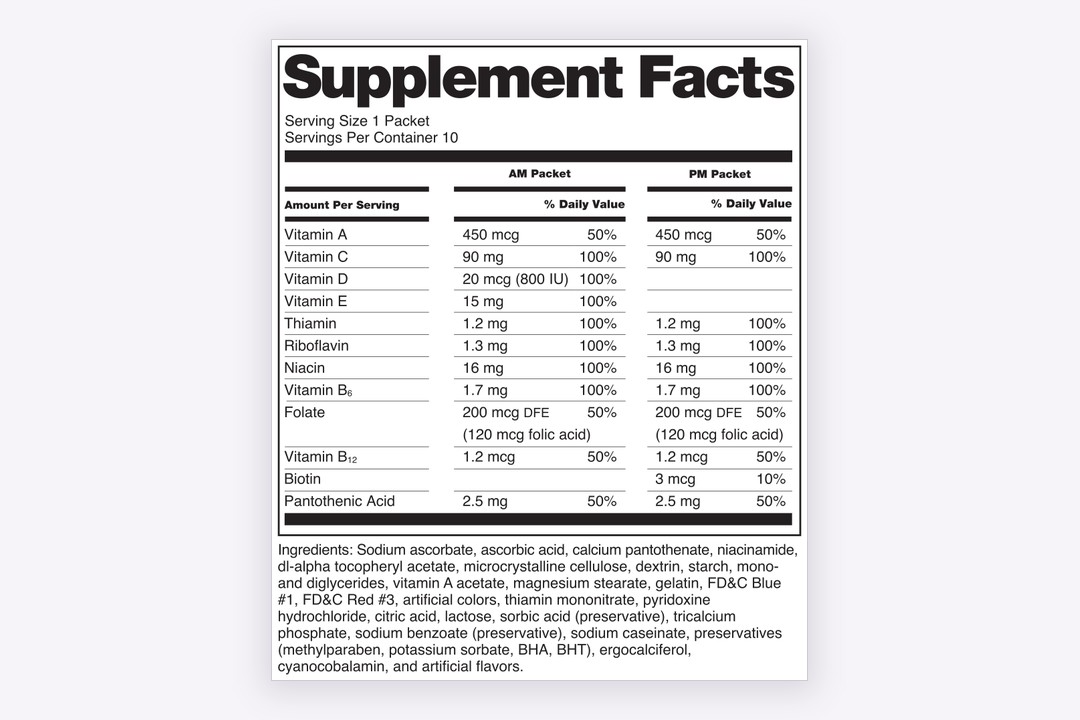
The front of a supplement bottle is advertising. The back is the only part the FDA actually dictates, and almost everything determining whether a product will do anything for you is printed there in six-point type. Patients bring me bottles constantly asking whether one is any good, and the answer is usually visible in about forty seconds once you know which four numbers to read.
Those four are the serving size, the elemental amount of each active ingredient, the percent Daily Value, and the servings per container. In that order they tell you what you are actually taking, how it compares to what you need, and what the product genuinely costs per day.
This guide walks the panel in the order the traps appear: the serving size arithmetic that makes a “1,000 mg” claim mean something other than it appears to, the elemental weight problem running through every mineral on the shelf, what a proprietary blend is legally allowed to hide, which third-party seals verify what, and how to scan a label for interactions with prescription medication.
Supplement Facts Is Not Nutrition Facts
Five statements are required on a dietary supplement label: a statement of identity naming the product, the net quantity of contents, the Supplement Facts panel, an ingredient list, and the name and place of business of the manufacturer, packer, or distributor. If any is missing, the product is misbranded, and I would put it back without further analysis.
The Supplement Facts panel resembles the Nutrition Facts panel on a cereal box but carries one important allowance: it may list dietary ingredients with no established Daily Value. Nutrition Facts may not. That is why a supplement panel can carry ashwagandha root extract, a named probiotic strain, or CoQ10, each marked with a dagger or asterisk pointing to a footnote reading “Daily Value not established.”
That footnote is honest rather than evasive. It means the FDA never set a reference intake, usually because the ingredient is not an essential nutrient. It also means the panel gives you no benchmark for whether the amount present is meaningful, so you have to supply that context yourself.
Serving Size Is the Number That Quietly Changes Everything
Every amount on the panel is per serving, and the serving is whatever the manufacturer decided it should be. This is the most common way a label misleads without lying.
A bottle whose front reads “1,000 mg” may have a panel showing a serving size of three capsules. Each capsule holds roughly 333 mg. Take one a day because you assumed that was a dose, and you are getting a third of what the research used, then concluding the ingredient does not work.
Two calculations fix this permanently:
- Divide the labeled amount by units per serving to get the per-capsule or per-scoop dose. That is the figure to compare against studies and competing products.
- Divide servings per container by servings per day to get days of supply. A 120-count bottle at three capsules twice daily is a twenty-day bottle, not a four-month one.
The second calculation is where cost comparisons invert. Two products far apart on shelf price often land within pennies of each other per day. Compare cost per day, never cost per bottle.
Percent Daily Value and What It Does Not Mean
The %DV column shows what share of a reference intake one serving provides. That reference is a generic adult on a 2,000-calorie diet, not personalized to your age, sex, pregnancy status, kidney function, or medication list.
The FDA maintains separate Daily Value tables for adults and children four and older, for infants under twelve months, for children one through three, and for pregnant and lactating people. A label aimed at one group uses that group’s values, which is why a prenatal vitamin and a general multivitamin for women can show different percentages beside identical milligram amounts. Compare milligrams, not percentages, across product types.
Two corrections matter most. A %DV above 100 is not automatically wrong: B12 and vitamin D are routinely and appropriately dosed well above the DV, because absorption is limited or because the DV targets deficiency prevention rather than repletion. And a %DV above 100 is not automatically safe. For vitamin A, iron, niacin, and zinc, the gap between the Daily Value and the level where harm begins is short, and those four are the ones I check first on any panel.
Where a dagger or asterisk replaces a percentage, no Daily Value exists for that ingredient. That tells you nothing about whether the dose is right, only that no target was set.
Elemental Weight Is the Trap in Every Mineral
This is the most useful thing on this page and the one almost no label explains.
Minerals are sold as salts and chelates, not as pure metal, and the compound weighs more than the mineral inside it. A 325 mg ferrous sulfate tablet contains about 65 mg of elemental iron, because ferrous sulfate is roughly 20 percent iron by weight. It takes about 1,250 mg of calcium carbonate to deliver 500 mg of elemental calcium, since carbonate is about 40 percent calcium. Calcium citrate is only about 21 percent calcium, so a citrate product needs more than twice the compound weight for the same delivered dose.
Magnesium makes the point sharpest. Magnesium oxide has the highest elemental percentage of the common forms, around 60 percent by weight, and it is also the form people absorb and tolerate worst. Citrate and glycinate carry far less magnesium per milligram of compound and deliver more of it. Compound weight and useful dose move in opposite directions.
Here is what resolves the confusion: the FDA requires the panel to declare the elemental amount. When a panel reads “Calcium (as calcium carbonate) 500 mg,” that 500 mg is elemental calcium, with the carbonate named parenthetically as the source. The front of the bottle is under no such constraint, and neither is the copy on a product page. Both routinely quote compound weight, because it is the bigger number.
Two bottles advertising conspicuously different figures can therefore contain the same dose. This applies to every iron supplement, every calcium supplement, and every zinc supplement you will compare. When a patient tells me they accidentally doubled their dose by switching brands, this is nearly always what happened.
mcg, mg, IU, and Why the Units Changed
Milligrams and micrograms differ by a factor of a thousand and their abbreviations differ by one letter. That combination produces real dosing errors, particularly with B12, biotin, folate, and vitamin D.
International Units are a different kind of measure: an IU expresses biological activity rather than mass, with a conversion factor specific to each nutrient. The FDA’s 2016 Nutrition and Supplement Facts label final rule retired IU in favor of metric units, putting vitamin D in micrograms, vitamin E in milligrams of alpha-tocopherol, vitamin A in micrograms of retinol activity equivalents, and folate in micrograms of dietary folate equivalents. Compliance was required in January 2020 for manufacturers with 10 million dollars or more in annual food sales, and January 2021 for smaller manufacturers.
For vitamin D, 1 mcg equals 40 IU, so a bottle reading 25 mcg and one reading 1,000 IU hold the same dose. Many products now print both, but an older bottle may show only IU.
Folate trips up the most people. Folic acid and food folate are not absorbed equally, so the panel expresses both as dietary folate equivalents: 1 mcg of folic acid taken on an empty stomach counts as 2 mcg DFE. That is why a prenatal panel can read “680 mcg DFE (400 mcg folic acid)” with both numbers correct. Vitamin B12 products show a related quirk, since doses far above the Daily Value are standard when passive absorption is inefficient. A 1,000 mcg tablet listed at 41,667 percent DV is unremarkable rather than alarming.
Proprietary Blends and the Arithmetic That Exposes Them
A proprietary blend is disclosed as one combined weight. The manufacturer must state the blend total and list components in descending order by weight, but need not disclose how much of each is present.
Descending order is more informative than it looks: it tells you the first ingredient outweighs the second. It does not tell you whether the first is 90 percent of the blend or 12 percent, and that ambiguity is the point. The practice it enables is label dressing, sometimes called fairy dusting: including a trace of an expensive, well-marketed ingredient purely so its name appears on the panel.
One test settles it without insider knowledge. If the clinically studied dose of any single named component exceeds the entire blend’s stated weight, the product cannot contain an effective dose of it. A 400 mg blend listing an ingredient normally studied at 500 mg has disproven itself on its own label.
This matters most for dose-sensitive botanicals. Ashwagandha is typically studied at 300 to 600 mg daily of a standardized root extract, so finding it inside a 250 mg “stress blend” is disqualifying. Turmeric adds a wrinkle: curcuminoid percentage and the presence of an absorption enhancer matter as much as raw weight, and both vanish inside a blend. When the ingredient you are buying the product for is hidden in one, buy the competitor that discloses amounts.
Other Ingredients, Allergens, and What Is Not Required
Below the panel sits the “Other Ingredients” line, listing the excipients that hold the product together. Binders, flow agents, capsule material, colorants, and preservatives all live here, and their presence is normal manufacturing rather than a defect.
Magnesium stearate is the most maligned of these and the least deserving of it, being a flow agent used in tiny quantities. Titanium dioxide is a more reasonable thing to avoid on preference: it remains permitted as a color additive in the United States, while the European Union removed its food additive approval in 2022. Capsule material matters to anyone avoiding animal products, since standard capsules are bovine or porcine gelatin and vegetarian alternatives use hypromellose or pullulan.
Major food allergens must be declared under FALCPA, now covering nine: milk, eggs, fish, crustacean shellfish, tree nuts, peanuts, wheat, soybeans, and sesame. That declaration is mandatory. “Free of” claims are not. Gluten-free, dairy-free, and non-GMO statements are voluntary, and apart from the FDA’s defined gluten-free threshold largely unverified.
Source material sits here too. Collagen supplements may be bovine, porcine, marine, or eggshell membrane derived, which determines both the peptide types present and whether the product is compatible with a shellfish allergy or a religious dietary restriction. Fiber supplements hide differences as well, since psyllium, inulin, methylcellulose, and wheat dextrin behave very differently in the gut.
Third-Party Seals and What Each One Actually Verifies
Because no agency checks a supplement before sale, independent verification is the closest thing to quality assurance this category offers. The seals are not interchangeable.
| Seal or program | What it verifies |
|---|---|
| USP Verified | Ingredient identity and declared potency, absence of specified contaminants at harmful levels, dissolution within a set time, manufacturing under current good manufacturing practices |
| NSF/ANSI 173 | Contents match the label, no undeclared or unsafe contaminants, GMP facility audit |
| NSF Certified for Sport | Everything in NSF/ANSI 173 plus screening for hundreds of substances banned in competitive sport |
| Informed Sport | Batch-level banned-substance testing, with every production batch tested before release |
| Informed Choice | Banned-substance testing on a periodic and random basis rather than every batch |
| ConsumerLab | Independent testing of products bought off the shelf, published to subscribers, not a manufacturer-paid certification |
Two honest caveats. These programs are voluntary and expensive, so the absence of a seal is not evidence of a bad product, particularly from a small manufacturer. And a seal verifies what is in the bottle, not that the ingredient works. A USP Verified product can contain exactly the dose of a compound that has never been shown to help you.
The phrase “third-party tested” printed with no named certifier and no accessible documentation is worth very little. What backs it up is a Certificate of Analysis, increasingly reachable by QR code. A real COA names the lot number, the testing date, and the independent laboratory, and reports assayed amounts of actives against label claim, heavy metals including lead, arsenic, cadmium and mercury, and microbial limits. A COA without a lot number is a marketing document.
This matters most where contamination risk is documented. Heavy metals in protein powders are a recurring finding in independent testing, worth weighing when choosing among protein powders for seniors, a group already more vulnerable to cumulative exposure. Sea moss products carry both heavy metal risk and wildly variable iodine content, and I would not buy one without a COA.
What Regulation Actually Exists, and What Changed Recently
Under the Dietary Supplement Health and Education Act of 1994, supplements are regulated as a category of food. Manufacturers do not submit products for FDA approval, do not prove efficacy, and do not have labels cleared before sale. The FDA acts after products reach the market.
This is why structure/function claims are worded as they are. A manufacturer may say a product “supports immune health” or “helps maintain healthy joints,” accompanied by the familiar disclaimer that the statement has not been evaluated by the FDA and the product is not intended to diagnose, treat, cure, or prevent any disease. It may not say a product treats influenza or lowers blood pressure. Those are disease claims, and they make the product an unapproved drug.
Two recent developments show label conventions actively shifting. On December 11, 2025, the FDA issued a letter to the dietary supplement industry stating that it is considering amending 21 CFR 101.93 to remove the requirement that the disclaimer appear on every panel bearing a structure/function claim, and that in the interim it will exercise enforcement discretion on that each-panel requirement. The agency was explicit that the disclaimer must still appear on the label and still be linked to each claim. Separately, the FDA held a public meeting titled “Exploring the Scope of Dietary Supplement Ingredients” on March 27, 2026 in College Park, Maryland, addressing novel and synthetically produced dietary ingredients, with comments accepted through April 27, 2026 under docket FDA-2026-N-2047.
For a reader standing in an aisle: a disclaimer appearing once rather than on every panel is not a red flag by itself. It may simply be a label printed under current policy.
Reading the Label for Drug Interactions
This is the part of label reading most consumer guides skip, and the part where I see actual harm.
The skill is narrower than it sounds. Scan the panel for three groups only: minerals, vitamin K, and any botanical. Then check those three against your medication list. Nearly every clinically important supplement interaction falls into one of them.
- Vitamin K and warfarin. Vitamin K, including the K2 forms in bone health products, directly opposes warfarin. The goal is consistency rather than avoidance, since erratic intake destabilizes the INR more than steady intake does. Anyone on warfarin should clear a vitamin K2 supplement with the clinician managing their anticoagulation.
- Calcium, iron, and levothyroxine. Both minerals bind levothyroxine in the gut and can substantially reduce absorption. Separate them by at least four hours. This is a frequent and entirely preventable cause of a thyroid dose that stopped working.
- Calcium and iron against each other. They compete for the same absorption pathway, one reason iron is best taken apart from calcium rather than bundled into one multivitamin.
- Minerals and certain antibiotics. Calcium, magnesium, iron, and zinc chelate tetracyclines and fluoroquinolones and can render a course substantially less effective. Space them by several hours during treatment.
- Acid suppression, metformin, and B12. Long-term proton pump inhibitors and long-term metformin both deplete B12. That is a reason to supplement, and a reason to have the level measured rather than guessed.
- St. John’s wort. A potent inducer of CYP3A4, it lowers blood levels of oral contraceptives, statins, immunosuppressants, and several antidepressants, with consequences including contraceptive failure and transplant rejection. This is the botanical I ask about most often.
- CoQ10 and statins. Statins lower endogenous CoQ10, which is why CoQ10 supplements are commonly taken alongside them. CoQ10 also carries a modest warfarin interaction worth mentioning to your prescriber.
- High-dose fish oil with anticoagulants or antiplatelets. The additive bleeding risk at gram-level doses is dose-dependent and worth raising with your physician rather than assuming.
- Biotin and laboratory tests. High-dose biotin does not interact with drugs, but it interferes with many immunoassays, including troponin and thyroid panels, and can produce falsely reassuring or falsely alarming results. Stop it several days before bloodwork and tell the ordering clinician.
Upper Limits and Where the Real Risk Sits
Most nutrients have a Tolerable Upper Intake Level, the highest daily intake unlikely to cause harm in the general population. It is what turns a high %DV from irrelevant into important. Some nutrients have enormous headroom, which is why a 41,667 percent DV of B12 is unremarkable. Others have very little:
- Vitamin A. Preformed retinol is teratogenic at high doses, making it the nutrient I am strictest about in pregnancy. Beta-carotene does not carry the same risk, because conversion is regulated.
- Iron. Acute overdose is a leading cause of fatal poisoning in young children, which is why the FDA requires that specific warning on iron-containing products. Keep them genuinely out of reach.
- Vitamin D. Sustained excessive intake causes hypercalcemia, with kidney stones, confusion, and arrhythmia at the severe end. The adult UL is 100 mcg, or 4,000 IU.
- Niacin. Flushing begins well below the doses used therapeutically for lipids, and hepatotoxicity is documented at gram-level doses, particularly with sustained-release preparations.
- Zinc. Chronic high intake suppresses copper absorption and can cause a copper deficiency myelopathy that is not always reversible. The adult UL is 40 mg.
- Selenium. A narrow window between an RDA of 55 mcg and a UL of 400 mcg, with hair loss, brittle nails, and neuropathy at the top end.
The failure mode I see most often is stacking. A multivitamin, a single-nutrient supplement, and a fortified food can push a total past the UL while no individual product looks excessive. This is a particular hazard for older adults taking several supplements alongside prescription medication. Add the columns across everything you take, not within one bottle.
Expiration Dates, Storage, and Lot Numbers
Expiration dating is voluntary for dietary supplements; the FDA does not require it. If a manufacturer prints a date, it must hold stability data supporting it, which makes a printed expiration a small quality signal in itself.
For most vitamins and minerals, expiry is a potency question rather than a safety one. The product does not become dangerous, it becomes weaker. Two categories break that rule.
Probiotics carry the most gamed number in the industry. A label guaranteeing colony-forming units “at time of manufacture” describes a moment in a factory, not what reaches your gut. CFU counts fall continuously with time and temperature, so a product guaranteeing potency through the expiration date is making a materially stronger claim. That distinction separates most good probiotic products from most disappointing ones. Fish oil oxidizes and goes rancid, and rancid oil smells and tastes distinctly off. Trust that signal over the printed date.
Record the lot number if you ever have an adverse reaction, since it is the only way a manufacturer or the FDA can trace a production run. Store supplements somewhere cool and dry, which makes a bathroom cabinet the worst common storage spot in the house.
A 60-Second Label Check
In a store or on a product page, in this order:
- Find the Supplement Facts panel. No panel, no purchase.
- Read the serving size. Divide the labeled amount by units per serving for the real per-capsule dose.
- Check servings per container against servings per day. That gives true days of supply and true cost per day.
- For minerals, confirm the elemental amount and note the salt named in parentheses.
- Check the units. Convert IU to metric before comparing anything.
- Look for proprietary blends. If the ingredient you want sits inside one, apply the blend-weight test or move on.
- Scan for a third-party seal, and for a COA with a lot number in categories with contamination risk.
- Scan the panel for minerals, vitamin K, and botanicals and check them against your medication list.
- Check the %DV on vitamin A, iron, niacin, and zinc against everything else you take.
What to Bring to Your Physician
Bring the bottles. Not a list, not photographs of the fronts, the actual bottles, because the panel is the only part that answers what I need to know: elemental doses, botanical species and plant part, and what is hiding inside a blend. Most patients underestimate their total intake substantially once fortified foods and overlapping multivitamins are counted, and that reconciliation is impossible from memory.
To compare products before buying, the NIH Office of Dietary Supplements maintains the Dietary Supplement Label Database at dsld.od.nih.gov, a free searchable archive of more than 200,000 labels from products sold in the United States, including discontinued ones. It lets you read a full Supplement Facts panel without owning the bottle, which makes side-by-side comparison of elemental doses and blend disclosures straightforward. It is the tool I point patients to most often, and it costs nothing.
Frequently Asked Questions
What is the difference between a Supplement Facts label and a Nutrition Facts label?
What does proprietary blend mean on a supplement label, and is it a red flag?
What is the difference between mg, mcg, and IU on a supplement label?
Does the FDA approve supplement labels before a product is sold?
Is it safe to take a supplement after its expiration date?
Related Articles
About the Reviewer

Dr. David Taylor, MD, PhD
Drexel University College of Medicine (MD), Indiana University School of Medicine (PhD)
Dr. David Taylor is a licensed physician and medical researcher who founded BestRatedDocs in 2016. With an MD from Drexel University and a PhD from Indiana University School of Medicine, he combines clinical expertise with a passion for health technology to provide evidence-based product recommendations. Dr. Taylor specializes in health informatics and regularly evaluates medical devices, diagnostic equipment, and therapeutic products to help healthcare professionals and patients make informed decisions.