7 Best Biotin Supplements of 2026
Dr. David Taylor reviews the 7 best biotin supplements of 2026. Honest doctor's take on dosing, lab test interference, who actually needs biotin, and our top picks.
Updated
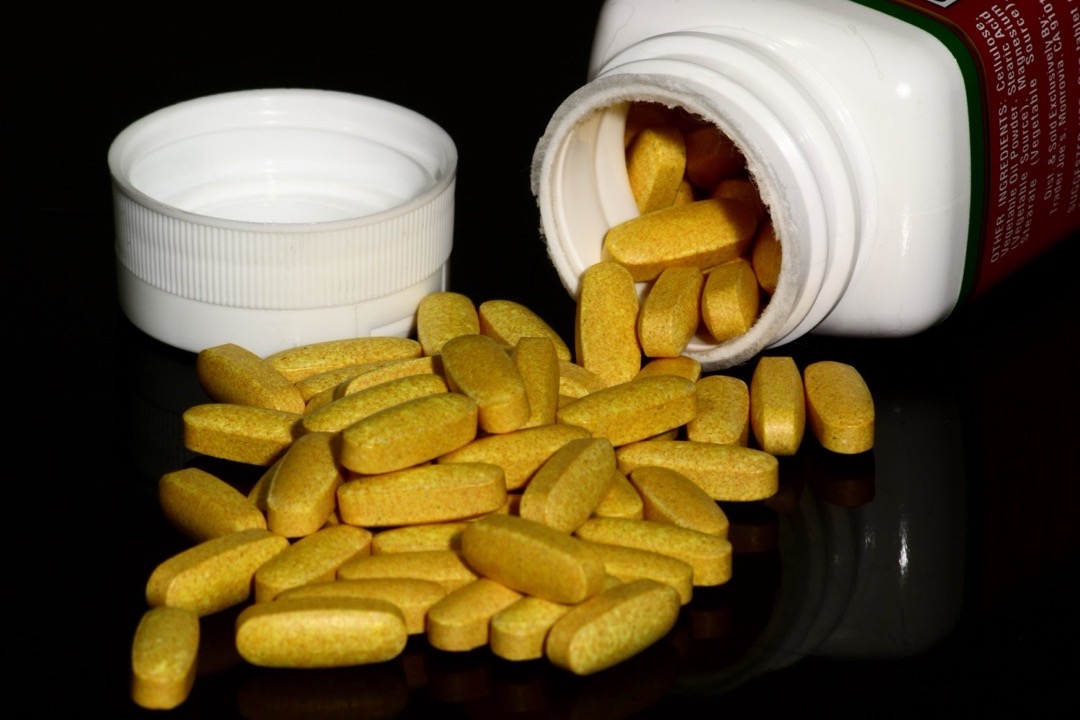
In my practice, patients ask me about biotin almost more than any other supplement. The marketing pressure is enormous — every drugstore aisle, every social media wellness account, and a fair number of telehealth services pushing 10,000 mcg “hair, skin, and nails” softgels. So I want to start this guide with something the bottle labels do not say: most healthy adults do not need a biotin supplement, and for most people taking one, the visible benefit is small to none.
Where biotin does matter — and matter a lot — is in a smaller group of patients I see every week. Patients on long-term anticonvulsants like carbamazepine or phenobarbital, where the medication itself accelerates biotin metabolism. Patients with Crohn’s disease, celiac disease, or short bowel syndrome, where intestinal absorption is impaired. Post-bariatric patients with reduced absorptive surface. Pregnant patients, who have modestly increased requirements. The exceedingly rare biotinidase deficiency picked up on newborn screening. For these groups, supplementation is genuinely corrective, and the difference in hair, skin, and nail integrity over 3 to 6 months can be significant.
This guide is structured around that honesty gap. We reviewed the seven biotin supplements that combine the strongest verified review history, the cleanest manufacturing credentials, and the right dose range for both maintenance and corrective supplementation. I have flagged where the marketing exceeds the evidence, what the lab interference issue actually means for your blood work, and which products belong in which clinical scenarios. If you are not in a deficiency-risk group and you simply want healthier hair, you may want to look at our review of the best collagen supplements or the best multivitamins for women before committing to biotin alone.
| Product | Price | Buy |
|---|---|---|
| Sports Research Biotin 10,000mcg with Organic Coconut Oil (120 Softgels)Best Overall | $19.95 | View on Amazon |
| Nature's Bounty Biotin 10,000 mcg Hair, Skin and Nails (120 Softgels)Budget Pick | $8.50 | View on Amazon |
| Pure Encapsulations Biotin 8 mg (120 Capsules)Premium Pick | $26.50 | View on Amazon |
| Nutricost Biotin 10,000mcg (240 Capsules)Runner-Up | $14.95 | View on Amazon |
| vitafusion Extra Strength Biotin Gummy Vitamins (100 Count)Runner-Up | $14.31 | View on Amazon |
| Amazon Elements Vegan Biotin 5000 mcg (130 Capsules)Runner-Up | $5.52 | View on Amazon |
| NUTRAHARMONY Biotin + Collagen + Hyaluronic Acid + Keratin (60 Capsules)Runner-Up | $23.79 | View on Amazon |
Find the Right Biotin for Your Situation
Jump to the section that matches why you are considering biotin:
- Best biotin supplements overall — all seven picks reviewed
- Best biotin supplement for hair growth
- Best biotin supplement for hair and nails
- Best collagen and biotin supplements
- Biotin by dose, diet and budget
How We Chose These Biotin Supplements
Our methodology combined four filters: cumulative Amazon review volume (we prioritized products with at least 2,500 verified reviews so the consumer signal had statistical weight), independent quality credentials (cGMP at minimum, with bonus weight for Non-GMO Project Verified, USP Verified, Informed Sport, or practitioner-grade allergen panels), dose appropriateness within the 5,000 to 10,000 mcg range that matches both maintenance supplementation and corrective dosing for documented deficiency, and clinical fit across the realistic use cases I see in practice — sensitive patients, vegan patients, post-bariatric patients, capsule-averse patients, and patients who want a single all-in-one combination formula. Cost-per-serving was used as a tiebreaker, not a primary filter — a pristine $0.47-per-serving combination formula is the right answer for some patients even though four-cent-per-serving alternatives exist.
Best Biotin Supplements Overall
Sports Research Biotin 10,000mcg with Organic Coconut Oil — Best Overall
Sports Research takes our top pick because it is the only product in this lineup that combines vegan certification, Non-GMO Project verification, and an oil-based softgel format in a single bottle. That sounds like a small thing until you realize how rare it is in practice: most softgels rely on bovine gelatin, which excludes vegetarian, vegan, kosher, halal, and beef-allergic consumers in one stroke. Sports Research’s Plantgel shell, made from a modified plant starch, solves this without sacrificing the absorption advantages of an oil-carrier softgel.
The organic coconut oil carrier is more than a marketing detail. Biotin absorption is modestly improved when delivered with a fat carrier, particularly in patients with reduced gastric motility or fat-soluble vitamin absorption issues — a group that includes many of the post-bariatric and IBD patients I treat. Coconut oil is also a clean carrier compared to the soybean oil base used in many cheaper softgels, which is a real differentiator for patients with soy sensitivity. The 120-softgel bottle provides a four-month supply at one daily dose, and the cGMP US manufacturing pedigree from a 40+ year family-owned brand has produced consistent batch quality across the years I have been recommending the brand.
The honest limitations: this is roughly twice the cost-per-serving of the Nature’s Bounty equivalent, and a small subset of users report a mild coconut aftertaste that does not bother most but matters to a few. For patients who want the cleanest available formula, who follow a vegan or kosher diet, or who have absorption concerns, the cost premium is justified. For everyone else, the budget pick below is going to deliver substantively similar results at a much lower price.

Sports Research Biotin 10,000mcg with Organic Coconut Oil (120 Softgels)
by Sports Research
The cleanest premium biotin formula on Amazon — vegan softgel with organic coconut oil carrier, made by a long-tenured US family brand with cGMP manufacturing.
Pros
- Vegan Certified and Non-GMO Project Verified in a softgel format — rare combination, since most softgels rely on bovine gelatin
- Organic coconut oil carrier improves absorption of fat-soluble micronutrients and supports more consistent serum biotin levels
- Clean Plantgel shell uses no bovine gelatin, no carrageenan, and no synthetic dyes — appropriate for sensitive patients and most elimination diets
- Manufactured in a US cGMP facility by a 40+ year family-owned brand with consistent batch quality history
Cons
- Priced at roughly twice the cost-per-serving of Nature's Bounty at the same 10,000 mcg dose
- Mild coconut aftertaste reported by a subset of users — not a fit for those sensitive to coconut flavor or smell
Nature’s Bounty Biotin 10,000 mcg Hair, Skin and Nails — Best Budget
Nature’s Bounty is the right answer for most price-sensitive patients, and I say that as someone who is not normally a budget-pick advocate in the supplement space. The product earns its place through scale of validation: with more than 120,000 Amazon reviews accumulated over years on the platform, this is the most-reviewed biotin supplement in the world. At that signal volume, quality issues, label inaccuracy, or batch inconsistency would have surfaced in the user feedback. They have not, and the consistent 4.7-star average reflects sustained user satisfaction rather than a marketing burst.
The brand pedigree matters here. Nature’s Bounty is owned by The Bountiful Company, which has been in supplement manufacturing for more than 50 years, distributes through every major US pharmacy chain, and has internal quality control that has held up under FDA inspection. The rapid-release softgel construction is appropriate for a water-soluble vitamin, and the formulation is genuinely clean — no artificial colors, no artificial flavors, no added sugar, no synthetic dyes. At approximately seven cents per serving, it is the lowest cost-per-serving among major pharmacy-grade brands and supports long-term daily supplementation without budget strain.
Why Is Everyone Selling Biotin at 10,000 mcg?
A brief aside that helps explain the market: the 10,000 mcg dosing convention is essentially a marketing artifact, not a clinical recommendation. The Adequate Intake for biotin in adults is 30 mcg daily — meaning a 10,000 mcg supplement delivers 333 times the daily requirement. There is no published evidence that 10,000 mcg outperforms 5,000 mcg for any clinical endpoint in healthy adults, and neither dose has demonstrated reliable benefit in non-deficient populations. The 10,000 mcg standard emerged as a competitive escalation in the early 2010s when brands began competing on dose visibility on the label. The dose persists because it is what consumers expect to see on a “Hair, Skin, Nails” bottle, not because it produces clinically superior outcomes. For corrective supplementation in documented deficiency, the 5,000 mcg products work just as well — and they cause noticeably less lab test interference, which we will get to shortly.
The honest limitations of Nature’s Bounty: the bovine gelatin softgel makes it unsuitable for vegetarian, vegan, kosher, halal, or beef-allergic consumers, and the brand carries no third-party USP or NSF certification beyond GMP. For patients in those exclusion groups, Sports Research or Nutricost are more appropriate. For everyone else, Nature’s Bounty is a defensible default.

Nature's Bounty Biotin 10,000 mcg Hair, Skin and Nails (120 Softgels)
by Nature's Bounty
The most validated budget biotin on the market — 120,000+ Amazon reviews, pharmacy-brand pedigree, and the lowest cost-per-serving among trusted national brands.
Pros
- Most-reviewed biotin supplement on Amazon with 120,000+ verified reviews — unmatched real-world consumer signal
- Approximately seven cents per serving at the standard 10,000 mcg dose — the lowest cost-per-serving among major pharmacy-grade brands
- Backed by a 50+ year pharmacy brand with broad retail distribution and consistent label compliance history
- Rapid release softgel construction with no artificial colors, flavors, or sweeteners
Cons
- Bovine gelatin softgel shell makes this product unsuitable for vegetarian, vegan, or kosher consumers
- No third-party USP or NSF certification, only internal manufacturing controls
Pure Encapsulations Biotin 8 mg — Best Practitioner-Grade / Upgrade
Pure Encapsulations is the brand I recommend for my most sensitive patients — multiple food allergies, multiple chemical sensitivities, post-bariatric patients with active malabsorption, pediatric patients, and patients with autoimmune conditions where allergen exposure carries real consequences. The brand’s positioning as a practitioner-grade line is not marketing language; the company sells primarily through clinicians, distributes Certificates of Analysis on request, and runs lot-by-lot potency and identity testing that exceeds the standard cGMP baseline most consumer brands stop at.
The “free from 14 common allergens” certification is the differentiator that justifies the price premium. Standard biotin formulations frequently include shared-line allergens — soy in the filler oil, wheat-based binders, dairy proteins from cross-contamination, and gelatin in softgel shells. For most consumers these exposures are clinically irrelevant, but for the patient population I see most often in supplementation consults — patients with documented food allergies, eosinophilic conditions, or chemical sensitivities — they matter enormously. The hypoallergenic vegetarian capsule shell, the absence of common excipients, and the explicit allergen-panel testing put this product in a clinical-grade category that no other product in this review approaches.
The 8,000 mcg dose, while slightly below the 10,000 mcg marketing standard, is well within the corrective range for any deficiency scenario and produces marginally less lab test interference than the 10,000 mcg alternatives — a real benefit for patients who have frequent blood work. The honest limitations are price (the highest cost-per-serving among standalone biotin products in this lineup) and Amazon visibility (only 2,511 reviews because the brand sells through clinical channels rather than retail). For sensitive patients, both are acceptable trade-offs.
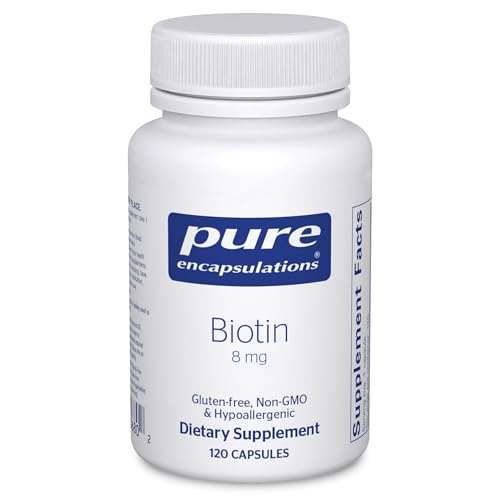
Pure Encapsulations Biotin 8 mg (120 Capsules)
by Pure Encapsulations
The practitioner-grade pick for sensitive patients — the most rigorously allergen-controlled biotin available, with lot-level testing and clinical-channel pedigree.
Pros
- Strictest allergen-free formula in the category — free from 14 of the most common food and environmental allergens
- Practitioner-grade brand recommended by Forbes Health and stocked by integrative medicine clinics nationwide
- Lot-by-lot potency and identity testing with full Certificate of Analysis available on request
- Hypoallergenic vegetarian capsule shell appropriate for the most sensitive patient populations including pediatric and post-bariatric users
Cons
- Lowest review count of the picks at 2,511 — the brand sells primarily through clinicians, not Amazon
- Highest cost-per-serving among standalone biotin products in this lineup
- 8,000 mcg dose is slightly below the 10,000 mcg dose used in most marketed formulations
Nutricost Biotin 10,000mcg (240 Capsules) — Best High-Dose Value
Nutricost occupies a specific and useful place in the lineup: 10,000 mcg of biotin in a vegetarian capsule format with third-party testing, at approximately six cents per capsule. That is the lowest cost-per-serving of any 10,000 mcg product in this review. The Amazon Elements vegan capsule is cheaper still at roughly four cents, but it carries half the dose, so per milligram of biotin delivered Nutricost is the most efficient bottle on this page. The 240-capsule bottle delivers an eight-month supply at one daily dose, which is genuinely meaningful for long-term protocols where running out mid-cycle disrupts consistency. The brand manufactures in a GMP-compliant, FDA-registered facility and submits products for independent third-party testing — a credential that puts it ahead of many cheaper alternatives that rely solely on internal quality control.
The vegetarian capsule format is the right choice for patients who want plant-based supplementation without the cost premium of Sports Research’s Plantgel softgel. Most plant-based patients I work with find the standard HPMC vegetarian capsule perfectly acceptable, and the format does not carry the soy filler oil that some softgels include. The honest limitation is that a dry capsule lacks the oil carrier that may marginally improve absorption — for patients with intact intestinal function this is a negligible difference, but for post-bariatric or IBD patients, an oil-carrier softgel may produce more consistent serum levels.
For a patient who wants high-dose biotin, third-party testing, and the lowest cost per milligram in a vegetarian format, Nutricost is the answer. The brand recognition is lower than Nature’s Bounty, but the manufacturing credentials are stronger and the per-serving economics are better. Pair it with a daily multivitamin protocol for cofactor support if your overall nutrition is variable.

Nutricost Biotin 10,000mcg (240 Capsules)
by Nutricost
The best high-dose value pick — 10,000 mcg vegetarian capsules with third-party testing and an 8-month bottle, at the lowest cost-per-serving of any 10,000 mcg product here.
Pros
- Lowest cost-per-serving among 10,000 mcg products at approximately six cents per capsule
- 240-count bottle delivers an 8-month supply — fewer reorders, less risk of running out mid-protocol
- Independent third-party testing in a GMP-compliant, FDA-registered facility
- Vegetarian capsule format appropriate for plant-based diets and most religious dietary frameworks
Cons
- Dry capsule format lacks an oil carrier, which may marginally reduce absorption efficiency compared to softgel formats
- Less brand recognition than Nature's Bounty, with shorter consumer track record despite strong manufacturing credentials
vitafusion Extra Strength Biotin Gummy Vitamins — Best Gummy
I include a gummy option in this lineup because adherence beats biochemistry in real-world outcomes. A patient who consistently takes a 5,000 mcg gummy every day will see better results than a patient who buys a 10,000 mcg softgel and forgets it for weeks at a time. vitafusion is the most credentialed gummy brand in the category, with America’s number one gummy vitamin brand designation, broad pharmacy distribution, and a clean ingredient deck that excludes high-fructose corn syrup, artificial sweeteners, and synthetic dyes — most gummy competitors fail at least two of those marks.
The 5,000 mcg dose per two-gummy serving is appropriate for maintenance supplementation in non-deficient adults and produces less lab interference than 10,000 mcg products. The 4.7-star rating across 20,000+ reviews provides strong social proof in a format category where consumer satisfaction is heavily flavor-driven and quality varies enormously. For capsule-averse adults, pediatric patients (with appropriate physician guidance on dosing), and elderly patients with swallowing difficulties, the gummy format genuinely solves an adherence problem that capsules and softgels do not.
The honest limitations are real and worth weighing carefully. The product contains real cane sugar — typically 3 grams per serving — which makes it inappropriate for low-carbohydrate, ketogenic, insulin-resistant, or diabetic users. The 100-gummy bottle provides only a 50-day supply at the two-gummy daily dose, requiring more frequent reordering than capsule formats. And the bovine gelatin base disqualifies vegetarian and vegan users. For a patient who fits the use case — sugar-tolerant, capsule-averse, looking for a maintenance-dose format — vitafusion is the strongest gummy biotin available.

vitafusion Extra Strength Biotin Gummy Vitamins (100 Count)
by vitafusion
The best gummy biotin available — clean ingredient deck, 20k+ four-and-a-half-star reviews, and the most palatable format for users who refuse capsules or softgels.
Pros
- Best-tasting biotin format for capsule-averse users and pediatric or geriatric patients with swallowing difficulties
- 20,000+ verified reviews at 4.7 stars — strongest social proof of any biotin gummy on Amazon
- No high-fructose corn syrup, no artificial sweeteners, and no synthetic dyes — cleaner gummy formulation than most competitors
- America's number one gummy vitamin brand with broad retail and pharmacy distribution
Cons
- Contains real cane sugar — not appropriate for low-carbohydrate, ketogenic, or insulin-resistant or diabetic users
- Roughly 50-day supply per bottle requires more frequent reordering than capsule formats
- 5,000 mcg dose is half of the 10,000 mcg dose found in standard capsule and softgel products
Amazon Elements Vegan Biotin 5000 mcg — Best Vegan Budget
Amazon Elements Vegan Biotin is the answer for plant-based patients who want the lowest possible cost-per-serving without sacrificing label cleanliness. At roughly four cents per capsule, this is the cheapest legitimate biotin in the entire category, and the formulation is genuinely clean: strictly vegan, no artificial colors, no artificial flavors, no preservatives, and a transparent ingredient deck that discloses sourcing. The 130-capsule bottle delivers more than four months of daily supplementation, and the 36,000+ verified Amazon reviews accumulated over multiple years demonstrate consistent quality.
The Amazon Elements line is one of the more thoughtfully constructed private-label supplement programs in retail. The brand publishes ingredient sourcing on a per-batch basis through a QR code on the bottle, which is more transparency than most national brands provide. The 5,000 mcg dose is appropriate for maintenance supplementation in non-deficient adults and matches the dose range used in most clinical research on biotin and skin or hair endpoints — the 10,000 mcg products are not better-evidenced, just better-marketed.
The two honest considerations: the product discloses on the label that ingredients are sourced from China, which is transparent but a concern for some consumers who prefer US-sourced raw material (note that the product is then manufactured in a US GMP facility, but the input biotin powder is imported). And the 5,000 mcg dose is half the 10,000 mcg standard found in most marketed competitor products — appropriate for maintenance, possibly insufficient for a corrective protocol in active deficiency. For plant-based patients with budget constraints and intact intestinal function, this is the right choice.
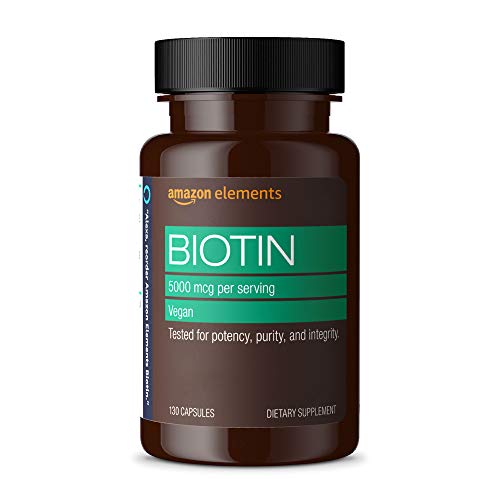
Amazon Elements Vegan Biotin 5000 mcg (130 Capsules)
by Amazon Elements
The cheapest legitimate vegan biotin on Amazon — clean ingredient deck and 36k+ reviews at the lowest cost-per-serving of any product in this review.
Pros
- Lowest price-per-serving in the entire category at roughly four cents per capsule
- Strictly vegan with no artificial colors, flavors, or preservatives — clean label appropriate for plant-based users
- 130-count bottle delivers more than four months of daily supplementation
- 36,000+ verified Amazon reviews with consistent quality feedback over multiple years on the platform
Cons
- Ingredients sourced from China, disclosed transparently on the label but a concern for some users who prefer US-sourced raw material
- 5,000 mcg dose is half of the 10,000 mcg standard found in most marketed competitor products
NUTRAHARMONY Biotin + Collagen + Hyaluronic Acid + Keratin — Best Combo Formula
NUTRAHARMONY’s combination formula occupies a category of its own: rather than competing on biotin dose alone, it stacks biotin with collagen, keratin, hyaluronic acid, and vitamins A and E in a single capsule. The clinical rationale is the cofactor-pathway argument — collagen synthesis requires Vitamin C and other cofactors, hyaluronic acid contributes to skin hydration via extracellular matrix water retention, and keratin is the structural protein that biotin metabolism supports in hair and nail formation. A combination formula tries to address the entire skin-and-hair pathway in one product rather than asking users to assemble a four-bottle stack.
What distinguishes NUTRAHARMONY from the dozens of similar combination products is a 2024 clinical study of 80 women over 90 days specifically on this formulation, which is rare for the combo-formula category. The trial reported improvements in hair density, nail growth, and skin elasticity at the formulation’s daily dose. Combined with 17,000+ Amazon reviews and clear US GMP manufacturing labeling, the product has more evidentiary backing than most combination formulas. For users who want a single-capsule approach to skin and hair wellness rather than managing three or four standalone bottles, this is a defensible choice.
The honest limitations are important. The cost-per-serving of approximately forty-seven cents is the highest among picks in this lineup — roughly seven to twelve times the cost-per-serving of the standalone biotin alternatives. The collagen content per capsule is meaningfully lower than what you would get from a dedicated collagen powder providing 5 to 20 grams per scoop; combination products inevitably dilute each ingredient to fit them all into a single capsule shell. And the 4.5-star rating, while still strong, is the lowest among picks in this review and reflects slightly more variable consumer feedback. For users looking specifically at the collagen pathway, pairing standalone biotin with a dedicated collagen product is generally more cost-effective. For users who genuinely value the single-capsule simplicity, NUTRAHARMONY is the best of category.
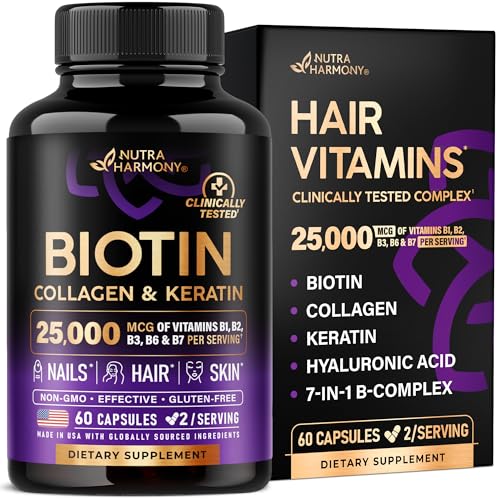
NUTRAHARMONY Biotin + Collagen + Hyaluronic Acid + Keratin (60 Capsules)
by NUTRAHARMONY
The most ambitious combo formula on the market — biotin plus collagen, keratin, and hyaluronic acid in a single capsule, with a published clinical study to support the stack.
Pros
- All-in-one combination formula stacks biotin with collagen, keratin, hyaluronic acid, and vitamins A and E in a single capsule
- Backed by a 2024 clinical study of 80 women over 90 days, a rare evidence base in the biotin combo category
- 17,000+ Amazon reviews validate the combination-formula category and demonstrate consistent product reception
- Clear US GMP labeling with transparent disclosure of ingredient sourcing and manufacturing
Cons
- Highest cost-per-serving among picks at approximately forty-seven cents per capsule
- Collagen content per capsule is meaningfully lower than dedicated collagen supplements that deliver 5 to 20 grams per serving
- Lowest star rating among picks at 4.5 stars — slightly more variable consumer feedback than the 4.6 to 4.7 star alternatives
Best Biotin Supplement for Hair Growth
This is the reason nearly everyone arrives at this page, so it deserves the most honest answer on it. The evidence that biotin grows hair in people who are not deficient is weak. A 2017 review in Skin Appendage Disorders found only a handful of case reports of improvement, and in every one the patient had an underlying deficiency or an inherited metabolic condition. In people with normal biotin status, controlled evidence of benefit for hair growth does not exist. What that means practically: if your hair loss is driven by thyroid disease, iron deficiency, androgenetic alopecia, telogen effluvium after illness or childbirth, or a medication, biotin will not address the cause, and the months you spend waiting on it are months you are not treating what is actually happening. Get ferritin and TSH checked before you spend anything.
If you are in a genuine risk group, which means long-term anticonvulsants, inflammatory bowel disease, celiac disease, a bariatric procedure, or pregnancy, then supplementation is corrective and the three products below are the ones I would choose from. All three are 10,000 mcg once daily, which is the dose used for corrective rather than maintenance protocols. Give any of them three to six months, because that is the length of one hair cycle and nothing visible happens faster than the hair grows.
One thing to settle before you buy at this dose. Biotin at 10,000 mcg interferes with a long list of immunoassays, including troponin, TSH and free T4, and the interference is large enough to have produced both missed heart attacks and false thyroid diagnoses. Stop it 48 to 96 hours before any blood draw and tell whoever orders the test. The lab interference section below covers exactly what is affected.
| Product | Price | Buy |
|---|---|---|
| Sports Research Biotin 10,000mcg with Organic Coconut Oil (120 Softgels)Cleanest 10,000 mcg formula A vegan softgel in organic coconut oil, the cleanest ingredient deck at the corrective dose, and the pick if you want the fewest excipients | $19.95 | View on Amazon |
| Nature's Bounty Biotin 10,000 mcg Hair, Skin and Nails (120 Softgels)Most-validated budget option More than 120,000 verified ratings and pharmacy-chain distribution, which is the deepest real-world safety signal at this dose | $8.50 | View on Amazon |
| Nutricost Biotin 10,000mcg (240 Capsules)Best value on a long protocol Eight months of capsules in one bottle at the lowest cost per milligram here, which matters when the protocol runs a year | $14.95 | View on Amazon |
Best Biotin Supplement for Hair and Nails
Split these two apart, because the evidence is genuinely different for each and nobody selling a “hair, skin and nails” bottle will tell you so. For nails, biotin has the strongest case in the whole category. Small clinical studies, including the work of Colombo and Hochman in the early 1990s, found roughly 25 percent greater nail plate thickness and less splitting in people with brittle nails, and the benefit held up in some patients who were not overtly deficient. That is a real, if modest, finding. For hair in a non-deficient person, as covered above, it is not there. So if brittle, splitting nails are your actual complaint, this is the one place where biotin is a defensible purchase on its own merits.
Dose matters less here than consistency. The nail matrix produces new nail slowly, and a fingernail takes four to six months to grow out completely, a toenail closer to twelve. You cannot judge this in six weeks. Pick the bottle you will still be taking in month five.
The three below cover the range. Nutricost is the cost-efficient way to run a long nail protocol without restocking. Pure Encapsulations is the one I reach for with patients who have multiple allergies or sensitivities, and its 8,000 mcg dose produces marginally less assay interference than the 10,000 mcg options while staying comfortably in the corrective range. Nature’s Bounty is the default if you want a well-established brand at a budget price.
| Product | Price | Buy |
|---|---|---|
| Nutricost Biotin 10,000mcg (240 Capsules)Best for a long nail protocol An eight-month bottle at one capsule a day, which removes the mid-protocol restock that breaks consistency | $14.95 | View on Amazon |
| Pure Encapsulations Biotin 8 mg (120 Capsules)Best for sensitive patients Fourteen-allergen-free with lot-by-lot testing, and its 8,000 mcg dose interferes slightly less with lab assays | $26.50 | View on Amazon |
| Nature's Bounty Biotin 10,000 mcg Hair, Skin and Nails (120 Softgels)Best established budget brand The cheapest way into a six-month nail trial from a brand with pharmacy-chain quality oversight | $8.50 | View on Amazon |
Best Collagen and Biotin Supplements
Combination products pair biotin with collagen, keratin and hyaluronic acid on a cofactor argument: collagen supplies the amino acid substrate, biotin supports the enzymes involved in keratin production, and hyaluronic acid contributes to skin hydration. It is a coherent story. It is also the part of this category where mainstream medicine is most openly skeptical. Mayo Clinic’s position is that the evidence for these combinations is thin, and a widely-read CNBC piece put it more bluntly, arguing that hair, skin and nail supplements deliver far more biotin than anyone needs and little else of proven value. Both are worth reading before you spend forty-seven cents a capsule.
Where I land is narrower than the marketing and less dismissive than the skeptics. The combination formula makes sense for one specific buyer: someone who would otherwise be taking three or four separate bottles and will not keep that up. Adherence is a real clinical variable, and a single capsule taken daily beats a four-bottle stack abandoned in week three. What a combination product cannot do is deliver a meaningful collagen dose. Dedicated collagen powders provide 5 to 20 grams per serving. No capsule holds that, so the collagen content in any combination capsule is a fraction of what the collagen research actually used.
So the honest comparison is not between two combination products, because only one on this page is a genuine combination formula. It is between the combination approach and the standalone approach, which is what the table sets out. If collagen is your real priority rather than biotin, our collagen supplements guide is the better page.
| Product | Price | Buy |
|---|---|---|
| NUTRAHARMONY Biotin + Collagen + Hyaluronic Acid + Keratin (60 Capsules)Best all-in-one combination formula Biotin with collagen, keratin, hyaluronic acid and vitamins A and E in one capsule, and the rare combination product with a 2024 trial on this exact formulation, though the collagen dose is far below what collagen studies use | $23.79 | View on Amazon |
| Sports Research Biotin 10,000mcg with Organic Coconut Oil (120 Softgels)Best standalone alternative The cleaner route if you want a known biotin dose and would rather buy collagen separately at a dose the research supports, and it costs roughly a third as much per capsule | $19.95 | View on Amazon |
Biotin by Dose, Diet and Budget
A few narrower situations do not need a section of their own but do point at a specific bottle.
| Product | Price | Buy |
|---|---|---|
| Amazon Elements Vegan Biotin 5000 mcg (130 Capsules)Best vegan biotin supplement Strictly vegan at roughly four cents a capsule, the cheapest legitimate biotin here, at a 5,000 mcg maintenance dose rather than a corrective one | $5.52 | View on Amazon |
| Nutricost Biotin 10,000mcg (240 Capsules)Best 10,000 mcg biotin supplement The lowest cost per milligram at the 10,000 mcg corrective dose, in a vegetarian capsule with third-party testing | $14.95 | View on Amazon |
| vitafusion Extra Strength Biotin Gummy Vitamins (100 Count)Best biotin gummy For anyone who will not swallow capsules, at 5,000 mcg per two-gummy serving, though it carries added sugar the capsules do not | $14.31 | View on Amazon |
| Pure Encapsulations Biotin 8 mg (120 Capsules)Best biotin for adults over 50 The practitioner-grade option, and the allergen-free deck plus slightly lower 8,000 mcg dose suits older adults on multiple medications and having frequent blood work | $26.50 | View on Amazon |
How Much Biotin Do You Actually Need? A Doctor’s Perspective
The Adequate Intake for biotin in adults is 30 mcg per day, set by the Institute of Medicine. Pregnant women have a slightly higher AI of 30 mcg, lactating women 35 mcg. These are not aspirational targets — they are the daily intakes that prevent deficiency in healthy adults, and most people meet them through ordinary diet. Eggs (especially the yolk), salmon, sweet potatoes, almonds, sunflower seeds, avocados, and legumes all provide meaningful biotin, and a typical mixed American diet delivers somewhere between 35 and 70 mcg daily without effort.
Against that backdrop, the 5,000 to 10,000 mcg doses in commercial supplements are 166 to 333 times the AI. There is no published evidence in healthy adults that these doses outperform 1,000 mcg, and clinical trials have not consistently shown improvements over placebo in non-deficient populations. The dosing convention is a competitive marketing artifact, not a clinical recommendation. For non-deficient adults choosing to supplement for general hair-and-nail support, 1,000 to 5,000 mcg daily is more than sufficient, and the higher doses produce meaningfully more lab test interference (covered in the next section) without producing better outcomes.
Where higher doses (10,000 mcg) are appropriate: documented biotin deficiency, biotinidase deficiency (rare inherited disorder), patients on long-term carbamazepine, phenobarbital, or primidone (these anticonvulsants accelerate biotin metabolism), patients with active inflammatory bowel disease or short bowel syndrome, post-bariatric surgery patients in the first year of recovery, and patients consuming raw egg whites regularly (avidin in raw egg white binds biotin and prevents absorption). Outside these scenarios, the dose-up-to-10,000-mcg pattern delivers cost without benefit. Talk with your physician before starting any supplementation protocol if you have an underlying medical condition or are taking prescription medications.
Critical Warning: Biotin and Lab Test Interference
This is the section every biotin shopper needs to read, and the section that no supplement marketer will put on a product label. High-dose biotin — meaning anything above the 30 mcg daily Adequate Intake, which is effectively all marketed biotin supplements — interferes with a class of clinical laboratory tests called streptavidin-biotin immunoassays. These assays use the extraordinarily strong binding affinity between streptavidin and biotin to detect specific molecules in patient blood samples. When a patient has elevated serum biotin from supplementation, the supplemental biotin saturates the binding sites and produces falsely high or falsely low results depending on the assay design.
The list of affected tests is long and clinically critical. Thyroid function tests (TSH, free T4, free T3, reverse T3) are heavily affected — biotin interference can produce a pattern that mimics Graves’ disease, with falsely suppressed TSH and falsely elevated free T4 and free T3. I have personally seen patients started on antithyroid medication based on biotin-contaminated thyroid panels, only to have normal results after a 96-hour washout. Cardiac troponin (I and T) is the marker used to diagnose myocardial infarction in the emergency department, and biotin interference produces falsely low results — meaning a patient having an active heart attack can have a falsely reassuring troponin in the setting of high-dose biotin use. The FDA issued a formal safety communication in 2017 specifically warning of this risk, with a follow-up communication in 2019.
Other commonly affected assays include 25-OH vitamin D (the standard test for vitamin D deficiency), testosterone, LH, FSH, prolactin, progesterone, cortisol, hCG (used in pregnancy testing and trophoblastic disease monitoring), and a number of tumor markers. Falsely abnormal results on any of these tests can drive incorrect diagnoses, unnecessary imaging, unwarranted treatment initiation, and meaningful patient harm. The interference is dose-dependent — higher biotin doses produce greater interference, which is why 10,000 mcg formulations carry more risk than 5,000 mcg formulations even though both are far above the 30 mcg AI.
The clinical recommendation is straightforward: stop biotin supplementation at least 48 to 96 hours before any scheduled blood draw, longer for users on doses above 10,000 mcg. Tell your physician you take biotin every single time labs are ordered, even if it has been weeks since your last dose. If your lab results are unexpectedly abnormal in a way that does not fit your clinical picture — particularly thyroid panels or troponin — biotin interference should be on the differential before any treatment decision. For more general guidance on home health monitoring practices that work alongside (not in conflict with) clinical lab work, our reviews of the best blood pressure monitors and the best glucose monitors cover devices that produce reliable readings independent of supplement timing.
Who Actually Needs Biotin? A Clinical Risk Checklist
Outside the marketing space, the patients I actually start on biotin supplementation fall into a relatively small set of categories. Patients with biotinidase deficiency, an inherited metabolic disorder typically detected on newborn screening — these patients require lifelong supplementation. Patients on long-term anticonvulsant therapy with carbamazepine, phenobarbital, primidone, or phenytoin — these medications accelerate biotin catabolism and produce subclinical deficiency over months to years. Patients with active inflammatory bowel disease, Crohn’s disease, celiac disease, or short bowel syndrome — impaired intestinal absorption produces functional deficiency even with normal dietary intake. Post-bariatric surgery patients in the first year after surgery — reduced absorptive surface area and altered gastric chemistry produces multiple micronutrient deficiencies including biotin. Patients who consume large quantities of raw egg whites regularly — the avidin protein binds biotin in the gut and prevents absorption. Heavy smokers, where there is limited but real evidence of accelerated biotin catabolism. And pregnant women, who have modestly increased biotin requirements supported by both the Adequate Intake values and clinical trial data.
If you do not fit any of these categories, the realistic clinical expectation from biotin supplementation is small to negligible benefit. If you do fit one of these categories, supplementation is appropriately corrective and produces meaningful improvement over a 3-to-6-month timeline. The most useful question to ask your physician is not “should I take biotin,” but “do I have a reason to be biotin-deficient.” The answer to that question determines whether supplementation will produce real improvement or simply be a low-cost, low-risk wellness habit with marketing-driven expectations.
Buyer's Guide
Choosing the right biotin supplement is less about brand and more about matching dose, form, and certification status to your specific clinical situation. The biotin category has more marketing noise than almost any other supplement, so a clear-eyed look at the variables that actually matter is the best protection against paying for marketing rather than substance.
Dosage (5,000 mcg vs 10,000 mcg)
The US Adequate Intake for biotin is 30 mcg per day, which most adults already meet through ordinary diet. Commercial supplements at 5,000 to 10,000 mcg deliver 166 to 333 times that — a dosing convention driven by marketing, not by evidence of additional benefit. Randomized trials in healthy adults have not consistently demonstrated that 10,000 mcg outperforms 5,000 mcg, and neither has shown reliable benefits in non-deficient populations. For corrective supplementation in documented deficiency, 1,000 to 5,000 mcg daily is sufficient. The 10,000 mcg products are useful primarily for known malabsorption syndromes and patients on biotin-depleting anticonvulsants. Higher doses also produce greater lab test interference, which is a real downside for any patient who has periodic blood work.
Form (Softgel vs Capsule vs Gummy vs Liquid)
Softgels with an oil carrier (such as the coconut oil base in Sports Research) may improve consistency of absorption because biotin is modestly fat-influenced in its uptake. Vegetarian capsules are the most flexible format and allow for higher fill weights without an oil carrier. Gummies are the most palatable format for capsule-averse users, but they invariably contain added sugar and tend to deliver lower biotin doses per serving. Liquid biotin is rarely warranted unless severe swallowing difficulties make tablets and capsules impractical. Choose the format you will actually take consistently — adherence beats biochemistry in real-world outcomes.
Pure Biotin vs Combination Formulas
Combination formulas stack biotin with collagen, keratin, hyaluronic acid, vitamins A, C, and E, and sometimes B-complex nutrients. The argument for combinations is the cofactor stack: collagen synthesis requires Vitamin C, keratin metabolism requires biotin and zinc, and skin hydration depends on hyaluronic acid retention. The argument against is dose dilution: collagen doses in combination products are typically a fraction of what dedicated collagen supplements provide, and you generally pay more per milligram of any single ingredient. If you have a known biotin deficiency or specific hair-and-nail concern, a standalone biotin product is usually more cost-effective. Combination products are reasonable for users who want a single capsule covering multiple skin and hair pathways at general-maintenance dose levels.
Third-Party Testing & Quality Certifications
The supplement industry in the United States operates under minimal pre-market FDA oversight, and label inaccuracy is a documented problem in independent testing studies. Third-party certifications meaningfully change the risk profile: USP Verified, NSF Certified, Informed Sport, Informed Choice, and Non-GMO Project Verified all provide independent confirmation that the product matches its label. GMP certification is the manufacturing baseline. For biotin specifically, allergen-panel testing (as Pure Encapsulations performs) matters more than for most supplements because biotin formulations frequently include shared-line allergens (soy, gelatin, dairy proteins) that are not always disclosed clearly on consumer-facing labels.
Vegan & Allergen Considerations
The most common biotin softgel uses bovine gelatin, which immediately disqualifies it for vegetarian, vegan, kosher, halal, and beef-allergic consumers. Plant-based softgel alternatives (Plantgel, modified starch, or vegan agar shells) exist but are more expensive and less common. Vegetarian capsules using HPMC (hydroxypropyl methylcellulose) are the cleanest baseline for most plant-based users. Other allergens to scrutinize on biotin labels include soy (frequently used as a filler oil in softgels), wheat (rare but occasionally present), dairy proteins, and color additives. Patients with multiple allergies or chemical sensitivities should prioritize Pure Encapsulations or another practitioner-grade brand with explicit allergen-free certification.
Cost Per Serving & Bottle Size
Cost-per-serving in the biotin category ranges from approximately four cents (Amazon Elements Vegan) to forty cents (combination formulas), an order-of-magnitude variation. Bottle counts range from 60 capsules (combination formulas at two-month supply) to 240 capsules (eight-month supply). For a maintenance-dose biotin protocol that may run for years, cost-per-serving is the single most influential variable in the lifetime cost of supplementation. Larger bottle sizes (120 or 240 count) almost always provide better per-serving economics, and they reduce the risk of running out mid-protocol and disrupting consistency. Match the bottle size to your anticipated duration of use, and recheck the per-serving math when comparing brands at different doses.
How to Choose the Best Biotin Supplement
Match the dose to your clinical situation: 1,000 to 5,000 mcg daily is appropriate for general maintenance and for non-deficient adults, while 10,000 mcg is reserved for documented deficiency or patients on biotin-depleting medications. Choose a vegetarian capsule or vegan softgel if your diet excludes animal products, and prioritize Pure Encapsulations or another practitioner-grade brand if you have multiple allergies or chemical sensitivities. Cost-per-serving matters most for long-term protocols — at four to seven cents per serving, Amazon Elements Vegan, Nutricost, and Nature’s Bounty all support sustained adherence without budget strain. Whatever you choose, build a 48-to-96-hour washout into your routine before any scheduled blood draw, and tell your physician you supplement every time labs are ordered.
Final Verdict
Our top recommendation for most buyers is the Sports Research Biotin 10,000mcg with Organic Coconut Oil — vegan, Non-GMO Project Verified, oil-carrier softgel, and made by a long-tenured family-owned US brand with cGMP manufacturing. It is the only product in this review that combines clean-label allergen profile with absorption-friendly formulation in a single bottle, and it works well for the broadest range of patient scenarios.
For price-sensitive buyers without dietary restrictions, Nature’s Bounty Biotin 10,000 mcg is the most-validated budget option in the category, with 120,000+ Amazon reviews and the lowest cost-per-serving among major pharmacy brands. For sensitive patients with allergies or chemical sensitivities, the Pure Encapsulations Biotin 8 mg practitioner-grade capsule is the only product in this review with explicit 14-allergen-free certification and lot-by-lot testing. Whatever product you choose, the dose only matters as much as the underlying clinical question — talk to your physician about whether you actually need biotin supplementation before committing to a long-term protocol, and pair the supplement with a foundational multivitamin for broader cofactor support.
Frequently Asked Questions
Does biotin actually work for hair growth?
Will biotin interfere with my blood tests?
How much biotin should I take per day?
Who actually needs a biotin supplement?
How long does biotin take to work?
When is the best time to take a biotin supplement?
Is biotin good for nail growth and brittle nails?
Can biotin help with hair loss?
Does biotin work for beard growth?
Related Articles
About the Reviewer

Dr. David Taylor, MD, PhD
Drexel University College of Medicine (MD), Indiana University School of Medicine (PhD)
Dr. David Taylor is a licensed physician and medical researcher who founded BestRatedDocs in 2016. With an MD from Drexel University and a PhD from Indiana University School of Medicine, he combines clinical expertise with a passion for health technology to provide evidence-based product recommendations. Dr. Taylor specializes in health informatics and regularly evaluates medical devices, diagnostic equipment, and therapeutic products to help healthcare professionals and patients make informed decisions.