7 Best Glucose Monitors of 2026
Dr. David Taylor reviews the best glucose monitors on Amazon. Compare top blood glucose meters by accuracy, sample size, connectivity, and strip cost for diabetes management.
Updated
Approximately 38 million Americans — more than 11% of the US population — live with diabetes, and another 96 million meet the clinical criteria for prediabetes, according to the CDC’s most recent National Diabetes Statistics Report. For anyone in this group, blood glucose monitoring is not optional. It is the feedback mechanism that turns a diagnosis into actionable daily management, helping patients and physicians determine whether medications, diet adjustments, and lifestyle changes are actually working. Yet the market for home glucose meters is genuinely confusing: dozens of options at nearly identical price points, with marketing claims that are difficult to evaluate without clinical context. For this guide, we reviewed seven of the top-selling traditional blood glucose monitors on Amazon, evaluating each on the criteria that matter most: ISO 15197 accuracy compliance, ongoing strip economics, connectivity, and real-world usability for patients across the full spectrum of diabetes management needs.
It is worth clarifying what this guide covers — and what it does not. This roundup focuses exclusively on traditional finger-stick blood glucose monitors, which remain the standard for many patients and the reference check for continuous glucose monitor (CGM) users. CGMs like the Dexcom G7 and Abbott FreeStyle Libre are a separate product category requiring a different purchasing framework. If you are also managing cardiovascular comorbidities — as many people with Type 2 diabetes do — our guide to the best blood pressure monitors covers that adjacent need. After extensive research and review of tens of thousands of verified Amazon customer ratings, here are our top picks for 2026.
| Product | Price | Buy |
|---|---|---|
| CONTOUR NEXT ONE Blood Glucose Monitoring System All-in-One KitBest Overall | $35.49 | View on Amazon |
| CareSens N Blood Glucose Monitor KitBudget Pick | $22.31 | View on Amazon |
| OneTouch Verio Reflect Blood Glucose Test KitPremium Pick | $34.99 | View on Amazon |
| Ascensia Contour Next GEN Blood Glucose MonitorRunner-Up | $19.97 | View on Amazon |
| AUVON DS-W Blood Sugar Kit | $19.79 | View on Amazon |
| IMDK Blood Glucose Monitor Kit with 100 Test Strips and 100 Lancets | $19.99 | View on Amazon |
| Accu-Chek Guide Glucose Monitor Kit for Diabetic Blood Sugar Testing | $29.32 | View on Amazon |
How We Selected These Glucose Monitors
We evaluated each meter against four clinical and practical criteria: ISO 15197:2013 accuracy compliance (the FDA benchmark for home glucose meter performance), cost-per-strip for ongoing affordability, sample volume requirements (with lower being better for patient comfort), and connectivity features that facilitate data sharing with care teams. We cross-referenced manufacturer specifications with independent laboratory studies where available, analyzed thousands of verified Amazon customer reviews to surface real-world reliability patterns, and assessed each meter’s suitability for distinct patient populations — from newly diagnosed Type 2 patients to insulin-dependent Type 1 adults, seniors managing multiple comorbidities, and high-frequency testers who want Bluetooth app integration alongside their daily readings.
1. CONTOUR NEXT ONE Blood Glucose Monitoring System — Best Overall
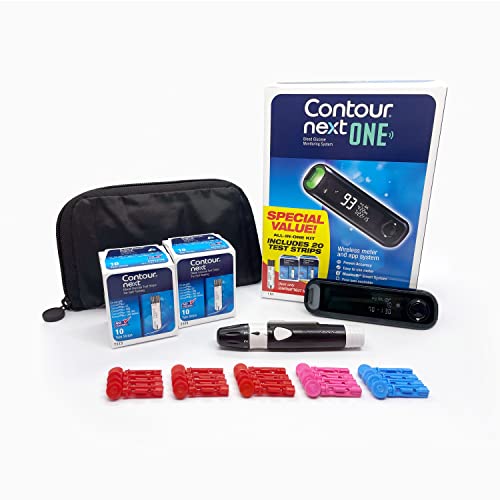
A note on what changed: this slot previously held the Contour Next EZ, which Amazon has now stopped stocking with a working buy box. The Contour Next ONE replaces it. That is a substitution within the same family rather than a change of recommendation, because what earned the EZ this position was the Contour Next strip platform, and the ONE uses exactly that platform.
That platform is why this meter leads the page. In multiple third-party studies, including work published in the Journal of Diabetes Science and Technology, the Contour Next test strip system has consistently exceeded ISO 15197:2013 requirements, often placing 98 to 99 percent of readings inside the tolerance band where the standard mandates 95 percent. Ascensia documents the ONE specifically at within plus or minus 8.4 percent of laboratory values. For a device that informs insulin dosing, that margin matters clinically. A meter reading 20 mg/dL high during a post-meal spike could prompt an unnecessary correction dose; one reading low during a hypoglycaemic episode could delay an intervention that needs to happen immediately.
Second-Chance Sampling carries over from the EZ and remains the feature I most often point patients toward. If the first blood drop is insufficient, which is common with circulation problems or callused fingertips, the meter alerts you and accepts more blood on the same strip within 60 seconds rather than voiding it. At current strip prices, that has real economic value across months of daily testing. The no-coding design removes the manual calibration step when opening a new vial, which was a genuine source of error in older meters.
What the ONE adds over the discontinued EZ is the part patients notice first: a smartLIGHT indicator that colour-codes each result as above, below, or within your target range, and Bluetooth pairing with the free Contour Diabetes app so readings build into a shareable log without hand-copying. For a newly diagnosed patient still learning what a number means, the colour cue does real work.
Two honest cautions. The kit includes only 20 test strips, so plan on a refill order almost immediately if you test daily. More importantly, this listing is fulfilled by a third-party seller rather than by Amazon or Ascensia, and the delivery estimate runs about a week rather than next-day. Check the buy box and the seller before you order. If the listing is unavailable when you look, the Contour Next GEN further down this page runs the identical strip chemistry and is the direct substitute.
CONTOUR NEXT ONE Blood Glucose Monitoring System All-in-One Kit
by Ascensia / Contour
The accuracy leader of this group and the successor to the discontinued Contour Next EZ — documented to plus or minus 8.4% of lab values, with a colour-coded range light and app logging.
Pros
- Ascensia documents accuracy within plus or minus 8.4% of laboratory values, tighter than the plus or minus 15% that the ISO 15197:2013 standard permits
- smartLIGHT target range indicator colour-codes every result as above, below, or within range, removing the interpretation step for newly diagnosed patients
- Second-Chance Sampling lets you apply more blood to the same strip within 60 seconds, so a short draw does not waste a strip
- Bluetooth pairing with the free Contour Diabetes app builds a shareable log without hand-copying readings into a notebook
Cons
- Currently sold by a third-party seller rather than by Amazon or Ascensia, and delivery runs about a week rather than next-day — check the buy box and seller before ordering
- The kit ships with only 20 test strips, so anyone testing daily needs a refill almost immediately
- Contour Next strips run roughly $21 per 50, more than the budget kits reviewed here
2. CareSens N Blood Glucose Monitor Kit — Best Budget
The CareSens N system is the most pragmatic choice for newly diagnosed patients, uninsured individuals, or anyone who needs to minimize upfront and ongoing costs without compromising on the fundamentals. The defining advantage of this kit is completeness: the CareSens N ships with 100 test strips, 100 lancets, and everything needed to begin testing immediately, all in a single box. For a patient who has just received a diabetes diagnosis and faces the logistical and financial weight of building a new monitoring routine, removing the need to purchase supplies separately has genuine practical value.
The 0.5 µL sample requirement is smaller than the Contour Next ONE’s 0.6 µL, which means the CareSens N performs well for patients who struggle to produce a large blood drop. Auto-coding handles calibration automatically, and the 5-second test time matches the fastest meters in the category. The accuracy meets FDA standards for home monitoring and is adequate for the majority of Type 2 patients who are not on complex insulin regimens requiring the tightest possible readings. With more than 9,000 Amazon ratings, the CareSens N has built a strong customer base that supports its value proposition.
The 250-reading memory is the significant practical limitation here. A patient testing four times daily will fill the memory in approximately 62 days — well short of a full quarter between most endocrinology appointments. If you prefer to review data with your physician directly from the meter rather than maintaining a separate paper or app log, this could mean manually recording readings to avoid losing early data. For patients already tracking glucose in an app or logbook, the memory constraint is manageable and the overall value proposition remains strong.

CareSens N Blood Glucose Monitor Kit
by CareSens
The CareSens N kit is the most complete budget entry point for new diabetes monitoring, bundling strips and lancets into a single affordable purchase.
Pros
- Complete all-in-one kit includes 100 test strips and 100 lancets — lowest total out-of-pocket cost to start testing with everything needed in a single box
- 0.5 µL micro-sample requirement is smaller than the Contour Next ONE's, reducing finger-stick discomfort for daily testers
- Auto-coding technology calibrates automatically with each strip batch — no manual code entry required
- Affordable replacement strip pricing keeps long-term monitoring costs below most national brands
Cons
- 250-reading memory is among the smaller in this roundup — frequent testers may need to download data more often to avoid overwriting records
- Relatively newer brand compared to Contour or OneTouch — fewer long-term independent accuracy studies published
3. OneTouch Verio Reflect Blood Glucose Test Kit — Best Upgrade
The OneTouch Verio Reflect occupies a distinct niche: it is the best glucose meter for patients who want structured coaching alongside their readings, strong insurance coverage for ongoing strip costs, and a polished digital experience that can be shared with their care team. The Blood Sugar Mentor feature is clinically meaningful — it does not simply display a number and leave interpretation to the patient. It analyzes your historical reading patterns and delivers contextual messages: if it detects consistent post-breakfast spikes, for example, it will flag this pattern and prompt you to discuss it at your next appointment. For patients managing diabetes without frequent specialist access, this coaching layer bridges a genuine gap in self-management support.
The color range indicator — green for in-range, yellow for borderline, red for out-of-range — is a usability feature with real-world safety implications. In the immediate aftermath of a reading, when a patient may be anxious, cognitively fatigued, or managing multiple tasks, a color signal communicates the clinical urgency of a result faster than processing a three-digit number against a memorized target range. The OneTouch Reveal app extends this feedback to historical trend analysis, generating time-in-range statistics and shareable PDF reports that endocrinologists can review at appointments rather than relying on patient recollection. Its Amazon ratings show steady real-world validation from daily users.
The insurance formulary advantage deserves special emphasis. OneTouch is on the preferred formulary tier for many major US insurance plans, including several Medicare Part D plans. For a patient testing four times daily, the copay savings on strips can easily exceed the difference in out-of-pocket meter cost within the first month. Before purchasing any meter, we strongly recommend calling your insurer to confirm which brand carries the lowest copay tier for your specific plan. Pair this meter with a pulse oximeter if you are also monitoring oxygen saturation as part of diabetes-related cardiovascular management.
OneTouch Verio Reflect Blood Glucose Test Kit
by OneTouch
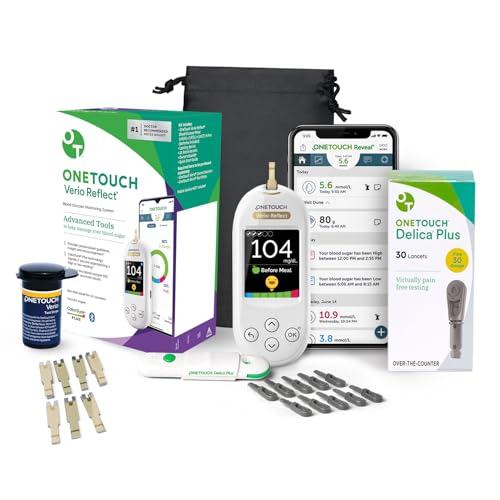
The OneTouch Verio Reflect is the smartest traditional glucose meter in this group, combining the best app ecosystem with the strongest insurance formulary position.
Pros
- Blood Sugar Mentor delivers personalized, pattern-based messages — flags trends like post-meal spikes and suggests action steps based on your individual data
- Color Range Indicator lights the meter green (in range), yellow (borderline), or red (out of range), enabling instant visual interpretation without reading numbers
- Bluetooth syncs automatically to the OneTouch Reveal app, generating time-in-range graphs and shareable PDF reports for endocrinologist appointments
- OneTouch brand formulary status means strips are covered under most major insurance and Medicare Part B plans with lower copay tiers
Cons
- OneTouch Verio strips carry a higher retail price than Contour Next or CareSens strips — cost difference is significant for uninsured patients testing multiple times daily
- Requires OneTouch Verio-specific strips only — not cross-compatible with other OneTouch strip lines
4. Ascensia Contour Next GEN Blood Glucose Monitor — Runner-Up
The Contour Next GEN sits alongside the ONE in Ascensia’s current line rather than above or below it, and for many buyers it is the more sensible purchase. It runs the same strip chemistry and the same accuracy platform that makes the ONE our best overall pick, and it carries the same smartLIGHT colour indicator and Bluetooth connectivity to the Contour Diabetes app. What it costs is roughly half the ONE’s current price. If you have settled on the Contour Next ecosystem for strip cost or accuracy reasons, start here, and step up to the ONE only if you find a specific feature you need or if this listing is out of stock when you look.
The smartLIGHT system illuminates the meter’s test port in blue (below your target range), green (within range), or red (above range) as soon as a reading registers, providing the same instant color communication as the OneTouch system without requiring a phone to be present. The Contour Diabetes app is a capable logbook replacement — it captures each reading automatically via Bluetooth, allows you to annotate readings with meal, exercise, and medication context, generates trend charts, and produces exportable reports for physician appointments. The 800-reading onboard memory means the meter retains all data independently of app connectivity, so readings taken during travel or phone downtime are never lost. At a rating of 4.5 stars across more than 2,700 reviews, the Contour Next GEN has quickly established itself as one of the top-rated meters in the category.
The Contour Next GEN’s honest limitation versus the OneTouch Verio Reflect is coaching depth. The Contour app is a strong data platform but does not yet offer the proactive pattern-recognition guidance that OneTouch’s Blood Sugar Mentor delivers. For patients who want a meter that interprets their data and suggests actions — rather than one that records it accurately for later review — the OneTouch remains the superior choice.

Ascensia Contour Next GEN Blood Glucose Monitor
by Ascensia / Contour
The Contour Next GEN carries the same accuracy platform, smartLIGHT indicator, and Bluetooth as our top pick at roughly half the price, which makes it the value choice in the Contour Next line.
Pros
- Shares the same strip chemistry and accuracy platform as our Best Overall pick, the Contour Next ONE, at a materially lower meter price
- smartLIGHT color feedback indicator lights the meter port blue (below range), green (in range), or red (above range) for instant at-a-glance result interpretation
- Contour Diabetes app syncs readings automatically and generates trend graphs, time-in-range analysis, and exportable logbook PDFs
- 800-reading onboard memory retains data even when phone is not present, ensuring no readings are lost during travel or connectivity gaps
Cons
- Does not add anything over the pricier Contour Next ONE beyond a lower price, so buyers wanting the newest Ascensia hardware will look past it
- Contour Diabetes app interface is functional but less polished than the OneTouch Reveal app in terms of coaching features
5. AUVON DS-W Blood Sugar Kit — Best for Large Display
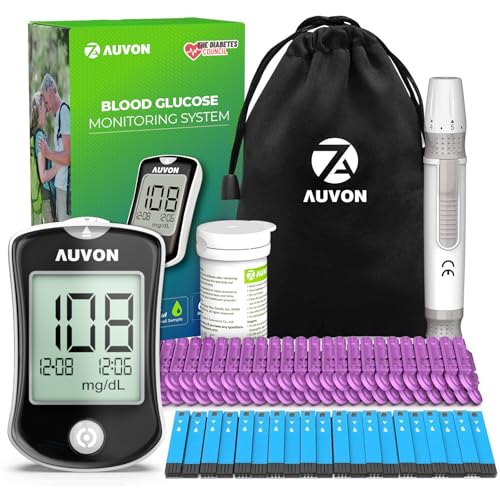
The AUVON DS-W was designed with a specific user in mind: older adults, patients with low vision, or anyone who finds standard glucose meter displays difficult to read in real-world conditions. The display is meaningfully larger than competitors — not just slightly different, but a class apart in readability. High-contrast numerals on a bright backlit screen allow readings to be seen clearly in poor lighting, including at night without turning on overhead lights. The automatic backlight activation is a thoughtful design feature: it triggers whenever ambient light falls below a threshold, eliminating the need to remember to press a button during disorienting overnight testing episodes.
Beyond display accessibility, the AUVON offers strong value at its price point. The kit includes 50 test strips and 50 lancets, which is enough to start testing the day it arrives but half what the CareSens N and IMDK kits ship, so budget for a refill sooner. No-coding design handles calibration automatically, reducing the risk of user error. The 6-second test time is a beat slower than the rest of this lineup. Where the AUVON falls short relative to competitors is in two measurable areas: the 0.7 µL sample requirement is the largest in this roundup, potentially requiring more pressure on the lancet to produce an adequate drop, and the 200-reading memory is the smallest, filling in approximately 50 days for a four-times-daily tester. With more than 21,000 Amazon ratings, the AUVON has proven its reliability with a wide user base.
For the target population — seniors or low-vision patients for whom display readability is a safety priority — these trade-offs are clearly worth accepting. For patients without vision or dexterity limitations, the Contour Next GEN or CareSens N provides better overall value.
AUVON DS-W Blood Sugar Kit
by AUVON
The AUVON DS-W's oversized backlit display makes it the most accessible glucose meter for seniors or anyone with diminished vision or manual dexterity.
Pros
- Extra-large backlit LCD display with high-contrast numerals is significantly easier to read than standard meter displays — purpose-designed for older adults or those with low vision
- Includes 50 test strips and 50 lancets in the box, so testing can start the day it arrives without a separate strip order
- No-coding design removes the calibration step entirely, reducing the learning curve for new or infrequent users
- Backlight activates automatically in low-light conditions, enabling nighttime testing without disturbing a sleeping partner
Cons
- 0.7 µL sample requirement is larger than the Contour, OneTouch, and CareSens meters here — may require more confident finger-stick technique to fill consistently
- No Bluetooth or app connectivity — all data logging must be done manually
6. IMDK Blood Glucose Monitor Kit — Best Starter Kit
This slot previously held the Metene TD-4116, which is now listed as unavailable on Amazon. The IMDK kit takes its place and serves the same purpose: it is the cheapest route to a genuinely complete monitoring setup for a newly diagnosed patient.
The bundle is the reason to buy it. The box contains 100 test strips, 100 lancets, and a lancing device for under twenty dollars, where most competing kits ship with ten strips or fewer and leave you to work out what else you need. For someone who has just been diagnosed and does not yet know which accessories matter, having a few months of consumables in one purchase removes both a cost and a decision at a stressful moment. Auto-coded strips eliminate the manual calibration step, and results return in five seconds.
On accuracy, IMDK publishes more detail than most budget brands. The listing cites ISO 15197:2013 and ISO 13485:2013 certification and claims results within plus or minus 10 percent of laboratory values more than 98 percent of the time, which if it holds is tighter than the standard requires. It also carries an unusually wide 10 to 70 percent haematocrit range, which matters for patients whose blood counts sit outside the typical adult range, including during pregnancy or with anaemia.
Two caveats deserve weight. The first is the sample size: this meter needs 5 microlitres of blood, roughly eight times what the Contour and Accu-Chek meters draw, which means a deeper lancet setting and a larger drop. If finger-stick discomfort is what stops you testing consistently, this is the wrong meter and the CareSens N is the better budget choice. The second is that IMDK is a newer brand without the decades of clinical familiarity that Ascensia, Roche, and LifeScan carry, and there is no independent third-party accuracy literature on it the way there is for the Contour Next platform. For insulin-dependent patients or anyone holding tight glycaemic targets, the Contour Next ONE remains the better instrument. If you are also monitoring blood pressure as part of a comprehensive diabetes management plan, our guide to the best blood pressure monitors covers that complementary category in depth.

IMDK Blood Glucose Monitor Kit with 100 Test Strips and 100 Lancets
by IMDK
The most strips per dollar in this roundup — a 100-strip kit at an entry-level price, with published ISO accuracy certification, offset by a notably large sample requirement.
Pros
- The most complete starter kit here — 100 test strips, 100 lancets, and a lancing device in the box, where most kits include ten strips or fewer
- Listing documents ISO 15197:2013 and ISO 13485:2013 certification, and claims results within plus or minus 10% of laboratory values more than 98% of the time
- Auto-coded strips remove the manual calibration step that is the most common source of user error for first-time testers
- Wide 10% to 70% haematocrit range makes it usable across patients whose blood counts fall outside the typical adult range
Cons
- Requires a 5 microlitre blood sample, which is roughly eight times what the Contour and Accu-Chek meters need and means a deeper lancet setting
- No Bluetooth or companion app, so results have to be logged by hand for a physician review
- A newer brand without the decades of clinical familiarity that Ascensia, Roche, and LifeScan carry
7. Accu-Chek Guide Glucose Monitor Kit — Best for App Tracking
The Accu-Chek Guide takes a different approach to app integration than the OneTouch or Contour Next GEN: rather than building a proprietary coaching platform, it partners with mySugr — one of the most widely used diabetes management apps globally — to provide a comprehensive digital ecosystem. The integration links glucose readings with food logs, medication schedules, and activity data, and calculates an estimated A1C based on your reading history (you can run the same average-glucose-to-A1C math yourself anytime with our free A1C conversion calculator). For patients who are already managing diabetes holistically through an app and want their meter to feed seamlessly into that workflow, the Accu-Chek Guide is the most complete solution in this roundup.
Note that the specific listing here has changed: the Guide starter kit we previously linked is no longer available, and this is the standard Guide kit, sold and shipped by Accu-Chek directly. That direct-from-manufacturer buy box is the cleanest seller profile of any meter on this page, which is worth something in a category where third-party resellers are common.
On the hardware, three things stand out. Onboard memory holds 720 test results plus 32 control records, comfortably the deepest storage in this roundup and enough to cover a quarterly review cycle for a frequent tester without overwriting. The Softclix lancing device offers 11 depth settings, which is what lets you find the shallowest stick that still yields a usable drop rather than defaulting to a painful one. And the battery door is child-resistant, requiring a narrow object to release the tab, which addresses a real household risk that most meters ignore entirely. The 4-second test time is the fastest here, and the detection range extending down to 10 mg/dL rather than the more typical 20 mg/dL is clinically relevant for patients managing hypoglycaemia risk on insulin.
The Accu-Chek Guide’s honest trade-off is ongoing strip cost. Guide strips carry a premium over the CareSens N and IMDK alternatives, and the mySugr app reserves its full coaching feature set for a paid subscription. The listing also carries the smallest review count on this page, though that reflects this particular listing rather than the meter, which is a long-established Roche product. For uninsured patients already stretched by diabetes management costs, these factors tip the balance toward more affordable ecosystems. For insured patients who want the best-integrated app experience and the most ergonomically accessible strip handling, the Accu-Chek Guide is worth the premium. As with all glucose monitoring decisions, we recommend consulting your physician or certified diabetes educator to establish target ranges and testing protocols appropriate to your treatment plan. You may also want to review our guide to ECG monitors if cardiac health monitoring is part of your overall diabetes management picture.

Accu-Chek Guide Glucose Monitor Kit for Diabetic Blood Sugar Testing
by Accu-Chek
The brand-faithful replacement for the discontinued Guide starter kit — same Roche meter family, sold directly by Accu-Chek, with the deepest memory and the fastest test time here.
Pros
- Sold and shipped by Accu-Chek itself rather than a reseller, which is the cleanest seller profile of any meter on this page
- Stores 720 test results plus 32 control records, the largest onboard memory in this roundup
- Bluetooth sync to the mySugr app turns the meter into a shareable trend report for endocrinology appointments
- Softclix lancing device offers 11 depth settings, and a child-resistant battery door addresses a genuine household safety issue
Cons
- Accu-Chek Guide strips are priced above the CareSens and IMDK alternatives, so ongoing supply costs are higher for uninsured patients
- The mySugr app reserves its coaching and analytics features for a paid subscription tier
- Smallest review base on this page, though that reflects the listing rather than the meter, which is a long-established Roche product
How to Choose the Best Glucose Monitor
Selecting a blood glucose monitor is a decision you will live with daily for years — and the wrong choice creates friction that erodes testing consistency, which is ultimately what good glycemic control depends on. Below are the six factors that matter most, expanded beyond the summary table above to give you the context needed to make a decision calibrated to your specific situation.
The accuracy question deserves special emphasis before any other factor. ISO 15197:2013 compliance is the floor, not the ceiling — and not all meters that claim to meet this standard perform equally in independent testing. If you are being prescribed insulin based on your home readings, or if your endocrinologist uses your meter data to make medication titration decisions, you want a meter at the top of the accuracy tier. The Contour Next platform is the consistent benchmark in this regard. For patients on lifestyle modification and metformin only, a meter that meets the standard without exceeding it is clinically adequate and may cost significantly less per strip.
Buyer's Guide
Choosing a blood glucose monitor involves more than picking the highest-rated option on Amazon. Accuracy standards, ongoing strip costs, connectivity features, and insurance formulary status all materially affect which meter will serve you best over years of daily use.
Accuracy (ISO 15197 Compliance)
Accuracy is the single most important attribute in a glucose meter — an inaccurate reading can lead to under- or over-treating dangerously. Look for meters that explicitly meet ISO 15197:2013, which requires 95% of readings to fall within ±15 mg/dL (or ±15%) of a lab reference. The Contour Next line consistently outperforms this threshold in independent studies. If you are on insulin or have tightly controlled glycemic targets, accuracy should be your non-negotiable starting criterion.
Test Strip Cost
The meter itself is rarely the significant expense — test strips are the ongoing cost that adds up to hundreds or thousands of dollars annually. A patient testing four times daily uses roughly 120 strips per month. At typical retail prices, the difference between a budget strip brand and a premium brand can amount to $600 or more per year. Always calculate cost-per-strip, not just the meter price. If you have insurance, check which brands are on your formulary before purchasing — a preferred-tier strip can cost less than a generic with a copay.
Blood Sample Size
Sample size is measured in microliters (µL) and determines how large a blood drop you need from each finger stick. The range in this roundup is wide, from 0.4 µL (OneTouch Verio Reflect) up to 5 µL (IMDK). A smaller sample requirement reduces finger-stick discomfort and is particularly important for people with peripheral neuropathy, callused fingertips, or poor circulation in the extremities — all of which are common complications of long-standing diabetes. If finger-stick pain is a barrier to consistent testing, prioritize meters with sub-0.5 µL requirements.
Memory and Data Management
Onboard memory ranges from 200 readings (AUVON) to 800 readings (Contour Next ONE and Next GEN), with the Accu-Chek Guide holding 720 results plus 32 control records. If you visit your endocrinologist every 3 months and test four times daily, you accumulate roughly 360 readings between appointments — meters with fewer than 400 slots may overwrite older data before your next visit. Bluetooth-enabled meters that sync to a smartphone app solve this problem by offloading storage to the cloud. Consider whether you want to share trendline reports digitally with your care team, which increasingly expects structured data rather than handwritten logs.
Display and Ease of Use
For older adults, those with low vision, or anyone testing in dim conditions, display quality is a practical safety consideration. The AUVON DS-W's large backlit LCD is the standout option for readability. No-coding technology — standard across all meters in this roundup — eliminates the manual calibration step that was historically the most common source of user error. Color-coded range indicators (available on the OneTouch Verio Reflect and Contour Next GEN) allow immediate visual feedback without needing to interpret a number.
Insurance and FSA/HSA Eligibility
All traditional blood glucose monitors and their strips are FSA/HSA-eligible expenses. Medicare Part B covers meters and strips for beneficiaries with diabetes under the Therapeutic Shoes and Supplies benefit. However, private insurance formularies vary significantly — some plans cover OneTouch strips at Tier 1 (lowest copay), while charging Tier 3 rates for equivalent Contour or generic strips. If you have private insurance or Medicare, call your plan's member services line or ask your physician's diabetes educator which brand is preferred before you invest in a meter ecosystem. Switching brands later requires purchasing a new meter and discarding unused strips.
Final Verdict
The CONTOUR NEXT ONE is our best overall glucose monitor for 2026, and the recommendation we would make to most patients asking where to start. The Contour Next strip platform exceeds ISO 15197:2013 requirements in independent testing, Ascensia documents this meter to within plus or minus 8.4 percent of laboratory values, Second-Chance Sampling preserves strips for patients with circulation problems, and the smartLIGHT indicator tells a newly diagnosed patient what a number means before they have learned to interpret it. Two practical notes: it is sold through a third-party seller on a roughly week-long delivery estimate, so check the buy box, and it is no longer the cheapest meter here. For patients who want that same accuracy platform and the same smartLIGHT indicator at roughly half the price, the Contour Next GEN is the runner-up, and for many buyers it is the one we would actually reach for.
For patients who are cost-constrained and need the most complete starter kit possible, the CareSens N delivers strips, lancets, and everything needed to begin testing immediately at a price point that makes routine daily monitoring financially sustainable. For patients with private insurance who test multiple times daily, we strongly recommend calling your insurer before purchasing any meter to confirm formulary status. The OneTouch Verio Reflect is on many preferred formulary lists, and the copay savings on strips over 12 months frequently exceed the meter’s price difference many times over. Whichever meter you choose, please consult your physician or certified diabetes educator to establish the testing frequency, target ranges, and interpretation framework appropriate for your individual diagnosis, treatment plan, and goals.
Frequently Asked Questions
How accurate are home glucose monitors compared to lab tests?
How often should I test my blood sugar?
Are glucose monitor test strips interchangeable between brands?
What is the difference between a glucose monitor and a CGM?
Can you monitor blood sugar without pricking your finger?
Can an Apple Watch or smartwatch monitor blood glucose?
Can you buy a continuous glucose monitor over the counter without a prescription?
Are glucose monitors covered by insurance or FSA/HSA?
Related Articles
About the Reviewer

Dr. David Taylor, MD, PhD
Drexel University College of Medicine (MD), Indiana University School of Medicine (PhD)
Dr. David Taylor is a licensed physician and medical researcher who founded BestRatedDocs in 2016. With an MD from Drexel University and a PhD from Indiana University School of Medicine, he combines clinical expertise with a passion for health technology to provide evidence-based product recommendations. Dr. Taylor specializes in health informatics and regularly evaluates medical devices, diagnostic equipment, and therapeutic products to help healthcare professionals and patients make informed decisions.