5 Best Continuous Glucose Monitors of 2026
Dr. David Taylor reviews every over-the-counter continuous glucose monitor you can buy on Amazon. Lingo vs Stelo compared on accuracy, wear time, and real cost per sensor.
Updated
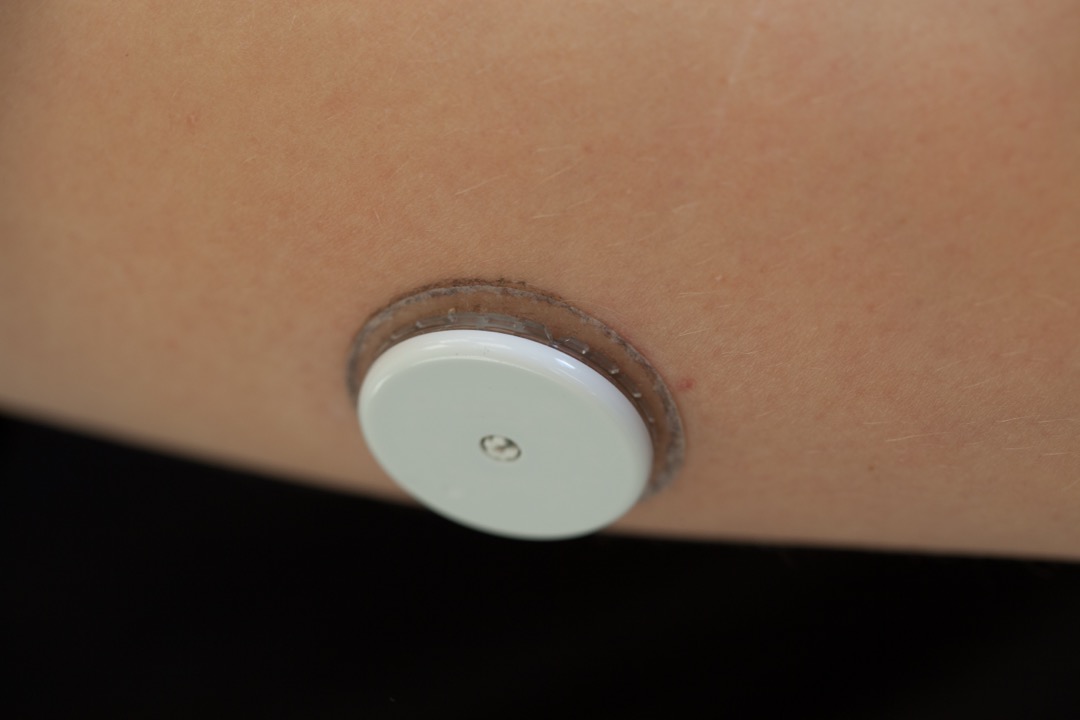
For most of the last two decades, wearing a glucose sensor meant having diabetes and a prescription. That changed in 2024, when the FDA cleared the first continuous glucose monitors for sale directly to consumers. You can now buy a sensor on Amazon, apply it in your kitchen, and watch your glucose respond to breakfast in near real time, with no appointment and no diagnosis.
What has not changed is how narrow the over-the-counter market actually is. Most published rankings of the best continuous glucose monitors lead with the Dexcom G7 and the FreeStyle Libre 3 Plus, and both of those require a prescription you cannot get from a shopping cart. Strip out everything you cannot legally buy without a doctor and the category collapses to two devices: Abbott’s Lingo and Dexcom’s Stelo. Everything below is one of those two, in the pack sizes Amazon actually stocks.
I have written this guide around that reality rather than around the devices that make a list look longer. If you are here because you take insulin and want cheaper sensors, skip to the safety section, because the honest answer is that none of these are for you. If you are here out of metabolic curiosity, or because a physician mentioned prediabetes at your last visit, this is a genuinely useful category and the choice is simpler than it looks. For finger-stick meters and test strips, which remain the right tool for a great many people, see our guide to the best glucose monitors.
| Product | Price | Buy |
|---|---|---|
| Lingo Continuous Glucose Monitor (CGM) 2-Pack, 24/7 Glucose Tracking by AbbottBest Overall | $95.00 | View on Amazon |
| Lingo Continuous Glucose Monitor (CGM), 1 Biosensor, 24/7 Glucose Tracking by AbbottBudget Pick | $48.97 | View on Amazon |
| Stelo Glucose Biosensor & App 2-Pack (Up to 15 Days Each), Made by DexcomPremium Pick | $98.88 | View on Amazon |
| Lingo Continuous Glucose Monitor (CGM) 4-Pack, 24/7 Glucose Tracking by AbbottRunner-Up | $169.99 | View on Amazon |
| Stelo 1-Pack Glucose Biosensor (15-Day)Runner-Up | $36.99 | View on Amazon |
Find the Best Continuous Glucose Monitor for Your Need
Jump straight to the comparison that matches why you are shopping.
- Overall best continuous glucose monitors
- Best over-the-counter continuous glucose monitors
- Lingo continuous glucose monitor
- Dexcom Stelo continuous glucose monitor
- Best continuous glucose monitor for type 2 diabetes
- Best continuous glucose monitor for prediabetes
- Best continuous glucose monitor for non-diabetics
- Cheapest continuous glucose monitor without insurance
- More use cases
Prescription vs Over-the-Counter Continuous Glucose Monitors
The distinction between these two tiers is not marketing. It is a regulatory line drawn around what the device is allowed to be used for, and it determines which one belongs on your arm.
Prescription continuous glucose monitors are cleared to diagnose and manage diabetes. They carry urgent high and low glucose alarms, report across a wide glucose range, integrate with insulin pumps in some cases, and are eligible for insurance coverage. The Dexcom G7, the FreeStyle Libre 3 Plus, the year-long implantable Eversense system, and the Medtronic pump-linked sensors all sit in this tier. They are, by most clinical measures, better devices. They are also unavailable without a prescription, which is why you will not find them below.
Over-the-counter sensors are cleared as wellness and general-insight devices for adults 18 and over who do not take insulin. They have no urgent alarms, report across a narrower glucose range, and are cash-pay or funded through an FSA or HSA. They are excellent at showing you patterns. They are deliberately not built to catch an emergency, and Abbott and Dexcom both say so plainly in their own labeling.
The practical test is simple. If a wrong reading could lead to a wrong dose, you need the prescription tier and a clinician. If a wrong reading just means a slightly misleading chart, the over-the-counter tier is fine.
How We Chose These Continuous Glucose Monitors
Every device here was verified as genuinely purchasable on Amazon at the time of writing, with a real listing, a working checkout, and confirmed stock. That sounds like a low bar and it is not: several sensor listings on Amazon are grey-market repackages with obfuscated brand names, generic manufacturer fields, and specification tables that make no sense for a biosensor. Those were excluded regardless of price.
We then ranked on published accuracy, wear time, warm-up duration, app capability, and the true cost per sensor rather than the sticker price of the pack. Sensors were compared on manufacturer-published MARD figures rather than on marketing language about precision.
One thing deserves stating up front, because it looks alarming in the comparison table and no other guide addresses it. Both Lingo and Stelo sit at roughly three stars on Amazon despite selling in very high volume. That is unusually low for a best-seller, it is not a data error, and it reflects genuine and recurring complaints about accuracy variance against finger-stick readings, occasional early sensor failure, and Bluetooth pairing trouble. I have not dressed that up. These are useful devices with real and well-documented rough edges, and knowing that before you buy is worth more than a reassuring number.
Best Continuous Glucose Monitors Overall
Five listings, two devices. The reviews below cover each listing in full, and the use-case sections that follow point you at the right one for a specific situation.
1. Lingo Continuous Glucose Monitor 2-Pack: Best Overall
Abbott’s Lingo is the sensor most people should start with, and the two-sensor pack is the tier that makes sense for a first real attempt. Two 14-day biosensors give you a month of continuous data, which is roughly the minimum needed to separate a genuine pattern from an interesting Tuesday. A single day of glucose data is entertaining. A month of it is the point at which people notice that their usual breakfast behaves differently from the one they eat on weekends.
The hardware lineage matters here. Lingo is built on the same FreeStyle Libre sensor platform Abbott uses in its prescription monitors, so the applicator, the adhesive, and the sensing chemistry are not a first-generation consumer experiment. Application is genuinely painless for most people, which is the single most common positive across the review pool and the thing most first-time buyers are anxious about.
The honest caveat is accuracy. Lingo’s published figures are noticeably worse than Abbott’s own prescription sensors, and a substantial number of reviewers report readings that sit low against a finger-stick meter. For pattern-spotting that gap is tolerable. If it would bother you, the Stelo pick below is the better fit.

Lingo Continuous Glucose Monitor (CGM) 2-Pack, 24/7 Glucose Tracking by Abbott
by Abbott
The best balance of commitment and cost in a two-device category: a full month of continuous data from the official Abbott listing, at the lowest cost per sensor Lingo offers.
Pros
- Two 14-day biosensors cover a full month of continuous tracking, which is the shortest window in which most people can see a repeatable pattern rather than a single interesting day
- Built on Abbott's FreeStyle Libre sensor platform, the same hardware lineage used in the company's prescription continuous glucose monitors, rather than a newly engineered consumer-only sensor
- The spring-loaded applicator is the most consistently praised part of the product across the review pool, with users repeatedly describing application as painless and the sensor as unnoticeable during normal wear
- Sold and shipped by Amazon directly rather than through a third-party reseller, which matters for a temperature-sensitive biosensor with a dated shelf life
Cons
- Published accuracy is meaningfully worse than Abbott's own prescription sensors, and a substantial share of reviewers report readings that run low against a finger-stick meter
- The companion app does not export to third-party nutrition trackers, so food logging has to happen inside Lingo or not at all
- Amazon pools reviews across every Lingo pack size, so the rating reflects the sensor platform rather than this specific listing
2. Lingo Continuous Glucose Monitor, 1 Biosensor: Budget Pick
This is the cheapest way to answer the only question that actually matters before you spend real money: does seeing your glucose in real time change anything about what you eat? For a surprising number of people the answer is no, and finding that out for the cost of a single sensor is a much better outcome than finding it out two months into a four-pack.
The sensor itself is identical to the ones in the larger packs. Same 14-day wear, same warm-up, same accuracy, same app. Nothing is downgraded. Fourteen days also spans two weekends, which is where most people find their genuinely surprising readings, because weekday eating tends to be more uniform than we think and weekend eating tends to be less so.
The catch is worth being blunt about, because it runs against intuition: this is the cheapest Lingo listing to buy and the most expensive one per sensor. It is the right first purchase and the wrong ongoing one.

Lingo Continuous Glucose Monitor (CGM), 1 Biosensor, 24/7 Glucose Tracking by Abbott
by Abbott
The lowest-commitment entry point into continuous glucose monitoring, and the right first purchase for anyone who is not yet sure the data will change anything.
Pros
- The lowest total outlay of any over-the-counter continuous glucose monitor sold on Amazon, which makes it the only genuinely low-risk way to find out whether wearing a sensor changes your behavior at all
- Identical sensor hardware, wear time, and accuracy profile to the larger Lingo packs, so nothing about the experience is downgraded relative to the multi-sensor listings
- Fourteen days is long enough to capture both weekday and weekend eating patterns, which is where most people find their genuinely surprising readings
- Sold and shipped by Amazon on the official Abbott listing rather than repackaged by a reseller
Cons
- This is the most expensive Lingo option on a per-sensor basis, so it is the cheapest way to start and the worst way to continue
- A single sensor gives you no overlap, so there is a gap in data between this sensor ending and any replacement warming up
- Carries the same accuracy caveats and the same shared review pool as every other Lingo pack size
3. Stelo Glucose Biosensor 2-Pack: Upgrade Pick
Stelo was the first continuous glucose monitor the FDA ever cleared for over-the-counter sale, and it remains the more clinically framed of the two. Its published accuracy is the best available without a prescription, its warm-up is about half of Lingo’s, and its sensors run 15 days plus a grace period, which means two of them cover a calendar month exactly rather than leaving you two days short.
The feature that genuinely separates it is Dexcom Clarity. Stelo data exports into the same trend-report format clinicians already read from prescription Dexcom users, so if there is any prospect of a physician looking at this data, you can hand them something familiar rather than a wellness app’s habit score. For a reader whose doctor has raised prediabetes, that is not a small difference.
It costs more per sensor than Lingo, and a recurring minority of reviewers report sensors failing before the 15-day mark with slow support resolution. Those complaints are real and they are the reason this sits as the upgrade pick rather than the outright winner.
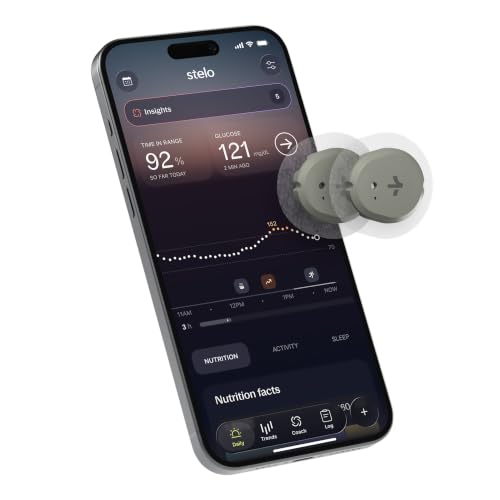
Stelo Glucose Biosensor & App 2-Pack (Up to 15 Days Each), Made by Dexcom
by Dexcom
The most clinically credible sensor available without a prescription, and the one to choose when the number matters more than the price.
Pros
- The lowest published mean absolute relative difference in the over-the-counter category, which makes it the most defensible choice when the reading itself has to be trustworthy
- Dexcom Clarity integration lets you export and share trend reports with a physician, the only device here that supports a clinician handoff
- Fifteen-day wear plus a 12-hour grace period means two sensors cover a full 30 days exactly, with no awkward gap at the end of the month
- Warm-up is roughly half of Lingo's, so you start collecting usable data the same morning you apply it rather than after lunch
Cons
- Costs meaningfully more per sensor than Lingo, which is a real difference over a year of continuous wear
- A recurring minority of reviewers report sensors failing well before the 15-day mark, and support resolution is commonly described as slow
- Dexcom does not sell a single-sensor pack, so the smallest official commitment is a full month
4. Lingo Continuous Glucose Monitor 4-Pack
Once you already know that Lingo works for you and that you actually look at the data, the four-sensor pack is the sensible next tier. Roughly two months of uninterrupted wear is long enough to run a real experiment: change something about how you eat or when you walk, and see whether your glucose response moved in a way a single month could not have told you apart from noise.
The practical argument for this tier is continuity rather than savings. The most common reason people abandon continuous monitoring is not disillusionment, it is a supply gap, where one sensor ends, the reorder takes a few days, and the habit quietly dies. Fewer reorder events means fewer chances for that to happen.
Do not buy this expecting a bulk discount. The per-sensor cost is identical to the 2-pack, so the only thing you are buying is convenience.

Lingo Continuous Glucose Monitor (CGM) 4-Pack, 24/7 Glucose Tracking by Abbott
by Abbott
The right tier once you already know Lingo works for you, sized for a genuine two-month experiment rather than a first look.
Pros
- Roughly two months of uninterrupted wear, which is long enough to test whether a dietary or exercise change actually moved your glucose response rather than your mood
- Exactly the same cost per sensor as the 2-pack, so nothing is lost by buying this tier instead of reordering twice
- Fewer reorder events means fewer gaps between sensors, which is the most common reason people abandon continuous monitoring early
- Official Abbott listing sold and shipped by Amazon
Cons
- There is no bulk discount at this tier, so the only thing you gain over two separate 2-packs is convenience
- Sensors carry a dated shelf life, so buying further ahead than you will realistically wear is wasteful
- Same accuracy profile and shared review pool as every other Lingo listing
5. Stelo 1-Pack Glucose Biosensor
Dexcom does not sell a single-sensor Stelo pack on Amazon. Its own listing starts at two. This third-party listing is the only way to buy one Stelo sensor, which makes it genuinely useful for a reader who wants to test the Dexcom app and the adhesive on their own skin before committing to a full month.
It is a genuine Stelo-branded product with the same 15-day wear, the same short warm-up, and the same accuracy profile as the official pack. What differs is who is selling it. This comes from a third-party reseller rather than Amazon or Dexcom directly, which matters more for a dated biosensor than it would for a phone case, and it costs more per sensor than the official two-pack.
Treat it as a one-time trial rather than a supply source. The review count is only a few dozen, which is far too small a sample to read anything into the star rating in either direction.

Stelo 1-Pack Glucose Biosensor (15-Day)
by Stelo by Dexcom
The only single-sensor Stelo option on Amazon, sold through a third-party listing at a per-sensor premium over the official pack.
Pros
- The only route to a single Stelo sensor, because Dexcom's own Amazon listing starts at a two-sensor pack
- Fifteen days of wear from one sensor, the longest single-sensor duration in this guide
- Genuine Stelo-branded product with the same warm-up, app, and accuracy profile as the official pack
- Lets you test the Dexcom app and adhesive on your own skin before committing to a full month
Cons
- Sold by a third-party reseller rather than Amazon or Dexcom directly, which is a real consideration for a dated biosensor
- Costs more per sensor than the official 2-pack, so it is only rational as a one-time trial
- Only a few dozen reviews, far too small a sample to read anything into the star rating
Best Over-the-Counter Continuous Glucose Monitors
This is the comparison the whole category comes down to. Both are FDA-cleared for sale without a prescription to adults who do not use insulin, both are sold directly by Amazon, and the choice between them is a straightforward trade of accuracy against running cost.
| Product | Price | Buy |
|---|---|---|
| Lingo Continuous Glucose Monitor (CGM) 2-Pack, 24/7 Glucose Tracking by AbbottBest OTC value Lower cost per sensor and a coaching app built around changing habits rather than reporting numbers | $95.00 | View on Amazon |
| Stelo Glucose Biosensor & App 2-Pack (Up to 15 Days Each), Made by DexcomBest OTC accuracy The best published accuracy available without a prescription, plus a clinician-facing data export | $98.88 | View on Amazon |
Lingo Continuous Glucose Monitor
Lingo is Abbott’s consumer biosensor, and the practical question for anyone searching it by name is not whether to buy it but which pack to buy. All three tiers below are the identical sensor. The only variables are how long a runway you want and how much you are willing to commit before you know it suits you.
| Product | Price | Buy |
|---|---|---|
| Lingo Continuous Glucose Monitor (CGM) 2-Pack, 24/7 Glucose Tracking by AbbottBest Lingo pack for most people A full month of data at the lowest per-sensor price Lingo offers, which is the sensible default | $95.00 | View on Amazon |
| Lingo Continuous Glucose Monitor (CGM), 1 Biosensor, 24/7 Glucose Tracking by AbbottCheapest way to try Lingo One sensor and two weeks, enough to find out whether the data changes your behavior at all | $48.97 | View on Amazon |
| Lingo Continuous Glucose Monitor (CGM) 4-Pack, 24/7 Glucose Tracking by AbbottBest Lingo pack for two months Two months of continuity for readers who already know Lingo has stuck, at the same price per sensor | $169.99 | View on Amazon |
Dexcom Stelo Continuous Glucose Monitor
Stelo is the more clinically oriented option and the first sensor of any kind the FDA cleared for over-the-counter sale. The official Dexcom listing is a two-sensor pack, so the single-sensor route runs through a third-party seller at a premium.
| Product | Price | Buy |
|---|---|---|
| Stelo Glucose Biosensor & App 2-Pack (Up to 15 Days Each), Made by DexcomBest Stelo pack overall Dexcom's official listing, sold by Amazon, and two sensors cover a calendar month exactly | $98.88 | View on Amazon |
| Stelo 1-Pack Glucose Biosensor (15-Day)Only single-sensor Stelo option A third-party listing at a per-sensor premium, worth it only as a one-time trial of the platform | $36.99 | View on Amazon |
Best Continuous Glucose Monitor for Type 2 Diabetes
One qualifier governs this entire section. These sensors are cleared for adults with type 2 diabetes who do not take insulin. If insulin is part of your regimen, you need a prescription monitor with alarms, and no over-the-counter sensor is an acceptable substitute at any price.
For non-insulin type 2 management, the argument favors Stelo, because the data is exportable in a format your physician can actually read and act on.
| Product | Price | Buy |
|---|---|---|
| Stelo Glucose Biosensor & App 2-Pack (Up to 15 Days Each), Made by DexcomBest for type 2 not on insulin Clarity trend reports are the same format clinicians already read, which makes the data useful at your next appointment | $98.88 | View on Amazon |
| Lingo Continuous Glucose Monitor (CGM) 2-Pack, 24/7 Glucose Tracking by AbbottBest lower-cost alternative A cheaper way to track meal responses if your physician is not going to review the data directly | $95.00 | View on Amazon |
Best Continuous Glucose Monitor for Prediabetes
Prediabetes is where these devices are genuinely at their most useful. Glucose is elevated but not yet in the diabetic range, nothing hurts, and there is usually no daily feedback of any kind. A sensor supplies exactly the missing signal, and the changes that help most at this stage are dietary and behavioral rather than pharmaceutical.
| Product | Price | Buy |
|---|---|---|
| Stelo Glucose Biosensor & App 2-Pack (Up to 15 Days Each), Made by DexcomBest for sharing data with a clinician If your doctor flagged prediabetes, bring them a Clarity report rather than a screenshot of an app score | $98.88 | View on Amazon |
| Lingo Continuous Glucose Monitor (CGM) 2-Pack, 24/7 Glucose Tracking by AbbottBest for everyday pattern spotting Lingo's coaching framing is built around changing habits, which is the actual intervention at this stage | $95.00 | View on Amazon |
| Lingo Continuous Glucose Monitor (CGM), 1 Biosensor, 24/7 Glucose Tracking by AbbottBest short trial Two weeks is enough to see whether the feedback loop motivates you before spending more | $48.97 | View on Amazon |
Best Continuous Glucose Monitor for Non-Diabetics
If you have no diagnosis and are simply curious about your metabolism, Lingo is the device designed for you. It is marketed and built as a wellness sensor rather than a medical one, and its app is oriented toward habit change rather than clinical reporting.
One expectation to set before you buy. A glucose rise after eating is normal, and seeing one does not mean something is wrong. More on that below.
| Product | Price | Buy |
|---|---|---|
| Lingo Continuous Glucose Monitor (CGM) 2-Pack, 24/7 Glucose Tracking by AbbottBest for metabolic curiosity Built explicitly for non-diabetic wellness tracking, with coaching rather than clinical framing | $95.00 | View on Amazon |
| Lingo Continuous Glucose Monitor (CGM), 1 Biosensor, 24/7 Glucose Tracking by AbbottBest one-off experiment The cheapest possible way to satisfy the curiosity without committing to a supply | $48.97 | View on Amazon |
| Stelo Glucose Biosensor & App 2-Pack (Up to 15 Days Each), Made by DexcomBest if accuracy matters most Choose this if the precision of each individual number would otherwise nag at you | $98.88 | View on Amazon |
Cheapest Continuous Glucose Monitor Without Insurance
None of these are covered by insurance, because none of them require a prescription. That makes cost per sensor the number to watch, and it is not the same as the cheapest listing. Buying the smallest pack minimizes what you spend today and maximizes what you spend per day of wear.
| Product | Price | Buy |
|---|---|---|
| Lingo Continuous Glucose Monitor (CGM), 1 Biosensor, 24/7 Glucose Tracking by AbbottLowest total cost to start One sensor, two weeks, and the smallest possible amount at risk if you decide it is not for you | $48.97 | View on Amazon |
| Lingo Continuous Glucose Monitor (CGM) 2-Pack, 24/7 Glucose Tracking by AbbottLowest cost per sensor The best ongoing value in the category once you have decided to keep wearing one | $95.00 | View on Amazon |
| Stelo 1-Pack Glucose Biosensor (15-Day)Cheapest single Stelo sensor The only way to try Stelo without buying a full month, though it costs more per sensor than the official pack | $36.99 | View on Amazon |
Best Continuous Glucose Monitors by Use Case
A few narrower situations, and the listing that fits each one.
| Product | Price | Buy |
|---|---|---|
| Lingo Continuous Glucose Monitor (CGM) 4-Pack, 24/7 Glucose Tracking by AbbottBest for the longest supply runway The largest pack Abbott still sells, and long enough to test whether a change to diet or exercise genuinely moved your glucose response | $169.99 | View on Amazon |
| Stelo 1-Pack Glucose Biosensor (15-Day)Best for testing the Dexcom app first One sensor is enough to judge whether Dexcom's app and adhesive suit you before committing | $36.99 | View on Amazon |
| Lingo Continuous Glucose Monitor (CGM), 1 Biosensor, 24/7 Glucose Tracking by AbbottBest for a two-week reset A short, self-contained block for anyone wanting to recalibrate their eating after a holiday or a slip | $48.97 | View on Amazon |
What an Over-the-Counter Sensor Cannot Do
This is the most important section on the page, and it is the one most buying guides leave out.
Neither Lingo nor Stelo has an urgent low-glucose alarm. That is not an oversight or a cost-saving measure, it is a consequence of what these devices are cleared to do. A prescription continuous glucose monitor is a safety device: it is validated to detect a dangerous low and wake you up. An over-the-counter sensor is an information device, and it will show you a low reading only if you happen to open the app and look.
The consequence is specific. If you take insulin, a sensor reading consistently low while you sleep is not a minor inaccuracy, it is a dosing error with nothing to interrupt it. The same reasoning applies to anyone with a history of problematic hypoglycemia, whether or not insulin is involved. Both situations call for a prescription monitor obtained through a clinician. If cost is what stands in the way, that is a conversation to have with your physician, not a reason to substitute a wellness sensor.
These devices also do not diagnose diabetes. A run of high readings is a reason to book an appointment and get a proper HbA1c, not a diagnosis in itself.
How Accurate Are These Sensors, Really
Accuracy is published as mean absolute relative difference, or MARD, which is the average percentage gap between the sensor and a laboratory blood measurement. Stelo publishes roughly 8.3 percent and Lingo roughly 9 percent. Abbott’s prescription FreeStyle Libre 3 sits near 7.9 percent, so the over-the-counter tier is close to but not equal to the prescription tier.
What that means in practice: a reading of 120 at a 9 percent MARD commonly corresponds to a true value somewhere between about 109 and 131, and sometimes further out. That is entirely adequate for noticing that one breakfast spikes you and another does not. It is not adequate for a medication decision.
Two other effects surprise people. Interstitial fluid lags blood by several minutes, so during a fast rise or fall the sensor will read behind a finger-stick and the gap is physiology rather than a fault. And accuracy is typically at its worst in the first 24 hours after application, so a new sensor disagreeing with your meter on day one is common and usually settles.
Certain substances can also skew readings, including high-dose vitamin C, and for some sensor chemistries acetaminophen and hydroxyurea. If you take any of these regularly, expect occasional readings that do not match how you feel.
Why Your Readings Might Look Alarming When Nothing Is Wrong
This is the most common experience among people wearing a sensor for the first time without a diagnosis, and almost nobody warns them about it.
Glucose is supposed to rise after you eat. In people without diabetes, a post-meal peak into the 140s is ordinary, particularly after a carbohydrate-heavy meal, and it should drift back toward baseline within roughly two hours. Seeing that curve for the first time on a screen is startling precisely because you have never been able to see it before, not because it is abnormal.
What is worth paying attention to is the pattern rather than any single number: readings that stay elevated for hours rather than returning to baseline, fasting values that are consistently high morning after morning, or a general upward drift across several weeks. Those are worth an appointment and an HbA1c test.
What is not worth doing is skipping meals to keep a line flat. It is a genuinely reported response among new sensor users, and it trades a normal physiological curve for a real nutritional problem. If you notice yourself eating less to make an app happier, that is the moment to take the sensor off.
Keeping a Sensor On for the Full Wear Period
Early sensor loss is the most common practical complaint in both review pools, and much of it is preventable. Abbott’s own reported data indicates a meaningful share of Lingo sensors do not reach the full 14 days, so some attrition is expected rather than exceptional.
Apply to the back of the upper arm, which is the only site either manufacturer validates. Clean the skin with alcohol and let it dry completely, because adhesive fails on residual moisture and on lotion more often than on anything else. Avoid a spot where a bag strap, a seatbelt, or a mattress will catch the edge, and give the adhesive a few hours before swimming or a long shower.
If a sensor fails early, both manufacturers operate replacement processes, and it is worth using them rather than absorbing the loss. Adhesive overpatches designed for these sensors are inexpensive and solve most edge-lift problems for people who exercise heavily or have oily skin.
Buyer's Guide
Over-the-counter continuous glucose monitoring is a two-brand category, so choosing well is less about sorting a long shortlist and more about getting five specific decisions right. The factors below are the ones that actually change which sensor belongs on your arm.
Prescription Status and Who These Sensors Are Actually For
This is the first filter and the one most buyers get wrong. Every sensor in this guide is cleared for sale without a prescription to adults 18 and over who are not taking insulin. That last clause is not fine print. If you take insulin, you need a prescription continuous glucose monitor with high and low alarms, prescribed and followed by a clinician, because an over-the-counter sensor is not validated to catch a dangerous low and will not wake you up when one happens. The prescription devices that dominate most published rankings, including the Dexcom G7, the FreeStyle Libre 3 Plus, and the implantable Eversense system, are not reviewed here because they cannot legally be sold without a prescription. If you have diagnosed diabetes and take insulin, this guide is not your starting point, and your physician is.
Accuracy and What a MARD Figure Means
Sensor accuracy is published as mean absolute relative difference, or MARD, which is the average percentage gap between the sensor and a laboratory blood measurement. Lower is better. Stelo publishes roughly 8.3 percent, Lingo roughly 9 percent, and for context Abbott's prescription FreeStyle Libre 3 publishes around 7.9 percent. A 9 percent MARD on a reading of 120 means the true value is commonly somewhere around 109 to 131, and occasionally further out than that. That range is perfectly adequate for spotting that a particular breakfast spikes you and a different one does not. It is not adequate for making a medication decision, which is exactly why neither manufacturer permits you to use it for one.
Wear Time, Warm-Up, and the Gaps Between Sensors
Lingo sensors run 14 days and take roughly an hour to warm up. Stelo sensors run 15 days plus a 12-hour grace period and warm up in about 30 minutes. Two practical consequences follow. First, two Stelo sensors cover a calendar month exactly while two Lingo sensors leave you two days short, which quietly matters if you are trying to hold a continuous record. Second, Abbott's own reported data indicates a meaningful minority of Lingo sensors do not survive the full 14 days, so plan for the occasional short sensor rather than treating the advertised figure as guaranteed.
App Ecosystem and Whether You Can Share Data With a Doctor
The two platforms are built for different readers. Lingo is a coaching app that scores your glucose responses and nudges habit change, and it does not export to third-party nutrition trackers or offer a clinician-facing report. Stelo connects to Dexcom Clarity, which produces the same style of trend report clinicians already read from prescription Dexcom users, so you can hand a physician something they recognize. If you are tracking out of general metabolic curiosity, Lingo's framing is the more useful one. If there is any chance a doctor will want to look at this data, choose Stelo.
Pack Size, Subscriptions, and the Cost Trap Nobody Mentions
Lingo's 2-pack and 4-pack cost exactly the same per sensor. Buying the largest pack saves you nothing beyond fewer reorders, which is the opposite of how bulk pricing usually works and worth knowing before you commit several months of spending. The single-sensor Lingo listing is the outlier in the other direction: it is the cheapest way to start and the most expensive way per sensor to continue. Stelo's official listing is a 2-pack only, and the single-sensor Stelo comes from a third-party reseller at a per-sensor premium. Neither platform requires a subscription to use the sensors you buy on Amazon: you purchase biosensors outright and the companion app is free. Abbott sells an optional paid coaching tier alongside Lingo, and buying directly from the manufacturer rather than Amazon can enroll you in auto-renewing plans, which is the source of most subscription confusion in the reviews. The rational path for most people is a single Lingo sensor first, then the 2-pack tier if the data changed anything.
FSA and HSA Eligibility
Both platforms are generally eligible for flexible spending and health savings account funds as over-the-counter medical devices, which effectively discounts them by your marginal tax rate and is the single largest saving available in this category. Keep the order confirmation as documentation. Eligibility rules vary by plan administrator, and a sensor bought purely for wellness curiosity rather than a documented condition is the case most likely to be questioned, so confirm with your plan before assuming coverage rather than after.
How to Choose the Best Continuous Glucose Monitor
Start with the question that eliminates most of the confusion: do you take insulin? If the answer is yes, stop here and speak to your physician about a prescription monitor. Nothing in this guide is an appropriate substitute, and the price difference is not the relevant consideration.
If the answer is no, the decision is a two-way trade. Choose Stelo if the accuracy of each individual reading matters to you, if a doctor may review the data, or if you want the shorter warm-up and the tidier 15-day cycle. Choose Lingo if you want the lower running cost and an app built around changing habits rather than reporting numbers.
Then choose a pack size on commitment rather than on price, and remember the quirk that the multi-packs cost the same per sensor. Start with one sensor, and scale up only once you know you actually look at the data. Compare against a standard blood glucose meter if you want to sanity-check readings, and if you are managing diabetes more broadly, our guides to diabetic socks and blood pressure monitors cover the other two devices that matter most for long-term complications.
Final Verdict
The Lingo 2-pack is the best continuous glucose monitor for most people buying without a prescription. It gives you a full month of data, it comes from Abbott’s established sensor platform, and it costs less per sensor than anything else here.
Buy the single Lingo biosensor first if you are unsure, because it is the cheapest way to discover whether the data changes your behavior, and most of the value of this category is decided in those first two weeks.
Choose the Stelo 2-pack if accuracy is the priority or if a physician will be reading the results. It has the best published accuracy available without a prescription and the only clinician-facing export in the category.
One closing note, in my capacity as a physician rather than a reviewer. These sensors are good at showing you something you have never seen before, and that novelty is genuinely motivating for a few weeks. The people who get lasting value from them are the ones who use that window to change something specific and durable, then stop wearing the sensor. If you take insulin or have a history of hypoglycemia, please use a prescription monitor with alarms instead, and involve your doctor in the decision.
Frequently Asked Questions
Can I just buy a continuous glucose monitor without a prescription?
What is the cheapest CGM I can get without insurance?
Is the Lingo glucose monitor accurate?
What is the difference between FreeStyle Libre and Lingo?
Can I use an over-the-counter CGM if I take insulin or have hypoglycemia?
Is Lingo better than Dexcom?
Related Articles
About the Reviewer

Dr. David Taylor, MD, PhD
Drexel University College of Medicine (MD), Indiana University School of Medicine (PhD)
Dr. David Taylor is a licensed physician and medical researcher who founded BestRatedDocs in 2016. With an MD from Drexel University and a PhD from Indiana University School of Medicine, he combines clinical expertise with a passion for health technology to provide evidence-based product recommendations. Dr. Taylor specializes in health informatics and regularly evaluates medical devices, diagnostic equipment, and therapeutic products to help healthcare professionals and patients make informed decisions.