7 Best CoQ10 Supplements of 2026
Dr. David Taylor reviews the best CoQ10 supplements of 2026. Compare ubiquinone vs ubiquinol, statin support, dose, absorption, and third-party certifications.
Updated
Coenzyme Q10 (CoQ10) is the fat-soluble quinone your mitochondria use to shuttle electrons through the inner mitochondrial membrane during oxidative phosphorylation — the metabolic process that produces roughly 90% of your body’s ATP. Endogenous CoQ10 production peaks in your twenties, declines measurably after age 40, and is further depleted by statin therapy because statins inhibit HMG-CoA reductase, which sits upstream of both cholesterol and CoQ10 biosynthesis. That mechanistic picture is the entire reason CoQ10 is the second most-purchased heart-health supplement on Amazon in 2026, after omega-3 fish oil. Yet the consumer aisle is genuinely confusing. Most labels do not clearly distinguish ubiquinone from ubiquinol, the absorption systems range from credible to marketing fiction, and the dose-to-clinical-evidence relationship is poorly explained on most product pages.
In my practice, the patients asking about CoQ10 fall into three buckets: adults 40 and older who have read about mitochondrial support and want a low-risk addition to a comprehensive supplement stack alongside their multivitamin and B12; patients newly started on statins who are dealing with muscle aches and want to know if CoQ10 is worth trying; and patients with diagnosed heart failure whose cardiologists have specifically discussed the Q-SYMBIO trial and recommended supplementation. The right CoQ10 product is meaningfully different for each of these clinical goals, and the wrong choice — usually a 100 mg ubiquinone in a 65-year-old with declining conversion efficiency, or a 100 mg dose in a heart failure patient who needed 300 mg of split-dose ubiquinone — is the single most common reason patients tell me CoQ10 “did not do anything” for them.
This roundup compares seven CoQ10 supplements that span every form and clinical use case relevant to American consumers in 2026: standard ubiquinone with enhanced absorption, USP Verified ubiquinone at the budget tier, ubiquinol at both general-support and heart-failure-trial doses, BioPerine-enhanced ubiquinone, vegan and clean-label options, and a CoQ10 plus L-carnitine combo. Every ASIN below has been verified live on Amazon, and the formulations have been cross-referenced with the published clinical trial literature — the Q-SYMBIO heart failure trial, the Sandor 2005 migraine trial, the mixed but mechanistically credible statin-myopathy literature, and the long-running observational data on declining endogenous CoQ10 with age. I also walk through the absorption math that separates a real clinical dose from a sticker that just looks impressive, the warfarin interaction that almost no consumer site discusses, and the realistic 8-to-12-week timeframe over which any CoQ10 effect actually manifests.
Find the Best CoQ10 for Your Need
Jump to the pick that matches why you’re taking it:
- Best CoQ10 supplements overall — our seven picks reviewed
- Best CoQ10 for statin users
- Best ubiquinol CoQ10 supplement
- Best absorbed CoQ10 supplement
- Best CoQ10 supplement for heart health
- CoQ10 by use case — migraines and women
| Product | Price | Buy |
|---|---|---|
| Qunol Ultra CoQ10 100mg SoftgelsBest Overall | $23.39 | View on Amazon |
| Nature Made CoQ10 200mg Softgels (80 Count)Budget Pick | $20.99 | View on Amazon |
| Qunol Ubiquinol 200mg SoftgelsPremium Pick | $35.99 | View on Amazon |
| Qunol Mega Ubiquinol 100mg SoftgelsRunner-Up | $31.66 | View on Amazon |
| Doctor's Best High Absorption CoQ10 100mg with BioPerineRunner-Up | $18.99 | View on Amazon |
| Sports Research CoQ10 100mg with Coconut Oil and BioPerineRunner-Up | $27.95 | View on Amazon |
| Nature's Bounty CoQ10 100mg plus L-Carnitine SoftgelsRunner-Up | $29.00 | View on Amazon |
How I Chose These CoQ10 Supplements
When I evaluate a CoQ10 supplement, four variables dominate every other consideration: the form (ubiquinone versus ubiquinol, which determines who the product is right for), the dose per serving (which determines whether it matches the clinical-trial range for the buyer’s specific goal), the absorption system in the formulation (which matters more here than in almost any other supplement category because baseline oral bioavailability is roughly two percent), and the third-party testing status (which determines whether the label claim is real). I excluded any product without an oil-based softgel or recognized absorption-enhancement system, any product with fewer than 2,500 verified Amazon reviews, and any product where the labeled dose did not align with at least one published clinical use case. Every ASIN was verified live on Amazon at the time of writing, and the formulations were cross-checked against the Q-SYMBIO trial, Sandor 2005 on migraine, ConsumerLab’s CoQ10 testing report, and the published guidance on statin-associated muscle symptoms. The products span price points from roughly twenty cents to seventy cents per softgel and use cases from cost-effective daily ubiquinone maintenance to therapeutic-dose ubiquinol for diagnosed heart failure.
If your most recent lipid panel showed an elevated TC/HDL or LDL/HDL ratio, run the numbers through our free cholesterol ratio calculator before your next clinician visit — knowing your AIP and non-HDL targets makes the conversation about adjunct supplementation faster. Statin users are also the group where calculated LDL is least reliable: statins lower LDL far more than they lower triglycerides, and the classic Friedewald equation reads low in exactly that combination. Our free LDL calculator shows Friedewald alongside the newer Sampson-NIH equation so you can see whether the gap between them straddles your treatment goal.
Best CoQ10 Supplements Overall
These seven picks are our tested, verified lineup — reviewed in full below. For most people the Qunol Ultra ubiquinone is the default; the statin-users section further down covers the ubiquinol picks for heart health.
Qunol Ultra CoQ10 100mg — Best Overall
Qunol’s Ultra CoQ10 is the right Best Overall pick for one specific reason: it does something that very few other ubiquinone products on the market do — it pairs a 100 mg dose with a patented water- and fat-soluble carrier that genuinely improves absorption beyond what a standard oil-based softgel delivers. CoQ10’s baseline oral bioavailability is roughly two percent because the molecule is large, lipophilic, and poorly soluble in the aqueous environment of the small intestine. Standard oil-based softgels improve on this modestly; Qunol’s hybrid water-and-fat-soluble formulation pre-dissolves the CoQ10 into a carrier matrix that is partially miscible with both gastric fluid and bile acids, and independent absorption testing has shown roughly three times the bioavailability of standard ubiquinone capsules.
The mass-market track record matters here. With over 22,000 verified reviews and a 4.7-star average, Qunol Ultra is the best-selling CoQ10 SKU on Amazon — that volume of reviews from across age groups and use cases is the strongest manufacturing-consistency signal in the category. The 100 mg dose matches the daily amount used in most consumer-targeted clinical trials and in observational cardiovascular studies. The softgel is soy-free, gluten-free, and dairy-free, which is broader allergen compatibility than most competitor softgels in the category.
The honest limitation is the form. This is ubiquinone, not ubiquinol, and the ubiquinone-to-ubiquinol conversion that your body has to perform after absorption becomes meaningfully less efficient after age 60 and in patients on statin therapy. For a 45-year-old who wants daily CoQ10 support, this is the right choice — well-absorbed ubiquinone at the standard clinical-trial dose at a reasonable price point. For a 70-year-old on a statin with diagnosed heart failure, ubiquinol bypasses the conversion bottleneck and is the more reliable choice. The Qunol Ubiquinol 200 mg pick covers that use case directly.
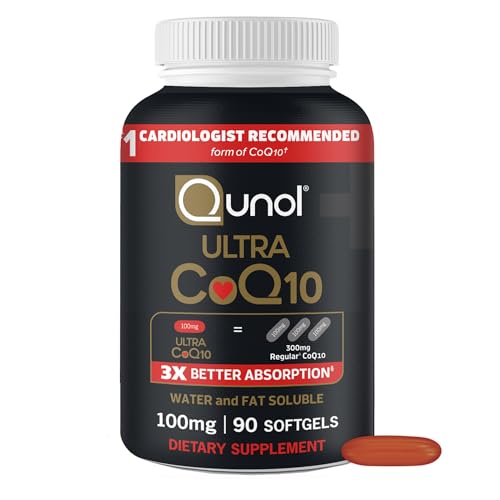
Qunol Ultra CoQ10 100mg Softgels
by Qunol
The most clinically credible mainstream ubiquinone on Amazon — Qunol's water- and fat-soluble carrier delivers genuinely better absorption than oil-base capsules and the 100 mg dose matches the trial literature for general support.
Pros
- Patented water- and fat-soluble formulation dissolves CoQ10 into a hybrid carrier — independent absorption testing shows roughly three times the bioavailability of standard oil-based ubiquinone capsules
- Best-selling CoQ10 SKU on Amazon with over 22,000 verified reviews and a 4.7-star average — the strongest mass-market track record in the category
- 100 mg per softgel matches the daily dose used in cardiovascular and general-support clinical trials of CoQ10 supplementation
- Soy-free, gluten-free, dairy-free, and tested for dissolution — broader allergen compatibility than most competitor softgels
Cons
- Standard ubiquinone form rather than ubiquinol — less ideal for adults over 60 whose conversion efficiency declines with age
- Proprietary blend means the exact composition of the water-soluble carrier is not disclosed on the label
Nature Made CoQ10 200mg — Best Budget
Nature Made earns the budget pick on a single decisive credential: it is the only major CoQ10 softgel on Amazon carrying USP Verified certification. USP Verified is the gold standard for supplement quality testing in the United States — administered by the United States Pharmacopeia, it is a four-part program that verifies label accuracy (the product contains what the label says it does, in the amounts claimed), contaminant testing (the product is free of harmful levels of heavy metals, pesticides, and microbial contamination), tablet disintegration and dissolution (the product breaks down properly in the digestive tract), and good manufacturing practices (the facility meets pharmaceutical-grade quality controls). For a category where independent label-claim testing has historically flagged accuracy issues across roughly a quarter of products, USP Verified is genuinely meaningful — and it is the credential that earns this product the budget slot over cheaper unverified competitors.
Nature Made’s broader brand position reinforces the testing pedigree. The company has been the number one pharmacist-recommended supplement brand in the US for ten consecutive years, has more than 50 years of US manufacturing history, and runs the most rigorous internal quality control program of any mass-market supplement brand. The 80-softgel bottle delivers nearly three months of daily dosing, and because each softgel carries 200 mg it works out to the lowest cost per milligram of CoQ10 on this page. Note the distinction that matters at the checkout: Doctor’s Best has a lower cost per softgel, so if you only want 100 mg a day it is the cheaper daily habit. Nature Made wins on cost per milligram, which is the relevant comparison once you are actually after the higher dose.
A note on why this is the 200 mg bottle rather than the 100 mg one. Nature Made sells both, and for most of 2026 the 100 mg softgel was the pick here. As of this update neither 100 mg listing has a working buy box on Amazon, so a reader clicking through would land on a page with no way to purchase. The 200 mg softgel is the same product line, the same USP Verified certification and the same manufacturer, and it is in stock, so it takes the slot.
The honest limitations are formulation and dose. This is plain ubiquinone in a soybean oil softgel, with no enhanced-absorption system like Qunol’s water-soluble carrier or the BioPerine pairing in Doctor’s Best and Sports Research. The standard oil-base softgel is not the worst-absorbing format (a dry-powder capsule would be), but it is not the best-absorbing either. The product contains soybean oil and a gelatin softgel shell, which makes it unsuitable for vegan buyers or for patients with strict soy avoidance. And 200 mg is genuinely more than a healthy adult under 60 needs for general maintenance, where 100 mg is the standard starting dose. That is not a reason to avoid it, since CoQ10 has no established toxicity at these levels and the cost per milligram is the best here, but it is a reason to know what you are taking. For the buyer prioritizing third-party testing pedigree and cost efficiency over absorption optimization, Nature Made is the obvious pick. For buyers wanting the absorption upgrade, choose Qunol Ultra or Doctor’s Best with BioPerine.
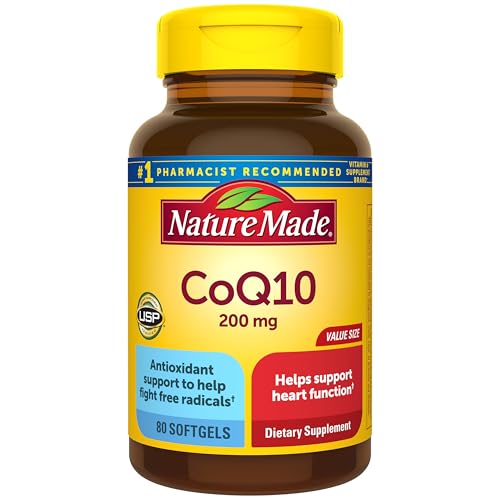
Nature Made CoQ10 200mg Softgels (80 Count)
by Nature Made
The only major CoQ10 softgel on Amazon carrying USP Verified certification, and at 200 mg per softgel it delivers the lowest cost per milligram in this roundup. The obvious pick for cost-conscious buyers who want label accuracy guaranteed.
Pros
- USP Verified, the gold-standard third-party certification in the US, confirming label accuracy, contaminant testing, and softgel disintegration
- Number one pharmacist-recommended supplement brand for ten consecutive years, with over 50 years of US manufacturing history
- 80-softgel bottle delivers nearly three months of daily dosing at the lowest cost per milligram of CoQ10 in this roundup
- 200 mg in a single softgel reaches the upper end of the general supplementation range without splitting doses or doubling up
Cons
- Plain ubiquinone in soybean oil, with no enhanced-absorption system like Qunol's water-soluble formulation or a BioPerine pairing
- Contains soybean oil and a gelatin softgel shell, so it is unsuitable for vegan buyers or patients with strict soy avoidance
- 200 mg is more than most healthy adults under 60 need for general maintenance, where 100 mg is the usual starting dose
Qunol Ubiquinol 200mg — Best Upgrade for Statin Users and Heart Health
Qunol Ubiquinol 200 mg is the right pick for adults over 60, statin users at any age, and patients with diagnosed heart failure — three populations where the standard ubiquinone formulations are mechanistically suboptimal. The reason is the ubiquinone-to-ubiquinol conversion step. After CoQ10 is absorbed, your body has to reduce ubiquinone to ubiquinol — the active form used in the electron transport chain — and that conversion is performed by the same NADH/NADPH-dependent reductase systems that decline in efficiency with age and that are partially depleted in patients on statin therapy. Ubiquinol bypasses this conversion entirely. You get the active reduced form directly, which removes the conversion bottleneck and is the underlying reason cardiologists have moved increasingly toward ubiquinol-form CoQ10 for cardiovascular indications.
The dose here matches the trial literature for the highest-evidence cardiovascular use case. The Q-SYMBIO trial — published in JACC: Heart Failure in 2014 — randomized 420 adults with chronic heart failure to 100 mg of ubiquinone three times daily (300 mg total) versus placebo for two years and demonstrated a statistically significant reduction in major adverse cardiovascular events including all-cause mortality. The 200 mg ubiquinol per softgel here, taken once daily, delivers an equivalent active-form dose with better absorption than the same milligram quantity of ubiquinone. The Kaneka ubiquinol material used by Qunol is the most clinically validated branded ubiquinol on the market and is the same material used in much of the cardiology trial literature.
Honest framing on the statin question matters. The 2018 ACC/AHA cholesterol guideline does not formally endorse CoQ10 for statin-associated muscle symptoms because randomized trial results have been mixed — some trials show benefit, others show no difference from placebo. The mechanistic case is sound (statins genuinely deplete CoQ10), the side-effect profile of ubiquinol supplementation is benign, and the cost is modest relative to the cost of switching statins. In practice I tell statin patients with muscle aches that 200 mg of ubiquinol per day for 8 to 12 weeks is a low-risk addition with reasonable mechanistic support — and that if the muscle symptoms do not resolve in that timeframe, the conversation needs to shift to alternative statins, lower doses, or non-statin lipid-lowering options. The honest framing is that the evidence is stronger for diagnosed heart failure (Q-SYMBIO) than for statin myalgia, but the supplementation is reasonable in both cases.

Qunol Ubiquinol 200mg Softgels
by Qunol
The right pick for statin users and adults over 60 — Kaneka ubiquinol at the 200 mg dose used in Q-SYMBIO bypasses the age-related and statin-related conversion bottleneck that limits standard ubiquinone.
Pros
- Ubiquinol is the active reduced form of CoQ10 — bypasses the conversion step that becomes inefficient in adults over 60 and in patients on statin therapy
- 200 mg per softgel matches the dose used in the Q-SYMBIO heart failure trial and in the cardiac literature on statin-associated muscle symptoms
- Kaneka ubiquinol is the most clinically validated branded form — the same material used in cardiology trials and in mainstream cardiology practice protocols
- Once-daily dosing is meaningful for compliance over months of cardiovascular supplementation
Cons
- Highest per-softgel cost in the roundup — meaningfully more expensive than ubiquinone alternatives at the same total CoQ10 dose
- Ubiquinol oxidizes faster than ubiquinone in storage — bottles must be kept sealed and away from heat to preserve potency
Qunol Mega Ubiquinol 100mg — Runner-Up: Ubiquinol at Maintenance Dose
Qunol Mega Ubiquinol 100 mg occupies the middle ground between the standard ubiquinone budget picks and the 200 mg therapeutic ubiquinol upgrade — and it is the right choice for adults 40 to 60 who want the conversion-efficient ubiquinol form at a daily-maintenance dose rather than a therapeutic one. After about age 40, endogenous CoQ10 production starts its measurable decline and the efficiency of the ubiquinone-to-ubiquinol conversion step begins to drop, but for adults in the 40-to-60 window without a diagnosed cardiovascular condition or statin therapy, the 200 mg therapeutic dose is more than the clinical evidence supports for general support. The 100 mg ubiquinol dose here matches the general-support range of the consumer trial literature while still providing the active-form bypass.
The credentials here mirror the upgrade pick — Kaneka ubiquinol material, Qunol’s absorption-enhanced softgel format, and the same broader allergen compatibility (soy-free, gluten-free) as the rest of the Qunol lineup. With over 10,500 verified reviews, this is the largest review base of any ubiquinol product on Amazon — meaningful manufacturing-consistency signal at a price point well below the 200 mg version.
The trade-off is dose ceiling. For diagnosed heart failure, statin-associated muscle symptoms, or any clinical use case modeled on the Q-SYMBIO 300 mg total daily dose, the 100 mg per softgel is below threshold and the upgrade pick is the better choice. For a 50-year-old without a specific clinical condition who wants ubiquinol-form CoQ10 at a sensible daily-maintenance dose with the absorption advantage over standard ubiquinone, this is the right product.

Qunol Mega Ubiquinol 100mg Softgels
by Qunol
The middle-ground ubiquinol pick — for adults 40 to 60 who want the conversion-efficient ubiquinol form at a daily-maintenance dose without paying the premium for a 200 mg therapeutic softgel.
Pros
- Ubiquinol form at the 100 mg general-support dose — the conversion-efficient option for adults over 40 who do not need a 200 mg therapeutic dose
- Largest review base of any ubiquinol product on Amazon at over 10,500 verified ratings
- Same Kaneka ubiquinol material used in cardiology research, just at a daily-maintenance rather than therapeutic dose
- Qunol's signature absorption-enhanced softgel format with broader allergen compatibility than most ubiquinol competitors
Cons
- Higher per-softgel cost than equivalent ubiquinone supplements at the same 100 mg dose
- 100 mg ubiquinol may be below the therapeutic threshold for diagnosed heart failure or statin-associated muscle symptoms — those use cases are better served by the 200 mg upgrade pick
Doctor’s Best CoQ10 100mg with BioPerine — Most-Reviewed
Doctor’s Best High Absorption CoQ10 with BioPerine is the most-reviewed CoQ10 supplement on all of Amazon — over 34,000 verified reviews — and that volume is genuinely meaningful. Manufacturing consistency is one of the harder things to verify in the supplement category because most failure modes (low-potency batches, contamination events, capsule integrity issues) only show up at the population scale. A 34,000-review base maintained at 4.6 stars across more than a decade of continuous distribution is the strongest manufacturing-consistency signal in the CoQ10 category.
The BioPerine inclusion is the formulation differentiator. BioPerine is a standardized extract of black pepper containing 95% piperine, which inhibits cytochrome P450 3A4 (CYP3A4) and several other hepatic metabolic enzymes — the practical effect is that it slows the first-pass metabolism of fat-soluble compounds taken with it, and the published bioavailability data on BioPerine paired with CoQ10 and other lipophilic nutrients shows a meaningful but variable improvement in plasma levels. The vegan softgel format is also unusual at this price point — most BioPerine-enhanced CoQ10 products use gelatin softgels.
The honest limitations are form and interaction. Like the other ubiquinone picks, this is the oxidized form rather than ubiquinol, so the same age-60-plus and statin-user caveats apply. The BioPerine inclusion that makes this product better-absorbing than plain ubiquinone is also the reason it requires a closer interaction review for patients on multiple prescription medications — CYP3A4 is the metabolic pathway for a long list of common drugs (calcium channel blockers, certain statins, several antidepressants, some immunosuppressants), and inhibiting it can meaningfully change those drug levels. Patients on more than two prescription medications should review the BioPerine interaction with their pharmacist before adding this product. For the otherwise-healthy adult wanting an absorption-enhanced ubiquinone with the strongest manufacturing track record in the category, Doctor’s Best is a solid pick.

Doctor's Best High Absorption CoQ10 100mg with BioPerine
by Doctor's Best
The most-reviewed CoQ10 supplement on Amazon and the longest-standing BioPerine-enhanced ubiquinone — Doctor's Best earns its slot on the strength of 34,000-plus reviews and a vegan softgel format unusual at this price point.
Pros
- Largest review base of any CoQ10 supplement on Amazon at over 34,000 verified ratings — the strongest signal of manufacturing consistency in the category
- BioPerine (black pepper extract standardized to piperine) inhibits CYP3A4 and has documented absorption-enhancing effects on fat-soluble nutrients in published studies
- Vegan softgel formulation suitable for plant-based diets, which is uncommon among high-volume CoQ10 brands
- Naturally fermented ubiquinone rather than synthetic — closer in stereochemistry to endogenous CoQ10
Cons
- BioPerine can interact with prescription medications metabolized by CYP3A4 — patients on multiple medications should review interactions with their pharmacist
- Standard ubiquinone form, not ubiquinol — less ideal for adults over 60 or for statin users with conversion bottleneck concerns
Sports Research CoQ10 with Coconut Oil and BioPerine — Best Vegan and Clean-Label
Sports Research CoQ10 is the right pick for vegan and clean-label buyers, and it earns that slot on the strength of credentials no other CoQ10 product in this roundup matches: it is the only major Amazon CoQ10 supplement carrying both Vegan Certified and Non-GMO Project Verified seals. The cGMP-certified US manufacturing facility with full third-party batch testing for identity, potency, and contaminants reinforces that sourcing-transparency story. For buyers who came to CoQ10 through the clean-label or plant-based wellness orientation rather than through specific clinical guidance, this is the product whose certifications match that orientation most directly.
The formulation is interesting. Sports Research pairs the 100 mg ubiquinone with a coconut oil base and BioPerine — a dual absorption system that is mechanistically credible. Coconut oil’s medium-chain triglycerides are absorbed differently from longer-chain fats: they enter portal circulation directly and reach the liver faster, which can enhance the absorption of fat-soluble nutrients dissolved in them. The BioPerine inclusion adds the CYP3A4-inhibition pathway on top of that. The carrageenan-free softgel shell is also a meaningful differentiator for buyers managing GI inflammation, IBS, or carrageenan sensitivity — most softgel shells contain trace carrageenan as a thickening agent, and a carrageenan-free shell is actually relatively uncommon in the supplement aisle.
The honest trade-offs are price and the BioPerine interaction. Per milligram of CoQ10, this costs almost twice what the budget Nature Made pick does, and the Nature Made softgel carries double the dose, so you are paying for the certifications, the dual absorption system, and the cleaner softgel shell rather than for CoQ10 content. The BioPerine carries the same CYP3A4 interaction concern as Doctor’s Best for patients on multiple prescription medications. For vegan buyers, clean-label purists, and adults managing GI inflammation, this is the right pick. For pure cost-per-milligram value, Nature Made is more efficient.
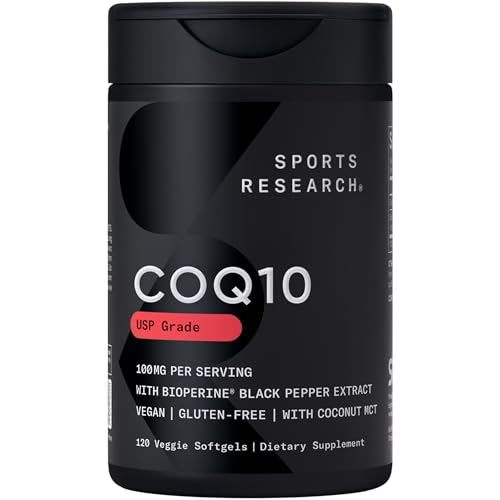
Sports Research CoQ10 100mg with Coconut Oil and BioPerine
by Sports Research
The cleanest-label CoQ10 in the roundup — Sports Research is the only major Amazon CoQ10 with combined Vegan and Non-GMO Project certifications, and the coconut-oil-plus-BioPerine carrier is a genuine absorption upgrade over plain oil softgels.
Pros
- Only major CoQ10 supplement on Amazon carrying both Vegan Certified and Non-GMO Project Verified seals — strongest dual sourcing credentials in the category
- Coconut oil base plus BioPerine creates a dual absorption system — the medium-chain triglycerides in coconut oil enhance fat-soluble nutrient uptake while piperine inhibits hepatic clearance
- Manufactured in a cGMP-certified US facility with full third-party batch testing for identity, potency, and contaminants
- Carrageenan-free softgel shell — a meaningful differentiator for buyers managing GI inflammation or carrageenan sensitivity
Cons
- Higher per-softgel cost than the budget ubiquinone picks despite being the same 100 mg standard ubiquinone dose
- BioPerine inclusion adds a CYP3A4 interaction concern for patients on multiple prescription medications
Nature’s Bounty CoQ10 plus L-Carnitine — Runner-Up: Energy Combo
Nature’s Bounty CoQ10 plus L-Carnitine is the only mainstream combo formula on Amazon pairing CoQ10 with L-carnitine in a single softgel, and it occupies a specific niche that some buyers genuinely benefit from. The mechanistic case for the combination is real. L-carnitine shuttles long-chain fatty acids across the inner mitochondrial membrane via the carnitine-palmitoyltransferase shuttle system; CoQ10 then accepts electrons from the resulting acyl-CoA derivatives during beta-oxidation and ATP production. The two compounds work in series at the mitochondrial membrane to support fatty-acid-derived energy production, and many adults already stack them separately — endurance athletes, adults with documented L-carnitine insufficiency from vegan diets, and patients with chronic fatigue protocols all commonly combine them. Doing it in a single softgel is convenient.
Nature’s Bounty itself is a credible mass-market brand: cGMP-certified US manufacturing, broad pharmacy and grocery retail distribution, and a long-running quality program. The combo softgel is a useful single-pill solution for buyers who would otherwise be taking two separate supplements at the same time of day.
The honest limitations are dose and inflexibility. The 200 mg L-carnitine per serving is well below the 1,000 to 2,000 mg daily dose used in most clinical trials of L-carnitine for fatigue, exercise tolerance, or cardiovascular outcomes. As a meaningful L-carnitine therapeutic dose, this product comes up short — the 200 mg sits more in the supportive-supplementation range than the therapeutic range. The combo format also locks in a fixed CoQ10-to-L-carnitine ratio that does not match every protocol; buyers who want to titrate either component independently are better served by separate single-ingredient supplements. For the adult who wants both compounds for general energy support and is willing to accept the lower L-carnitine dose for the convenience of a single softgel, this product fills the slot. For dedicated L-carnitine therapy, choose a higher-dose dedicated product.

Nature's Bounty CoQ10 100mg plus L-Carnitine Softgels
by Nature's Bounty
The only mainstream CoQ10 plus L-carnitine combo on Amazon — useful for buyers stacking both for energy and cardiovascular support, with the honest caveat that the 200 mg L-carnitine dose is below the typical therapeutic range.
Pros
- Only mainstream combo formula on Amazon pairing CoQ10 with L-carnitine — the two compounds work in series at the mitochondrial membrane to support fatty-acid-derived ATP production
- Convenient single-softgel format combines two supplements that many adults already stack separately for energy and cardiovascular support
- Nature's Bounty carries cGMP manufacturing and a long US distribution track record — broadly available in pharmacy and grocery retail
- Useful for endurance athletes and adults with documented L-carnitine insufficiency where the combination is mechanistically appropriate
Cons
- 200 mg L-carnitine per serving is below the 1,000 to 2,000 mg daily dose used in most clinical trials of L-carnitine for fatigue or cardiovascular outcomes
- Combo product locks in a fixed ratio — buyers who want to titrate either component independently are better served by separate single-ingredient supplements
Best CoQ10 for Statin Users
This is the single most common reason patients bring CoQ10 up in my office, so it earns its own head-to-head. Statins inhibit HMG-CoA reductase, the enzyme that sits upstream of both cholesterol and endogenous CoQ10 synthesis on the mevalonate pathway — so every statin measurably lowers your circulating CoQ10, and the same age- and statin-related decline in reductase capacity that depletes CoQ10 also slows the conversion of ubiquinone to the active ubiquinol form. That is the mechanistic argument for choosing a pre-converted ubiquinol product over standard ubiquinone once you are on a statin, particularly if you are also over 60. The trial evidence for reversing statin-associated muscle symptoms is genuinely mixed and the 2018 ACC/AHA guideline stops short of endorsing it, but the intervention is low-risk, low-cost, and mechanistically sound, and the working range in the trials that did show benefit was 100 to 200 mg per day for 8 to 12 weeks.
The three picks below cover that range. Choose the Qunol Ubiquinol 200 mg if you are over 60, have diagnosed heart disease, or want the therapeutic dose modeled on the Q-SYMBIO heart-failure trial; the Qunol Mega Ubiquinol 100 mg if you want the conversion-efficient active form at a daily-maintenance dose; and the Doctor’s Best BioPerine ubiquinone if cost is the priority and you are under 60 with efficient conversion. All three are best taken with a fat-containing meal, and none should be started on warfarin without telling your anticoagulation clinic.
| Product | Price | Buy |
|---|---|---|
| Qunol Ubiquinol 200mg SoftgelsBest for statin users & heart Pre-converted Kaneka ubiquinol at the 200 mg Q-SYMBIO-aligned dose — the right form and dose for statin users over 60 or with diagnosed heart disease. | $35.99 | View on Amazon |
| Qunol Mega Ubiquinol 100mg SoftgelsUbiquinol at maintenance dose The same Kaneka ubiquinol at a 100 mg daily-maintenance dose — bypasses the conversion bottleneck without the therapeutic-dose premium. | $31.66 | View on Amazon |
| Doctor's Best High Absorption CoQ10 100mg with BioPerineBudget enhanced ubiquinone Standard ubiquinone with BioPerine for enhanced absorption at the lowest cost of the three — a reasonable choice for statin users under 60 who still convert efficiently. | $18.99 | View on Amazon |
Buyer's Guide
Choosing a CoQ10 supplement is more nuanced than picking the highest-dose softgel — the right product depends on your age, whether you are on a statin or have diagnosed heart disease, the absorption system in the formulation, and what third-party testing has actually been done to verify the label.
Ubiquinone vs Ubiquinol
Ubiquinone is the oxidized form of CoQ10 used in most older supplements; ubiquinol is the pre-converted reduced form. Healthy adults under 50 convert ubiquinone to ubiquinol efficiently and either form is reasonable. After age 60, in patients on statin therapy, and in adults with diagnosed heart failure or chronic fatigue, conversion efficiency drops and ubiquinol becomes the more reliable choice. The trade-off is cost — ubiquinol is meaningfully more expensive per milligram than ubiquinone, so buyers without a specific reason to choose it can reasonably stay with the standard form. If you are over 60, on a statin, or managing a diagnosed cardiovascular condition, the upgrade to ubiquinol is justified.
Dose Per Day
For general antioxidant and energy support in healthy adults, 100 mg per day is the standard dose used in most consumer trials. For statin-associated muscle symptoms, 100 to 200 mg per day is the working range supported by the mixed but mechanistically credible evidence. For diagnosed heart failure with reduced ejection fraction, the Q-SYMBIO trial used 300 mg per day of ubiquinone split into three doses and showed reduced major cardiovascular events at two years. For migraine prevention, Sandor 2005 used 300 mg per day. Doses above 300 mg per day have not shown additional benefit in published trials. Pick the dose that matches your clinical goal, not the largest number on the shelf.
Absorption System
CoQ10 is fat-soluble and has a baseline oral bioavailability of roughly two percent — formulation matters as much as dose. Three approaches genuinely improve absorption beyond a plain dry-powder capsule: an oil-based softgel (any branded ubiquinone or ubiquinol product), BioPerine pairing (piperine inhibits CYP3A4 and slows hepatic clearance — Doctor's Best and Sports Research use this), and Qunol's patented water-and-fat-soluble carrier that pre-dissolves the CoQ10 into a hybrid matrix. Of these, oil-base softgels are the baseline; BioPerine and water-soluble formulations add measurable but variable improvement. A dry-powder capsule with no carrier is the worst-absorbing format and should be avoided.
Third-Party Testing
The FDA does not verify supplement potency or label accuracy before products reach consumers, and CoQ10 is a category where label-claim verification matters because the active ingredient is invisible and the cost differential between high-quality and low-quality material is substantial. The strongest US certifications, in descending order of rigor, are USP Verified (full label-accuracy and contaminant testing program), NSF Certified for Sport, ConsumerLab approved, Non-GMO Project Verified, and cGMP facility-only registration. Of the products in this roundup, Nature Made carries USP Verified — that is the gold standard. Sports Research carries Non-GMO Project Verified and Vegan Certified. The other products rely on cGMP facility certification plus brand-level quality programs.
Form Factor
Softgels are the dominant format for CoQ10 because the molecule is fat-soluble and a softgel pre-dissolves it into the carrier oil — this is genuinely better-absorbing than a dry-powder capsule or compressed tablet. Most major CoQ10 brands use softgels for this reason. Vegan softgels (made from plant-based gelatin substitutes) are available from Doctor's Best, Sports Research, and Qunol and are the right pick for plant-based buyers. Avoid CoQ10 in dry-powder capsule or tablet form unless the manufacturer has a specific carrier-system claim — without it, the bioavailability drops substantially below the already-low baseline.
Cost Per 100mg
Per-day cost is the practical comparison metric across CoQ10 supplements, and it varies by roughly four-fold across the roundup at the same effective dose. Doctor's Best with BioPerine has the lowest cost per softgel here, and Nature Made USP Verified has the lowest cost per milligram because its softgel carries 200 mg rather than 100 mg. Qunol Ultra sits in the mid-range. Sports Research and the Qunol ubiquinol products sit at the upper end. Combo products (CoQ10 plus L-carnitine) and ubiquinol forms carry a meaningful premium. Calculate per-day cost across the bottle's serving count, not the sticker price — a higher-priced bottle with more servings often delivers a lower per-day cost than a smaller cheaper bottle. For long-term daily supplementation across 6 to 12 months, the per-day math compounds quickly.
Best Ubiquinol CoQ10 Supplement
Ubiquinol is the reduced, already-active form of coenzyme Q10. Ubiquinone, the form in most bottles, has to be converted to ubiquinol in the body before it does anything. In a healthy adult under about 60 that conversion is efficient enough that paying the ubiquinol premium buys very little. The picture changes with age, with statin therapy, and with the conditions that reduce reductase capacity, which is why the ubiquinol argument is a demographic argument rather than a universal one.
Be careful with the marketing here, because this is where the category oversells hardest. Ubiquinol is genuinely better absorbed in head-to-head pharmacokinetic work, but the size of that advantage in a healthy person is smaller than the price gap, and no outcome trial shows ubiquinol beating ubiquinone at a matched dose for a clinical endpoint. If you are 45, well, and taking CoQ10 as general insurance, the ubiquinone products on this page are the rational purchase and the money is better spent on consistency. If you are over 60, on a statin, or managing a cardiac diagnosis, the conversion argument becomes real and the two Kaneka ubiquinol products below are the ones worth the premium.
Both use Kaneka ubiquinol, which is the only ubiquinol raw material with a meaningful published record behind it. The difference between them is dose, not quality. Doctor’s Best is included as the honest counterpoint: enhanced-absorption ubiquinone at roughly a quarter of the per-milligram cost, which is the better buy for anyone who still converts efficiently.
| Product | Price | Buy |
|---|---|---|
| Qunol Ubiquinol 200mg SoftgelsBest ubiquinol at a therapeutic dose Kaneka ubiquinol at the 200 mg dose modeled on the Q-SYMBIO heart-failure trial, the right pick over 60 or with a cardiac diagnosis | $35.99 | View on Amazon |
| Qunol Mega Ubiquinol 100mg SoftgelsBest ubiquinol at a maintenance dose The same Kaneka ubiquinol at 100 mg daily, which bypasses the conversion step without paying for the therapeutic dose | $31.66 | View on Amazon |
| Doctor's Best High Absorption CoQ10 100mg with BioPerineBest value if you still convert well Not ubiquinol at all, and that is the point: BioPerine-enhanced ubiquinone costs far less per milligram and suits adults under 60 | $18.99 | View on Amazon |
Best Absorbed CoQ10 Supplement
Absorption is the variable that matters most in this category and the one buyers weigh least. Plain crystalline CoQ10 is a large, fat-soluble, poorly water-soluble molecule, and oral bioavailability sits at roughly two percent. That number is why a 100 mg product with a real absorption system can outperform a 300 mg product without one, and why comparing bottles on milligrams alone is the most common mistake made on this shelf.
Three approaches actually have evidence behind them. Solubilized or water-dispersible carriers, which is what Qunol’s formulation does, keep the molecule in a form the gut can take up. Piperine, sold as BioPerine, inhibits the intestinal and hepatic enzymes that would otherwise clear a share of the dose before it reaches circulation. And an oil suspension, which is the baseline in any softgel, is better than a dry powder in a capsule because the molecule needs fat to move at all. Taking any of them with a meal containing fat is not optional advice, it is part of the dose.
One caution that belongs with the BioPerine products specifically. Piperine works by inhibiting CYP3A4 and P-glycoprotein, and those are the same pathways that clear a long list of prescription drugs. That is exactly why it boosts CoQ10 absorption, and exactly why it can raise levels of other medications you take alongside it. If you are on multiple prescriptions, particularly anticoagulants, immunosuppressants or antiepileptics, raise the piperine question with your pharmacist before choosing one of these two.
| Product | Price | Buy |
|---|---|---|
| Qunol Ultra CoQ10 100mg SoftgelsBest water-soluble absorption system The solubilized carrier is the best-marketed absorption system here and does not carry the piperine drug-interaction question | $23.39 | View on Amazon |
| Doctor's Best High Absorption CoQ10 100mg with BioPerineBest piperine-enhanced value BioPerine plus ubiquinone at the lowest cost per softgel on this page, with the CYP3A4 caveat above | $18.99 | View on Amazon |
| Sports Research CoQ10 100mg with Coconut Oil and BioPerineBest clean-label absorption Coconut oil carrier plus BioPerine with Non-GMO and vegan certifications, the pick if ingredient quality matters as much as uptake | $27.95 | View on Amazon |
Best CoQ10 Supplement for Heart Health
Heart health is the claim on nearly every CoQ10 box, so start with what the evidence actually supports. The strongest trial in the field is Q-SYMBIO, which randomised patients with moderate to severe chronic heart failure to 300 mg of ubiquinone daily in divided doses and reported fewer major adverse cardiovascular events and lower all-cause mortality at two years. That is a genuinely important result and it is the reason CoQ10 is taken seriously in cardiology at all. Read the population carefully though: those were patients with diagnosed heart failure on standard therapy, not healthy adults taking a supplement for prevention. No trial shows CoQ10 preventing heart disease in people who do not have it.
So the honest framing is that CoQ10 is an adjunct for two groups. People with a diagnosed cardiac condition, where the dose should come from the cardiologist managing them and where 200 to 300 mg daily in divided doses is the trial-aligned range. And people on statins, where the depletion mechanism is established even if the symptom benefit is mixed. Everyone else is buying insurance with thin evidence behind it, which is a legitimate choice to make knowingly.
Nothing here replaces guideline therapy, and CoQ10 has one interaction that matters more than the rest: it is structurally similar to vitamin K and can blunt warfarin’s effect. If you are anticoagulated, tell your clinic before starting rather than after your next INR comes back low. If you are tracking lipids alongside this, our cholesterol ratio calculator is the faster way to see where your numbers actually sit.
| Product | Price | Buy |
|---|---|---|
| Qunol Ubiquinol 200mg SoftgelsClosest to the Q-SYMBIO dose Ubiquinol at 200 mg, the nearest product here to the trial-aligned range, and the form that suits older patients with reduced conversion | $35.99 | View on Amazon |
| Qunol Ultra CoQ10 100mg SoftgelsBest general heart-health daily Solubilized 100 mg ubiquinone at a sensible daily maintenance dose for adults without a cardiac diagnosis | $23.39 | View on Amazon |
| Nature's Bounty CoQ10 100mg plus L-Carnitine SoftgelsBest if you already take L-carnitine The only mainstream single pill combining CoQ10 with L-carnitine, which saves a second bottle if you already take both | $29.00 | View on Amazon |
CoQ10 by Use Case
Two more situations come up often enough to answer directly, and neither needs a section of its own.
| Product | Price | Buy |
|---|---|---|
| Doctor's Best High Absorption CoQ10 100mg with BioPerineBest CoQ10 supplement for migraines The migraine evidence (Sandor 2005) used 100 mg three times daily, so a cheap high-count 100 mg bottle is the right shape for the protocol rather than a single large dose, and this is the lowest cost per softgel here. Give it three months and treat it as prophylaxis, not as something to take during an attack | $18.99 | View on Amazon |
| Qunol Ultra CoQ10 100mg SoftgelsBest CoQ10 supplement for women CoQ10 requirements are not sex-specific and no product here is formulated for women, so the honest answer is the same as the overall pick. The exception is fertility and egg quality, where the protocols run to 600 mg daily and belong with the clinician managing them, not with a general roundup | $23.39 | View on Amazon |
CoQ10 and Statins — An Honest Look at the Evidence
The relationship between CoQ10 and statin therapy is the single most-asked question I get about this supplement, and the honest answer requires holding two ideas at the same time. The mechanistic case is uncontested. Statins work by inhibiting HMG-CoA reductase, the rate-limiting enzyme in cholesterol biosynthesis. The same enzymatic step is upstream of endogenous CoQ10 production — both molecules share the mevalonate pathway in their early biosynthesis — so statins definitively reduce circulating CoQ10 levels in essentially every patient who takes them. That part of the mechanism is not in dispute.
The harder question is whether the CoQ10 depletion produced by statins causes the muscle symptoms that some patients experience, and whether supplementing back the lost CoQ10 reverses those symptoms. Here the randomized trial evidence is genuinely mixed. Some trials of CoQ10 supplementation in statin patients with muscle pain have shown statistically significant improvement; others have shown no difference from placebo. The 2018 ACC/AHA cholesterol guideline reflects this mixed evidence base by not formally endorsing CoQ10 for statin-associated muscle symptoms, while many cardiologists in clinical practice routinely recommend it as a low-risk first step before considering alternative statins or non-statin lipid therapy.
My read of the literature for clinical practice is straightforward. CoQ10 supplementation at 100 to 200 mg per day for 8 to 12 weeks is a reasonable low-risk addition for statin patients with muscle symptoms — the side-effect profile of CoQ10 is benign, the cost is modest, and there is at least mechanistic support and partial trial support for the intervention. If symptoms do not resolve within that timeframe, the supplement is unlikely to be the answer and the conversation needs to shift back to medication management. For patients with diagnosed heart failure rather than statin myalgia, the evidence is stronger — Q-SYMBIO showed a meaningful all-cause mortality benefit at 300 mg per day of ubiquinone over two years — and the case for supplementation in that population is genuinely well-supported. The framing I use with patients is that CoQ10 is a low-risk addition with reasonable mechanistic support, particularly for adults 40-plus on statins, but it should not be sold as a guaranteed fix for any specific symptom.
Who Actually Needs CoQ10 — and Who Probably Does Not
The clinical evidence base for CoQ10 is concentrated in a few specific use cases, and the consumer-facing energy-and-vitality marketing on most product pages is meaningfully ahead of what the trial literature actually supports. Three populations have credible clinical evidence for benefit. First, patients with diagnosed heart failure with reduced ejection fraction — the Q-SYMBIO trial established a 300 mg per day total dose of ubiquinone (or equivalent ubiquinol) over two years as producing a statistically significant reduction in major adverse cardiovascular events. Second, patients with episodic migraine — the Sandor 2005 trial used 300 mg per day and showed meaningful reduction in attack frequency over 12 weeks, and CoQ10 at this dose appears in some clinical migraine prevention guidelines as a reasonable second-line option. Third, statin patients with associated muscle symptoms — mixed but mechanistically credible evidence for 100 to 200 mg per day for 8 to 12 weeks, as discussed above.
Two further populations have weaker but still defensible reasons to supplement. Adults over 60 with subjective fatigue and a clean cardiovascular workup may benefit from 100 mg per day of ubiquinol, given the documented decline in endogenous CoQ10 and ubiquinone-to-ubiquinol conversion efficiency with age. Adults with documented mitochondrial dysfunction or specific metabolic conditions where CoQ10 deficiency has been confirmed also have a clear mechanistic case for supplementation. Outside of these groups, the energy-and-anti-aging case for daily CoQ10 in healthy younger adults is largely anecdotal — the trial evidence for those endpoints is thin. CoQ10 is not harmful at standard doses, and many of my patients in this group report subjective benefit, but the honest framing is that you are running an n-of-one experiment rather than reproducing a published clinical effect.
A small set of patients should consult their physician before starting CoQ10. Patients on warfarin should not start CoQ10 without informing their anticoagulation clinic — the structural similarity to vitamin K can reduce warfarin’s anticoagulant effect and INR monitoring should be tightened during the first 4 to 6 weeks. Patients in active chemotherapy with anthracyclines or alkylating agents should defer to their oncology team — the antioxidant mechanism that benefits cardiac and metabolic health may theoretically interfere with chemotherapy modalities that work through oxidative damage. Pregnancy and lactation safety data are limited; CoQ10 is generally not recommended in pregnancy without specific clinical indication.
How and When to Take CoQ10
CoQ10 is fat-soluble and has a baseline oral bioavailability of roughly two percent. Taken on a fully empty stomach, absorption is minimal; taken with a meal containing some fat, absorption improves substantially. The practical recommendation is to take CoQ10 with a meal that contains at least some dietary fat — eggs at breakfast, a salad with olive oil at lunch, fish at dinner, or any meal with nuts or avocado will work. The traditional advice to take CoQ10 in the morning is largely arbitrary; some patients report better sleep when taking it earlier in the day, while others see no time-of-day effect. For ubiquinol products specifically, splitting the daily dose into two doses with morning and evening meals can improve steady-state plasma levels for therapeutic indications.
For the heart failure protocol modeled on Q-SYMBIO, take 100 mg of ubiquinone three times daily with meals (300 mg total). For the ubiquinol equivalent, 200 mg once daily with breakfast or 100 mg twice daily with breakfast and dinner are both reasonable. For statin-associated muscle symptoms, 100 to 200 mg per day with the same meal-timing approach is the working range. For migraine prevention, 100 mg three times daily for 12 weeks is the Sandor 2005 protocol. For general support in healthy adults, 100 mg per day with any meal is the standard dose.
Allow 8 to 12 weeks of consistent daily dosing before evaluating effect — this is a slow-onset supplement, and patients who stop after 2 to 4 weeks because they “did not feel anything” are stopping before the published trial timeframes for measurable effect. If you are pairing CoQ10 with a comprehensive supplement stack — a daily multivitamin, B12, omega-3, and an adaptogen like ashwagandha for stress management — there are no clinically significant interactions among those products, and the CoQ10 can be slotted into any time of day that fits your meal pattern. If you are tracking your blood pressure or heart rate at home with a blood pressure monitor, the data is genuinely useful for documenting any cardiovascular effect of supplementation across the 8-to-12-week window. Avoid CoQ10 supplementation in pregnancy, in active chemotherapy without oncology clearance, and in anyone on warfarin without anticoagulation clinic involvement.
Final Verdict
For most adults who want a clinically credible CoQ10 supplement with the best absorption profile in the mass-market category, Qunol Ultra CoQ10 100 mg is the right Best Overall pick. The patented water-and-fat-soluble carrier delivers genuinely better absorption than plain oil softgels, the 100 mg dose matches the trial literature for general support, and the 22,000-plus review base at 4.7 stars is the strongest manufacturing-consistency track record in the category. Use it as a daily supplement at the labeled dose, give it 8 to 12 weeks before evaluating effect, and pair it with consistent meal timing to maximize absorption.
For the budget-conscious buyer who prioritizes third-party testing pedigree above all else, Nature Made CoQ10 200 mg is the obvious pick — USP Verified is the gold standard for supplement quality assurance in the US, and Nature Made is the only major CoQ10 product carrying it. For the upgrade buyer over 60 or on a statin or with diagnosed heart failure, the Qunol Ubiquinol 200 mg is the right form-and-dose match for the conversion-efficient ubiquinol bypass and the Q-SYMBIO-aligned therapeutic dose. For vegan and clean-label buyers, Sports Research is unmatched on dual sourcing certifications. For the buyer who already takes both CoQ10 and L-carnitine separately, the Nature’s Bounty combo is the only mainstream single-pill option. Pick the product that matches your clinical goal and your demographic profile — ubiquinone for adults under 60, ubiquinol for adults over 60 or on statins or with cardiac diagnoses — take it consistently with meals for at least 8 weeks before judging effect, and pair it with the rest of a sensible supplement stack rather than expecting it to do everything on its own. If you want to see how CoQ10 fits alongside other foundational supplements like a women’s multivitamin or B12, our other roundups cover the rest of the daily stack in the same physician-reviewed format.
Frequently Asked Questions
What's the difference between ubiquinone and ubiquinol — and which should I take?
Can I take CoQ10 if I'm on a statin?
What's the right CoQ10 dose for heart health vs general support?
Does CoQ10 interact with any medications I should know about?
How long until I notice any benefit from CoQ10?
Which CoQ10 is best for fertility and egg quality?
Related Articles
About the Reviewer

Dr. David Taylor, MD, PhD
Drexel University College of Medicine (MD), Indiana University School of Medicine (PhD)
Dr. David Taylor is a licensed physician and medical researcher who founded BestRatedDocs in 2016. With an MD from Drexel University and a PhD from Indiana University School of Medicine, he combines clinical expertise with a passion for health technology to provide evidence-based product recommendations. Dr. Taylor specializes in health informatics and regularly evaluates medical devices, diagnostic equipment, and therapeutic products to help healthcare professionals and patients make informed decisions.