7 Best Probiotics of 2026
Dr. David Taylor reviews the best probiotics on Amazon. Compare top-rated supplements by CFU count, strain diversity, delivery system, and clinical evidence.
Updated

Your gut harbors approximately 38 trillion bacteria — outnumbering your own human cells — and the composition of that microbial community influences everything from nutrient absorption and immune regulation to mood, skin health, and metabolic function. The global probiotic supplement market is projected to exceed $73 billion by 2027, yet the average consumer navigating Amazon’s crowded probiotic listings has almost no framework for distinguishing between a clinically validated formula and a well-marketed capsule of questionable viability. CFU numbers are inflated, strain names are obscured, and the majority of probiotic advertising makes claims that the clinical evidence simply does not support at the product level.
In 2026, we reviewed seven of the best-selling probiotic supplements on Amazon — spanning multi-strain high-CFU formulas, single evidence-backed strains, the only yeast-based product in the category, and the most extensively validated clinical-grade consumer synbiotic available. Our selection draws on Dr. David Taylor’s clinical experience evaluating supplements, systematic review of the published probiotic literature through PubMed, and analysis of tens of thousands of verified Amazon user reviews across products with 7,000 to 144,000 ratings. We prioritized strain-level clinical evidence over marketing language, and honest limitations over brand storytelling. If you are also managing digestive discomfort alongside gut health goals, our reviews of best stool softeners and best electrolyte powders cover complementary products in the digestive health category.
After evaluating products on CFU viability, strain identity, delivery system engineering, third-party testing, and condition-specific evidence, here are our seven top picks at a glance.
| Product | Price | Buy |
|---|---|---|
| Physician's CHOICE Probiotics 60 Billion CFUBest Overall | $17.49 | View on Amazon |
| NewRhythm Probiotics 50 Billion CFU 20 StrainsBudget Pick | $16.99 | View on Amazon |
| Seed DS-01 Daily SynbioticPremium Pick | $59.99 | View on Amazon |
| Culturelle Pro Strength Daily ProbioticsRunner-Up | $27.68 | View on Amazon |
| Garden of Life Dr. Formulated Probiotics for Women | $26.90 | View on Amazon |
| Florastor Daily Probiotic Supplement | $67.99 | View on Amazon |
| Align Probiotic Pro Formula | $59.99 | View on Amazon |
Find the Right Probiotic for Your Goal
Strain selection matters far more than CFU count, and the right strain depends entirely on what you are trying to fix. Jump to your goal:
- Best probiotics overall — all seven picks reviewed
- Best probiotics for bloating
- Best probiotics for IBS
- Best probiotics for diarrhea
- Best probiotics for constipation and regularity
- Best probiotics for gas
- Best probiotics for leaky gut
- Best probiotics for men
How We Selected These Probiotics
Our methodology prioritized clinical signal over commercial signal. Every product reviewed here has at least 6,000 verified Amazon ratings and is either backed by published clinical research on the specific named strain, or demonstrates sufficient strain diversity and delivery engineering to justify inclusion for general use. We applied three primary filters: (1) strain identity transparency — products that list only genera or undefined “proprietary blends” were excluded; (2) delivery system viability — acid-sensitive standard capsules without enteric coating or delayed-release technology scored lower regardless of CFU count; and (3) third-party quality evidence, including NSF, USDA Organic, or ConsumerLab verification. We also deliberately included one yeast-based product (Florastor) and one condition-specific IBS formula (Align) to cover clinical use cases that bacterial multi-strain products cannot address.
Best Probiotics Overall
These are the seven probiotics that earned a place in this guide, each reviewed in full below. Physician’s CHOICE is our best overall pick because it pairs broad multi-strain coverage with a delayed-release capsule at a price that makes daily use sustainable. The goal-specific sections after the reviews then match each objective — bloating, IBS, diarrhea, regularity — to the strain that actually has evidence behind it.
1. Physician’s CHOICE Probiotics 60 Billion CFU — Best Overall
With over 140,000 verified Amazon ratings and the #1 bestseller position in the supplement probiotic category, Physician’s CHOICE has achieved something rare: genuine consensus across a massive, heterogeneous user population. The clinical design is sound. The delayed-release acid-resistant capsule addresses the most fundamental problem in oral probiotic supplementation — getting live bacteria through the stomach — using a validated enteric delivery mechanism rather than relying on CFU excess to compensate for die-off. The inclusion of an organic prebiotic blend in the same capsule creates a synbiotic effect that supports bacterial colonization after delivery, which standalone probiotic formulas without prebiotics cannot replicate.
The 10-strain diversity is clinically meaningful for general gut health, covering key Lactobacillus acidophilus and Bifidobacterium strains that have the most human clinical data for digestive regularity, bloating reduction, and post-antibiotic microbiome restoration. At 60 billion CFU, the product sits in the upper range of dosing where most randomized trial data exists — enough to achieve meaningful colonization without the adjustment symptoms associated with extremely high-dose products. For buyers managing general digestive health, intermittent bloating, or seeking daily gut maintenance without a specific clinical diagnosis, this is the appropriate starting point.

Physician's CHOICE Probiotics 60 Billion CFU
by Physician's CHOICE
The #1 bestselling probiotic on Amazon — 60B CFU, 10 strains, organic prebiotic, and shelf-stable in a single delayed-release capsule.
Pros
- 60 billion CFU across 10 strains in a single delayed-release acid-resistant capsule that survives transit through the stomach
- Shelf-stable formula requires no refrigeration — convenient for travel, office, and anyone who forgets to open the fridge
- Organic prebiotic blend included in the same capsule feeds beneficial bacteria after arrival, reducing the need for a separate prebiotic supplement
- Outstanding value for a 60B CFU product with 144,000+ verified Amazon reviews — the most-reviewed probiotic on the platform
Cons
- 30-day supply per bottle requires monthly repurchase for continuous use
- Capsules have a faint fermented odor that some users find unpleasant
2. NewRhythm Probiotics 50 Billion CFU 20 Strains — Budget Pick
NewRhythm’s primary competitive advantage is arithmetic: 50 billion CFU across 20 strains delivered via targeted-release capsule technology at a price point that makes daily supplementation accessible without the mental calculus of whether a premium probiotic is worth the investment. The 20-strain formulation is the broadest strain diversity available at this price tier, covering not just the common Lactobacillus acidophilus and Bifidobacterium longum present in most formulas, but also Lactobacillus plantarum, Lactobacillus casei, and Streptococcus thermophilus — strains with distinct clinical profiles for fermentation tolerance and mucosal adhesion.
The practical limitation is brand transparency. Unlike Culturelle or Garden of Life, NewRhythm does not disclose specific strain identifiers beyond genus and species names, which makes it impossible to cross-reference individual strains against the PubMed clinical literature. The TRTech capsule performs the essential function of acid bypass, and the 60-day supply per bottle meaningfully reduces the monthly cost compared to competitors at similar potency levels. For buyers whose primary goal is high-CFU daily maintenance at the lowest possible price, and who are not managing a specific diagnosed condition requiring evidence-backed strain selection, NewRhythm delivers the best cost-per-day value in the category.

NewRhythm Probiotics 50 Billion CFU 20 Strains
by NewRhythm
The best value high-potency probiotic on Amazon — 50B CFU across 20 strains with a 60-day supply for just $0.28 per day.
Pros
- Best price-per-dose for a high-CFU multi-strain formula — 50 billion CFU at roughly $0.28 per day
- 20-strain diversity is among the highest in the mainstream market, covering Lactobacillus, Bifidobacterium, and Streptococcus families
- Targeted release technology (TRTech) capsules are engineered to bypass stomach acid and release in the intestine
- 60-day supply per bottle reduces purchase frequency compared to 30-day competitors at the same price tier
Cons
- Some users report mild nausea and adjustment symptoms during the first week at the full 50B CFU dose
- Brand credibility and third-party testing documentation trail legacy supplement brands like Culturelle and Garden of Life
3. Seed DS-01 Daily Synbiotic — Upgrade Pick
Seed’s DS-01 occupies a genuinely different category from every other product on this list. Where other probiotics are formulated with strains selected based on general clinical literature, the DS-01 was designed around published research specific to the complete 24-strain formula — including two randomized controlled trials on the DS-01 product itself, not just its component strains. For anyone who has tried to evaluate probiotic supplements by strain and found a patchwork of studies on individual bacteria without integrated product-level evidence, the DS-01’s 26-publication study database is a meaningful differentiator.
The ViaCap nested capsule is the most sophisticated delivery engineering available in a consumer probiotic. The inner capsule contains the 24 probiotic strains; the outer capsule is composed of prebiotic compounds that serve as both an additional acid barrier and a colonization substrate for the bacteria after delivery. This architecture addresses two failure modes in conventional probiotics simultaneously — acid exposure during gastric transit and lack of a local nutrient environment for establishing colonies in the large intestine. The vegan, dairy-free, soy-free label profile means the DS-01 is appropriate for users with dietary restrictions that exclude most other products in this category. The tradeoff is cost: buyers willing to subscribe directly through Seed’s website rather than purchasing through Amazon will find a significantly lower per-month price. If you are also managing blood glucose as part of broader metabolic health, pair the DS-01 with a glucose monitor to track how dietary and supplement changes affect your metabolic markers.
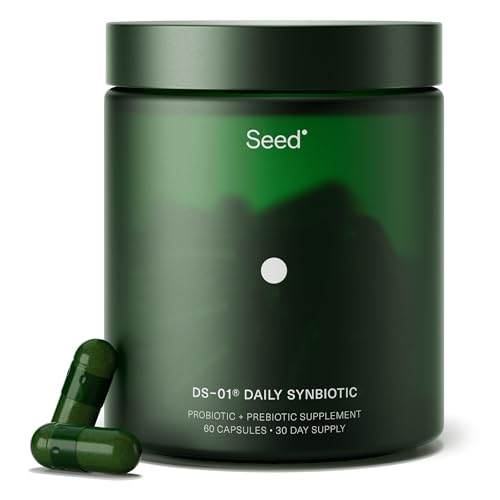
Seed DS-01 Daily Synbiotic
by Seed Health
The most rigorously validated consumer probiotic available — 24 clinically studied strains, a patented nested delivery capsule, and 26 published studies.
Pros
- 24 strains all individually studied in published clinical research — the most evidence-backed strain roster of any consumer probiotic
- Patented ViaCap 2-in-1 nested capsule system encapsulates the probiotic inside a prebiotic outer capsule, providing layered protection through stomach acid
- 26 published studies including 2 randomized controlled trials specifically on the DS-01 formulation, not just individual strains
- Vegan, dairy-free, soy-free, and gluten-free with the cleanest label in the category — appropriate for most dietary restrictions
Cons
- Amazon price is higher than the direct subscription rate — buyers willing to subscribe through Seed's website pay significantly less per month
- Adjustment period of 3-5 days can include temporary constipation or bloating as the microbiome responds to 24 new strains
4. Culturelle Pro Strength Daily Probiotics — Runner-Up
Culturelle’s case rests on a single extraordinary fact: the LGG strain has been the subject of more than 1,000 published clinical trials — more than any other probiotic strain on Earth. This is not a marketing claim; the PubMed record for Lactobacillus rhamnosus GG is extensive and covers antibiotic-associated diarrhea prevention, Clostridioides difficile prophylaxis, pediatric acute gastroenteritis, traveler’s diarrhea, immune function modulation, and general digestive health outcomes. No other single probiotic strain has generated this volume and breadth of clinical evidence.
The clinical implication for buyers is that when you take Culturelle Pro Strength, you are taking the best-characterized probiotic intervention in existence — not the highest CFU count, not the most diverse strain panel, but the strain whose mechanisms, dosing thresholds, and patient population responses are most completely understood. The 4.7-star Amazon rating across more than 15,000 reviews confirms that clinical evidence translates to real-world user satisfaction. For antibiotic recovery specifically, the 2-hour timing protocol matters: take LGG at least 2 hours after your antibiotic dose, and continue for 1-2 weeks after finishing the course. This is also an excellent choice to recommend alongside allergy medicine for users managing seasonal allergies, as emerging research links gut microbiome composition to atopic immune responses.

Culturelle Pro Strength Daily Probiotics
by Culturelle
The world's most-studied probiotic strain — LGG's 1,000+ clinical trials and Culturelle's 4.7-star rating make this the evidence-first everyday pick.
Pros
- Lactobacillus rhamnosus GG (LGG) is the world's most-studied probiotic strain with over 1,000 published clinical trials across multiple health outcomes
- Ties Align for the highest star rating on this page (4.7), a strong user-satisfaction signal
- Inulin prebiotic included alongside LGG creates a synbiotic effect that supports strain colonization in the colon
- 2-month supply per bottle at a mid-range price delivers strong cost efficiency relative to daily value
Cons
- Single strain may underperform for complex gut dysbiosis where multi-strain diversity is clinically indicated
- Users with diarrhea-dominant IBS specifically report more variable results than those managing antibiotic recovery or general gut support
5. Garden of Life Dr. Formulated Probiotics for Women
The women’s probiotic category is full of products that differentiate on packaging while using the same strain roster as unisex formulas. Garden of Life’s Dr. Formulated Probiotics for Women is a genuine exception. The inclusion of L. reuteri RC-14 and L. rhamnosus GR-1 — both identified by specific strain-level designations — is clinically significant: a body of randomized controlled trial literature supports this specific two-strain combination for vaginal microbiome restoration and maintenance, including reduction of bacterial vaginosis recurrence and improvement of vaginal pH. These are not strains that happen to be popular; they are strains selected based on a specific clinical indication.
The USDA Organic certification and NSF gluten-free verification are the strongest third-party credentials available in the consumer probiotic category and set Garden of Life apart from most competitors who rely on self-certification. The 16-strain diversity means the product also functions as a complete general gut health probiotic beyond the vaginal health application — making it appropriate for women who want a single supplement covering both systemic digestive health and vaginal microbiome support. Buyers who are primarily seeking general gut health without the vaginal health indication will find equivalent or better value in Physician’s CHOICE or Culturelle at a lower per-month cost.

Garden of Life Dr. Formulated Probiotics for Women
by Garden of Life
The top women's probiotic on Amazon — USDA Organic, NSF-certified, and formulated with clinically studied vaginal health strains.
Pros
- Contains L. reuteri RC-14 and L. rhamnosus GR-1 — the two strains with the strongest published clinical evidence for vaginal microbiome health
- USDA Organic certified and NSF-certified gluten-free — the strongest third-party credential combination available in consumer probiotics
- 16-strain diversity across Lactobacillus and Bifidobacterium families provides comprehensive digestive and immune support beyond vaginal health
- Dairy-free, soy-free, and vegetarian with RAW delayed-release capsule technology for enhanced strain survival
Cons
- 30-day supply at premium price is more expensive per month than unisex alternatives with similar CFU counts
- Capsule size is larger than several competitors, which some users find uncomfortable to swallow
6. Florastor Daily Probiotic Supplement
Florastor occupies a unique clinical position that no bacterial probiotic on this list can replicate. S. boulardii CNCM I-745 is a yeast — biologically distinct from bacteria in a way that produces one medically critical property: antibiotics do not kill it. All antibacterial antibiotics — amoxicillin, doxycycline, ciprofloxacin, azithromycin — work by mechanisms that target bacterial cell biology. S. boulardii, as a yeast, is completely unaffected. This means Florastor can be taken simultaneously with antibiotics (not the 2-hour offset required for bacterial probiotics), making it the logistically simplest antibiotic-concurrent probiotic available.
The 50+ years of clinical research on S. boulardii CNCM I-745 is almost entirely focused on two applications: antibiotic-associated diarrhea prevention and Clostridioides difficile infection prophylaxis in hospitalized patients. In these specific indications, the clinical evidence is among the strongest in the probiotic category. The 3-year shelf life without refrigeration makes Florastor practical to keep on hand for episodic use — starting a bottle at the beginning of every antibiotic course rather than taking it daily indefinitely. For patients in at-risk populations for recurrent C. diff (elderly, immunosuppressed, recent hospitalization), consultation with a physician about prophylactic Florastor use during any antibiotic course is warranted.
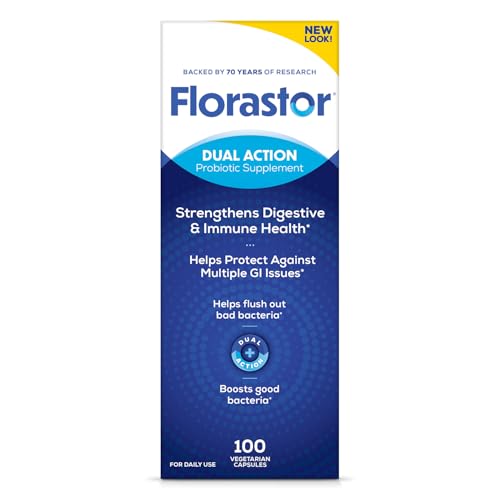
Florastor Daily Probiotic Supplement
by Florastor
The only yeast-based top-seller — Florastor's S. boulardii survives antibiotic co-administration with 50+ years of clinical backing for C. diff prevention.
Pros
- Only yeast-based probiotic in the top sellers — Saccharomyces boulardii CNCM I-745 survives co-administration with antibiotics that would destroy bacterial strains
- 50+ years of clinical research behind S. boulardii for antibiotic-associated diarrhea and C. difficile prevention
- 3-year shelf life without refrigeration — exceptional for stockpiling or using episodically during illness and travel
- Freeze-dried vegetarian capsules are free of artificial colors, flavors, and preservatives
Cons
- Highest per-day cost of any product in this review — not economical for continuous daily use at the full recommended dose
- Contains lactose and is not recommended for lactose-intolerant individuals or immunocompromised patients
7. Align Probiotic Pro Formula
Align is the only probiotic on this list that has been designated the #1 gastroenterologist-recommended brand in the United States for multiple consecutive years by independent physician surveys. That designation reflects how the gastroenterology community views the B35624 strain evidence: sufficiently robust and condition-specific to recommend by name when patients ask which probiotic to take for IBS. The clinical logic is important to understand: B35624 efficacy is dose-independent above a threshold — the 1 billion CFU that looks underwhelming on Align’s label is the validated clinical dose. More CFU does not produce better IBS outcomes with this strain; the mechanism operates through immune modulation and mucosal barrier function, not direct bacterial colonization competition.
For buyers with a formal IBS diagnosis — particularly IBS with mixed bowel habits or IBS-C — Align represents the most targeted evidence-backed intervention available without a prescription. The 63-day supply per bottle is the longest in this review and significantly reduces the per-day cost at the recommended continuous daily dosing schedule. The absence of a prebiotic is a deliberate design choice for an IBS formula, as some IBS patients are sensitive to fermentable fibers (FODMAPs) that most prebiotic blends contain. Align is the wrong choice for someone seeking general gut maintenance, high CFU counts, or multi-strain diversity — but for the IBS patient specifically, it is the most clinically justified option available on Amazon.

Align Probiotic Pro Formula
by Align (Procter & Gamble)
The #1 gastroenterologist-recommended probiotic — Align's patented B35624 strain is specifically studied for IBS with clinical credibility no mass-market formula can match.
Pros
- #1 gastroenterologist-recommended probiotic brand in the United States per ProVoice 2024 survey
- Bifidobacterium longum 35624 is a patented strain with over 20 years of targeted R&D specifically for IBS symptoms
- Reviewers with long-standing IBS report meaningful reduction in bloating, gas, and abdominal pain with consistent use
- 63-day supply per bottle reduces purchase frequency and cost-per-day for long-term IBS management
Cons
- 1 billion CFU count looks low on the label compared to 50–60B competitors, creating a perceived value gap despite strain-specific efficacy
- No prebiotic included, and the formula does not address digestive diversity outside of the specific IBS mechanism
Best Probiotics for Bloating
Bloating is the symptom that sends more people to the probiotic aisle than any other, and it is also where expectations most need managing. Bloating has several distinct causes — gas production by colonic bacteria, delayed gastric emptying, visceral hypersensitivity, and in some cases small intestinal bacterial overgrowth — and probiotics genuinely help only some of them. Where the driver is an unbalanced colonic community fermenting carbohydrates too enthusiastically, a multi-strain product can shift the balance over several weeks.
Two practical points decide the purchase. Strain diversity matters more than CFU count, because different species ferment different substrates, and a product spanning both Lactobacillus and Bifidobacterium covers more ground than a huge dose of one organism. Give it four weeks before judging, since the microbiome does not change in days. If bloating comes with weight loss, blood in the stool, or a sudden change in bowel habits after age 50, that needs a physician rather than a supplement. Counterintuitively, if a probiotic makes your bloating distinctly worse over the first weeks rather than better, SIBO is worth investigating.
| Product | Price | Buy |
|---|---|---|
| Physician's CHOICE Probiotics 60 Billion CFUBest for bloating overall Ten strains across both major genera give the broadest coverage of the fermentation patterns behind bloating | $17.49 | View on Amazon |
| Align Probiotic Pro FormulaBest single-strain option for bloating B. longum 35624 is the strain with dedicated trial evidence for bloating and abdominal discomfort | $59.99 | View on Amazon |
| Culturelle Pro Strength Daily ProbioticsBest for a sensitive gut LGG is gentle enough to start at full dose without the adjustment period a high-count multi-strain can cause | $27.68 | View on Amazon |
Best Probiotics for IBS
Irritable bowel syndrome is where probiotic evidence is strongest and most specific, and it is also where buying by CFU count fails most clearly. The organism with the best-characterised IBS data is Bifidobacterium longum 35624, studied in randomised controlled trials for abdominal pain, bloating, and bowel habit satisfaction. A 1-billion CFU dose of the right strain outperforms a 50-billion dose of the wrong ones, which is the opposite of how these products are marketed.
Set expectations for a four to eight week trial. IBS symptoms fluctuate on their own, so a fair assessment needs enough time to see past normal variation, and switching products every two weeks guarantees you learn nothing. Diagnosis matters here too: IBS is diagnosed after ruling out celiac disease, inflammatory bowel disease, and other causes, so anyone self-labelling based on symptoms should get evaluated first. A low-FODMAP diet under a dietitian’s guidance has stronger evidence than any supplement in this category.
| Product | Price | Buy |
|---|---|---|
| Align Probiotic Pro FormulaBest for IBS overall B. longum 35624 is the most trial-supported IBS strain available over the counter, at a deliberately modest dose | $59.99 | View on Amazon |
| Seed DS-01 Daily SynbioticBest broad-spectrum option for IBS A defined 24-strain synbiotic for anyone who has already tried the single-strain route without benefit | $59.99 | View on Amazon |
| Culturelle Pro Strength Daily ProbioticsBest for IBS with diarrhea LGG has the strongest evidence of any strain for diarrhea-predominant symptoms | $27.68 | View on Amazon |
Best Probiotics for Diarrhea
Diarrhea is the indication with the most convincing probiotic evidence overall, and two organisms carry that evidence. Saccharomyces boulardii is a yeast rather than a bacterium, which gives it a genuinely useful property: antibiotics do not kill it, so it can be taken alongside a course rather than spaced away from it. Lactobacillus rhamnosus GG has the largest trial base for acute infectious diarrhea and shortens duration by roughly a day.
Antibiotic-associated diarrhea is the clearest use case and affects up to a third of people taking antibiotics. Starting a probiotic at the same time as the antibiotic works considerably better than starting after symptoms appear. Keep in mind that rehydration matters more than any supplement in acute diarrhea. Seek care for bloody stools, a fever above 102 degrees, signs of dehydration, or diarrhea lasting beyond a few days, and note that anyone severely immunocompromised or with a central venous catheter should not take S. boulardii without physician approval.
| Product | Price | Buy |
|---|---|---|
| Florastor Daily Probiotic SupplementBest for antibiotic-associated diarrhea A yeast rather than a bacterium, so it survives a course of antibiotics and can be taken at the same time | $67.99 | View on Amazon |
| Culturelle Pro Strength Daily ProbioticsBest for acute infectious diarrhea LGG carries the largest evidence base for shortening acute diarrhea, roughly by a day | $27.68 | View on Amazon |
| Physician's CHOICE Probiotics 60 Billion CFUBest for recovery afterward Broad multi-strain coverage for rebuilding the community once the acute episode has passed | $17.49 | View on Amazon |
Best Probiotics for Constipation and Regularity
Constipation responds to probiotics more modestly than marketing suggests, and it is worth being straight about that. Bifidobacterium species have the better evidence here, with meta-analyses showing a small but real increase in weekly bowel movements and improved stool consistency. That is a genuine effect and a small one, so a probiotic belongs alongside fibre, fluid, and movement rather than instead of them.
Where probiotics do earn their place is maintenance. Once regularity is restored, a daily multi-strain product with good Bifidobacterium representation helps hold it, which laxatives are not designed to do. Give it four weeks and pair it with a fibre supplement, since the prebiotic substrate is what the bacteria actually feed on. For faster relief of an episode already underway, our stool softener guide covers the options, and our fiber supplement guide covers the pairing.
| Product | Price | Buy |
|---|---|---|
| Physician's CHOICE Probiotics 60 Billion CFUBest for regularity overall Strong Bifidobacterium representation plus an organic prebiotic, which is the combination the constipation data supports | $17.49 | View on Amazon |
| Seed DS-01 Daily SynbioticBest synbiotic for constipation Pairs its strains with a prebiotic compound, so the bacteria arrive with the substrate they need | $59.99 | View on Amazon |
| NewRhythm Probiotics 50 Billion CFU 20 StrainsBest budget multi-strain Twenty strains at the lowest cost per day, which matters for a supplement you take for months | $16.99 | View on Amazon |
Best Probiotics for Gas
Excess gas and its more socially urgent variants are among the most-searched probiotic questions, and the mechanism is worth understanding before buying. Gas is produced when colonic bacteria ferment carbohydrates that were not absorbed higher up. Odour comes mainly from sulphur compounds generated by specific bacterial populations. A probiotic can help by shifting which organisms dominate that fermentation, but it will not stop gas production altogether, because a healthy colon produces gas by design.
Realistically, expect a reduction in volume and odour rather than elimination, over several weeks. Diet usually does more: sugar alcohols, beans, cruciferous vegetables, and carbonated drinks are the usual culprits, and lactose intolerance is a very common missed explanation. For gas trapped painfully rather than excessive in quantity, simethicone from our antacid guide works mechanically and immediately, which no probiotic does.
| Product | Price | Buy |
|---|---|---|
| Align Probiotic Pro FormulaBest for gas and odour B. longum 35624 has the dedicated trial evidence for gas and abdominal discomfort rather than general gut claims | $59.99 | View on Amazon |
| Physician's CHOICE Probiotics 60 Billion CFUBest broad-spectrum option Ten-strain diversity to shift the fermentation pattern behind excess gas production | $17.49 | View on Amazon |
| Culturelle Pro Strength Daily ProbioticsBest for a sensitive stomach A single well-studied strain that rarely causes the initial gas increase a high-count product can trigger | $27.68 | View on Amazon |
Best Probiotics for Leaky Gut
“Leaky gut” is the popular term for increased intestinal permeability, and honesty is warranted here. Intestinal permeability is a real, measurable phenomenon documented in celiac disease, inflammatory bowel disease, and some infections. What is not established is the broader wellness claim that a permeable gut causes fatigue, brain fog, and a long list of unrelated conditions in otherwise healthy people. No probiotic is proven to seal an intestinal barrier, and any product marketed on that promise is ahead of the evidence.
What the research does support is more modest and still worthwhile: certain strains strengthen the mucosal barrier by increasing mucin production and supporting the tight junctions between cells. Products built on defined, individually studied strains are the reasonable choice if this is your goal, as is a diet with adequate fibre and reduced alcohol. Persistent symptoms attributed to leaky gut deserve testing for celiac disease and inflammatory bowel disease rather than an indefinite supplement regimen.
| Product | Price | Buy |
|---|---|---|
| Seed DS-01 Daily SynbioticBest for barrier support Defined strains selected on published research rather than a proprietary blend, which is what this goal calls for | $59.99 | View on Amazon |
| Physician's CHOICE Probiotics 60 Billion CFUBest everyday multi-strain Broad daily coverage with a delayed-release capsule that gets the organisms past stomach acid | $17.49 | View on Amazon |
| NewRhythm Probiotics 50 Billion CFU 20 StrainsBest budget option The widest strain count here at the lowest cost, for a long trial without a large outlay | $16.99 | View on Amazon |
Best Probiotics for Men
Men’s probiotic needs overlap almost entirely with everyone else’s, and the products marketed specifically to men rarely justify their premium. The genuine differences are narrow: prostate and urinary tract support appear in some men’s formulas, and men on average carry higher rates of the metabolic issues that gut composition influences. None of that changes the core requirement, which is multi-strain coverage of both major genera at a dose you will actually take daily.
Two situations do merit specific attention. Athletes and heavy trainers experience exercise-induced gut permeability and more frequent GI symptoms during endurance work, where a daily probiotic has reasonable support. Men taking frequent antibiotic courses benefit from the same S. boulardii approach as anyone else. Beyond that, buy on strain quality and price rather than on the word “men” on the label.
| Product | Price | Buy |
|---|---|---|
| Physician's CHOICE Probiotics 60 Billion CFUBest for men overall Ten-strain daily coverage at a price that beats most products carrying a men's label for the same formula | $17.49 | View on Amazon |
| Seed DS-01 Daily SynbioticBest for athletes and heavy training Defined strains with published research, which suits the gut permeability that endurance training produces | $59.99 | View on Amazon |
| NewRhythm Probiotics 50 Billion CFU 20 StrainsBest value for daily use The lowest cost per day here, since a probiotic only works if you keep taking it | $16.99 | View on Amazon |
How to Choose the Best Probiotic
The buyer’s guide factors above cover the core decision criteria. One additional dimension worth addressing is the GLP-1 medication question: the 15+ million Americans currently on semaglutide, tirzepatide, or other GLP-1 agonists experience significant changes in gastric emptying rate — the stomach empties more slowly on GLP-1 drugs, which means probiotic capsules spend more time in the stomach before moving to the intestine. This extended acid exposure time makes delayed-release or enteric-coated capsules (like Physician’s CHOICE or Garden of Life) particularly important for GLP-1 users, as standard capsule transit times no longer apply. If you are on a GLP-1 medication and experiencing digestive symptoms, the interaction between altered gastric motility and your probiotic delivery system is worth discussing with your prescribing physician.
A second practical point on timing: most clinical trial data on probiotics was collected with subjects taking them in the morning with or without food. While probiotics can technically be taken at any time, consistency of timing matters more than the specific hour — the microbiome responds to circadian patterns, and erratic dosing produces less predictable colonization outcomes than daily same-time administration. For products requiring 2 capsules per day (Seed DS-01), splitting the dose morning and evening is generally recommended on the label and aligns with emerging research on twice-daily synbiotic administration.
Finally, understand that probiotics are not a permanent fix. Research on microbiome persistence consistently shows that colonization from commercial probiotic strains typically reverses within 1-4 weeks of discontinuation — the supplemented strains do not permanently establish themselves in the gut ecosystem. For chronic conditions like IBS, this means continuous daily use is the appropriate model, not a course-based approach. For acute applications like antibiotic recovery, a 2-4 week post-antibiotic course is the evidence-supported protocol after which discontinuation is appropriate.
Buyer's Guide
Choosing the right probiotic requires understanding your specific health goal, the clinical evidence behind individual strains, and the practical delivery factors that determine whether live bacteria actually reach your intestine.
CFU Count and Measurement
CFU (colony-forming units) measures the number of viable bacteria in a dose, but higher numbers do not automatically mean better results. A probiotic with 1 billion CFU of a well-studied strain (like Align's B35624) can outperform a 60 billion CFU product with poorly characterized strains for a specific indication. Look for products that guarantee CFU count 'at expiration' rather than 'at time of manufacture' — probiotic bacteria die over time, and a guarantee at manufacture tells you nothing about what is alive when you swallow the capsule. For general gut health and maintenance, 10-50 billion CFU is the range where most clinical trial data exists.
Strain Specificity
The probiotic strain matters more than any other single variable. Lactobacillus rhamnosus GG (LGG), Bifidobacterium longum 35624, and Saccharomyces boulardii CNCM I-745 are among the most evidence-backed strains for specific conditions. A product listing '10 strains of Lactobacillus' without naming them tells you almost nothing clinically useful — the published research is on specific named strains, not genera. When evaluating a probiotic, search PubMed for the specific strain identifier alongside your target condition. If the manufacturer does not disclose strain-level identifiers, the product cannot be meaningfully evaluated against the clinical literature.
Third-Party Testing
Probiotic manufacturing quality varies significantly. Third-party certification from NSF International, USP, or ConsumerLab provides independent verification that the product contains what the label claims — both in terms of CFU count and strain identity. USDA Organic certification (as on Garden of Life's products) adds verification of ingredient sourcing but does not independently verify CFU counts or strain viability. Without third-party testing, you are trusting the manufacturer's internal QC exclusively. For a category where the active ingredient is a living organism that degrades over time, third-party testing is not a luxury feature — it is basic accountability.
Delivery System
Live probiotic bacteria must survive the harsh acidic environment of the stomach (pH 1.5-3.5) to reach the small intestine and colon where they act. Standard uncoated capsules allow significant bacterial die-off during gastric transit. Delayed-release or enteric-coated capsules bypass the stomach acid and release in the intestine, substantially improving viable bacteria delivery. Seed's nested ViaCap capsule and the targeted-release technology in NewRhythm are specifically engineered for this problem. Shelf-stable probiotics using lyophilization (freeze-drying) retain higher viability than refrigerated liquid cultures when the cold chain is broken during shipping or storage.
Storage Requirements
Most modern probiotic formulas use shelf-stable technology that does not require refrigeration, but the distinction matters for how you purchase and store the product. Refrigerated probiotics must maintain the cold chain from manufacturer to consumer — a product sitting unrefrigerated in an Amazon warehouse or a warm delivery truck may have significantly reduced viable CFU counts even before opening. Shelf-stable products certified to specific temperature thresholds (typically below 77°F) are more reliable for mail-order purchase and travel. If refrigeration is required, purchase from a retailer with reliable cold-chain handling rather than standard online delivery.
Condition-Specific Strains
Different health goals require different strains. For general digestive health and bloating: multi-strain products with Lactobacillus and Bifidobacterium diversity (Physician's CHOICE, NewRhythm). For IBS specifically: B. longum 35624 (Align) or LGG (Culturelle). For antibiotic-associated diarrhea prevention: S. boulardii (Florastor) or LGG (Culturelle). For vaginal microbiome support: L. reuteri RC-14 + L. rhamnosus GR-1 combination (Garden of Life for Women). For maximum clinical evidence with a research-validated multi-strain formula: Seed DS-01. Matching strain selection to clinical indication is the single most impactful purchasing decision in this category.
Final Verdict
For most buyers seeking a daily probiotic for general gut health, digestive regularity, and bloating management, Physician’s CHOICE 60 Billion CFU is our best overall pick. Its combination of a validated delayed-release delivery system, 10-strain diversity with a built-in prebiotic, shelf-stable convenience, and 140,000+ verified reviews at a competitive price is the most complete package in the category. The user consensus is unusually consistent for a supplement: meaningful digestive improvement within 1-2 weeks is the modal experience.
For buyers focused on budget without sacrificing potency, NewRhythm 50 Billion CFU delivers the best cost-per-day value in the high-CFU category, with a 60-day supply that further reduces the monthly outlay. And for the buyer who wants the most clinically rigorous, publication-backed formula money can buy, Seed DS-01 is in a distinct tier — the only consumer probiotic with randomized controlled trial evidence on its complete formulation rather than individual components.
As always, the right probiotic is condition-specific. If you have a diagnosed digestive condition — IBS, IBD, recurrent C. diff, or SIBO — consult your gastroenterologist or primary care physician before selecting a probiotic, as strain selection in these populations is a clinical decision, not a consumer preference. Your physician can also help you understand interactions with any current medications and determine whether probiotic supplementation is appropriate for your specific health context.
Frequently Asked Questions
What is the most effective probiotic supplement?
Should you take probiotics while on antibiotics?
How long does it take for probiotics to start working?
Can probiotics help with IBS symptoms?
Who should NOT take probiotics?
Related Articles
About the Reviewer

Dr. David Taylor, MD, PhD
Drexel University College of Medicine (MD), Indiana University School of Medicine (PhD)
Dr. David Taylor is a licensed physician and medical researcher who founded BestRatedDocs in 2016. With an MD from Drexel University and a PhD from Indiana University School of Medicine, he combines clinical expertise with a passion for health technology to provide evidence-based product recommendations. Dr. Taylor specializes in health informatics and regularly evaluates medical devices, diagnostic equipment, and therapeutic products to help healthcare professionals and patients make informed decisions.