9 Best Protein Powders for Seniors of 2026
Dr. David Taylor reviews the best protein powders for seniors in 2026 — physician-vetted picks for muscle preservation, easy digestion, diabetes, plant-based diets, and appetite loss, with dose and safety guidance.
Updated
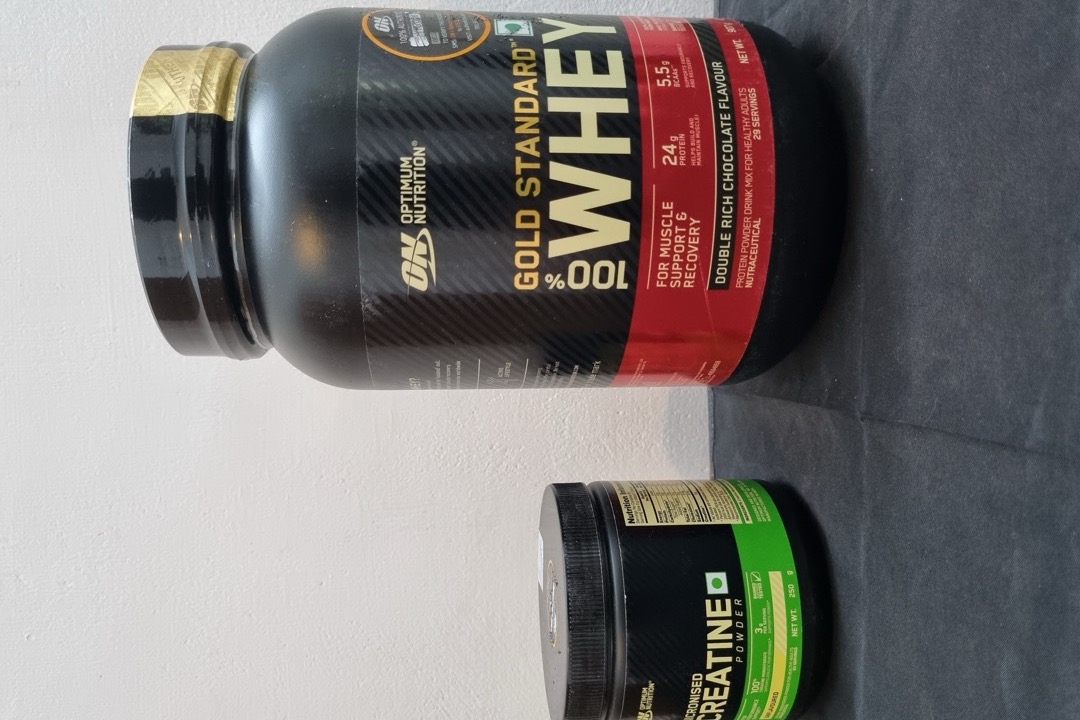
After about age 60, protecting muscle becomes one of the most important — and most overlooked — pillars of healthy aging. Adults lose roughly 3 to 8 percent of their muscle mass per decade after 30, and the rate accelerates after 60 in a process called sarcopenia. That lost muscle is not just about strength: it drives balance problems, falls, slower recovery from illness, and the gradual loss of independence that so many older adults fear most. Protein is the raw material the body uses to rebuild muscle, yet a large share of seniors fall short of even the modest protein RDA — appetite fades, cooking becomes harder, and chewing and dental issues push people toward soft, low-protein foods.
That is exactly the gap a good protein powder fills. It is one of the simplest, lowest-effort ways to add 20 to 30 grams of high-quality protein to a senior’s day, stirred into milk, a smoothie, oatmeal, or morning coffee. As a physician, I approach this category the way I approach any supplement: with attention to the clinical evidence, the biochemistry of why some proteins work better than others for aging muscle, and the safety caveats that most review sites skip — kidney health, blood sugar, lactose tolerance, and heavy-metal contamination among them. The nine products below are chosen and organized around the ways seniors actually differ, from muscle-building and diabetes to sensitive stomachs and poor appetite.
Find the Best Protein Powder for Your Needs
Jump to the pick that fits your situation, or read the full reviews below.
- Overall best protein powders for seniors
- Best whey protein powder for seniors
- Best protein powder for seniors to build muscle
- Best protein powder for seniors over 70
- Best protein powder for diabetic seniors
- Best plant-based protein powder for seniors
- More picks by age and need
How We Chose These Protein Powders
We started with products that are actually appropriate for older adults — complete proteins with a meaningful leucine content, clean labels, and formats a senior will realistically use every day — rather than pulling the highest-protein tubs off the sports-nutrition shelf. Every product here has a verified, in-stock Amazon listing, and we prioritized options with strong review volume and consistent tolerance feedback. We weighed protein quality and leucine content, digestibility and lactose, added sugar (with diabetes in mind), third-party testing and manufacturing standards, and palatability. We deliberately included nutritional drink mixes and fiber-fortified options because for many seniors — especially the frail or those with poor appetite — the “best” protein is the one that also delivers vitamins, calories, and easy mixing. Prices and availability were confirmed at the time of writing.
Best Protein Powders for Seniors Overall
These are the reviews in full — every product on this page appears once below, with its pros, cons, specs, and who it is for. The use-case sections that follow simply point back to these picks.
Best Overall: Optimum Nutrition Gold Standard 100% Whey
Optimum Nutrition’s Gold Standard 100% Whey earns the top spot because it does the single most important job for aging muscle better than almost anything else at its price: it delivers a fast-absorbing, complete protein rich in leucine. Each scoop provides 24 grams of protein with about 5.5 grams of BCAAs and roughly 2.7 grams of leucine — the specific amino acid that flips on muscle protein synthesis. This matters more with age because older muscle suffers from “anabolic resistance,” meaning it needs a bigger leucine signal to respond. A leucine-rich whey like this one is the most direct nutritional counter to that problem.
Beyond the formula, Gold Standard is one of the few mainstream powders carrying Informed Choice third-party testing on top of GMP manufacturing — genuine reassurance in a category where independent labs have repeatedly found heavy metals and label inaccuracies. It mixes cleanly, tastes acceptable across a wide flavor range, and has decades of consistent quality behind it, which is exactly what you want in a product a senior will drink daily for years. The main caveat is lactose: the concentrate in the blend can bother lactose-intolerant users, who should step up to the hydrolyzed isolate reviewed below. For everyone else, this is the best starting point. If you are supplementing to stay strong and steady on your feet, pair it with the strategies in our senior fall prevention guide.
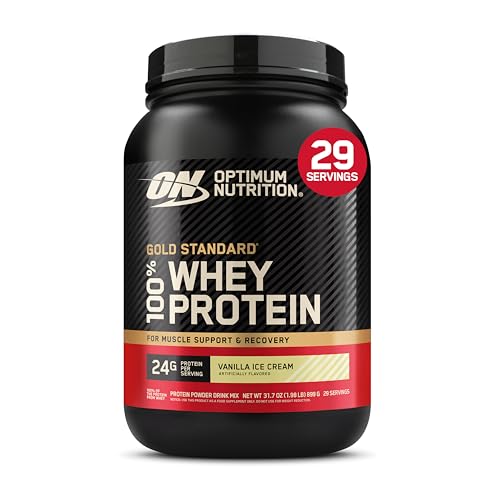
Optimum Nutrition Gold Standard 100% Whey Protein Powder
by Optimum Nutrition
The best all-around protein powder for most seniors — a complete, leucine-rich whey with third-party testing and a proven track record for preserving muscle with age.
Pros
- 24 g of complete whey protein per scoop with 5.5 g of naturally occurring BCAAs and roughly 2.7 g of leucine — the amino acid that most directly triggers muscle protein synthesis in older adults
- Whey isolate is the primary listed ingredient, delivering a fast-absorbing, complete amino acid profile ideal for countering age-related muscle loss
- Informed Choice tested and produced under GMP standards — meaningful third-party assurance in a loosely regulated category
- Mixes cleanly in water or milk with minimal grit, and comes in a wide range of tolerable flavors for daily long-term adherence
Cons
- Contains lactose from whey concentrate — may cause bloating in lactose-intolerant seniors, who should choose an isolate instead
- Flavored versions use artificial sweeteners some older adults prefer to avoid
Budget Pick: Six Star Whey Protein Plus
For seniors on a fixed income, the price per serving can decide whether a protein habit survives past the first tub. Six Star Whey Protein Plus is the value leader here — it delivers 30 grams of protein from a whey isolate and concentrate blend, plus a dose of creatine that further supports strength and muscle maintenance, at one of the lowest costs on this list. Creatine is one of the most evidence-backed supplements for preserving strength and function in older adults, so getting it bundled in is a genuine bonus.
It is produced in a cGMP-certified facility, mixes easily, and is stocked almost everywhere. The trade-offs are honest: it carries more added sugar and artificial flavoring than a premium isolate, it is not sport-tested by an independent lab, and the whey blend contains lactose. But none of that undermines its core value proposition — a large, complete protein dose at a price that makes daily use sustainable. For a senior who wants effective protein without a premium price, this is the pragmatic choice.

Six Star Whey Protein Plus
by Six Star
The best budget pick — 30 g of whey plus creatine at the lowest per-serving cost here, ideal for seniors who want daily protein without the premium price.
Pros
- One of the lowest per-serving costs of any whey protein — makes daily supplementation genuinely affordable on a fixed income
- Delivers 30 g of protein from a whey isolate and concentrate blend, plus added creatine to support strength and muscle maintenance
- Produced in a cGMP-certified facility with consistent label accuracy for a budget product
- Widely available and mixes easily — a practical, no-frills daily option
Cons
- Contains more added sugar and artificial flavoring than premium isolates
- Not third-party sport-tested, and the whey blend contains lactose
- Flavor and texture are acceptable rather than excellent
Premium Upgrade: Dymatize ISO100 Hydrolyzed Whey Protein Isolate
Dymatize ISO100 is the powder I point sensitive-stomach seniors to first. It is a hydrolyzed whey isolate, which means the protein has been both filtered to strip out nearly all the lactose and fat, and pre-digested into smaller peptides for fast, easy absorption. For the many older adults who have grown lactose-intolerant and bloat on ordinary whey, this is the difference between a protein habit they can keep and one they abandon in a week.
The macros are exceptionally clean — 25 grams of protein, 5.5 grams of BCAAs including 2.7 grams of leucine, just 1 gram each of sugar and fat, and under 120 calories — which also makes it a strong fit for weight-conscious or diabetic seniors. It is consistently rated among the best-mixing and best-tasting isolates, and taste drives adherence. The downsides are the premium price and a California Prop 65 lead notice, which appears on a great many protein powders; it is a reasonable prompt to keep daily doses moderate and to favor third-party-tested products, but not a reason to avoid protein supplementation. If joint comfort is also on your list, see our guide to supplements for joint health.

Dymatize ISO100 Hydrolyzed Whey Protein Isolate
by Dymatize
The premium upgrade for sensitive stomachs — a lactose-free hydrolyzed isolate that digests fast and clean, with high leucine for muscle preservation.
Pros
- Hydrolyzed whey isolate is filtered to remove nearly all lactose — the single best whey option for seniors who bloat on regular protein powders
- Pre-digested (hydrolyzed) peptides absorb quickly, and each scoop delivers 25 g of protein with 5.5 g BCAAs including 2.7 g leucine
- Just 1 g of sugar, 1 g of fat, and under 120 calories — clean macros suitable for weight-conscious or diabetic seniors
- Consistently rated among the best-mixing, best-tasting isolates, which supports long-term daily use
Cons
- One of the more expensive options per serving
- Carries a California Prop 65 lead notice (common across the protein category) — a reason to favor lighter daily doses and rotate sources
Runner-Up & Best Plant-Based: Orgain Organic Vegan Protein Powder
Orgain Organic Vegan is our runner-up overall and the best plant-based pick — and with more than 62,000 reviews, it is also the most-vetted product on this page. It provides 21 grams of complete protein from organic pea and brown rice, a pairing that covers the full essential amino acid profile. Because it is entirely dairy-free and lactose-free, it sidesteps the single most common tolerance problem seniors have with protein powders, and its fiber content quietly supports digestive regularity.
The label is exactly what older adults should look for: USDA Organic, Non-GMO Project Verified, vegan, and no added sugar. Plant protein is marginally lower in leucine than whey, so a slightly larger serving matches whey’s muscle-building effect — an easy adjustment. The texture is earthier and thicker than whey, which is the main complaint, but blending it into a smoothie or oatmeal resolves most of that. For any senior who is vegan, dairy-sensitive, or simply wants the cleanest possible label, this is the one to reach for. It pairs naturally with collagen supplements for connective-tissue support.
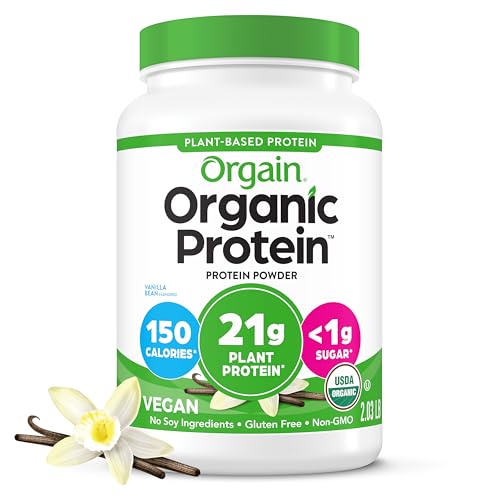
Orgain Organic Vegan Protein Powder
by Orgain
The best plant-based option and our runner-up overall — a clean, organic, dairy-free protein with unmatched review volume and good digestive tolerance.
Pros
- 21 g of complete plant protein from organic pea and brown rice — fully dairy-free and lactose-free for sensitive seniors
- USDA Organic, Non-GMO Project Verified, and vegan, with no added sugar — a clean label older adults can trust
- The most-reviewed protein powder on this list, with strong real-world tolerance feedback
- Fiber content supports digestive regularity, a common concern with age
Cons
- Plant protein has a slightly lower leucine content than whey, so a marginally larger dose may be needed for the same muscle-building effect
- Earthy, thicker texture that some users find grittier than whey
Premier Protein Powder, No Added Sugar
Premier Protein’s no-added-sugar powder is built for the large share of seniors managing type 2 diabetes or pre-diabetes. It delivers 30 grams of complete whey protein with no added sugar and low carbohydrate, so it adds substantial protein without meaningfully moving blood glucose — and because protein blunts the glycemic response of a meal, a shake can actually help smooth out post-meal spikes. It is also fortified with vitamins and minerals, so it does a little extra nutritional work.
Just as important for daily adherence, it tastes like a familiar milkshake and mixes smoothly, which keeps people drinking it. The trade-offs are that it uses artificial sweeteners in place of sugar (a non-issue for most, a dealbreaker for some), and the whey base contains lactose. For a diabetic senior who wants a high-protein, low-sugar shake from a mainstream, trusted brand, this is the standout. Keeping an eye on your numbers matters here — our reviews of blood pressure monitors and glucose monitors cover the tools that make that easy at home.

Premier Protein Powder, No Added Sugar
by Premier Protein
The best pick for diabetic seniors — 30 g of whey with no added sugar and added micronutrients, in a palatable milkshake format that supports adherence.
Pros
- 30 g of complete whey protein with no added sugar and low carbohydrate — well suited to seniors managing blood glucose
- Fortified with vitamins and minerals, adding nutritional value beyond protein alone
- Rich, familiar milkshake flavor that mixes smoothly and encourages consistent daily use
- From a widely trusted mainstream nutrition brand with strong review consistency
Cons
- Uses artificial sweeteners in place of sugar, which some prefer to avoid
- Whey base contains lactose — not ideal for the lactose-intolerant
Carnation Breakfast Essentials Powder Drink Mix
Not every senior needs a bodybuilding-grade protein; some need an easy, appealing way to get any nutrition at all. Carnation Breakfast Essentials has served that role for decades, and it is my pick for frail seniors or anyone with poor appetite. Mixed with a cup of milk it provides 13 grams of protein and 21 vitamins and minerals — a genuine nutritional safety net for someone who is skipping meals or eating too little.
Its real strengths are practical: it mixes into milk in seconds, the mild vanilla flavor is non-medicinal and consistently well tolerated (reflected in a remarkable 4.8-star rating), and the individual packets make dosing effortless for anyone with arthritis or memory changes. The trade-off is added sugar — the price of palatability and calories — which means diabetic seniors should choose the no-sugar Premier option above instead. And its protein content is lower than a dedicated whey or plant powder; think of it as an approachable nutrition supplement, not a protein concentrate. For an underweight or appetite-challenged senior, that approachability is exactly the point.

Carnation Breakfast Essentials Powder Drink Mix, Classic French Vanilla
by Carnation Breakfast Essentials
The best option for frail seniors or those with poor appetite — an easy-drinking, vitamin-fortified nutrition powder that adds protein and calories without effort.
Pros
- Delivers 13 g of protein when mixed with a cup of milk, plus 21 vitamins and minerals — a genuine nutritional safety net for seniors with poor appetite
- Mixes into milk in seconds with a mild, non-medicinal vanilla flavor older adults consistently tolerate and enjoy
- Individual packets make dosing effortless for anyone with dexterity or measuring difficulties
- Long-trusted, affordable, and easy to find — with a stellar 4.8-star rating
Cons
- Contains added sugar — the trade-off for palatability and calories, and a reason diabetic seniors should choose a no-sugar option instead
- Lower protein per serving than dedicated whey or plant powders; it is a nutritional supplement, not a high-protein concentrate
Optimum Nutrition Gold Standard 100% Micellar Casein
Micellar casein is the mirror image of whey: instead of a fast spike of amino acids, it forms a gel in the stomach and releases protein slowly over several hours. That makes Optimum Nutrition’s casein an excellent bedtime protein for seniors actively working to rebuild strength, because it counters the muscle breakdown that occurs during the long overnight fast. Taken before bed, it keeps a low, steady supply of amino acids available to muscle through the night.
Each serving provides 24 grams of complete protein from the same trusted, GMP-produced ON line as our top pick. The thick, pudding-like texture is filling and satisfying, which can also help with appetite control and satiety. It works beautifully as a complement to a daytime whey — fast protein by day, slow protein at night — for around-the-clock coverage. The caveats are that it contains lactose (so it is not for the dairy-sensitive) and it mixes thicker and slower than whey. For a senior building back muscle who wants to make the most of overnight recovery, it is the best slow-release option here.

Optimum Nutrition Gold Standard 100% Micellar Casein
by Optimum Nutrition
The best slow-release protein — a bedtime micellar casein that feeds muscle overnight, complementing a daytime whey for continuous protein support.
Pros
- Micellar casein digests slowly, releasing amino acids over several hours — ideal taken before bed to counter overnight muscle breakdown in older adults
- 24 g of complete protein per serving with a full amino acid profile from a trusted, GMP-produced brand
- The thick, pudding-like texture is filling and satisfying, helping with satiety and appetite control
- Low in sugar and pairs well with a daytime fast-digesting whey for around-the-clock coverage
Cons
- Contains lactose and is not suitable for the dairy-sensitive
- Thicker and slower to mix than whey; premium price point
Premier Protein Powder Plus Fiber
Muscle loss and sluggish digestion are two of the most common complaints of aging, and they rarely get solved by the same product — which is what makes Premier Protein Plus Fiber worth its own spot. It pairs 25 grams of protein with 7 grams of added fiber in a single scoop, directly targeting the digestive regularity that so many seniors struggle with while still delivering a solid protein dose. The fiber also helps blunt the blood-sugar rise after a shake, a quiet bonus for glucose management.
It is low in sugar, mixes smoothly into water, milk, or oatmeal, and comes from a mainstream brand with dependable quality control. The main limitations are a smaller review base than Premier’s flagship powder and the usual lactose in the whey base; the added fiber can also cause gas if you ramp up too quickly, so introduce it gradually. For a senior who wants their protein to do double duty for gut health, this is the most efficient choice on the list. Staying well hydrated helps the fiber do its job — our review of electrolyte powders covers hydration support worth knowing about.

Premier Protein Powder Plus Fiber, Vanilla
by Premier Protein
The best protein-plus-fiber option — 25 g of protein and 7 g of fiber in one scoop, targeting the muscle and gut-health needs that so often overlap in older adults.
Pros
- Pairs 25 g of protein with 7 g of added fiber — a rare combination that supports both muscle and the digestive regularity many seniors struggle with
- Low in sugar with a smooth vanilla flavor that mixes easily into water, milk, or oatmeal
- Fortified formula from a mainstream brand with reliable quality control
- The fiber helps blunt post-shake blood sugar rises, a bonus for glucose management
Cons
- Newer product with a smaller review base than the flagship Premier powder
- Whey base contains lactose; the added fiber may cause gas if introduced too quickly
Garden of Life Raw Organic Protein, Vegan
Garden of Life Raw Organic rounds out the list as a second plant-based option for seniors who put clean sourcing and gentle digestion first. It delivers 22 grams of complete protein from sprouted legumes and grains, and — uniquely here — builds in probiotics and digestive enzymes to make that plant protein easier to absorb, which can matter for older digestive systems. Its certification stack is among the most thorough on this page: USDA Organic, NSF Certified Gluten-Free, and Non-GMO Project Verified.
With zero added sugar, only 1 to 2 grams of net carbs, and 5 grams of fiber, it is a genuinely clean daily protein. The honest drawback is taste and texture — it is earthier and grittier than whey, which is reflected in its lower 4.2-star rating, so blending it into a flavored smoothie is the way to enjoy it. Like all plant proteins it is a touch lower in leucine than whey, so a modestly larger serving matches the muscle effect. For a senior who values organic, dairy-free, probiotic-supported nutrition and does not mind a smoothie, it is a solid choice. To pair protein with bone support, see our review of calcium supplements.

Garden of Life Raw Organic Protein, Vegan
by Garden of Life
A heavily certified organic plant protein with added probiotics and enzymes — the gentlest-digesting vegan option for seniors who prioritize clean sourcing over flavor.
Pros
- 22 g of complete plant protein from sprouted legumes and grains, plus built-in probiotics and digestive enzymes for gentle absorption
- USDA Organic, NSF Certified Gluten-Free, and Non-GMO Project Verified — one of the most thoroughly certified powders here
- Zero added sugar and only 1–2 g net carbs, with 5 g of fiber to support digestion
- Fully dairy-free and lactose-free — a strong second plant-based choice for sensitive seniors
Cons
- Earthy, grittier taste and texture that divides users — reflected in a lower 4.2-star rating
- Slightly lower leucine than whey, so plant-protein users may need a modestly higher dose
Best Whey Protein Powder for Seniors
Whey is the most effective protein type for preserving aging muscle because it is highest in leucine and absorbs quickly — the exact traits that overcome the anabolic resistance of older muscle. If you tolerate dairy, a whey is the first thing to try; if lactose is a problem, a hydrolyzed isolate keeps the benefits while removing almost all the lactose.
| Product | Price | Buy |
|---|---|---|
| Optimum Nutrition Gold Standard 100% Whey Protein PowderBest whey overall Leucine-rich, third-party tested, mixes clean | $47.99 | View on Amazon |
| Dymatize ISO100 Hydrolyzed Whey Protein IsolateBest lactose-free whey Hydrolyzed isolate — near-zero lactose, fast absorbing | $55.85 | View on Amazon |
| Six Star Whey Protein PlusBest value whey 30 g plus creatine at the lowest cost | $24.89 | View on Amazon |
Best Protein Powder for Seniors to Build Muscle
Building or rebuilding muscle after 60 comes down to enough total protein, enough leucine per dose, and consistency. A fast whey by day drives each meal’s muscle-synthesis signal, while a slow casein at night limits overnight breakdown — the two together are the most effective muscle-building pairing for older adults.
| Product | Price | Buy |
|---|---|---|
| Optimum Nutrition Gold Standard 100% Whey Protein PowderBest daytime muscle builder 24 g whey, 2.7 g leucine to trigger synthesis | $47.99 | View on Amazon |
| Optimum Nutrition Gold Standard 100% Micellar CaseinBest nighttime muscle support Slow-release casein feeds muscle overnight | $48.16 | View on Amazon |
| Dymatize ISO100 Hydrolyzed Whey Protein IsolateBest fast-absorbing isolate Hydrolyzed isolate absorbs fast post-activity | $55.85 | View on Amazon |
Best Protein Powder for Seniors Over 70
Past 70, priorities often shift from maximizing protein to making sure enough of it — plus overall nutrition — gets in at all. Appetite, chewing, and meal prep can all decline, so ease of use, palatability, and added vitamins matter as much as grams of protein. A fortified nutrition mix, a gentle high-protein option, and an easy-drinking pick cover most needs at this stage.
| Product | Price | Buy |
|---|---|---|
| Carnation Breakfast Essentials Powder Drink Mix, Classic French VanillaBest for poor appetite 13 g plus 21 vitamins — easy packets, loved flavor | $29.81 | View on Amazon |
| Premier Protein Powder Plus Fiber, VanillaBest for digestion 25 g protein with 7 g fiber for regularity | $40.99 | View on Amazon |
| Orgain Organic Vegan Protein PowderBest gentle daily protein Dairy-free, clean label, easy on the stomach | $29.59 | View on Amazon |
Best Protein Powder for Diabetic Seniors
For seniors managing diabetes or pre-diabetes, the number that matters most is added sugar. A no-added-sugar, high-protein powder adds muscle-supporting protein without spiking blood glucose — and can even flatten the rise from a meal. Fiber content is a further plus for glycemic control.
| Product | Price | Buy |
|---|---|---|
| Premier Protein Powder, No Added SugarBest no-added-sugar whey 30 g whey, no added sugar, fortified | $29.99 | View on Amazon |
| Dymatize ISO100 Hydrolyzed Whey Protein IsolateBest low-carb isolate 25 g, 1 g sugar, under 120 calories | $55.85 | View on Amazon |
| Premier Protein Powder Plus Fiber, VanillaBest fiber for glucose control 7 g fiber helps blunt post-shake glucose | $40.99 | View on Amazon |
Best Plant-Based Protein Powder for Seniors
Plant protein is the answer for seniors who are vegan, lactose-intolerant, or simply prone to dairy bloating. Choose a complete blend (pea plus rice, or multi-source) and take a slightly larger dose to match whey’s leucine. The bonus is extra fiber and, in some formulas, probiotics for easier digestion.
| Product | Price | Buy |
|---|---|---|
| Orgain Organic Vegan Protein PowderBest plant protein overall 21 g pea & rice, most-reviewed, clean label | $29.59 | View on Amazon |
| Garden of Life Raw Organic Protein, VeganBest organic + probiotic 22 g sprouted plant with probiotics & enzymes | $35.69 | View on Amazon |
Best Protein Powder for Seniors by Age and Need
A few more targeted picks for specific ages and situations — each links straight to Amazon so you can check current pricing.
| Product | Price | Buy |
|---|---|---|
| Optimum Nutrition Gold Standard 100% Whey Protein PowderBest protein powder for seniors over 60 Active 60s: leucine-rich whey to preserve strength | $47.99 | View on Amazon |
| Carnation Breakfast Essentials Powder Drink Mix, Classic French VanillaBest protein powder for seniors over 80 Over 80: vitamin-fortified, easy-drinking nutrition | $29.81 | View on Amazon |
| Orgain Organic Vegan Protein PowderBest protein powder for seniors over 90 Over 90: gentle, dairy-free protein that's easy to tolerate | $29.59 | View on Amazon |
How to Choose the Best Protein Powder for Seniors
Buyer's Guide
Choosing a protein powder for an older adult is different from choosing one for a young athlete. The priorities are muscle preservation, easy digestion, adequate leucine, clean ingredients, and — above all — a product the person will actually drink every day. Match these factors to the individual's health situation rather than simply buying the highest-protein tub.
Protein Type and Leucine Content
The type of protein determines how effectively it fights age-related muscle loss. Whey is the gold standard because it is rich in leucine — the amino acid that triggers muscle protein synthesis — and absorbs quickly, which helps overcome the 'anabolic resistance' of aging muscle. Whey isolate and hydrolyzed isolate keep this advantage while stripping out most lactose. Casein is a slow-release protein useful before bed. Plant proteins (pea, brown rice, soy, or multi-source blends) are complete and effective but slightly lower in leucine, so a modestly larger serving matches whey's effect. For most seniors focused on preserving strength, a leucine-rich whey is the first choice; plant protein is the answer for anyone dairy-sensitive or vegan.
Digestibility and Lactose
Lactose intolerance becomes far more common with age, and bloating or cramping is the fastest way to abandon a protein habit. Whey concentrate contains meaningful lactose; whey isolate and hydrolyzed isolate contain very little; and plant proteins contain none. Powders with added digestive enzymes or probiotics can further ease absorption. If a senior has ever felt gassy or uncomfortable after dairy, steer them toward an isolate or a plant-based option from the start — the benefits of whey protein for seniors only accrue if the product is tolerated well enough to be taken consistently.
Sugar and Suitability for Diabetes
Type 2 diabetes and pre-diabetes are common in older adults, so added sugar is a genuine concern. Many flavored powders and nutritional drink mixes carry 10–15 g of added sugar per serving. Diabetic seniors should choose a no-added-sugar formula (protein itself has minimal effect on blood glucose and can actually blunt the rise from a meal). Conversely, an underweight senior with poor appetite may benefit from the extra calories and palatability that a lightly sweetened nutritional powder provides. Read the added-sugar line, not just the total carbohydrate.
Third-Party Testing and Clean Labels
The U.S. supplement industry operates with minimal FDA pre-market oversight, so independent verification matters. Certifications such as Informed Choice, NSF Certified for Sport, and USP confirm that the label is accurate and the product is screened for contaminants including heavy metals — a real issue in the protein category, where lead and cadmium have turned up in independent testing. At minimum choose a GMP-produced product; ideally, choose one with a third-party seal, particularly for a senior taking it daily over years.
Palatability, Mixability, and Ease of Use
The best protein powder is the one a senior will actually drink. Flavor, a smooth (non-gritty) texture, and easy mixing directly determine adherence. Single-serve packets or a simple one-scoop routine help those with arthritis or memory changes. Consider whether it dissolves in the liquids the person already drinks — coffee, milk, or a smoothie — because folding protein into an existing habit beats adding a new chore. A slightly lower-protein powder taken every day beats a superior one that sits unused in the pantry.
Added Nutrients for Healthy Aging
Some powders do double duty. Nutritional drink mixes add a broad spectrum of vitamins and minerals — valuable for seniors whose overall intake is low. Added fiber supports the digestive regularity that commonly declines with age. Calcium and vitamin D support bone density alongside the muscle benefit, which together reduce fall and fracture risk. If a senior struggles to eat a varied diet, a fortified powder can quietly cover several gaps at once — though it should complement, not replace, whole-food nutrition.
The single most useful step before buying is to set a daily protein target and see how big your gap really is. Run your weight, age, and activity level through our free protein intake calculator — it returns your daily grams from cited sources, including the higher targets that geriatric guidelines recommend for older adults, with a per-meal breakdown. A protein powder then simply fills whatever your meals leave uncovered. For a lean-mass-based version of the same target, the lean body mass calculator gives it in three validated formulas. And if you strength-train to hold onto muscle with age, the one rep max calculator turns a working set into your estimated max and a full percentage chart to program safely.
From there, match the product to the person: a leucine-rich whey for general muscle preservation, a hydrolyzed isolate or plant protein for sensitive stomachs, a no-sugar formula for diabetes, a fortified nutrition mix for poor appetite, and a fiber blend for digestive health. Above all, pick something the senior will genuinely drink every day — consistency beats specs.
Final Verdict
For most older adults, the Optimum Nutrition Gold Standard 100% Whey is the best choice — a complete, leucine-rich, third-party-tested whey that does the core job of preserving aging muscle better than anything at its price. If dairy is a problem, step up to the Dymatize ISO100 hydrolyzed isolate; if you prefer plants, the Orgain Organic Vegan is the cleanest, most-vetted option. Diabetic seniors should reach for the no-added-sugar Premier Protein, and those with a fading appetite are well served by the vitamin-fortified Carnation Breakfast Essentials.
Whatever you choose, remember three principles that matter more than brand: get enough total protein (older adults need more than the old RDA suggests), spread it across meals in 25–30 gram doses, and — if your kidneys are healthy — treat a daily shake as a safe, low-effort investment in staying strong and independent. As always, confirm the plan with your own physician, especially if you have kidney disease, diabetes, or take multiple medications.
Frequently Asked Questions
Is protein powder good and safe for seniors?
How much protein does a senior actually need per day?
Whey or plant protein — which is better for older adults?
Can protein powder cause kidney problems in seniors?
When is the best time for a senior to take protein powder?
Related Articles
About the Reviewer

Dr. David Taylor, MD, PhD
Drexel University College of Medicine (MD), Indiana University School of Medicine (PhD)
Dr. David Taylor is a licensed physician and medical researcher who founded BestRatedDocs in 2016. With an MD from Drexel University and a PhD from Indiana University School of Medicine, he combines clinical expertise with a passion for health technology to provide evidence-based product recommendations. Dr. Taylor specializes in health informatics and regularly evaluates medical devices, diagnostic equipment, and therapeutic products to help healthcare professionals and patients make informed decisions.