Understanding Compression Levels: 15-20 vs 20-30 mmHg (Physician Guide)
Dr. David Taylor, MD explains the clinical difference between 15-20 and 20-30 mmHg compression, CEAP-mapped indications, and when ABI testing is required first.
Updated
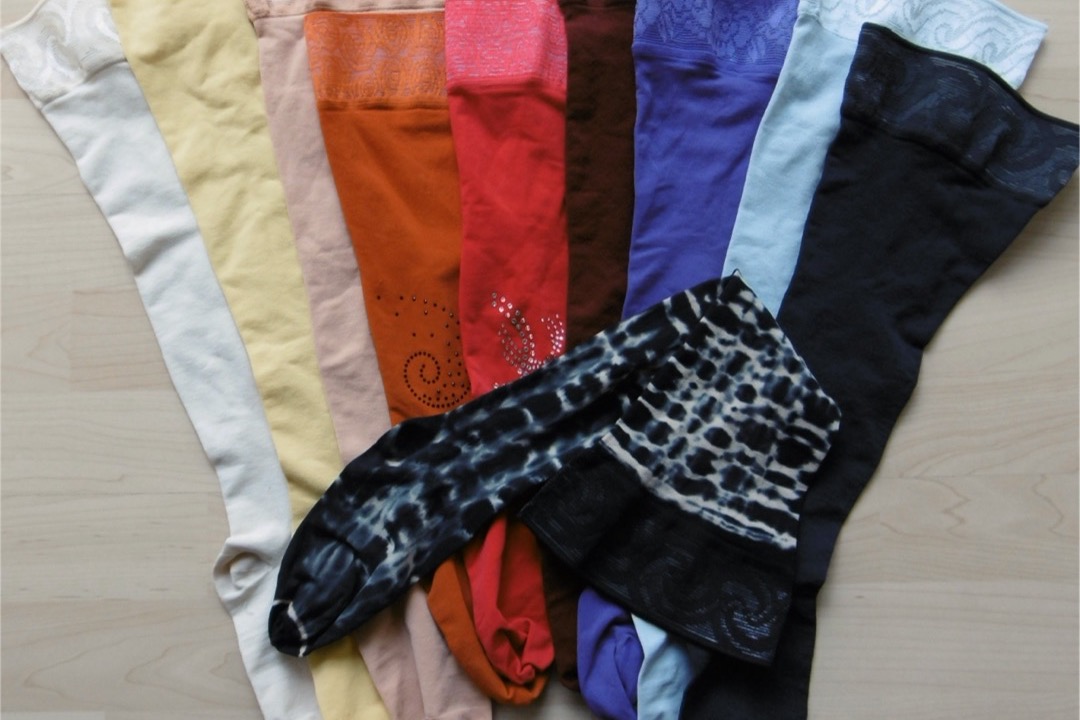
A patient came to my office last spring carrying a clear plastic bag with four pairs of compression socks, all unworn, all the wrong product for what she actually needed. She had developed worsening evening leg swelling and visible varicose veins after several years of standing-intensive shift work. Her primary care physician had told her to “get some compression,” and she had done what most patients do — gone to the pharmacy, picked up a couple of pairs labeled 15-20 mmHg, then ordered two more pairs online when those did not seem to help. The pharmacy stockings turned out to be 8-15 mmHg general support hose. One online pair was an athletic calf sleeve, foot uncovered, marketed as 20-30 mmHg compression but applied uniformly across the calf rather than graduated from the ankle up. The other online pair was a TED hose set — anti-embolism stockings designed for hospitalized bedridden patients, not ambulatory women working twelve-hour retail shifts. She had spent close to two hundred dollars on garments that, collectively, had no chance of treating her actual condition. Her duplex ultrasound showed great saphenous vein reflux at CEAP class C3, and she needed properly fitted 20-30 mmHg graduated knee-high compression socks while we worked up endovenous ablation as definitive treatment.
This kind of mismatch is the rule rather than the exception in my practice. Compression therapy is one of the highest-value, lowest-cost home interventions in vascular medicine — when it is matched correctly to the indication. When it is not, patients waste money, get no relief, and sometimes worsen their underlying problem. The labeling on retail compression products is genuinely confusing. The mmHg numbers are not regulated the way drug doses are. European classification systems do not translate cleanly to US retail. The line between athletic-marketed sleeves and medical-grade graduated stockings is blurred deliberately by manufacturers selling into both categories. And the most consequential safety question — whether you have adequate arterial inflow to safely tolerate compression at all — is almost never raised in retail or marketing copy.
This guide walks through compression levels the way I explain them to patients in clinic. What the mmHg numbers actually represent, what the published evidence supports at each level, how the US over-the-counter ranges differ from European medical classifications, and where the safety guardrails sit. The goal is to give you enough framework to either select the correct product confidently or to know when the question requires a physician’s evaluation before you go any further.
What mmHg Means — and Why Graduated Compression Works
Compression strength is expressed in millimeters of mercury, abbreviated mmHg. It is the same unit used for blood pressure and cerebrospinal fluid pressure, and it represents the external pressure the garment applies to the surface of the leg. A 20 mmHg compression stocking, applied correctly, exerts roughly the equivalent pressure of a 20-millimeter column of mercury — enough to meaningfully assist venous return without exceeding the threshold at which arterial inflow becomes compromised in patients with normal circulation.
The term that matters more than the absolute number is graduated. Medical compression stockings apply their highest pressure at the ankle, with pressure decreasing progressively as the garment extends up the leg. A typical 20-30 mmHg knee-high stocking might apply 100 percent of the labeled pressure at the ankle, roughly 70 percent at mid-calf, and 40 percent just below the knee. This pressure differential is the central mechanism. It creates a directional flow assist that propels venous blood and lymphatic fluid from the foot upward, working with — not against — the calf muscle pump that drives venous return during walking.
Without the graduation, compression alone does not achieve the same therapeutic effect. A garment that applies uniform pressure across the calf, or worse, applies more pressure proximally than distally, can actually impede venous return and produce paradoxical worsening of distal swelling. This is why athletic calf sleeves at the same nominal mmHg as a medical-grade graduated stocking are not interchangeable products — the compression profile is fundamentally different, and the foot is uncovered, leaving the most distal point of the venous system unaddressed. Our deep dive on compression socks vs sleeves walks through exactly why those two product categories are not interchangeable despite frequently being marketed side by side.
The Compression Level Chart: 8-15, 15-20, 20-30, 30-40, 40-50 mmHg
The published clinical literature and the major manufacturer specifications converge on five working ranges. The numbers below reflect what each level treats well, the typical purchase channel, and the clinical caveats.
| Level (mmHg) | Category | Typical indications | Purchase channel | Clinical notes |
|---|---|---|---|---|
| 8-15 | Mild support | General leg fatigue, mild standing-related achiness, basic travel comfort | OTC retail, athletic | Not medical-grade. Broadly safe in healthy adults. |
| 15-20 | Moderate | Mild varicose veins (CEAP C1 with symptoms), pregnancy swelling, long-haul travel DVT prophylaxis, occupational standing, mild post-exercise recovery | OTC retail, pharmacy | The most common retail range. Not classified as medical-grade in most jurisdictions. |
| 20-30 | Firm / lower medical-grade | Varicose veins (CEAP C2-C3), chronic venous insufficiency, post-thrombotic syndrome, post-surgical edema, mild-to-moderate lymphedema, post-DVT maintenance | OTC in US; prescription required for insurance coverage; prescription required in most of Europe | The most-prescribed level. ABI confirmation recommended before initiation in patients over 50, diabetics, and smokers. |
| 30-40 | Extra-firm / medical-grade | Severe venous disease (CEAP C4-C5), severe lymphedema, post-DVT high-risk, healed venous ulcer | Typically by prescription, dispensed through medical-supply channels | Vascular evaluation and ABI documentation are essentially required. Difficult to don without donning aids. |
| 40-50 | Very firm | Severe lymphedema, active or recurrent venous ulcer (CEAP C6), specific specialist-managed indications | Always by prescription, typically certified-fitter dispensed | Reserved for specialist management. Not appropriate for self-selection at any level. |
A few practical points the chart does not capture. First, the upper end of each range is the labeled ankle pressure under standardized testing conditions; actual delivered pressure varies modestly with garment age, fit, and donning technique. Second, the boundaries between ranges are not sharp clinical cliffs — a CEAP C3 patient may do well on either 20-30 or 30-40 mmHg depending on individual response, and the choice is often fine-tuned over weeks of clinical follow-up. Third, donning difficulty rises steeply above 20-30 mmHg; many patients who could theoretically benefit from 30-40 mmHg cannot reliably get the garment on without a donning aid such as a butler or silicone gel kit, and a prescription stocking that lives in a drawer because it is too hard to put on is no compression therapy at all.
15-20 mmHg: Who It Is Right For (and Its Limits)
The 15-20 mmHg range is where most over-the-counter compression sales happen and where the largest gap exists between marketing claims and clinical evidence. It is genuinely useful for several specific scenarios and genuinely insufficient for several others, and patients are routinely sold the wrong outcome for their indication.
The right indications for 15-20 mmHg are well-defined. Long-haul air travel is the cleanest evidence-based use case — flights longer than four to six hours measurably increase deep vein thrombosis risk, and 15-20 mmHg graduated knee-high socks are the most studied prophylactic intervention with consistent meta-analytic evidence of risk reduction. Pregnancy-related leg swelling and mild varicose veins responding in the second and third trimesters are another well-supported use, with most obstetricians recommending 15-20 mmHg starting around the time leg symptoms become noticeable. Occupational standing — nurses, teachers, retail workers, line cooks, surgeons — produces lower-leg achiness that responds well to mid-range compression worn during the workday. Mild post-exercise muscle soreness in healthy athletes is a soft indication, supported by patient-reported outcome data more than objective performance metrics.
The limits matter. 15-20 mmHg is not classified as medical-grade in the regulatory sense and does not deliver the pressure required to manage established chronic venous insufficiency, varicose veins beyond CEAP C1, post-thrombotic syndrome, or any meaningful lymphedema. Patients in those categories sometimes try 15-20 mmHg first because it is more comfortable and easier to don, find it underwhelming, and conclude that “compression doesn’t work for me” when the actual conclusion should be “this dose is too low for my disease.” If the indication is structural venous disease and the symptoms warrant treatment, 20-30 mmHg is the evidence-based starting level — and 15-20 mmHg, while better than nothing, should be a stepping stone rather than a destination.
The other common misconception is that 15-20 mmHg counts as “medical compression” because it is the lowest mmHg range labeled with that phrase in some marketing copy. The clinical convention, supported by the International Compression Club consensus, sets the medical-grade threshold at 20 mmHg. Anything below that is mild support — useful, often appropriate, but not the same therapy.
20-30 mmHg: The Most Prescribed Level — What the Evidence Says
20-30 mmHg is the workhorse range of medical compression therapy. It is the level the published evidence supports for the broadest set of indications, the level most insurance plans will cover with a prescription, and the level where the cost-benefit calculation is most favorable for patients who actually need compression rather than mild support.
The clinical evidence is substantial. The Cochrane systematic review on compression for chronic venous insufficiency identifies 20-30 mmHg as the consistent dose across well-designed trials demonstrating reduction in leg volume, improvement in skin trophic changes, and slowed progression of CEAP class. The IUP 2008 international consensus document (Partsch et al., International Angiology) formalized 20-30 mmHg as the standard starting dose for ambulatory chronic venous disease. The American College of Chest Physicians (ACCP) guidelines on antithrombotic therapy support 20-30 mmHg graduated compression in post-thrombotic syndrome management, where the goal is reducing chronic venous hypertension that develops after DVT.
The Belczak 2018 randomized controlled trial published in Phlebology (PMC6188858) is one of the more useful pieces of evidence for everyday clinical decision-making because it specifically compared 15-20 versus 20-30 mmHg in working adults stratified by posture. The finding that translates directly to the patient in front of me: seated workers — office workers, drivers, anyone whose work involves prolonged sitting — derived significantly greater benefit from 20-30 mmHg than from 15-20 mmHg in terms of leg-volume reduction at end-of-day measurement. Standing workers benefited from both levels and showed less differentiation between them. The mechanistic reading is that prolonged sitting impairs the calf muscle pump in a way that demands higher compression to overcome the venous stasis, while standing — even prolonged standing — at least keeps the calf pump intermittently active and partially compensates.
The practical implication is that “I stand all day, so I need higher compression” turns out to be backwards. The seated patient with all-day computer work and evening leg swelling is the patient who most often gets under-treated at 15-20 mmHg and would benefit from stepping up to 20-30 mmHg. This is the level where most of my patients with symptomatic chronic venous insufficiency, post-thrombotic syndrome, mild lymphedema, or moderate varicose veins land — and where the evidence base is strongest for the cost-benefit ratio of daily wear. For specific product selection at this level, our best compression socks review covers the validated 20-30 mmHg options across knee-high and thigh-high lengths, with discussion of fit, donning ease, and durability.
30-40 mmHg and Above: When Medical Supervision Is Essential
The transition from 20-30 to 30-40 mmHg is not just a step up in pressure; it is a step into a different category of therapy where vascular evaluation, ABI documentation, and certified-fitter sizing become essentially required rather than optional.
The CEAP-to-mmHg mapping for the higher ranges is consistent across vascular guidelines:
| CEAP class | Description | Recommended compression |
|---|---|---|
| C0 | No visible venous disease | None or 8-15 mmHg if symptomatic |
| C1 | Spider/reticular veins | 15-20 mmHg if symptomatic |
| C2 | Varicose veins ≥ 3 mm | 20-30 mmHg |
| C3 | Edema with venous origin | 20-30 mmHg |
| C4 | Skin changes (pigmentation, eczema, lipodermatosclerosis) | 30-40 mmHg |
| C5 | Healed venous ulcer | 30-40 mmHg (compression for life) |
| C6 | Active venous ulcer | 30-40 to 40-50 mmHg, often with multi-layer bandaging during active ulceration |
The reasons supervision matters at 30-40 mmHg and above are concrete. First, the pressure is high enough that getting it wrong produces real harm — skin breakdown, paradoxical edema if applied without correct graduation, and tissue ischemia in patients with unrecognized arterial disease. Second, donning at this level is genuinely difficult; many patients require silicone donning butlers, glove-assisted technique, or in some cases caregiver assistance, and the dispensing process should include a hands-on demonstration that retail purchase does not provide. Third, the indications themselves — CEAP C4 and beyond — are by definition advanced disease that warrants specialist follow-up rather than self-management.
The CEAP C5 patient — healed venous ulcer — is the prototypical example of compression-for-life. Once a venous ulcer has formed and healed, the patient remains at high lifetime risk of recurrence, and consistent 30-40 mmHg graduated compression daily is the cornerstone of recurrence prevention. Failure to maintain compression in this population is the single most reproducible predictor of ulcer recurrence within 12 months. This is not an indication where switching to a lower-comfort level for convenience is clinically acceptable.
Compression Socks vs TED Hose: A Critical Distinction
I see TED hose mistaken for medical compression socks more often than any other compression-product confusion. The two are genuinely different products with different design intent, different pressure profiles, and different appropriate use cases.
TED hose — formally called anti-embolism stockings — are typically labeled at 8-18 mmHg and are designed for non-ambulatory hospitalized patients confined to bed. Their pressure profile is engineered for the supine position, where graduated compression is less critical because gravity is not the dominant force on lower-extremity venous return. They are intended to prevent perioperative and early-recovery deep vein thrombosis in patients who cannot use their calf muscle pump because they are not walking.
The clinical limits matter. Once a patient is up and ambulating — even slowly post-op — TED hose are no longer the appropriate garment. The calf muscle pump becomes the primary driver of venous return during walking, and the appropriate therapy switches to graduated medical compression socks at the indicated mmHg level. Continuing TED hose in an ambulatory patient with chronic venous insufficiency is essentially under-treatment at a level that almost certainly will not deliver the clinical effect the patient needs.
The retail confusion happens because TED hose are sometimes sold through pharmacy channels alongside graduated compression socks, often at similar price points and with overlapping packaging conventions. A patient who has been told to “wear compression” by a discharge nurse may pick up TED hose and assume they are equivalent to graduated medical socks. They are not. If you are walking around, you need graduated medical compression socks. Reserve TED hose for the use case they were designed for: bedridden hospitalization or immediate post-surgical recovery before ambulation begins.
US vs European Compression Classifications: Why “Class 1” Doesn’t Always Mean 20-30 mmHg
This is where labeling translation gets meaningful in dollars and therapy. The US retail convention specifies compression products by a numeric mmHg range — 15-20, 20-30, 30-40, and so on. The European convention, codified in the German RAL-GZ 387 standard and used by Sigvaris, Medi, Jobst, Juzo, and most other European medical-grade manufacturers, classifies compression in numbered “compression classes” (CCL) that map to different mmHg ranges than US patients often expect.
The RAL CCL framework runs:
- CCL 1: 18-21 mmHg (light medical compression)
- CCL 2: 23-32 mmHg (moderate medical compression)
- CCL 3: 34-46 mmHg (strong medical compression)
- CCL 4: ≥ 49 mmHg (very strong medical compression)
The trap is that a patient in the US, told to wear 20-30 mmHg compression, may purchase a Sigvaris or Medi stocking labeled “Class 1” and assume the labels are equivalent. They are not. CCL 1 at 18-21 mmHg is closer to the upper end of the US 15-20 retail range than to the US 20-30 retail range. The patient who needed 20-30 ends up wearing what is functionally 18-21, falls short of the prescribed dose, and may conclude that compression is not working when the issue is dosage labeling.
The reverse problem appears when patients shopping European brands assume CCL 2 is roughly equivalent to US 20-30. CCL 2 at 23-32 mmHg overlaps but extends higher than the US 20-30 range; for some patients with normal arterial circulation this is clinically indistinguishable, but for borderline patients it can deliver more compression than the US prescription specified.
The practical guidance: read the actual mmHg range on the label, not the class designation. If you have a US prescription for 20-30 mmHg and you are buying a European-manufactured stocking, look for “23-32 mmHg” on the packaging — that is the closest functional equivalent — and confirm with your prescribing physician if you are buying outside the dose range you were given. The class numbers are not interchangeable; the mmHg ranges are.
Safety First: Who Should Not Wear Compression Without Medical Clearance
This is the most important section in this article and the one most consumer-facing content omits entirely. Compression therapy is broadly safe in patients with normal arterial inflow and intact skin. It is not universally safe, and several specific patient populations require medical clearance — and in some cases an absolute contraindication — before initiating compression at any level above 8-15 mmHg.
Peripheral arterial disease (PAD) is the central safety question. The screening tool is the ankle-brachial index — a simple, non-invasive Doppler measurement comparing systolic blood pressure at the ankle to systolic blood pressure at the brachial artery. A normal ABI is 1.0 to 1.4. The clinical thresholds for compression decision-making are:
- ABI ≥ 0.8: Generally safe to initiate standard graduated compression at the indicated mmHg level.
- ABI 0.6 to 0.8: Borderline. Requires vascular specialist clearance and modified compression — typically reduced pressure (usually capped at 23-32 mmHg or lower) and close monitoring for signs of arterial insufficiency.
- ABI < 0.6: Absolute contraindication to standard compression therapy. The patient has critical arterial inflow compromise, and external compression can tip marginal tissue into ischemia.
- ABI > 1.4: Falsely elevated, typically due to arterial calcification (common in diabetes and chronic kidney disease). Requires alternative testing — toe-brachial index or duplex ultrasound — to assess arterial status accurately before compression.
ABI should be obtained before compression initiation in any patient over 50, any smoker or former smoker, any patient with diabetes, any patient with documented atherosclerotic disease elsewhere, and any patient with calf pain on walking that resolves with rest (claudication). The test takes ten minutes in a vascular lab or a properly equipped primary care office and is the single highest-value safety check in compression therapy.
The other complete contraindications:
- Acute cellulitis or active skin infection in the treatment area. Compression over infected tissue spreads infection and prevents healing.
- Acute deep vein thrombosis without anticoagulation in place. New-onset DVT is treated with anticoagulation first; the timing and role of compression therapy are determined by the treating physician.
- Severe peripheral neuropathy with absent protective sensation. The patient cannot feel ischemic pressure or skin breakdown, eliminating the warning signal that prevents compression-related injury. Diabetic patients with documented neuropathy should initiate compression only with physician guidance and close skin surveillance, ideally with daily skin inspection by themselves or a caregiver. Diabetic patients without significant venous disease and without overt circulatory issues are usually better served by diabetic socks — non-binding, seamless garments designed for diabetic foot care — than by retail compression products.
- Decompensated congestive heart failure. Aggressive lower-extremity compression in a patient with poor cardiac reserve can shift fluid centrally and precipitate pulmonary edema. Compression in CHF patients should be initiated under cardiology supervision and titrated carefully.
- Severe arterial or mixed-etiology leg ulceration. Requires formal vascular evaluation; the correct treatment depends on the underlying etiology and may not include compression at all.
If any of these apply, the answer is not to pick a lower mmHg and hope for the best. The answer is to see a physician for evaluation before initiating any compression therapy. The downside of getting compression wrong in these populations ranges from skin breakdown to limb-threatening ischemia, and the cost of the workup is small relative to the cost of the complication.
For patients dealing with adjacent orthopedic concerns — chronic knee pain, ankle instability, or leg-fatigue secondary to foot mechanics — supportive products such as the options reviewed in best knee braces, best ankle braces, and best orthotic insoles often pair well with appropriate compression and can address the mechanical contributors that compression alone does not. For chronic lower-extremity nerve pain that is not primarily circulatory in origin, a TENS unit addresses the neural component directly and is a complementary rather than competing therapy. None of these substitutes for compression in a patient with venous disease, but several of them legitimately reduce the leg-symptom burden that drives patients to compression in the first place.
How to Put On Compression Stockings Correctly
Donning technique is the difference between a garment that delivers its labeled pressure and one that lives bunched at the ankle delivering inconsistent compression along its length. At 20-30 mmHg and above, donning becomes meaningfully difficult, and the most common reason a properly indicated and properly fitted stocking fails is that the patient cannot reliably get it on correctly.
The protocol I demonstrate to every new compression patient:
-
Don first thing in the morning. Put the garment on within ten minutes of getting out of bed, before the leg has had time to swell. Donning a non-edematous leg is dramatically easier than donning a leg that has accumulated several hours of dependent edema. If you cannot don in the morning, lie down with your legs elevated for fifteen minutes before attempting to don during the day.
-
Turn the stocking inside out down to the heel. Do not try to pull a fully-extended stocking onto the leg. Reach inside the stocking, grasp the heel, and pull the leg of the stocking inside-out down to the heel pocket. The result should be a small, manageable bunched garment with the foot portion accessible.
-
Position the foot. Slide your foot into the foot portion, ensuring the heel pocket is properly seated under your heel — not in front of or behind the actual heel anatomy. Misplacement of the heel is the most common fit error and causes the entire pressure profile to shift up or down the leg incorrectly.
-
Roll the stocking up the leg. Do not pull from the top of the stocking; roll the inside-out portion up the leg progressively, smoothing the fabric flat against the skin as you go. Avoid bunching, twisting, or letting wrinkles form — each wrinkle creates a focal pressure point that exceeds the labeled mmHg and can produce skin damage over time.
-
Smooth the fabric and check the position. Once fully donned, run your hands up the leg from ankle to top of stocking to confirm even distribution. The top band should sit one to two finger-widths below the popliteal crease (back of the knee) for knee-high stockings — too high, and the band cuts behind the knee; too low, and you are not getting the upper-leg pressure component.
-
Use donning aids if needed. At 20-30 mmHg and especially at 30-40 mmHg, silicone donning butlers, donning gloves with rubber grip, or slip-on devices like the Medi 2-in-1 are not optional luxuries — they are how most patients reliably don higher-grade compression. Insurance often covers donning aids when prescribed alongside the compression itself.
-
Doffing protocol. Roll the stocking inside out as you remove it, starting from the top and rolling progressively down to the heel. Do not yank from the top edge; this stretches the elastic fibers near the upper band and accelerates garment fatigue.
-
Skin inspection at doff. Each evening when you remove the stocking, inspect the skin for new redness, indentation patterns, rashes, or breakdown. Some pink discoloration in the pattern of the stocking weave is normal and resolves within thirty minutes; persistent indentation, blanching pressure marks, or any open skin is not normal and warrants reassessment of fit or indication.
Don and doff every day. Nighttime wear of graduated compression is appropriate only in specific medical scenarios as discussed above; for ambulatory patients with venous disease, the garment goes on in the morning and comes off at bedtime. Replace the garment every three to six months with regular daily wear — compression products lose effective pressure as the elastic fibers fatigue with washing and use, and a stretched-out stocking that no longer applies the labeled pressure is the same as wearing nothing at all.
Final Clinical Summary
Compression therapy is one of the most effective and underutilized home interventions in vascular medicine, and the dose-to-indication match is what determines whether it works. 15-20 mmHg is appropriate for general support, mild varicose veins, pregnancy swelling, travel DVT prophylaxis, and occupational standing — useful, broadly safe, but not medical-grade. 20-30 mmHg is the evidence-based starting level for chronic venous insufficiency, established varicose veins (CEAP C2-C3), post-thrombotic syndrome, post-surgical edema, and mild-to-moderate lymphedema; it is over-the-counter in the US but warrants ABI confirmation in any patient over 50, diabetic, or with cardiovascular risk factors before daily wear. 30-40 mmHg and above belong in the realm of vascular specialists and certified compression fitters, with CEAP C4 through C6 mapping to those higher pressures and the donning challenges and safety considerations rising correspondingly.
Read the actual mmHg range on the label, not the marketing class. Distinguish graduated medical compression socks from anti-embolism (TED) hose and from athletic calf sleeves — each is a different product for a different patient. Get the workup before you commit to daily 20-30 mmHg or higher in any patient with cardiovascular risk factors, and do not self-prescribe compression in the presence of any of the absolute contraindications above. For specific product selection at the level your indication requires, our compression socks review walks through validated options across the over-the-counter and medical-grade ranges, and our companion article on compression socks vs sleeves covers when each garment category is the right tool. For patients managing hand and wrist symptoms in addition to lower-extremity issues, compression gloves cover the upper-extremity equivalent.
This guide is informational and does not replace individual medical evaluation. Compression therapy at the right dose, fitted correctly, used for the right indication, is one of the most cost-effective home therapies in vascular medicine. Used at the wrong dose or in the presence of unrecognized arterial disease, it can quietly cause harm. The fifteen minutes it takes to confirm your indication and your arterial status with a physician is the highest-leverage time you can spend before committing to daily compression — particularly at 20-30 mmHg or above. Match the product to the actual clinical problem, and the therapy delivers what the literature promises.
Frequently Asked Questions
What is the difference between 15-20 and 20-30 mmHg compression socks?
Do I need a prescription for 20-30 mmHg compression socks?
What level of compression do I need for varicose veins?
What is the difference between compression socks and TED hose?
Can I wear compression socks to bed?
Related Articles
About the Reviewer

Dr. David Taylor, MD, PhD
Drexel University College of Medicine (MD), Indiana University School of Medicine (PhD)
Dr. David Taylor is a licensed physician and medical researcher who founded BestRatedDocs in 2016. With an MD from Drexel University and a PhD from Indiana University School of Medicine, he combines clinical expertise with a passion for health technology to provide evidence-based product recommendations. Dr. Taylor specializes in health informatics and regularly evaluates medical devices, diagnostic equipment, and therapeutic products to help healthcare professionals and patients make informed decisions.