7 Best Compression Gloves of 2026
Dr. David Taylor reviews the best compression gloves for arthritis, Raynaud's, and carpal tunnel. Compare top-rated options by coverage, material, and clinical fit.
Updated

Arthritis affects more than 58 million adults in the United States, and hand pain is among the most functionally limiting manifestations of both rheumatoid and osteoarthritis. Compression gloves have been used as a conservative management tool for hand symptoms for decades, and in 2026, we reviewed the seven best compression gloves available on Amazon — evaluating each for clinical design rationale, compression quality, fit accuracy, and real-world performance across a combined pool of more than 165,000 verified buyer reviews.
This review is informed by Dr. David Taylor’s clinical background in internal medicine and evidence-based evaluation of durable medical equipment, combined with systematic analysis of verified Amazon review patterns, peer-reviewed compression therapy literature, and the specific requirements of the three conditions that drive most compression glove purchases: rheumatoid arthritis, osteoarthritis, and Raynaud’s syndrome. If you are also managing lower-body circulation concerns, see our companion guide to the best compression socks for the same evidence-based approach applied to graduated leg compression — and our free compression sock size chart for cross-brand sizing across the eight major compression sock manufacturers.
After reviewing products ranging from high-volume copper-infused fingerless gloves to Certified Hand Therapist-designed options and full-finger designs for Raynaud’s, our top recommendation is the Copper Compression Arthritis Gloves (Fingerless) — a category leader with more than 66,000 verified reviews and consistent performance across the most common arthritis presentations. For buyers on a tight budget or those eligible for FSA or HSA reimbursement, the Vive Arthritis Gloves deliver solid basic compression at the lowest verified price in this roundup.
| Product | Price | Buy |
|---|---|---|
| Copper Compression Arthritis Gloves (Fingerless)Best Overall | $25.95 | View on Amazon |
| Vive Arthritis GlovesBudget Pick | $9.99 | View on Amazon |
| Isotoner Arthritis Compression Gloves (CHT-Designed)Premium Pick | $18.81 | View on Amazon |
| Doctor Developed Compression Gloves (Open-Finger)Runner-Up | $14.95 | View on Amazon |
| ComfyBrace Copper Infused Compression Arthritis GlovesRunner-Up | $15.97 | View on Amazon |
| FREETOO All-Around Compression Arthritis GlovesRunner-Up | $23.99 | View on Amazon |
| Copper Compression Full Finger Arthritis GlovesRunner-Up | $24.95 | View on Amazon |
Find the Best Compression Gloves for Your Need
Jump to the recommendation that matches your condition or activity:
- Best compression gloves overall
- Best compression gloves for swelling
- Best copper compression gloves
- Best compression gloves for crochet
- Best compression gloves for rheumatoid arthritis
- More use cases — lymphedema, typing, Raynaud’s, and others
How We Selected These Compression Gloves
We focused our review on products with verifiable Amazon listings, meaningful review depth (prioritizing products with at least 5,000 verified ratings where possible), and clear product specifications that allow clinical comparison. For each glove, we assessed the finger coverage design against condition-specific requirements, evaluated compression delivery and consistency based on verified user feedback, identified which clinical presentations each design best serves, and confirmed all seven ASINs as live and in-stock. Products are sequenced from Best Overall to condition-specific picks so readers can match their diagnosis to the right design without reading the entire review.
Do Compression Gloves Actually Work? What the Research Shows
The evidence base for compression gloves is more nuanced than most consumer review articles acknowledge, and as a physician I think it is important to frame this honestly before recommending specific products.
The foundational systematic review is Hammond et al. (2016), published in Cochrane Database of Systematic Reviews, which evaluated compression gloves for rheumatoid arthritis specifically. The review found low-quality evidence of modest benefit for pain and grip strength, but noted that study heterogeneity, small sample sizes, and short follow-up durations made firm conclusions difficult. The 2023 A-GLOVES randomized controlled trial (Nasir et al., Annals of the Rheumatic Diseases) added higher-quality data specifically for RA patients, finding statistically significant improvement in morning stiffness and patient-reported hand function at 12 weeks compared to control gloves — a meaningful result, though the effect size was modest.
What the evidence supports: compression gloves may help reduce morning hand stiffness and improve perceived grip in RA patients during active disease phases. They appear to work primarily through warmth retention, edema reduction from circumferential compression, and proprioceptive feedback that modulates pain perception. What the evidence does not support: that compression gloves significantly reduce structural joint damage, replace pharmacological therapy for RA, or deliver equivalent benefit for osteoarthritis (which involves different pathophysiology).
The clinical bottom line is that compression gloves are a low-risk, modest-benefit conservative tool appropriate as an adjunct to, not a replacement for, your physician’s recommended management plan. If you are also using a TENS unit for broader pain management, see our TENS units guide for options that may complement compression therapy for chronic musculoskeletal pain.
Rheumatoid Arthritis vs. Osteoarthritis vs. Raynaud’s — Which Gloves Fit Which Condition
This is the most important clinical distinction in the compression glove category, and virtually no competitor review articles address it clearly. The three conditions that drive most purchases have meaningfully different requirements:
Rheumatoid Arthritis (RA): RA produces synovial inflammation that causes joint swelling, warmth, and morning stiffness. Compression gloves address the edema component directly through circumferential pressure and secondarily improve function through warmth and proprioception. The evidence base for compression gloves is strongest in RA — the A-GLOVES 2023 RCT enrolled RA patients specifically. Open-finger fingerless gloves are appropriate for most RA patients. Patients with moderate-to-severe RA who require firm compression should prioritize products with specific sizing guidance and confirmed compression gradient delivery, such as the Isotoner CHT-Designed gloves.
Osteoarthritis (OA): OA does not produce the same synovial inflammatory edema as RA. The clinical benefit of compression gloves in OA is primarily through warmth (which reduces perceived stiffness), gentle proprioceptive feedback (which modulates pain perception), and psychological reassurance. Realistic expectations are important: compression gloves will not reduce the structural changes of OA, and the effect on OA pain is more variable than in RA. Open-finger designs that allow continued hand function are the right choice for OA patients, with material comfort prioritized over compression firmness.
Raynaud’s Syndrome: Raynaud’s involves episodic digital vasospasm triggered by cold exposure or emotional stress, causing characteristic color changes (white, blue, then red) and significant pain in the fingers. For Raynaud’s, the critical design requirement is full-finger coverage with insulating material that prevents the cold exposure triggering vasospasm — fingerless gloves do not address this need. The Copper Compression Full Finger Arthritis Gloves with touchscreen-compatible fingertips is the only product in this review specifically suited to Raynaud’s management.
Carpal Tunnel Syndrome (CTS): CTS involves median nerve compression at the wrist and requires wrist immobilization in neutral position — not just circumferential compression. Standard compression gloves are not the primary intervention for CTS. The FREETOO all-around glove in this review is designed with carpal tunnel in mind, but patients with moderate-to-severe CTS should prioritize a rigid wrist splint (see our wrist braces guide) and use compression gloves only as a supplementary comfort measure.
Best Compression Gloves Overall
Every glove below is reviewed once, in depth — the condition-specific sections that follow reference these same seven picks.
1. Copper Compression Arthritis Gloves (Fingerless) — Best Overall
With more than 66,000 verified Amazon reviews — the largest real-world performance dataset of any compression glove in this category — the Copper Compression Arthritis Gloves represent the most thoroughly validated consumer option available. That review volume matters clinically: a large and diverse buyer population across different arthritis types, hand sizes, and use patterns provides a performance signal that cannot be replicated by smaller datasets.
The fingerless design is the right clinical choice for the majority of arthritis patients. Preserving fingertip dexterity while delivering continuous metacarpal and wrist compression allows patients to maintain their daily hand function — typing, writing, phone use, cooking — without removing the gloves, which drives the compliance that determines whether any conservative intervention produces benefit. The copper-infused fabric adds practical antimicrobial odor resistance for daily wear, even though the copper itself has no documented independent clinical effect on arthritis symptoms.
The sizing system with full measurement guidance is a genuine clinical advantage over alternatives with only two or three size categories. Compression that does not fit the hand correctly delivers inconsistent pressure — either too loose to provide therapeutic benefit or too tight to wear comfortably for the 6 to 8 hours per day that compliance requires. For patients beginning compression therapy for the first time, this is our recommended starting point.

Copper Compression Arthritis Gloves (Fingerless)
by Copper Compression
The most-reviewed compression glove on Amazon — copper-infused fingerless design delivers consistent metacarpal compression with full dexterity preserved.
Pros
- 66,000+ verified Amazon reviews make this the most-reviewed compression glove in the category by a wide margin — the largest real-world performance dataset available
- Fingerless design preserves full fingertip dexterity for typing, phone use, and fine motor tasks while delivering continuous metacarpal and wrist compression
- Copper-infused nylon fabric provides antimicrobial properties that resist odor accumulation during extended daily wear — relevant for patients in multi-month arthritis management
- Available in multiple sizes with a full measurement guide — critical for achieving the consistent compression that makes these clinically useful rather than merely decorative
Cons
- Copper-infused fabric provides no documented clinical benefit beyond the compression itself — the marketing claim exceeds the evidence, though the glove's compression performance is real
- Open-finger design may provide insufficient warmth for Raynaud's patients who need full digital coverage to manage vasospasm episodes effectively
2. Vive Arthritis Gloves — Budget Pick
The Vive Arthritis Gloves hold Amazon’s Choice status with more than 21,000 verified reviews at 4.3 stars — a strong signal that buyers in the budget segment are finding the product meets their expectations. The defining clinical advantage is FSA and HSA eligibility, which changes the effective cost comparison significantly for the substantial portion of arthritis patients covered by high-deductible health plans with tax-advantaged spending accounts.
For patients new to compression gloves and uncertain whether compression therapy will benefit their specific presentation, the Vive provides a low-risk entry point. The open-finger design and standard nylon-spandex construction deliver the core compression mechanism at a price point that reduces the cost of experimentation. If compression therapy does not produce meaningful benefit after four to six weeks of consistent use — which is a realistic outcome for some OA patients — the financial consequence is minimal.
The primary clinical limitation is compression firmness: patients with moderate-to-severe RA who require firm therapeutic compression may find the Vive’s lighter construction insufficient. In that population, the Isotoner CHT-designed gloves or Copper Compression options are more appropriate, and the higher price is justified by the improved clinical design.
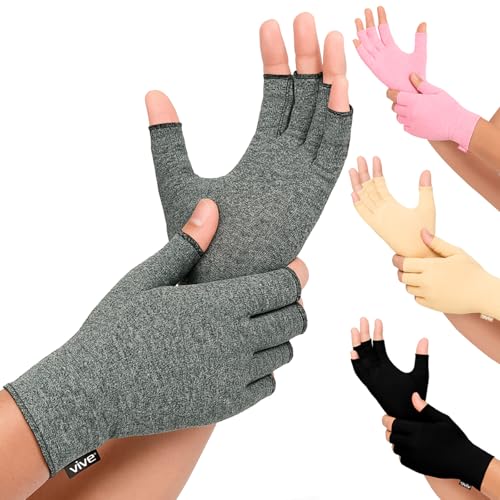
Vive Arthritis Gloves
by Vive Health
FSA/HSA-eligible arthritis gloves with 21,000+ verified reviews — the most cost-effective entry point for daily compression support.
Pros
- FSA and HSA eligible — one of the few compression gloves in this category that qualifies for tax-advantaged health spending accounts, reducing effective out-of-pocket cost
- 21,000+ verified reviews at 4.3 stars confirms consistent performance across a large and diverse buyer population
- Amazon's Choice designation reflects strong conversion and return rates — real-world signal that buyers find this product meets their expectations
- Open-finger fingerless design maintains full hand function for daily tasks, keyboard use, and phone interaction during wear
Cons
- Lighter construction than premium alternatives — patients requiring firm therapeutic compression for moderate-to-severe RA may find the pressure insufficient
- Limited sizing guidance compared to medical-grade alternatives — measure carefully before purchasing to avoid a fit that undermines compression delivery
3. Isotoner CHT-Designed Arthritis Compression Gloves — Upgrade Pick
The Isotoner arthritis compression gloves carry a clinical credential that distinguishes them from every other product in this roundup: design by a Certified Hand Therapist (CHT). CHT certification requires passage of a rigorous specialty examination following years of clinical hand rehabilitation practice — it is the highest applicable credential in this space and provides genuine assurance that the compression gradient, joint coverage, and wrist support architecture are clinically intentional rather than marketing-driven.
The 4.5-star rating is the highest satisfaction score in this review, and the consistent feedback behind it emphasizes fit quality and noticeable symptom relief — two outcomes that depend directly on accurate compression delivery. The extended wrist component provides additional radiocarpal support that standard wrist-stopping fingerless gloves lack, making this a meaningful upgrade for patients with combined wrist and finger involvement, which is a common presentation in RA.
For patients whose physicians or occupational therapists have specifically recommended compression gloves as part of an arthritis management protocol, the CHT-backed design provides appropriate clinical credibility. This is also the most defensible choice for patients who want to document that their compression glove purchase was clinically informed — relevant for insurance reimbursement claims or FSA documentation.
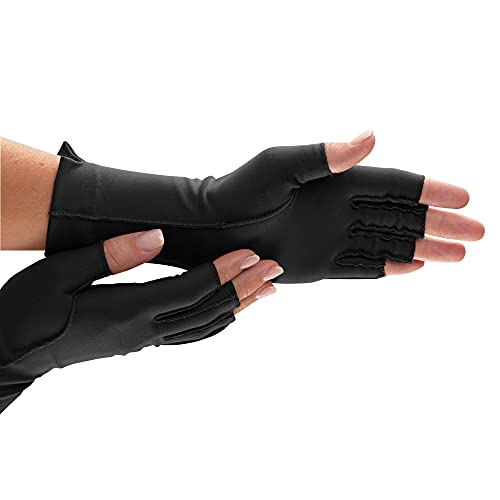
Isotoner Arthritis Compression Gloves (CHT-Designed)
by Isotoner
Designed by a Certified Hand Therapist with a satisfaction rating tied for the highest in this review, the upgrade pick for patients who want clinical design backing their compression.
Pros
- Designed by a Certified Hand Therapist (CHT) — the highest relevant clinical credential in hand rehabilitation, providing confidence that the compression gradient and joint coverage are clinically sound
- 4.4-star rating ties for the highest user satisfaction score in this roundup — consistent praise for fit quality and symptom relief
- Amazon's Choice with CHT endorsement bridges the gap between consumer convenience and clinical credibility for patients whose physicians have recommended compression therapy
- Wrist-extending design provides additional support at the radiocarpal joint — relevant for patients with combined wrist and finger arthritis or post-inflammatory joint stiffness
Cons
- Smaller review base than Copper Compression or Vive alternatives — less long-term durability data available from real-world buyers
- Higher price point than budget alternatives may deter patients who are uncertain whether compression gloves will benefit their specific presentation before committing
4. Dr. Arthritis Doctor Developed Compression Gloves — Runner-Up
The Dr. Arthritis brand approaches the category from a physician-informed perspective, and the inclusion of a doctor-written arthritis management handbook differentiates this product from every other option in this review. For patients recently diagnosed with arthritis who are simultaneously managing medication decisions, physical therapy referrals, and lifestyle modifications, a concise clinical reference explaining compression therapy’s role in conservative management is a meaningful addition.
The gloves themselves perform consistently with the category standard — open-finger fingerless design, OEKO-TEX STANDARD 100 certified fabric, and more than 16,000 verified reviews confirming broad buyer satisfaction. The extended wrist coverage adds radiocarpal support beyond what basic fingerless gloves provide. For patients who are beginning arthritis self-management and want both a clinically designed glove and accompanying educational material in a single purchase, this is the right choice.

Doctor Developed Compression Gloves (Open-Finger)
by Dr. Arthritis
Doctor-brand gloves with an included arthritis handbook — a thoughtful package for patients beginning compression therapy for the first time.
Pros
- Includes a doctor-written arthritis management handbook — a meaningful added resource for newly diagnosed patients navigating conservative treatment options
- Over 16,000 verified reviews confirm broad patient satisfaction across diverse arthritis presentations
- Open-finger design with extended wrist coverage addresses the radiocarpal joint that many fingerless gloves leave unsupported
- OEKO-TEX STANDARD 100 certified fabric — tested for harmful chemicals, a meaningful signal for sensitive or reactive skin
Cons
- Handbook, while a thoughtful inclusion, does not substitute for individualized guidance from a rheumatologist or hand therapist for moderate-to-severe arthritis
- Sizing runs small and stitching can loosen with heavy daily wear — order one size up and rotate pairs to extend life
5. ComfyBrace Copper Compression Arthritis Gloves — Runner-Up
ComfyBrace’s defining differentiator in a crowded market is the lifetime replacement warranty — the strongest buyer protection offer in this entire category. For patients committed to daily compression as part of a long-term arthritis management plan, a warranty that covers wear-related degradation over years of use changes the true cost calculation. A compression glove used 8 hours daily for a year undergoes roughly 2,900 hours of mechanical stress; elasticity loss and fabric wear at that intensity will eventually reduce compression effectiveness, and a replacement warranty addresses exactly that failure mode.
With more than 50,000 verified reviews, ComfyBrace also carries the second-largest real-world performance dataset in this roundup, providing meaningful evidence of consistent quality across varied buyer populations. The copper-infused construction adds antimicrobial odor resistance that is particularly relevant for patients incorporating gloves into active daily routines. For patients who know from prior experience that they will wear compression gloves consistently for months or years, ComfyBrace’s warranty makes the investment case straightforward.

ComfyBrace Copper Infused Compression Arthritis Gloves
by ComfyBrace
Lifetime replacement warranty backed by 50,000+ verified reviews — the best choice for patients committed to daily compression as part of a long-term management plan.
Pros
- Lifetime replacement warranty is the strongest buyer protection offer in this category — a meaningful differentiator for patients who wear gloves daily and experience wear-related degradation
- 50,000+ verified reviews make this the second most-reviewed option in this roundup, providing a large performance dataset across varied arthritis types and hand sizes
- Copper-infused fabric offers antimicrobial odor resistance that is particularly relevant for patients wearing gloves through work days and physical therapy sessions
- Full-palm coverage with open fingertips delivers consistent metacarpal joint compression while maintaining the dexterity needed for daily life
Cons
- Lifetime warranty requires registration and brand communication — not an automatic process, and some buyers report variable customer service responsiveness
- Copper-infused compression claim should be evaluated the same as with all copper gloves: the compression is real and beneficial; the copper itself has no proven independent clinical benefit
6. FREETOO All-Around Compression Gloves — Runner-Up
The FREETOO gloves introduce a design feature absent from every other product in this review: silicone pressure dots positioned at the MCP (metacarpophalangeal) and PIP (proximal interphalangeal) joints. These dots apply targeted point compression directly to the articular surfaces most affected in both rheumatoid and osteoarthritis — a mechanically different intervention from the standard circumferential pressure of flat-knit designs.
The full 360-degree circumferential wrap covers both dorsal and palmar hand surfaces, addressing coverage gaps that purely dorsal fingerless designs leave at the palm and thenar regions. This comprehensive coverage combined with the silicone point pressure makes FREETOO the most clinically specific design for carpal tunnel patients who also have finger joint involvement — a combination presentation that is common in patients with repetitive occupational exposure. Amazon’s Choice status and a #2 best-seller position in the arthritis glove category, despite a smaller review base than the veterans of this roundup, suggest strong early buyer satisfaction.
The practical caution is fit: the high-elasticity Lycra construction runs snug by design, so follow the palm-circumference size chart exactly and size up if you prefer lighter pressure. For patients managing predominantly wrist symptoms without significant finger joint involvement, the carpal tunnel wrist splints category offers more targeted immobilization options.

FREETOO All-Around Compression Arthritis Gloves
by FREETOO
Silicone knuckle pressure dots and full 360-degree coverage make this the strongest option for carpal tunnel patients who also need targeted finger joint compression.
Pros
- Silicone knuckle pressure dots apply targeted point compression directly to the MCP and PIP joints — a design feature absent from standard flat-knit compression gloves and directly relevant for arthritic joint pain at those specific sites
- Full 360-degree circumferential wrap covers both dorsal and palmar hand surfaces, addressing a coverage gap that dorsal-only designs leave at the palm
- Amazon's Choice and #2 best seller in Arthritis Gloves with a 4.4-star rating — strong buyer satisfaction signal for a design-forward newer entrant
- Palm-grip silicone with open fingertips keeps a secure hold on crochet hooks, keyboards, and game controllers during wear
Cons
- Review base of about 4,000 ratings means less long-term durability data than the category's most established alternatives
- High-compression Lycra fit runs snug by design — follow the palm-circumference size chart exactly, and size up if you prefer lighter pressure
7. Copper Compression Full Finger Arthritis Gloves — Runner-Up
The Copper Compression Full Finger Gloves solve the specific problem that makes Raynaud’s management with standard arthritis gloves impossible: the need for complete digital warmth combined with the practical requirement of phone and device use. Touchscreen-compatible fingertips eliminate the compliance barrier that causes patients to remove full-finger gloves in the situations — cold environments, public transit, outdoor exposure — where Raynaud’s episodes are most likely to occur.
Raynaud’s syndrome affects an estimated 3 to 5 percent of the general population and up to 30 percent of patients with autoimmune conditions including RA and lupus. For this population, managing cold exposure is the primary intervention alongside any pharmacological therapy, and full-finger compression gloves that can be worn continuously in varied environments are a clinically meaningful tool. The Copper Compression brand’s proven sizing system (same manufacturer as our Best Overall pick) provides consistent fit reliability, which is particularly important for full-finger designs where poor fit is more difficult to compensate for than in fingerless gloves.

Copper Compression Full Finger Arthritis Gloves
by Copper Compression
Full-finger touchscreen-compatible design makes this the definitive pick for Raynaud's syndrome and patients who need complete digital coverage without sacrificing phone or device use.
Pros
- Full-finger design with touchscreen-compatible fingertips maintains digital warmth while preserving phone and device use — the critical combination for Raynaud's patients who cannot remove gloves in cold environments
- Touchscreen compatibility eliminates a primary compliance barrier for full-finger glove wearers — patients no longer must choose between glove wear and phone use
- Nearly 2,900 verified reviews at 4.3 stars confirm steady buyer satisfaction for Raynaud's and cold-sensitive arthritis management
- Copper Compression brand's proven sizing system (same brand as the Best Overall) provides consistent fit reliability across their full-finger product line
Cons
- Full-finger coverage reduces tactile sensation compared to fingerless designs — patients performing fine motor work such as sewing, instrument playing, or detailed writing may find this limiting
- Not appropriate as a primary carpal tunnel intervention — the full-finger design prioritizes warmth and coverage over the targeted wrist and metacarpal compression that CTS management requires
Best Compression Gloves for Swelling
Hand swelling — whether from inflammatory arthritis, dependent edema, or post-activity fluid accumulation — responds to circumferential compression that restricts excess fluid build-up and supports venous and lymphatic return. For swelling specifically, coverage matters: the more of the hand’s surface the glove compresses evenly, the better the fluid control. These are the three picks I recommend for edema-dominant symptoms:
| Product | Price | Buy |
|---|---|---|
| Copper Compression Arthritis Gloves (Fingerless)Best for swelling overall Even circumferential compression across metacarpals and wrist with the sizing precision that consistent edema control requires | $25.95 | View on Amazon |
| FREETOO All-Around Compression Arthritis GlovesBest for localized joint swelling The 360-degree wrap plus silicone joint dots targets fluid where it pools around individual knuckles | $23.99 | View on Amazon |
| Vive Arthritis GlovesBest budget option for swelling Gentle all-day compression at the lowest price — appropriate for mild dependent swelling | $9.99 | View on Amazon |
If your swelling is tied to post-surgical lymphedema or is rapidly worsening, skip over-the-counter gloves and ask your occupational or physical therapist about a custom-fitted medical-grade compression garment — and see the warning signs in the safety section below.
Best Copper Compression Gloves
Three of the seven picks in this review are copper-infused, and my clinical framing is consistent for all of them: the compression is the therapy; the copper adds antimicrobial odor resistance for long daily wear, not an independent arthritis benefit. Research does not support copper-infused fabric outperforming identical non-copper compression. With that honest caveat, if you want the practical hygiene advantage of copper fabric for all-day wear, these are the standouts:
| Product | Price | Buy |
|---|---|---|
| Copper Compression Arthritis Gloves (Fingerless)Best copper gloves overall The category's most-reviewed copper glove — proven sizing and consistent compression delivery | $25.95 | View on Amazon |
| ComfyBrace Copper Infused Compression Arthritis GlovesBest copper gloves with warranty Same copper-infused construction backed by a lifetime replacement warranty for daily wearers | $15.97 | View on Amazon |
| Copper Compression Full Finger Arthritis GlovesBest full-finger copper gloves Copper fabric in a full-finger touchscreen design for cold-sensitive hands | $24.95 | View on Amazon |
Best Compression Gloves for Crochet
Crocheters, knitters, and other fiber crafters are one of the largest real-world user groups for compression gloves — repetitive pinch grip and sustained wrist flexion produce exactly the kind of cumulative hand fatigue that light compression helps manage. For crafting, the requirements are specific: open fingertips so yarn tension and hook feel stay intact, a snug palm that does not bunch during repetitive motion, and light-enough compression to wear through a multi-hour project session.
| Product | Price | Buy |
|---|---|---|
| Doctor Developed Compression Gloves (Open-Finger)Best for crochet overall The doctor-designed pick most recommended in crafting communities — open fingers preserve yarn feel, and the handbook covers repetitive-strain prevention | $14.95 | View on Amazon |
| Copper Compression Arthritis Gloves (Fingerless)Best grip for hook work Non-slip fingerless design keeps hook control precise; the most-reviewed option among crafters | $25.95 | View on Amazon |
| Isotoner Arthritis Compression Gloves (CHT-Designed)Best for long craft sessions CHT-designed compression gradient reduces fatigue across multi-hour knitting and crochet sessions | $18.81 | View on Amazon |
The same picks apply to knitting — the biomechanics of sustained needle work are close enough to crochet that the glove requirements are identical. Take a 5-minute stretch break every 30 to 45 minutes of hook or needle work regardless of what you wear; no glove substitutes for load management in repetitive craft strain.
Best Compression Gloves for Rheumatoid Arthritis
RA is the diagnosis where compression gloves have their strongest clinical evidence — the 2023 A-GLOVES randomized trial enrolled RA patients specifically and found meaningful improvement in morning stiffness and self-reported hand function. For RA, prioritize a firm, clinically designed compression gradient and wrist coverage for the radiocarpal involvement common in active disease:
| Product | Price | Buy |
|---|---|---|
| Isotoner Arthritis Compression Gloves (CHT-Designed)Best for RA overall Certified Hand Therapist design with firm gradient and extended wrist support — the most clinically defensible choice for active RA | $18.81 | View on Amazon |
| Copper Compression Arthritis Gloves (Fingerless)Best high-volume RA pick The proven default with the deepest review base across RA users and the widest size range | $25.95 | View on Amazon |
| Doctor Developed Compression Gloves (Open-Finger)Best for newly diagnosed RA Includes a physician-written management handbook that is genuinely useful in the first months after diagnosis | $14.95 | View on Amazon |
Compression gloves in RA are an adjunct to disease-modifying therapy, never a substitute — if morning stiffness is lasting longer or swelling is escalating despite treatment, that conversation belongs with your rheumatologist, not with a better glove.
Best Compression Gloves by Use Case
The long tail of conditions and activities, each matched to the pick that fits it best:
| Product | Price | Buy |
|---|---|---|
| Copper Compression Arthritis Gloves (Fingerless)Best compression gloves for lymphedema Even, sized circumferential compression for mild lymphedema — for post-surgical or severe cases, ask your OT about medical-grade custom garments first | $25.95 | View on Amazon |
| Vive Arthritis GlovesBest compression gloves for women Runs true across smaller palm sizes with a light, low-bulk knit — the most comfortable everyday fit in this roundup | $9.99 | View on Amazon |
| Isotoner Arthritis Compression Gloves (CHT-Designed)Best compression gloves for typing CHT-designed gradient supports the wrist through full keyboard days without restricting finger travel | $18.81 | View on Amazon |
| Doctor Developed Compression Gloves (Open-Finger)Best compression gloves for artists Open fingertips preserve pen and brush control; OEKO-TEX fabric suits long studio sessions | $14.95 | View on Amazon |
| ComfyBrace Copper Infused Compression Arthritis GlovesBest compression gloves for musicians Light compression with full dexterity between practice sessions — remove for performance if tactile feel matters | $15.97 | View on Amazon |
| FREETOO All-Around Compression Arthritis GlovesBest carpal tunnel compression gloves The 360-degree wrap with silicone dots is the most carpal-tunnel-specific glove design here — pair with a night splint for confirmed CTS | $23.99 | View on Amazon |
| Copper Compression Full Finger Arthritis GlovesBest compression gloves for Raynaud's Full-finger touchscreen coverage is the only appropriate choice for cold-triggered vasospasm | $24.95 | View on Amazon |
| FREETOO All-Around Compression Arthritis GlovesBest compression gloves for gaming Palm-grip silicone holds controllers securely, and open fingertips keep thumbstick precision intact | $23.99 | View on Amazon |
| Copper Compression Arthritis Gloves (Fingerless)Best compression gloves for tendonitis Targeted point compression around inflamed tendon insertions — combine with load management and your PT's guidance | $25.95 | View on Amazon |
How to Use Compression Gloves Safely
Following correct wear protocols significantly affects both safety and efficacy:
Daytime wear limit: Most compression gloves are appropriate for 6 to 8 hours of continuous wear maximum. Remove gloves for meals (if you find sustained wear impractical) and always before sleeping.
Overnight protocol: Do not sleep in standard over-the-counter compression gloves. If nighttime stiffness or carpal tunnel symptoms are your primary concern, discuss with your physician whether a purpose-designed overnight wrist splint is appropriate. Prolonged compression during sleep without active hand movement risks reducing digital circulation in vulnerable patients.
Break-in period: New gloves typically feel tighter for the first 5 to 10 minutes of wear as the fabric warms and conforms to your hand. Mild initial snugness that resolves within this window is normal. Persistent tightness, pain, or numbness after the break-in period indicates the gloves are too small — size up immediately.
Warning signs to stop wearing immediately: Remove your compression gloves if you experience numbness or tingling in any finger, skin color changes (blanching or bluish discoloration at the fingertips), increasing pain during wear, skin breakdown or abrasion at compression edges, or any new joint swelling that develops during wear. These are signals of impaired circulation or mechanical irritation that require glove removal and, if persistent, medical evaluation.
Washing: Machine wash cold and air dry or tumble dry on low — most gloves in this review are machine washable, but avoid high heat which degrades elastic compression fibers and reduces the compression effectiveness of the fabric over time.
When to See a Doctor Instead
Compression gloves are appropriate for mild-to-moderate hand symptoms as an adjunct to your management plan. They are not appropriate as the sole intervention in several situations:
- Significant joint swelling that is worsening despite several weeks of compression and anti-inflammatory management — this warrants rheumatology evaluation for disease-modifying therapy
- New numbness or tingling in specific fingers that follows a dermatomal pattern — this may indicate peripheral nerve compression (carpal tunnel, cubital tunnel, cervical radiculopathy) requiring electrodiagnostic evaluation rather than compression gloves
- Skin breakdown, ulceration, or non-healing wounds at the finger or hand — compression should not be applied over open wounds or areas of compromised skin integrity, and these presentations require wound care evaluation
- Raynaud’s attacks that are increasing in frequency, duration, or severity — escalating Raynaud’s may indicate underlying autoimmune disease (systemic sclerosis, lupus, mixed connective tissue disease) requiring rheumatology referral and potentially pharmacological vasodilator therapy
Compression gloves are a tool — a useful and low-risk one for the right patients — but they should be integrated into a care plan rather than used as a substitute for medical evaluation when symptoms are progressing.
Buyer's Guide
Choosing the right compression glove requires matching finger coverage, compression type, and material to your specific condition — an approach that differs meaningfully depending on whether you are managing rheumatoid arthritis, osteoarthritis, Raynaud's syndrome, or carpal tunnel. These six factors guide that decision before you buy.
Finger Coverage — Open vs. Full
The best fingerless compression gloves are the appropriate choice for the majority of arthritis and carpal tunnel buyers — they deliver metacarpal and wrist compression while preserving full fingertip dexterity for typing, phone use, and fine motor tasks. The best full finger compression gloves are specifically indicated for Raynaud's syndrome and cold-sensitive arthritis, where complete digital warmth is required to prevent vasospasm. Touchscreen-compatible full-finger options like the Copper Compression Full Finger resolve the primary compliance barrier of losing phone and device use. Do not select full-finger coverage unless your condition specifically requires full digital warmth — the reduction in tactile sensitivity and dexterity has real daily consequences.
Material and Skin Sensitivity
Nylon-spandex blends are the standard material across this category — breathable, durable, machine washable, and capable of delivering consistent compression at therapeutic levels. Copper-infused nylon adds antimicrobial odor resistance that is practically useful for patients who wear gloves daily, though the copper itself has no documented clinical benefit beyond the compression. Bamboo-fiber compression gloves are marketed for softness and moisture-wicking; the fabric is genuinely gentle on reactive skin, but bamboo blends typically deliver lighter compression than dedicated nylon-spandex knits, so treat them as a comfort choice rather than a therapeutic upgrade. Patients with sensitive skin, contact dermatitis, or nickel sensitivity should review the full material composition before purchasing, and patients with confirmed latex sensitivity should confirm the elastic components are latex-free — most modern compression knits use spandex (polyurethane) rather than latex, but verification is warranted.
Compression Type — Standard, Copper-Infused, or Silicone Pressure
Standard graduated compression knits apply uniform circumferential pressure to the metacarpal and wrist regions — this is the primary mechanism of clinical benefit and is present across all seven products in this review. Copper-infused compression adds antimicrobial properties with no additional clinical effect on arthritis or edema beyond the baseline compression. Silicone pressure dots, as used in the FREETOO design, apply targeted point compression directly to the MCP and PIP joint surfaces — a potentially meaningful advantage for patients with localized knuckle pain, though this design feature has less clinical trial evidence than standard flat compression. Match the compression type to your primary symptom: circumferential for edema and general stiffness, silicone point pressure for specific joint pain.
Sizing and Fit
Compression gloves that fit incorrectly provide no therapeutic benefit — a glove that is too loose delivers insufficient pressure, and one that is too tight risks impaired circulation. Measure your dominant hand circumference at the widest point of the palm (excluding the thumb) and compare it to the manufacturer's specific size chart, not generic S/M/L labels. Most brands in this review offer XS through XL or XXL at minimum; Copper Compression and ComfyBrace extend to XXL for larger hands. If you fall between sizes, size up for comfort and safety. For patients with significant hand edema, morning measurements (when swelling is lowest) may underestimate afternoon or evening fit needs — consider measuring at the time of day when swelling is typically greatest.
Day vs. Overnight Use
Standard over-the-counter compression gloves are designed for daytime wear of 6 to 8 hours maximum and are not appropriate for overnight use. During sleep, the prolonged compression in the absence of active hand movement can restrict digital circulation, particularly in patients with compromised peripheral vascular status. If morning stiffness is your primary complaint — which is common in rheumatoid arthritis due to overnight synovial fluid accumulation — discuss an appropriate overnight protocol with your rheumatologist. For carpal tunnel patients with nocturnal symptoms, a rigid wrist splint used overnight is the correct intervention; see our carpal tunnel wrist splints guide for validated overnight options.
HSA/FSA Eligibility
Compression gloves purchased for a qualifying medical condition — including arthritis, Raynaud's syndrome, and carpal tunnel syndrome — are generally eligible for reimbursement through Health Savings Accounts and Flexible Spending Accounts. The Vive Arthritis Gloves in this review are explicitly Amazon-designated as FSA/HSA eligible. For other brands, eligibility depends on your plan administrator's interpretation of durable medical equipment guidelines. Using FSA or HSA funds reduces the effective after-tax cost of any glove in this review by 25 to 40 percent depending on your marginal tax rate — a meaningful consideration when comparing price points across the products reviewed here.
Final Verdict
For most adults seeking compression gloves for arthritis, morning hand stiffness, or everyday joint support, the Copper Compression Arthritis Gloves (Fingerless) are our top recommendation. The combination of 66,000+ verified reviews, consistent sizing guidance, and proven daily-wear durability makes this the most thoroughly validated consumer choice in the category. Budget-conscious buyers or those with FSA/HSA accounts should strongly consider the Vive Arthritis Gloves, which deliver solid basic compression at the lowest verified price with confirmed FSA/HSA eligibility. Patients whose physicians or occupational therapists have specifically recommended compression gloves and who want clinical design credibility should consider the Isotoner CHT-Designed Gloves — the only product in this roundup designed by a Certified Hand Therapist, with the highest satisfaction rating in the review.
For Raynaud’s syndrome specifically, the Copper Compression Full Finger Arthritis Gloves are the only appropriate choice in this roundup — full-finger coverage with touchscreen fingertips addresses the specific clinical requirement that fingerless gloves cannot meet. And for patients also managing broader musculoskeletal pain alongside hand symptoms, consider pairing your compression gloves with a heating pad for heat therapy between wear cycles, or an ice pack for acute flare management — both are evidence-supported adjuncts in arthritis symptom management.
As with all conservative interventions for arthritis, set realistic expectations: compression gloves may help reduce stiffness and improve comfort during active wear phases, but they are an adjunct to comprehensive management, not a cure. Consult your rheumatologist or hand therapist to confirm whether compression gloves are appropriate for your specific presentation before purchase.
Frequently Asked Questions
Are compression gloves HSA or FSA eligible?
Can I safely sleep in compression gloves overnight?
Do compression gloves work differently for rheumatoid arthritis versus osteoarthritis?
Can compression gloves make carpal tunnel syndrome worse?
How tight should compression gloves feel when worn correctly?
Do compression gloves help with EDS (Ehlers-Danlos syndrome)?
Do compression gloves help nerve pain or neuropathy in the hands?
Related Articles
About the Reviewer

Dr. David Taylor, MD, PhD
Drexel University College of Medicine (MD), Indiana University School of Medicine (PhD)
Dr. David Taylor is a licensed physician and medical researcher who founded BestRatedDocs in 2016. With an MD from Drexel University and a PhD from Indiana University School of Medicine, he combines clinical expertise with a passion for health technology to provide evidence-based product recommendations. Dr. Taylor specializes in health informatics and regularly evaluates medical devices, diagnostic equipment, and therapeutic products to help healthcare professionals and patients make informed decisions.