7 Best Cough Medicines of 2026
A physician's guide to the best OTC cough medicines — syrups and tablets reviewed for cough type, active ingredient, drowsiness, and value.
Updated
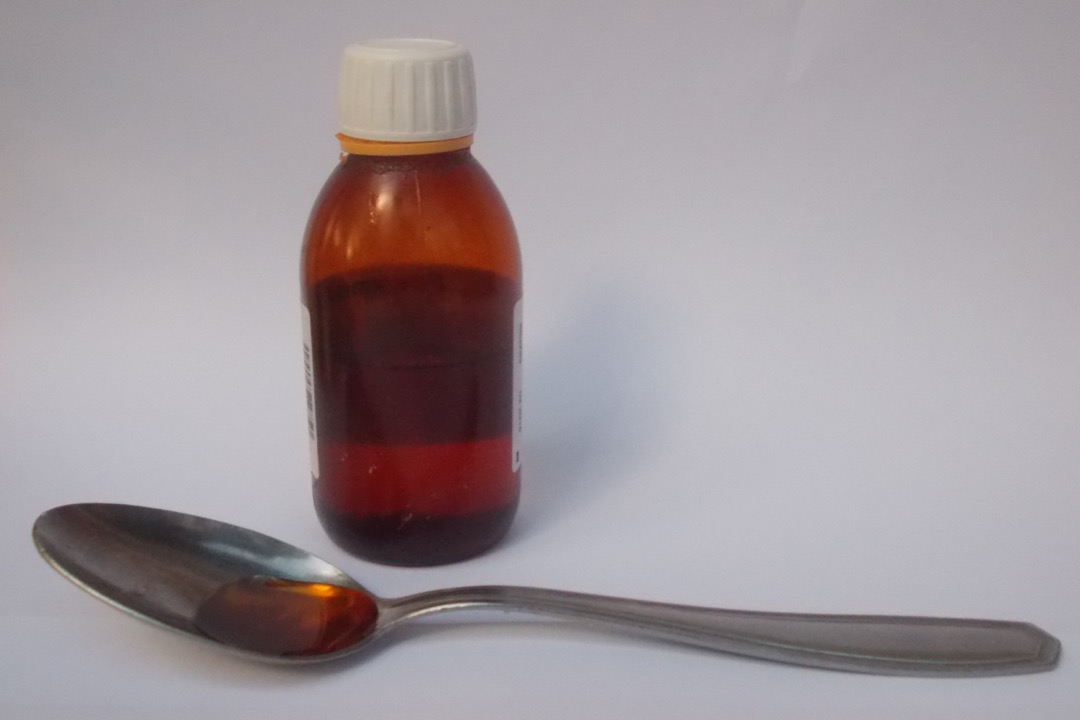
Cough is one of the most common reasons Americans visit a doctor — generating more than 30 million outpatient visits annually — and yet it is also one of the most poorly managed at home. A landmark 2014 Cochrane systematic review of 29 randomized controlled trials found that fewer than half of them showed OTC cough medicines performing statistically better than placebo, a finding that has shaped how physicians think about this category ever since. The paradox is this: the products that work, work well — but only when matched correctly to the mechanism driving the cough. Buying the wrong product for your cough type is the most common reason for perceived treatment failure.
At BestRatedDocs.com, we approach OTC cough medicine the same way we approach diagnostic devices and medical equipment: with clinical rigor, transparency about where the evidence is strong and where it is limited, and a commitment to helping you choose the product that actually fits your clinical situation. For this guide, Dr. David Taylor reviewed seven of the top-selling cough medicines on Amazon, drawing on clinical pharmacology literature, analysis of verified consumer reviews, and the 2026 OTC landscape including the FDA’s 2024 proposed rulemaking on phenylephrine. We evaluated every major active ingredient class, both daytime and nighttime formulations, and included one drug-free option for patients who prefer or require a pharmaceutical-free approach.
A note on timing, since respiratory season is now getting under way: US cough and cold activity typically begins climbing in late September, builds through October and November, and peaks between December and February. The practical advice I give patients is to stock the medicine cabinet before you need it. Deciding between a suppressant and an expectorant at 2 a.m. with a cough already underway is how people end up with the wrong product, and it is also when the shelf at the nearest pharmacy is most likely to be picked over.
After reviewing all seven products, one framework matters above all others: dry cough versus wet cough. A dry, non-productive cough calls for a suppressant; a wet, productive cough with mucus calls for an expectorant. Buying the wrong type for your symptom is the single most common reason people report that cough medicine “doesn’t work.” The comparison table below gives you the key variables at a glance.
Find the Right Cough Medicine for Your Cough
The most common mistake in this aisle is buying a suppressant for a productive cough, or an expectorant for a dry one. Jump to the cough you actually have:
- Best cough medicines overall — all seven picks reviewed
- Best cough medicine for a dry cough
- Best cough medicine for chest congestion and mucus
- Best cough medicine for bronchitis
- Best cough medicine for nighttime
- Best cough medicine for a sore throat
- Best cough medicine for a cold or the flu
- More situations: allergy cough, post-nasal drip, smoker’s cough
How We Selected These Products
Our selection criteria prioritized products with meaningful consumer review volumes. We held every pharmaceutical pick to a floor of 3,000 verified reviews and relaxed that floor only for the single drug-free option, which competes in a much smaller category. We also required documented differentiation in clinical mechanism or use case, and coverage of the full spectrum of cough presentations a patient might encounter. We include both brand-name and generic options, both daytime and nighttime formulas, a pure suppressor, a pure expectorant, a combination product, and a drug-free alternative. Products were assessed for active ingredient clinical profile, dosing interval, drowsiness, age appropriateness, alcohol content, FSA/HSA eligibility, and cost-per-dose value.
One important note on the evidence landscape: the 2014 Cochrane review’s finding that fewer than half of OTC cough RCTs showed benefit over placebo is frequently misrepresented. The better interpretation is that study design limitations — including placebo effects of sweet liquids, heterogeneous cough populations, and short follow-up windows — made it difficult to detect real effects in aggregate. DXM has well-established pharmacological activity at the cough center; guaifenesin has FDA-approved expectorant status based on clinical evidence. The issue is not that these drugs don’t work — it is that they only work for the cough mechanism they address.
Best Cough Medicines Overall
These are the seven products that earned a place in this guide, each reviewed in full below. Mucinex Fast-Max is our best overall pick because it covers the combination of cough, mucus, and nasal congestion that most acute respiratory illness actually produces. The cough-type sections after the reviews then match each presentation — dry, productive, nighttime, bronchitis, sore throat — to the right product from this same lineup.
1. Mucinex Fast-Max Severe Congestion & Cough Liquid — Best Overall
Mucinex Fast-Max earns the Best Overall designation because it is the only product on this list that simultaneously addresses all three dominant acute respiratory illness symptoms: cough suppression (DXM), mucus loosening (guaifenesin), and nasal congestion. For the vast majority of patients who develop a cough in the context of a cold or upper respiratory infection — where all three symptom components are typically present — this triple-action liquid is the single-bottle solution that replaces the need to purchase separate products. The liquid format is also clinically relevant: compared to tablets, liquids absorb faster and deliver a more rapid onset of symptom relief, typically within 20–30 minutes.
The FDA elephant in the room deserves direct acknowledgment. In November 2024, the FDA proposed rulemaking to remove phenylephrine from the OTC monograph after determining the evidence for its nasal decongestant efficacy was insufficient. This proposal was not final as of publication, and the phenylephrine is still present in this formulation — but the honest clinical truth is that the DXM plus guaifenesin combination is doing the therapeutic work. If phenylephrine is ultimately removed from OTC monographs, a reformulated version of this product with just the two effective ingredients will likely improve the clinical picture. In the meantime, the cough suppression and expectorant effects are not in question.
For most patients managing an acute respiratory illness in 2026, this is the appropriate starting product. The thousands of verified reviews and consistent 4.7-star rating across multiple flu seasons reflect a broad base of real-world user experience that aligns with its pharmacological profile. It is FSA/HSA eligible, making it reimbursable from pre-tax benefit dollars for eligible account holders.

Mucinex Fast-Max Severe Congestion & Cough Liquid, 6 fl oz
by Mucinex
Most comprehensive OTC cough formula — triple-action for cough, mucus, and nasal congestion in a fast-acting liquid.
Pros
- Triple-action formula suppresses cough, loosens mucus, and clears nasal congestion in a single liquid dose — the most comprehensive OTC cough product on this list
- Fastest-acting format available — liquid absorbs more rapidly than tablets, with relief noticeable within 20–30 minutes for most users
- FSA/HSA eligible under the CARES Act, making it reimbursable from pre-tax health benefit dollars
- Consistent 4.7-star performance across thousands of verified reviews spanning multiple cold and flu seasons
Cons
- Phenylephrine decongestant component proposed for removal by FDA in 2024 as insufficiently effective — the suppression and expectorant portions carry the clinical load
- Every-4-hour dosing (up to 6 doses daily) is less convenient than 12-hour extended-release options
2. Delsym 12 Hour Cough Relief Liquid — Runner-Up
Delsym’s clinical differentiation is its extended-release mechanism — the only 12-hour liquid cough suppressant on this list. Where every other immediate-release DXM product requires dosing every 4 hours (up to 6 times daily), Delsym’s dextromethorphan polistirex delivers twice-daily dosing through a resin-bound extended-release technology that slows DXM absorption over 12 hours. For anyone who has set a middle-of-the-night alarm to redose a standard cough syrup — or woken up at 3 AM with breakthrough cough because the dose wore off — the clinical value of 12-hour coverage is immediately apparent.
Delsym is the correct choice for a pure dry cough — the non-productive, tickling, or irritant cough with no mucus production. It suppresses the cough reflex without adding guaifenesin, which is appropriate when there is no mucus that needs to be expectorated. This precision matters clinically: guaifenesin is not harmful to take when unnecessary, but keeping ingredients to a minimum reduces side effect exposure and cost. Amazon’s #1 Best Seller status in the cough syrup segment reflects broad consumer recognition of the twice-daily convenience, which translates directly to better adherence and fewer missed doses during illness.
One population for whom Delsym is particularly valuable: patients managing post-COVID cough, which is often characteristically dry, persistent, and refractory to standard intervention. The extended-release profile reduces the coughing frequency more sustainably than short-burst immediate-release products, and the non-drowsy formula allows daytime use without functional impairment. If you are pairing cough management with respiratory monitoring, a pulse oximeter can help you track oxygen saturation during recovery — particularly useful for those managing post-COVID respiratory symptoms.

Delsym 12 Hour Cough Relief Liquid, Orange Flavor, 5 fl oz
by Delsym
#1 bestselling cough syrup — 12 hours of non-drowsy cough suppression with extended-release DXM for dry coughs.
Pros
- Only 12-hour extended-release liquid cough suppressant on this list — twice-daily dosing eliminates the every-4-hour alarm clock dosing pattern
- Amazon's #1 Best Seller in cough syrup — market leader by review volume in the extended-release segment
- Dextromethorphan polistirex extended-release technology delivers steady plasma levels, avoiding the peak-and-trough symptom pattern of immediate-release products
- Non-drowsy formula appropriate for daytime use during work or school
Cons
- Cough suppressant only — no expectorant, so wet/productive coughs with chest mucus require a separate guaifenesin product or a combination formula
- Contains high-fructose corn syrup and artificial orange dye — not suitable for patients managing sugar intake or dye sensitivities
3. Amazon Basic Care Tussin DM MAX — Budget Pick
The pharmacological equivalence case here is as clean as it gets in OTC medicine. Amazon Basic Care Tussin DM MAX contains DXM HBr USP 20mg and Guaifenesin USP 400mg — the exact same active ingredients at the exact same doses as Robitussin DM Max — manufactured under FDA Current Good Manufacturing Practice (cGMP) regulations that require bioequivalence with the reference brand. The FDA does not allow generic OTC products to claim equivalence unless the formulation meets the same standards. The result is a product that is pharmacologically indistinguishable from Robitussin DM Max, at less than half the retail price.
Two features distinguish this product within the budget tier. First, it is alcohol-free — a detail that matters for patients who avoid alcohol due to religious observance, medication interactions (metronidazole, disulfiram), liver disease, pregnancy, or personal preference. Most branded cough syrups contain small amounts of alcohol as a solubilizing agent; the Amazon Basic Care formulation omits it. Second, the 8 fl oz volume provides more total doses per purchase than either the 5 fl oz Delsym or the 6 fl oz Mucinex products — relevant for households managing a respiratory illness across multiple family members or needing a supply that lasts through a full 7–10 day viral illness course.
The tradeoff is that immediate-release dosing — every 4 hours, up to 6 times daily — is more demanding than twice-daily alternatives. For daytime use in a home setting where you can dose consistently, the budget case is compelling. For overnight use where an every-4-hour schedule is impractical, step up to Delsym (dry cough) or the Robitussin Nighttime formula.

Amazon Basic Care Tussin DM MAX Cough Syrup, Raspberry Menthol, 8 fl oz
by Amazon Basic Care
Same FDA-approved dual-action formula as Robitussin DM Max at less than half the cost — the clear value winner in cough medicine.
Pros
- Clinically identical to Robitussin DM Max — same DXM HBr 20mg and Guaifenesin 400mg per dose under the same FDA OTC monograph, at less than half the branded price
- Alcohol-free formulation — appropriate for patients who avoid alcohol for religious, medical, or personal reasons
- Largest volume per dollar on this list — 8 fl oz provides the most doses per purchase of any liquid product here
- 4.7 stars across more than 5,700 verified reviews confirming batch-to-batch consistency with Robitussin DM Max
Cons
- Immediate-release formula requires every-4-hour dosing — 6 doses per day for full-day coverage is more demanding than 12-hour options
- Raspberry menthol flavor is polarizing — a minority of reviews cite the taste as the primary reason for not reordering
4. Robitussin Maximum Strength Nighttime Cough DM Max — Upgrade Pick
The upgrade designation here is clinically earned, not just a premium price tier. Robitussin Nighttime Cough DM Max solves a problem the daytime formulations cannot: the combination of cough suppression and sleep restoration in a single formula engineered for overnight use. The active ingredient addition is doxylamine succinate 6.25mg — the same antihistamine used in Unisom SleepTabs — which produces clinically meaningful sedation alongside its H1-blocking effects on runny nose and postnasal drip. The practical result is that patients fall asleep faster, stay asleep longer, and wake up having slept through the cough cycle rather than having been woken by it.
The clinical rationale for investing in sleep during illness is not merely comfort. Sleep is when the immune system runs its highest-intensity repair and antibody-production activity. Studies of experimental rhinovirus infection show that subjects sleeping fewer than 7 hours are 2.9 times more likely to develop clinical illness after viral exposure, and shorter sleep duration correlates with longer illness duration in established infections. A bad cold that prevents normal sleep is not just uncomfortable — it is actively prolonging the illness. The nighttime cough formula that gets a patient from 4 hours of broken sleep to 6–7 hours of consolidated rest has measurable clinical impact.
The honest limitations: doxylamine produces real sedation, and morning grogginess — particularly in older adults or those sensitive to antihistamines — is a legitimate concern. Do not drive or operate heavy machinery after taking this formula. The 6-hour duration is also shorter than the 12-hour extended-release options, meaning a patient who goes to bed at 10 PM will have coverage through approximately 4 AM. If breakthrough cough occurs in the early morning hours, having a non-drowsy daytime formula accessible for the post-6-AM period is a useful backup strategy. For patients who have been sleeping fewer than 5 hours due to cough, this is the product most likely to change that outcome from night one.

Robitussin Maximum Strength Nighttime Cough DM Max Syrup, Berry, 8 fl oz
by Robitussin
Definitive nighttime cough medicine — doxylamine plus DXM so a severe cold no longer means a sleepless night.
Pros
- Only top-ranked formula engineered specifically for nighttime use — combines DXM cough suppression with doxylamine succinate, an antihistamine sleep aid
- Doxylamine also relieves runny nose, sneezing, and postnasal drip — the combination addresses the full spectrum of symptoms that keep patients awake during a cold
- Sleep improvement from the first dose — clinically important because sleep deprivation during illness prolongs recovery time
- FSA/HSA eligible and sourced from the #1 pharmacist-recommended cough brand in the US
Cons
- Causes meaningful drowsiness — doxylamine is the same antihistamine in Unisom SleepTabs, and morning grogginess is reported by a subset of users
- 6-hour dosing window is shorter than 12-hour alternatives, potentially requiring a 3 AM redose if symptoms break through early
5. Mucinex 12 Hour Extended-Release Tablets, 600mg Guaifenesin
This is the product pharmacists reach for when a patient presents with chest congestion — the kind where you feel tightness or heaviness in your chest, produce thick or discolored phlegm, or hear a rattling quality in your lower airways when you breathe. Guaifenesin is the only FDA-approved OTC expectorant, and its mechanism is precisely matched to this symptom: it increases the volume and decreases the viscosity of respiratory tract secretions, making it easier for the mucociliary clearance system to move mucus up and out of the bronchial tree. The 600mg bi-layer tablet — which delivers an immediate-release portion plus a sustained-release core — provides 12 hours of continuous expectorant action from a single tablet.
The clinical context for using a pure expectorant rather than a combination DM product is important. When you have a wet, productive cough with significant mucus, suppressing the cough entirely with DXM is counterproductive — you need the cough reflex to help clear the mucus. Guaifenesin-only therapy thins the mucus to make each cough more effective and less frequent, which is the physiologically appropriate intervention. If you take DXM on a productive cough, you may suppress the reflex that is clearing your airways, potentially allowing mucus to pool and creating conditions favorable to secondary bacterial infection. This is the reason pharmacists and physicians distinguish carefully between dry and wet cough management.
Patients managing respiratory illness alongside asthma or chronic bronchitis should be aware that guaifenesin thins mucus secretions broadly, which can temporarily increase the sensation of productive cough as previously stagnant mucus begins to mobilize. This is the expected clinical response, not a worsening of symptoms. If you are monitoring your respiratory health during illness, a home nebulizer for delivering bronchodilator medication can be an important companion tool for patients with underlying airway disease.

Mucinex 12 Hour Extended-Release Tablets, Guaifenesin 600mg, 20 Count
by Mucinex
Pharmacist-recommended 12-hour guaifenesin tablet for chest congestion — the clinical choice for wet, productive coughs with mucus.
Pros
- Pure pharmacist-recommended expectorant — guaifenesin 600mg is the only FDA-approved OTC expectorant ingredient and works by thinning and loosening bronchial mucus for productive expectoration
- Patented bi-layer tablet delivers an immediate-release layer plus an extended-release core — 12 hours of continuous mucus-thinning in a single tablet
- No flavor, no taste, no liquid — tablet format is preferred by patients who dislike the sweetness of cough syrups or manage diabetes
- FSA/HSA eligible; the Mucinex brand is the #1 pharmacist-recommended expectorant
Cons
- Pure expectorant only — zero effect on dry, tickling, or irritant coughs that do not involve mucus production; wrong product for a dry cough
- Large bi-layer tablet cannot be split or crushed without destroying the extended-release mechanism — may be difficult to swallow for some patients
6. Mucinex DM Maximum Strength Cough Liquid
Mucinex DM in liquid form occupies the same pharmacological space as the Amazon Basic Care Tussin DM MAX — DXM plus guaifenesin, dual-action, non-drowsy — but brings the clinical credibility of the Mucinex brand name, which is the #1 pharmacist-recommended cough brand in the US. For patients who associate quality with brand recognition, or who have had positive prior experiences specifically with Mucinex products, this is the daytime dual-action liquid to reach for. The liquid format delivers faster onset than the Mucinex Extended-Release tablet, which is relevant when you want symptomatic relief in the next 20–30 minutes rather than waiting for a tablet’s slower absorption curve.
The Amazon’s Choice designation on this product reflects a sustained pattern of high purchase rates and positive reviews across multiple seasonal cycles — not a one-time designation. For households that stock a single cough medicine as a general-purpose remedy, this product covers the widest ground: both suppressant and expectorant action, no drowsiness, FSA/HSA eligible, and from the most trusted brand in the segment. The practical limitation relative to the Budget Pick is price — for identical active ingredients at identical doses, the brand premium does not add clinical value. If you are cost-sensitive, the Amazon Basic Care version delivers the same outcome. If brand consistency matters to you, this is your product.
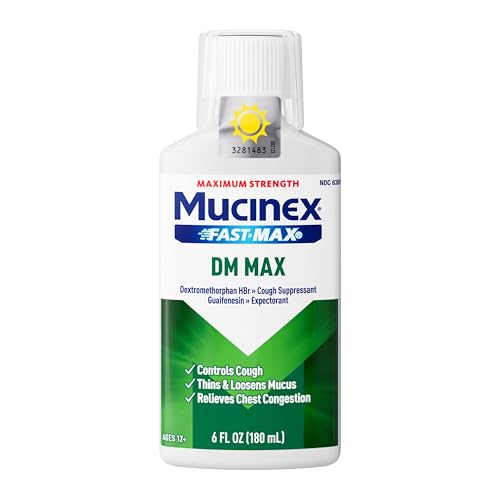
Mucinex DM Maximum Strength Cough Liquid, 6 fl oz
by Mucinex
Mucinex's trusted DM formulation in liquid form — dual-action daytime cough and mucus relief with brand-name quality.
Pros
- Trusted Mucinex brand in liquid form — dual-action DXM cough suppressant plus guaifenesin expectorant in a single dose
- Amazon's Choice designation across thousands of verified purchases confirms consistent quality and high repurchase rate
- Non-drowsy daytime formula appropriate for work or school; no antihistamine or sedating components
- FSA/HSA eligible; liquid format delivers faster absorption than the equivalent tablet for those who need quicker onset
Cons
- Every-4-hour immediate-release dosing — less convenient than the 12-hour Mucinex tablet for daytime coverage
- Price premium over Amazon Basic Care Tussin DM MAX despite identical active ingredients at the same doses
7. Beekeeper’s Naturals Honey Cough Syrup, Elderberry Daytime
Beekeeper’s Naturals occupies a distinct niche in this guide: it is the only product here classified as a dietary supplement rather than an FDA-regulated OTC drug, which means it operates under a different evidence standard and cannot make approved cough suppression claims. What it offers is a legitimate clinical rationale for drug-free use. Honey has more Cochrane-reviewed evidence for cough reduction than many of the pharmaceutical ingredients in this category — a 2012 Cochrane review found honey superior to diphenhydramine and comparable to some standard cough preparations for reducing cough frequency in children. Propolis has in vitro antimicrobial and anti-inflammatory properties that are well-documented, though human clinical trial data for cough specifically is limited.
The population for whom this product is most appropriate is clearly defined: patients with documented DXM drug interactions (MAOI use, high-dose SSRI use, personal sensitivity), patients who prefer to avoid pharmaceutical compounds for philosophical or religious reasons, and patients with mild coughs who want a symptomatic comfort measure rather than a pharmaceutical intervention. It also serves as a useful bridge product at the onset of symptoms — before the illness has progressed to the point requiring pharmaceutical intervention — where the anti-inflammatory and soothing properties of propolis and honey may reduce symptom severity without introducing drug exposure.
The FSA/HSA ineligibility is a real cost disadvantage relative to the pharmaceutical options, and the cost-per-ounce is the highest on this list. For patients with access to HSA or FSA funds, the pharmaceutical options deliver more clinical bang-for-buck. For everyone else, the product’s drug-free profile and its status as Amazon’s #3 Best Seller in cough syrup confirm that a large population finds real-world value in it. If you are monitoring symptoms like elevated temperature during illness, check out our guide to the best forehead thermometers for tracking fever progression alongside cough management.

Beekeeper's Naturals Honey Cough Syrup, Elderberry Daytime, 4 oz
by Beekeeper's Naturals
Bestselling drug-free cough syrup — propolis, honey, and elderberry for those who prefer clean ingredients over pharmaceutical suppressants.
Pros
- Drug-free formula with no DXM, alcohol, or artificial ingredients — appropriate for patients who avoid pharmaceutical cough suppressants or have DXM drug interactions
- Amazon's #3 Best Seller in the cough syrup category — broad consumer adoption confirms real-world tolerability and flavor acceptance
- Propolis has documented in vitro antimicrobial and anti-inflammatory properties; honey has Cochrane-reviewed evidence for cough reduction in children aged 1 and older
- No drug interactions — safe alongside antibiotics, antivirals, blood pressure medications, and other concurrent treatments without pharmacokinetic risk
Cons
- Not an FDA-regulated drug — classified as a dietary supplement, with no approved efficacy claims for cough suppression
- Highest cost per fluid ounce of any product on this list; contains honey, so not appropriate for children under 1 year old
Best Cough Medicine for a Dry Cough
A dry, non-productive cough brings up nothing and serves no useful purpose. There is no mucus to clear, so the cough is pure irritation — usually from post-viral airway hypersensitivity — and suppressing it is the entire goal. Dextromethorphan is the ingredient that does that, acting centrally to raise the threshold of the brainstem cough reflex. Guaifenesin, by contrast, thins and loosens mucus, which does nothing at all for a cough that has no mucus behind it.
Duration is what separates the options. An extended-release polistirex formulation holds suppression for a full 12 hours on two doses a day, which matters most for a dry cough that keeps interrupting work or sleep. Immediate-release syrups need dosing every four hours, so you inevitably wake up or lose coverage mid-afternoon. If a dry cough persists beyond three weeks, has followed a course of a new blood pressure medication, or comes with weight loss or blood, it needs a physician rather than a stronger suppressant. ACE inhibitor cough is a very common and frequently missed cause.
| Product | Price | Buy |
|---|---|---|
| Delsym 12 Hour Cough Relief Liquid, Orange Flavor, 5 fl ozBest for dry cough overall Extended-release dextromethorphan suppresses for 12 hours on two doses a day, with no expectorant you do not need | $14.89 | View on Amazon |
| Robitussin Maximum Strength Nighttime Cough DM Max Syrup, Berry, 8 fl ozBest for a dry cough at night Adds an antihistamine that helps you sleep through the irritation, so save it for bedtime only | $12.97 | View on Amazon |
| Amazon Basic Care Tussin DM MAX Cough Syrup, Raspberry Menthol, 8 fl ozBest budget suppressant Contains guaifenesin you will not use for a dry cough, but it is the cheapest way to get a full dose of dextromethorphan | $9.09 | View on Amazon |
Best Cough Medicine for Chest Congestion and Mucus
A productive cough is doing a job, and suppressing it is usually the wrong move. Mucus sitting in the lower airways needs to come up, and a cough that clears it protects you from the secondary bacterial infection that pooled secretions invite. What helps is an expectorant: guaifenesin thins bronchial secretions so each cough moves more material with less effort. The most useful thing you can do alongside it is drink considerably more water, because guaifenesin depends on hydration to work.
The 600mg extended-release tablet is the purest expression of this approach, giving 12 hours of mucus thinning with no suppressant working against it. Combination products pair guaifenesin with dextromethorphan, which is a reasonable compromise when a productive cough has become exhausting overnight, but it is a compromise rather than an optimum. Green or yellow mucus does not by itself mean you need an antibiotic, though a fever above 101 degrees, chest pain, or breathlessness does mean you should be seen. For the humidification side of this, our steam inhaler guide covers the options.
| Product | Price | Buy |
|---|---|---|
| Mucinex 12 Hour Extended-Release Tablets, Guaifenesin 600mg, 20 CountBest for chest congestion overall A pure 600mg extended-release expectorant for 12 hours, with no suppressant fighting the cough that is clearing your chest | $14.97 | View on Amazon |
| Mucinex Fast-Max Severe Congestion & Cough Liquid, 6 fl ozBest when nasal congestion is also present Adds a decongestant for the head-and-chest combination that most colds actually produce | $13.14 | View on Amazon |
| Mucinex DM Maximum Strength Cough Liquid, 6 fl ozBest when the cough is exhausting you Guaifenesin plus dextromethorphan when a productive cough is costing you sleep and you accept the trade-off | $13.97 | View on Amazon |
Best Cough Medicine for Bronchitis
Acute bronchitis is inflammation of the bronchial tubes, almost always viral, and it produces the lingering productive cough that outlasts every other symptom. Three weeks is normal and some cases run to six. Antibiotics do not help viral bronchitis, which is worth stating plainly because it remains one of the most common reasons people ask for a prescription they do not need. Management is symptomatic: thin the mucus, stay hydrated, and control the cough enough to sleep.
An extended-release expectorant is the mainstay through the day, since the productive phase is where most of the discomfort lives. At night, the calculation changes and a suppressant becomes reasonable so the cough does not keep you awake through the whole recovery. Chronic bronchitis is a different diagnosis entirely, part of COPD, and needs ongoing physician management rather than an over-the-counter product. See someone if you have a fever beyond three days, you are short of breath at rest, or the cough persists past three weeks.
| Product | Price | Buy |
|---|---|---|
| Mucinex 12 Hour Extended-Release Tablets, Guaifenesin 600mg, 20 CountBest for bronchitis overall Twelve hours of mucus thinning per dose is what the long productive phase of bronchitis actually needs | $14.97 | View on Amazon |
| Mucinex Fast-Max Severe Congestion & Cough Liquid, 6 fl ozBest for the acute multi-symptom phase Covers cough, mucus, and nasal congestion together in the first several days when everything hits at once | $13.14 | View on Amazon |
| Delsym 12 Hour Cough Relief Liquid, Orange Flavor, 5 fl ozBest for nighttime coughing fits Extended-release suppression at night so a three-week cough does not cost you three weeks of sleep | $14.89 | View on Amazon |
Best Cough Medicine for Nighttime
Coughs get worse lying down for two reasons that compound each other: post-nasal drainage runs backward into the throat, and airway secretions pool instead of clearing. Add the fact that there is nothing to distract you from the irritation and a cough that was manageable at 3pm becomes the reason you are awake at 3am. A nighttime product is genuinely a different formulation, not just a marketing label.
Two approaches work. A dedicated nighttime formula pairs dextromethorphan with an antihistamine, which both dries post-nasal drip and makes you drowsy, so it is a bedtime-only product and unsafe before driving. An extended-release suppressant achieves overnight coverage without sedation, which suits anyone who cannot tolerate feeling groggy the next morning. Do not stack the two, since doubling dextromethorphan is a real overdose risk. Elevating your head and running a humidifier both help more than people expect.
| Product | Price | Buy |
|---|---|---|
| Robitussin Maximum Strength Nighttime Cough DM Max Syrup, Berry, 8 fl ozBest for nighttime cough overall Dextromethorphan plus doxylamine dries post-nasal drip and helps you fall asleep, strictly for bedtime use | $12.97 | View on Amazon |
| Delsym 12 Hour Cough Relief Liquid, Orange Flavor, 5 fl ozBest non-drowsy overnight option Twelve hours of suppression without sedation, so there is no next-morning grogginess to manage | $14.89 | View on Amazon |
| Beekeeper's Naturals Honey Cough Syrup, Elderberry Daytime, 4 ozBest drug-free option before bed A honey and propolis syrup that coats the throat with no active drug, which suits anyone avoiding medication at night | $9.99 | View on Amazon |
Best Cough Medicine for a Sore Throat
When a cough comes with a raw throat, the two symptoms have different causes and need different handling. The cough is a reflex from airway irritation; the soreness is inflamed pharyngeal tissue, often made worse by the mechanical trauma of coughing itself. A syrup that coats helps the throat directly, which is the one advantage syrups hold over tablets in this category. Honey has reasonable evidence behind it for cough and throat symptoms and is a legitimate choice rather than a folk remedy.
A drug-free coating syrup is the right starting point when the throat is the dominant complaint, and it stacks safely with an active medication because there is no overlapping ingredient. Warm salt water gargles, lozenges, and hydration all contribute more than a stronger cough medicine would. What matters clinically is separating this from strep: a sore throat with a high fever, swollen tender lymph nodes, white patches on the tonsils, and no cough points toward bacterial pharyngitis and needs testing. The presence of a cough actually argues against strep.
| Product | Price | Buy |
|---|---|---|
| Beekeeper's Naturals Honey Cough Syrup, Elderberry Daytime, 4 ozBest for cough with a sore throat Honey and propolis coat the inflamed tissue directly and can be layered on top of any medicated product | $9.99 | View on Amazon |
| Mucinex Fast-Max Severe Congestion & Cough Liquid, 6 fl ozBest for sore throat with congestion The multi-symptom liquid addresses the congestion driving post-nasal irritation of the throat | $13.14 | View on Amazon |
| Amazon Basic Care Tussin DM MAX Cough Syrup, Raspberry Menthol, 8 fl ozBest budget coating syrup A menthol syrup that soothes on the way down while delivering a full suppressant and expectorant dose | $9.09 | View on Amazon |
Best Cough Medicine for a Cold or the Flu
A cold or influenza rarely produces just a cough. You typically get some combination of cough, chest mucus, nasal congestion, sore throat, and body aches, and this is the one scenario where a multi-symptom product genuinely makes sense rather than adding ingredients you do not need. Matching the formula to your actual symptom set is what keeps you from taking a decongestant for a nose that is not blocked.
One caution deserves emphasis: multi-symptom cold products often contain acetaminophen, and stacking one with separate acetaminophen for fever or aches is a leading cause of accidental liver injury. Read both labels and add up the total. Influenza specifically has antiviral treatment available, but it has to start within 48 hours of symptom onset, so a high fever with abrupt body aches during flu season is worth a same-day call rather than a trip to the cough aisle. Our flu season essentials guide covers the wider symptom picture.
| Product | Price | Buy |
|---|---|---|
| Mucinex Fast-Max Severe Congestion & Cough Liquid, 6 fl ozBest for cold and flu overall Covers cough, mucus, and nasal congestion in one dose, which is the symptom set a cold usually delivers | $13.14 | View on Amazon |
| Mucinex DM Maximum Strength Cough Liquid, 6 fl ozBest without a decongestant Skips the phenylephrine, which matters if you have high blood pressure or your nose is not actually blocked | $13.97 | View on Amazon |
| Amazon Basic Care Tussin DM MAX Cough Syrup, Raspberry Menthol, 8 fl ozBest budget cold and cough option The same suppressant and expectorant pairing as the brand names at the lowest cost per dose | $9.09 | View on Amazon |
Best Cough Medicines by Situation
A few common presentations are worth an honest answer, including the ones where a cough medicine is not really the right purchase.
| Product | Price | Buy |
|---|---|---|
| Robitussin Maximum Strength Nighttime Cough DM Max Syrup, Berry, 8 fl ozBest for allergy-driven cough The antihistamine here helps an allergy cough, though a dedicated antihistamine from our allergy guide treats the cause better | $12.97 | View on Amazon |
| Mucinex 12 Hour Extended-Release Tablets, Guaifenesin 600mg, 20 CountBest for post-nasal drip Thinning secretions reduces the drainage that triggers the cough, alongside treating the congestion behind it | $14.97 | View on Amazon |
| Delsym 12 Hour Cough Relief Liquid, Orange Flavor, 5 fl ozBest for smoker's cough Suppression helps the symptom only; a cough that persists in a smoker needs evaluation rather than a syrup | $14.89 | View on Amazon |
| Beekeeper's Naturals Honey Cough Syrup, Elderberry Daytime, 4 ozBest for a lingering post-viral cough A drug-free coating syrup is the sensible choice for a cough that has outlasted the illness by weeks | $9.99 | View on Amazon |
How to Choose the Best Cough Medicine
The buyer’s guide factors below cover the full decision framework. But two additional clinical topics deserve extended attention here, because no major competitor in this category addresses them — and they affect millions of American patients. One practical note first: most products here are liquids dosed by the “teaspoonful,” which on any medicine label means exactly 5 mL — measure each dose with the cup or syringe in the box, and if you’ve lost it, our teaspoon-to-mL converter shows the common doses.
ACE inhibitor-induced cough affects approximately 10–15% of patients on lisinopril, enalapril, ramipril, or other ACE inhibitors. This cough is dry, persistent, tickling, and completely unresponsive to any OTC cough medicine — because it is pharmacologically generated by bradykinin accumulation from ACE inhibition, not by a respiratory infection. If you have been on a blood pressure medication for weeks or months and developed a new dry cough with no other illness symptoms, the appropriate step is a conversation with your prescribing physician about switching to an ARB (angiotensin receptor blocker) like losartan, which does not cause this side effect. No amount of DXM, guaifenesin, or nighttime formula will resolve a drug-induced cough.
GERD and laryngopharyngeal reflux (LPR) are the second most common cause of chronic cough — accounting for up to 40% of non-infectious cough cases in some clinical series. When stomach acid or refluxate reaches the larynx and hypopharynx, it triggers a cough reflex that can be persistent, worse at night, and easily mistaken for a post-infectious or allergic cough. OTC cough suppressants address the symptom but not the cause. If you have a cough that has persisted for more than three weeks, worsens after eating or when lying down, or is accompanied by heartburn, regurgitation, or throat clearing, GERD-induced cough should be on the differential and addressed with appropriate antireflux measures before adding more cough medications. Pair cough management with allergy medicine if postnasal drip from rhinitis is contributing to your cough reflex.
Buyer's Guide
Selecting the right cough medicine requires matching the product's mechanism to your specific cough type — dry versus wet, daytime versus nighttime, and adult versus pediatric use. Buying the wrong product for your cough type provides no benefit and wastes money.
Cough Type: Dry vs. Wet
This is the single most important selection criterion in the entire cough medicine category. A dry, non-productive cough — where you feel an urge to cough but produce no mucus — requires a cough suppressant (DXM). A wet, productive cough — where you are coughing up phlegm or feel chest congestion — requires an expectorant (guaifenesin) to thin and loosen the mucus so it can be expelled. Using a suppressant on a wet cough is counterproductive: you need to clear the mucus, not trap it. If your cough involves both elements, a combination DM product (DXM plus guaifenesin) addresses both. When in doubt, the combination product is the safer starting choice.
Active Ingredient
Dextromethorphan (DXM) is the only FDA-approved OTC cough suppressant in the United States. It acts on the medullary cough center in the brainstem to raise the threshold for cough initiation. Guaifenesin is the only FDA-approved OTC expectorant, working by increasing respiratory tract fluid secretion to reduce mucus viscosity. Combination products labeled 'DM' (e.g., Robitussin DM, Mucinex DM) contain both. Phenylephrine is a decongestant found in some combination products — note that in November 2024, the FDA proposed rulemaking to remove phenylephrine from the OTC monograph as insufficiently effective. Antihistamines (doxylamine, diphenhydramine) appear in nighttime formulas and add sedation that helps with sleep but impairs daytime function.
Daytime vs. Nighttime Use
Daytime cough medicines should be non-drowsy — all products on this list except Robitussin Nighttime Cough DM Max qualify. The Robitussin Nighttime product contains doxylamine succinate, the same antihistamine in Unisom SleepTabs. For patients whose cough is disrupting sleep — the most common complaint during a severe respiratory illness — the nighttime formula addresses two problems simultaneously: cough suppression and sleep restoration. Sleep deprivation during illness measurably impairs immune function and prolongs recovery. If your cough is bad enough at night that you are sleeping fewer than 5-6 hours, a nighttime formula with a sedating antihistamine is the clinically appropriate choice.
Age Range
Age cutoffs in cough medicine are not arbitrary — they reflect real safety differences in how pediatric physiology handles these compounds. The FDA advises against OTC cough and cold medicines for children under 4 years old. Delsym is labeled for children 6 and older. Most combination products (DXM plus guaifenesin) are labeled for 12 and older. For children aged 1-4, honey has the strongest evidence for safe cough reduction and is available without a drug purchase. For any child under 12 with a significant respiratory illness — cough lasting more than 7 days, fever, respiratory distress, or a history of asthma — pediatrician consultation is the appropriate first step before any OTC product.
Medical Conditions and Drug Interactions
Several medical conditions require careful attention to cough medicine ingredient selection. ACE inhibitor medications (lisinopril, enalapril, ramipril) cause a dry, persistent cough in approximately 10-15% of patients — this cough is pharmacological, not infectious, and no OTC cough medicine will resolve it. The only treatment is switching to a different antihypertensive class with your prescribing physician. GERD and laryngopharyngeal reflux (LPR) are the second most common cause of chronic cough — again, OTC cough suppressants address the symptom without treating the cause. Monoamine oxidase inhibitors (MAOIs) interact dangerously with DXM; do not take any DXM-containing product if you are on an MAOI or within 14 days of stopping one.
Single-Ingredient vs. Combination Products
Clinical pharmacology guidelines generally favor single-ingredient products, especially for targeted symptoms. If you have a dry cough only, a pure DXM product like Delsym avoids unnecessary guaifenesin. If you have chest congestion only, plain Mucinex 600mg avoids unnecessary DXM. Combination products are appropriate when multiple symptoms coexist — but be aware that multi-ingredient cold products often contain ingredients you do not need, increasing side effect risk without additional benefit. Read the drug facts panel and identify whether each listed ingredient addresses a symptom you actually have. Purchasing the most complex product available is a common consumer mistake that does not improve outcomes.
Final Verdict
For most adults managing a cough from an acute cold or respiratory illness, Mucinex Fast-Max Severe Congestion & Cough Liquid is our Best Overall pick. Its triple-action formula covers the three most common concurrent symptoms — cough, mucus, and congestion — in a single fast-absorbing liquid dose, and its more than 4,000 verified reviews confirm consistent real-world performance across multiple cold seasons. It is FSA/HSA eligible under the CARES Act, making it reimbursable from pre-tax benefit dollars for eligible account holders.
For budget-conscious buyers who want the same dual-action DXM plus guaifenesin formula at under half the brand-name price, Amazon Basic Care Tussin DM MAX is the pharmacologically identical choice — same active ingredients, same doses, same FDA-mandated standards, zero compromise in clinical efficacy. The savings are real and the science is unambiguous.
For patients whose primary problem is nighttime cough disrupting sleep, Robitussin Maximum Strength Nighttime Cough DM Max is the upgrade pick that addresses what the daytime formulas cannot — sleep restoration alongside cough suppression. Its doxylamine component is not a minor add-on but a clinically meaningful sleep aid that can shift a patient from 4 hours of fragmented sleep to a full night, with measurable immune recovery implications.
As with all OTC medications, these products address symptoms — not underlying causes. A cough that persists beyond 7–10 days, produces discolored or bloody sputum, is accompanied by fever above 103°F, or occurs in a patient with asthma, COPD, heart failure, or immunocompromise warrants evaluation by a physician. Consult your healthcare provider before using cough medicine if you are on MAOIs, antidepressants at high doses, or blood pressure medications — and always before giving any cough medicine to a child under 12.
Frequently Asked Questions
Is Mucinex or Robitussin better for a cough?
Is Delsym or Robitussin better for a cough?
Are OTC cough medicines covered by HSA or FSA?
What cough medicine is safe during pregnancy?
Can I give cough medicine to my toddler or young child?
Related Articles
About the Reviewer

Dr. David Taylor, MD, PhD
Drexel University College of Medicine (MD), Indiana University School of Medicine (PhD)
Dr. David Taylor is a licensed physician and medical researcher who founded BestRatedDocs in 2016. With an MD from Drexel University and a PhD from Indiana University School of Medicine, he combines clinical expertise with a passion for health technology to provide evidence-based product recommendations. Dr. Taylor specializes in health informatics and regularly evaluates medical devices, diagnostic equipment, and therapeutic products to help healthcare professionals and patients make informed decisions.