8 Best Compression Socks for Travel in 2026
Dr. David Taylor reviews the best compression socks for travel on Amazon — compared by compression level, fabric, and flight length, with picks for long-haul flights, women, men, pregnancy, and wide calves.
Updated
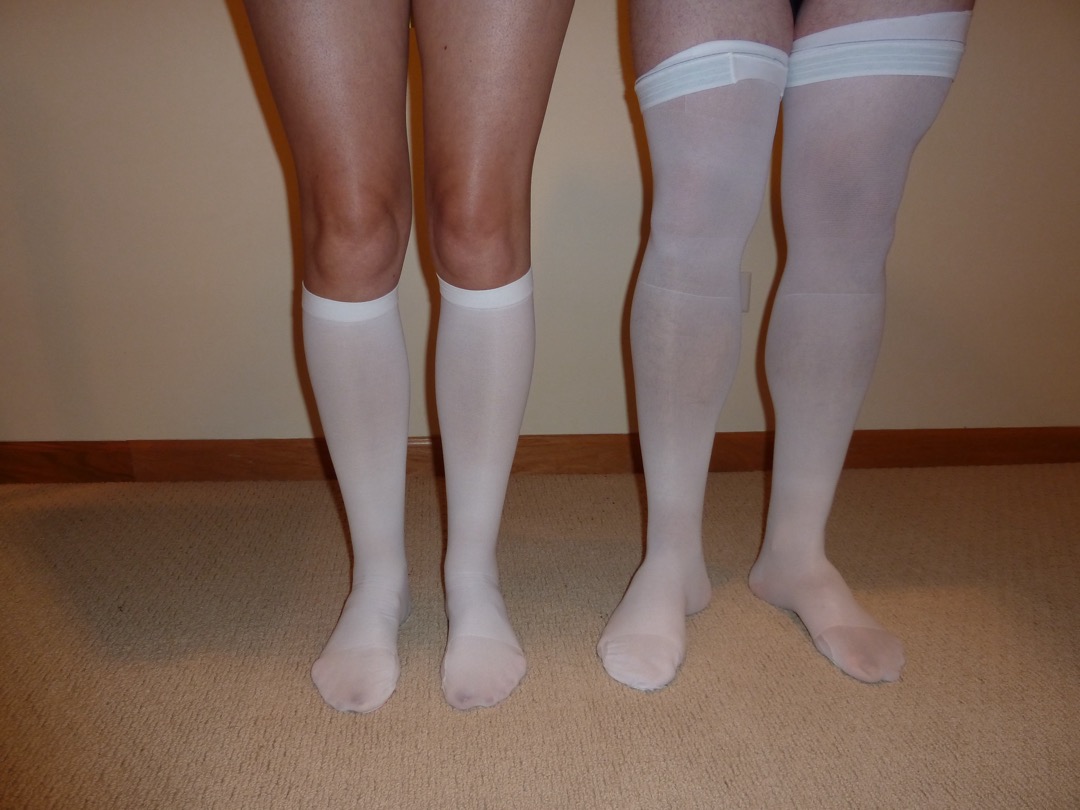
Cabin air pressure gets blamed for a lot of things it does not cause. The swollen ankles you notice somewhere over the Atlantic are not the altitude — they are the seat. Several hours of sitting with the knees flexed and the legs dependent switches off the calf muscle pump, the mechanism that does most of the work returning venous blood from the lower leg against gravity. Blood pools, capillary pressure rises, fluid moves into the tissue, and your shoes stop fitting. The same thing happens on a nine-hour drive, in a coach seat and in business class alike.
Graduated compression is the one intervention that addresses this directly, and the evidence behind it is unusually clean for a consumer product. Randomised trials in long-haul airline passengers consistently show that properly fitted graduated compression stockings reduce leg swelling and cut the rate of symptomless deep vein thrombosis detected on post-flight ultrasound. What those trials cannot demonstrate — because the events are too rare in healthy people — is a reduction in dangerous, symptomatic clot in low-risk travellers. That distinction matters, and it shapes the recommendations below: I have picked for the compression level a traveller actually needs rather than the firmest number available, because over-compressing a healthy passenger is both uncomfortable and pointless.
This guide is specifically about travel. If you want compression for standing shifts, chronic swelling, or a diagnosed venous condition, our broader best compression socks roundup covers those situations in more depth, and our beginner’s guide to compression therapy explains the basics from scratch. Everything below was verified live on Amazon in August 2026 for price, stock, and current rating.
Find the Best Travel Compression Sock for Your Trip
Jump straight to the pick that matches your situation:
- Best compression socks for travel overall — all eight reviewed
- Best compression socks for flying and long-haul flights
- Best compression socks for travel for women
- Best compression socks for travel for men
- Best compression socks for travel during pregnancy
- Best lightweight compression socks for travel
- More travel situations: wide calves, road trips, warm destinations
What Actually Happens to Your Legs on a Long Journey
The venous system in the leg has no pump of its own. It relies on the deep veins being squeezed by the calf muscles with each step, with one-way valves preventing backflow between squeezes. Walk, and the system works. Sit still with the knee bent for six hours, and it effectively stops — venous pressure at the ankle rises, the valves sit under sustained load, and plasma leaks into the surrounding tissue. That is the ankle swelling. In a smaller number of travellers, the combination of stasis, mild dehydration from cabin air, and an underlying risk factor is enough to start a clot forming in a calf vein.
Graduated compression supplies from the outside what the calf pump is not supplying from the inside. The sock is tightest at the ankle, typically delivering the full stated pressure there, and eases progressively up the calf to roughly seventy percent of that figure below the knee. That gradient pushes venous blood in the direction it needs to travel and narrows the vein diameter enough to keep flow velocity up. The gradient is the entire mechanism, which is why a sock that squeezes uniformly from ankle to knee — or worse, one that grips hardest at the top band — does nothing useful and can make things worse.
Two things follow from this that most travel roundups skip. First, the sock has to be knee-high; there is no gradient to build across an ankle sock. Second, fit is not a comfort preference but the difference between a working medical garment and a tight accessory. A sock two sizes too big delivers no gradient at all, and a compression sock is measured against the circumference of your ankle and calf, never your shoe size.
How I Chose These Eight Socks
Every product here was checked directly on Amazon for live availability, current price, rating, and review count rather than pulled from a cached feed — a category where listings rotate constantly and last year’s recommendation is frequently a dead link. I prioritised socks that state a specific mmHg range and describe a graduated gradient, and excluded anything using vague “compression” language without a number.
Beyond that, the selection was built to cover the travel-specific decisions rather than to rank eight near-identical nylon knee-highs. That means a deliberate spread across compression levels from 8-15 through 20-30 mmHg, both synthetic and natural-fiber construction for travellers heading somewhere hot, single premium pairs alongside a multipack for long itineraries, and purpose-built options for the fits that standard socks handle badly — wide calves, maternity, and gendered cuts. Two picks here carry small review pools; both earn their place on a construction advantage rather than volume, and I have flagged that limitation in their reviews rather than hiding it.
Before ordering any of them, run your measurements through our free compression sock size chart, which cross-references sizing across eight major compression brands and pairs your use case with the right mmHg level.
Best Compression Socks for Travel Overall
The eight socks below each earned a place for a specific travel reason. The Iambamboo merino blend is the best all-round choice for most travellers; the sections after the reviews then match particular situations — long-haul flights, pregnancy, wide calves, first-timers — to the right pick from this same lineup.
1. Iambamboo Merino Wool Compression Socks 15-20 mmHg — Best Overall
Most compression socks are general-purpose medical products that mention travel in the listing. This one is built around it, and the design choices show it. The blend is half bamboo viscose and just under a third merino wool, a combination that solves the specific thermal problem of air travel: cabins run cold enough that a thin synthetic sock leaves your feet chilled at cruise, while the jet bridge, the terminal, and the destination frequently run hot. Merino handles both directions, insulating when it is cold and moving moisture when it is not, which is exactly why the natural-fiber brands dominate travel editors’ recommendations.
The compression level is right. At 15-20 mmHg this sits in the range that flight-related swelling research actually uses for healthy passengers, firm enough to assist the calf pump meaningfully but light enough to get on and off without a struggle. Reviewers who wore them specifically for flying report the outcome you want from this product category — legs that feel normal on landing rather than heavy and tight. One reviewer described wearing them on a long flight and through Alaskan excursions with no post-flight heaviness at all.
Two honest caveats. The toe seam is thicker than average, and more than one reviewer found it created a hot spot inside a snug shoe or hiking boot, so pair these with footwear that has room in the toe box. And with only about 1,300 ratings, the evidence base is far thinner than the mass-market options below. This is a newer listing earning its place on construction rather than on volume.

Iambamboo Merino Wool Compression Socks 15-20 mmHg for Flying
by Iambamboo
A travel-specific merino-bamboo sock at the compression level flight medicine recommends — the natural-fiber choice for people who overheat in synthetic compression.
Pros
- Merino-and-bamboo blend regulates temperature in both directions — warm on an over-air-conditioned cabin, breathable on a humid layover
- 15-20 mmHg is the compression level travel medicine actually recommends for healthy passengers on long flights
- Merino resists odor well enough to wear through a multi-leg itinerary without the sour-sock problem synthetics develop
- Reviewers who wore them on long-haul flights specifically report no post-landing heaviness in the legs
Cons
- The toe seam is bulkier than average and can create a pressure point inside narrow shoes or hiking boots
- About 1,300 verified ratings, a much smaller feedback pool than the mass-market multipacks in this guide
2. Iseasoo Copper Compression Socks 15-20 mmHg, 8 Pairs — Budget Pick
The arithmetic here is hard to argue with. Eight pairs of genuine 15-20 mmHg graduated knee-highs cost roughly what a single premium pair costs, and the listing carries more than 40,000 verified ratings at 4.5 stars, the best combination of rating and volume anywhere in this guide. For a two-week trip where laundry is not on the itinerary, this single purchase covers a clean pair for every travel day.
The travel-specific detail that matters more than it sounds: each pair ships individually wrapped. Reviewers repeatedly call this out, and anyone who has tried to keep clean and worn socks separate in a shared suitcase will understand why. The knit is thin enough to pack flat and to disappear under trousers, and the copper treatment does a reasonable job on odor across consecutive wears.
The trade-offs are the ones you would expect at this price. Copper-infused nylon traps more heat than the merino and bamboo alternatives, so if you are heading somewhere genuinely hot, spend up. And several reviewers, particularly at the larger sizes, describe these as a real effort to get on — one noted rolling them over the toes and working the foot in before unrolling up the calf. That is normal for effective compression, but worth knowing before you are doing it in a hotel bathroom at five in the morning.

Iseasoo Copper Compression Socks 15-20 mmHg (8 Pairs)
by Iseasoo
The value benchmark for travel: eight individually wrapped pairs at true 15-20 mmHg, backed by the largest review pool here.
Pros
- Eight pairs for the price most brands charge for one — enough for a two-week trip without doing laundry
- More than 40,000 verified ratings at 4.5 stars, the strongest rating-to-volume combination of any sock in this guide
- Each pair ships individually packaged, which reviewers specifically call out as travel-friendly for packing cubes
- Lightweight nylon knit compresses flat in a carry-on and slips under trousers without visible bulk
Cons
- Copper-infused synthetic runs warmer than the merino and bamboo options when destinations are hot
- Genuinely difficult to don at the larger sizes — reviewers describe rolling them on in stages
3. Sockwell Women’s Circulator Moderate 15-20 mmHg — Upgrade Pick
Sockwell is the name that appears in essentially every serious travel compression roundup, and having looked at the construction it is easy to see why. The Circulator uses a four-zone graduated gradient rather than a simple ankle-to-knee taper, adding targeted support through the arch and around the ankle where a plain knit tends to bunch. The merino-nylon-rayon blend is close to a third merino, which is what delivers the thermoregulation and odor resistance that make a sock wearable across a multi-day itinerary.
The turn-welt top is the detail travellers will notice most. Rather than a narrow elastic band that digs a groove below the knee over six seated hours, the top folds back on itself to spread the pressure — the single most common comfort complaint in this category, engineered out. Add an arch support and a light cushion sole and this becomes a sock you can walk a terminal in, not just sit in.
The cost is real: roughly triple the per-pair price of the multipacks, sold one pair at a time. For a frequent flyer who launders at home between trips, that is the right purchase. For a three-week backpacking route with no washing machine, it is not.
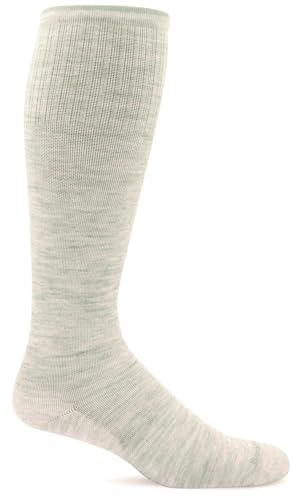
Sockwell Women's Circulator Moderate Graduated Compression Sock 15-20 mmHg
by Sockwell
The premium travel sock the major travel publications keep landing on, in a women's cut with merino thermoregulation and a non-binding top band.
Pros
- The brand travel editors converge on — merino-rayon construction that holds its gradient through years of washing
- Four-zone graduated compression with a turn-welt top that does not dig in during a long seated flight
- Natural fibers manage moisture and odor across multiple wears between laundry stops
- Arch support and a light cushion sole make it comfortable for airport walking, not just sitting
Cons
- Roughly triple the per-pair cost of the multipack options in this guide
- Sold as a single pair, so multi-week travelers need several to avoid mid-trip washing
4. LEVSOX Compression Socks 20-30 mmHg — Runner-Up, Firm Compression
This is the pick for travellers who have an actual medical reason to want firm compression, and it should be read that way rather than as a general upgrade. At a true 20-30 mmHg, this is Class 2 territory — the range clinicians prescribe for chronic venous insufficiency, significant varicose veins, and post-thrombotic management, and the range appropriate for a passenger with a clot history facing a long flight.
What makes it work as a travel product rather than just a medical one is the fabric. Firm compression in a stiff synthetic becomes intolerable somewhere around hour four; the bamboo viscose knit here stays soft enough that wearing it across a transatlantic flight is realistic. With more than 15,000 verified ratings it also carries the deepest evidence base of any firm-compression sock in this guide, and because the listing is marketed heavily to pregnancy and nursing, the accumulated sizing feedback is unusually detailed.
Two warnings. If you have no medical indication, this is more compression than you need, and firmer is not better — 15-20 mmHg is the correct choice for a healthy traveller. And 20-30 mmHg socks are genuinely hard to pull on; put these on at the hotel before you leave, never at the gate.
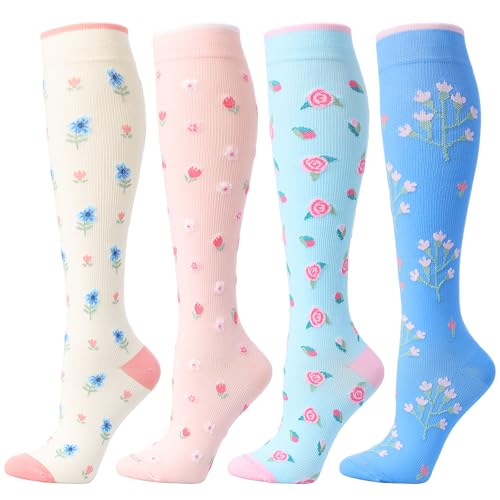
LEVSOX Compression Socks 20-30 mmHg for Travel and Pregnancy
by LEVSOX
The firm-compression option for travellers with a genuine medical indication — 20-30 mmHg in a knit soft enough to keep on for a transatlantic flight.
Pros
- True 20-30 mmHg — the firm range appropriate for passengers with a clot history or diagnosed venous disease
- More than 15,000 verified ratings, the deepest feedback pool of any firm-compression sock reviewed here
- Bamboo viscose keeps a 20-30 mmHg sock tolerable for the eight-plus hours a long-haul flight demands
- Marketed and reviewed heavily for pregnancy and long shifts, so the sizing guidance is unusually well road-tested
Cons
- 20-30 mmHg is more compression than a healthy traveler needs and should not be self-prescribed
- Meaningfully harder to pull on than the 15-20 mmHg picks, which matters in a cramped airplane lavatory
5. Pembrook Bamboo Viscose Light Compression Socks 8-15 mmHg, 3 Pairs
The most common failure mode in compression socks is not that they do not work — it is that the buyer cannot get them on and stops trying. This three-pack is the answer to that, and there is no shame in starting here. At 8-15 mmHg the socks slide on like a firm knee-high sock, and the bamboo viscose knit is the softest in this lineup by a clear margin, which matters if you have sensitive skin or have found conventional compression itchy.
Reviewers consistently praise two things: the comfort over a full day, and, oddly, the printed donning guide the brand includes. Several describe that guide as the thing that made compression socks finally click for them. For a traveller who has bought and abandoned a pair before, that is worth more than a few extra mmHg.
Be clear about the trade-off. At 8-15 mmHg this sits below the level used in the flight-swelling research, so treat it as a comfort measure and a gateway rather than a preventive intervention. If you have a genuine risk factor, start at 15-20 mmHg instead. The contrast white toe panel also makes them look like medical hosiery with sandals, which some reviewers minded.

Pembrook Bamboo Viscose Light Compression Socks 8-15 mmHg (3 Pairs)
by Pembrook
The gentlest entry point in the category — light enough that people who gave up on compression socks will actually wear these on a plane.
Pros
- 8-15 mmHg is genuinely easy to put on, which is the single biggest reason first-time buyers abandon compression
- Bamboo viscose is the softest knit in this guide and does not itch on sensitive skin during long wear
- Three pairs at a single-pair price, useful for a first trial before committing to firmer compression
- The brand includes a donning guide that reviewers repeatedly describe as the thing that made them stick with it
Cons
- 8-15 mmHg sits below the level travel medicine recommends for genuine flight-related swelling prevention
- Contrast white toe panel reads as medical hosiery rather than a normal sock with sandals or slides
6. LEVSOX Wide Calf Compression Socks Plus Size 15-20 mmHg
Sizing up a standard compression sock to fit a wide calf does not work, and it is worth understanding why. The stated mmHg assumes the knit is stretched to a specific tension across a specific circumference. Stretch it further and the pressure at the calf drops while the ankle stays tight, distorting the gradient the sock exists to create — and the over-stretched top band is exactly what starts rolling down an hour into a flight.
This one is knitted wide rather than sized up, which is the distinction that matters. It also solves a fit mismatch standard plus-size socks handle badly: a wide calf paired with an average foot, where a conventionally sized-up sock leaves inches of loose fabric flapping past the toes. Reviewers at the upper end of the range, including one describing a sixteen-inch calf, report it staying in place through a full day without cutting in.
It is not perfect. The top band is narrower than it should be, and several reviewers with shorter legs still report some rolling — the sock runs long, so anyone under about five foot five should expect to fold or bunch it below the knee.
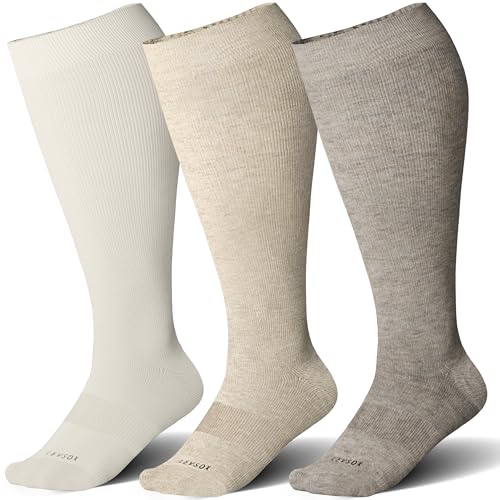
LEVSOX Wide Calf Compression Socks Plus Size 15-20 mmHg
by LEVSOX
The wide-calf answer for travellers whose compression socks have always rolled down by the second hour of a flight.
Pros
- Built wide from the start rather than sized up, so it holds its gradient instead of stretching thin at the calf
- Reviewers with calves at the top of the range report it staying put through a full day without rolling
- Cut for the common mismatch of a wide calf and an average foot, which standard plus-size socks handle badly
- Bamboo viscose keeps a plus-size knit from feeling like a tourniquet on a warm flight
Cons
- The top band is narrower than ideal and some reviewers still report it rolling on shorter legs
- Runs long — travellers under about five foot five report excess fabric bunching below the knee
7. Sockwell Men’s Circulator Moderate 15-20 mmHg
This is the men’s cut of the Circulator reviewed above, and the reason it appears separately rather than as a footnote is that compression fit is not gender-neutral marketing. Men’s legs are typically longer below the knee with a higher calf-to-ankle ratio, and a properly graduated sock has to account for that to place its pressure zones correctly. Sockwell sizes and knits this version accordingly rather than relabelling the women’s sock in darker colours.
The construction is otherwise identical and equally good for flying: the same four-zone gradient, the same merino-rayon blend at roughly a third wool, the same non-binding turn-welt top and light cushion sole. The manufacturer explicitly lists flying and travel among the intended uses, which is not marketing filler here — 15-20 mmHg graduated is precisely the specification travel medicine points healthy passengers toward.
The caveats mirror the women’s version: premium single-pair pricing, and a thinner review pool at under 2,000 ratings despite being the same sock in a different cut.

Sockwell Men's Circulator Moderate Graduated Compression Sock 15-20 mmHg
by Sockwell
The men's Circulator delivers the same four-zone merino gradient travel editors rate highly, in a cut and colour range built for men.
Pros
- The men's cut of the same four-zone Circulator gradient, sized and coloured for men rather than simply relabelled
- Merino-rayon blend handles the temperature swing between a cold cabin and a hot arrivals hall
- Seamless toe closure and ultra-light cushion sole make it wearable through airport transit, not just the flight
- The manufacturer explicitly lists flying and travel among the intended uses, with a 15-20 mmHg gradient to match
Cons
- Premium single-pair pricing that a traveller needing several pairs will feel
- Under 2,000 ratings, a thinner evidence base than the women's Circulator despite being the same construction
8. Kindred Bravely Maternity Compression Socks, 2 Pairs
Pregnancy changes the calculation on travel compression in three ways at once. Blood volume rises by up to half, the growing uterus impedes venous return from the legs, and pregnancy itself is an independent risk factor for clot — which is why compression on a long flight moves from optional comfort to something worth discussing with your obstetrician or midwife.
This is one of the few options on Amazon designed for that situation rather than adapted to it. The sizing is keyed to calf measurement in two bands, under sixteen inches and sixteen to nineteen, which is the right approach when pregnancy swelling means the leg you measure in the first trimester is not the leg boarding the plane in the third. The bamboo-derived knit is soft and stretchy enough to don without a struggle at a point when reaching your feet is already difficult, and the cushioned sole addresses the foot ache that pregnancy and airport concourses produce together.
The honest limitation is evidence: about 1,600 ratings is one of the smaller pools in this guide, and the two-band sizing leaves anyone outside that calf range unserved. If you need firmer compression on obstetric advice, the LEVSOX 20-30 mmHg above is the better-evidenced choice.

Kindred Bravely Maternity Compression Socks for Pregnancy (2 Pairs)
by Kindred Bravely
A maternity-specific sock sized by calf measurement rather than shoe size — the right starting point for pregnant travellers, chosen with an obstetrician's input.
Pros
- Designed specifically for pregnancy rather than adapted from a general medical sock
- Sized by actual calf measurement rather than shoe size, which matters when pregnancy swelling changes the fit mid-trip
- Cushioned sole addresses the foot ache that pregnancy and airport walking combine to produce
- Two pairs per pack covers an outbound and return flight without laundry in between
Cons
- About 1,600 verified ratings, one of the smaller review pools in this guide
- Two size bands only, so calves outside roughly 16 to 19 inches are not accommodated
Best Compression Socks for Flying and Long-Haul Flights
For flights, the decision splits cleanly on medical risk rather than on hours in the air. A healthy passenger wants 15-20 mmHg regardless of whether the flight is five hours or fifteen. A passenger with a clot history, diagnosed venous disease, or recent major surgery should be in 20-30 mmHg and should have discussed the flight with their physician.
| Product | Price | Buy |
|---|---|---|
| Iambamboo Merino Wool Compression Socks 15-20 mmHg for FlyingBest for most flyers Merino-bamboo at 15-20 mmHg — the level flight-swelling research uses for healthy passengers | $16.98 | View on Amazon |
| LEVSOX Compression Socks 20-30 mmHg for Travel and PregnancyBest for high clot risk True 20-30 mmHg for prior DVT or diagnosed venous disease, soft enough to keep on for eight hours | $18.59 | View on Amazon |
Best Compression Socks for Travel for Women
Women’s compression sizing is keyed to a different calf-to-ankle ratio and a shorter below-knee length than men’s, and the gendered cuts exist for gradient placement rather than styling. The Sockwell Circulator is the women’s-cut pick; for a longer trip needing several pairs, the unisex multipack is the practical companion.
| Product | Price | Buy |
|---|---|---|
| Sockwell Women's Circulator Moderate Graduated Compression Sock 15-20 mmHgBest for women overall Women's-cut four-zone gradient in merino-rayon, with a turn-welt top that does not dig in | $32.95 | View on Amazon |
| Iseasoo Copper Compression Socks 15-20 mmHg (8 Pairs)Best value for women Eight individually wrapped pairs at 15-20 mmHg for trips longer than the laundry cycle | $17.09 | View on Amazon |
Best Compression Socks for Travel for Men
Men typically need more length below the knee and a wider calf allowance at the same shoe size, which is why a men’s cut places its pressure zones correctly where a unisex sock sized up does not. The Sockwell men’s Circulator is the premium answer; the copper multipack sizes generously enough that larger feet and calves are well served at a fraction of the cost.
| Product | Price | Buy |
|---|---|---|
| Sockwell Men's Circulator Moderate Graduated Compression Sock 15-20 mmHgBest for men overall Men's-cut four-zone merino gradient, with flying listed among the manufacturer's intended uses | $32.95 | View on Amazon |
| Iseasoo Copper Compression Socks 15-20 mmHg (8 Pairs)Best value for men Sizes roomy through L/XL — reviewers with size 14 feet report a proper fit | $17.09 | View on Amazon |
Best Compression Socks for Travel During Pregnancy
Pregnancy is an independent clot risk factor, so compression on a long flight is worth raising with your obstetrician or midwife before you fly rather than treating as a comfort purchase. Start with a maternity-specific fit; step up to firm compression only on clinical advice. For everyday pregnancy swelling rather than the travel case, our best compression socks for pregnancy guide covers sizing, donning, and the level to start at in more depth.
| Product | Price | Buy |
|---|---|---|
| Kindred Bravely Maternity Compression Socks for Pregnancy (2 Pairs)Best maternity fit Sized by calf measurement rather than shoe size, which matters as pregnancy swelling changes | $29.99 | View on Amazon |
| LEVSOX Compression Socks 20-30 mmHg for Travel and PregnancyBest if firm compression is advised True 20-30 mmHg with deep pregnancy-specific sizing feedback — use on obstetric advice | $18.59 | View on Amazon |
Best Lightweight Compression Socks for Travel
Lightweight here means two different things worth separating: a lighter compression level, and a lighter, more breathable knit at a proper level. If donning difficulty is what has put you off compression, drop the mmHg. If heat is the problem, keep 15-20 mmHg and change the fiber instead — that is the better trade.
| Product | Price | Buy |
|---|---|---|
| Pembrook Bamboo Viscose Light Compression Socks 8-15 mmHg (3 Pairs)Lightest compression 8-15 mmHg bamboo viscose, the easiest sock here to pull on — a comfort measure, not prevention | $19.95 | View on Amazon |
| Iambamboo Merino Wool Compression Socks 15-20 mmHg for FlyingLightest feel at full compression Keeps the recommended 15-20 mmHg while merino-bamboo handles the heat | $16.98 | View on Amazon |
Best Compression Socks by Travel Situation
A few more travel situations come up repeatedly. Each pick below is drawn from the same eight socks reviewed above, with a live Amazon link so you can check the current price.
| Product | Price | Buy |
|---|---|---|
| LEVSOX Wide Calf Compression Socks Plus Size 15-20 mmHgBest for wide calves and plus size Knitted wide rather than sized up, so the gradient survives a large calf | $26.99 | View on Amazon |
| Iseasoo Copper Compression Socks 15-20 mmHg (8 Pairs)Best for road trips and long drives Individually wrapped pairs make a clean pair per driving day trivial to pack | $17.09 | View on Amazon |
| Sockwell Women's Circulator Moderate Graduated Compression Sock 15-20 mmHgBest for warm destinations Merino-rayon thermoregulates when the destination is hotter than the cabin | $32.95 | View on Amazon |
| LEVSOX Compression Socks 20-30 mmHg for Travel and PregnancyBest for multi-day sitting with swelling Firm 20-30 mmHg for travellers whose legs swell badly across consecutive travel days | $18.59 | View on Amazon |
How to Choose Compression Socks for Travel
The six factors below cover the decision in detail, but the shortest version is worth stating plainly first: pick your compression level from your medical risk, pick your fabric from your destination’s climate, pick your pack size from your trip length, and measure your calf before you order anything. Get those four right and almost any well-constructed graduated sock will do the job.
One more consideration specific to travel: build replacement into the plan. Compression socks lose their elastic gradient in roughly three to six months of regular wear, and a pair that has lived in a suitcase for two years is not delivering its stated pressure regardless of how intact it looks. If you fly a few times a year and dig the same pair out each time, the sock is almost certainly expired. Pull it up your calf — if it goes on easily and does not resist, it is finished.
Buyer's Guide
A travel compression sock has a different job than a clinical one. It has to be light enough to pack, easy enough to put on in a hotel room at 5am, comfortable across a twenty-degree temperature swing between cabin and destination, and correct at the compression level for the wearer's actual risk — not the highest number available.
Compression Level for Your Risk, Not the Flight Length
The single most common mistake is choosing compression by trip duration rather than by personal risk. For a healthy traveller, 15-20 mmHg is the right answer whether the flight is five hours or fifteen — a longer flight means wearing that level for longer, not needing a firmer one. Step up to 20-30 mmHg only if you have a specific indication: prior deep vein thrombosis, diagnosed chronic venous insufficiency, significant varicose veins, recent major surgery, or a physician's instruction. The 8-15 mmHg light options are a legitimate choice for a nervous first-timer or someone who has abandoned compression before because they could not get the socks on, but understand you are trading some of the benefit for wearability.
Fabric and Temperature Regulation
Travel exposes a sock to conditions daily wear does not. An over-conditioned cabin at altitude, a humid jet bridge, then a hot arrivals hall in a single afternoon. Merino wool and bamboo blends handle that swing in both directions, staying warm when the cabin is cold and wicking when the destination is not — which is why the Sockwell and Iambamboo picks are the ones to reach for if you run hot or are heading somewhere warm. Copper-infused nylon like the Iseasoo multipack is the most packable and the cheapest per pair, but it traps more heat. Natural fibers also resist odor over consecutive wears, which matters on an itinerary where laundry is not an option.
Ease of Donning on the Road
A compression sock you cannot put on in a hotel bathroom at dawn is a sock you will leave in the suitcase. Firmer compression is meaningfully harder to don, and the difficulty scales sharply between 15-20 and 20-30 mmHg. Bamboo-blend knits like the Pembrook and LEVSOX options stretch more forgivingly than tight synthetics at the same rating. Two travel-specific tips: put them on before showering rather than after, since damp skin makes donning far harder, and pack a pair of rubber washing-up gloves, which improve grip dramatically and weigh nothing. Travellers with limited hand strength or significant swelling should pack a donning frame.
Fit, and Why Shoe Size Is the Wrong Input
Graduated compression only delivers its stated gradient if the sock matches your leg, and brand size charts are keyed to ankle and calf circumference, not shoe size. Measure your ankle at its narrowest point and your calf at its widest, ideally in the morning before any swelling. A sock that is too large sags and delivers nothing; one that is too small creates a tourniquet effect at the calf that is worse than no compression at all. If your calf is at the top of a standard range, buy a purpose-built wide-calf sock like the LEVSOX plus-size option rather than sizing up a standard one, which stretches the knit thin and destroys the gradient. Our free compression sock size chart cross-references sizing across eight major brands so you can compare before ordering.
Pack Quantity and Trip Length
This is where travel buying diverges most sharply from everyday buying. A single premium pair is the right purchase for a weekend trip or a regular commuter flyer who launders at home. For a two-week itinerary with no laundry access, a multipack is not a downgrade but the correct choice — you need a clean pair per travel day, and the Iseasoo eight-pack costs less in total than two premium single pairs. Individually wrapped pairs, as that multipack ships, also make packing cubes and dirty-laundry separation far easier. Buy the level of compression you need first, then choose the pack size that matches the trip.
Knee-High Versus Ankle and Toeless Styles
For travel, knee-high is the only length that does the job. Graduated compression works by creating a pressure gradient along the calf that assists the muscle pump returning blood toward the heart; an ankle-length compression sock has no calf over which to build that gradient and functions as ankle support, not venous assistance. Toeless and open-toe variants are legitimate — they exist for people with toe deformities, fungal nail treatment, or who simply want to check toe colour — and they compress the calf identically. What to avoid for a flight is anything below knee height, and anything marketed as a compression sock that lists a single pressure figure without describing a graduated gradient.
Final Verdict
For most travellers, the Iambamboo merino-bamboo sock is the right buy: it sits at 15-20 mmHg, the level the flight research actually supports for healthy passengers, and the natural-fiber blend handles the cold-cabin-to-hot-terminal swing that makes synthetic compression uncomfortable on a long journey.
If you are packing for a trip longer than a week, buy the Iseasoo eight-pack instead and stop thinking about it — eight individually wrapped pairs of genuine 15-20 mmHg graduated socks, backed by the largest review pool in this guide, for what one premium pair costs. If you fly often and launder at home between trips, the Sockwell Circulator in the women’s or men’s cut is the sock worth spending on, and the turn-welt top is the detail you will appreciate somewhere over hour four.
Two situations call for something different. If you have a history of deep vein thrombosis, diagnosed venous insufficiency, or a physician who has told you to wear firm compression, the LEVSOX 20-30 mmHg is the pick — and that conversation should happen before a long flight, not after. And if standard socks have always rolled down your calf, the LEVSOX wide-calf version is knitted for the job rather than stretched to fit it.
One closing note that applies to everyone. Compression socks are a genuinely useful intervention for travel, but they are not the whole intervention. Walk the cabin every couple of hours, flex your ankles in the seat, stay hydrated, and choose an aisle seat on a long flight if you can. If you have significant clot risk factors, none of that substitutes for a conversation with your physician before you fly. And if you develop calf pain, swelling in one leg, or breathlessness after a long journey, that is an urgent medical assessment, not something to manage with a better sock.
Frequently Asked Questions
What compression level is best for a long flight?
How long before a flight should I put compression socks on?
Who should not wear compression socks on a flight?
Do compression socks actually prevent DVT on planes?
Are compression socks worth it for road trips and long drives?
Can I wear the same compression socks for a whole two-week trip?
Related Articles
8 Best Compression Socks of 2026
orthopedic-supports
Compression Socks vs Sleeves: When to Choose Each (Physician Guide)
orthopedic-supports
A Beginner's Guide to Compression Therapy: What It Is, How It Works, and How to Start Safely
orthopedic-supports
Understanding Compression Levels: 15-20 vs 20-30 mmHg (Physician Guide)
orthopedic-supports
7 Best Diabetic Socks of 2026
monitoring
About the Reviewer

Dr. David Taylor, MD, PhD
Drexel University College of Medicine (MD), Indiana University School of Medicine (PhD)
Dr. David Taylor is a licensed physician and medical researcher who founded BestRatedDocs in 2016. With an MD from Drexel University and a PhD from Indiana University School of Medicine, he combines clinical expertise with a passion for health technology to provide evidence-based product recommendations. Dr. Taylor specializes in health informatics and regularly evaluates medical devices, diagnostic equipment, and therapeutic products to help healthcare professionals and patients make informed decisions.