Pulse Oximeter Readings: What They Mean and When to Worry
Dr. David Taylor, MD explains what your pulse oximeter's SpO2 and pulse numbers mean — normal ranges, the 88% threshold, red flags for when to call 911, and why readings can be wrong.
Updated
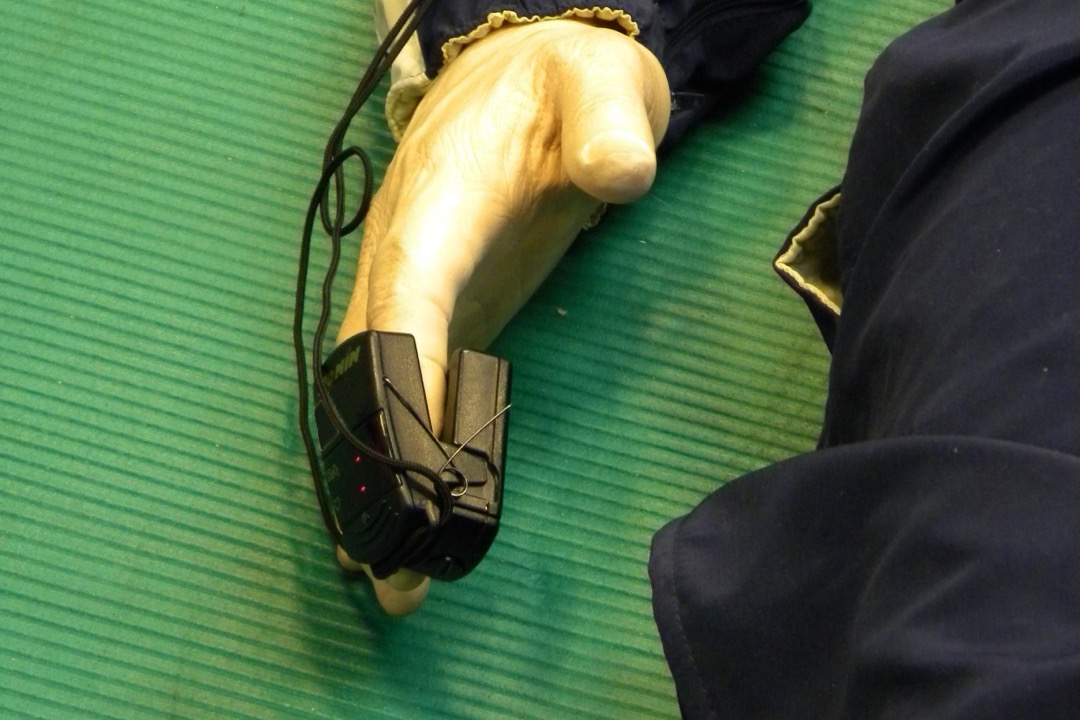
A patient called my office one winter evening, badly frightened. She had bought a fingertip pulse oximeter after a bout of bronchitis, clipped it on after coming in from shoveling the driveway, and watched it read 86 percent. She was certain she was in respiratory failure. I asked her one question: how cold were her hands? Freezing, she said. I had her warm them under running water for two minutes, sit down, and try again. The reading climbed to 98 percent. She was fine. What she had was not low oxygen — it was a cold fingertip that could not feed the sensor a decent pulse.
That call captures why this article exists. A pulse oximeter is one of the most useful home health devices you can own, but it is also one of the most misread. The number on the screen is not a verdict — it is a measurement made under conditions that can help it or wreck it, interpreted against a normal range that shifts with your lungs, your altitude, and even your skin. In this guide I will walk you through exactly what those numbers mean, the ranges I use in clinic, the specific readings that should worry you, the ones that should send you to an emergency room, and the surprisingly long list of reasons a reading can be wrong. By the end you will read your own oximeter the way I read one in the exam room.
What a Pulse Oximeter Actually Measures
A pulse oximeter estimates the percentage of your hemoglobin — the oxygen-carrying protein in your red blood cells — that is currently loaded with oxygen. That percentage is called your oxygen saturation, and when it is measured through the skin with an optical device rather than drawn from an artery, it is written as SpO2. A reading of 97 percent means that, of all the hemoglobin the device can see, 97 percent is carrying its full complement of oxygen.
The clever part is how it does this without a needle. The little clip you put on your fingertip shines two wavelengths of light — one red, one infrared — through the translucent tissue of your finger to a sensor on the other side. Oxygen-rich hemoglobin and oxygen-poor hemoglobin absorb these two wavelengths differently: well-oxygenated blood lets more red light through, poorly oxygenated blood absorbs more of it. The device measures the ratio of red to infrared light reaching the sensor and translates it into a saturation percentage.
The word “pulse” in the name matters. The sensor watches for the rhythmic surge of arterial blood with each heartbeat and reads oxygen only from that pulsing signal — which is how it isolates arterial blood (the blood that matters for oxygen delivery) from the surrounding tissue and venous blood. This is also why a strong, steady pulse at the fingertip is essential to a trustworthy reading, and why cold, still, or poorly circulated fingers give the device so much trouble. No pulse signal, no reliable number. If you want the full picture of choosing a device that reads accurately, our roundup of the best pulse oximeters breaks down which units hold a signal on cold or low-perfusion fingers.
The Two Numbers on the Screen
Clip on a typical fingertip oximeter and the display lights up with two numbers. Knowing which is which is the first step to reading it correctly.
- SpO2 (the big number, shown as a percentage): your blood oxygen saturation. This is the number this whole article is built around. Normal is 95 to 100 percent.
- Pulse rate (usually the smaller number, in beats per minute): your heart rate, read optically from the same pulse of blood. Normal at rest is 60 to 100 beats per minute for adults.
Many devices also show a small waveform or bar — the plethysmograph, or “pleth” — that pulses with each heartbeat. A tall, regular waveform means a strong signal and a reading you can trust; a flat, ragged, or flickering waveform means the device is struggling and the number may be junk. Some higher-end units add a perfusion index (PI), a direct measure of signal strength that I will come back to later. Learn to glance at the waveform before you believe the number.
Normal Pulse Oximeter Readings: The Ranges That Matter
Here are the ranges I use when a patient asks me to interpret their home readings. This table assumes an adult without chronic lung disease, breathing room air near sea level.
| SpO2 Reading | What It Means | What to Do |
|---|---|---|
| 95–100% | Normal oxygen saturation | No action needed; this is the healthy range |
| 93–94% | Low-normal / borderline | Recheck carefully; fine if you feel well and it is stable |
| 91–92% | Mild hypoxemia | Recheck with warm hands; if it holds, call your doctor the same day |
| 90% or below | Hypoxemia — a warning sign | Contact a clinician promptly; go to the ER if symptomatic |
| 88% or below | Clinically significant hypoxemia | Medical evaluation needed; this is the supplemental-oxygen threshold |
| Below 80% | Severe hypoxemia | Emergency — call 911, even without dramatic symptoms |
The single most important thing to understand about this table is that it is a starting point, not a law of physics. The right interpretation of any given number depends on your baseline lung health, your altitude, and — critically — whether the reading was taken under good conditions. Let me walk down the levels the way I explain them in the room.
95 to 100 Percent: Normal
This is where a healthy person should live. Most adults at rest read 97 to 99 percent. A brief dip to 95 or 96 percent during sleep, exertion, or a coughing fit is normal and not worth a second thought. If your resting reading is consistently in this band and you feel well, your oxygen delivery is doing its job. One important adjustment: altitude shifts this range downward. There is simply less oxygen to load onto the blood at elevation, so a healthy person living at 5,000 to 8,000 feet may sit in the low 90s and be completely normal. Judge your reading against your own baseline where you live, not a sea-level chart.
91 to 94 Percent: The Borderline Zone
This is the range that generates the most anxious phone calls, and most of the time the explanation is benign — a cold finger, a poor probe fit, a moment of motion, or nail polish. A single reading here should always be rechecked under good conditions (warm hands, no polish, sitting still, dim light, waiting for the number to settle). If a careful recheck still lands at 91 to 94 percent and you feel completely well, it may simply be your reading for the moment; monitor it. If it is 91 to 92 percent and holding, or drifting lower, that is worth a same-day call to your physician — especially if you have an active respiratory infection.
90 Percent and Below: Hypoxemia
Ninety percent is the clinical line for hypoxemia — a blood oxygen level low enough to matter. A confirmed reading at or below 90 percent in someone without chronic lung disease should prompt prompt medical contact. If it comes with any symptom of oxygen deprivation, it becomes an emergency (see the red flags below). Do not talk yourself out of a confirmed reading in this range because you “feel okay” — this is exactly where silent hypoxia lives.
88 Percent: The Threshold That Has Clinical Weight
Eighty-eight percent is not an arbitrary number. In U.S. clinical practice, a resting SpO2 at or below 88 percent (or an arterial oxygen pressure at or below 55 mmHg) is the established threshold at which long-term supplemental oxygen therapy is prescribed and covered. When I see 88 percent or lower on a reliable reading, I am thinking about a patient’s need for oxygen, not about whether the drop is real. It is real until proven a measurement artifact.
Below 80 Percent: Severe
A confirmed reading below 80 percent is a medical emergency regardless of symptoms. At this level the heart and brain are not receiving enough oxygen, and the situation can deteriorate quickly. Recheck once with warm hands and a steady signal to rule out gross artifact, and if it holds, call 911.
When to Worry — and When to Call 911
Numbers matter, but symptoms decide urgency. Here is the rule I drill into patients: watch the number, but act on the combination of the number and how you feel.
Call 911 or go to the emergency department immediately if a low reading (roughly 90 percent or below, confirmed) comes with any of these:
- Severe or worsening shortness of breath, or gasping for air
- Chest pain or tightness
- Bluish or gray discoloration of the lips, face, gums, or fingertips (cyanosis)
- Confusion, agitation, or difficulty staying awake
- A reading in the low 80s or below on a reliable recheck, even without dramatic symptoms
Call your doctor the same day — urgent but not a 911 call — if your careful readings persistently sit in the 91 to 94 percent range, if the number is slowly trending downward over hours, or if you have a respiratory illness and your oxygen is drifting below your normal baseline.
The reason a home oximeter earns its place on the shelf is a phenomenon called silent hypoxia (sometimes “happy hypoxia”), which drew wide attention during COVID-19. In some conditions, oxygen saturation can fall substantially before the body produces the breathlessness that would normally sound the alarm. A patient can look and feel deceptively okay while their oxygen quietly slides. This is precisely the scenario where the device catches something your symptoms have not — so when a reliable reading and your symptoms disagree, believe the worse of the two and act on it.
A Special Case: COPD and Chronic Lung Disease
If you have COPD, pulmonary fibrosis, or another chronic lung condition, throw out the “95 percent or bust” rule — it does not apply to you, and chasing it can actually be dangerous.
Many people with advanced COPD live at a lower baseline oxygen level, and their clinicians deliberately set a target range of 88 to 92 percent rather than pushing for the high 90s. In a subset of COPD patients who retain carbon dioxide, driving oxygen too high can actually blunt their drive to breathe and cause CO2 to build up to dangerous levels. So for these patients, 89 percent may be perfectly acceptable and 98 percent might be a sign of too much supplemental oxygen. The correct number is whatever your pulmonologist has set for you.
The practical rule for anyone with chronic lung disease: know your personal baseline — the range you sit at when you are stable and feeling well — and treat a meaningful drop below that baseline, not a universal cutoff, as your alarm. Pair the oximeter with a peak flow meter if you have asthma or COPD, because how hard you can push air out and how well your blood is oxygenating are two different, complementary signals — a falling peak flow often precedes a falling oxygen level and gives you earlier warning.
Why Your Reading Might Be Wrong
This is the section most guides skip and the one that would have saved my patient her frightening evening. A pulse oximeter is an optical device measuring a moving target through skin, and plenty of ordinary things throw it off. Before you trust any alarming number, run through this list.
- Cold hands and poor perfusion. The most common cause of a falsely low reading, by far. A cold, constricted fingertip cannot deliver the pulse of blood the sensor needs. Warm your hands and recheck.
- Nail polish and artificial nails. Dark shades — blue, green, black, brown — and thick artificial nails absorb or scatter the light and can lower the reading. Use a bare finger.
- Motion. Shivering, tremor, tapping, or even talking during the measurement scrambles the signal. Rest the hand on a table and hold still.
- Bright ambient light. Direct sunlight or strong overhead light hitting the sensor can corrupt the reading. Cup your other hand over the device.
- A loose or oversized probe. The clip must sit snugly with the light passing straight through the fleshy pad of the fingertip. A wobbly fit or a finger too small for the probe reads poorly.
- Carbon monoxide poisoning — the dangerous one. A standard pulse oximeter cannot tell oxygen-bound hemoglobin from carbon-monoxide-bound hemoglobin, so in CO poisoning it reads falsely high — often a reassuring 98 or 99 percent while the person is genuinely oxygen-starved. If there is any suspicion of CO exposure (a running engine, a faulty furnace, headache and nausea in multiple people in a home), do not trust the oximeter; get out and call for help.
- Anemia. The device reports the percentage of hemoglobin that is saturated, not how much hemoglobin you have. Someone severely anemic can show a normal SpO2 while still delivering too little oxygen simply because there is not enough hemoglobin to carry it. A “normal” reading does not rule out an oxygen-delivery problem.
- Very low blood pressure or shock, nail fungus, and even certain intravenous dyes can also interfere.
The takeaway: a low reading is a prompt to recheck under good conditions, not an instant diagnosis. Warm, still, bare fingers in dim light, waiting 15 to 30 seconds for the number to stabilize, is the standard I want before anyone acts on a number.
The Skin-Tone Accuracy Problem
One limitation deserves its own section because it is real, well-documented, and rarely mentioned. Pulse oximeters can read less accurately on darker skin. A landmark 2020 analysis in the New England Journal of Medicine (Sjoding and colleagues) found that these devices were nearly three times more likely to miss dangerously low oxygen levels — so-called occult hypoxemia — in Black patients than in white patients. The danger was concentrated exactly where you would least expect it: among readings in the reassuring 92 to 96 percent range, where a patient and clinician see a “normal” number and never suspect the true arterial level has quietly fallen below 88 percent. The mechanism is optical — the melanin in more pigmented skin absorbs some of the light the sensor depends on, skewing the red-to-infrared ratio the device uses, and many oximeters were historically calibrated on mostly light-skinned volunteers. The net effect is that the reading can run falsely high in people with darker skin and mask a genuine problem.
Regulators have taken notice. In early 2025 the FDA issued draft guidance urging manufacturers to validate device accuracy across a diverse range of skin tones, and newer devices are being designed and tested with this in mind. Until that validation is universal, the practical guidance is straightforward: if you have darker skin, give your symptoms extra weight, be more cautious with borderline numbers, and never let a reassuring reading override real shortness of breath, chest pain, or confusion. When the technology and your body disagree, trust your body.
The Pulse Rate and Perfusion Index
Do not ignore that second number. Your pulse rate, read from the same optical signal, is a genuine vital sign. A resting rate of 60 to 100 beats per minute is normal for adults; consistently above 100 (tachycardia) or below 50 with symptoms deserves a look. A racing pulse paired with a falling oxygen level is a combination I take seriously, because together they suggest the body is working hard to compensate for something.
If your device shows a perfusion index, use it. PI reflects how strong the pulse signal is at your fingertip — essentially, how much the device can trust itself. A healthy PI is often somewhere from about 1 to 20 percent; a very low PI (under roughly 0.4) is a red flag that the SpO2 number may be unreliable, usually because of cold or poor circulation, and that you should warm the hand and recheck. Think of PI as the device grading its own confidence.
The oximeter measures rate, not rhythm. If you are worried about an irregular or skipping heartbeat rather than a fast or slow one, that is a question for a dedicated home ECG monitor, which records the electrical pattern of the heart rather than just counting pulses.
How to Get an Accurate Reading at Home
Put the whole method together and it takes about a minute:
- Warm up. If your hands are cold, warm them first — this single step prevents most falsely low readings.
- Prep the finger. Use a bare finger with no polish or artificial nail; the index or middle finger usually works best.
- Rest first. Sit down, rest for a few minutes if you have been active, and keep the hand still and supported on a table or in your lap.
- Fit the probe. Slide the finger fully into the clip so the sensor sits over the fleshy pad, not the very tip.
- Wait and watch. Hold still, keep the sensor out of bright light, and wait 15 to 30 seconds for the number and the waveform to settle before reading it.
- Recheck the alarming ones. Any low or surprising number gets a second measurement under these same good conditions before you act on it.
Track your readings the same way you would track any vital sign — with a date, a time, and how you felt. A single snapshot is far less useful than a trend, which is the same logic behind keeping a log for your blood pressure numbers or checking a thermometer when you are ill. Patients who manage several conditions at once often keep an oximeter alongside a home blood pressure monitor and, if diabetic, a glucose meter, so the whole vital-sign picture is visible in one place. The numbers become genuinely actionable when you can show your clinician a trend rather than one anxious reading.
When to See a Doctor
Two simple decision rules close this out. Call 911 immediately if a confirmed reading is roughly 90 percent or below and you have any symptom of oxygen deprivation — severe breathlessness, chest pain, bluish lips or face, or confusion — or if a reliable reading is in the low 80s or below regardless of symptoms.
Schedule a same-day or prompt doctor’s visit — urgent but not an emergency — if your careful home readings persistently sit at 91 to 94 percent, if your oxygen is trending downward over hours, if you have a respiratory illness and are dropping below your normal baseline, or if you have chronic lung disease and have fallen below the target range your pulmonologist set for you. And remember the two traps that make the oximeter lie: it reads falsely high in carbon monoxide poisoning and can read falsely high on darker skin, so when your symptoms are worse than your number suggests, believe your symptoms. A pulse oximeter is a powerful early-warning tool, but it is one input into a decision, not the decision itself — bring the trend to your physician and let the whole clinical picture guide what happens next.
Frequently Asked Questions
What is a normal oxygen level on a pulse oximeter?
At what oxygen level should you go to the hospital?
Why is my pulse oximeter reading low when I feel fine?
Can a pulse oximeter be inaccurate on dark skin?
What does the second number on a pulse oximeter mean?
Related Articles
About the Reviewer

Dr. David Taylor, MD, PhD
Drexel University College of Medicine (MD), Indiana University School of Medicine (PhD)
Dr. David Taylor is a licensed physician and medical researcher who founded BestRatedDocs in 2016. With an MD from Drexel University and a PhD from Indiana University School of Medicine, he combines clinical expertise with a passion for health technology to provide evidence-based product recommendations. Dr. Taylor specializes in health informatics and regularly evaluates medical devices, diagnostic equipment, and therapeutic products to help healthcare professionals and patients make informed decisions.