7 Best Rollator Walkers of 2026
Dr. David Taylor reviews the best rollator walkers on Amazon. Compare top-rated rollators by wheel size, weight capacity, seat height, and brake type.
Updated
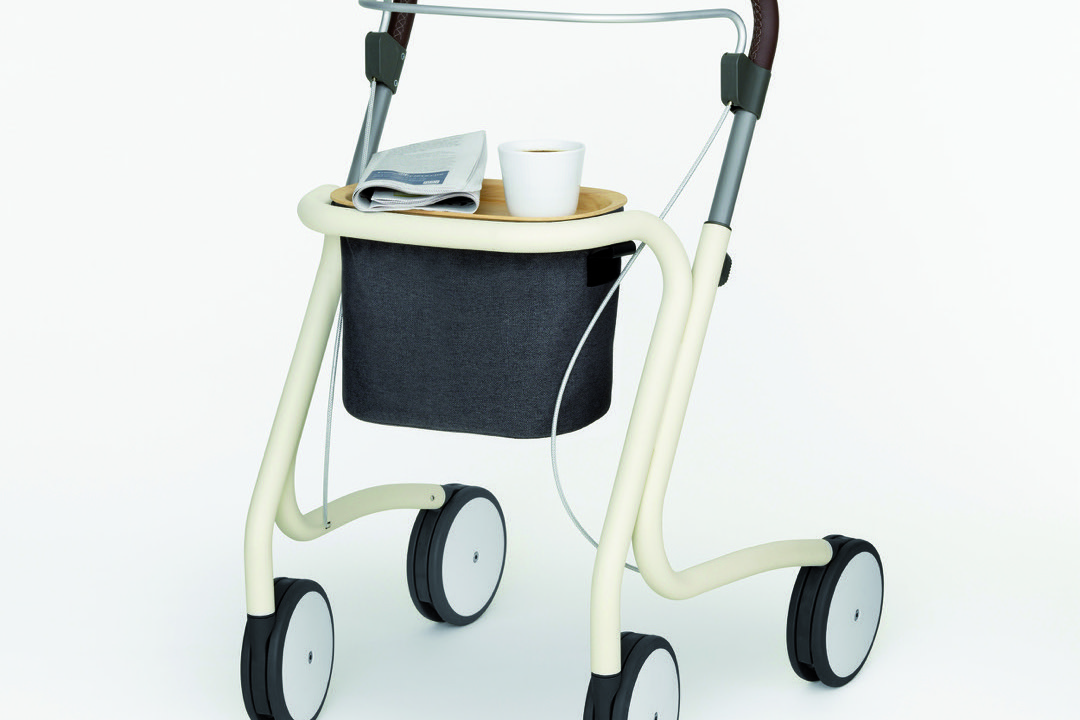
A rollator walker is one of the most liberating mobility aids available — it restores independent walking to people who can no longer go far on their own legs, and the built-in seat means a rest is always seconds away. But a rollator is also one of the most misunderstood. Unlike a standard walker, a rollator rolls continuously and does not bear your weight; it is a balance and stability aid, and using it as though it were a weight-bearing walker is how people get hurt. Choosing the best rollator walker is as much about matching the device to the user’s actual abilities and home environment as it is about comparing star ratings.
In 2026, I reviewed seven of the best-selling rollator walkers on Amazon, spanning budget-friendly clinical workhorses, premium European-style models, all-terrain best sellers, and a heavy-duty bariatric option. My evaluations draw on Amazon review analysis across nearly 100,000 combined ratings, published specifications, and my own clinical perspective from years of prescribing and fitting durable medical equipment. If you are still deciding between this and a traditional walker, start with our rollator vs walker guide — the wrong category choice is the most common and most dangerous mistake buyers make.
Below you will find the seven picks at a glance, followed by detailed reviews, a buyer’s guide, and several safety protocols I consider non-negotiable — including who should not use a rollator at all, and the exact sequence for sitting down safely. Read those sections before you buy.
| Product | Price | Buy |
|---|---|---|
| Drive Medical Rollator Walker with Seat and 7.5-Inch WheelsBest Overall | $80.63 | View on Amazon |
| Medline Steel Rollator Walker with Seat and 6-Inch Wheels (Burgundy)Budget Pick | $67.54 | View on Amazon |
| Drive Medical Nitro RTL10266 Euro-Style 4-Wheel Rollator with 10-Inch WheelsPremium Pick | $277.99 | View on Amazon |
| VOCIC Z21 Rollator Walker with 8-Inch All-Terrain Wheels (350 lb)Runner-Up | $79.98 | View on Amazon |
| HOMLAND Foldable Rollator Walker with 8-Inch Wheels (300 lb)Runner-Up | $89.99 | View on Amazon |
| Medline Extra-Wide Bariatric Rollator Walker with 8-Inch Wheels (400 lb)Runner-Up | $115.84 | View on Amazon |
| Vive Mobility Upright Stand-Up Rollator Walker with Forearm SupportsRunner-Up | $189.99 | View on Amazon |
Find the Best Rollator for Your Situation
Jump straight to the pick that matches how and where the user will walk:
- Best rollator walkers overall — our seven picks reviewed
- Best rollator walker for tall people
- Best all-terrain rollator walker for outdoor use
- Best lightweight rollator walker for travel
How We Chose These Rollators
I focused on rollators with a substantial verified review base — every model here except the specialty upright carries thousands of Amazon ratings, and the top pick alone has over 50,000. For each model I analyzed review patterns for recurring problems (fold mechanisms springing open, weld failures, wheel wobble), compared stated specifications against user-reported measurements, and weighed clinical relevance: wheel size and material, brake reliability, seat and handle dimensions, and weight capacity margins. The selection deliberately spans the full range of real-world needs — indoor-only budget use, all-terrain outdoor walking, bariatric capacity, and posture support for back-pain sufferers — because the “best” rollator is entirely dependent on who is using it and where.
Who Should NOT Use a Rollator
Before any product discussion, this is the most important section on the page. A rollator is the wrong device — and a genuine fall hazard — for several groups of people, and no amount of features changes that.
People with severe cognitive impairment should not use a rollator. The device only stays safe if the user reliably engages both brakes before sitting or standing every single time. A user with advanced dementia who forgets this step will sit down on a rolling seat that slides out from under them. For these patients, a standard walker with no wheels is far safer.
Anyone post-operative from hip or knee surgery should not use a rollator until cleared by their physical therapist. Early in recovery you often need partial weight-bearing support that a rollator cannot provide, and the forward-rolling motion can compromise a healing joint. Use the device your surgical team prescribes during this phase; our home recovery after surgery guide covers the typical progression.
People with Parkinson’s disease who experience festination — the involuntary acceleration into a faster and faster shuffle — can be pulled forward by a freely rolling rollator, worsening the very problem. And finally, anyone who needs to bear significant weight through their arms to walk needs a standard walker, not a rollator. A rollator is balance support, not structural support. If you find yourself leaning your body weight onto the frame, the device is wrong for you. When in doubt, a physical therapist’s gait assessment settles the question in minutes.
Best Rollator Walkers Overall
These are the seven rollators that earned a place in this guide, each reviewed in full below. The Drive Medical 7.5-inch model is our best overall pick for the widest range of users; the use-case sections after the reviews then match specific situations — tall users, outdoor terrain, and travel portability — to the right pick from this same lineup.
1. Drive Medical Rollator Walker with 7.5-Inch Wheels — Best Overall
The Drive Medical rollator is the default recommendation for most users, and its standing as the most-reviewed rollator on Amazon — north of 50,000 ratings — reflects a level of real-world validation no competitor approaches. The 7.5-inch casters hit a sweet spot for the typical user who walks mostly indoors with occasional trips out to the mailbox or the car: they roll smoothly across hard floors, handle the transition from tile to carpet without catching, and manage most door thresholds without a hard bump.
What makes this model the workhorse it is comes down to thoughtful, unglamorous details. It folds upright and stands on its own, which sounds minor until you are trying to tuck a rollator into a hall closet or a sedan trunk without it toppling over. The padded backrest is removable, the under-seat pouch keeps a phone and keys secure, and the 350 lb capacity covers the great majority of users with a comfortable safety margin. The loop-style brakes are intuitive and lock positively.
Its honest limitations are weight and seat width. At 20 lbs of steel, lifting it into a trunk solo is a real task for a caregiver with shoulder or back limitations — if portability is your top priority, look at the lighter Medline or the aluminum Nitro. And the seat runs narrow; larger users will be more comfortable on the bariatric Medline further down this list. For everyone else, this is the rollator I point people to first.

Drive Medical Rollator Walker with Seat and 7.5-Inch Wheels
by Drive Medical
The most reviewed and most trusted rollator on Amazon — smooth 7.5-inch wheels, 300 lb capacity, folds upright on its own.
Pros
- Over 50,000 verified reviews make it the most trusted rollator on Amazon by a wide margin
- 7.5-inch casters roll smoothly across pavement, thresholds, and carpet-to-hard-floor transitions
- Folds upright and stands on its own for compact storage in closets and car trunks
- Removable padded backrest and under-seat storage pouch come standard
Cons
- 20 lb steel frame is heavy to lift into a car trunk solo
- Seat width runs narrow — larger users may find it tight
2. Medline Steel Rollator with 6-Inch Wheels — Budget Pick
The Medline burgundy rollator is the one I recommend when budget is the deciding factor, and it earns that spot honestly rather than by cutting corners that matter. Medline is a clinical brand stocked in hospitals and frequently handed to patients by occupational and physical therapists, so the build quality and support are a notch above the no-name imports clustered at this price. With over 25,000 reviews and FSA/HSA eligibility, it is the safe, proven, low-cost choice.
At roughly 17 lbs, it is actually lighter than the Drive Medical flagship, which makes it easier for a caregiver to lift and for the user to maneuver around tight corners. Assembly is tool-free out of the box. The trade-off lives in the wheels: at 6 inches, they are firmly indoor-and-smooth-pavement tires. Take this rollator onto grass, gravel, or a cracked sidewalk and the small wheels will catch and stall. The grip padding is also thinner than what you get on premium models.
If the user walks primarily indoors — around the house, through stores, down hospital corridors — none of that matters and the Medline is a genuinely excellent value. If outdoor terrain is part of the daily routine, step up to one of the 8-inch all-terrain models below. For a first rollator, a backup unit, or a tight budget, this is the one to buy.

Medline Steel Rollator Walker with Seat and 6-Inch Wheels (Burgundy)
by Medline
A clinical-grade rollator from a trusted brand at the lowest price point — light, FSA/HSA eligible, best for indoor and smooth-surface use.
Pros
- Trusted clinical brand frequently recommended by occupational and physical therapists
- Lighter ~17 lb frame is easier to lift and maneuver than heavier steel rollators
- Over 25,000 reviews provide a deep, reliable feedback base at a low price
- FSA and HSA eligible with tool-free assembly out of the box
Cons
- 6-inch wheels struggle on grass, gravel, and uneven outdoor surfaces
- Grip padding is thinner than premium models
3. Drive Medical Nitro Euro-Style Rollator with 10-Inch Wheels — Upgrade Pick
The Drive Medical Nitro is what you buy when you want the best rollator made and the price is secondary. Its 4.8-star rating across nearly 7,000 reviews is the highest in this roundup, and the nickname it has earned among users — the Ferrari of rollators — is not marketing hyperbole. The large 10-inch casters are the headline feature: they glide over curbs, sidewalk expansion joints, door thresholds, and uneven outdoor ground that would stop a 6-inch-wheeled rollator dead.
The engineering details set it apart from the budget field. The brake cables are routed internally through the frame, so there are no exposed lines to snag on a doorframe or fray over time — a small thing that meaningfully improves daily reliability. It cross-folds with one hand and locks closed with an under-seat catch, so it stays compact in a trunk instead of springing open. At 17.5 lbs of aluminum, it is also lighter than the steel Drive flagship despite being more capable.
The two honest caveats: its 300 lb capacity is below the 350 lb mid-range standard, so heavier users should look elsewhere, and it costs three to four times what the budget picks do. For an active user who gets outdoors regularly, values a refined glide, and wants a rollator that will last for years, the Nitro is worth every dollar of the premium.

Drive Medical Nitro RTL10266 Euro-Style 4-Wheel Rollator with 10-Inch Wheels
by Drive Medical
The premium choice — 10-inch wheels, internal cabling, and a one-hand fold make it the smoothest, most refined rollator available.
Pros
- Highest-rated rollator reviewed at 4.8 stars — widely called the Ferrari of rollators
- Large 10-inch casters glide over curbs, door thresholds, and outdoor terrain
- Internal cable routing means no exposed brake lines to snag or catch
- One-hand cross-fold with an under-seat lock holds the frame closed for transport
Cons
- 300 lb capacity is lower than the 350 lb models in this roundup
- Priced roughly three to four times the budget options
4. VOCIC Z21 Rollator with 8-Inch All-Terrain Wheels — Runner-Up
The VOCIC Z21 has become the Amazon #1 Best Seller in its category by delivering most of what the premium Nitro offers at a fraction of the price. Its 8-inch puncture-proof all-terrain wheels are the reason: they bridge the gap between indoor-only 6-inch tires and the outdoor-capable 10-inch casters, handling pavement, packed dirt, and short grass without the premium cost. For a user who wants to walk the neighborhood, not just the living room, this is a lot of capability for the money.
The Z21 also gets the comfort and fit details right. The 1.6-inch foam seat is noticeably more cushioned than the thin vinyl seats on bargain rollators, and the dual height adjustment spans an unusually wide range, fitting users from about 4 feet 11 inches to 6 feet 3 inches. The 350 lb capacity matches the segment standard. My main reservation is the fold: it lacks a positive lock, so the frame can spring open inside a car trunk during transport — you will want to secure it with a strap. The rear storage is a netted bag rather than an enclosed pouch, which offers less privacy for personal items.

VOCIC Z21 Rollator Walker with 8-Inch All-Terrain Wheels (350 lb)
by VOCIC
The best-selling all-terrain rollator — 8-inch puncture-proof wheels and a wide height range at a budget price.
Pros
- Amazon #1 Best Seller in its category with roughly 6,000 units sold monthly
- 8-inch puncture-proof all-terrain wheels handle pavement, packed dirt, and grass
- Ergonomic 1.6-inch foam seat is more comfortable than thin standard seats
- Dual height adjustment fits users from 4 feet 11 inches to 6 feet 3 inches
Cons
- No fold-lock — the frame can spring open inside a car trunk
- Rear netted storage bag offers less privacy than an enclosed pouch
5. HOMLAND Foldable Rollator with 8-Inch Wheels — Runner-Up
The HOMLAND rollator carries Amazon’s Choice status and competes directly with the VOCIC on the comfort front, with an extra-wide 16-by-12-inch seat and a 1.6-inch padded cushion, against the 14-by-10-inch seats that are standard at this tier. For a user who spends meaningful time sitting on the rollator between walks, that extra seat real estate is a tangible daily benefit. It backs its build with a lifetime metal-frame warranty, which is a stronger durability commitment than most rollators in this price bracket offer.
The folding mechanism is enclosed and pinch-proof, a thoughtful safety touch for users with reduced hand dexterity who might otherwise catch a finger during setup. The 8-inch wheels and tall height range make it a comfortable fit for both indoor and light outdoor use. Two honest cautions from the review pool: some users report front-wheel wobble, and at 27.5 inches wide the frame may not clear narrower interior doorways — this is exactly the kind of measurement to check against your home before ordering. For a comfort-focused buyer who values the wide seat and the warranty, it is a strong runner-up.

HOMLAND Foldable Rollator Walker with 8-Inch Wheels (300 lb)
by HOMLAND
A comfort-focused rollator with a wide memory-foam seat, pinch-proof fold, and a lifetime frame warranty.
Pros
- Amazon's Choice badge with a memory-foam seat wider than the Drive flagship
- Lifetime metal-frame warranty backs long-term durability
- Pinch-proof enclosed folding mechanism protects fingers during setup
- 8-inch wheels and a tall height range suit both indoor and mixed-surface use
Cons
- Some users report front-wheel wobble
- 27.5-inch width may not clear narrower interior doorways
6. Medline Extra-Wide Bariatric Rollator with 8-Inch Wheels — Runner-Up
The Medline bariatric rollator solves a specific and important problem: it safely supports users up to 400 lbs, well beyond the 350 lb ceiling of standard models. That capacity comes from a reinforced aluminum frame paired with an extra-wide 23.5-inch padded seat and a padded backrest, so larger users get both the structural margin and a seat that actually fits them comfortably. Because it is a Medline product sold and shipped by Amazon directly, replacements and returns are straightforward, which matters more than it sounds when a mobility aid is the thing getting someone through the day.
The tall handle adjustment — 31.5 to 37.5 inches at the grip — also makes this one of the better choices for taller users who find standard rollators force them to stoop. Three practical realities to plan around: at 29 inches of total width, this frame will not clear a standard interior doorframe, so measuring your doorways first is mandatory, not optional. At 22 lbs it is awkward to load into a car single-handed. And reviewers who have put serious mileage on it report wheel wobble developing over time, so check the caster hardware periodically. This is a purpose-built tool for larger and taller users; within that lane, it is the clear pick, and choosing it over a standard rollator that the user exceeds is a non-negotiable safety call. If a wheelchair is also under consideration for the same user, our wheelchair guide covers bariatric options there as well.

Medline Extra-Wide Bariatric Rollator Walker with 8-Inch Wheels (400 lb)
by Medline
The heavy-duty pick — 400 lb capacity and an extra-wide padded seat for larger users, shipped direct from Amazon.
Pros
- 400 lb weight capacity from a trusted clinical brand — well above the 300 lb standard
- Extra-wide 23.5-inch padded seat and padded backrest comfortably fit larger users
- 8-inch wheels roll smoothly on both indoor flooring and outdoor pavement
- Sold and shipped by Amazon, so replacement and returns are straightforward
Cons
- 29-inch total width will not clear standard interior doorframes — measure first
- Reviewers report wheel wobble developing with heavy long-term use
- 22 lb frame is awkward to lift into a vehicle single-handed
7. Vive Mobility Upright Stand-Up Rollator with Forearm Supports — Runner-Up
The Vive Mobility upright rollator is the only stand-up design in this roundup, and it serves a genuinely different clinical purpose. Instead of conventional hand grips that you stoop slightly forward to reach, it has forearm rests at near-standing height. This keeps the user upright with the spine in a more neutral position — a meaningful relief for people with spinal stenosis, chronic lower-back pain, or anyone for whom the forward lean of a standard rollator becomes painful or exhausting. Many users find they can walk noticeably farther on an upright simply because they are not fighting the stoop. One reviewer, a nurse recovering from a crushed pelvis and spinal fractures, credits the upright geometry specifically for the difference in pain over a standard walker.
The forearm pads adjust forward and back, and the 45 to 52 inch handle range covers users from roughly 5 feet 2 inches to 6 feet 4 inches, which is a wider fit window than most uprights offer. Vive Health is a US medical-supply brand shipping from Florida, and the unit carries a one-year guarantee and FSA and HSA eligibility. Two cautions are important and honest. First, the steering feedback in the review pool is genuinely mixed: some users find it stable and easy to turn, others report it takes effort to maneuver in tight spaces, so this is a device worth trying before committing if you can. Second, the 17.5-inch seat is narrow for the walker’s overall footprint, and the 300 lb capacity means a heavier user needs the bariatric frame above instead. For the specific user who needs posture support, though, no standard rollator on this list can match what the upright design does for the lower back.
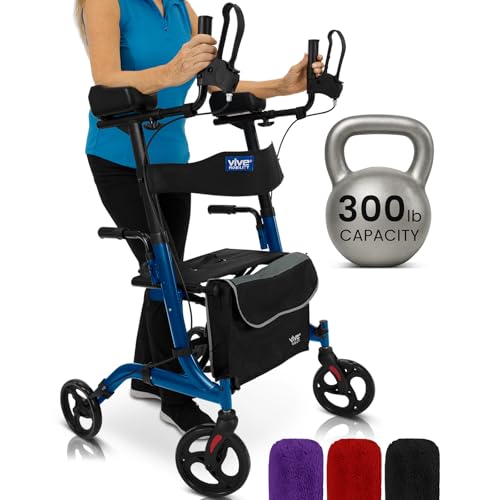
Vive Mobility Upright Stand-Up Rollator Walker with Forearm Supports
by Vive Health
An upright stand-up rollator that promotes proper posture and relieves lower-back strain — the right tool for stenosis and back-pain sufferers.
Pros
- Only upright stand-up design reviewed — forearm rests promote tall, upright posture
- Eases pressure on the lower back, a real benefit for spinal stenosis and chronic back pain
- Handle range of 45 to 52 inches fits users from roughly 5 feet 2 inches to 6 feet 4 inches
- US-based medical brand with a one-year guarantee, and FSA and HSA eligible
Cons
- Steering feedback is mixed — some reviewers find it harder to maneuver than a standard rollator
- 17.5-inch seat is narrow relative to the walker's overall footprint
- 300 lb capacity is lower than a dedicated bariatric frame
Best Rollator Walker for Tall People
Taller users — roughly 6 feet and up — are forced to stoop over a standard rollator whose handles top out around 34 inches, which strains the lower back and shifts weight dangerously forward. Two picks from the lineup solve this in different ways: an upright stand-up frame that keeps the user vertical, and a bariatric model with the tallest handle range here.
| Product | Price | Buy |
|---|---|---|
| Vive Mobility Upright Stand-Up Rollator Walker with Forearm SupportsBest for tall users overall Forearm rests at near-standing height keep users over 6 ft upright without stooping, with a fit window running to 6 ft 4 in — the standout choice for tall walkers | $189.99 | View on Amazon |
| Medline Extra-Wide Bariatric Rollator Walker with 8-Inch Wheels (400 lb)Best tall + heavy-duty Grips adjust to 37.5 in, the tallest hand-grip range among the conventional rollators here, on a reinforced 400 lb frame for big-and-tall users | $115.84 | View on Amazon |
Best All-Terrain Rollator Walker for Outdoor Use
Six-inch indoor wheels stall on grass, gravel, and cracked sidewalks. For neighborhood walks, packed-dirt trails, and uneven outdoor ground, wheel size and tire material are what matter — 8-inch puncture-proof tires for value, or 10-inch casters for the smoothest glide over curbs.
| Product | Price | Buy |
|---|---|---|
| VOCIC Z21 Rollator Walker with 8-Inch All-Terrain Wheels (350 lb)Best all-terrain value 8-inch puncture-proof all-terrain wheels cross packed dirt, grass, and cracked pavement at a budget price — the best-selling outdoor rollator | $79.98 | View on Amazon |
| Drive Medical Nitro RTL10266 Euro-Style 4-Wheel Rollator with 10-Inch WheelsBest for premium outdoor glide 10-inch casters roll over curbs and uneven ground the smoothest of any pick here, with internal cabling that won't snag outdoors | $277.99 | View on Amazon |
Best Lightweight Rollator Walker for Travel
Whoever lifts the rollator into a car trunk cares most about frame weight and the fold. A sub-18-lb aluminum or light-steel frame that folds and locks closed travels far more easily than a 22-lb bariatric frame — the two lightest picks here both come in around 17 lbs.
| Product | Price | Buy |
|---|---|---|
| Drive Medical Nitro RTL10266 Euro-Style 4-Wheel Rollator with 10-Inch WheelsLightest premium fold 17.5 lb aluminum frame with a one-hand cross-fold that locks closed so it won't spring open in the trunk | $277.99 | View on Amazon |
| Medline Steel Rollator Walker with Seat and 6-Inch Wheels (Burgundy)Lightest budget option ~17 lb clinical-brand frame at the lowest price — the easiest budget rollator to lift and stow | $67.54 | View on Amazon |
Buyer's Guide
Choosing the right rollator means matching wheel size, weight rating, handle height, and frame portability to where and how the user will actually walk every day.
Wheel Size
Wheel size determines where the rollator can go. Six-inch wheels are smooth-indoor-floor only and catch on thresholds and grass. Eight-inch wheels handle mixed indoor and light outdoor use. Ten-inch wheels roll over curbs, sidewalk cracks, and uneven outdoor terrain. Just as important is the material: solid rubber tires grip even when braked, while hard plastic wheels can slide forward even with the brakes locked, which is a genuine fall risk. Favor solid rubber for any outdoor use.
Weight Capacity
Always choose a rollator rated for at least 50 lbs more than the user's body weight. This safety margin protects the welds and casters from the repeated stress of sitting and leaning, which over time can fail at exactly the wrong moment. Standard rollators are rated 250 to 350 lbs; bariatric models extend to 500 lbs with reinforced frames and wider seats. A user near the rated limit should always size up to the next capacity tier.
Handle Height
Correct handle height is a clinical safety issue, not just comfort. With the user standing upright in their normal shoes, the handles should reach the crease of the wrist, producing a 15 to 20 degree elbow bend at the grip. Too high forces the shoulders to shrug; too low forces a forward stoop that strains the back and shifts the center of gravity dangerously forward. Verify the rollator's adjustment range covers the user's height before buying.
Frame Weight and Portability
The frame weight matters most to whoever loads the rollator into a car. A 17 lb aluminum frame is manageable for most caregivers; a 25 lb bariatric steel frame is realistically a two-person lift. If the rollator will travel frequently, prioritize a light frame and a fold mechanism that locks closed — an unlocked fold can spring open inside a trunk. Confirm the folded footprint fits the intended vehicle or storage space.
Brake Type and Grip Strength
Loop-style hand brakes are the standard and are intuitive for most users: squeeze to slow, push down to lock. Some models add a third intermediate mode. The single most important question is whether the user has the hand strength and cognitive consistency to engage both brakes reliably before sitting or standing. If grip strength is marginal, test the brakes in person before committing — brake failure to engage is the leading cause of rollator falls.
Indoor Environment Fit
Audit the home before buying. Measure every doorway the rollator must pass through — most rollators are 23 to 25 inches wide, but bariatric models reach 29 inches and many older bathroom doors are only 28 inches. Remove throw rugs, which are the number-one wheel-catch hazard, and note any carpet pile or threshold strips that small wheels will struggle with. The right rollator on paper is the wrong rollator if it cannot fit through the bathroom door.
How to Choose the Best Rollator Walker
The buyer’s guide above covers the six variables that matter most, but two safety practices deserve to stand on their own — they prevent the most common rollator injuries I see.
The safe-sit protocol. The single most frequent rollator injury comes from sitting down on a seat that is still free to roll. Every time you sit, follow the same three steps without exception. First, back up until the backs of your legs touch the front edge of the seat, so you know exactly where it is. Second, engage both parking brakes by pushing both loop levers down into the locked position — confirm they are locked, do not assume. Third, lower yourself slowly with your hands on the armrests or seat frame, never on the handlebars, because pushing on the handlebars can roll the whole rollator out from under you. Stand up by reversing the sequence: brakes locked, hands on the frame, rise, then release the brakes only once you are stable on your feet.
The home environment audit. Before the rollator arrives, walk the route the user will travel every day and fix the hazards. Measure each doorway — most rollators need 23 to 25 inches of clear width, but older bathroom doors can be as narrow as 28 inches and bariatric frames reach 29 inches. Remove throw rugs entirely; they are the number-one wheel-catch and trip hazard in the home. Note any threshold strips between rooms and any thick carpet pile, both of which small wheels struggle with. Pairing the rollator with the right bathroom and home safety equipment — grab bars, a shower chair, raised toilet seat — turns a single mobility aid into a coordinated safety setup.
A quick word on wheels and material, since it drives so many of these picks: 6-inch wheels are smooth-indoor-only, 8-inch wheels handle mixed use, and 10-inch wheels are for outdoor and uneven ground. Just as important, choose solid rubber over hard plastic — hard plastic can slide forward even when the brakes are locked, which defeats the whole purpose.
Final Verdict
For the great majority of users, the Drive Medical rollator with 7.5-inch wheels is the best overall choice. Its unmatched 50,000-plus review base, smooth all-around wheels, self-standing fold, and 350 lb capacity make it the dependable default I recommend first — it simply does everything a typical user needs without drama. If budget is the deciding factor, the Medline 6-inch steel rollator delivers genuine clinical-brand quality at the lowest price, ideal for indoor and smooth-surface use. Active users who get outdoors should spend up for the Drive Medical Nitro and its 10-inch wheels, larger users need the Medline extra-wide bariatric model, and back-pain sufferers should look hard at the Vive Mobility upright design.
Whichever you choose, remember that the rollator is only half the equation — fit it to the user’s wrist crease, audit the home for hazards, and drill the safe-sit protocol until it is automatic. If you are still weighing whether a rollator is even the right device, or whether a cane or standard walker would serve better, read our walking canes guide and consult your physician or physical therapist for a personalized recommendation based on the user’s specific diagnosis and gait.
Frequently Asked Questions
What is the difference between a rollator and a walker?
Are rollator walkers safe for seniors with balance problems?
Does Medicare cover rollator walkers?
How do I measure for the right rollator fit?
What are the disadvantages of a rollator?
Related Articles
About the Reviewer

Dr. David Taylor, MD, PhD
Drexel University College of Medicine (MD), Indiana University School of Medicine (PhD)
Dr. David Taylor is a licensed physician and medical researcher who founded BestRatedDocs in 2016. With an MD from Drexel University and a PhD from Indiana University School of Medicine, he combines clinical expertise with a passion for health technology to provide evidence-based product recommendations. Dr. Taylor specializes in health informatics and regularly evaluates medical devices, diagnostic equipment, and therapeutic products to help healthcare professionals and patients make informed decisions.