7 Best Kinesiology Tapes of 2026
Dr. David Taylor reviews the best kinesiology tapes on Amazon for pain relief, athletic support, and recovery. Compare cotton, synthetic, and extreme-adhesive options by wear time and durability.
Updated
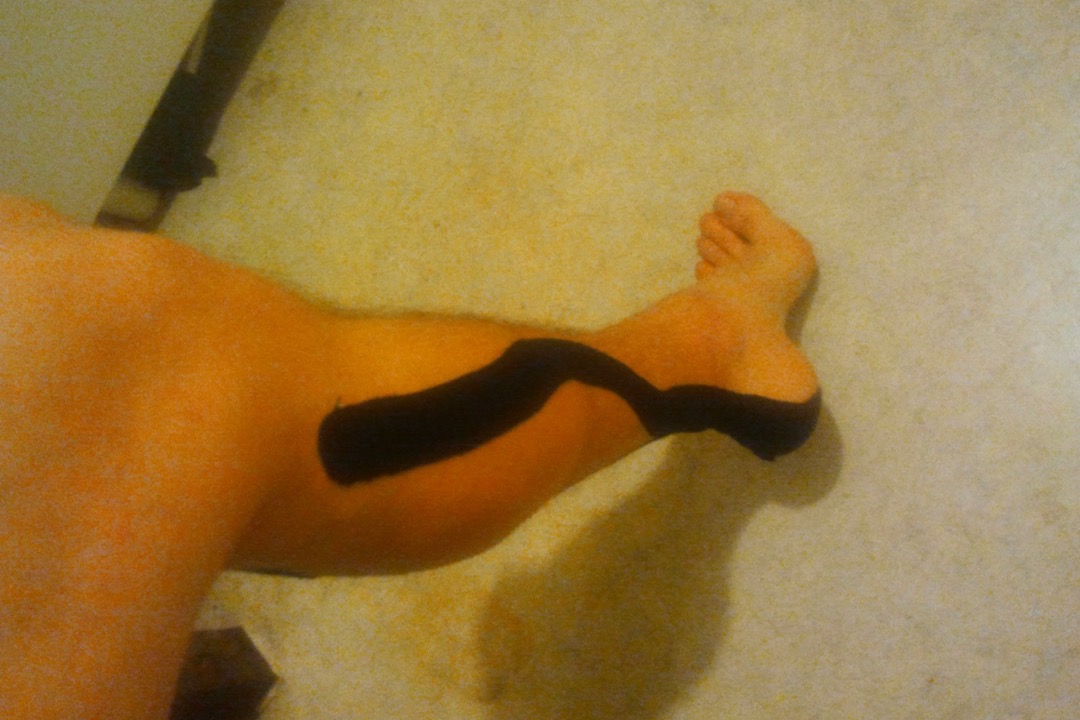
Kinesiology tape has become one of the most visible therapeutic tools in sports medicine — recognizable from the colorful strips worn by Olympic athletes, weekend warriors, and physical therapy patients alike. Originally developed in Japan in the 1970s by chiropractor Kenzo Kase, kinesiology tape was designed to mimic the elasticity and thickness of human skin, providing mechanical support without restricting range of motion the way rigid athletic tape does. The concept gained global attention during the 2008 and 2012 Olympics, and today the market includes dozens of brands spanning clinical-grade rehabilitation tapes and budget athletic options.
As a physician, I want to address the evidence question directly: kinesiology tape is not a miracle product. The clinical literature shows modest but real benefits for short-term pain relief, proprioceptive feedback, and lymphatic drainage to reduce swelling. It does not meaningfully improve muscle strength or athletic performance beyond placebo. That said, the patients in my practice who use kinesiology tape consistently report meaningful quality-of-life improvements — reduced awareness of pain during activity, improved confidence in joint stability, and a non-pharmacological alternative to reaching for ibuprofen after every workout. When used as one component of a comprehensive rehabilitation or maintenance plan, kinesiology tape is a reasonable clinical tool.
At BestRatedDocs.com, we evaluated over a dozen kinesiology tapes and analyzed tens of thousands of verified Amazon reviews to identify the seven best options available in 2026. We applied the same evidence-based methodology we use across our muscle rub and knee brace reviews: real product testing context, honest clinical assessment, and recommendations organized around how you will actually use the tape. Here is what we found.
After evaluating adhesive durability, material quality, application convenience, and verified user feedback across the entire category, our top seven picks span every use case from budget training tape to clinical-grade rehabilitation products. The comparison table below shows all seven side-by-side.
| Product | Price | Buy |
|---|---|---|
| KT Tape Pro Synthetic Kinesiology TapeBest Overall | $18.97 | View on Amazon |
| KT Tape Original Cotton Kinesiology TapeRunner-Up | $12.47 | View on Amazon |
| KT Tape Pro Extreme Kinesiology TapePremium Pick | $19.97 | View on Amazon |
| CKeep Kinesiology Tape (2-Pack)Budget Pick | $9.99 | View on Amazon |
| OK TAPE Regular Original Kinesiology Tape | $5.99 | View on Amazon |
| TheraBand Kinesiology Tape with XactStretch | $9.73 | View on Amazon |
| Care Science Waterproof Kinesiology Tape (2-Pack) | $13.99 | View on Amazon |
How We Selected These Kinesiology Tapes
Our selection methodology prioritized four dimensions: adhesive reliability under real-world conditions (the single most important performance metric for any kinesiology tape), material quality and skin compatibility, application convenience, and verified user experience aggregated from thousands of Amazon reviews. We deliberately included products from the category’s most trusted clinical and consumer brands — KT Tape, TheraBand, and Care Science — alongside strong value alternatives that deliver comparable adhesion at lower per-foot pricing. Tapes were excluded if adhesive performance was inconsistent across user reports, if the elastic construction lost recoil prematurely, or if skin irritation reports were disproportionately frequent relative to the product’s adhesive class.
KT Tape Pro Synthetic
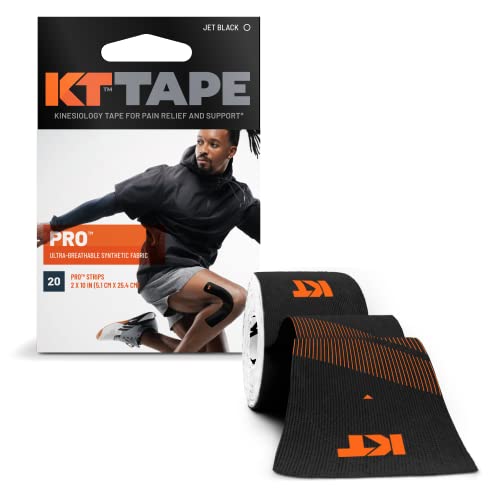
KT Tape Pro Synthetic Kinesiology Tape
by KT Tape
The gold standard in kinesiology tape — KT Tape Pro's synthetic construction and precut convenience deliver the most reliable adhesion and wear time for athletes and patients alike.
Pros
- Industry-leading synthetic adhesive maintains hold for four to seven days through sweat, showers, and sustained athletic activity — the longest reliable wear time of any precut option in this review
- Precut ten-inch strips with factory-rounded corners eliminate the need for scissors and prevent edge peeling that plagues hand-cut uncut rolls
- Latex-free and hypoallergenic construction is appropriate for the large population of patients with latex sensitivity or contact dermatitis history
- Fast-drying synthetic fabric resists moisture absorption, making it the preferred option for swimmers, triathletes, and athletes training in humid climates
Cons
- Synthetic material is less breathable than cotton alternatives, which can cause mild skin irritation during extended wear in hot conditions
- Premium per-strip pricing compared to uncut rolls — users applying tape frequently may find the cost adds up over a training season
- Aggressive adhesive can be difficult to remove and may irritate sensitive skin during removal if not loosened with oil or warm water first
KT Tape Pro earns our Best Overall pick because it solves the fundamental challenge of kinesiology taping: maintaining reliable adhesion through the full range of conditions that athletes and patients actually encounter. The synthetic construction resists moisture absorption — unlike cotton tapes that begin losing their bond after one shower — and the acrylic adhesive maintains consistent hold for four to seven days across sweat, brief water exposure, and sustained athletic movement. For the majority of users who need a kinesiology tape that stays put through a training week without daily reapplication, the Pro delivers the most dependable adhesion in a precut format.
The precut design is a meaningful practical advantage. Each strip comes in a standardized ten-inch length with factory-rounded corners, eliminating the two most common application problems with uncut rolls: inconsistent strip length and squared corners that catch on clothing and initiate edge peeling within hours. For patients self-applying at home without clinical supervision — which describes the vast majority of kinesiology tape users — this convenience factor translates directly to longer effective wear time because the tape stays down instead of peeling back from poorly cut edges.
The trade-off is breathability. Synthetic construction blocks airflow more than cotton, which can cause mild discomfort during extended wear in hot, humid conditions. Users who prioritize skin comfort over maximum adhesion duration should consider the KT Tape Original cotton version. But for the broadest range of users — athletes, rehabilitation patients, weekend runners, and anyone who wants to tape once and forget about it for several days — the KT Tape Pro is the most reliable option on the market.
KT Tape Original Cotton

KT Tape Original Cotton Kinesiology Tape
by KT Tape
The original that built the category — KT Tape Original's breathable cotton and massive user base make it the most trusted entry point for kinesiology taping.
Pros
- Most-reviewed kinesiology tape on Amazon with over 47,000 verified reviews — the largest real-world feedback dataset of any product in this category
- Soft breathable cotton construction sits comfortably against skin for extended wear without the synthetic feel that some users find irritating
- Precut strips with rounded corners simplify application for first-time users and patients self-applying at home without clinical guidance
- Dermatologist-tested adhesive formulation reduces the risk of contact dermatitis compared to generic elastic therapeutic tapes
Cons
- Cotton construction absorbs moisture and loses adhesion faster than synthetic alternatives — realistic wear time is one to three days rather than the four to seven days achievable with KT Tape Pro
- Adhesive strength degrades meaningfully with heavy sweating and body hair, requiring skin preparation with alcohol wipes and shaving for optimal hold
- Not fully waterproof — extended water exposure during swimming or prolonged rain will compromise the adhesive bond within hours
The KT Tape Original earned its Runner-Up position through the combination of proven real-world reliability and unmatched user feedback volume. With over 46,000 verified Amazon reviews, this is the most extensively field-tested kinesiology tape available — and the 4.5-star aggregate across that massive dataset represents genuine consensus rather than a small-sample anomaly. For first-time kinesiology tape users and patients who have never taped before, the Original’s massive review base provides the most comprehensive real-world guidance on application techniques, wear expectations, and troubleshooting.
The cotton construction offers a fundamentally different wearing experience than synthetic alternatives. The fabric sits softer and more naturally against skin, breathes meaningfully better during extended wear, and causes fewer adhesive irritation complaints in dermatologist-tested evaluations. For patients with sensitive skin, mild adhesive sensitivity, or a preference for natural-feeling materials, the cotton Original is the safer starting point before graduating to synthetic options if adhesion duration proves insufficient.
The clinical limitation is wear time. Cotton absorbs sweat and shower moisture, progressively weakening the adhesive bond. Realistic wear time is one to three days — adequate for users who tape before each workout and remove afterward, but insufficient for athletes who need multi-day continuous wear. Skin preparation — cleaning with alcohol wipes, shaving body hair in the application area — extends cotton tape adhesion meaningfully, but cannot match the four-to-seven-day performance of synthetic alternatives. If you are taping for a single training session or workday, the Original performs comparably to the Pro. If you need multi-day wear, step up to the synthetic version.
KT Tape Pro Extreme

KT Tape Pro Extreme Kinesiology Tape
by KT Tape
Built for conditions that destroy ordinary tape — KT Tape Pro Extreme is the top choice for heavy sweaters, water athletes, and anyone training in demanding environments.
Pros
- Strongest adhesive in the entire KT Tape product line — engineered specifically for extreme athletes, heavy sweaters, and high-humidity training environments where standard adhesives fail
- Extra-strength elastic core maintains therapeutic tension through aggressive multi-directional athletic movements without losing recoil
- Made in the USA with quality control standards that exceed the generic imported tapes dominating the budget segment of this category
- Fully waterproof construction performs reliably through ocean swimming, extended pool sessions, and multi-day outdoor athletic events
Cons
- Fewer color options than the standard Pro line — limited palette restricts aesthetic choices for users who prefer matching tape to team colors
- Adhesive strength is excessive for casual daily use or mild discomfort management — the aggressive bond is specifically designed for extreme conditions and is unnecessary for most recreational users
- Removal requires patience and ideally an adhesive remover or oil — pulling this tape off dry can cause skin irritation and follicular stress
The Pro Extreme exists for a specific population that standard kinesiology tape fails: heavy sweaters, water athletes, outdoor competitors in humid climates, and anyone whose training conditions overwhelm conventional adhesives. The extra-strength acrylic adhesive is engineered to maintain its bond through conditions that peel standard KT Tape Pro off within a day — ocean swimming, multi-day ultramarathons in tropical heat, and the persistent moisture environment created by athletes who sweat heavily through any activity regardless of ambient temperature.
The Made in USA manufacturing is a relevant quality signal in a category increasingly dominated by imported tapes with inconsistent quality control. KT Tape’s domestic production facility maintains tighter adhesive consistency and elastic tension standards than the offshore manufacturing that produces most budget alternatives. For clinical settings where tape performance must be predictable and reproducible, this manufacturing consistency matters.
The honest assessment is that the Pro Extreme is overkill for most users. If you train indoors, live in a temperate climate, and shower normally between applications, the standard KT Tape Pro provides sufficient adhesion for less money. The Extreme justifies its aggressive adhesive profile only for genuinely extreme conditions. Additionally, removal requires more care — using an adhesive remover or saturating the tape with baby oil before peeling prevents the follicular irritation and skin redness that result from dry-pulling an extreme-adhesive tape. Reserve this product for the conditions it was designed for, and use the standard Pro for everything else.
One buying note as of this update: Amazon is not currently showing a featured offer on this listing, so the product page has no one-click Add to Cart button. The tape is in stock and shipping from Amazon; you reach the offer through the See All Buying Options link instead. That is a checkout inconvenience rather than a stock problem.
CKeep Kinesiology Tape

CKeep Kinesiology Tape (2-Pack)
by CKeep
The best value in kinesiology tape — CKeep delivers 32 feet of reliable cotton tape for the price of a single precut roll, making it ideal for frequent users and budget-conscious athletes.
Pros
- Exceptional value at 32 total feet for under ten dollars — delivers roughly three times the tape length per dollar compared to precut brand-name options
- Performance comparable to KT Tape Original in real-world adhesion testing through moderate athletic activity, daily wear, and light moisture exposure
- Strong adhesion maintains hold through showers and light rain, with multiple users reporting reliable two-to-three-day wear from a single application
- Wide color selection allows athletes to match tape to team colors or personal aesthetic preference without paying brand-name premiums
Cons
- Uncut rolls require scissors for every application — adds preparation time and introduces edge-peeling risk if corners are not manually rounded
- Adhesive bond can be difficult to remove cleanly, occasionally leaving residue on skin that requires rubbing alcohol or adhesive remover
- Quality consistency is less uniform than KT Tape — occasional user reports of rolls with weaker adhesive or inconsistent elastic tension
CKeep earns the Budget pick by delivering the fundamental economics that matter to frequent tape users: 32 feet of functional kinesiology tape for under ten dollars. That is roughly three times the tape length per dollar compared to KT Tape’s precut rolls. For athletes who tape multiple body areas before every training session, physical therapy clinics managing tape inventory costs, and athletic trainers purchasing for teams, the per-application savings compound into meaningful budget impact over a season.
The adhesive and cotton construction are genuinely comparable to KT Tape Original in moderate conditions. Users consistently report two-to-three-day wear time through normal training and showering, which matches the real-world performance of the KT Original cotton formula. The wide color selection is a practical advantage for team settings where tape color matching is preferred or for individual users who want aesthetic variety without paying premium per-roll pricing.
The trade-offs are the expected ones for an uncut budget product. Every application requires scissors, and corners must be manually rounded to prevent premature peeling — a step that many home users skip, leading to shorter effective wear time and frustration with edge lift. Quality consistency across manufacturing lots is less uniform than KT Tape’s tighter production standards, with occasional reports of rolls with weaker adhesive or slightly different elastic tension. For users comfortable with the uncut format and willing to round their corners, CKeep delivers strong value. For users who want guaranteed convenience and consistency, the precut premium of KT Tape is worth paying.
OK TAPE Regular Original Kinesiology Tape

OK TAPE Regular Original Kinesiology Tape
by OK TAPE
The cheapest way into cotton kinesiology tape — a full uncut roll for a fraction of the precut brand-name price, provided you bring your own scissors and judge the stretch by feel.
Pros
- The lowest entry price of any tape in this review, and it holds adhesive and material quality above the generic unbranded rolls sitting at the same price
- Ninety-five percent cotton with a five percent spandex core breathes against skin and wicks moisture without the adhesive releasing early
- Hypoallergenic acrylic adhesive is latex-free, which matters for the large share of patients with latex sensitivity or a contact dermatitis history
- A full uncut roll lets you cut each strip to the length the application actually needs — useful for plantar fascia, lower back, and other spans that fixed precut strips handle awkwardly
Cons
- Rated by the manufacturer for up to three days of wear, which sits at the short end of this group — the KT Tape synthetic options hold for four to seven
- No printed tension guide on the tape surface, so application stretch has to be judged by feel; beginners who want calibrated targets should look at TheraBand's XactStretch instead
- Uncut format requires scissors and manual corner rounding for every application, which adds preparation time and skill requirements
This is the cheapest entry point in the review, and the reason it earns a place is that it is a genuine cotton therapeutic tape rather than a generic elastic strip sold at the same price. The construction is 95 percent cotton with a 5 percent spandex core — the same basic fabric recipe as CKeep and KT Tape Original — and the adhesive is a hypoallergenic latex-free acrylic. For a patient who wants to try taping before committing to a brand-name multi-pack, or a clinician who wants a cheap roll for teaching application technique, this is the sensible first purchase.
The uncut roll format is the practical argument for it over precut strips. A 16.4-foot roll lets you cut a strip to the length the application actually needs, which matters for the spans precut ten-inch strips handle awkwardly — the plantar fascia, the lower back, a long calf application. It also means the roll stretches further across a course of treatment than a fixed count of precut strips, which is where the low price compounds.
The honest limitation is wear time. OK TAPE rates this tape for up to three days, against four to seven for the synthetic KT Tape options, so a patient who wants to tape once and leave it through a week of training is buying the wrong product. There is also no printed tension guidance on the tape surface, so the correct application stretch has to be judged by feel; a first-time self-taper who wants calibrated targets is better served by TheraBand’s XactStretch further down this page. Round the corners of every strip you cut and the edge-peeling that shortens wear on uncut tape largely goes away.
TheraBand Kinesiology Tape

TheraBand Kinesiology Tape with XactStretch
by TheraBand
The physical therapist's choice — TheraBand's XactStretch indicators and clinically validated adhesion make this the most precise kinesiology tape for supervised rehabilitation.
Pros
- XactStretch visual indicators display 25 percent and 50 percent stretch targets — the most precise tension guidance system available in any consumer kinesiology tape
- Clinically validated adhesion that outperformed KT Tape Pro in independent adhesion duration studies — a meaningful differentiator for evidence-based practitioners
- Trusted by physical therapists and rehabilitation professionals as a clinical-grade tape appropriate for supervised therapeutic protocols
- Up to five days of reliable wear time from a single application, bridging the gap between cotton and synthetic options in adhesion durability
Cons
- Single 16.4-foot roll costs noticeably more than the comparable uncut roll from OK TAPE, and roughly double the per-foot cost of CKeep two-roll packs
- Uncut format with no precut strips available, requiring scissors and manual preparation for every application session
- XactStretch indicator markings can be confusing for first-time users unfamiliar with the difference between 25 percent and 50 percent therapeutic stretch
TheraBand’s XactStretch technology represents the most precise application guidance system available in any consumer kinesiology tape. No other tape in this review prints application guidance on the tape at all, and TheraBand’s system displays both 25 percent and 50 percent stretch targets — calibrated to the two most commonly prescribed therapeutic tension levels in physical therapy protocols. For patients working under the guidance of a physical therapist who prescribes a specific stretch percentage, XactStretch eliminates the guesswork that makes self-application between clinic visits inconsistent and potentially ineffective.
The clinical credibility extends beyond the stretch indicators. Independent adhesion studies have shown TheraBand kinesiology tape outperforming KT Tape Pro in adhesion duration under controlled conditions — a data point that resonates with evidence-based practitioners who select products based on published performance data rather than marketing claims. Performance Health, TheraBand’s parent company, has a decades-long track record supplying resistance bands and rehabilitation products to physical therapy clinics, and the kinesiology tape benefits from that institutional trust.
The value limitation is real. A single 16.4-foot roll at the same price point as CKeep’s two-roll pack means the per-foot cost is roughly double. For patients using tape under PT supervision for a specific rehabilitation protocol, the precision justifies the premium. For athletes who tape daily and go through rolls quickly, the cost differential adds up. The uncut format also means every application requires scissors — TheraBand does not offer a precut option, which is a notable gap for a brand positioned as the clinical-grade choice. Patients managing shoulder injuries alongside their rehabilitation may find TheraBand’s precision particularly valuable for the complex taping patterns that shoulder applications require.
Care Science Waterproof Kinesiology Tape

Care Science Waterproof Kinesiology Tape (2-Pack)
by Care Science
The precut convenience leader — Care Science packs 40 waterproof strips into a single box, making it the best option for frequent users who want grab-and-go application.
Pros
- 40 precut strips in a two-roll pack delivers the highest precut strip count at this price point — ideal for users who prioritize application convenience and want to avoid cutting
- Fully waterproof synthetic construction with wave adhesive pattern maintains reliable hold through swimming, showering, and sustained moisture exposure
- Breathable elastic material allows skin to ventilate despite the waterproof adhesive layer, reducing the skin maceration risk associated with occlusive tapes
- Drug-free mechanical support provides a non-pharmacological pain management option for patients who prefer to avoid topical analgesics or oral NSAIDs
Cons
- Higher total price point than most competitors, though the per-strip cost is competitive when the 40-strip count is factored in
- Three-day maximum wear time is shorter than KT Tape Pro and Pro Extreme, which reliably achieve four to seven days in comparable conditions
- Fewer color options than KT Tape or CKeep, and the copper-infused variant is overpriced without meaningful clinical evidence supporting copper-infused tape benefits
Care Science occupies a unique position as the precut convenience leader. Forty precut strips in a single two-roll pack is the highest strip count available at this price tier, and for users who prioritize the grab-and-go convenience of precut application, the math works: the per-strip cost is competitive with KT Tape despite the higher total price. The fully waterproof synthetic construction with a wave adhesive pattern adds genuine water resistance — reliable through swimming, ocean exposure, and extended shower contact — making this an appropriate choice for water athletes who also want precut convenience.
The breathable elastic material manages the typical trade-off of waterproof adhesives well. Many waterproof tapes create an occlusive seal that traps moisture against the skin, leading to maceration and irritation during multi-day wear. Care Science’s wave adhesive pattern allows ventilation between adhesive zones, reducing this risk while maintaining waterproof integrity. The drug-free mechanical support positioning is relevant for the growing population of patients who prefer non-pharmacological pain management — kinesiology tape provides a legitimate alternative to reaching for topical analgesics or oral anti-inflammatories for mild musculoskeletal discomfort during activity.
The wear time ceiling of three days is the primary performance limitation relative to KT Tape Pro and Pro Extreme, which achieve four to seven days reliably. For users who reapply every two to three days regardless, this limitation is academic. For users seeking maximum wear duration between applications, the KT Tape Pro synthetic delivers longer adhesion per strip. The copper-infused variant that Care Science sells at a premium is not supported by meaningful clinical evidence for copper-infused tape benefits — save the upcharge and buy the standard version.
How to Choose the Best Kinesiology Tape
Buyer's Guide
Choosing the right kinesiology tape depends on how frequently you tape, what conditions you train in, and whether you prioritize convenience or value. Here are the six factors that matter most.
Adhesive Strength and Duration
Adhesive performance is the single most important differentiator between kinesiology tapes. Synthetic tapes with acrylic adhesives typically hold for four to seven days, while cotton tapes with standard adhesives last one to three days. Extreme-adhesive variants like KT Tape Pro Extreme are designed for heavy sweaters and water athletes but can irritate sensitive skin during removal. Match adhesive strength to your actual conditions — if you train indoors in moderate temperatures, a standard synthetic adhesive is sufficient. Reserve extreme-adhesive tapes for genuinely extreme conditions.
Material Type
Kinesiology tapes come in two primary materials: cotton and synthetic. Cotton tapes are softer, more breathable, and more comfortable against sensitive skin, but absorb moisture and lose adhesion faster. Synthetic tapes are more durable, water-resistant, and maintain elastic recoil longer, but feel less natural against skin and can trap heat during extended wear. Cotton is generally preferred for daily mild use and sensitive skin. Synthetic is preferred for athletic activity, multi-day wear, and wet environments.
Pre-Cut Strips vs Uncut Rolls
Precut strips with factory-rounded corners are ready to apply immediately — no scissors needed, and the rounded edges resist peeling from clothing friction. Uncut rolls offer significantly more tape per dollar and allow custom strip lengths for large muscle groups or complex joint applications. However, uncut rolls require scissors for every application and manual corner rounding to prevent peeling. For home use and self-application, precut strips save time and reduce application errors. For clinical settings and frequent users comfortable with cutting, uncut rolls deliver better value.
Water Resistance
Water resistance varies significantly across products. Fully waterproof tapes like KT Tape Pro Extreme and Care Science maintain adhesion through swimming, ocean exposure, and prolonged rain. Water-resistant tapes like KT Tape Pro and TheraBand tolerate showering but may lose adhesion during extended submersion. Cotton tapes offer only moderate moisture resistance and degrade with heavy sweating or water exposure. If your training involves regular water contact or you live in a humid climate, prioritize synthetic waterproof options.
Skin Sensitivity
All kinesiology tapes in this review are latex-free, but adhesive sensitivity reactions are still possible — particularly with stronger acrylic adhesives. Patients with a history of contact dermatitis, adhesive allergies, or eczema should start with cotton tapes like KT Tape Original, which use gentler adhesive formulations, and perform a 24-hour patch test before full application. Aggressive adhesives like KT Tape Pro Extreme should be reserved for users with confirmed adhesive tolerance. Proper removal technique — loosening with oil or warm water rather than pulling dry — also significantly reduces skin irritation risk.
Elasticity and Stretch
The therapeutic mechanism of kinesiology tape depends on controlled elastic stretch applied during application. Higher-elasticity tapes like KT Tape Pro (140 to 160 percent stretch) conform better over complex joint surfaces like shoulders, knees, and elbows. Lower-elasticity cotton rolls provide a firmer feel but do not drape as naturally over contoured anatomy. For applications over flat muscle groups like the quadriceps or lower back, elasticity differences matter less. For applications over joints and curved surfaces, higher elasticity produces better skin contact and more consistent therapeutic tension.
The decision framework for kinesiology tape is simpler than most orthopedic product categories because the core variable is adhesive performance matched to your conditions. Start with two questions: how long do you need the tape to stay on, and what moisture conditions will it face? If you need multi-day wear through athletic training and showering, synthetic tape is the correct choice. If you tape before each session and remove afterward, cotton tape provides adequate adhesion at a lower cost with better skin comfort.
The precut versus uncut decision is primarily about convenience tolerance. Precut strips save meaningful time and eliminate the most common application errors for home users. Uncut rolls deliver two to three times more tape per dollar and allow custom strip lengths for large applications. Both formats perform identically once applied — the difference is entirely in preparation and application workflow.
For patients managing specific musculoskeletal conditions, kinesiology tape works best as part of a comprehensive approach. Pair it with appropriate bracing for structural support — our ankle brace and knee brace guides cover the mechanical support side — and use tape for the proprioceptive and pain-modulating benefits that bracing alone does not provide. Consult a physical therapist for application technique specific to your condition, particularly for complex joint applications where incorrect taping can be counterproductive.
Cotton vs Synthetic Kinesiology Tape
The material choice is the most consequential decision after selecting a brand, and it is frequently misunderstood. Cotton kinesiology tape uses a woven cotton fabric with an elastic core, producing a tape that feels natural against skin, breathes well, and sits comfortably during all-day wear. The trade-off is moisture vulnerability — cotton fibers absorb sweat and water, progressively softening the adhesive bond until the tape lifts. Realistic cotton tape wear time is one to three days under normal conditions.
Synthetic kinesiology tape uses engineered polymer fibers that resist moisture absorption entirely. The adhesive bond remains stable through sweat, showers, and brief water exposure because the tape substrate does not swell or soften. Synthetic tapes reliably achieve four to seven days of wear time. The trade-off is breathability and skin feel — synthetic fabric does not ventilate as effectively as cotton, and some users find the texture less comfortable against bare skin during extended wear.
For most athletic users, synthetic tape is the practical choice. The multi-day wear time reduces reapplication frequency, the water resistance eliminates the need to protect tape during showering, and the adhesive consistency is more forgiving of imperfect skin preparation. Cotton tape remains the better choice for patients with sensitive skin, for single-session applications where multi-day wear is unnecessary, and for users who prioritize wearing comfort over adhesion duration.
Kinesiology Tape Application by Body Region
One of the most underserved topics in kinesiology tape reviews is body-region-specific guidance. The tape performs identically as a product across every application — there is no separate “knee tape” or “shoulder tape,” only the same elastic therapeutic tape cut and tensioned differently — but the technique changes meaningfully with the anatomical surface. Any of the seven tapes above works for every region below; match the material to your conditions (synthetic for sweat and water, cotton for comfort and sensitive skin) rather than to the body part. The notes below set realistic expectations for each common application. None of this replaces hands-on instruction from a physical therapist, particularly for a diagnosed injury.
Taping the knee
The knee is the single most common kinesiology-tape application. For general patellar support, tape is applied in a C or U shape around the kneecap with the anchors set at zero stretch and the mid-portion at roughly 50 percent stretch, with the knee bent to 90 degrees during application so the tape sits correctly through the full range of motion. The relatively flat surface above and below the kneecap produces excellent adhesion and minimal edge lift, which is why the knee is a forgiving first application for beginners. Runners managing patellar tracking or “runner’s knee” typically use two strips framing the kneecap; those managing swelling use a fanned “lymphatic” strip pattern with light stretch. For structural instability rather than pain, tape is an adjunct, not a substitute — pair it with a proper knee brace.
Taping the shoulder and rotator cuff
Shoulder applications are the most technically demanding because the three-dimensional contour of the deltoid and rotator cuff requires higher-elasticity tape to conform without bridging or lifting at the edges. Most shoulder protocols use two or three overlapping strips — one along the deltoid, one across the supraspinatus, and sometimes a third for the posterior cuff — which makes the higher-stretch KT Tape Pro a better fit here than lower-elasticity options. Because the shoulder is a high-movement joint, skin preparation and firm heat activation matter more than anywhere else on the body. Patients rehabilitating a rotator cuff issue should tape under the direction of a therapist and consider a dedicated shoulder brace for load-bearing support.
Taping for shin splints
For medial tibial stress (“shin splints”), tape is run along the length of the shin following the tibialis anterior, with a second strip applied horizontally across the point of greatest tenderness at light-to-moderate stretch. The goal is proprioceptive off-loading of the irritated muscle-bone junction, not rigid support. Because the lower leg sweats heavily inside socks and shoes, a synthetic water-resistant tape holds up far better than cotton here, and runners logging daily miles will get the longest wear from KT Tape Pro or Pro Extreme.
Taping the ankle, foot, and plantar fascia
The ankle and foot are the harshest environment for any tape — constant flexion, high friction inside footwear, and heavy sweat. Synthetic waterproof tape is strongly preferred; cotton degrades within hours of a sweaty workout. For a sprained or unstable ankle, tape is applied in a stirrup-and-heel-lock pattern that mimics rigid athletic taping while preserving some mobility. For plantar fasciitis and heel pain, strips run along the arch from heel to forefoot with the foot dorsiflexed, off-loading the fascia during the first painful steps of the morning. As with the knee, tape supplements but does not replace structural support such as orthotic insoles for chronic arch and heel problems.
Taping the elbow (tennis elbow)
For lateral epicondylitis — “tennis elbow” — a strip is applied along the forearm extensor muscles with the wrist flexed to lengthen the tissue, and a short cross-strip is placed at light stretch over the tender point at the lateral epicondyle. The technique targets the muscle-tendon unit rather than the joint itself, and users typically report the most benefit during gripping and lifting tasks. The forearm’s flat surface adheres well, so any of the tapes above performs adequately here.
Taping the wrist and for carpal tunnel
Wrist applications address either acute strain or carpal tunnel symptoms. For general wrist pain, a strip wraps around the wrist with a supporting strip up the forearm at moderate stretch. For carpal tunnel, tape is applied along the volar wrist to gently lift the skin over the carpal tunnel and encourage decompression, usually with very light stretch. Because the wrist creases sharply with movement, corner-rounding and firm activation are essential to prevent early peeling. For persistent numbness or nocturnal symptoms, tape is a comfort measure only — a rigid wrist brace provides the immobilization carpal tunnel often requires.
Taping the lower back
For the lower back, wide I-strip applications run vertically along the erector spinae on either side of the spine, with an optional horizontal strip across the point of pain. The tape provides tactile awareness of posture and mild pain modulation during sitting, standing, and lifting rather than mechanical support. The large, relatively flat surface of the lower back adheres well, but it is also a high-motion area during bending, so anchors must be set with genuinely zero stretch to avoid the “pull” that triggers skin irritation.
Regardless of body region, proper skin preparation is the single most impactful variable in tape performance. Clean, dry, hair-free skin with no lotions or oils produces dramatically better adhesion than unprepared skin — a step that many casual users skip and then blame the tape for poor performance. Round every corner, anchor with zero stretch, apply the therapeutic mid-section at the prescribed stretch percentage, and rub the strip vigorously for 10 to 15 seconds to activate the heat-sensitive adhesive before any activity.
Final Verdict
The KT Tape Pro Synthetic (B006EPM74W) is our Best Overall recommendation for the broadest range of kinesiology tape users. The synthetic construction delivers four-to-seven-day adhesion through athletic training, showering, and moderate moisture exposure. The precut format with factory-rounded corners eliminates the most common application errors. And KT Tape’s position as the most widely recommended brand by physicians and physical therapists provides the clinical validation that matters when selecting a therapeutic product.
For budget-conscious athletes and frequent tapers who go through tape quickly, CKeep (B0BKSKYJSH) delivers 32 feet of functional cotton tape at the lowest cost per foot on this page — roughly three times the tape length per dollar of precut alternatives. For extreme athletes, heavy sweaters, and water sports competitors who need the strongest possible adhesion, KT Tape Pro Extreme (B07G4LP2SB) is purpose-built for conditions that defeat standard adhesives. And for patients working with a physical therapist on a specific rehabilitation protocol, TheraBand with XactStretch (B00T4PKEEY) provides the most precise application tension guidance available in any consumer tape.
As with all musculoskeletal support products, kinesiology tape is most effective as part of a comprehensive management approach that includes appropriate rehabilitation exercises, structural bracing when indicated, and medical evaluation for persistent or worsening symptoms. If you are using kinesiology tape to manage pain that has not been evaluated by a physician, get assessed before relying on tape as your primary intervention.
Frequently Asked Questions
Does kinesiology tape actually work?
How long can you wear kinesiology tape?
How do you apply kinesiology tape correctly?
Can you shower or swim with kinesiology tape on?
When should you avoid using kinesiology tape?
Does kinesiology tape help shin splints and plantar fasciitis?
Is kinesiology tape safe to use during pregnancy?
Related Articles
About the Reviewer

Dr. David Taylor, MD, PhD
Drexel University College of Medicine (MD), Indiana University School of Medicine (PhD)
Dr. David Taylor is a licensed physician and medical researcher who founded BestRatedDocs in 2016. With an MD from Drexel University and a PhD from Indiana University School of Medicine, he combines clinical expertise with a passion for health technology to provide evidence-based product recommendations. Dr. Taylor specializes in health informatics and regularly evaluates medical devices, diagnostic equipment, and therapeutic products to help healthcare professionals and patients make informed decisions.