Wheelchair Sizing Guide: Standard Dimensions and How to Measure for the Right Fit
An MD's method for measuring for a wheelchair — the five body measurements that determine fit, the standard seat-width/depth/height dimensions, a printable size chart, and the clinical reasons an inch in either direction matters.
Updated
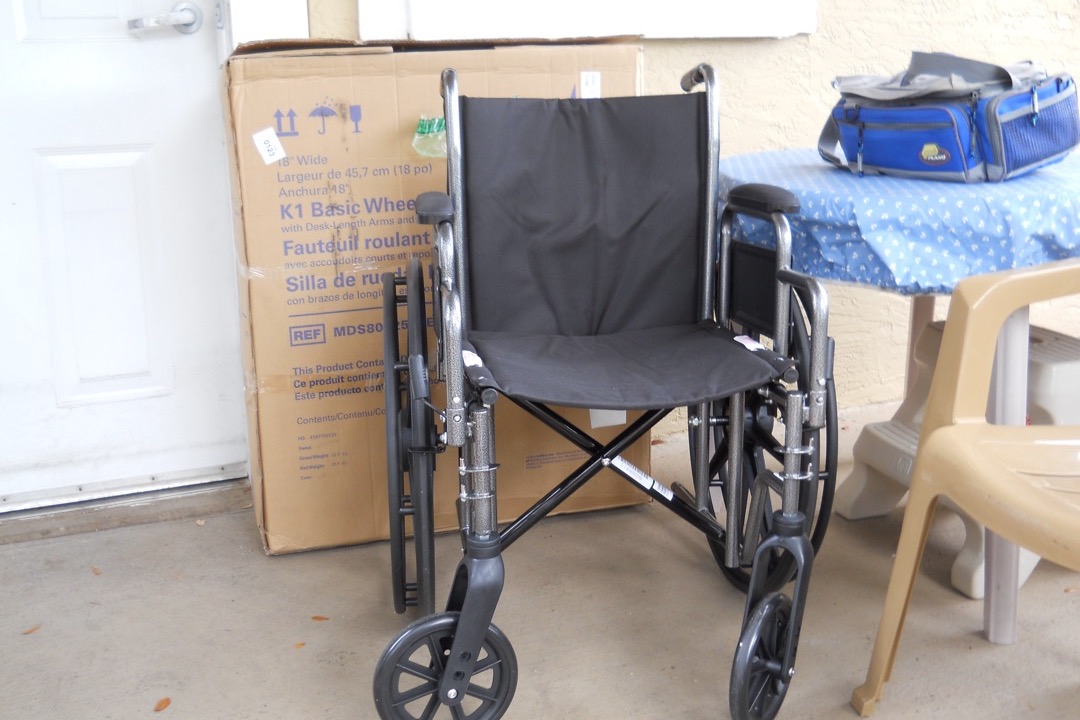
Of all the questions I field about mobility equipment, sizing a wheelchair is the one where a small error does the most quiet damage. A shoe that fits poorly announces itself within a block. A wheelchair that is an inch too wide, an inch too deep, or an inch too high produces no complaint on day one — and then, over the weeks that follow, shows up as a pressure sore on the tailbone, a shoulder that aches every evening, or a person who slides forward out of the seat and can never get comfortable. The chair gets blamed. Usually the chair is fine; it was simply the wrong size.
This guide is the sizing method I use in practice, translated for measuring at home. It covers the five body measurements that actually determine fit, what the standard wheelchair dimensions are and why they cluster where they do, a size chart you can measure against, and — the part most guides skip — the clinical reason each measurement matters, so you understand what you are protecting against when you get it right. If you are still deciding between a manual chair, a power chair, or a walking aid in the first place, that is a separate decision, and our manual vs electric wheelchair guide walks through it before you ever pick up a tape measure. This guide assumes you have settled on a manual or transport wheelchair and now need it to fit.
Why Wheelchair Sizing Is a Clinical Measurement, Not a Preference
A wheelchair is a seating system, and the body sitting in it is under load for hours at a time. Two things go wrong when the load is placed incorrectly. The first is pressure: skin and the tissue beneath it tolerate high pressure for short periods or low pressure for long periods, but not high pressure for long periods. A seat that concentrates weight onto the tailbone, the sitting bones, or the sides of the hips crosses that threshold and the tissue begins to break down — the beginning of a pressure injury, which in a seated person is stubborn, painful, and slow to heal. The second is biomechanics: a self-propelled wheelchair user pushes the handrims tens of thousands of times a week, and if the seat width forces the shoulders to reach outward to reach those rims, that repetition drives one of the best-documented overuse problems in rehabilitation medicine, rotator-cuff and shoulder injury in manual wheelchair users.
Correct sizing is what keeps weight off the vulnerable bony points and keeps the shoulders in a mechanically safe position. That is why the tolerances are measured in single inches, and why “close enough” is not a standard I apply to a device someone lives in. It is also why, for full-time users, a pressure-relief cushion is not optional — a topic our roundup of the best seat cushions for tailbone relief covers in depth, and one that changes your seat-height math, as I will explain below.
The Five Measurements That Determine Fit
Every wheelchair fitting comes down to five body measurements. Take them with the person seated upright in a firm chair — not a soft sofa, which changes the numbers — wearing the clothing they will typically wear in the wheelchair. Have a helper hold the tape; measuring yourself distorts the posture you are trying to capture. Use a rigid tape measure and, where the instruction says to measure a straight-line distance, keep the tape straight rather than following the curve of the body.
1. Seat Width — Hip Width Plus 1 to 2 Inches
Measure across the widest part of the seated body. For most people that is hip to hip; for a heavier build it may be the outer thighs. Press a flat object — a hardcover book works — vertically against each side and measure the straight-line distance between them. To that hip measurement, add 1 to 2 inches. That total is your target seat width.
The margin is deliberate and bounded on both sides. Too little, and the trochanters — the bony prominences at the outside of each hip — press against the rigid side panels, causing pressure and cutting circulation to the tissue there. Too much, and a self-propelled user has to abduct the shoulders and reach outward to grip the handrims, the exact posture that drives shoulder overuse injury. One to two inches is the window that clears the hips without pushing the rims out of easy reach.
2. Seat Depth — Buttock-to-Knee Minus About 2 Inches
Seat depth runs from the back of the buttocks to the crease behind the knee. Measure that distance, then subtract about 2 inches. The subtraction leaves a two-finger gap between the front edge of the seat and the back of the knee — the popliteal gap. Without it, the seat’s leading edge presses into the soft tissue and the major blood vessels behind the knee, again restricting circulation and, over time, causing numbness and swelling in the lower leg. A seat that is too shallow, on the other hand, loses thigh support and dumps weight backward onto the sitting bones and tailbone. The goal is full thigh support with the knees free.
3. Seat-to-Floor Height — Lower-Leg Length Plus Footrest Clearance
Measure from the back of the knee down to the heel (or the bottom of the shoe the person will wear). This is the lower-leg length, and it sets how high the seat should sit so that the feet rest flat on the footplates with the thighs parallel to the floor. Add a small amount — commonly 1 to 2 inches — for footplate-to-floor clearance so the footrests don’t scrape the ground. The result should produce feet flat, knees at a right angle, thighs level. If the seat is too high the feet dangle and weight drags onto the backs of the thighs; too low and the knees ride up above the hips, tipping weight back onto the tailbone.
This is the measurement a cushion changes. A pressure-relief cushion compresses to roughly 2 to 3 inches under body weight and raises the effective seat surface by that much. Decide on your cushion before you finalize seat height, and measure so the feet still land flat with the cushion compressed underneath. Skipping this is the single most common home-sizing mistake I see.
4. Backrest Height — Depends on Trunk Control
Backrest height is measured from the seat surface up the back, and the right target depends on how much trunk support the person needs. For an active user with good trunk control, a lower back — roughly to just below the shoulder blades, often calculated as the seat-to-armpit measurement minus about 4 inches — leaves the shoulders free to move and push. For someone with weak trunk control, a taller backrest that supports up to the shoulders or beyond is appropriate, sometimes with lateral supports. There is a genuine trade-off here between mobility and support, so this is the measurement most worth discussing with a therapist if trunk control is marginal.
5. Armrest Height — Seated Elbow Height Plus About 1 Inch
With the person seated and the upper arm hanging relaxed, bend the elbow to 90 degrees and measure from the seat surface to the bottom of the elbow. Add about 1 inch. Set correctly, the armrests support the forearms without either forcing the shoulders up into a shrug (armrests too high) or letting them slump and round forward (too low). Because this measurement is referenced to the seat surface, it — like seat height and backrest height — shifts up by the thickness of your compressed cushion.
Standard Wheelchair Dimensions and Size Chart
Manufacturers build wheelchairs in fixed increments rather than to the exact inch, so once you have your body measurements you are matching them to standard sizes. The chart below covers the adult manual and transport chairs most buyers are choosing among.
The single most important number to know: a standard adult wheelchair has an 18-inch seat width and a 16-inch seat depth, which fits a large share of average-build adults. Seat width is the primary sizing dimension, and it comes in these standard steps:
- 16 inches — narrow / petite. Suits a hip measurement of roughly 14 inches. Common for smaller adults and many transport chairs.
- 18 inches — standard. The default adult size; fits a hip measurement of about 15 to 16 inches.
- 20 inches — wide. Fits a hip measurement of about 17 to 18 inches.
- 22 inches and up — bariatric / extra-wide. Heavy-duty frames for larger builds and higher weight capacities.
Standard seat depths are typically 16 inches (standard) and 18 inches (tall), matching a buttock-to-knee measurement of roughly 18 and 20 inches respectively after the 2-inch subtraction. Standard seat-to-floor height on a stock manual chair is about 19.5 inches, which suits an average lower-leg length; hemi-height chairs sit lower (around 17.5 inches) for users who foot-propel by walking the chair along with their feet, and our best lightweight wheelchairs guide notes which models offer a hemi-height option.
There is a second dimension the size chart above does not capture, and it fits the home rather than the body: overall width. A wheelchair’s overall open width runs roughly 8 inches wider than its seat — an 18-inch-seat chair is about 26 inches across at the wheels. That is the number that has to clear your doorways. A modern ADA doorway is 32 inches and poses no problem, but the interior doorways in many older homes and apartments are only 28 to 30 inches, where a standard 26-inch chair leaves little room for the hands on the handrims. Measure the narrowest doorway the chair must pass through before you buy; if it is tight, a narrower transport chair or a lightweight narrow-frame model may be the answer. Our roundup of the best wheelchairs lists overall width alongside seat width for exactly this reason.
Putting the Two Measurements Together: Body and Home
A well-sized wheelchair satisfies two constraints at once, and buyers routinely optimize for only one. The body constraint is the five measurements above — seat width, depth, height, back height, armrest height — which protect skin, circulation, and shoulders. The home constraint is overall width against doorways and, sometimes, the turning space in a small bathroom. When those two pull in opposite directions — the body wants a 20-inch seat but the bathroom door is 28 inches — that tension is real information, and it usually points toward either a narrower-frame lightweight chair or, occasionally, a home modification. Do not resolve it by squeezing the person into a chair that is too narrow; the pressure and circulation costs of an undersized seat are not worth a few inches of door clearance. Resolve it on the equipment or the doorway side instead.
When the Chart Isn’t Enough: Signs You Need a Professional Fitting
For occasional-use and transport chairs, a careful home measurement against the chart above will fit the great majority of people. A formal seating evaluation with a physical or occupational therapist becomes worth arranging when the chair will be used full-time, or when any of the following apply: a spinal cord injury or progressive neuromuscular disease, a history of pressure injuries, significant asymmetry or scoliosis, poor trunk control, or a body size outside the standard 16-to-20-inch range. A seating specialist measures well beyond the basic five dimensions — pelvic position, tone, skin-integrity risk — and can specify a custom chair and cushion, frequently through Medicare’s custom-manual or power-mobility pathway. If the decision you are still weighing is manual versus power in the first place, our manual vs electric wheelchair guide covers the clinical triggers for each, and for users likely to progress, the best electric wheelchairs guide covers powered options that most people size with professional help rather than a home chart.
The Bottom Line
Measuring for a wheelchair is not complicated, but it rewards precision. Take the five measurements with the person in real clothing on a firm seat, add or subtract the small clinical margins — hip width plus 1 to 2 inches for seat width, buttock-to-knee minus 2 inches for depth, lower-leg length plus footrest clearance for height — and match the results to the standard sizes, remembering that a cushion raises everything referenced to the seat by its compressed thickness. Then check the chair’s overall width against your narrowest doorway. Do that, and the chair disappears into daily life the way well-fitted equipment should. Skip it, and the chair spends the next several months reminding the person it was sized by guesswork. An inch is worth the care.
Frequently Asked Questions
How do I measure someone for a wheelchair seat width?
What are the standard dimensions of a wheelchair?
What is the 90-90-90 rule for wheelchair seating?
Should I add for a cushion when measuring for a wheelchair?
Can I use a standard wheelchair size chart, or do I need a professional fitting?
Related Articles
Manual vs Electric Wheelchair: An MD's Clinical Guide to Choosing the Right Chair
mobility-aids
7 Best Electric Wheelchairs of 2026
mobility-aids
7 Best Lightweight Wheelchairs of 2026
mobility-aids
7 Best Wheelchairs of 2026
mobility-aids
9 Best Coccyx Seat Cushions for Tailbone Pain of 2026
orthopedic-supports
About the Reviewer

Dr. David Taylor, MD, PhD
Drexel University College of Medicine (MD), Indiana University School of Medicine (PhD)
Dr. David Taylor is a licensed physician and medical researcher who founded BestRatedDocs in 2016. With an MD from Drexel University and a PhD from Indiana University School of Medicine, he combines clinical expertise with a passion for health technology to provide evidence-based product recommendations. Dr. Taylor specializes in health informatics and regularly evaluates medical devices, diagnostic equipment, and therapeutic products to help healthcare professionals and patients make informed decisions.