9 Best Coccyx Seat Cushions for Tailbone Pain of 2026
Dr. David Taylor MD reviews the best coccyx seat cushions on Amazon for tailbone pain. Compare cutout depth, foam vs gel, and firmness across 9 doctor-evaluated picks for the office, car, and wheelchair.
Updated
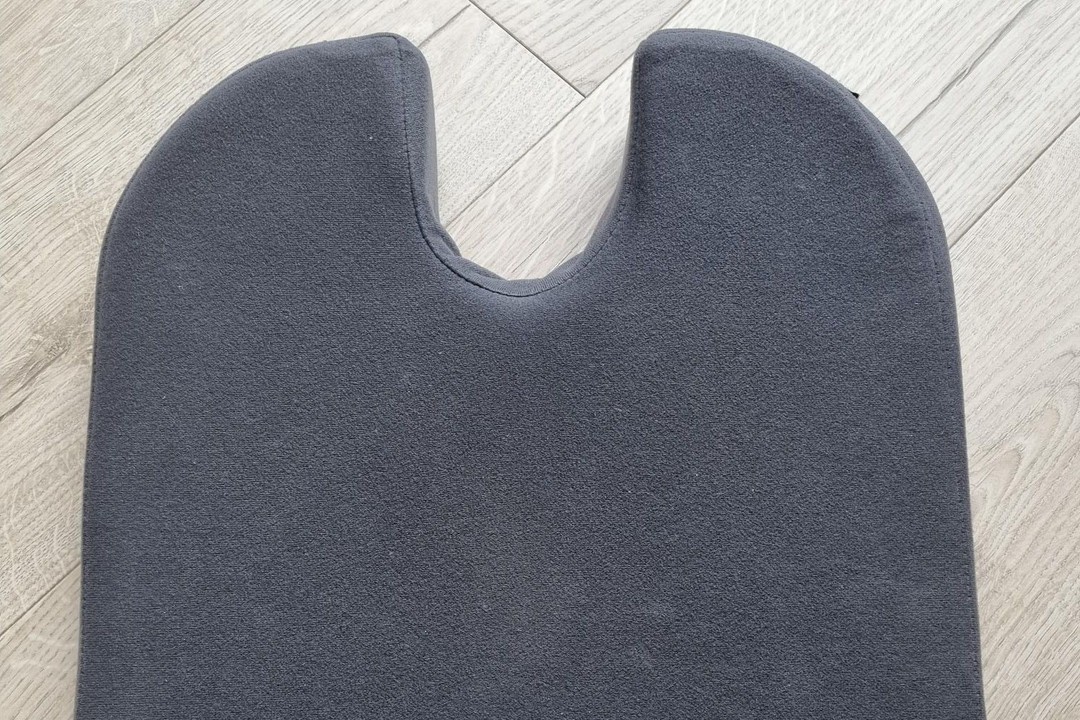
Tailbone pain — clinically, coccydynia — is one of the most frustrating musculoskeletal complaints I see, because it turns the simple act of sitting into a constant low-grade ordeal. The pain is sharp or aching, centered right at the very bottom of the spine, and it predictably worsens the longer you sit, eases when you stand, and flares again the moment you lower yourself back into a chair. Whether it started with a fall onto a hard surface, childbirth, months of sitting on an unforgiving office chair, or seemingly nothing at all, the single most useful thing most patients can do for themselves is stop loading the coccyx while it heals. That is exactly what a well-designed coccyx seat cushion does.
The coccyx is the small, triangular terminal segment of your spine — three to five fused vertebrae hanging below the sacrum. It was never meant to be a weight-bearing structure, yet when you sit and lean back, a disproportionate share of your body weight can pass straight through it. A purpose-built coccyx cushion corrects this with a posterior cutout: a U-shaped notch or rear wedge that suspends the tailbone over open space and redirects your weight onto the ischial tuberosities, the sit bones that are actually built to bear load. This is not a comfort gimmick — it is the same load-transfer principle physical therapists and physiatrists rely on for conservative coccydynia management. If your tailbone pain travels up into your lower back, a cushion paired with proper lumbar support often addresses both ends of the problem at once.
At BestRatedDocs, I evaluated the coccyx seat cushions that dominate Amazon against a structured set of clinical and practical criteria: the mechanism and depth of the cutout, foam-versus-gel construction, firmness and durability, cover and non-slip quality, and verified user review aggregates spanning hundreds of thousands of purchases. Every one of the nine cushions below was confirmed as a current, in-stock Amazon listing. This is the rare physician-authored coccyx cushion roundup that pairs real clinical reasoning with an actual product-by-product comparison — the buying guides that rank for this search are almost all written by staff writers without a medical background. Here is what I found.
| Product | Price | Buy |
|---|---|---|
| ComfiLife Premium Gel & Memory Foam Seat CushionBest Overall | $41.36 | View on Amazon |
| Everlasting Comfort Memory Foam Seat CushionRunner-Up | $47.99 | View on Amazon |
| TushGuard Seat CushionBudget Pick | $19.99 | View on Amazon |
| Purple Double Seat CushionPremium Pick | $117.00 | View on Amazon |
| Cushion Lab Patented Pressure Relief Seat CushionRunner-Up | $74.99 | View on Amazon |
| Everlasting Comfort Car Seat Cushion for DrivingRunner-Up | $33.97 | View on Amazon |
| Everlasting Comfort Ventilated Wheelchair CushionRunner-Up | $39.99 | View on Amazon |
| Kieba Coccyx Seat CushionRunner-Up | $28.95 | View on Amazon |
| FOMI Extra Thick Firm Coccyx Orthopedic Memory Foam Seat CushionRunner-Up | $36.50 | View on Amazon |
Find the Best Coccyx Cushion for Your Need
Jump straight to the pick that matches how and where you sit:
- Overall best coccyx seat cushions — our top picks reviewed
- Best for office chairs and all-day sitting
- Best for cars and long drives
- Best for wheelchair users
- Best for sciatica
- Best for larger body types
- Best for pregnancy and postpartum
- More use cases: memory foam, gel, travel, injury recovery
How We Chose These Coccyx Cushions
Selection prioritized four dimensions. First, cutout mechanism — does the cushion genuinely offload the coccyx through a posterior cutout or ergonomic contour, or is it a flat pad that merely cushions the tailbone without unloading it? A flat cushion, no matter how thick, does not treat tailbone pain, so several popular high-review “seat cushions” were excluded for having no functional cutout. Second, material and durability — the balance of contouring, cooling, and resistance to flattening across foam, gel-hybrid, and grid constructions. Third, verified user outcomes at scale, filtering hundreds of thousands of reviews for coccyx-specific and pain-relief feedback. Fourth, breadth of real-world fit across the settings where tailbone pain actually happens: the office chair, the car, the wheelchair, and larger or pregnant bodies. Every finalist was verified as live and in stock before inclusion.
Best Coccyx Seat Cushions Overall
These are the nine cushions that earned a place in this guide, each reviewed in full below. The ComfiLife Premium is the best overall pick for the widest range of tailbone-pain buyers; the use-case sections after the reviews then match specific situations — desk work, driving, wheelchair use, sciatica, larger frames, and pregnancy — to the right pick from this same lineup.
ComfiLife Premium Gel & Memory Foam Seat Cushion — Best Overall
The ComfiLife Premium is my Best Overall recommendation, and the case for it starts with a number that is difficult to overstate: more than 108,000 verified reviews at a steady 4.4 stars. That is an aggregate real-world sample larger than any published clinical trial on seat cushions, and it converges on a cushion that does the fundamentals correctly. The U-shaped posterior cutout suspends the coccyx over open space and transfers weight onto the sit bones and thighs — the exact load-transfer mechanism that conservative coccydynia care is built around.
What separates the ComfiLife from its nearly-identical rival is the construction. It is a genuine dual-layer cushion: a gel-enhanced top over a high-density memory foam base. The memory foam contours to your anatomy and distributes pressure quietly, while the gel layer addresses memory foam’s one real weakness — heat retention — keeping the surface cooler across a long sitting day. High-density foam also matters mechanically: it resists bottoming out under body weight, which is what keeps the cutout functional. A soft cushion that fully compresses stops offloading the coccyx entirely.
The practical details round it out. The zippered velour cover machine-washes, the rubber base genuinely grips a smooth chair, and the built-in carry handle means one cushion can follow you from your desk to your car to a stadium seat. The honest caveats are minor: it runs firm before a week or so of break-in, and a subset of heavy daily users report gradual flattening after a year or more. For the large majority of people with tailbone pain, this is the cushion to start with.

ComfiLife Premium Gel & Memory Foam Seat Cushion
by ComfiLife
The best-reviewed coccyx cushion on Amazon, and the gel layer edges out its closest rival on cooling and comfort.
Pros
- The most-reviewed coccyx cushion on Amazon with over 108,000 verified ratings — an aggregate real-world sample larger than any published clinical trial on seat cushions
- Dual-layer construction pairs a gel-enhanced top with high-density memory foam, delivering the cooling that plain-foam cushions cannot and the pressure offloading that gel-only pads cannot
- The U-shaped posterior cutout suspends the coccyx over open space, transferring load onto the ischial tuberosities and thighs — the exact biomechanical mechanism recommended for coccydynia
- Machine-washable zippered velour cover, non-slip rubber base, and a built-in carry handle make it the most practical all-day pick for moving between desk, car, and home
Cons
- Runs firm before a short break-in period — buyers expecting a plush pillow feel should give it a week
- A subset of long-term reviewers report gradual flattening after 12 to 18 months of heavy daily use
Everlasting Comfort Memory Foam Seat Cushion — Runner-Up
The Everlasting Comfort is the co-leader of this category and my runner-up, and the two flagships are close enough that the choice mostly comes down to foam versus gel-hybrid. With more than 104,000 reviews of its own at 4.4 stars, it carries essentially the same trust profile as the ComfiLife, and it offloads the tailbone through the same deep U-cutout geometry. If you have seen the “doctor recommended” seat cushion marketing, this is frequently the one being referenced.
Its construction is 100 percent high-density memory foam with no gel layer. That is a deliberate trade, not a shortcoming: pure memory foam gives a slightly softer, more enveloping contour that many people prefer, and it comes without the gel premium. The cushion is genuinely versatile, moving comfortably between a car seat, an office chair, and a hard dining chair, and the removable cover washes cleanly.
The two things to know before choosing it over the ComfiLife: without the gel layer it can feel warmer during long uninterrupted sitting, and a few reviewers note firmness varying between production runs. If you run cool, prefer a plusher foam feel, or simply want to save a few dollars, the Everlasting Comfort is every bit the equal of our top pick. If you sit for very long stretches or run warm, the ComfiLife’s gel layer is the tiebreaker.

Everlasting Comfort Memory Foam Seat Cushion
by Everlasting Comfort
A near-identical trust profile to our Best Overall pick for buyers who prefer pure memory foam over a gel hybrid.
Pros
- Review volume rivals our top pick at over 104,000 ratings — the other genuine category co-leader carrying a doctor-recommended marketing designation
- 100 percent high-density memory foam holds its shape with regular use and offloads the tailbone through the same deep U-cutout geometry
- Versatile across car, office chair, and home dining seats without a use-case-specific contour that limits where it fits
- Soft, removable, washable cover and a reliable non-slip base — the essentials done well at a mainstream price
Cons
- No cooling gel layer, so it can feel warmer than the ComfiLife during long uninterrupted sitting
- Some batch-to-batch firmness inconsistency reported between production runs
TushGuard Seat Cushion — Best Budget
The TushGuard is the pick I point budget-conscious buyers to, and its significance is that it refuses to cut the corner that matters. Plenty of cheap “seat cushions” save money by shipping a flat pad with no cutout — which, for tailbone pain, defeats the entire purpose. The TushGuard keeps the genuine U-shaped posterior cutout and pairs it with the full practical feature set — a washable zippered cover, a non-slip base, and a carry handle, all at a budget price.
More than 28,000 verified reviews back it up, which is an unusually deep track record for a budget cushion and the reason it earns a spot over dozens of cheaper unknowns. The breathable cover and compact profile also make it the single easiest cushion here to throw in a bag and move between an office chair, a car seat, and travel.
The honest trade-offs are exactly what you would expect at the price. The foam is less dense and less plush than the flagship picks, firmness feedback is mixed, and it will not hold up as long under heavy daily use. But as a first cushion — a low-risk way to confirm that offloading the coccyx helps your pain before committing to a premium model — the TushGuard is the smart entry point.
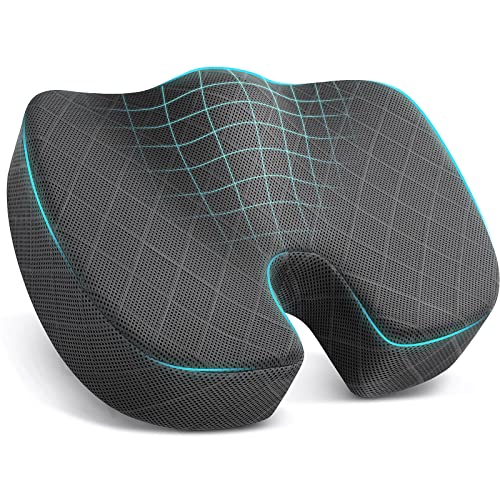
TushGuard Seat Cushion
by TushGuard
Proof that a budget coccyx cushion does not have to skip the cutout or the essentials.
Pros
- Ships the full feature set — U-cutout, washable zippered cover, non-slip base, and a carry handle — for well under twenty dollars
- Over 28,000 verified reviews back it, an unusually deep track record for a budget cushion
- Breathable cover and compact profile make it the easiest pick to move between an office chair, a car seat, and a travel bag
- A genuine posterior cutout, not a flat pad — it actually offloads the tailbone rather than just adding a layer of foam under it
Cons
- Foam is noticeably less dense and plush than the premium picks, and firmness feedback is mixed
- Less durable under heavy daily long-term use — expect a shorter lifespan than the flagship cushions
Purple Double Seat Cushion — Upgrade Pick
The Purple Double is the upgrade choice, and it is genuinely different from everything else in this guide. Instead of foam, it uses Purple’s GelFlex Grid — a hyper-elastic polymer molded into an open lattice. Under your sit bones the grid walls buckle to relieve peak pressure, while under lower-load areas they stay standing to support you. It is a fundamentally different way to redistribute weight than a foam cutout, and for the right buyer it is worth the premium.
Two properties justify the price. First, temperature: hundreds of air channels run through the open grid, so it does not trap body heat the way closed-cell memory foam does and stays neutral through an all-day sit — the single most common complaint about premium foam cushions is heat, and the Purple simply does not have it. Second, durability: the structural grid returns to its shape indefinitely and does not compress or flatten the way foam does over months and years. Over a long enough horizon, a cushion that never needs replacing partly offsets its own cost.
The Double earns its name from a two-sided build: the same cushion gives you a softer feel with the small grid facing up and a firmer one with the large grid up. That matters more than it sounds for tailbone pain, because the right firmness depends on what you are sitting on. A padded office chair usually wants the firmer side so you do not sink through to the base, while a hard dining or stadium seat is more comfortable on the softer one. You get to test both without buying twice.
The caveats are real and worth stating plainly. It costs roughly three times what the flagship foam cushions do. And it redistributes pressure through the grid rather than a dedicated coccyx cutout, so buyers whose relief depends on a fully open channel under the tailbone — particularly severe or post-injury cases — may actually do better with a deep-cutout foam design. For heat-sensitive, all-day sitters who want a buy-it-once cushion, though, nothing else here matches it.

Purple Double Seat Cushion
by Purple
The one cushion here that skips foam entirely for Purple's grid technology — premium price, premium durability, no heat, and a flip-side firmness choice.
Pros
- Genuine Purple GelFlex Grid — a hyper-elastic polymer lattice, not foam — that redistributes pressure by buckling under the sit bones while staying supportive under the tailbone
- Temperature-neutral by design: hundreds of air channels run through the open grid, so it does not trap body heat the way closed-cell memory foam does
- Does not compress or flatten over time — the structural grid returns to shape indefinitely, unlike foam that degrades within a year or two
- Two-sided construction lets you flip between a softer and a firmer feel, so one cushion adapts to both a padded office chair and a hard seat
Cons
- Costs roughly three times the price of the flagship foam cushions
- Spreads pressure through the grid rather than a cutout, and the unconventional feel and look are not for everyone
Cushion Lab Patented Pressure Relief Seat Cushion — Best for Desk Work
The Cushion Lab is the cushion I recommend for people whose tailbone pain is driven by long desk days, because it is engineered against the exact failure mode that kills most cushions: flattening. Its extra-dense charcoal memory foam is meaningfully firmer and denser than the mainstream picks, and it is designed to hold its supportive shape across eight-plus hours of continuous sitting rather than compressing to a thin pad by mid-afternoon.
Rather than a fully open U-cutout, it uses a patented ergonomic contour that cradles the hips and thighs and offloads the coccyx through shaping instead of a hole. Some people with tailbone pain actually prefer this — it feels more stable and broadly supportive, without the “sitting around an edge” sensation that a deep cutout can create. It is also the cushion that recurs most often as the default pick in independent editorial roundups, backed here by more than 20,000 reviews.
The trade-offs follow directly from its density: it is firm, and some buyers find it too hard for the first several days before it breaks in, and it is priced above the mainstream foam options. But if you spend most of your painful sitting hours at a desk, the flatten-resistant construction is precisely what you want. Pair it with a good posture corrector and an ergonomic setup and you address the sitting posture that aggravates coccydynia in the first place.

Cushion Lab Patented Pressure Relief Seat Cushion
by Cushion Lab
Built specifically for people who sit for eight-plus hours straight and need foam that will not compress by mid-afternoon.
Pros
- Extra-dense charcoal memory foam is engineered specifically to resist flattening across 8-plus-hour sitting days — the failure mode that ends most cushions
- A patented ergonomic hip-and-thigh contour cradles the pelvis and offloads the coccyx without a fully open cutout, which some users find more stable
- The universal roundup pick — it recurs across independent editorial reviews as the default recommendation for desk workers
- Over 20,000 reviews and an odor-free, removable-cover construction built for daily office use
Cons
- Noticeably firmer than average, and some buyers find it too hard for the first several days
- Priced above the mainstream foam cushions per square inch of support
Everlasting Comfort Car Seat Cushion for Driving — Best for the Car
Driving is uniquely hard on the tailbone. You are locked into one position for the whole trip, the seat is shaped rather than flat, and road vibration adds a constant low-level load that a static chair never does. The Everlasting Comfort Car cushion is purpose-built for that environment, which is why it is my pick for commuters and road-trippers rather than a repurposed office cushion.
It combines the standard posterior U-cutout — offloading the coccyx during those long, vibration-loaded stretches — with a car-specific contour and an elevated design that raises seat height. For shorter drivers that height boost is a genuine dual benefit, improving forward sightlines while it relieves the tailbone. The low-profile, firm-foam shape also sits more securely in a bucket seat than a bulky, tall office cushion, and the cover washes and the base grips.
Know two things going in. The booster height that helps shorter drivers can feel awkward if you are already tall, and the foam runs firm, consistent with the whole category. But for anyone whose worst tailbone pain shows up behind the wheel, a cushion designed around the car seat is the right tool.

Everlasting Comfort Car Seat Cushion for Driving
by Everlasting Comfort
A car-specific contour that doubles as a visibility booster for commuters and road-trippers with tailbone pain.
Pros
- Purpose-built car contour with an elevated design that raises seat height and improves sightlines for shorter drivers on long trips
- The posterior U-cutout offloads the tailbone during the sustained, vibration-loaded sitting that makes driving uniquely hard on the coccyx
- High-density firm foam and a low-profile shape that fits bucket seats better than a bulky office cushion
- Machine-washable cover and a non-slip base from an established, high-review brand
Cons
- The booster height can feel awkward for already-tall drivers
- Firmness runs hard for some users, consistent with the category-wide pattern
Everlasting Comfort Ventilated Wheelchair Cushion — Best for Wheelchairs
Wheelchair seating is a different clinical problem than office or car sitting, and it deserves a purpose-built cushion — a point most seat-cushion guides skip entirely. A wheelchair user often cannot shift position to relieve a pressure point, so heat, moisture, and sustained localized pressure become the real risks, up to and including pressure sores. This Everlasting Comfort cushion is designed around exactly those priorities.
It is a gel-and-foam hybrid built with ventilation channels that actively move heat and moisture away from the skin rather than trapping them, which is the single most important property for someone seated in one position for hours at a stretch. It also carries the highest star rating in this entire roundup at 4.5, and reviewers return again and again to the same phrase — that it feels like sitting on air. For a category dominated by generic office cushions, a dedicated wheelchair design with a review base this strong is genuinely uncommon.
The one practical caveat is that it can slide on a slick wheelchair seat without an added strap, so pairing it with a simple non-slip solution is worth doing. If you or someone you care for uses a wheelchair, this cushion prioritizes the things that matter for that use — airflow and pressure relief — over a simple cutout. For related mobility equipment, our wheelchair buying guide covers the chairs these cushions ride in.

Everlasting Comfort Ventilated Wheelchair Cushion
by Everlasting Comfort
A ventilated design built for wheelchair users who need all-day pressure relief with airflow, not just a cutout.
Pros
- Gel-and-foam hybrid with ventilation channels that move heat and moisture away from the skin — the priority for anyone sitting in one position for hours
- Highest star rating in this roundup at 4.5, with reviewers repeatedly describing the feel as sitting on air
- A dedicated wheelchair design with a strong review base, rare in a category dominated by generic office cushions
- Soft, removable, non-slip cover appropriate for daily seated use and caregiver laundering
Cons
- Can slide on a slick wheelchair seat without an added strap
- Firmness feedback is mixed, as with most cushions in this category
Kieba Coccyx Seat Cushion — Best for Sciatica and Severe Pain
The Kieba earns its place on the strength of one feature: the deepest, most fully open orthopedic U-cutout of any well-reviewed cushion I found. Where most cushions relieve pressure on the tailbone, the Kieba’s deep channel genuinely suspends it, and that maximal offloading is what makes it my pick for severe coccydynia, post-injury tailbone pain, and post-surgical recovery — situations where any residual pressure on the coccyx is the difference between tolerable and not.
It is built from gel-infused memory foam, so it runs cooler than plain foam, and at its price it delivers a dedicated orthopedic design for a fraction of what the flagships cost. With more than 7,400 reviews it is also the most-validated true deep-cutout option in the category — reviewers dealing with sciatica and lower-back pain specifically credit the deep channel for their relief.
One important clinical nuance, because most guides omit it: a very deep or narrow central cutout shifts your weight onto the sides of the buttocks, and in some people that increases pressure right over the sciatic nerve and piriformis. For most sciatica sufferers the offloading helps, but if a deep-cutout cushion increases your leg pain or numbness over the first week, that is your signal to switch to a broader-surface design instead. The Kieba’s compact footprint can also feel small on a wide chair. For the person who needs maximum tailbone offload, though, nothing else here goes as deep.
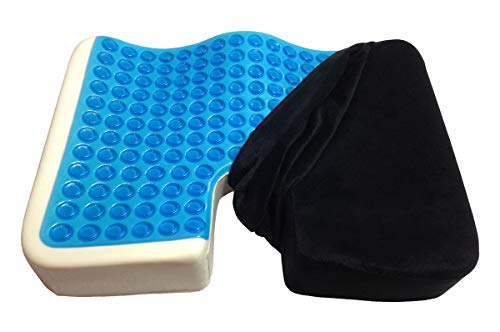
Kieba Coccyx Seat Cushion
by Kieba
The deepest tailbone cutout in the roundup, with a review count buyers can actually trust, for severe coccyx pain.
Pros
- The deepest, most fully open orthopedic U-cutout of any well-reviewed pick here — it completely suspends the tailbone rather than merely relieving pressure on it
- Reviewers with sciatica, post-injury, and post-surgical coccyx pain specifically credit the deep channel for relief
- Gel-infused memory foam feels cooler than plain foam at a fraction of the flagship price
- Over 7,400 reviews, a deep enough review base to trust for a specialist deep-cutout cushion
Cons
- The compact footprint can feel small on wider office chairs and does not fully cover a large seat pan
- The cover is more basic than the premium picks, and the foam runs firm for some users
FOMI Extra Thick Firm Coccyx Seat Cushion — Best for Larger Users
For larger-frame users the cushion that fails does not usually fail by being too narrow. It fails by bottoming out. Body weight compresses the foam fully within the first few seconds of sitting, the tailbone settles onto the hard seat underneath, and the cutout stops doing anything at all. Depth and density are what prevent that, and this FOMI has more of both than anything else in this guide: a full 3.5 inches of firm, high-density memory foam, which the manufacturer describes in its own listing as heavy-duty thicker foam built to support heavier users.
The important part is that the extra depth does not cost you the cutout. Most thick foam pads are solid slabs, so they raise you up without ever offloading the coccyx. This one keeps a true open cut-out through the back, so the tailbone stays clear of the seating surface even under a load that would flatten a two-inch cushion. You also get a breathable velour cover with built-in handles, a non-slip base, and a cover that unzips for the washing machine.
Two honest notes. The footprint is a standard 18 by 16 inches, so if your specific problem is width — sit bones and thighs hanging off the sides rather than sinking through — this solves the wrong half of the problem, and a wider pad is the better buy. And there is no manufacturer-stated pound rating here, which is a genuine market-wide gap rather than a flaw in this cushion: no bariatric seat cushion rated to 400 or 500 pounds has meaningful review volume on Amazon at all. Treat this as the densest well-reviewed option available and verify the fit for your chair.

FOMI Extra Thick Firm Coccyx Orthopedic Memory Foam Seat Cushion
by FOMI
The thickest firm-foam cushion here at 3.5 inches, built by the manufacturer for heavier users and the load that flattens ordinary cushions.
Pros
- A full 3.5 inches of firm, high-density memory foam — the manufacturer builds it specifically as heavy-duty thicker foam to support heavier users
- Depth is what stops a cushion bottoming out under higher body weight, which is the actual failure mode for larger-frame sitters rather than width alone
- Keeps a true open cut-out so the tailbone never contacts the seat surface, unlike most thick foam pads that drop the cutout
- Breathable velour cover with built-in handles and a non-slip base, and the cover unzips for machine washing
Cons
- At 18 by 16 inches the footprint is standard, so it solves depth rather than width
- No manufacturer-stated pound rating, so very heavy users should verify fit for their chair
Best Coccyx Cushions for Office Chairs and All-Day Sitting
Desk work is where most tailbone pain is either created or made worse — eight or more hours a day in one chair, often with a posture that rocks the pelvis back onto the coccyx. The cushion that wins here is not necessarily the softest; it is the one that stays supportive from the first hour to the last. Density and flatten-resistance matter more than plushness, because a cushion that compresses by mid-afternoon stops offloading the tailbone exactly when you have been sitting longest.
| Product | Price | Buy |
|---|---|---|
| Cushion Lab Patented Pressure Relief Seat CushionBest for 8+ hour desk days Extra-dense charcoal foam engineered specifically to resist compression across a full workday | $74.99 | View on Amazon |
| Purple Double Seat CushionBest no-flatten premium The GelFlex grid never flattens and stays heat-neutral through an all-day sit — buy it once | $117.00 | View on Amazon |
Best Coccyx Cushion for Cars and Long Drives
A car seat is a shaped, vibrating environment that a flat office cushion was never designed for, and long drives concentrate tailbone load in a way that a chair you can get up from does not. The right car cushion is low-profile enough to sit securely in a bucket seat, has a reliable non-slip base, and ideally adds a little height for shorter drivers.
| Product | Price | Buy |
|---|---|---|
| Everlasting Comfort Car Seat Cushion for DrivingBest car-specific fit Purpose-built car contour with a booster height that improves sightlines and offloads the tailbone on long drives | $33.97 | View on Amazon |
| TushGuard Seat CushionBest compact pick for travel Budget-priced, handled, and compact, the easiest cushion to move between the car and everywhere else | $19.99 | View on Amazon |
Best Coccyx Cushion for Wheelchair Users
Wheelchair seating prioritizes different things than a chair you can rise from. Because the user often cannot shift to relieve a pressure point, airflow and pressure-sore prevention matter more than a simple cutout. A ventilated gel-foam design is purpose-built for that; a deep U-cutout cushion can serve as an alternative when maximal coccyx offload is the priority.
| Product | Price | Buy |
|---|---|---|
| Everlasting Comfort Ventilated Wheelchair CushionBest ventilated wheelchair design Ventilation channels move heat and moisture off the skin — the top priority for hours in one position | $39.99 | View on Amazon |
| ComfiLife Premium Gel & Memory Foam Seat CushionBest U-cutout alternative The all-rounder flagship works as a wheelchair cushion too, with a true U-cutout and non-slip base | $41.36 | View on Amazon |
Best Coccyx Cushion for Sciatica
Sciatica and tailbone pain frequently travel together, and a cushion that offloads the coccyx often eases the sciatic pain that prolonged sitting provokes. The clinical nuance most guides omit: a very deep, narrow cutout shifts weight onto the sides of the buttocks, which in some people presses on the sciatic nerve and piriformis. Match the cutout to your response — deep offload for severe tailbone-dominant pain, a broader supportive surface if a deep notch aggravates the leg.
| Product | Price | Buy |
|---|---|---|
| Kieba Coccyx Seat CushionBest deep offload for tailbone-dominant pain The deepest cutout here fully suspends the coccyx — ideal unless a deep notch increases your leg symptoms | $28.95 | View on Amazon |
| Cushion Lab Patented Pressure Relief Seat CushionBest broad-surface option A broad ergonomic contour that spreads load without an aggressive central cutout, gentler on the sciatic nerve | $74.99 | View on Amazon |
Best Coccyx Cushion for Larger Body Types
For larger-frame users the usual failure is not width, it is bottoming out: the foam compresses fully under higher body weight within seconds and the tailbone lands on the hard seat beneath. The fix is depth and density — enough firm foam that the cutout is still doing its job an hour into sitting.
| Product | Price | Buy |
|---|---|---|
| FOMI Extra Thick Firm Coccyx Orthopedic Memory Foam Seat CushionBest depth against bottoming out 3.5 inches of firm high-density foam, built by the manufacturer for heavier users, with the tailbone cut-out kept intact | $36.50 | View on Amazon |
| Purple Double Seat CushionBest no-flatten under higher load The grid does not compress under weight and stays heat-neutral — durable support for heavier all-day sitters | $117.00 | View on Amazon |
Best Coccyx Cushion for Pregnancy and Postpartum Tailbone Pain
Pregnancy loosens the pelvic ligaments and shifts the center of gravity, and childbirth can bruise or even injure the coccyx directly — so tailbone pain is common in the third trimester and postpartum. A well-cushioned U-cutout that offloads the coccyx while staying comfortable for long feeding and rest sessions is the priority, with a washable cover for the practical realities of new parenthood.
| Product | Price | Buy |
|---|---|---|
| ComfiLife Premium Gel & Memory Foam Seat CushionBest cushioned gel U-cutout Gel-over-foam comfort with a true U-cutout to offload a coccyx stressed by pregnancy and delivery | $41.36 | View on Amazon |
| Everlasting Comfort Memory Foam Seat CushionBest soft pure-foam pick A softer, enveloping pure-foam feel with the same offloading cutout and a washable cover | $47.99 | View on Amazon |
Best Coccyx Cushions by Use Case
Beyond the major settings above, a few more situations come up often. Here is the quick-decision pick for each — every one drawn from the nine cushions reviewed above, with a live Amazon link so you can check the current price:
| Product | Price | Buy |
|---|---|---|
| Everlasting Comfort Memory Foam Seat CushionBest pure memory-foam feel Enveloping high-density memory foam without a gel premium, for buyers who want the classic foam feel | $47.99 | View on Amazon |
| ComfiLife Premium Gel & Memory Foam Seat CushionBest cooling gel hybrid The gel top runs cooler than plain foam through a long sit — the best pick if you run warm | $41.36 | View on Amazon |
| TushGuard Seat CushionBest for travel, flights, and bleachers Compact, handled, and inexpensive enough to keep in a bag for planes, stadiums, and hard event seats | $19.99 | View on Amazon |
| Kieba Coccyx Seat CushionBest for injury and post-surgery recovery The deepest cutout fully offloads a bruised or post-surgical coccyx while it heals | $28.95 | View on Amazon |
Buyer's Guide
Choosing the right coccyx cushion means matching the cutout design, material, and firmness to how and where you sit, and to the specific reason your tailbone hurts. Here are the six factors that matter most.
Cutout Shape and Depth
The cutout is the entire therapeutic point of a coccyx cushion — it is what transfers your weight off the tailbone and onto the sit bones and thighs. Look for a genuine posterior U-notch or wedge cutout, not a flat pad marketed as ergonomic. Depth is a real trade-off: a deep, fully open cutout (like the Kieba) maximally suspends the coccyx and is ideal for severe pain, post-injury, or post-surgical recovery, while a shallower ergonomic contour (like the Cushion Lab) can feel more stable and broadly supportive for everyday desk use. Avoid flat cushions with no cutout for tailbone pain specifically — they add padding under the coccyx but never offload it.
Material: Foam vs Gel
High-density memory foam contours quietly and distributes pressure well, but traps heat and slowly compresses. Gel — as a top layer over foam or a full grid — runs cooler and resists flattening, at a higher price. The best-reviewed cushions in this guide are gel-and-memory-foam hybrids because that combination captures the strengths of both. A pure high-density foam cushion is a sound, lower-cost choice; a gel hybrid is worth the premium if you run warm or sit for very long stretches; and a grid cushion like the Purple is the durable, heat-neutral extreme. Avoid low-density foam at any price, because it compresses fully and lets the tailbone bottom out.
Firmness
Firmness feedback is genuinely divisive across this entire category — nearly every cushion, budget or premium, has reviewers calling it both too firm and too soft, because the right firmness depends on your body weight and pain type. As a general rule, the cushion arch and base should be firm enough to resist bottoming out under your full weight, so the cutout keeps working; a cushion that fully compresses stops offloading the coccyx. Heavier users and those with severe pain generally need denser, firmer foam; lighter users and those seeking all-day comfort may prefer a slightly softer top layer over a firm base. Most firm cushions also require a short break-in period of a few days to a week before they feel right.
Size and Weight Capacity
Match the cushion footprint to both your body and your chair. A standard cushion runs roughly 17 to 18 inches wide, which suits most office chairs and average frames. Larger users have two separate problems and should be clear which one they have. If the sit bones and thighs hang off the sides, you need a wider footprint. If instead the cushion feels fine for a minute and then your tailbone settles onto the seat beneath, the cushion is bottoming out and you need depth and density instead — a 3.5-inch firm high-density pad like the FOMI rather than a wider thin one. Note a genuine market gap: no bariatric cushion rated to 400 to 500 pounds has meaningful review volume on Amazon, so very heavy buyers should choose the largest, densest well-reviewed option and verify fit. Also confirm the cushion physically fits your seat pan, especially in a shaped car seat.
Cover, Base, and Portability
The practical features determine whether you actually keep using the cushion. A removable, machine-washable cover matters more than buyers expect, because a cushion in daily contact with skin and clothing gets dirty; a breathable or velour cover also affects temperature. A reliable non-slip base keeps the cushion from wandering on a smooth chair or sliding on a car seat — quality varies even when a non-slip base is advertised. A carry handle is a small feature that determines whether one cushion follows you between your desk, your car, and travel, or whether you end up needing several. If you will move the cushion often, prioritize a compact, handled design.
Intended Setting and Use Case
The best cushion depends on where you sit most. For an office chair and eight-plus-hour desk days, prioritize dense, flatten-resistant foam. For a car, prioritize a low-profile, non-slip, ideally booster-contoured design that fits a bucket seat. For a wheelchair, prioritize ventilation and pressure-sore prevention over a simple cutout, since the user often cannot shift to relieve pressure. For pregnancy and postpartum tailbone pain, a well-cushioned U-cutout offloads the coccyx that pregnancy hormones and childbirth have stressed. A single high-quality U-cutout cushion can cover several of these settings adequately, but if the vast majority of your sitting happens in one place, a purpose-built version fits better and lasts longer.
How to Choose the Best Coccyx Cushion
The single most consequential decision is the cutout. For tailbone pain specifically, a cushion must genuinely offload the coccyx — through a posterior U-cutout, a rear wedge, or a true ergonomic pressure-relief contour — not merely pad it. A flat cushion, however thick or plush, cushions the tailbone while still loading it, which is why so many popular “seat cushions” do nothing for coccydynia. Start there, then match the depth of the cutout to your severity: a deep, fully open channel for severe or post-injury pain, a broader contour for everyday desk comfort.
After the cutout, let your dominant setting and body decide the rest. Long desk days call for dense, flatten-resistant foam; a car calls for a low-profile, non-slip, booster design; a wheelchair calls for ventilation over a simple cutout; a larger frame calls for a wider footprint. Firmness is genuinely personal — the category runs firm, most cushions need a short break-in, and the base simply has to be firm enough not to bottom out under your weight. And a practical reminder from the clinic: a cushion manages the symptom, not the cause. If your tailbone pain does not meaningfully improve over six to eight weeks of offloading and activity modification, or if it is severe, worsening, or comes with leg numbness or weakness, see a physician — not all tailbone pain is simple coccydynia, and the right diagnosis is what leads to the right treatment.
Final Verdict
The ComfiLife Premium Gel & Memory Foam Seat Cushion (B08HPQVJMW) is my Best Overall recommendation for tailbone pain in 2026 — a genuine gel-and-memory-foam hybrid with a true U-cutout, backed by more than 108,000 verified reviews, and the most practical all-day design here. For the large majority of people with coccydynia, this is the cushion to start with. Buyers who prefer pure memory foam or want to save a few dollars will be equally well served by the Everlasting Comfort Memory Foam Seat Cushion, the category’s other co-leader.
If cost is the priority, the TushGuard Seat Cushion (B0B5SW6381) keeps the essential cutout for under twenty dollars and is the right low-risk first cushion. For severe or post-injury pain that needs maximum offload, step up to the deep-cutout Kieba; for heat-sensitive all-day sitters who want to buy once, the Purple Double is worth its premium. Whichever you choose, remember that a cushion buys your tailbone the relief it needs to settle — and if the pain does not improve over a couple of months, or you develop neurological symptoms, an in-person evaluation is the next step. For pain that extends up the spine, our guides to lumbar support pillows and wedge pillows cover the rest of a well-supported sitting and sleeping setup.
Sources:
Frequently Asked Questions
What type of seat cushion is best for tailbone pain?
Do coccyx cushions actually work?
What is the difference between a donut cushion and a coccyx wedge cushion?
Is memory foam or gel better for a coccyx cushion?
Can I use a coccyx cushion in a car or a wheelchair?
Can a coccyx cushion help with sciatica, or make it worse?
Related Articles
About the Reviewer

Dr. David Taylor, MD, PhD
Drexel University College of Medicine (MD), Indiana University School of Medicine (PhD)
Dr. David Taylor is a licensed physician and medical researcher who founded BestRatedDocs in 2016. With an MD from Drexel University and a PhD from Indiana University School of Medicine, he combines clinical expertise with a passion for health technology to provide evidence-based product recommendations. Dr. Taylor specializes in health informatics and regularly evaluates medical devices, diagnostic equipment, and therapeutic products to help healthcare professionals and patients make informed decisions.