How to Remove Ear Wax Safely: A Doctor's Guide
Dr. David Taylor, MD on removing ear wax safely at home: which drops actually work, the right irrigation technique, and who should never attempt it.
Updated
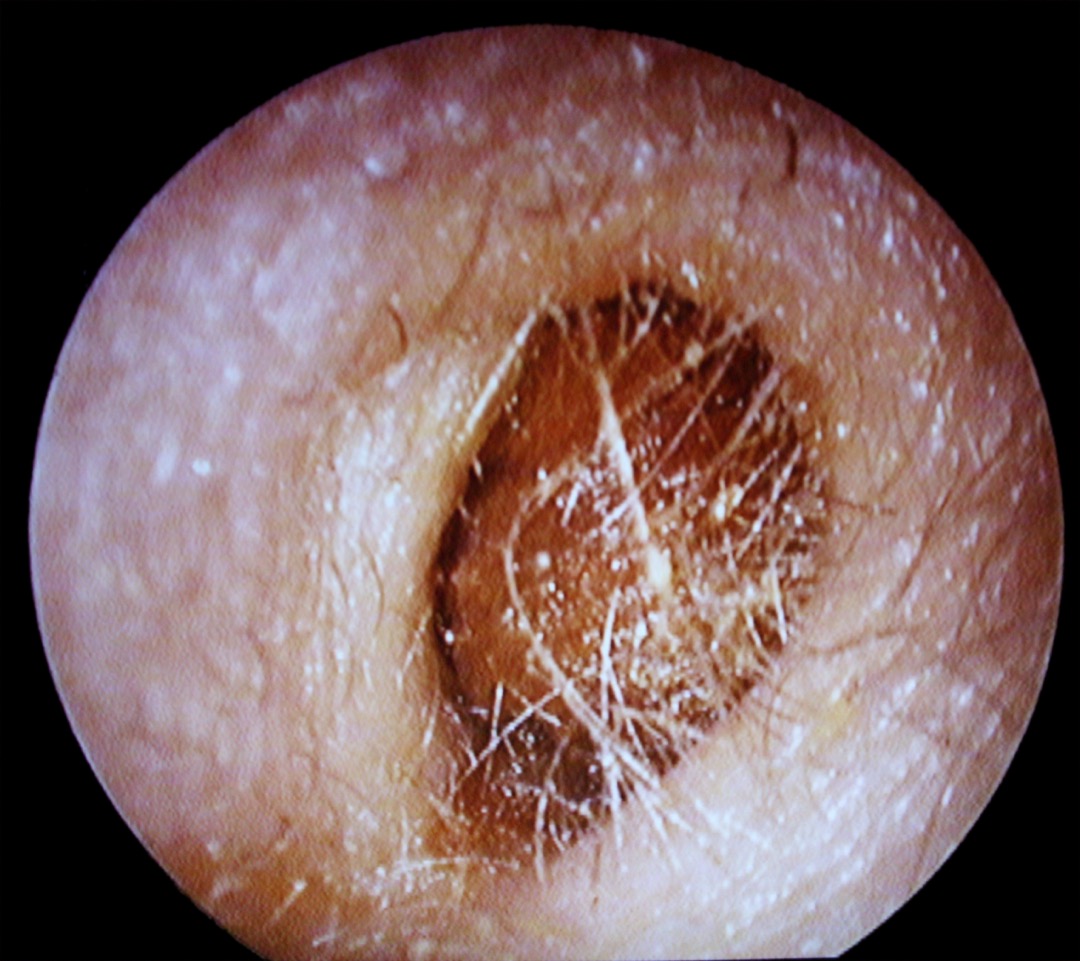
A man in his sixties came to see me because his right ear had gone dull over a long weekend. He had felt the fullness building, reached for the cotton swabs in his bathroom drawer, and worked at it twice a day for four days. By the time he sat in my exam chair he could barely hear on that side. What the otoscope showed was not a small plug near the opening. It was a dense wall of wax pressed flat against his eardrum, ringed with the concentric grooves a swab leaves behind. He had not removed any wax at all. He had compacted the lot of it and driven it somewhere his ear had no way to clear on its own.
That case is entirely ordinary, and it is why the first half of this guide is about what not to do. Ear wax removal is one of the few areas of home medicine where the standard household technique reliably makes the problem worse. Done properly, though, most blockages clear at home in under a week with a bottle of drops and a rubber bulb. Below is the method I give patients, the specific people who should never attempt it, and the honest state of the evidence on which drops work.
The short version, for anyone who wants it before the reasoning: soften the wax with oil or peroxide drops twice a day for three to five days, then flush gently with a rubber bulb and water warmed to body temperature, aiming at the canal wall rather than the eardrum, then dry the outer ear. Nothing goes into the canal that is not a liquid. If you have a perforated eardrum, grommets, ear pain, discharge, or previous ear surgery, skip all of it and see a clinician instead.
First, Decide Whether It Needs Removing at All
Most wax does not need to come out. The American Academy of Otolaryngology’s clinical practice guideline on cerumen impaction, updated in 2017, states plainly that clinicians should not routinely treat wax in a patient who has no symptoms and whose canal and eardrum can be seen adequately. Wax in an ear is a finding, not a diagnosis.
Impaction is common enough to matter, affecting roughly 5 percent of healthy adults at any given time and a far higher share of older adults and nursing home residents, but the majority of wax that people notice is not impacted. Treat it when it is causing something. The symptoms that justify removal are muffled or reduced hearing on one side, a blocked or full sensation, earache, ringing, itching, a feeling of imbalance, or a persistent dry cough with no chest cause. Removal is also justified when wax is blocking a clinician’s view of an eardrum that needs to be examined, or when it is interfering with a hearing aid.
If you have none of that and simply noticed wax when you looked, the correct action is to leave it alone. I will come back to why.
What Ear Wax Actually Is, and Why the Ear Cleans Itself
Cerumen is a mixture of secretions from two glands in the outer third of the canal, combined with shed skin cells and a little sebum. It is mildly acidic and water-repellent, and it carries lysozyme and immunoglobulins. That combination keeps the delicate canal skin from drying and cracking, discourages bacterial and fungal overgrowth, and traps dust, debris, and the occasional insect before any of it reaches the eardrum. Strip a canal bare and you get a dry, itchy, infection-prone tube. The itch leads to scratching, the scratching leads to more wax, and a loop starts.
The ear also has a disposal system, and it is a genuinely elegant one. The skin lining the canal and covering the outer surface of the eardrum migrates outward, like a conveyor belt made of skin. A systematic review of the published measurements found this is the fastest-migrating epithelium in the human body, averaging roughly 0.14 millimetres a day. Skin cells shed from the centre of the eardrum travel outward across its surface, along the bony canal, and reach the junction with the cartilaginous outer portion, where they mix with gland secretions and are carried out by the canal hairs. That mixture is ear wax, and under normal circumstances it arrives at the opening of your ear on its own, where washing your outer ear removes it.
Everything that goes wrong with wax is a disruption of that conveyor belt. A swab, an ear plug, an ear bud, or a hearing aid pushes material back against the direction of travel. That is the entire mechanism of impaction in most people.
Wet Versus Dry Wax Is Genetic
Some people have sticky, honey-coloured, wet wax; others have flaky, grey, dry wax. This is not diet or hygiene. It is a single letter of DNA. A variant in the ABCC11 gene, identified in 2006, determines which type you produce: two copies of the variant give dry wax, one or none gives wet.
The distribution is strikingly regional. Dry wax is the norm across East Asia, where roughly 80 to 95 percent of people carry two copies, and it is found in around 30 to 50 percent of people from South and Central Asia, the Pacific Islands, and among Indigenous American populations. Among people of European and African ancestry it is rare, on the order of a few percent. The same gene variant governs apocrine sweat, which is why dry wax and reduced body odour travel together.
Practically, dry wax tends to flake and clear on its own more readily, while wet wax is the type that more often consolidates into a plug. Neither is a problem to be corrected.
What Makes It Worse
Cotton swabs are the main offender. The canal is narrow and the swab head is wider than the wax it is meant to catch, so the net effect is compaction. The injury figures are worth knowing: a study in The Journal of Pediatrics analysing two decades of United States emergency department data estimated 263,338 children treated for cotton swab related ear injuries between 1990 and 2010, roughly 12,500 a year, or 34 a day. Perforated eardrums accounted for a quarter of those injuries. Seventy-seven percent happened while the child was using the swab on themselves, which is an argument for keeping them out of the bathroom rather than for supervising their use.
Ear plugs and ear buds worn for long stretches act the same way, which is why heavy users see more blockages. If you wear plugs nightly for sleep or on the job, that is not a reason to stop, since protecting hearing matters more, but it is a reason to expect wax and to manage it early. The same applies to anyone who wears ear plugs for sleep or noise most nights, or musician’s ear plugs on stage several evenings a week.
Age is the other big factor. Cerumen becomes drier and less mobile with the years, canal hairs coarsen, and the conveyor belt slows. Impaction is markedly more common after 65, and more common again in people with cognitive impairment who cannot report a blocked ear. Narrow or curved canals, eczema and psoriasis of the canal skin, previous ear surgery, and the bony canal growths that develop after years of cold-water swimming all hold wax that a normal canal would shed.
Who Should Not Do This at Home
This list is not boilerplate. Each item is a situation where home irrigation can cause real harm, and the guideline specifically instructs clinicians to identify these before choosing a method.
- A perforated eardrum, or any suspicion of one. Water and drops entering the middle ear are painful and can seed infection.
- Tympanostomy tubes (grommets), currently in place or recently extruded.
- Any previous ear surgery, including mastoid surgery.
- Current ear pain, discharge, bleeding, or a recent or active ear infection.
- A single hearing ear. If one ear has poor or no hearing, do not experiment with the other.
- Diabetes, immunosuppression, or previous radiotherapy to the head and neck, all of which raise the risk of a canal infection becoming serious.
- Anticoagulant therapy, because canal skin bleeds easily.
- Vertigo or a known balance disorder.
- Children, unless a clinician has looked in the ear first.
If any apply, book an appointment. Professional removal takes minutes and there is no equivalent risk.
How to Remove Ear Wax at Home, Step by Step
Step 1: Soften it, and be patient
Softening is the step that determines whether the rest works, and it is the step people rush. Choose one of the following and use it for three to five days before attempting anything else. Several national health services advise persisting with drops alone for up to two weeks before escalating, and in a fair number of cases the plug simply works its way out during that time with no irrigation at all.
The realistic options are plain mineral oil, olive oil, glycerin, sodium bicarbonate drops, saline, over-the-counter carbamide peroxide, or ordinary 3 percent hydrogen peroxide. Warm the bottle briefly in your hand, lie on your side with the blocked ear uppermost, instil three to five drops, and stay there for five to ten minutes. Twice a day is enough.
On which one to choose, the evidence is more honest than the packaging. A 2018 Cochrane review pooled ten randomised trials covering 623 participants and concluded there is no high-quality evidence that any one cerumenolytic outperforms another, and no evidence that the active commercial preparations beat plain water or saline. Quality of evidence was rated low. Pick whichever you tolerate, and do not pay for a premium formulation expecting a better result.
Two practical notes on the peroxide preparations specifically. They fizz, which is normal, and they leave the canal wet once the oxygen has bubbled off, so drying the ear properly afterwards matters more with peroxide than with an oil. A damp canal is a hospitable one for bacteria, which is the same reason swimmer’s ear exists. And skip the essential oil remedies circulating online. Tea tree and garlic oil have no evidence behind them for wax, and Mayo Clinic’s own guidance states there is no data showing they are either safe or effective in the ear canal.
Step 2: Irrigate gently, with water at body temperature
Once the wax is soft, flush it. Use a rubber bulb syringe, the kind that lives in most home first aid kits, filled with clean water warmed to body temperature.
The temperature is not a comfort detail. Water noticeably cooler or warmer than body temperature sets up convection currents in the fluid of the horizontal semicircular canal, which is the physical basis of the caloric test used to assess balance function. In an exam room that is a diagnostic tool. Over a bathroom sink it is sudden, unpleasant vertigo with the room appearing to spin. Run the water until it feels like nothing against the inside of your wrist.
Then:
- Stand or sit over a sink and tilt your head so the blocked ear faces downward slightly.
- With your free hand, pull the outer ear gently up and back. This straightens the natural S-curve of the canal so water can reach the plug.
- Place the bulb tip just inside the opening, not wedged in, and squeeze gently to direct a slow stream at the wall of the canal, angled upward and backward. Never aim straight down the middle at the eardrum.
- Let the water run back out into the sink or a towel, carrying wax with it.
- Repeat a few times. Stop immediately for pain, dizziness, or any sign of blood.
- Tilt your head to drain, then dry the outer ear with the corner of a towel or a hairdryer on the lowest setting held well back. A damp canal invites swimmer’s ear.
Two or three sessions across a few days will clear most ordinary plugs. If it has not shifted after a week of proper softening and gentle irrigation, that is the point to stop, not the point to try harder.
What not to do at any stage
Do not use a cotton swab, a hairpin, a key, a paperclip, or a spiral plastic pick. Do not use a dental water jet on an ear; the pressure is far beyond what an eardrum tolerates and perforations from this are well documented. Do not irrigate an ear that hurts. Do not keep using peroxide daily for weeks, because it dries and irritates canal skin.
Ear Candling Does Not Work and Can Burn You
The 2017 guideline includes an explicit recommendation against ear candling, and the Food and Drug Administration has warned consumers not to use ear candles at all, issued warning letters to manufacturers, and used import alerts to stop shipments at the border. The agency has found no evidence they provide any medical benefit.
The mechanism does not survive examination either. A lit hollow candle held in the ear cannot generate meaningful suction, and the brown residue presented as extracted wax is candle wax and burnt fabric, which is readily demonstrated by burning one over an empty jar. Reported injuries include burns to the face, outer ear, and eardrum, perforation, and hot wax hardening inside the canal against the eardrum, producing a blockage worse than whatever prompted the treatment.
Ear Cameras, Electric Flushers, and Scoops
The smartphone-linked ear cameras and motorised flushers sold heavily online are a mixed picture, and it is worth separating the two functions.
Looking is reasonable. A video otoscope or ear endoscope can show you and, more usefully, your clinician what is in the canal, and smartphone otoscopes have performed respectably in diagnostic studies when a trained person interprets the image. If you simply want to see whether there is a plug before you start, that is a sensible use.
Digging while you look is where it goes wrong. The camera occupies much of the canal, leaving little room for the scoop and little depth perception on a small screen. Reviewers and ENT clinicians report the common outcome is wax pushed further in rather than lifted out, with canal abrasion a real risk. The canal skin is thin and the eardrum is closer than people expect, roughly two and a half centimetres from the opening in an adult.
Clinicians use the same principle in reverse: otoscopes and combined diagnostic sets are for seeing. Removal is done with suction or a curette under direct magnified vision, by someone who has done it many times.
The Hearing Aid Problem
If you wear hearing aids, wax stops being a nuisance and becomes a maintenance issue. An aid or a dome sitting in the canal blocks outward migration, so wearers accumulate wax faster than non-wearers. That wax then migrates into the receiver port and tubing, where it is the leading cause of aids failing: manufacturers and audiology clinics consistently attribute the majority of repair returns to wax and moisture rather than to any electronic fault.
Three things follow. Change the wax guard on schedule, roughly monthly for most wearers and more often if you produce wax quickly, because a clogged guard mimics a dead device and is the first thing to check before paying for a repair. Second, wipe and dry the aids nightly. Third, the guideline directs clinicians to perform otoscopy on hearing aid users at routine visits regardless of symptoms, so ask for your canals to be looked at rather than waiting for a blockage. If you are choosing devices, our roundup of the best hearing aids covers which styles sit deepest in the canal and therefore demand the most wax management.
Wax Skews Your Ear Thermometer
This one rarely appears in wax guides and it matters for anyone monitoring a fever at home. Infrared tympanic thermometers read the temperature of the eardrum, and wax sitting between the probe and the drum absorbs infrared and drags the reading down. Measurements published in the emergency medicine literature found occluded canals reading roughly 0.3 degrees Celsius lower than the opposite clear ear, and readings rising by around 0.5 degrees Celsius once a fully obstructing plug was removed.
Half a degree is the difference between a reassuring number and a fever worth acting on. If you rely on an ear thermometer, take readings from a clear canal, use the same ear each time, and treat an unexpectedly low reading in someone who feels feverish as a reason to check the ear or switch to a forehead or oral device.
What a Clinician Will Do, and When to Go
Professional removal takes one of three forms, and the differences between them are worth knowing, because most guides name all three and compare none of them.
Microsuction uses a fine suction tube under a microscope or surgical loupes. The clinician sees the wax the entire time and no water enters the ear, which is the decisive advantage: it is the option that remains available when irrigation is contraindicated, including a perforated eardrum, grommets in place, a previously operated or mastoid ear, and a canal that is already infected. It is noisy, which some patients dislike, and it usually needs a trained ENT clinician or audiologist rather than a general practice nurse. It is generally regarded as the safest of the three.
Manual removal uses a curette, hook, or fine forceps under magnification. Like microsuction it is dry and done under direct vision, and it is often the quickest method for a single firm plug sitting clear of the eardrum. It depends heavily on the operator and on the patient holding still, so it is less suitable for children or anyone who cannot stay motionless.
Electronic irrigation uses a pump delivering water at a controlled pressure and temperature, and it is the method most commonly offered in primary care because it needs less specialist training. It requires an intact eardrum and pre-treatment with softening drops, and clinicians should decline to irrigate an ear that has not been softened first. It has largely replaced the old metal ear syringe, which several national health services have withdrawn from routine use because the uncontrolled pressure caused perforations.
The practical implication for you: if you have any reason to suspect your eardrum is not intact, ask specifically whether microsuction is available rather than accepting irrigation or being told nothing can be done.
Go and be seen rather than persisting at home if: the blockage has not cleared after a week or two of correct drops and gentle irrigation; there is pain, discharge, or bleeding; hearing loss is sudden, severe, or does not resolve once the ear is clear; you have vertigo; you have any item on the contraindication list above; or the same ear keeps blocking despite good technique. A one-sided blockage that recurs quickly and never quite clears deserves a proper look, because a small number of things that feel like wax are not wax.
Keeping It From Coming Back
Prevention is mostly a matter of subtraction. Stop putting things in the canal, wash only the outer ear in the shower, and let the conveyor belt work. For the minority who genuinely do re-block, a maintenance dose of a few drops of mineral or olive oil once a week keeps wax soft enough to migrate out, and that alone resolves most recurrent cases. Hearing aid and ear plug wearers should combine that with a routine cleaning schedule for the devices themselves.
If you have been through three or four blockages in a year despite all of that, it is reasonable to arrange periodic professional clearance, commonly every six to twelve months, rather than repeatedly improvising at home. Some anatomy simply does not self-clear well, and a scheduled ten-minute appointment is a better answer than an escalating series of gadgets. Building a small ear kit into your home first aid supplies, a bottle of drops and a bulb syringe, covers the ordinary episodes.
The reframe I would leave you with is the one my patient with the compacted plug wished he had heard first. Your ear is not dirty and it is not failing to clean itself. It is a canal with an outward conveyor belt that works well until something is pushed against it. Take the swabs out of the bathroom, soften before you flush, keep the water at body temperature, and know which situations belong to a clinician rather than a bulb syringe. This is general information rather than personal medical advice, and any ear that hurts, bleeds, discharges, or loses hearing suddenly should be examined by a doctor rather than treated from an article.
Frequently Asked Questions
What is the fastest way to remove ear wax at home?
Is hydrogen peroxide safe for ear wax removal?
Why do I suddenly have so much ear wax?
Can ear wax cause hearing loss, dizziness, or tinnitus?
Why will my doctor not remove my ear wax?
Should you remove ear wax at all if it is not bothering you?
Related Articles
About the Reviewer

Dr. David Taylor, MD, PhD
Drexel University College of Medicine (MD), Indiana University School of Medicine (PhD)
Dr. David Taylor is a licensed physician and medical researcher who founded BestRatedDocs in 2016. With an MD from Drexel University and a PhD from Indiana University School of Medicine, he combines clinical expertise with a passion for health technology to provide evidence-based product recommendations. Dr. Taylor specializes in health informatics and regularly evaluates medical devices, diagnostic equipment, and therapeutic products to help healthcare professionals and patients make informed decisions.