10 Best Musician Ear Plugs of 2026
Dr. David Taylor compares the 10 best musician ear plugs of 2026 by real attenuation, filter type, and fit, plus the NRR derating math most guides get wrong.
Updated
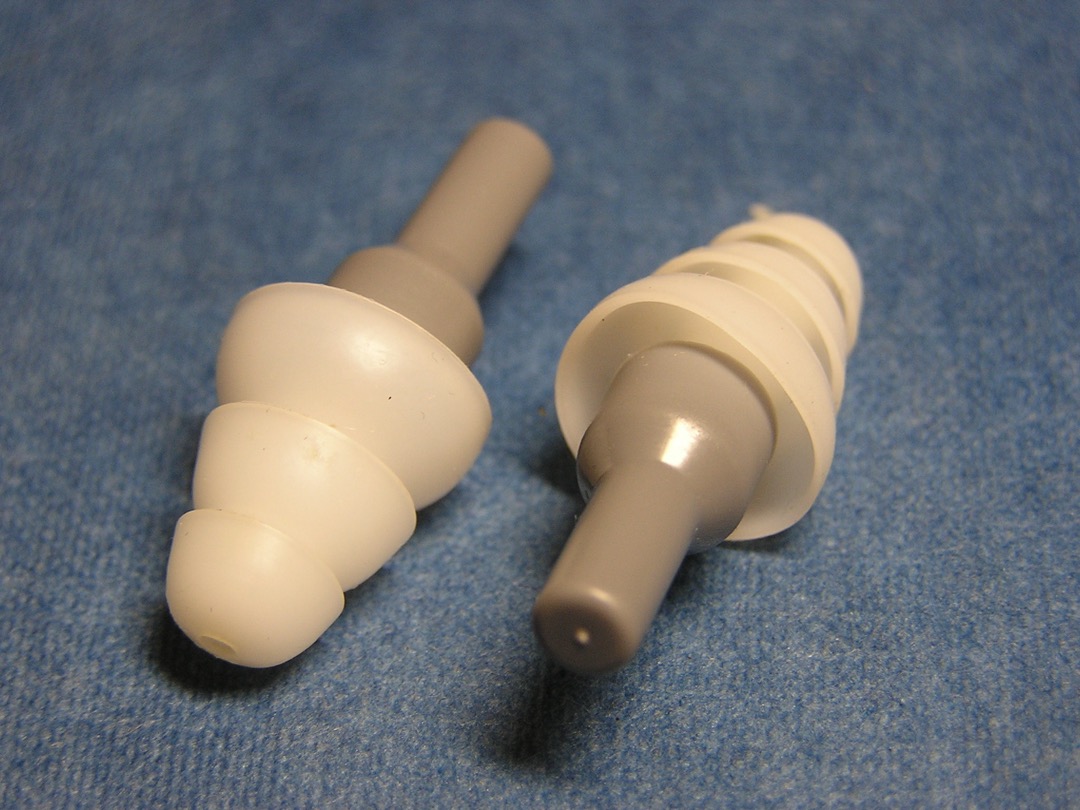
Every working musician I have examined in clinic tells me a version of the same story: the ringing after a gig used to fade by lunchtime, then by dinner, then it stopped fading altogether. That progression is not bad luck. It is the documented natural history of noise-induced hearing loss, and the reason the best musician ear plugs are the cheapest piece of professional equipment a player will ever buy. Human cochlear stereocilia, the hair cells that convert vibration into the signal your auditory nerve carries, do not regenerate. Once enough of them are gone, the loss is permanent, hearing aids compensate rather than restore, and the tinnitus that usually comes with it has no cure.
I am Dr. David Taylor, and I spend a lot of time explaining to musicians why the foam plugs in the venue’s front-of-house drawer are not a solution. Foam works, but it works unevenly, crushing the high frequencies far harder than the low ones. Wear it on stage and you lose your own intonation, the cymbal decay, the top of the vocal. So players take them out, and then they have no protection at all. A properly filtered musician plug solves the compliance problem by keeping the music intelligible, and a plug you keep in is worth more than a higher-rated plug in your pocket.
For 2026 I compared ten filtered musician ear plugs that are actually in stock and actually publish something meaningful about their attenuation. Along the way I have laid out two things the rest of the internet gets wrong: that NRR and SNR are separate scales measured by separate methods and cannot be converted, and that the real-world derating for filtered plugs is far steeper than the vague “50 to 70 percent” figure most guides print. If you are here for sleep or general noise rather than performance, my roundup of the best ear plugs for sleeping covers foam, silicone and wax instead.
| Product | Price | Buy |
|---|---|---|
| Alpine MusicSafe ProBest Overall | $29.95 | View on Amazon |
| Etymotic ER20XS High-Fidelity EarplugsBudget Pick | $19.99 | View on Amazon |
| Loop Experience 2 PlusPremium Pick | $44.95 | View on Amazon |
| Eargasm High Fidelity EarplugsRunner-Up | $43.95 | View on Amazon |
| Earasers Musicians Plugs 26dB (Medium) | $39.99 | View on Amazon |
| Earasers Musicians Plugs 19dB (Medium) | $39.99 | View on Amazon |
| EarPeace Music PRO | $42.95 | View on Amazon |
| Loop Experience 2 | $34.95 | View on Amazon |
| Alpine PartyPlug Pro | $24.95 | View on Amazon |
| Eargasm Smaller Ears | $55.95 | View on Amazon |
Find the Best Musician Ear Plugs for Your Need
Jump straight to the section that matches how you actually play.
- Best musician ear plugs overall
- Best for drummers
- Best for flat high-fidelity attenuation
- Best for DJs and sound engineers
- Best for band practice and rehearsals
- Best for singers and vocalists
- Best for marching band and student musicians
- More use cases
How I Chose These Musician Ear Plugs
Every product here was verified live and in stock on Amazon US before publication, and every attenuation figure quoted was read off the manufacturer’s own listing rather than inferred. Products that publish no verifiable attenuation figure at all were excluded outright, which removed several heavily-marketed names from consideration. I weighted three things: whether the stated attenuation is anchored to a named test standard, whether the fit system covers more than one ear canal shape, and whether the review record is deep enough and specific enough to say anything useful about durability. Where a listing pools reviews across colourways or sizes, I have said so rather than quoting the number as if it belonged to one pair.
I have also been deliberate about what is not here. There is no gentle 9 to 12 dB orchestral option on this list, because no such product currently exists on Amazon with a credible review base. Classical and orchestral players who need that band are genuinely better served by custom molds from an audiologist, and the closest universal-fit compromise is the Etymotic ER20XS.
Best Musician Ear Plugs Overall
Below are all ten picks reviewed individually, starting with the four headline choices and then the specialists.
Alpine MusicSafe Pro: Best Overall
The MusicSafe Pro wins because it solves the problem most musicians actually have, which is that no single attenuation level is right for every room they play in. A pair with three filter sets rated 16, 19 and 22 dB SNR covers a teaching studio, a pub gig and a full drum kit, and swapping filters takes about fifteen seconds once you have done it a few times. Everything else on this page except the Loop Experience 2 Plus commits you to one level at the point of purchase.
The body material is the other reason it earns the top slot. AlpineThermoShape is a thermoplastic that softens at body temperature and takes on the shape of your canal over the first minute of wear. Silicone shells are stiffer and either fit your anatomy or do not; a heat-conforming body accommodates a wider spread of canal geometry from one universal size. It is also entirely silicone-free, which is not a marketing point for the small number of players who react to silicone, it is the difference between wearing protection and not.
Be clear-eyed about the label. Alpine tests to the European SNR standard and publishes no EPA NRR, so 22 dB SNR is not the same claim as 22 dB NRR and the two cannot be converted. Apply the NIOSH derating for premolded and filtered plugs and the realistic protection from the 22 dB filter is in the region of 7 dB, which is still meaningful and still more than the zero you get from a plug you took out during the second song.

Alpine MusicSafe Pro
by Alpine
The most adaptable musician earplug on the market: one pair, three filter strengths, and a heat-conforming body that suits the widest range of ear canals.
Pros
- Three interchangeable filter sets rated 16, 19 and 22 dB SNR let one pair cover a quiet rehearsal room, a loud club and a full drum kit without buying three products
- AlpineThermoShape body is a silicone-free thermoplastic that softens at body temperature, so the plug conforms to your canal instead of forcing your canal to accept a fixed shell
- Hypoallergenic and silicone-free, which matters for the players who react to the silicone shells almost every competitor uses
- Keychain filter box holds the spare filter sets, so you can change attenuation between soundcheck and downbeat instead of guessing before you leave home
Cons
- Swapping the tiny filters is fiddly in low light and the loose filters are easy to drop into a dark stage floor
- Alpine labels this product in SNR, the European scale, and publishes no EPA NRR figure, so it cannot be compared directly against a US foam plug's NRR
- The thermoplastic body has less grip than silicone, and heavy head movement can work it loose over a long set
Etymotic ER20XS High-Fidelity Earplugs: Best Budget
The ER20XS is the plug I hand to a musician who has never worn hearing protection, because it demonstrates the concept faster than any explanation. Etymotic builds it around a tuned resonator and an acoustic resistor that together mimic the natural resonance of an open ear canal, and the practical effect is that music through it sounds like the same music, quieter. Players who have only ever tried foam usually take about ten seconds to understand why this matters.
The stem-less low-profile design is quietly one of its best features. It sits inside the outer ear without protruding, so it clears a violin chinrest, a marching helmet, a motorcycle lid and over-ear headphones. Anyone who has fought a protruding earplug against a headphone cushion for a whole tracking session will recognise how much that is worth. The included neck cord is not an afterthought either, because a reusable pair with one plug lost is a wasted purchase.
The honest limitation is fit. This is the standard-size SKU only, and the 4.2-star average is the lowest of the flat-filter picks here, driven mainly by people whose canals do not suit the standard body. Etymotic also publishes an “up to 20 dB” figure rather than an EPA NRR, so it lands in the same not-directly-comparable bucket as most of this category. If your canals are small, the Eargasm Smaller Ears further down this page is the better route.

Etymotic ER20XS High-Fidelity Earplugs
by Etymotic Research
The best value route into genuine flat attenuation, and the plug I hand a musician who has never worn hearing protection and needs to hear what the concept actually does.
Pros
- A tuned resonator and acoustic resistor reproduce the ear canal's natural response, which is why the ER20XS is the reference point most audiologists reach for when a player asks what flat attenuation sounds like
- Stem-less low-profile body sits inside the outer ear rather than protruding, so it clears a violin chinrest, a marching helmet and over-ear headphones
- Etymotic has the longest measurement pedigree in consumer hearing protection, and the ER20XS is the only current-generation SKU in that line
- Includes a neck cord, which is the single most effective defence against losing one plug of a reusable pair mid-load-out
Cons
- The listing states up to 20 dB of sound reduction but publishes no EPA NRR figure, so the number on the box is not comparable to a foam plug's NRR
- Sold here in the standard size only; players with small canals have to buy a different SKU rather than choosing a tip from the box
- The 4.2-star average is the lowest of the flat-filter picks here, and fit and retention are the recurring themes behind it
Loop Experience 2 Plus: Upgrade Pick
The Experience 2 Plus is the only product here that lets you change protection level after you have arrived at the venue. The baseline is 17 dB SNR, which is a sensible rehearsal figure, and the removable Mute accessory adds roughly another 3 dB when the room turns out louder than the promoter promised. Two Mute sets ship in the box, which is a tacit acknowledgement that you will lose one.
Its real advantage, though, is the fit kit. Four silicone tip sizes and three foam tip sizes is the deepest set of fit options on this page, and it is the reason the Experience 2 Plus seals ears that reject fixed-shell products. Seal is not a comfort issue, it is the whole mechanism: an unsealed plug leaks sound past the filter and the rating on the box becomes fiction. The twist-to-lock seating into the concha is also genuinely secure, which matters if you move while you play.
At 4.6 stars across more than four thousand reviews it holds the highest rating on this roundup. The trade-offs are cosmetic and practical rather than acoustic: the visible ring reads as jewellery on camera, the tiny Mute pieces are easy to lose, and like every Loop product it is labelled in SNR with no EPA NRR published.

Loop Experience 2 Plus
by Loop
The most flexible fit system here, and the only plug on this page that lets you add attenuation mid-gig rather than committing to a level before you leave home.
Pros
- The removable Mute accessory adds roughly 3 dB on top of the 17 dB SNR baseline, so one pair covers both a rehearsal and a stage in front of a drum kit
- Ships with four silicone tip sizes and three foam tip sizes, the deepest fit kit of anything on this page and the reason it seals canals that reject fixed-shell designs
- 4.6 stars across more than four thousand reviews is the highest rating on this roundup, with retention during movement the most common thing owners praise
- The loop body twists to lock into the concha, which keeps it seated through the head movement that dislodges stemless plugs
Cons
- Rated in SNR, and Loop publishes no EPA NRR, so the figure cannot be lined up against a US-labelled product
- The visible ring is conspicuous on camera, which some players on video-recorded gigs dislike
- Two small loose Mute accessories are easy to misplace, and the plug reverts to its baseline attenuation without them
Eargasm High Fidelity Earplugs: Runner-Up
Eargasm does something almost nobody else in this category does: it prints an actual EPA NRR of 16 dB on the listing alongside the 21 dB peak figure. That single decision makes it the easiest product here to compare honestly against any US-labelled hearing protection, and it is the main reason it sits this high despite offering nothing exotic in the way of features.
It ships two interchangeable shell sizes in the box, standard and small, which quietly solves a problem more common than most people expect: ear canals are frequently not symmetrical, and running a standard shell on one side and a small on the other is a perfectly reasonable thing to do. The aluminium keychain case is the accessory owners mention most, because it is what keeps the pair alive through a year of load-ins.
Two caveats. The 18,916-review pool is shared across the Blue, Gold and Pink colourways of the same listing, so it describes the product family rather than any single pair, and I would rather say so than quote it as if it belonged to the blue. And the shells seat deeper than the Etymotic or Loop designs, which makes the occlusion effect more noticeable. That is a fine trade for an instrumentalist and a poor one for a singer.

Eargasm High Fidelity Earplugs
by Eargasm
The best-documented flat-filter plug on Amazon, with a real published NRR and a review record deep enough to trust on durability.
Pros
- One of the very few musician plugs on Amazon that publishes an actual EPA NRR (16 dB) alongside its peak figure, which makes it directly comparable to US-labelled protection
- Two interchangeable shell sizes come in the box, so a player with a mismatched left and right canal can run different shells on each side
- The aluminium keychain case is genuinely gig-proof, and it is the accessory owners cite most often as the reason the pair survived a touring year
- The deepest review record in the category by a wide margin, giving the clearest picture of long-term durability of anything here
Cons
- That review pool is shared across the Blue, Gold and Pink colourways of the same listing, so it reflects the product family rather than one specific pair
- The shells are noticeably deeper-seating than the Etymotic or Loop designs, which raises the occlusion effect for singers
- The filter is fixed, so there is no way to dial attenuation down for a quiet rehearsal
Earasers Musicians Plugs 26dB: Best for Drummers and High-SPL Stages
This is the highest-attenuation product on the page, and the one I would put in front of a drummer. Earasers rates it SNR 20 with up to 26 dB of reduction at its peak frequency, and it publishes the full curve: 23.4 dB average at the high frequencies, 18.8 dB at the mids, 14.7 dB at the lows. That shape is deliberate. Cymbal wash and snare crack live at the top of the spectrum, and so does the cochlear damage they cause, so a filter that works hardest up there is doing exactly what a percussionist needs.
Publishing the curve at all is the differentiator. Every other brand here gives you a single headline number and asks you to trust it. Being able to see that a plug takes 23 dB off the highs but only 15 off the lows tells you what your kit will sound like before you buy, and it tells you honestly that “flat” attenuation is a direction of travel rather than a physical achievement.
The fit is shallow and concha-seated, so it clears in-ear monitor cables and drummers’ isolation headphones rather than being driven deeper into the canal by them. The genuine caution is the review base: 267 reviews on this listing is a much thinner record than the four-figure pools elsewhere here, and this SKU has not been on the market long enough to say much about multi-year durability. Sizing is also a commitment, since Earasers uses sized shells rather than swappable tips.

Earasers Musicians Plugs 26dB (Medium)
by Earasers
The highest-attenuation musician plug here and the most transparent about what it actually does across the frequency spectrum.
Pros
- The highest attenuation on this page at SNR 20 and up to 26 dB at its peak frequency, which is the range a drummer or a guitarist standing in front of a stack actually needs
- Earasers publishes its full attenuation curve (23.4 high, 18.8 mid, 14.7 low), so you can see exactly which part of the spectrum is being cut instead of trusting one headline number
- The V-shaped filter deliberately attenuates high frequencies hardest, which is where cymbal and snare energy sits and where cochlear damage starts
- Sits low in the concha, so it clears in-ear monitor cables and drummers' headphones without being pushed deeper into the canal
Cons
- Only 267 reviews on this listing, a much thinner track record than the four-figure pools elsewhere on this page
- Sized shells mean you have to buy the right size rather than trying tips from a box, and a wrong guess is a return
- Earasers does not publish an EPA NRR for this 26 dB SKU, only SNR figures
Earasers Musicians Plugs 19dB: Best for Singers and Long Sessions
This is the most educational listing in the entire category, and it is worth reading even if you buy something else. Earasers prints an EPA NRR of 5 dB directly next to its 19 dB peak figure and its SNR of 14, and then adds a note explaining that NRR and SNR are tested at different labs using different formulas and therefore produce different results. That is not a company undercutting itself. It is the only brand here treating you as capable of understanding why a flat-filter plug scores a fraction of what foam scores on the EPA test, when both are protecting you.
The reason is that the EPA NRR calculation heavily penalises variability across the frequency spectrum and across test subjects, and it applies a large statistical correction. A filtered plug designed for uniform moderate reduction is exactly the shape of product that calculation punishes hardest. It says nothing about whether the plug is doing its job musically, which is why a 5 dB NRR musician plug and a 33 dB NRR foam plug are not on a scale you can meaningfully line up.
Musically, the gentle low-frequency attenuation of 8.8 dB average is the point for vocalists. The less you clamp down on the low end of a sealed canal, the less your own voice booms back at you through bone conduction. Combined with the shallow seating, it is the most comfortable option here for a three-hour set. It is also the lowest total attenuation here, and it is genuinely not enough standing in front of a stack.

Earasers Musicians Plugs 19dB (Medium)
by Earasers
The gentlest, most comfortable plug here for long vocal sets, and the only listing in the category that tells you the truth about how NRR and SNR differ.
Pros
- The single most honest attenuation label on Amazon: it prints an EPA NRR of 5 dB next to its 19 dB peak and SNR 14, and states outright that the two tests use different labs and formulas
- Gentle low-frequency attenuation (8.8 dB average at the low end) is what keeps a singer's own voice from booming, which is the usual reason vocalists pull plugs out
- Shallow concha-seated fit is the most comfortable design here for a three-hour set with no canal soreness
- A four-figure review pool on this exact SKU, so the durability picture is specific to this product rather than a family
Cons
- An NRR of 5 dB looks alarming next to foam's 33 dB, and it takes understanding the two test methods to see why that comparison is meaningless
- This is the lowest total attenuation on this page and is genuinely not enough in front of a drum kit or a guitar stack
- Sized shells with no tips in the box, so a wrong size means a return
EarPeace Music PRO: Best for DJs and Sound Engineers
The Music PRO is built for people whose job is judging sound rather than surviving it. Its Pro filter is tuned for accurate reproduction at a moderate reduction (up to 20 dB by EarPeace’s own statement, with no EPA NRR published) rather than for maximum blocking, which is the correct priority for a front-of-house engineer who has to hear whether the vocal is sitting right in the mix.
The box contents tell you who it is for. Six contour plugs, three standard and three small, means a spare pair permanently lives in the aluminium case. For a touring engineer who cannot stop a show to hunt for a dropped plug, that redundancy is more valuable than another two decibels. The contour shell is lightweight silicone that seals without deep insertion, which is what makes an eight-hour shift tolerable.
It carries the lowest average rating on this page at 4.1 stars, and fit consistency is the recurring theme in the critical reviews. That is a real caution, not a rounding error: this is a product with a narrower fit window than the Loop or the Alpine, and it has one filter strength with no way to adapt. If you are in a booth every night it earns its place. If you are a player moving between very different rooms, the MusicSafe Pro is a better tool.

EarPeace Music PRO
by EarPeace
Built around accurate reproduction and long shifts rather than maximum attenuation, with a spare pair in the box for people who work in booths, not on stages.
Pros
- Six contour plugs in the box (three standard, three small) means a spare pair lives in the case, which matters more for a working engineer than anyone else
- The Pro filter is tuned for accurate reproduction rather than maximum blocking, which is what you want when your job is judging a mix, not surviving it
- Contour shell is lightweight silicone that seals the canal without the deep insertion that fatigues over an eight-hour front-of-house shift
- Aluminium case is small enough to live on a keyring with the venue keys
Cons
- 4.1 stars is the lowest average on this page, with fit consistency the recurring complaint
- EarPeace states up to 20 dB of reduction but publishes no EPA NRR on the listing, so the figure is not comparable to US-labelled protection
- The Music PRO ships with a single filter strength, so unlike the Alpine you cannot change attenuation for a quieter room
Loop Experience 2: Best for Guitarists and Rehearsal Rooms
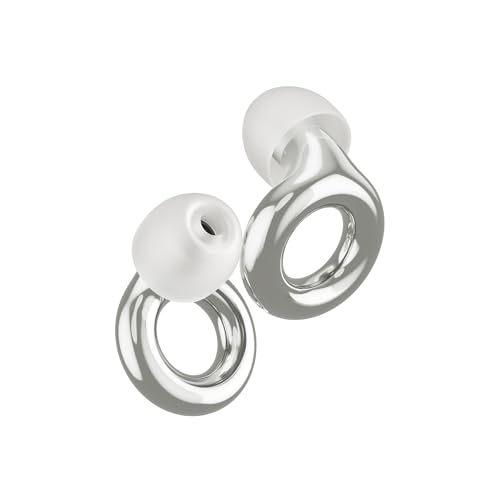
The standard Experience 2 is the same physical platform as the Plus without the Mute accessories, and 17 dB SNR is a well-judged figure for a rehearsal room. It takes the edge off an amplified band without isolating you from the room, which is exactly what you want when you need to hear the drummer’s hi-hat and the singer’s cues as well as your own amp.
It ships with four silicone tip sizes, medium pre-installed, and the practical consequence is the best out-of-box fit success rate of any fixed-filter product here. Most players will get a seal immediately; the rest will get there by sizing down once. The twist-to-lock seating holds through the physical business of playing guitar or bass standing up, which is where stemless plugs tend to work loose.
More than sixteen thousand reviews sit on the Experience 2 listing, pooled across its colourways, which is a substantial durability record for one design. The compromise versus the Plus is simply that you cannot add attenuation when the room turns out to be louder than expected, and like every Loop it is labelled in SNR only. If your rehearsal rooms are consistent, that is not much of a compromise.
Loop Experience 2
by Loop
The rehearsal-room default: a moderate, well-tuned reduction with the best out-of-box fit success of any fixed-filter plug here.
Pros
- 17 dB SNR is a well-judged rehearsal-room level: enough to take the edge off an amplified band without cutting you off from the room
- Four silicone tip sizes with medium pre-installed, so most players get a seal out of the box and can size down if the fit feels loose
- More than sixteen thousand reviews on the Experience 2 listing, the second deepest review record on this page
- Twist-to-lock seating stays put through the physical movement of playing guitar or bass standing up
Cons
- No Mute accessory in this version, so there is no way to add attenuation when the room turns out louder than expected
- Rated in SNR with no EPA NRR published, so it is not directly comparable to US-labelled protection
- The visible ring reads as a fashion accessory, which not every player wants on a formal stage
Alpine PartyPlug Pro: Best for Marching Band and Student Musicians
Buying hearing protection for a teenager is a different problem from buying it for yourself, and the PartyPlug Pro is shaped around that problem. It is the most affordable Alpine musician plug, which matters when the pair will spend its life in the bottom of a band bag and has a realistic chance of being lost before the season ends. Three eartip sizes cover the wide canal variation across a high-school band section, and it is washable, which foam is not, so a marching season of sweat and dust does not destroy it.
Alpine states 21 dB on its SNR scale for the filter here. Once again, that is not an EPA NRR and cannot be converted into one, so treat it as a comparative figure within Alpine’s own line rather than something to weigh against a foam plug’s US label. For a student standing in a brass section or next to a drumline, that level of moderate filtered reduction is the right target: enough to cut the peaks, not so much that they cannot hear the section around them or the director.
The honest limitation is the review record, which stands at 292 on this listing and is therefore too thin to say much about durability over multiple seasons. The filter is also fixed with no options. But for the specific job of protecting a young player’s ears at a price that survives being lost, it is the right recommendation. Adolescent hearing damage is cumulative and silent, and it is the loss they will still be living with at fifty.

Alpine PartyPlug Pro
by Alpine
The right plug to buy a student musician: durable, sized to fit a range of young ears, and inexpensive enough that losing a pair is not a crisis.
Pros
- The most affordable Alpine musician plug, which matters when you are buying for a teenager who will lose a pair before the season ends
- Three eartip sizes in the box handles the wide canal variation you get across a high-school band section
- Reusable and washable, so a marching season of sweat and dust does not end the pair the way it ends foam
- Compact keychain case survives being thrown in a band bag, which is where most student earplugs die
Cons
- Only 292 reviews on this listing, so the long-term durability picture is still thin
- Alpine states 21 dB on its SNR scale and publishes no EPA NRR, so the number cannot be compared to a US foam plug
- Fixed filter with no strength options, so it cannot be dialled down for a quiet indoor rehearsal
Eargasm Smaller Ears: Best for Small Ear Canals
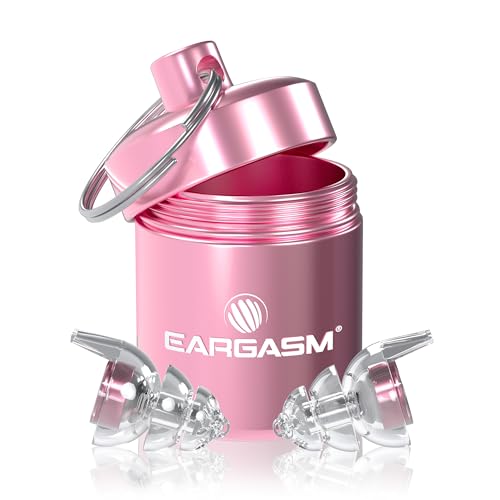
There is a group of musicians for whom every product above simply does not work, and they usually conclude that earplugs are not for them. If a shell is too large for your canal, it seats too shallowly, it leaks, and the attenuation you are counting on is not happening. The Smaller Ears is built for the smallest twenty percent of ear canals by Eargasm’s own measure, and for that group it is the difference between protection and the appearance of protection.
It publishes a real EPA NRR of 15 dB alongside its 21 dB peak, which puts it in the small group of listings here you can compare honestly against US-labelled protection. Two different small shell sizes ship in the box rather than one, which acknowledges that small canals are not all the same size. Just as usefully, this listing has its own separate review pool of more than three thousand rather than sharing the standard Eargasm family pool, so the feedback genuinely describes the small-shell product.
It is the most expensive product on this page, and the premium buys fit, not performance. It is also self-defeating if your canals are not genuinely small, because the shells will seat too shallowly in an average canal and leak in the other direction. If you are unsure, a physician or audiologist can look with an otoscope and tell you in about thirty seconds.
Eargasm Smaller Ears
by Eargasm
The answer for players whose canals are too small for every other plug on this list, with a published NRR and its own dedicated review record.
Pros
- Purpose-built for the smallest twenty percent of ear canals, a group that gets no seal at all from standard shells and therefore gets no protection
- Publishes a real EPA NRR of 15 dB alongside its 21 dB peak, so it can be compared against US-labelled protection honestly
- Two different small shell sizes in the box rather than one, which covers the range within small canals instead of assuming they are all identical
- Its own separate review pool of more than three thousand, so the feedback genuinely reflects the small-shell product rather than the standard one
Cons
- The most expensive product on this page, and the premium buys fit rather than performance
- Fixed filter with no attenuation options, so it cannot adapt between a quiet rehearsal and a loud stage
- If your canals are not genuinely small, these will seat too shallowly and leak, which defeats the entire purpose
Best Ear Plugs for Drummers
Drummers take the highest sustained exposure of anyone on a stage, and the energy is concentrated exactly where the ear is most vulnerable. A hi-hat and a snare rim shot put most of their power in the 2 to 8 kHz range, which is where cochlear hair cells are damaged first and where noise-induced hearing loss classically shows its notch on an audiogram. That argues for the highest attenuation you can tolerate while still hearing the click track and the bass player. It also argues for a shallow-seating plug, because drummers frequently wear isolation headphones or in-ear monitors over the top, and a protruding plug gets pushed deeper into the canal by the cushion.
| Product | Price | Buy |
|---|---|---|
| Earasers Musicians Plugs 26dB (Medium)Best for drummers Highest attenuation here at SNR 20, with a published curve that cuts hardest at cymbal frequencies | $39.99 | View on Amazon |
| Alpine MusicSafe ProBest adjustable option for drummers Fit the 22 dB SNR filter set for kit work and drop to 19 dB for quieter rooms | $29.95 | View on Amazon |
| Loop Experience 2 PlusBest for extra isolation on demand Add the Mute accessory for roughly 3 dB on top of the 17 dB SNR baseline when the kit is loud | $44.95 | View on Amazon |
Best High-Fidelity Ear Plugs for Flat Attenuation
Flat attenuation is the entire premise of a musician plug, and it is worth being precise about what it means. No passive filter reduces every frequency equally; what a good one does is narrow the gap between how much it cuts the highs and how much it cuts the lows, from foam’s 15-plus decibel skew down to single digits. That is what preserves pitch relationships, timbre and the ability to judge whether you are in tune. If your job involves making musical decisions while protected, prioritise the shape of the attenuation over the size of the headline number, and treat any product that publishes its curve as more trustworthy than one that publishes a single figure.
| Product | Price | Buy |
|---|---|---|
| Etymotic ER20XS High-Fidelity EarplugsBest flat attenuation on a budget Tuned resonator and acoustic resistor mimic the open ear canal's natural response | $19.99 | View on Amazon |
| Eargasm High Fidelity EarplugsBest flat filter with a published NRR One of the few here to publish a real EPA NRR alongside its peak figure | $43.95 | View on Amazon |
| Alpine MusicSafe ProBest flat filter with adjustable levels Three filter sets let you keep the flat character while changing the amount of reduction | $29.95 | View on Amazon |
Best Ear Plugs for DJs and Sound Engineers
Engineers and DJs have the opposite problem to drummers. Their exposure is long rather than peaky, often eight hours in a booth or at front of house, and their work depends on hearing the mix accurately rather than on surviving it. That means moderate, accurate attenuation and a plug that stays comfortable across a full shift, not the highest number available. It also means fit consistency matters more than usual, because a plug that migrates over six hours quietly changes the frequency balance you are mixing against. And if you monitor on in-ears, be aware of the trap: poorly isolating in-ears push you to raise monitor level to overcome room noise, which is how a monitoring system becomes an exposure source.
| Product | Price | Buy |
|---|---|---|
| EarPeace Music PROBest for engineers and DJs Pro filter is tuned for accurate reproduction, and six contour plugs mean a spare pair lives in the case | $42.95 | View on Amazon |
| Loop Experience 2 PlusBest fit range for long shifts Seven tip options make a stable all-shift seal achievable in most ear canals | $44.95 | View on Amazon |
| Alpine MusicSafe ProBest for varying room levels Drop to the 16 dB SNR filter for booth work and step up for the floor | $29.95 | View on Amazon |
Best Ear Plugs for Band Practice and Rehearsals
Rehearsal is where most cumulative damage actually happens, because it is the exposure players discount. Three hours a week in a small untreated room with a drum kit and two amplifiers is a larger lifetime dose than the occasional gig, and small rooms are worse than large ones because reflections add to the direct sound. The target here is moderate reduction, roughly 17 to 21 dB on whichever scale the manufacturer uses, so you can still hear cues, count-ins and the singer’s pitch. Being able to run a lower filter for a quiet arrangement rehearsal and a higher one for a full-volume run-through is worth more in this setting than anywhere else.
| Product | Price | Buy |
|---|---|---|
| Alpine MusicSafe ProBest for band practice Swap between 16, 19 and 22 dB SNR as the rehearsal volume changes | $29.95 | View on Amazon |
| Loop Experience 2Best fixed-filter rehearsal option 17 dB SNR is well judged for hearing cues while cutting amp and kit peaks | $34.95 | View on Amazon |
| Etymotic ER20XS High-Fidelity EarplugsBest value rehearsal option Low-profile body clears headphones for rehearsals that double as tracking sessions | $19.99 | View on Amazon |
Best Ear Plugs for Singers and Vocalists
Singers abandon hearing protection more than any other group, and the reason is a specific, well-documented phenomenon called the occlusion effect. When you seal an ear canal, the low-frequency vibration your own voice transmits through the bones of your skull can no longer escape, so it is trapped and reflected back at the eardrum. Your voice, your breathing and your own chewing all boom at low frequencies, and singers describe it as being trapped inside their own head. Two things reduce it: a shallower fit that seals in the concha rather than deep in the bony canal, and a filter that attenuates the low frequencies gently rather than clamping them. Expect a few sessions of adjustment regardless, and note that the effect is worse in a dry room and better once you are singing over a band.
| Product | Price | Buy |
|---|---|---|
| Earasers Musicians Plugs 19dB (Medium)Best for singers Gentlest low-frequency attenuation here at 8.8 dB average, which is what keeps your own voice from booming | $39.99 | View on Amazon |
| Etymotic ER20XS High-Fidelity EarplugsBest low-profile option for vocalists Stem-less shallow-seating body reduces occlusion compared with deep-canal designs | $19.99 | View on Amazon |
| Eargasm High Fidelity EarplugsBest sealed option for loud vocal stages Deeper seal and more attenuation for loud stages, at the cost of a stronger occlusion effect | $43.95 | View on Amazon |
Best Ear Plugs for Marching Band and Student Musicians
Buying for a student is a different calculation. The exposure is real, since a drumline outdoors and a brass section indoors both routinely exceed safe sustained levels, and adolescent damage is permanent and completely silent until it is measurable. But the product has to survive a band bag, tolerate heat and sweat, fit a range of young ears, and be cheap enough that losing a pair is an inconvenience rather than a crisis. Washable and reusable beats disposable here, because a plug that gets cleaned is a plug that gets worn again, and multiple tip sizes matter more in a section of thirty teenagers than they do for one adult.
| Product | Price | Buy |
|---|---|---|
| Alpine PartyPlug ProBest for marching band Washable, three tip sizes, and priced so that a lost pair is not a crisis | $24.95 | View on Amazon |
| Etymotic ER20XS High-Fidelity EarplugsBest budget pick for students Low-profile body clears a marching helmet and comes with a neck cord | $19.99 | View on Amazon |
| Loop Experience 2Best fit range for young ears Four tip sizes down to XS cover the smaller canals common in younger players | $34.95 | View on Amazon |
Best Musician Ear Plugs by Use Case
A few more situations that come up often enough to be worth naming, matched to the picks already reviewed above.
| Product | Price | Buy |
|---|---|---|
| Eargasm Smaller EarsBest for small ear canals Built for the smallest twenty percent of canals, with two small shell sizes and a published NRR | $55.95 | View on Amazon |
| Loop Experience 2Best for guitarists and bassists Moderate 17 dB SNR keeps the room audible while cutting amp peaks, and it stays seated while you move | $34.95 | View on Amazon |
| Earasers Musicians Plugs 19dB (Medium)Best for all-day wear and music teachers Shallow seating and gentle low-frequency attenuation make it the most wearable option across a full teaching day | $39.99 | View on Amazon |
| Alpine MusicSafe ProBest Alpine musician earplug Three filter sets in one pair, and the only silicone-free body on this page | $29.95 | View on Amazon |
Buyer's Guide
Choosing musician ear plugs comes down to how much attenuation you genuinely need, how flat that attenuation is, and whether the plug will seal your particular ear canal for the length of a real set. These are the six factors that decide it.
Attenuation rating and how derating really works
Two scales are in play and they are not interchangeable. NRR is the US EPA figure; SNR is the European one, and they are measured in different labs with different formulas, so a 20 dB SNR plug and a 20 dB NRR plug are not equivalent and cannot be converted. Worse, neither number is what you get in the field. NIOSH derates real-world performance by protector type: keep about 75 percent of the label for earmuffs, 50 percent for formable foam, and only 30 percent for everything else, which includes every filtered musician plug on this page. Read the label as an upper bound set under ideal laboratory insertion, then plan on roughly a third of it.
Flat versus foam attenuation, and why it matters for pitch
Foam attenuates high frequencies dramatically more than low ones, often by 15 dB or more of difference across the spectrum. That skew is why music through foam sounds like it is coming through a wall, and why players cannot judge their own intonation or a cymbal's decay while wearing it. A musician plug's filter narrows that gap so the reduction is closer to uniform. Nothing is perfectly flat, but a plug attenuating 23 dB at the high end and 15 dB at the low end preserves musical relationships that foam destroys. If you have to make musical judgements while wearing protection, this is the single most important property.
Fixed, interchangeable, or adjustable filters
A fixed filter is one attenuation level, chosen at purchase. Interchangeable filters, as on the Alpine MusicSafe Pro, let one pair serve a quiet rehearsal at 16 dB SNR and a loud stage at 22 dB SNR. Loop's Mute accessory is a middle path, adding roughly 3 dB on demand. If you play consistently loud material in consistent rooms, a fixed filter is simpler and there is nothing to lose. If your week runs from a teaching studio to a club stage, interchangeable filters are worth the fiddliness of swapping tiny parts in poor light.
Fit, seal, and the occlusion effect on long sessions
A plug that does not seal provides close to no protection, regardless of its rating, because sound leaks straight past it. Look for products that ship multiple shell or tip sizes rather than one universal body. Deep-seating plugs seal more reliably but raise the occlusion effect, where your own voice and breathing are amplified by bone conduction into a closed canal and boom uncomfortably at low frequencies. Singers feel this most. Shallower, concha-seated designs and filters with gentler low-frequency attenuation reduce it. Comfort over three hours is not a luxury: an uncomfortable plug is a plug you take out.
Custom-molded versus universal-fit
Custom musician monitors are made from silicone impressions of your ear canals taken by an audiologist, then fitted with interchangeable attenuator filters, typically 9, 15 or 25 dB. They are not an Amazon product and cannot be. The process is an appointment: impressions are taken, sent to a lab, and the finished molds are fitted and checked two to three weeks later, with a total cost usually landing somewhere between a few hundred and a thousand dollars depending on the filter and the clinic. They give the most consistent seal and the flattest response available, and they are the right answer for anyone performing multiple nights a week. The caveats are real: canals change shape with significant weight change and over years, so molds need re-fitting; they must be cleaned properly because a sealed personal mold is an excellent incubator; and molds are never shared between people. Everyone else is better served by a well-fitting universal plug they will actually carry.
dB targets by instrument and role
Match the reduction to the exposure. Acoustic and classical rehearsal typically needs the least, and the honest state of the market is that Amazon offers very little in the gentle 9 to 12 dB band with any real review base, which is where custom filters earn their price. Amplified rehearsal and most club stages sit comfortably with 17 to 21 dB. Drummers, percussionists, and anyone positioned in front of a guitar cabinet want the top of the range, which on this page means the Earasers 26 dB or Alpine's 22 dB SNR filter. Front-of-house engineers usually want moderate, accurate attenuation rather than maximum, because their job depends on judging the mix.
How to Choose the Best Musician Ear Plugs
Work backwards from your loudest regular exposure, not your average one. If you sit behind or in front of a drum kit weekly, start at the top of the attenuation range and accept the trade-off. If you sing, teach, or engineer, start in the middle and prioritise a shallow, comfortable fit that you can wear for hours. Then check the fit system before the number on the box, because a plug that does not seal your particular canal is not protecting you no matter what it claims, and a product shipping several shell or tip sizes gives you far better odds than one universal body.
Read every published figure as an optimistic ceiling. NRR and SNR come from different laboratories and different formulas, they are not interchangeable, and NIOSH’s derating schedule expects filtered plugs like these to deliver only about 30 percent of their label in real use. One more thing worth raising with your own physician: several common drugs are ototoxic and compound noise damage, including high-dose aspirin and some NSAIDs, aminoglycoside antibiotics, and loop diuretics. Touring musicians self-medicating for pain or a chest infection are stacking two risks at once, which is worth a conversation before a run of dates rather than after. If you already have persistent tinnitus or measurable loss, get a baseline audiogram and read up on hearing aids so you know what the road ahead looks like.
Final Verdict
The Alpine MusicSafe Pro is my overall pick for 2026 because it is the only product here that adapts to the range of rooms a working musician actually plays in, with 16, 19 and 22 dB SNR filter sets in one pair and a silicone-free thermo-conforming body that suits the widest spread of ear canals. If your budget is tight, the Etymotic ER20XS remains the best value route into real flat attenuation and the fastest way to understand why filtered protection is different from foam. Drummers should go straight to the Earasers 26 dB, singers to the Earasers 19 dB, and anyone with genuinely small canals to the Eargasm Smaller Ears.
Whichever you choose, the decisive factor is the one no product page will tell you: protection you carry and wear beats protection with a better number sitting at home. Buy the pair that fits, keep it on your keys, clean it properly, and see an audiologist for custom molds once you are gigging weekly. If ringing outlasts a day or two, if one ear is affected alone, or if hearing stays muffled, that is a same-week appointment rather than something to sleep off. For everything on the non-performance side of hearing and ear health, my guides to the best ear plugs for sleeping and the best otoscopes are the natural next reads, and your own physician remains the right person for personalised advice.
Frequently Asked Questions
What are musician ear plugs and how do they work?
What NRR do musician ear plugs need?
Is ringing in my ears after a gig normal?
Do musician ear plugs affect sound quality?
What do musicians on Reddit actually recommend?
Related Articles
About the Reviewer

Dr. David Taylor, MD, PhD
Drexel University College of Medicine (MD), Indiana University School of Medicine (PhD)
Dr. David Taylor is a licensed physician and medical researcher who founded BestRatedDocs in 2016. With an MD from Drexel University and a PhD from Indiana University School of Medicine, he combines clinical expertise with a passion for health technology to provide evidence-based product recommendations. Dr. Taylor specializes in health informatics and regularly evaluates medical devices, diagnostic equipment, and therapeutic products to help healthcare professionals and patients make informed decisions.