10 Best Concert Ear Plugs of 2026
Dr. David Taylor compares the 10 best concert ear plugs of 2026 by real attenuation, fit and all-night comfort, plus how loud concerts get and how much protection you need.
Updated
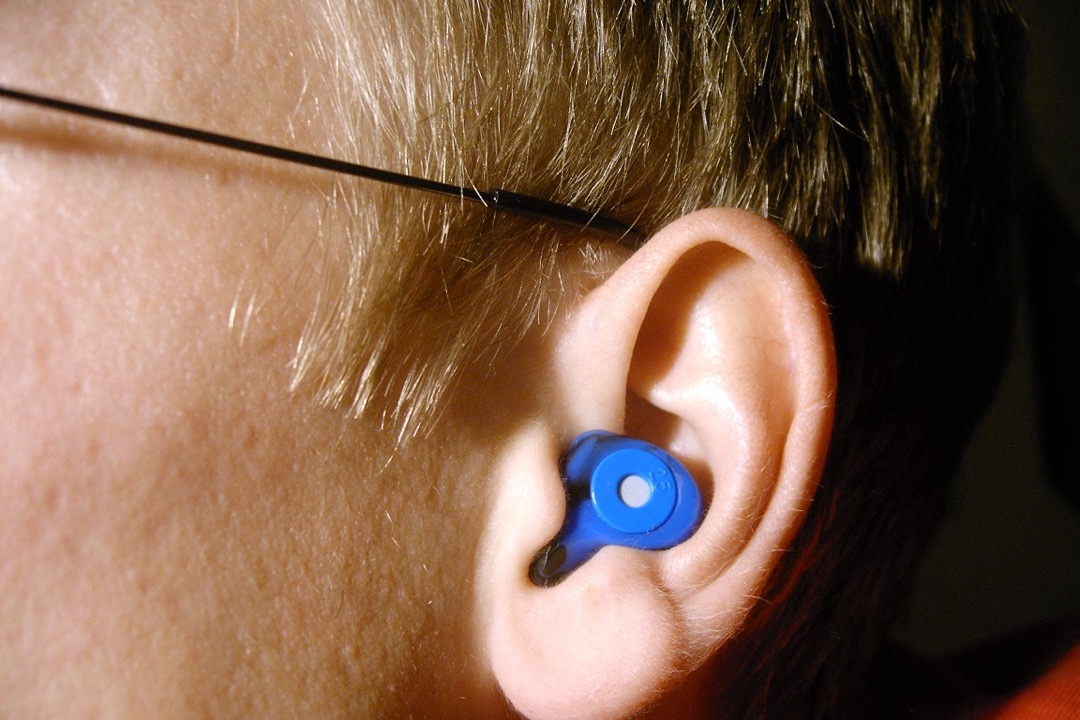
A loud concert is one of the few places where a healthy adult will knowingly stand in sound that damages hearing within minutes. Club and arena shows routinely average 100 to 110 dBA on the floor, and the rows nearest the speakers run higher. At 100 dBA, the NIOSH recommended exposure limit for a whole day is used up in about 15 minutes. At 106 dBA it is gone in under four. The ringing on the drive home is your cochlea telling you the dose was exceeded, and the best concert ear plugs are how you keep going to shows for the next forty years without paying for it later.
I am Dr. David Taylor, and the concert-goers I see tend to fall into two groups: people who have never worn protection because foam made the band sound like it was playing in the next room, and people who already have tinnitus and wish they had started earlier. Filtered concert plugs solve the first problem. They lower the volume fairly evenly across the spectrum, so the vocal, the guitars and the kick drum all come through, just quieter. A plug that keeps the music intact is a plug you leave in for the whole set, and that is the only way hearing protection works.
For 2026 I compared ten filtered concert plugs that are in stock on Amazon US, checked each listing’s attenuation claim against the rating scale it actually uses, and flagged the ones where the number on the box is not what it seems. This page is for people in the crowd. If you are the one on stage, my guide to the best musician ear plugs is built around rehearsal rooms and drum kits instead. If you want plugs for sleep, the best ear plugs for sleeping covers foam, silicone and wax.
| Product | Price | Buy |
|---|---|---|
| Loop Experience 2Best Overall | $34.95 | View on Amazon |
| Reure High Fidelity Concert Ear PlugsBudget Pick | $9.99 | View on Amazon |
| Loop Switch 2Premium Pick | $59.95 | View on Amazon |
| Eargasm High Fidelity EarplugsRunner-Up | $43.95 | View on Amazon |
| EarPeace Music Concert Ear Plugs | $31.95 | View on Amazon |
| VIBES High Fidelity Concert Ear Plugs | $36.95 | View on Amazon |
| Alpine PartyPlug | $16.95 | View on Amazon |
| Hearprotek Concert Ear Plugs | $14.99 | View on Amazon |
| Flare Audio Isolate | $29.95 | View on Amazon |
| Eargasm Smaller Ears | $55.95 | View on Amazon |
Find the Best Concert Ear Plugs for Your Need
Jump straight to the section that matches the shows you go to.
- Best concert ear plugs overall
- Best rock concert ear plugs
- Best festival ear plugs
- Best concert ear plugs for small ears
- Best cheap concert ear plugs
- More use cases
How I Chose These Concert Ear Plugs
Every product here was confirmed in stock, sold new by the brand itself, and showing a working Add to Cart button on Amazon US before publication. I read each attenuation figure off the listing and recorded which scale it uses, because concert plugs mix three different kinds of number: the US EPA Noise Reduction Rating (NRR), the European Single Number Rating (SNR), and unlabelled “up to” figures that are usually the peak reduction at a single frequency. Only three listings on this page publish an NRR at all. Where a listing pools its reviews across colourways or sibling listings, I say so rather than quoting the total as if it belonged to one pair.
I weighted four things: attenuation in the range a concert actually calls for, a fit system with more than one tip or shell size, a review record deep enough to say something about comfort over a long night, and a case you can clip to your keys, because the plug you forget at home protects nothing. Products that publish no attenuation figure anywhere were excluded, as were the custom-moldable Decibullz listings, which are too thinly reviewed on Amazon to recommend.
Best Concert Ear Plugs Overall
Below are all ten picks reviewed individually, starting with the four headline choices and then the specialists.
Loop Experience 2: Best Overall
The Experience 2 is the plug I would hand to anyone going to their first loud show, and it is the one almost every serious review of this category lands on too. Loop rates it at 17 dB SNR, a moderate figure chosen for listening rather than blocking: enough to pull a typical arena floor into a much safer range while the mix still sounds like the mix. The twist-to-lock body sits in the bowl of the outer ear and holds through dancing, jumping and a crowd pressing forward.
Fit is where it earns the top spot. Four silicone tip sizes ship in the box, down to XS, with the medium pre-fitted, so most people get a proper seal on the first or second try. That matters more than the rating. A plug that leaks around the edge lets sound bypass the filter entirely, and a well-sealed 17 dB plug protects you better than a badly seated plug with a bigger number. The Experience 2 listing carries more than 16,000 reviews, pooled across its colourways, which gives a clear picture of how the design holds up over many shows.
The limitation is its ceiling. For a club show around 100 dBA, 17 dB SNR is appropriate. Right in front of the PA at a metal show it is on the light side, and the Loop Switch 2 or Flare Isolate further down are better tools for that. Loop also publishes no US NRR, so the 17 dB figure cannot be lined up against a foam plug’s label, and the keychain case is plastic rather than metal.
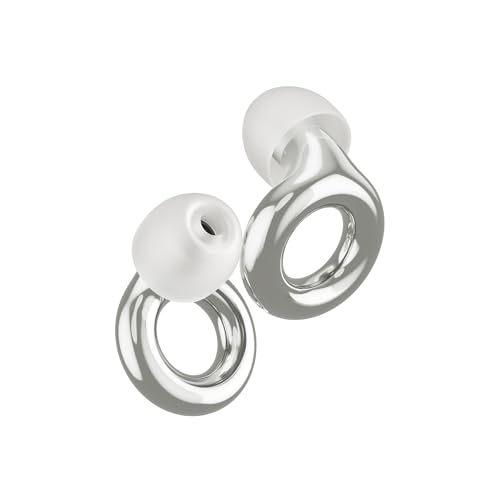
Loop Experience 2
by Loop
The concert plug I would hand to almost anyone: a well-judged 17 dB filter, a four-size fit kit, and a deep single-listing review record.
Pros
- 17 dB SNR is a moderate, listening-first level that lowers a typical show into a safer range while keeping vocals and instruments clear
- Four silicone tip sizes from XS to L, with medium pre-fitted, give most people a proper seal on the first or second try
- Twist-to-lock body sits in the bowl of the outer ear and stays put while dancing and in a pressing crowd
- More than 16,000 reviews on the Experience 2 listing, pooled across its colourways
Cons
- 17 dB is on the light side for front-row rock and metal
- Loop publishes no US NRR, so the figure cannot be compared directly with a foam plug's label
- The keychain case is plastic and less rugged than the metal cases elsewhere on this page
Reure High Fidelity Concert Ear Plugs: Best Budget
Reure is the least expensive plug on this page and the one that surprised me most. It is a newer brand without the name recognition of Loop or Eargasm, but it has built a record of 4,463 reviews on this listing, and the praise is consistent: people wear it through full concerts and DJ sets without soreness or headaches, and the music stays clear.
It ships two pairs in different sizes rather than one pair with swappable tips, which doubles as a spare. Reure states 23 dB of reduction but does not say which scale it uses, so treat that as a manufacturer figure rather than a certified rating comparable to Loop’s SNR or Eargasm’s NRR. In practice it sits in the same moderate, filtered band as the pricier plugs here.
The trade-offs are fit and documentation. A minority of reviewers find even the smaller pair too big for their canals, and anyone with genuinely small ears should look at the Eargasm Smaller Ears instead. But if the goal is to put working filtered protection in every jacket pocket and bag you own, this is the cheapest way I would do it.
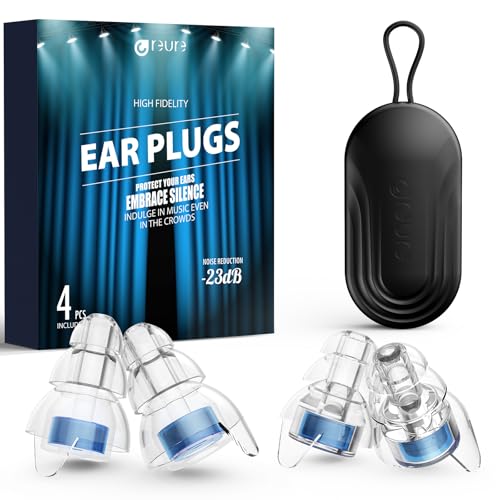
Reure High Fidelity Concert Ear Plugs
by Reure
The cheapest filtered concert plug here that I would trust, backed by thousands of reviews rather than just a low price.
Pros
- The lowest price on this page for a filtered, reusable concert plug
- Two pairs in different sizes, so you get a spare and a second fit option in one box
- 4,463 reviews with consistent praise for comfort through full concerts and DJ sets
- Compact case clips to keys, a belt loop or a bag
Cons
- The 23 dB figure is manufacturer-stated, with no NRR or SNR scale named
- Some reviewers find even the smaller pair too large for their canals
- A newer brand with a shorter track record than Loop or Eargasm
Loop Switch 2: Upgrade Pick
The Switch 2 does something no other plug here does: it changes attenuation while it is in your ear. A small dial on each plug moves between three modes, Experience, Engage and Quiet, spanning 20 to 26 dB SNR. That makes it the most useful plug for a night that is not one volume, where you might stand near the stage for the headliner, step back for the support act and then need to talk at the bar.
It is the upgrade pick for rock and metal for the same reason. Quiet mode puts it near the top of the attenuation range on this page, but you are not stuck at maximum when the room is quieter. The body is slimmer than the first Switch, with an angled nozzle, four tip sizes from XS to L come in the box, and it is fully passive, with no batteries or electronics.
It is the most expensive plug on this page, and the adjustability does not land for everyone. Some reviewers say they cannot hear much difference between modes, and its 4.2-star average trails the Experience 2. The 8,387-review total is also pooled across four colourways of the same product. If your concerts are consistently one kind of loud, a fixed plug does the job for less.

Loop Switch 2
by Loop
One plug for a whole night out, with enough range for the front of a rock show and a gentler setting for the bar.
Pros
- An in-ear dial moves between three modes spanning 20 to 26 dB SNR, the only plug here you can adjust while wearing it
- Quiet mode for the front of a loud show, Experience mode for clearer sound, Engage mode for conversation
- Slimmer body and angled nozzle, with four tip sizes from XS to L
- Fully passive, with no batteries or electronics to charge or fail
Cons
- The most expensive plug on this page
- Some reviewers cannot hear a large difference between modes
- The 8,387-review total is pooled across four colourways of the same product
Eargasm High Fidelity Earplugs: Runner-Up
Eargasm is one of three listings here that print a US NRR, 16 dB, next to its “up to 21 dB” headline. That gap is worth understanding rather than worrying about. The 21 dB figure is the peak reduction. The NRR is a single number from the EPA test, which heavily penalises variation between listeners and across frequencies, so a lower NRR on a filtered plug is normal. Publishing one at all makes Eargasm the easiest plug here to compare honestly with US-labelled protection.
It is also the best-built plug for festivals. The aluminum keychain case survives mud, heat and three days in a backpack, which is where plastic cases crack. Two shell sizes, standard and small, come in the box, so you can run a different size in each ear if your canals are not symmetrical, which is more common than people expect.
Two cautions. The 18,931-review total is shared across the Blue, Gold and Pink colourways of the same listing, so it describes the product family rather than one pair. And the shells seat a little deeper than Loop’s, which some people find less comfortable over a long day. For most concert-goers that deeper seal is a fair trade.

Eargasm High Fidelity Earplugs
by Eargasm
The sturdiest, best-documented plug for festivals, with a published NRR and a case built to be carried everywhere.
Pros
- Publishes a US NRR of 16 dB alongside its up-to-21 dB peak figure, so it can be compared honestly with US-labelled protection
- Aluminum keychain case survives festival conditions better than plastic
- Standard and small shells both come in the box, so you can run a different size in each ear
- Even, filtered reduction that keeps vocals, bass and instruments clear
Cons
- The 18,931-review total is shared across the Blue, Gold and Pink colourways of this listing
- Shells seat a little deeper than Loop's, which some people find less comfortable over a long day
- Fixed filter, so there is no way to dial protection up for a louder stage
EarPeace Music Concert Ear Plugs: Best Swappable Filters
EarPeace ships three filter sets, Medium, High and Max, which means one pair can be tuned to the room. Max is the setting for a stadium show or a loud rock club, and Medium keeps conversation easy at a smaller gig. EarPeace rates the Max filter at up to 26 dB but does not name the scale, so read it as a manufacturer figure.
It is the plug I would pick for someone who goes to very different kinds of shows. A jazz club, an arena tour and a festival main stage each need a different amount of reduction, and swapping a filter takes a minute before you leave the house. Two tip sizes, small and medium, come in the box with a compact case, and this listing has 4,224 reviews of its own.
Fit is the weak point. Some reviewers find the plugs awkward to seat, and there is no large size, so people with bigger canals may struggle to get a seal. The filters are also tiny and easy to lose, so change them at home rather than in a dark venue.

EarPeace Music Concert Ear Plugs
by EarPeace
One pair tuned three ways, from a quiet club to a festival main stage.
Pros
- Three interchangeable filter sets, Medium, High and Max, let one pair suit a jazz club or a stadium
- The Max filter is rated at up to 26 dB for loud rock and arena shows
- Small and medium tip sizes plus a compact case in the box
- 4,224 reviews on this listing, with frequent praise for hearing conversation while protected
Cons
- The 26 dB figure is manufacturer-stated, with no scale named
- Some reviewers find the plugs awkward to seat, and there is no large size
- The small filters are easy to lose if you change them at a venue
VIBES High Fidelity Concert Ear Plugs: Most Discreet
Vibes sells on looks, and the claim holds up. The transparent shells and low profile make them close to invisible in the ear, which matters to people who will not wear anything that looks like hearing protection. A plug that is not worn protects no one, so for some readers this is the most important feature on the page.
The listing’s bullets give no attenuation figure at all. Amazon’s spec panel for the listing shows 22 dB SNR and a 24 dB NRR. An NRR above the SNR is the reverse of what almost every other hearing protector shows, where the EPA figure comes out lower, so I would treat those numbers with caution. What owners describe, across 14,346 reviews on this single listing, is moderate reduction with clear sound and far less ringing after shows.
There is one universal size, which suits many ears and fails some, and fall-out complaints sit alongside praise for the fit. An aluminum case is included. If discretion is not a priority, the Loop Experience 2 has the better fit system.

VIBES High Fidelity Concert Ear Plugs
by VIBES
The plug for people who will not wear anything that looks like hearing protection.
Pros
- Transparent shells and a low profile make them close to invisible in the ear
- 14,346 reviews on this single listing, with frequent reports of less ringing after shows
- Hard aluminum carrying case included
- Filtered reduction that keeps music and speech clear
Cons
- The bullets state no attenuation, and the spec panel's 24 dB NRR sitting above a 22 dB SNR is an unusual pairing to treat with caution
- One universal size, which does not seal every ear
- Fall-out complaints sit alongside praise for the fit
Alpine PartyPlug: Best Budget Name Brand
The PartyPlug is the entry-level concert plug from Alpine, a Dutch company with a long record in hearing protection. Alpine rates it at 19 dB, a sensible middle figure for gigs and festivals, and its music filter is designed to keep vocals and conversation clear rather than simply blocking sound.
Three tip sizes, S, M and L, come in the box with a keychain case. That small tip helps it seal narrower canals than one-size plugs can, which is why it appears again in the small-ears section below. For people who would rather buy from an established hearing-protection brand than a newer one, it is the low-cost way in.
The caution is the review base. 423 reviews is thin next to the thousands behind most plugs here, so there is less evidence about durability over many shows. Alpine also publishes no US NRR for it, and the filter has a single strength.

Alpine PartyPlug
by Alpine
A low-cost name-brand concert plug with a three-size fit kit.
Pros
- A 19 dB music filter keeps vocals and conversation clear at gigs and festivals
- Three tip sizes, S, M and L, including a small tip for narrower canals
- Made by Alpine, a Dutch company with a long record in hearing protection
- Compact keychain case
Cons
- Only 423 reviews, a thin record next to most plugs here
- Alpine does not publish a US NRR for it
- Fixed filter with a single strength
Hearprotek Concert Ear Plugs: Best Value Two-Pack
Hearprotek packs two pairs, one small and one standard, into an aluminum case with a carabiner, plus a detachable cord. That makes it the practical choice for sharing with a partner or keeping a spare in the car. The translucent shells are low profile, and reviewers consistently say the ringing they used to get after shows stopped.
This listing states 20 dB of reduction without naming the scale. Its 13,237-review total is pooled with a sibling listing that describes what reads as the same product at 23 dB, so the exact figure is uncertain. I have used the 20 dB number from this listing, and the honest summary is moderate, filtered reduction in the same range as the other value picks.
Hearprotek itself says these are not meant for high-reduction jobs like shooting or sleeping, which is correct: they are designed for music. Some reviewers find they work loose over a long night, so seat them carefully and check them between sets.

Hearprotek Concert Ear Plugs
by Hearprotek
A practical value two-pack with a metal case, best for sharing or keeping a spare.
Pros
- Two pairs, small and standard, in one pack for a spare or a partner
- Aluminum case with a carabiner, plus a detachable cord
- Translucent low-profile shells for a discreet look
- Reviewers consistently report no ringing after shows
Cons
- The 13,237-review total is pooled with a sibling listing that states 23 dB rather than this listing's 20 dB
- No NRR or SNR scale is named for the reduction figure
- Some reviewers find they work loose over a long night
Flare Audio Isolate: Highest Attenuation
The Isolate is the odd one out, and on purpose. Instead of a silicone shell with a filter, it pairs an aluminum stem with a heat-reactive memory foam tip. Flare rates it at up to 30 dB and says it conforms to the European hearing-protector standard EN 352-2:2020. That is the strongest figure on this page, tied to a named test standard, which makes it the plug for front-row metal, festival stages beside the speakers, and anyone who also wants one pair for power tools or a motorbike.
Four foam tip sizes, XS to L, come in the box. The foam expands to seal irregular canals well, and the metal stem can be washed rather than thrown away. The foam tips are consumable, though, and will need replacing over time, which the silicone plugs here do not.
The big caveat is evidence. With 61 reviews, there is far too little to say much about comfort over many shows or long-term durability. Higher attenuation also means more muffling than the 17 to 22 dB plugs, so it suits the loudest settings rather than an average gig. I include it because nothing else here reaches this level with a named standard behind it, not because it has earned its place over time.
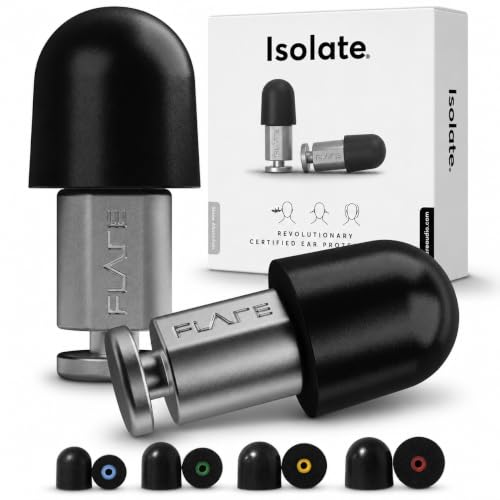
Flare Audio Isolate
by Flare Audio
The plug for the loudest settings, from the front row at a metal show to a festival stage beside the speakers.
Pros
- Up to 30 dB of reduction, the strongest figure on this page
- Conforms to the European hearing-protector standard EN 352-2:2020
- The aluminum stem is washable and reusable, with replaceable foam tips
- Four memory-foam tip sizes from XS to L expand to seal irregular canals
Cons
- Only 61 reviews, far too few to judge long-term comfort or durability
- Foam tips are consumable and need replacing
- More reduction means more muffling than the 17 to 22 dB plugs at an average gig
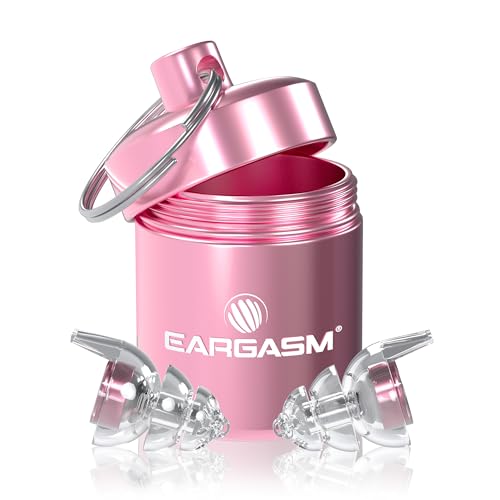
Eargasm Smaller Ears: Best for Small Ears
Some people conclude that earplugs do not work for them, when the real problem is that no standard shell fits their canal. A plug that is too large sits shallow, leaks, and delivers a fraction of its rating. Eargasm’s Smaller Ears version is built for the smallest 20 percent of ear canals and ships with two small shell sizes, so there is room to find the right fit within that range.
It publishes an NRR of 15 dB alongside an “up to 21 dB” headline, and it has its own 3,331-review record rather than borrowing the main Eargasm pool, so the feedback describes the small-shell product specifically. It comes with a waterproof aluminum case.
It is one of the most expensive plugs here, and the premium pays for fit, not extra protection. If your canals are average size it will seat too shallowly and leak, so buy it only if standard plugs have failed you. If you are not sure, a physician can check with an otoscope in under a minute.
Eargasm Smaller Ears
by Eargasm
The answer for people whose ears have never sealed with a standard plug.
Pros
- Built for the smallest 20 percent of ear canals, where standard shells never seal
- Two small shell sizes in the box to fine-tune the fit
- Publishes a US NRR of 15 dB alongside its up-to-21 dB headline
- Its own 3,331-review record and a waterproof aluminum case
Cons
- One of the most expensive plugs on this page
- Seats too shallowly and leaks in average or large canals
- Fixed filter with a single strength
Best Rock Concert Ear Plugs
Rock and metal shows are where concert-goers take their biggest doses. Levels near the front often exceed 105 dBA, and most of the energy in cymbals, distorted guitars and snare sits in the 2 to 8 kHz band, which is where the cochlea is damaged first. That argues for the top of the concert range, roughly 20 to 30 dB of labelled reduction, and for a plug that stays sealed in a moving crowd. If you stand back near the mixing desk, a standard 17 to 22 dB plug is usually enough. In the pit, go stronger.
| Product | Price | Buy |
|---|---|---|
| Loop Switch 2Best for rock concerts Turn it to Quiet mode near the stage and back down at the bar, across 20 to 26 dB SNR | $59.95 | View on Amazon |
| Flare Audio IsolateBest for metal and front-row shows Up to 30 dB and conforms to EN 352-2, the strongest figure on this page | $29.95 | View on Amazon |
| EarPeace Music Concert Ear PlugsBest swappable filters for rock Fit the Max filter for loud rock shows and swap to Medium for smaller rooms | $31.95 | View on Amazon |
Best Festival Ear Plugs
A festival is a different problem from a single show. You may spend eight or more hours a day near amplified stages for two or three days running, and the ear needs recovery time between exposures that a festival does not give it. The dose adds up, so the best festival ear plugs are the ones you will wear all day: comfortable after hours, secure when you dance, easy to clean, and stored in a case that survives dust, rain and a crushed backpack. Carry a spare pair, because losing one plug on the first day is the most common way festival protection fails.
| Product | Price | Buy |
|---|---|---|
| Eargasm High Fidelity EarplugsBest for festivals Aluminum keychain case and two shell sizes built for multi-day wear | $43.95 | View on Amazon |
| Loop Experience 2Best all-day comfort at festivals Twist-to-lock fit stays put while dancing, with four tip sizes | $34.95 | View on Amazon |
| EarPeace Music Concert Ear PlugsBest for switching between stages Swap filters between a loud main stage and a quieter tent | $31.95 | View on Amazon |
Best Concert Ear Plugs for Small Ears
Small ear canals are one of the most common reasons concert protection fails, because a shell that is too big sits at the entrance of the canal and never seals. Signs of a poor fit are a plug that pops out when you chew or talk, music that barely sounds quieter, and soreness at the opening of the ear. Look for dedicated small shells or an XS tip, and test the seal before the show: with both plugs in, your own voice should sound slightly louder and deeper, which is the occlusion effect of a sealed canal.
| Product | Price | Buy |
|---|---|---|
| Eargasm Smaller EarsBest for small ears Built for the smallest 20 percent of ear canals, with two small shell sizes | $55.95 | View on Amazon |
| Loop Experience 2Best XS tip option XS tip included, the smallest in Loop's four-size kit | $34.95 | View on Amazon |
| Alpine PartyPlugBest budget option for small ears Small tip in a three-size kit from an established brand | $16.95 | View on Amazon |
Best Cheap Concert Ear Plugs
You do not need to spend much to get filtered protection that works. The cheap concert ear plugs below use the same basic idea as the premium ones, an acoustic filter in a reusable silicone body, and two of the three have thousands of reviews behind them. What you give up at this end is documentation, since the attenuation figures often do not name their scale, along with some refinement in fit. What you should not do is fall back on nothing: a cheap filtered plug worn all night beats an expensive one left at home.
| Product | Price | Buy |
|---|---|---|
| Reure High Fidelity Concert Ear PlugsBest cheap concert ear plugs The lowest price on this page, with 23 dB stated and two sizes in the box | $9.99 | View on Amazon |
| Alpine PartyPlugBest cheap name-brand option Alpine's 19 dB music filter with S, M and L tips | $16.95 | View on Amazon |
| Hearprotek Concert Ear PlugsBest cheap two-pack Two pairs, a cord and an aluminum carabiner case | $14.99 | View on Amazon |
Best Concert Ear Plugs by Use Case
A few more situations and brand searches that come up often, matched to the picks reviewed above.
| Product | Price | Buy |
|---|---|---|
| Eargasm High Fidelity EarplugsBest for people with tinnitus A published NRR and even reduction that is comfortable enough to wear every time, which is what limits further damage | $43.95 | View on Amazon |
| Loop Experience 2Best Loop concert ear plugs Loop's concert default, 17 dB SNR with four tip sizes | $34.95 | View on Amazon |
| EarPeace Music Concert Ear PlugsBest EarPeace concert ear plugs Three filter sets let you match protection to the venue | $31.95 | View on Amazon |
| VIBES High Fidelity Concert Ear PlugsBest discreet concert ear plugs Transparent low-profile shells that are close to invisible | $36.95 | View on Amazon |
| Alpine PartyPlugBest Alpine concert ear plugs Alpine's entry-level concert plug, 19 dB with three tip sizes | $16.95 | View on Amazon |
| Hearprotek Concert Ear PlugsBest Hearprotek concert ear plugs Two sizes in one pack with an aluminum carabiner case | $14.99 | View on Amazon |
How Loud Is a Concert?
Loud enough that safe listening time is measured in minutes. NIOSH, the US occupational health agency, sets its recommended limit at 85 dBA averaged over eight hours, with a 3 dB exchange rate: every 3 dB increase halves the safe time. That makes 94 dBA an hour, 100 dBA fifteen minutes, and 106 dBA under four minutes. Club and arena shows commonly average 100 to 110 dBA on the floor. In 2022 the World Health Organization published a global standard for safe listening at venues and events that caps the average at 100 dB over any 15 minutes and calls for live sound monitoring and hearing protection for the audience. Many venues do not meet it.
The job of a concert plug is to bring your ears back inside those limits. Take a show averaging 103 dBA. Unprotected, the NIOSH limit is reached in about seven and a half minutes. Cut 15 dB from what reaches the eardrum and the same show allows roughly four hours. The catch is that labels overstate real protection: NIOSH derates filtered and premolded plugs to about 30 percent of their labelled NRR in real-world use, mostly because people insert them badly. Good technique closes much of that gap. Reach over your head, pull the top of your ear up and back to straighten the canal, insert the plug, and hold it for a few seconds while it settles.
Buyer's Guide
Choosing concert ear plugs comes down to how loud your shows are, whether the plug will seal your ear canal, and whether you will actually keep it in all night. These are the six factors that decide it.
Attenuation rating and which scale it uses
Concert plugs are labelled three different ways. The US EPA Noise Reduction Rating (NRR) and the European Single Number Rating (SNR) come from different tests with different formulas, so a 20 dB SNR plug and a 20 dB NRR plug are not equivalent, and one cannot be converted into the other. Many listings print an unlabelled up-to figure instead, which is usually the peak reduction at one frequency. None of these is what you get in real use. NIOSH derates filtered and premolded plugs to about 30 percent of their labelled NRR, because most people insert them imperfectly. Treat any label as a ceiling, and treat good insertion as the thing that gets you closer to it.
Matching protection to how loud the show is
For most club and arena concerts, 17 to 22 dB of labelled reduction is the right range: enough to bring a 100 to 105 dBA floor down toward safer levels while the mix stays clear. Front-row rock and metal, and festival stages close to the speakers, call for 25 dB or more, or an adjustable plug. More is not always better. Too much attenuation at a quieter show muffles the music, and a muffled plug is the one people take out.
Filtered silicone versus foam
Foam plugs carry high NRR labels and cost very little, but they cut treble far more than bass, so music sounds distant and dull. Filtered silicone plugs lower the volume more evenly across the spectrum, which is why concert-goers keep them in. Foam is a reasonable emergency backup and the right choice for sleep, but for a show a filtered plug is the better protector because it gets worn. Silicone plugs are also washable and reusable for years, where foam is single use.
Fit and ear canal size
A plug that does not seal gives close to no protection, whatever its rating, because sound leaks around it. Prefer plugs that ship several tip or shell sizes, and check the seal before the show: with both plugs in, your own voice should sound slightly louder and deeper, which is the occlusion effect of a sealed canal. If standard plugs always feel loose or pop out when you talk, you probably have small canals and need a dedicated small shell or an XS tip. Left and right canals are often different sizes, so it is fine to use different tips on each side.
All-night wearability and the case
Protection only works while it is in your ears. Look for a body that stays seated when you dance or jump, a shell you will not feel after three hours, and a look you are comfortable with, since some people will only wear something discreet. The case matters more than it sounds. A metal keychain case goes everywhere and survives a festival; a plug without a case ends up lost in a pocket. A cord or a spare pair helps at events where a dropped plug is gone for good.
Custom-molded concert ear plugs
Custom plugs are made from impressions of your ear canals taken by an audiologist, then fitted with interchangeable filters, commonly 9, 15 or 25 dB. They are not an Amazon product. The process is an appointment, a lab turnaround of two to three weeks, and a fitting check, at a cost several times that of any universal plug here. In return you get the most consistent seal and the flattest sound available. They make sense for people who go to shows every week or work in loud venues. Canals change shape over the years and with large weight changes, so molds need refitting eventually, and they must be cleaned regularly.
How to Choose the Best Concert Ear Plugs
Start with how loud your shows are and where you stand. For most club and arena concerts, a filtered plug in the 17 to 22 dB range is right. For front-row rock and metal, or a spot beside the festival speakers, go to 25 dB or more, or pick an adjustable plug. Then choose on fit before anything else. A plug with several tip or shell sizes gives you far better odds of a real seal than one universal size, and the seal is the whole mechanism.
Buy for the habit, not for one show. Keep a pair on your keys, put them in before the opening act, and leave them in until you are outside. If you bring children, remember that a young child’s ear canal is too small for most plugs, and over-ear earmuffs are usually the better choice for them.
Final Verdict
The Loop Experience 2 is my overall pick for 2026. Its 17 dB SNR filter suits most concerts, its four tip sizes give most people a proper seal, and it has a deep review record on a single listing. If you want to spend as little as possible, the Reure plugs are the cheapest filtered protection here that I would trust. If your nights move between the pit and the bar, the Loop Switch 2’s three modes justify the extra cost, and the Eargasm High Fidelity is the sturdiest choice for festivals.
Whichever you buy, it only works in your ears. If ringing lasts more than a day or two, affects only one ear, or comes with muffled hearing, dizziness or ear pain, see a doctor that week rather than waiting it out, since sudden hearing loss is treated as urgent. If you already live with tinnitus or measurable loss, a baseline hearing test is worth having, and my guide to the best hearing aids explains what the options look like. For anything specific to your own ears, your physician remains the right person to ask.
Frequently Asked Questions
Should I wear ear plugs to a concert?
What are concert ear plugs, and how are they different from regular ear plugs?
What concert ear plugs does Reddit recommend?
Do concert venues sell ear plugs?
Is ringing in my ears after a concert normal?
Related Articles
About the Reviewer

Dr. David Taylor, MD, PhD
Drexel University College of Medicine (MD), Indiana University School of Medicine (PhD)
Dr. David Taylor is a licensed physician and medical researcher who founded BestRatedDocs in 2016. With an MD from Drexel University and a PhD from Indiana University School of Medicine, he combines clinical expertise with a passion for health technology to provide evidence-based product recommendations. Dr. Taylor specializes in health informatics and regularly evaluates medical devices, diagnostic equipment, and therapeutic products to help healthcare professionals and patients make informed decisions.