7 Best Ear Plugs for Sleeping of 2026
Dr. David Taylor compares the best ear plugs for sleeping of 2026 by NRR, real-world attenuation, and comfort — foam, silicone, and wax picks for side sleepers.
Updated
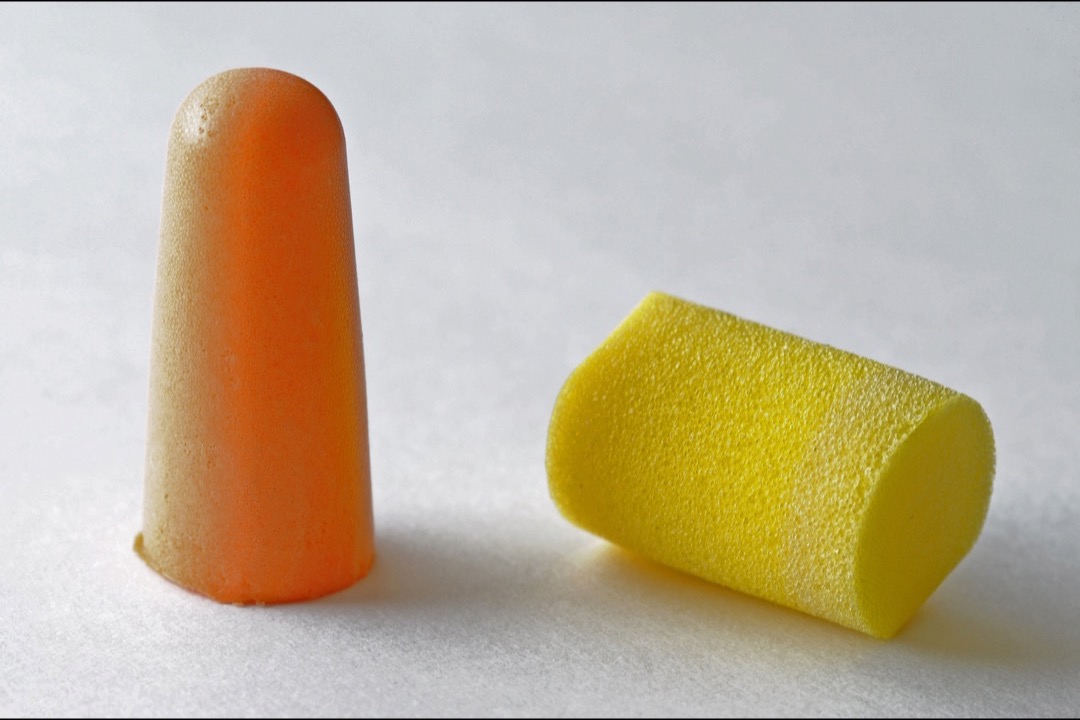
Noise is one of the most underrated threats to sleep quality. The body never fully tunes out sound — even when noise does not wake you, it pulls you up into lighter sleep stages, fragments your sleep architecture, and elevates overnight cortisol and heart rate. A snoring partner, a noisy street, a shift-work schedule that forces you to sleep through daytime activity, or a thin apartment wall can quietly cost you an hour of deep sleep a night without your ever consciously registering it. Earplugs are the simplest, cheapest, most immediate intervention for this problem, and the right pair can be genuinely sleep-changing. But the category is full of confusion — about how much noise plugs actually block, which material suits which sleeper, and whether nightly use is safe for your ears.
In my practice, the questions I hear about sleep earplugs cluster into three groups: people who cannot tolerate anything in their ear canal and need a gentler design, side sleepers who find foam plugs painful against the pillow, and people with small ear canals for whom standard plugs simply do not fit. Each of those problems has a specific material solution, and matching the plug to the problem matters far more than chasing the biggest number on the package. This roundup also addresses a question almost no consumer review covers honestly: is it actually safe to wear earplugs every night, and what does that do to the ear’s natural self-cleaning system over months and years?
Below, I compare seven earplugs across all four material categories — foam, reusable silicone, moldable silicone putty, and wax — spanning every fit, attenuation level, and sleep position. I walk through the real-world NRR math that explains why a “33 dB” plug does not block 33 decibels, the honest decibel arithmetic on whether earplugs can block snoring, and the clinical safety considerations around nightly use and earwax. If noise is also keeping you up because your mind will not settle, earplugs pair well with the sleep-hygiene approach I cover in my guide to the best melatonin supplements — but addressing the sound itself is usually the higher-leverage first step.
Find the Best Ear Plugs for Your Sleep Problem
Jump to the pick that matches what is keeping you awake:
- Best ear plugs overall — our seven picks reviewed
- Best ear plugs for snoring partners
- Best high-NRR ear plugs for maximum noise blocking
- Best ear plugs for side sleepers
- Best ear plugs for small ear canals
- Best travel ear plugs
- Best foam ear plugs
- Best reusable ear plugs
- Best ear plugs by situation — silicone, disposable, work and construction
| Product | Price | Buy |
|---|---|---|
| Mack's Ultra Soft Foam Earplugs, 50 CountBest Overall | $9.89 | View on Amazon |
| Loop Quiet 2 Ear PlugsPremium Pick | $24.95 | View on Amazon |
| Flents Protechs Foam Ear Plugs, 10 Pair with CaseBudget Pick | $3.57 | View on Amazon |
| Mack's Slim Fit Soft Foam Earplugs, 50 PairRunner-Up | $9.37 | View on Amazon |
| Mack's Pillow Soft Silicone Earplugs, 12 PairRunner-Up | $12.99 | View on Amazon |
| Peace&Quiet PQ Wax Ear Plugs, 15 PairRunner-Up | $11.99 | View on Amazon |
| LYSIAN Ultra Soft Foam Earplugs, 60 PairRunner-Up | $9.99 | View on Amazon |
How I Chose These Ear Plugs
When I evaluate a sleep earplug, four variables matter more than anything else: the material (which determines comfort, hygiene, and reusability), the real-world attenuation (which determines how much noise it actually blocks once you apply the NIOSH derating), the fit relative to ear-canal size (which determines whether it seals and stays put), and the sleep-position suitability (which determines whether a side sleeper can tolerate it all night). I deliberately included all four material categories rather than just the highest-attenuation foam, because the best earplug is the one matched to your specific ear and sleep style, not the one with the biggest printed number. Every product here was selected for a substantial verified-review record — most have well over 8,000 reviews, and the top pick has more than 50,000 — and every ASIN was confirmed live on Amazon. I cross-referenced the NRR and SNR claims against EPA labeling conventions and NIOSH derating guidance so the comparison reflects real-world performance, not just lab figures.
Best Ear Plugs Overall
Every plug below is scored on the four variables that decide whether an earplug actually improves a night of sleep: material, real-world attenuation, canal fit, and sleep-position tolerance. Each product is reviewed once here in full; the use-case sections further down pull these same picks into short compare-and-decide tables for specific problems.
Mack’s Ultra Soft Foam Earplugs — Best Overall
Mack’s is the most recognized name in the sleep-earplug category for good reason, and the Ultra Soft foam plug is the product that earns it. At a 33 NRR, this is the highest foam attenuation rating available on the consumer market, which makes it the right tool for the loudest problems — a heavily snoring partner, street noise, or sleeping near a busy road. With more than 50,000 verified reviews at 4.5 stars and a “#1 doctor-recommended” track record, no other product in this roundup has a comparable depth of real-world validation. When a single product has been bought and rated that many times and still holds 4.5 stars, you are looking at a genuinely reliable performer rather than a momentary best-seller.
What distinguishes these from cheaper foam is the foam itself. The Comfy Cush polyurethane is noticeably softer than standard industrial foam, which is the difference between a plug you can wear comfortably for a full eight hours and one that leaves your canal sore by morning. The slow-rebound formula also gives you a few seconds to seat the plug correctly before it fully expands, which is essential for getting a good seal (more on proper insertion technique below). The 50-pair jar makes the per-pair cost low enough that you can replace them daily, which — as I explain in the hygiene section — is exactly how foam should be used.
The honest limitations come down to fit and sleep position. The standard-diameter barrel is too large for many small or narrow ear canals, a common issue for women and teens, who are usually better served by the Slim Fit version below. And because foam protrudes from the canal, dedicated side sleepers can feel it pressing in against the pillow — for them, the Loop or the wax plug is a better match. But for the largest group of buyers, those who simply want to block as much noise as possible and sleep on their back or stomach, this is the bottle to keep in the nightstand drawer.

Mack's Ultra Soft Foam Earplugs, 50 Count
by Mack's
The consensus best overall earplug for sleep — the highest foam NRR available, the deepest review record in the category, and soft enough to wear all night.
Pros
- 33 NRR is the highest foam attenuation rating available — the right ceiling for blocking loud snoring and high ambient noise
- Over 50,000 verified reviews at 4.5 stars and the #1 doctor-recommended brand label — the deepest track record in the category
- Ultra-soft Comfy Cush foam stays comfortable across a full 8-hour night without the canal soreness cheaper foam causes
- 50 pairs in a resealable screw-top jar works out to a per-pair cost low enough to treat as genuinely disposable
Cons
- Disposable single-use design generates more waste than reusable silicone over a year of nightly use
- Standard-diameter barrel is too bulky for small or narrow ear canals — many women and teens find it uncomfortable
- Foam protrudes slightly from the canal, which side sleepers can feel pressing against the pillow
Loop Quiet 2 — Upgrade Pick for Side Sleepers
The Loop Quiet 2 is the upgrade pick because it solves the single most common complaint about foam plugs: comfort for side sleepers. Instead of a barrel that fills and protrudes from the canal, the Loop uses a low-profile silicone design that sits nearly flush with the ear. When you press your ear into the pillow, the plug is not driven deeper into your canal the way foam is — it simply stays put, which is why side sleepers who have given up on earplugs entirely often find this is the one they can finally tolerate. Wirecutter named it their top reusable sleep pick, and it is Amazon’s best seller in the category, both of which align with what I hear from patients who switch to it.
The four interchangeable silicone tip sizes are the second reason it works so well. Ear canals are not symmetrical — many people need a different tip size in each ear — and the Loop lets you dial in a leak-free seal on both sides rather than compromising with a one-size foam plug. Because the silicone is washable and reusable, a single pair replaces hundreds of disposable foam plugs over its life, which makes the higher upfront price the lowest true cost-per-night option in this roundup for a nightly user.
There are real trade-offs. A single reusable pair at a premium price is easy to lose in bedding, and losing one plug means replacing a whole pair — keep them in the included case religiously. The small ear tips are also fiddly to attach and swap until you get the hang of it. And the 24 dB SNR is a lower number on paper than foam, so for the very loudest environments, a 33 NRR foam plug still blocks more. But for the side sleeper whose real problem is comfort rather than maximum attenuation, the Loop is worth every cent of the upgrade.

Loop Quiet 2 Ear Plugs
by Loop
The best reusable earplug for nightly side sleepers — a low-profile silicone design that disappears against the pillow and pays for itself over months of use.
Pros
- Lies nearly flush with the ear, so side sleepers can press the ear into the pillow without the plug being driven into the canal
- Four interchangeable silicone tip sizes let you dial in a secure, leak-free seal in either ear canal
- Washable, reusable silicone replaces hundreds of disposable foam pairs over its life — the lowest long-run cost per night
- Wirecutter's top reusable sleep pick and Amazon's #1 best seller, with strong real-world comfort feedback
Cons
- A single reusable pair at premium price is easy to lose in bedding — replacing one lost plug is disproportionately costly
- Attaching and swapping the small ear tips is fiddly and takes a few tries to get right
- 24 dB SNR is a lower rating on paper than foam, so it blocks less of the loudest noise
Flents Protechs Foam Ear Plugs — Best Budget
The Flents Protechs is the budget pick, and the case for it is refreshingly simple: it delivers the same 33 NRR as the premium Mack’s foam at the lowest entry price in the roundup, with a hard carrying case included. If you have never slept with earplugs and are not sure they will solve your problem, this is the lowest-risk way to find out — you are not committing to a large jar or a premium reusable pair, just a small pack that tells you whether earplugs are the right intervention for your noise situation before you invest more.
The slow-recovery polyurethane foam expands gradually for a snug fit once seated, and the latex-free, made-in-the-USA construction is a reassurance for anyone with latex sensitivity. At 33 NRR, you genuinely give up nothing on attenuation by choosing the budget option — the foam blocks just as much noise as the more expensive Mack’s; what you trade is the larger supply count and the slightly softer Comfy Cush feel.
Two caveats are worth flagging honestly. Some 2024 batches drew complaints about consistency, with fit and density varying from pair to pair — at this price, that is the trade-off. And the 10-pair count is a small supply for a nightly user, so I view this less as a long-term stock and more as a travel pack or a trial. Like all standard-barrel foam, it is also not the right choice for small ear canals. But as the cheapest way to test the waters, or to keep a case in a travel bag, it does exactly what it needs to.

Flents Protechs Foam Ear Plugs, 10 Pair with Case
by Flents
The cheapest entry point into earplug sleeping — full 33 NRR and a carry case at a price low enough to find out if earplugs work for you before committing.
Pros
- Lowest entry price in the roundup makes it the cheapest way to trial whether earplugs solve your sleep-noise problem
- 33 NRR matches the premium foam picks — you give up nothing on attenuation by going budget
- Latex-free and made in the USA, with a hard carrying case included even at this price
- Slow-recovery foam expands gradually for a snug, well-seated fit once inserted correctly
Cons
- Some 2024 batches drew quality-consistency complaints — fit and density varied pair to pair
- Ten-pair count is a small supply for nightly users, so it works better as a travel pack or trial than a long-term stock
- Standard barrel diameter is not suited to small or narrow ear canals
Mack’s Slim Fit Soft Foam Earplugs — Best for Small Ears
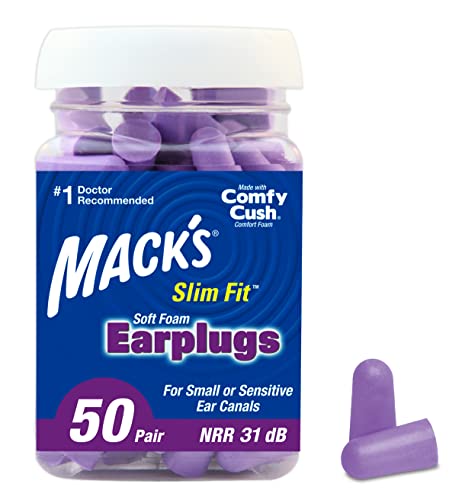
The single most common reason patients tell me earplugs “don’t work” for them is not noise — it is pain. A standard-diameter foam plug forced into a small or narrow ear canal causes pressure and soreness, and people understandably give up. The Mack’s Slim Fit solves this with a purpose-built slim barrel designed for exactly those canals. Wirecutter named it their #1 disposable pick, and the reason is precisely this fit advantage: the smaller diameter creates meaningfully less canal pressure across a long night, which is the difference between an earplug a small-eared sleeper can actually wear and one they abandon after a week.
The slow-rebound foam seats gently and seals well without the aggressive expansion of denser industrial foam, and at 50 pairs for well under twenty cents apiece, nightly disposable use stays affordable. For women, teens, and anyone who has historically found standard foam plugs uncomfortable, this is usually the first product I suggest they try — the fit problem is often the whole problem, and a slim barrel frequently fixes it entirely.
The trade-offs are the mirror image of its strength. Because it is slim, it can work loose and fall out of larger ear canals during the night, so it is genuinely a small-canal product rather than a universal one. And at 31 NRR it sits just below the 33 of the full-size Ultra Soft, blocking marginally less of the loudest noise. But for the right ear, that small attenuation difference is irrelevant next to finally having a plug that fits comfortably enough to keep in all night.
Mack's Slim Fit Soft Foam Earplugs, 50 Pair
by Mack's
The best foam earplug for small ears — a slim barrel that seals narrow canals comfortably where standard-diameter plugs cause pressure and pain.
Pros
- Slim barrel diameter is purpose-built for small and narrow ear canals that standard foam plugs overstretch
- Wirecutter's #1 disposable pick — the slim profile creates less canal pressure across a long night
- Slow-rebound foam seats gently and seals well without the aggressive expansion of denser foam
- 50 pairs at well under twenty cents a pair makes nightly disposable use genuinely affordable
Cons
- The smaller diameter can work loose and fall out of larger ear canals during the night
- 31 NRR is slightly below the 33 of the full-size Ultra Soft, so it blocks marginally less loud noise
Mack’s Pillow Soft Silicone Earplugs — Best for Sensitive Ears
Some people simply cannot tolerate anything inside the ear canal — whether because of past ear surgery, a history of ear infections, or plain sensitivity. For them, every in-canal foam or tip-style plug is a non-starter, and the Mack’s Pillow Soft moldable silicone is the answer. Unlike every other plug in this roundup, it does not go into the canal at all — it sits over the canal opening, where you warm and mold the silicone putty to cap your ear with a custom airtight seal. The result is zero in-canal pressure, which makes it the gentlest option here by a wide margin. This is the original moldable silicone, on the market since 1962 and widely used in clinical settings, giving it the longest real-world track record of any product on this list.
Because it molds to your exact ear shape, the seal is genuinely custom every time, and because the silicone is fully waterproof, the same plug doubles as a swimming and showering earplug — a versatility no foam plug offers. For sensitive ears, post-surgical ears (with a clinician’s clearance), or anyone who has never been able to use conventional plugs, this is the product that finally works.
The honest limitation is attenuation. At 22 NRR, this is the lowest-blocking plug in the roundup, which means it is well suited to moderate ambient noise but not to loud snoring or high-decibel environments — for those, the wax plug below offers a similar no-insertion comfort with far more blocking power. Each plug also lasts only about five uses before it loses its tack and seal, and the sticky silicone readily picks up lint and hair, so storage matters. But for the sensitive ear that rejects everything else, gentleness beats raw attenuation, and this is the right pick.

Mack's Pillow Soft Silicone Earplugs, 12 Pair
by Mack's
The right earplug for sensitive ears that can't tolerate anything inside the canal — moldable silicone that caps the canal opening with no insertion pressure at all.
Pros
- Sits over the canal opening rather than inside it — zero in-canal pressure, which suits anyone whose ears hurt with foam
- Moldable putty conforms to your exact ear shape for a custom airtight seal every time
- Original moldable silicone since 1962 and widely used by clinicians — the longest clinical track record of any sleep earplug
- Fully waterproof, so the same plug works for swimming and showering as well as sleep
Cons
- 22 NRR is the lowest in the roundup and not enough for loud snoring or high-decibel environments
- Each plug is good for only about five uses before it loses its tack and seal
- The tacky silicone surface readily picks up lint, hair, and dust between uses
Peace&Quiet PQ Wax Ear Plugs — Best Wax for Side Sleepers
The Peace&Quiet wax plug occupies a sweet spot that no other product in this roundup quite reaches: it combines the flush, no-protrusion comfort of a moldable plug with genuinely strong attenuation. Like the Mack’s silicone, the moldable wax warms to body heat and molds to a custom seal that caps the ear without anything standing proud of the canal — which is exactly what a side sleeper needs, because there is nothing for the pillow to press against and drive inward. But where the Mack’s silicone tops out at a modest 22 NRR, the PQ wax reaches 32 NRR, dramatically more noise blocking in the same flush, comfortable form factor.
That combination is rare and valuable. Side sleepers usually have to choose between comfort (a flush moldable plug) and attenuation (a protruding foam plug). The PQ wax lets them have both — the seal improves the longer it sits as the wax fully conforms, and the plug is fully waterproof and reusable across several nights per pair, with a carry case included. For a side sleeper whose partner snores loudly, this is frequently the single best match in the entire roundup.
The caveats are minor. The pillow-shaped wad is too large for some small ear canals and openings, so very small ears may do better with a slim foam plug. And the waxy, sticky feel on insertion takes some getting used to and can leave slight residue. But once you adapt to the texture, the comfort-plus-attenuation combination is hard to beat.

Peace&Quiet PQ Wax Ear Plugs, 15 Pair
by Peace&Quiet
The best wax earplug for side sleepers — a flush, no-protrusion fit with a 32 NRR that beats every other moldable option in the roundup.
Pros
- Moldable wax lies flush against the ear with no protrusion, so side sleepers feel nothing against the pillow
- 32 NRR is dramatically higher than Mack's moldable silicone (22) — real attenuation in a no-insertion design
- Warms to body heat on contact and molds to a custom seal that improves the longer it sits
- Fully waterproof and reusable across several nights per pair, with a carry case included
Cons
- The pillow-shaped wad is too large for some small ear canals and openings
- The waxy, sticky feel on insertion takes getting used to and can leave slight residue
LYSIAN Ultra Soft Foam Earplugs — Best Bulk & Eco-Conscious Buy
For the household that has settled on foam and goes through plugs nightly, the LYSIAN bulk pack is the value play. Sixty pairs, plus two bonus reusable silicone plugs and a carry case, make it the best cost-per-pair buy in the roundup — and unlike most cheap bulk foam, the foam here is GRS-certified recycled polyurethane, which makes it the only eco-conscious disposable option on this list. If the single-use waste of foam bothers you (a legitimate concern over a year of nightly use), recycled-content foam is the closest thing to a guilt-free disposable.
On performance, LYSIAN is no compromise. Its 38 SNR is the highest foam attenuation rating in this roundup, strong enough for snoring and street noise alike, and the slow 30-60 second expansion gives you ample time to seat the plug correctly before it fully fills the canal — a meaningful advantage for getting a consistent seal. The two bonus silicone plugs also let you test a reusable tip-style design before committing to a dedicated pair like the Loop.
The trade-offs are modest. At 4.3 stars it sits just below the Mack’s foam picks on overall satisfaction, the standard barrel is not suited to small canals, and despite the recycled material it still generates single-use waste. But for the nightly foam user who wants the most pairs, the highest blocking, and a lighter environmental footprint, the value math here is the best in the category. If your sleep struggles run deeper than noise alone, it is worth reading my comparison of melatonin versus magnesium for sleep to address the other half of the equation.

LYSIAN Ultra Soft Foam Earplugs, 60 Pair
by LYSIAN
The best bulk and eco-conscious foam buy — 60 pairs of GRS-recycled foam with the highest SNR in the roundup at the lowest cost per pair.
Pros
- 60 pairs plus two bonus reusable silicone plugs and a carry case is the best value-per-pair bulk buy in the roundup
- 38 SNR is the highest foam attenuation rating here — strong blocking for snoring and street noise
- GRS-certified recycled polyurethane foam makes it the only eco-conscious disposable option on the list
- Slow 30-60 second expansion gives you time to seat the plug correctly before it fully fills the canal
Cons
- 4.3 stars sits slightly below the Mack's foam picks on overall satisfaction
- Standard barrel diameter is not suited to small or narrow canals
- Disposable design still generates single-use waste despite the recycled material
Best Ear Plugs for Snoring Partners
Snoring is the single most common reason patients ask me about earplugs, and it is also the hardest noise to block. Snoring sits mostly in the low-frequency range (roughly 100–500 Hz), and every earplug material attenuates low frequencies far less effectively than the high frequencies that dominate lab NRR testing. That means the honest answer is that no plug will make a loud snorer silent — but a well-sealed high-NRR plug reliably drops a 60–70 dB snore below the threshold that fragments sleep architecture. Prioritize seal quality and attenuation over comfort features here, and if your partner’s snoring is accompanied by gasping or witnessed apneas, the right intervention is a sleep study rather than a better earplug.
| Product | Price | Buy |
|---|---|---|
| Mack's Ultra Soft Foam Earplugs, 50 CountBest for snoring overall At 33 NRR, Mack's Ultra Soft is the highest-attenuation foam on the consumer market — the right tool for a heavily snoring partner | $9.89 | View on Amazon |
| Peace&Quiet PQ Wax Ear Plugs, 15 PairBest for snoring if you sleep on your side PQ wax seals at 32 NRR without protruding from the canal, so it survives a night of pillow pressure that foam does not | $11.99 | View on Amazon |
| LYSIAN Ultra Soft Foam Earplugs, 60 PairBest value for nightly snore blocking LYSIAN's 60-pair box makes daily replacement affordable, which is how foam should be used for nightly snore blocking | $9.99 | View on Amazon |
Best High-NRR Ear Plugs for Maximum Noise Blocking
If your goal is simply to block as much sound as possible — night-shift sleep during daylight hours, a bedroom facing a busy road, thin apartment walls — attenuation is the variable to optimize, and foam wins. Remember the derating math covered below: NIOSH recommends halving the labeled NRR after subtracting 7 dB to estimate what a real user achieves, so a 33 NRR plug realistically delivers around 13 dB of protection. That is still the difference between fragmented and consolidated sleep. All three picks here sit at 31 dB or above.
| Product | Price | Buy |
|---|---|---|
| Mack's Ultra Soft Foam Earplugs, 50 CountHighest attenuation overall 33 NRR is the ceiling for consumer foam, and the Comfy Cush formula stays tolerable for a full eight hours | $9.89 | View on Amazon |
| Peace&Quiet PQ Wax Ear Plugs, 15 PairHighest attenuation without protrusion PQ wax reaches 32 NRR while sitting flush against the canal opening rather than inside it | $11.99 | View on Amazon |
| Mack's Slim Fit Soft Foam Earplugs, 50 PairHighest attenuation for narrow canals Mack's Slim Fit gives up only 2 dB versus the standard barrel while actually sealing in a small ear canal | $9.37 | View on Amazon |
Best Ear Plugs for Side Sleepers
Side sleepers have a mechanical problem that no amount of attenuation solves: a plug that protrudes from the ear canal gets pressed inward by the pillow, which turns a comfortable seal into canal soreness within an hour or two. The fix is a low-profile design that either sits flush with the canal opening or is soft enough to deform under pillow pressure. All three picks below solve that geometry; choose based on whether you want maximum reuse, maximum attenuation, or the gentlest possible material.
| Product | Price | Buy |
|---|---|---|
| Loop Quiet 2 Ear PlugsBest for side sleepers overall Loop Quiet 2 sits flush in the concha with a low-profile silicone body designed specifically for pillow contact, and ships with four tip sizes | $24.95 | View on Amazon |
| Peace&Quiet PQ Wax Ear Plugs, 15 PairBest high-NRR option for side sleepers PQ wax moulds over the canal opening rather than inserting into it, so pillow pressure has nothing to push against | $11.99 | View on Amazon |
| Mack's Pillow Soft Silicone Earplugs, 12 PairGentlest option for side sleepers Mack's Pillow Soft putty caps the canal entrance without entering it — the right pick if any in-canal plug irritates you | $12.99 | View on Amazon |
Best Ear Plugs for Small Ear Canals
Standard foam barrels are built around an average adult male canal diameter, which is why so many women and teens report that earplugs hurt, fall out overnight, or never seal properly in the first place. This is a fit problem, not a tolerance problem, and it has two solutions: a genuinely slimmer foam barrel, or a system that ships multiple tip sizes so you can match your own anatomy.
| Product | Price | Buy |
|---|---|---|
| Mack's Slim Fit Soft Foam Earplugs, 50 PairBest for small canals overall Mack's Slim Fit uses a narrower barrel built for small canals and still delivers 31 NRR — Wirecutter keeps it as a standing pick | $9.37 | View on Amazon |
| Loop Quiet 2 Ear PlugsBest sized-tip system Loop Quiet 2 ships four ear-tip sizes so you can fit an unusually narrow or unusually wide canal from one purchase | $24.95 | View on Amazon |
| Mack's Pillow Soft Silicone Earplugs, 12 PairBest no-insertion option Mack's Pillow Soft sidesteps canal diameter entirely by sealing over the opening rather than inside it | $12.99 | View on Amazon |
Best Travel Ear Plugs
Travel earplugs are judged on different criteria than nightstand plugs: they need a case so they survive a bag, they need to work in a hotel room with unfamiliar noise, and reusability matters more when you are away from your 50-pair jar. Note that these are noise-attenuating plugs, not pressure-regulating flight plugs — if your problem is ear pain during descent rather than cabin noise, you want a vented pressure-regulating plug instead.
| Product | Price | Buy |
|---|---|---|
| Loop Quiet 2 Ear PlugsBest for travel overall Loop Quiet 2 is washable, ships with a carry case, and packs down small enough to live in a toiletry bag permanently | $24.95 | View on Amazon |
| Flents Protechs Foam Ear Plugs, 10 Pair with CaseBest budget travel pack Flents Protechs includes a carrying case with just 10 pairs — the low-commitment pack for a single trip | $3.57 | View on Amazon |
| LYSIAN Ultra Soft Foam Earplugs, 60 PairBest for long trips LYSIAN's cased 60-pair box plus two silicone pairs covers a long trip without rationing plugs | $9.99 | View on Amazon |
Best Foam Ear Plugs
Foam remains the highest-attenuation, lowest-cost material in the category, and it is the right default for anyone whose priority is blocking noise rather than maximizing reuse. The trade-offs are real: foam must be rolled and inserted correctly to hit its rated attenuation (see the insertion section below), it protrudes from the canal in a way side sleepers often cannot tolerate, and it should be replaced daily rather than reused across nights.
| Product | Price | Buy |
|---|---|---|
| Mack's Ultra Soft Foam Earplugs, 50 CountBest foam overall Mack's Ultra Soft pairs the category's top 33 NRR with a slow-rebound formula soft enough for all-night wear | $9.89 | View on Amazon |
| Flents Protechs Foam Ear Plugs, 10 Pair with CaseBest budget foam Flents Protechs matches the 33 NRR at the lowest entry cost, with a case included | $3.57 | View on Amazon |
| Mack's Slim Fit Soft Foam Earplugs, 50 PairBest foam for small canals Mack's Slim Fit is the same foam concept in a narrower barrel for canals the standard size will not fit | $9.37 | View on Amazon |
| LYSIAN Ultra Soft Foam Earplugs, 60 PairBest eco-conscious foam LYSIAN uses GRS-certified recycled polyurethane and includes two silicone pairs alongside 60 foam pairs | $9.99 | View on Amazon |
Best Reusable Ear Plugs
Reusable plugs cost more up front and attenuate less than foam, but they eliminate the recurring cost and the waste stream, and for many sleepers they are simply more comfortable. The hygiene rule matters more here than with disposables: wash reusable plugs regularly, because a plug that cycles between your ear canal and a nightstand accumulates bacteria and cerumen that a single-use foam plug never gets the chance to.
| Product | Price | Buy |
|---|---|---|
| Loop Quiet 2 Ear PlugsBest reusable overall Loop Quiet 2 is fully washable silicone rated for long-term nightly reuse and is the only genuinely indefinite-life pick here | $24.95 | View on Amazon |
| Peace&Quiet PQ Wax Ear Plugs, 15 PairBest semi-reusable for attenuation PQ wax is washable and re-mouldable across multiple nights while holding a 32 NRR seal | $11.99 | View on Amazon |
| Mack's Pillow Soft Silicone Earplugs, 12 PairBest semi-reusable for sensitive ears Mack's Pillow Soft putty is good for roughly five uses per pair before it stops holding shape | $12.99 | View on Amazon |
Best Ear Plugs by Situation
Beyond sleep position and canal size, a few narrower situations come up often enough to be worth mapping directly. Every product below keeps its live Amazon link.
| Product | Price | Buy |
|---|---|---|
| Mack's Pillow Soft Silicone Earplugs, 12 PairBest silicone ear plugs Mack's Pillow Soft is the moldable silicone standard — it seals over the canal rather than inside it | $12.99 | View on Amazon |
| Flents Protechs Foam Ear Plugs, 10 Pair with CaseBest disposable ear plugs Flents Protechs is the cased disposable pack for occasional or trial use | $3.57 | View on Amazon |
| Mack's Ultra Soft Foam Earplugs, 50 CountBest for work and shop noise At 33 NRR, Mack's Ultra Soft covers occupational noise exposure as well as it covers snoring | $9.89 | View on Amazon |
| LYSIAN Ultra Soft Foam Earplugs, 60 PairBest for construction-site noise LYSIAN's 60-pair box is the cost-effective way to keep fresh plugs on hand for daily jobsite use | $9.99 | View on Amazon |
The Real NRR Math — Why “33 dB” Doesn’t Mean 33 Decibels
The single most misunderstood number in this entire category is the attenuation rating, and understanding it changes how you shop. In the US, earplugs carry an EPA-mandated Noise Reduction Rating (NRR); in Europe and on some imported products, you will see a Single Number Rating (SNR) instead. Both are derived from laboratory testing under ANSI S3.19 conditions — measured on trained subjects who insert the plugs perfectly, in a controlled sound chamber. That is not how anyone uses earplugs in their own bed.
Because of that gap between lab and life, the National Institute for Occupational Safety and Health (NIOSH) recommends derating the labeled NRR by 50 percent to estimate real-world performance. So a plug rated 33 NRR does not block 33 decibels for you — it blocks closer to 13 dB once you account for imperfect insertion, canal-shape variability, and the seal loosening as you move in your sleep. This is not a defect; it is the honest difference between a controlled test and a real ear. The practical implication is twofold: first, use the NRR to rank products against each other (a 33 genuinely blocks more than a 22), but never expect the literal printed number of decibels. Second, getting a good seal matters enormously — a poorly inserted 33 NRR foam plug can underperform a well-seated 24 NRR silicone one, because a leak around the plug undoes most of the rating. SNR is conceptually similar to NRR but calculated under a slightly different European standard, so when you compare a US NRR product to an EU SNR product, treat them as broadly comparable but not identical units.
Can Ear Plugs Actually Block Snoring? The Honest Decibel Math
This is the question that brings most people to earplugs, and it deserves an honest, numbers-based answer rather than marketing optimism. Loud snoring measures roughly 60 to 90 dB at close range — about the level of normal conversation to a vacuum cleaner, right next to your head. Apply the real-world attenuation math: your best 33 NRR foam plug delivers around 13 dB of actual reduction. So a 70 dB snore becomes roughly a 57 dB sound at your ear. That is meaningfully quieter — but it is still above the roughly 40 dB threshold at which noise begins disrupting sleep.
The honest conclusion: earplugs substantially reduce snoring noise, but they do not eliminate it, especially for the loudest snorers. For a moderate snore, that 13 dB reduction may be exactly enough to drop the sound below your personal disruption threshold and let you sleep. For a very loud snore, earplugs alone may not fully solve the problem, and you may need to combine them with a white-noise machine to mask the residual sound, or sleep in a separate room during the worst flares.
There is also a clinical point I want to make clearly. Loud, chronic snoring is not just a nuisance — it can be a sign of obstructive sleep apnea (OSA), a condition that affects roughly a quarter of adults and carries real cardiovascular risk (hypertension, atrial fibrillation, and increased stroke risk among them). If your partner snores loudly and consistently, especially with witnessed pauses in breathing or daytime sleepiness, the right move is not just better earplugs for you — it is a sleep-apnea evaluation for them. Earplugs treat your symptom; they do nothing for the underlying condition that may be quietly harming your partner’s health.
Is Nightly Use Safe? Earwax, Ear Anatomy, and the Self-Cleaning Conveyor
Here is the safety question almost no consumer review addresses honestly. The ear canal is not a passive tube — it is lined by skin that slowly migrates outward in a process called epithelial migration, moving at roughly 0.07 mm per day. This is the ear’s self-cleaning mechanism: it acts as a conveyor belt, carrying earwax (cerumen), dead skin, and debris from deep in the canal outward toward the opening, where it naturally falls away. It is an elegant system that requires no intervention — and inserting an earplug every single night interferes with it in two ways. First, the plug physically pushes cerumen inward, deeper toward the eardrum. Second, it obstructs the outward migration that would normally clear that wax.
Over months of nightly use, this combination raises the risk of cerumen impaction — a buildup of compacted wax that the ear can no longer clear on its own. The symptoms are worth knowing: a blocked or full feeling in the ear, conductive hearing loss (muffled hearing), ringing or buzzing (tinnitus), and sometimes ear pain (otalgia). This is why the ENT-aligned recommendation is to treat insertable earplugs as a tool for situational noise rather than a permanent every-night habit. If you face chronic ambient noise night after night, a white-noise machine is the safer long-term solution, with plugs reserved for the worst nights. Give your ears regular plug-free nights, and never try to dig wax out with cotton swabs — they push it deeper and make impaction worse. If you do develop ear fullness or muffled hearing, see a clinician for safe wax removal; understanding your own ear anatomy is also useful when, for example, taking an accurate ear thermometer reading depends on a clear canal.
Clinical Contraindications — When Not to Use Insertable Ear Plugs
This is the section no competitor covers, and it matters. Insertable earplugs are not appropriate for every ear, and in some situations they can cause genuine harm. Do not use in-canal earplugs, and consult an ENT first, if any of the following apply to you:
- Perforated eardrum (tympanic membrane). A hole or tear in the eardrum means the canal is no longer a closed space; inserting a plug can introduce bacteria toward the middle ear and worsen the perforation.
- Active otitis externa (outer-ear infection / swimmer’s ear). Sealing an already-infected, inflamed canal traps moisture and bacteria, feeding the infection. Let it fully resolve first.
- Ear tubes (tympanostomy tubes). If you or your child have surgically placed ventilation tubes, in-canal plugs can interfere with them and trap fluid; use only under your ENT’s direction.
- Recent ear-canal surgery. A healing canal should not have anything inserted into it until your surgeon clears you.
If none of these apply, insertable plugs are generally safe for situational use — but the moment you develop ear pain, drainage, sudden muffled hearing, or persistent fullness, stop using them and see a clinician rather than pushing through symptoms. The same caution applies if you already manage a hearing condition; the considerations there are different enough that I cover them separately in my guide to the best hearing aids.
The Hidden Infection Risk of Reusing Foam
One practice I want to specifically warn against: reusing foam earplugs night after night. Foam is porous, and over a night in your ear it absorbs sebum, sweat, and cerumen. That moist, organic-rich material is an ideal culture medium, and reused foam plugs can grow bacteria — including Staphylococcus aureus and Pseudomonas, two of the organisms most commonly implicated in otitis externa. Reinserting a colonized foam plug essentially inoculates your ear canal night after night.
The rule is simple: treat foam as single-use. This is exactly why the foam picks in this roundup come in large pair counts at low per-pair cost — they are designed to be discarded daily. If you want a reusable plug, choose nonporous silicone or wax, which can be wiped or washed between uses and do not absorb and harbor material the way foam does. Whatever the material, store plugs in a case rather than loose in a nightstand or pocket, and discard any plug that becomes dirty, hardened, or misshapen. And never share earplugs between people — that transfers bacteria directly from one ear canal to another.
How to Insert Foam Ear Plugs Correctly
A foam earplug only delivers its rated attenuation if it is seated correctly, and most people insert them wrong. The technique matters more than the product. Here is the method I teach patients:
- Roll it down. With clean, dry hands, roll and compress the foam plug between your thumb and fingers into a thin, tight cylinder. The thinner you can get it, the deeper and more completely it will seat.
- Pull the pinna up and back. Reach over your head with the opposite hand and gently pull the top of your ear (the pinna) up and back. This straightens the natural curve of the ear canal so the plug can slide in properly rather than buckling at the bend.
- Insert while still compressed. Slide the compressed plug into the canal promptly, before the slow-recovery foam re-expands. It should sit snugly in the canal — but it should never feel like it is pressing hard against the bony part deep in the canal. If you feel it touching bone or causing pressure pain, you have inserted it too deep; back it off slightly.
- Hold while it expands. Keep a fingertip gently against the plug for 20 to 60 seconds while the foam expands to fill and seal the canal. Letting go too early lets the plug back out before it seals, which is the most common cause of poor performance.
You will know you have a good seal when ambient sound drops noticeably and your own voice sounds louder and more resonant (the occlusion effect). If sound is still leaking in, the plug is not seated — re-roll and reinsert. Moldable wax and silicone plugs follow a different process: you warm and mold them, then cap the canal opening rather than inserting deep, but the same principle applies — a complete, leak-free seal is what delivers the noise reduction.
Buyer's Guide
Choosing a sleep earplug means matching material, real-world attenuation, and fit to how you sleep and how loud your environment is — the best plug for a small-eared side sleeper is fundamentally different from the best plug for blocking a partner's loud snore.
NRR & Real-World Attenuation
The Noise Reduction Rating printed on the package (US) or the SNR figure (EU) is a laboratory number measured on trained subjects under ideal fit (ANSI S3.19). For real users, NIOSH recommends derating the NRR by 50 percent, so a 33 NRR foam plug delivers closer to 13 dB of actual attenuation. Use the rating to rank products against each other, not as the literal decibel reduction you will experience. For blocking loud noise like snoring, choose the highest-NRR foam (31-33) you can tolerate; for moderate ambient noise, a 22-32 silicone or wax plug is plenty.
Material Type
Four materials dominate the category. Polyurethane foam gives the highest attenuation (31-33 NRR) but protrudes and is best treated as single-use. Reusable flexible silicone (tip-style plugs) is the lowest-profile and washable, ideal for nightly use. Moldable silicone putty caps the canal opening with no insertion pressure — gentle but low-attenuation (around 22 NRR). Moldable wax lies flush like putty yet reaches a 32 NRR, the best blend of comfort and blocking. Match the material to your priority: maximum quiet (foam), reusability (silicone), sensitive ears (putty), or flush high-NRR comfort (wax). A fifth option exists but is not an Amazon purchase: custom-molded earplugs, made from an impression of your own canal by an audiologist, typically run $100-200 a pair and take two appointments. They are worth considering only if you have tried a slim-fit foam and a multi-tip silicone plug and still cannot get a comfortable seal — for the overwhelming majority of sleepers, a correctly sized off-the-shelf plug performs just as well for a fraction of the cost.
Fit & Ear Canal Size
Ear canals vary widely in diameter, and a plug that seals one person's canal can be painfully oversized or fall out of another's. Standard-barrel foam plugs overstretch small or narrow canals — common in women and teens — causing pressure and soreness; a slim-profile foam or a multi-tip silicone design solves this. Conversely, slim plugs and small silicone tips can work loose in larger canals overnight. If a plug causes pain, a sense of pressure, or repeatedly falls out, it is the wrong size for your ear, not a problem you should push through.
Side-Sleeper Comfort
If you sleep on your side, the plug is pressed between your ear and the pillow all night, which drives a protruding foam plug deeper into the canal and causes soreness. The solution is a low-profile or flush design: reusable silicone tip plugs sit nearly flush, and moldable wax or putty lies flat against the ear opening with nothing standing proud of the canal. Side sleepers who also need strong noise blocking are best served by moldable wax, which combines a flush fit with a 32 NRR — the rare overlap of comfort and attenuation.
Reusability & Hygiene
Porous foam absorbs sebum, sweat, and cerumen, and reused foam can culture bacteria like Staphylococcus aureus and Pseudomonas — a setup for otitis externa (swimmer's ear). Treat foam as single-use. Silicone and wax plugs are nonporous and can be wiped or washed and reused for several nights, which is both more hygienic over time and lower-waste. Whatever the material, keep plugs clean, store them in a case rather than loose, and discard any plug that becomes dirty, hardened, or misshapen. Never share earplugs between people.
Safety & Contraindications
Insertable earplugs are not appropriate for every ear. Do not use in-canal plugs if you have a perforated eardrum (tympanic membrane), an active outer-ear infection (otitis externa), ear tubes (tympanostomy tubes), or have had recent ear-canal surgery — consult an ENT first in any of these cases. Nightly long-term use raises the risk of cerumen impaction by obstructing the ear's self-cleaning epithelial migration. If you develop ear pain, drainage, sudden muffled hearing, or persistent fullness, stop using plugs and see a clinician rather than continuing through symptoms.
Matching the Material to Your Sleep Problem
To pull the material taxonomy together, here is how I steer patients based on what is actually keeping them awake. If your problem is loud noise — a heavily snoring partner, street noise, or a loud environment — start with foam (Mack’s Ultra Soft or LYSIAN), because the 31-33 NRR foam plugs block the most, and accept that you will treat them as single-use. If your problem is side-sleeping discomfort with foam, move to a flush design: the Loop reusable silicone for moderate noise and nightly reuse, or the PQ wax if you need both flush comfort and strong attenuation. If your problem is that nothing fits or your ears are sensitive, the answer depends on canal size — Mack’s Slim Fit foam for small canals that reject standard foam, and Mack’s Pillow Soft silicone for ears that cannot tolerate anything inserted at all. And if you simply want the lowest cost per night as a nightly foam user, the LYSIAN bulk pack wins on value. The point is that there is no universal best earplug — there is the right earplug for your specific ear and the specific noise you are fighting.
Final Verdict
For most people who want to block as much noise as possible and sleep on their back or stomach, Mack’s Ultra Soft Foam Earplugs are the best overall pick. The 33 NRR is the highest foam attenuation available, the Comfy Cush foam is soft enough for a full night, and with more than 50,000 reviews at 4.5 stars, no product in the category has a deeper track record. Use them as the disposable, single-use plugs they are designed to be, and they will reliably solve the most common noise problems.
For buyers who want the cheapest way to find out whether earplugs work for them, Flents Protechs is the right budget pick — the same 33 NRR and a carry case at the lowest entry price in the roundup. And for side sleepers, the answer splits two ways depending on noise level: the Loop Quiet 2 for its flush, reusable comfort in moderate noise, or the Peace&Quiet PQ wax when you need that flush fit together with a strong 32 NRR. Remember the safety fundamentals — treat foam as single-use to avoid infection, give your ears plug-free nights to protect the canal’s self-cleaning system, and skip insertable plugs entirely if you have a perforated eardrum, an active ear infection, ear tubes, or recent ear surgery. And if your sleep struggles run deeper than noise, addressing the rest of your sleep hygiene — the kind of approach I lay out in my guide to the best melatonin supplements — is the natural next step. As always, if you have a chronic ear condition or recurring ear pain, talk with your physician or an ENT before making earplugs a nightly habit.
Frequently Asked Questions
Is it safe to wear ear plugs every night?
What NRR do I need to block snoring?
Can ear plugs cause earwax buildup or impaction?
Foam vs silicone vs wax — which is best for sleeping?
Will I still hear my alarm with ear plugs in?
What ear plugs does Reddit recommend for sleeping?
What are the best ear plugs in the world for sleeping?
Related Articles
About the Reviewer

Dr. David Taylor, MD, PhD
Drexel University College of Medicine (MD), Indiana University School of Medicine (PhD)
Dr. David Taylor is a licensed physician and medical researcher who founded BestRatedDocs in 2016. With an MD from Drexel University and a PhD from Indiana University School of Medicine, he combines clinical expertise with a passion for health technology to provide evidence-based product recommendations. Dr. Taylor specializes in health informatics and regularly evaluates medical devices, diagnostic equipment, and therapeutic products to help healthcare professionals and patients make informed decisions.