How to Get Rid of Dry Eyes: A Doctor's Guide
Dr. David Taylor, MD explains how to get rid of dry eyes: which of the two types you have, the warm compress temperature that matters, and what the evidence says.
Updated
Most people treat dry eye as a plumbing problem. The eye is dry, so add water, and the fix is a bottle of drops. That model is wrong for roughly eight out of ten patients, and it explains why so many people use artificial tears six times a day for years and never actually get better.
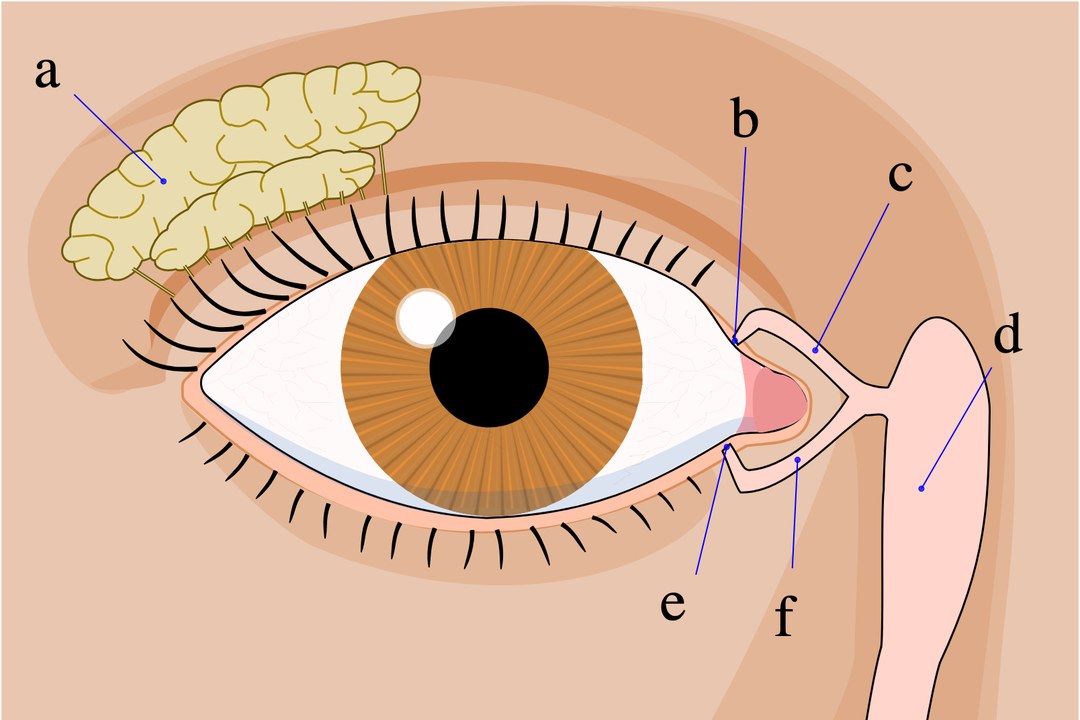
Your tears are not water. They are a three-layer film about seven micrometres thick, and each layer is made by a different structure. The innermost mucin layer, produced by goblet cells in the conjunctiva, lets the watery layer stick to the cornea at all. The middle aqueous layer, produced mainly by the lacrimal gland above the outer edge of the eye, carries the salts, proteins, and antibodies. The outer lipid layer, an oil secreted by 25 to 40 meibomian glands packed vertically inside each eyelid, caps the whole thing and slows evaporation. Squeeze that oil out and the same volume of tears evaporates several times faster.
That is the crux of it. In most dry eye, the water is present and the lid is failing to keep it there. Adding more water to an uncapped tear film is like topping up a bathtub with the plug out.
The International Dry Eye Workshop’s 2017 consensus report defines the condition as a loss of tear film homeostasis with symptoms, in which instability, hyperosmolarity, ocular surface inflammation, and nerve abnormalities all play a role. That sounds like clinical throat-clearing, but two words in it matter. Hyperosmolarity means that as the water evaporates, the salt concentration on the surface of your eye rises, and concentrated salt water is an irritant to the corneal cells sitting in it. Inflammation means that irritation triggers an immune response that damages the very glands producing your tears, which produces more evaporation, more salt, and more inflammation. Dry eye is a self-sustaining loop, and that is why it does not simply go away on its own.
First, Which Type Do You Have?
Everything downstream depends on this. A treatment that fixes one type does very little for the other, and nobody can prescribe for you sensibly until it is settled.
Evaporative dry eye is the large majority, and its usual driver is meibomian gland dysfunction, in which the oil glands in the lids become blocked and their secretion thickens from a clear oil into something closer to toothpaste. A widely cited clinic cohort found signs of meibomian gland dysfunction in 86 percent of dry eye patients. The pattern to recognise: burning and grittiness that is worse in the evening, worse on screens, worse in wind or air conditioning; eyes that water in the cold or in a breeze; lid margins that look thickened, reddened, or have small oil caps at the gland openings; a history of rosacea, or of styes and chalazia; vision that blurs after several seconds of staring and clears instantly when you blink.
Aqueous-deficient dry eye is the minority and means the lacrimal gland is not producing enough fluid. The pattern here is more constant than fluctuating, often worse on waking, and frequently accompanied by a dry mouth, difficulty swallowing dry food without a drink, dental decay out of proportion to hygiene, unexplained fatigue, or joint pain. That cluster is the classic presentation of Sjogren’s disease, an autoimmune condition that attacks the tear and saliva glands and accounts for around one in ten dry eye clinic patients. It is chronically underdiagnosed, with an average delay of several years, and the reason to name it is that it needs a rheumatologist rather than a better eye drop.
Mixed disease is common, particularly with age, and needs both approaches.
The one test I would want you to know by name is tear break-up time. Your eye doctor puts a trace of fluorescein dye on the surface, asks you to blink once, and times how long the film takes to develop its first dry spot. Under ten seconds indicates instability; under five is significant. Combined with a look at the lid margins and, if available, meibography that photographs the glands inside the lid, that tells you which type you have in about five minutes. Ask for it.
The Warm Compress Almost Everyone Does Wrong
If you have evaporative dry eye, this is the single highest-yield thing you can do at home, and it is also the thing most commonly done in a way that cannot possibly work.
Healthy meibum melts at roughly body surface temperature. In meibomian gland dysfunction the secretion becomes waxier and its melting point rises, so the lid has to be brought to somewhere around 40 to 45 degrees Celsius, that is 104 to 113 Fahrenheit, and held there for eight to ten minutes before the contents will liquefy and express.
A wet washcloth reaches that temperature for perhaps ninety seconds, then drops below therapeutic range while you sit there feeling virtuous. That is the failure. A microwavable eye mask filled with flaxseed or clay beads holds heat for the full ten minutes, which is the entire reason the format exists. General-purpose heating pads are excellent for a back or a cramping abdomen and are the wrong tool here: they do not conform to the orbit, and eyelid skin is the thinnest on the body and burns easily. Whatever you use, it should feel comfortably warm and never hot.
The step people skip is what happens next. Heat alone melts the oil; it does not evacuate it. Immediately after the compress, while the lids are still warm, use a clean fingertip to sweep firmly along the lid from the eyebrow down toward the lash line on the upper lid, and from the cheekbone up toward the lash line on the lower lid, five to ten strokes each. You are milking the glands in the direction they open. Do the whole routine once daily for six to eight weeks before judging it. Two weeks is not a trial.
Blinking Is a Skill You Lost at a Desk
At rest, people blink about 22 times a minute. Reading a printed page it falls to roughly 10. On a screen it drops to around 7, and this is the part that matters more than the count: the proportion of incomplete blinks, where the upper lid stops short of meeting the lower, rises sharply. In one study the share of incomplete blinks varied from under one percent to over fifty-six percent between individuals, and the people with the most incomplete blinks had the worst symptoms.
An incomplete blink never resurfaces the lower third of the cornea and never compresses the lower lid’s oil glands. Do it for eight hours a day and you have both an unresurfaced strip of cornea and a set of glands that are never being squeezed.
Three things fix this, and none of them costs anything.
Retrain the blink. Twice an hour, close the eyes gently, pause for two seconds, squeeze slightly, then open. Ten repetitions. The pause is what makes it a complete blink rather than a flutter.
Use the 20-20-20 rule as a timer for blinking, not just for focusing. Every 20 minutes, look at something 20 feet away for 20 seconds, and blink deliberately while you do it. The accommodation break helps eye strain; the blinking is what helps the tear film.
Drop your monitor. Put the top of the screen at or slightly below eye level so you are looking downward at roughly 15 to 20 degrees. A downward gaze narrows the opening between the lids and reduces the exposed ocular surface, which measurably cuts evaporation. Most people have their monitor too high, and if you wear progressive lenses you are probably tipping your chin up to find the reading segment, which does the opposite. If that is you, a pair of single-vision reading glasses set for screen distance lets you keep your chin down and your eyes narrowed, and solves the neck ache as a bonus.
Your Environment Is Doing More Than You Think
Tear evaporation is physics. Move dry air across a thin liquid film and it evaporates faster, and no drop compensates for a vent pointed at your face.
Indoor humidity below about 40 percent noticeably worsens symptoms, which is why forced-air heating in winter and aircraft cabins, typically running at 10 to 20 percent, are so reliably provocative. A humidifier in the room where you work or sleep is a genuine intervention rather than a comfort measure. Redirect car vents downward, move desks out of the path of ceiling fans and air conditioning diffusers, and wear wraparound sunglasses in wind. Cycling, running, and boating expose you to a lot of moving air.
Two overnight causes are worth checking because they are invisible to the person experiencing them. Nocturnal lagophthalmos means the lids do not fully close during sleep; it affects a meaningful minority of adults, and its signature is symptoms that are worst on waking and improve through the morning, which is the opposite of the usual evaporative pattern. A lubricating ointment or gel at bedtime, or a sleep mask that holds the lids closed, addresses it. The other is CPAP. Air escaping around a poorly fitted mask blows directly across the eyes all night, and CPAP-associated dry eye is common enough that it should be asked about routinely. It is a mask-fit problem, not a reason to abandon therapy, and if you are working through sleep-disordered breathing my guide to stopping snoring covers the fit and airflow issues.
On hydration, I will be more measured than most articles. Severe dehydration does reduce tear production, and if you are genuinely under-drinking, sick, or exercising hard in heat, fixing that helps, and an electrolyte powder is a reasonable way to do it when plain water is not being replaced fast enough. But drinking eight glasses of water a day does not cure a blocked meibomian gland, and no amount of hydration substitutes for the compress.
Check Your Medicine Cabinet Before You Buy Anything
This is the section most consumer articles reduce to a single line, and in my experience it is where a real answer most often turns up. A large fraction of the dry eye I see is a side effect that nobody connected to the drug.
Antihistamines are the most common culprit by a wide margin. Their anticholinergic activity suppresses tear secretion along with nasal secretion, which is precisely the mechanism they are taken for. The older sedating agents such as diphenhydramine are the worst offenders, but the second-generation drugs are not free of it either. If you take one daily through allergy season and your eyes are dry, that connection is worth taking seriously, and my comparison of allergy medicines covers which agents carry the least anticholinergic load. The trap is that allergic conjunctivitis and dry eye feel similar, so people escalate the antihistamine and dry themselves out further.
Decongestants do the same thing systemically. Topical nasal sprays are generally kinder to the eyes than oral pseudoephedrine for this reason, though a steroid nasal spray is a different drug class again and does not carry the drying effect.
Motion sickness drugs are quietly strong anticholinergics. Scopolamine patches in particular cause dry eyes and blurred near vision routinely, and meclizine and dimenhydrinate are antihistamines with the same liability, so if you take motion sickness medicine regularly rather than for the occasional crossing, factor it in.
Isotretinoin deserves its own mention because its effect is structural rather than functional. It shrinks sebaceous glands throughout the body, and the meibomian glands are sebaceous glands. Dry eye during a course is near-universal, and in some people gland atrophy persists after the course ends.
Beta blockers reduce tear production and tear lysozyme. Diuretics reduce it by reducing overall fluid volume. Antidepressants, both tricyclics and to a lesser degree SSRIs, carry anticholinergic effects. Hormone therapy and oral contraceptives alter the androgen signalling that meibomian glands depend on. Bladder anticholinergics such as oxybutynin are strongly drying by design. And glaucoma drops are a double problem: several drug classes irritate the surface, and the preserved formulations deliver benzalkonium chloride to the eye every day for years.
None of that is a reason to stop a prescribed medication on your own. It is a reason to bring your full list, including everything over-the-counter, to whoever prescribes it and ask whether an alternative exists. If keeping track of what you actually take each day is the obstacle, a simple pill organizer makes that list accurate, and an accurate list is what the conversation depends on.
Choosing Drops, and the Two Kinds That Backfire
Artificial tears are worth using. They are symptomatic relief rather than treatment, and used well they buy you comfort while the compresses do the real work. Three decisions matter.
Preservative-free above four doses a day. Benzalkonium chloride is a quaternary ammonium detergent, and it is in multi-dose bottles because it genuinely prevents contamination. It also disrupts the membranes of corneal epithelial cells in a dose-dependent way, breaks up the tear film’s own lipid layer, and with chronic exposure provokes exactly the surface inflammation you are trying to settle. Below roughly four instillations a day most eyes tolerate it. Above that, the preservative starts contributing to the problem, and single-use vials or a preservative-free multi-dose bottle with a filtered valve are the answer.
Match the formulation to your type. For evaporative disease, a drop containing a lipid, typically listed as mineral oil, castor oil, or a phospholipid, replaces something you are missing. For aqueous deficiency, a thicker agent, usually carboxymethylcellulose, hyaluronic acid, or hydroxypropyl guar, holds water on the surface longer. Thicker drops blur for a minute or two, which is why gels and ointments belong at bedtime rather than before driving. I work through the specific formulations and which type each suits in my review of eye drops for dry eyes.
Avoid redness-relief drops. Products whose active ingredient is tetrahydrozoline or naphazoline are vasoconstrictors. They shrink the conjunctival vessels, so the eye looks white within a minute, and they do nothing whatever for the tear film. With regular use the vessels become tolerant and dilate harder as the drug wears off, so the eye is redder than baseline and the obvious response is another drop. Tapering off that cycle takes a couple of genuinely uncomfortable weeks. The complication is that some brands sell a vasoconstrictor and a lubricant in near-identical packaging, so the box says the brand you trust and the small print says something different. Read the active ingredient, every time.
Two more habits. Wait five minutes between different drops, or the second washes out the first. And after instilling, press gently on the inner corner of the eye for thirty seconds, which occludes the punctum you can see in the cover image above and stops the drop draining into your nose.
Lid Hygiene and the Mite Nobody Mentions
If your lash bases crust, flake, or feel gritty in the morning, blepharitis is in play, and it both causes and worsens meibomian gland dysfunction.
Daily lid cleaning is the treatment. A hypochlorous acid spray applied to closed lids after the warm compress is the least irritating option and needs no rinsing. Dedicated lid wipes work. Diluted baby shampoo, the old standby, is now generally discouraged because the surfactants strip the tear film’s own lipids and can worsen dryness over time.
The commonly missed variant is Demodex blepharitis. Demodex is a microscopic mite that lives in lash follicles, and in overgrowth it produces a diagnostic sign: cylindrical dandruff, or collarettes, which are waxy cuffs wrapped around the base of the lash rather than flakes sitting loose on the skin. Ordinary lid hygiene barely touches it. Terpinen-4-ol, the active fraction of tea tree oil, is effective, and a prescription drop, lotilaner, is now approved specifically for it. If you have had stubborn lid irritation for years, ask your eye doctor to look at your lash bases under magnification for collarettes. It is a thirty-second look and it changes the treatment entirely.
Supplements: What the Evidence Actually Shows
Every article on this subject recommends omega-3, so I want to be precise about the evidence rather than repeat it.
The DREAM trial randomized more than 500 patients with moderate to severe dry eye to 3,000 mg of fish-derived omega-3 daily, 2,000 EPA plus 1,000 DHA, or to a refined olive oil placebo, and followed them for a year. Both groups improved substantially. The omega-3 group did not improve more than the placebo group. That is the largest and most rigorous trial we have, and it is negative.
Reasonable clinicians still differ on what to do with that. Some point out that the olive oil comparator may not have been inert and that certain subgroups may respond. A trial of omega-3 is defensible, cheap, and low-risk if you are not on an anticoagulant. What is not defensible is presenting it as established. If you do try it, the number that matters is combined EPA and DHA, not the total capsule weight, and a bottle advertising 1,000 mg of fish oil may contain only 300 mg of actual omega-3s. My guide to reading a supplement label walks through where that number hides.
Vitamin A deficiency causes severe ocular surface disease, but it is rare in developed countries outside malabsorption states and bariatric surgery, and high-dose supplementation carries real toxicity. Vitamin D deficiency is associated with dry eye, though correcting it has not been shown to improve the eyes specifically, and it is worth correcting on its own merits, which I cover alongside the rest of the evidence-backed shortlist in my rundown of essential vitamins for seniors. If you are postmenopausal, the relevant biology is androgen decline rather than any vitamin: meibomian glands are androgen-dependent, which is a large part of why dry eye is two to three times more common in women after menopause, and no multivitamin changes that, though there is no reason to have a deficiency layered on top of it.
When Home Care Is Not Enough
Give a consistent routine, compresses and lid hygiene daily, blink retraining, environmental fixes, and appropriate drops, a full eight weeks. If you are no better, escalate rather than continuing to buy drops.
Clinical severity is graded on a four-level scale in the standard framework, which is where the phrase “stage 4 dry eye” comes from. Level 1 is mild, episodic, and provoked by environment. Level 2 is episodic or chronic with stress. Level 3 is severe and frequent, constant, with visible corneal staining. Level 4 is severe and disabling: constant symptoms, marked staining, filaments and erosions on the cornea, and a real risk of scarring or infection. It is a clinician’s grading based on examination findings, not something you can assign yourself from symptoms, and level 4 is uncommon.
The prescription options are worth knowing by name so the appointment goes better. Cyclosporine and lifitegrast are anti-inflammatory drops that interrupt the immune loop rather than lubricate; cyclosporine typically takes three to six months to show its full effect, which is why so many people abandon it at week six. Varenicline nasal spray works on a nerve pathway in the nose to stimulate your own natural tear production, which is a useful option in aqueous deficiency. Perfluorohexyloctane is a drop designed specifically to slow evaporation in meibomian gland disease. A short course of topical steroid is sometimes used to break a flare, always with monitoring, since steroids on the eye raise intraocular pressure and accelerate cataract in susceptible people.
Punctal plugs block the drainage holes at the inner corner so your own tears stay on the eye longer, and they help genuinely in aqueous deficiency. Hospital sources tend to present them as risk-free and they are not. Silicone plugs extrude spontaneously in a meaningful proportion of patients, intracanalicular plugs can migrate and cause canaliculitis or a granuloma, and if the underlying tears are inflammatory, keeping them on the surface longer can make things worse rather than better. Most clinicians treat surface inflammation first and plug second. Temporary collagen plugs let you test the effect before committing.
For gland disease that will not respond, in-office thermal pulsation applies controlled heat and pressure to express the glands, and intense pulsed light is used across several sessions, particularly where rosacea is involved. For the most severe surface disease, autologous serum drops made from your own blood and scleral lenses that vault the cornea and hold a reservoir of fluid against it are genuinely transformative in the small group who need them.
The Symptoms That Are Not Dry Eye
Most of this article assumes ordinary dry eye. A few presentations are not, and mistaking them costs vision.
Go to an emergency department or reach an ophthalmologist the same day for sudden loss or blurring of vision that does not clear on blinking, severe pain as distinct from grittiness, marked light sensitivity with a red eye, thick coloured discharge, or a blistering rash on the forehead, eyelid, or tip of the nose, which suggests shingles involving the eye. The most dangerous item on the list is a red, painful eye in a contact lens wearer: microbial keratitis can threaten the cornea within days, and it is not something to treat with lubricants overnight.
Book a routine appointment, rather than an emergency one, if only one eye is affected, since one-sided symptoms point to a local cause such as incomplete lid closure or a lash rubbing the cornea; if you have thyroid disease, or bulging eyes, or a lid that does not fully close; or if dry eyes come with a dry mouth, fatigue, and joint pain, which is the combination that should prompt Sjogren’s testing.
And the counterintuitive one: watering eyes are frequently dry eyes. An unstable film irritates the corneal nerves, which triggers a reflex flood of thin tears that lack the oil to stay put and simply run down the face. People spend years treating a watering eye as the opposite of a dry one.
The thing I would leave you with is the reframe I opened with. Dry eye is usually not a shortage of water, it is a failure to keep water where it belongs, which is why the bottle on your desk has not fixed it. Find out which type you have, do the compress properly for eight weeks, audit your medication list, and fix the air moving across your face. That sequence resolves or substantially improves most cases, and the ones it does not are exactly the ones that need an eye doctor rather than another brand of drops. This is general information rather than personal medical advice, and your own physician or optometrist is the right person to apply it to your eyes.
Frequently Asked Questions
What is the fastest way to relieve dry eyes at home?
Can dry eyes be cured permanently?
Why do my eyes still feel dry even though I use eye drops all day?
What vitamin or nutrient deficiency causes dry eyes?
When should I see a doctor about dry eyes, and what is an emergency?
Related Articles
About the Reviewer

Dr. David Taylor, MD, PhD
Drexel University College of Medicine (MD), Indiana University School of Medicine (PhD)
Dr. David Taylor is a licensed physician and medical researcher who founded BestRatedDocs in 2016. With an MD from Drexel University and a PhD from Indiana University School of Medicine, he combines clinical expertise with a passion for health technology to provide evidence-based product recommendations. Dr. Taylor specializes in health informatics and regularly evaluates medical devices, diagnostic equipment, and therapeutic products to help healthcare professionals and patients make informed decisions.