How to Stop Snoring: A Doctor's Guide to What Actually Works
Dr. David Taylor, MD explains how to stop snoring: how to find where your snore comes from, which remedies match it, and the red flags that mean sleep apnea.
Updated
Roughly 40 percent of adult men and about a quarter of adult women snore habitually. It is common enough that most people treat it as a personality trait rather than a symptom, which is exactly the problem. Almost every article you will find on this topic jumps straight to nasal strips and side sleeping, and most of that advice is fine. It just skips the two questions that determine whether any of it will work for you.
The first question is whether you are dealing with simple snoring or obstructive sleep apnea. Primary snoring is the sound of air vibrating relaxed tissue in a narrowed airway. It is noisy and it wrecks a partner’s sleep, but the airway stays open and you keep breathing. Obstructive sleep apnea is different in kind, not degree: the airway collapses closed repeatedly through the night, blood oxygen drops, sleep fragments, and the cardiovascular strain accumulates over years. An estimated 30 million American adults have obstructive sleep apnea, and a large fraction of them have never been diagnosed. No nasal strip, chin strap, or mouthpiece sold over the counter treats sleep apnea. Sorting out which one you have comes first, and everything below assumes you have done that.
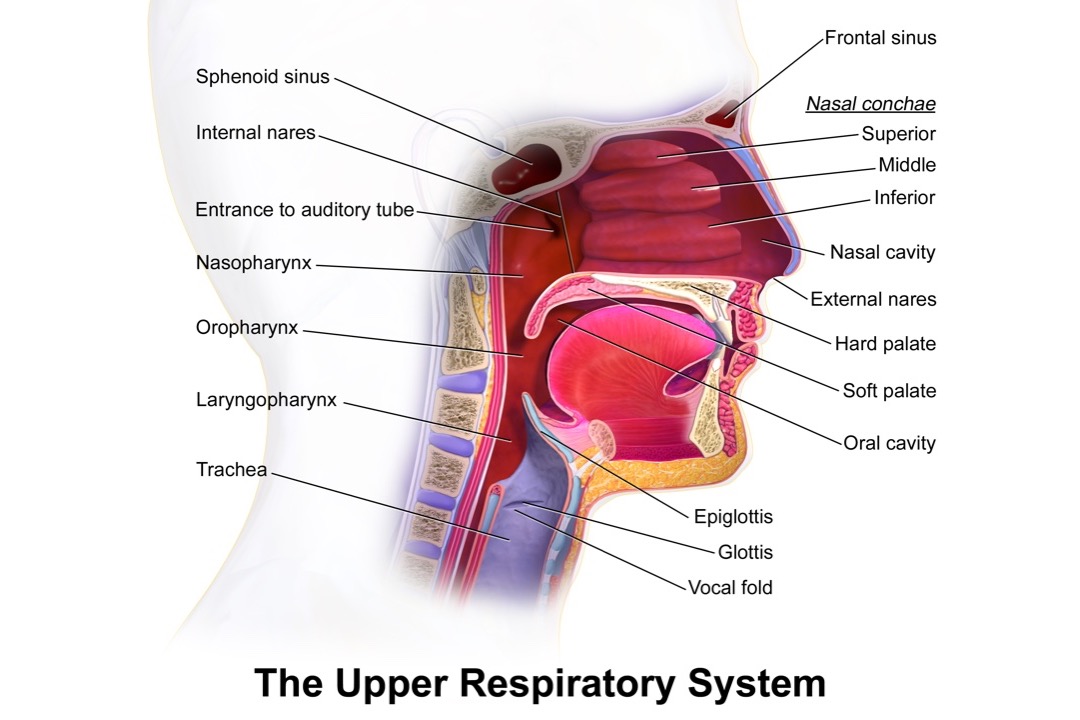
The second question, and the one nobody asks, is where in your airway the noise is actually being generated. A snore coming from a collapsing nostril and a snore coming from the base of the tongue are different mechanical problems, and the remedy that fixes one does nothing for the other. That is why most people cycle through three or four products and conclude that nothing works. They were never matching the fix to the source.
This is the version of the conversation a 15-minute visit does not have room for.
A Quick Self-Check Before You Try Anything
Sleep physicians use a screening questionnaire called STOP-BANG. It is not a diagnosis and it does not replace a sleep study, but it is a good filter for deciding whether to see a doctor before you spend money on a device. Score one point for each item that is true for you.
- Snoring. Loud enough to be heard through a closed door, or loud enough that your partner elbows you.
- Tired. You feel unrefreshed, sleepy, or foggy during the day even after a full night in bed.
- Observed. Someone has seen you stop breathing, gasp, or choke during sleep.
- Pressure. You have high blood pressure, or you are being treated for it.
- BMI. Body mass index over 35.
- Age. Over 50.
- Neck circumference. Over 17 inches in men, over 16 inches in women. Measure at the level of the Adam’s apple, not at the collar of your shirt.
- Gender. Male.
Three or more points means get evaluated before you buy anything. At three or more, your risk of obstructive sleep apnea is high enough that a home sleep test or a lab study is the appropriate next step, and an anti-snoring device could quiet the noise while leaving the underlying breathing problem untreated. That is the worst possible outcome, because the sound is what usually drives people to seek help in the first place.
Two of those items carry extra weight on their own. If anyone has witnessed you stop breathing, or if you gasp awake, that single finding is enough to justify an evaluation regardless of your total score.
One caveat on the gadgets people reach for at this stage. A fingertip pulse oximeter can show you overnight oxygen dips, and a pattern of repeated desaturations is a real signal worth bringing to your doctor. It is not a substitute for a sleep study. Consumer oximeters miss events, produce motion artifact through the night, and cannot count apneas or measure sleep stages. A normal-looking overnight trace does not rule out sleep apnea, so do not let one reassure you out of a proper test.
What Actually Causes Snoring
During wakefulness, the muscles of your throat hold the airway open without you thinking about it. When you fall asleep, that muscle tone drops. If the airway is already narrow, the reduced tone lets it narrow further, and air moving through a narrow tube speeds up and turns turbulent. Turbulent air sets the soft tissues vibrating, and that vibration is the sound.
Two things make it worse predictably. The first is REM sleep, when muscle tone reaches its lowest point of the night, which is why snoring often peaks in the second half of sleep and why the loudest episodes tend to cluster before dawn. The second is lying on your back, where gravity pulls the tongue and soft palate toward the posterior throat wall and narrows the airway exactly where the vibration happens.
The factors that set your baseline risk:
- Age. Muscle tone in the airway declines with age like everywhere else.
- Male sex. Men have longer, more collapsible airways and carry fat differently around the neck. Women catch up substantially after menopause.
- Anatomy. Enlarged tonsils and adenoids, a deviated nasal septum, chronically swollen turbinates, a long soft palate or elongated uvula, and a small or set-back lower jaw (retrognathia) all reduce the available space.
- Weight. Fat deposition around the neck and pharynx compresses the airway from outside.
- Family history. Airway shape is inherited, which is why snoring runs in families independent of weight.
- Hypothyroidism. An underactive thyroid thickens soft tissue and is a genuinely treatable cause I check for when snoring appears alongside fatigue, cold intolerance, and weight gain.
- Smoking. Chronic irritation swells the airway lining.
- Nasal obstruction. Anything that blocks the nose forces mouth breathing, which is itself a snoring mechanism.
Where Is Your Snore Coming From? Nasal, Palatal, or Tongue-Base
This is the section that matters most, and it is the one you will not find elsewhere. Snoring is generated in one of three places (sometimes two at once), and each has its own set of remedies that work and its own set that will waste your money.
You can narrow it down at home in about five minutes. Do these while awake, sitting up.
Test 1: the nose test. Close your mouth and breathe in through your nose, firmly. Then press one nostril closed and inhale through the other, and repeat on the opposite side. You are looking for two things: obvious blockage, and a nostril sidewall that visibly sucks inward and closes off as you inhale. Then try a variation clinicians call the Cottle maneuver: place two fingers on your cheek beside your nose and gently pull the skin outward and up, which opens the nasal valve. If breathing suddenly becomes dramatically easier, you have a nasal valve component.
Test 2: the jaw-advance test. Push your lower jaw forward so your bottom teeth sit ahead of your top teeth. Hold it there and try to make your snoring sound, or just breathe and notice how the throat feels. If the snore is much harder to produce or the airway feels distinctly more open, the base of your tongue is a major contributor.
Test 3: the open-mouth versus closed-mouth test. Try to reproduce your snore with your mouth closed and your teeth together. Then try with your mouth open. If you can only make the sound with your mouth open, you are likely a mouth-breathing or palatal snorer. If you can produce it with your mouth firmly closed, the tongue base is more likely involved.
| Snore source | What you notice | What the tests show | What actually helps | What will not help |
|---|---|---|---|---|
| Nasal | Worse during colds and allergy season, dry mouth on waking, a whistling or high-pitched quality | Blocked or collapsing nostril; the Cottle maneuver improves breathing markedly | Nasal strips, internal nasal dilators, saline rinses, steroid nasal spray, allergy treatment, septoplasty or turbinate reduction if structural | Chin straps (blocking the mouth when the nose is obstructed is counterproductive and unsafe), jaw-advancement devices |
| Palatal | A fluttering, rattling sound; mouth falls open in sleep; often the loudest type | Snore reproducible only with the mouth open | Positional therapy, weight loss, alcohol timing, myofunctional exercises, treating any nasal blockage first so the mouth can stay closed, palate procedures for refractory cases | Nasal dilators alone if the nose is already clear |
| Tongue base | Deep, low-pitched sound; strongly worse on the back; often the type most linked to sleep apnea | Snore is abolished or reduced when the jaw is held forward | A custom mandibular advancement device fitted by a dentist, positional therapy, weight loss, myofunctional exercises | Nasal strips, chin straps, over-the-counter night guards |
Match the fix to the row you landed in. If two rows describe you, treat the nasal component first, because clearing the nose is what makes every other intervention possible.
Sleep Position
A large share of snorers are position-dependent: loud on the back, quiet or nearly quiet on the side. If that describes you, positional therapy is the single highest-yield free intervention available.
The difficulty is staying on your side after you fall asleep. The tennis-ball trick still works and costs nothing: sew a tennis ball into a pocket on the back of a snug shirt, or pin a sock containing one to the back of your pajama top, so that rolling supine is uncomfortable enough to prompt a turn without fully waking you. Commercial positional trainers do the same thing with a vibrating sensor. Either way, expect two to four weeks before the new position feels automatic.
Head elevation helps too, and here the method is more important than the amount. Raising the entire upper body by about 30 to 45 degrees keeps the head, neck, and chest in one line and genuinely opens the airway, which is what a proper wedge pillow does. Stacking two or three ordinary pillows under your head produces the opposite result. It flexes the neck forward, kinks the airway at the level of the throat, and can make snoring measurably worse while leaving you with morning neck and shoulder pain. If you are a side sleeper, the goal is neutral alignment rather than height, which is where a properly contoured cervical pillow earns its place: it fills the gap between your ear and the mattress so your neck stays straight instead of bending toward the shoulder.
One more thing worth checking, because it drives people onto their backs without their noticing: overheating. If you are sweating and thrashing at 3am, you will end up supine. A cooling pillow and a cooler bedroom (most people sleep best in the mid to upper 60s Fahrenheit) keep you in the position you chose.
Alcohol, Sedatives, and Medications That Make Snoring Worse
Every one of these works by the same mechanism: they suppress the muscle tone that holds your airway open. They do not just make snoring louder, they can convert simple snoring into frank obstructive events in someone who was borderline.
- Alcohol. The most powerful and most modifiable. A drink within three hours of bed relaxes the pharyngeal muscles and reliably worsens snoring. The same drink at 6pm often does not. Timing matters as much as quantity.
- Benzodiazepines. Lorazepam, alprazolam, diazepam, clonazepam.
- Z-drug sleep aids. Zolpidem (Ambien), eszopiclone, zaleplon.
- Opioids. All of them, and they additionally blunt the brain’s drive to breathe.
- Muscle relaxants. Cyclobenzaprine, carisoprodol, tizanidine.
- First-generation antihistamines. Diphenhydramine above all.
That last one deserves emphasis, because most people taking it do not know they are. Diphenhydramine is the active ingredient in nearly every over-the-counter product with “PM” in the name, including the nighttime versions of common pain relievers and cold medicines. People take them precisely because they sleep badly, which is often because they snore, and the medication makes the snoring worse. If you rely on a nightly PM product, that is worth unwinding. Melatonin does not relax airway muscles the way an antihistamine does, and it is a more sensible starting point for sleep-onset trouble; I compare the reasonable options in melatonin vs magnesium for sleep, and the practical dosing points are covered in my guide to melatonin supplements. Never stop a prescribed benzodiazepine or opioid on your own. Bring the list to your doctor and ask which items can be reduced, timed differently, or swapped.
Nasal Congestion, Allergies, and the Congested Snorer
A blocked nose forces mouth breathing, and mouth breathing sets the soft palate vibrating. That is why the seasonal snorer, quiet for nine months and unbearable for three, is almost always an allergy problem rather than an airway problem.
Sort out the cause before you buy anything. If your snoring tracks pollen counts, worsens in a specific room, or comes with itchy eyes and sneezing, treat the allergy. Second-generation oral antihistamines and, more effectively for nasal blockage, intranasal corticosteroids are the mainstay; I go through the differences in my guide to allergy medicine. Steroid nasal sprays work on swelling rather than symptoms and need one to two weeks of consistent daily use before you judge them, which is where most people quit too early. My review of nasal sprays covers which type does what and, importantly, why decongestant sprays like oxymetazoline must not be used beyond three consecutive days: past that point they cause rebound congestion that leaves you more blocked than when you started.
Saline rinsing before bed clears allergens and thins mucus, and it pairs well with the sprays because it clears the passage the medication needs to reach. For thick congestion from a cold or sinus infection, a warm steam inhaler loosens secretions enough to get through the night. If your nose is blocked every single day regardless of season, that is a structural question for an ENT rather than a pharmacy question, and a septoplasty or turbinate reduction can be genuinely curative for the right patient.
Devices Compared: Nasal Strips, Dilators, Mouthpieces, Chin Straps, and Mouth Tape
Here is the honest accounting. Note the “best for” column, because it maps directly back to the snore-source framework above.
| Device | How it works | Best for | Evidence strength | Main limitation |
|---|---|---|---|---|
| External nasal strips | An adhesive spring band pulls the nostril sidewalls outward, widening the nasal valve | Nasal snorers, especially nasal valve collapse | Moderate for improving nasal airflow, weak and inconsistent for reducing snoring loudness | Does nothing for palatal or tongue-base snoring; adhesive fails on oily skin |
| Internal nasal dilators | A small stent sits inside each nostril and holds it open mechanically | Nasal snorers; often more effective than strips for valve collapse | Similar to strips, with some studies favoring internal devices | Uncomfortable for many people; requires cleaning; easy to dislodge |
| Mandibular advancement device (MAD) | Holds the lower jaw forward, pulling the tongue base away from the throat wall | Tongue-base snorers; the jaw-advance test predicts response well | Strongest evidence of any oral device, including for mild to moderate sleep apnea when prescribed and fitted | Needs a dentist for proper fitting; can cause jaw pain and bite changes; requires adequate healthy teeth |
| Over-the-counter night guards | A boil-and-bite tray that covers the teeth | Teeth grinding, not snoring | Good for bruxism, essentially none for snoring | A standard night guard does not advance the jaw at all, so it will not address a tongue-base snore. Do not buy one expecting it to |
| Chin straps | A fabric band under the chin holds the mouth closed | Mouth-breathing palatal snorers whose nasal airway is clear | Weak. Small studies show little effect on snoring or apnea | Unsafe and counterproductive if the nose is blocked; frequently just slides off overnight |
| Mouth tape | Adhesive across the lips to enforce nasal breathing | Palatal snorers with a completely clear nose and no sleep apnea | Very limited. A few small studies, no large trials | See the safety note below |
On mouth taping specifically. It has become popular well ahead of its evidence, and I want to be plain about it. Sealing the mouth shut is only tolerable if you can breathe freely through your nose all night, and the people most drawn to taping are frequently the people whose noses block. There are three situations where I would not use it at all: untreated or suspected obstructive sleep apnea, any degree of chronic nasal obstruction, and after alcohol or any sedating medication. In apnea, the mouth can function as a partial escape route during an obstructive event, and removing it while leaving the apnea untreated is the wrong trade. If you have never been evaluated and you snore loudly, get the sleep study before you tape.
And the rule that applies to every row of that table. None of these products treat obstructive sleep apnea. They may reduce the sound while the breathing problem continues underneath, and a quieter bedroom can be mistaken for a solved problem. Only the mandibular advancement device has an apnea role, and only when prescribed and titrated by a clinician after a diagnosis.
Throat and Tongue Exercises
Myofunctional therapy is the most underused snoring intervention I know of. It targets the actual mechanism (loss of muscle tone in the tongue and pharynx) rather than working around it, it costs nothing, and it has been studied in adults with snoring and with mild to moderate sleep apnea, with reductions in both snoring intensity and apnea severity. The catch is that it requires daily practice for about three months before the benefit is established, which is why so few people finish.
Do these once or twice a day, about 10 minutes total.
- Tongue slide. Press the tip of your tongue against the ridge just behind your upper front teeth, then slide it backward along the roof of your mouth. 20 repetitions.
- Tongue suction and hold. Suction the entire tongue flat against the roof of your mouth and hold for 5 to 10 seconds. 10 repetitions. This one builds the tone that matters most.
- Tongue press-down. Place the tip of your tongue against the back of your lower front teeth, then press the back of the tongue down into the floor of the mouth. Hold 5 seconds. 20 repetitions.
- Soft palate lift. Say the vowel “ah” with an exaggerated, sustained voice while feeling the back of your palate rise. 20 repetitions. Singing works on the same muscles, which is why singers report improvement.
- Cheek pull. Hook a clean finger inside one cheek and pull outward while using the cheek muscle to resist. 10 pulls per side.
Add nasal breathing practice: through the day, keep your lips closed and your tongue resting on the roof of your mouth. Nasal breathing while awake trains the pattern you want at night. Expect the first noticeable change somewhere between weeks 6 and 8, and judge the result at three months, not three weeks.
Weight, and Why a Small Loss Helps More Than People Expect
Fat around the neck and inside the pharyngeal walls compresses the airway from the outside, and the airway is a small structure, so small external changes produce large internal ones. The relationship is not linear in the direction people assume. You do not need to reach an ideal weight to see the benefit. In the research on weight and airway obstruction, roughly a 10 percent reduction in body weight produces a substantially larger proportional improvement in obstruction severity. For a 220-pound person, that is 22 pounds, not 60.
Neck circumference is the number that tracks snoring more closely than the scale does. Over 17 inches in men and over 16 inches in women is the threshold used in screening, and a half-inch reduction there often shows up in the bedroom before the pants fit differently. Measure your neck when you start, not just your weight, and re-measure monthly. Tracking weight consistently helps as well, and a good bathroom scale with body-composition measurement gives you a better trend line than an occasional weigh-in at the doctor’s office.
The relationship runs both ways, which is worth knowing when progress stalls. Fragmented sleep raises ghrelin and lowers leptin, increasing appetite the next day, so untreated sleep apnea makes weight loss harder, and the added weight worsens the apnea. Treating the breathing often makes the weight work possible rather than the other way around.
Snoring in Women, and During Pregnancy
Women snore less than men before menopause and then largely close the gap afterward, as declining estrogen and progesterone reduce upper-airway muscle tone. Two problems follow from this. First, women with sleep apnea often present differently, reporting fatigue, insomnia, morning headaches, low mood, and difficulty concentrating rather than the classic loud snoring and witnessed apneas, and they are under-diagnosed as a result. Second, those symptoms get attributed to menopause itself and the airway question never gets asked. If you are a woman past menopause with new snoring and persistent daytime tiredness, ask specifically about a sleep study.
Pregnancy deserves its own paragraph because the stakes are higher. Snoring rises sharply during pregnancy from a combination of hormonal nasal congestion, increased blood volume, weight gain, and the diaphragm being pushed upward in the third trimester. Most of it is benign and resolves after delivery. What is not benign is the association: snoring that begins during pregnancy has been linked in multiple studies to gestational hypertension and preeclampsia, and to gestational diabetes. That association is strong enough that new-onset snoring in pregnancy is worth mentioning to your OB or midwife at your next visit, particularly alongside swelling, headaches, or a rising blood pressure. Side sleeping (left side especially, for circulatory reasons unrelated to snoring) and torso elevation are the safe first-line measures. Do not start any anti-snoring device, decongestant, or sleep aid in pregnancy without asking your obstetrician first.
When a Child Snores
Pediatric snoring is treated far more aggressively than adult snoring, and for good reason. In children, the consequences of disordered breathing during sleep show up in growth and behavior rather than in daytime sleepiness. A tired adult gets drowsy. A tired child gets hyperactive, inattentive, and irritable, which is why pediatric sleep apnea is regularly mistaken for ADHD.
Occasional snoring during a cold is normal. These are the findings that warrant a pediatrician visit:
- Snoring on most nights when the child is not sick
- Pauses in breathing, gasping, or visible struggling to breathe
- Chronic mouth breathing, day or night
- Restless sleep, unusual sleeping positions with the neck extended, or heavy sweating at night
- Bedwetting that starts again after the child was reliably dry
- Attention problems, hyperactivity, irritability, or a drop in school performance
- Poor growth, or a very large tonsil visible when the child says “ah”
The most common cause in children is enlarged tonsils and adenoids, and removing them (adenotonsillectomy) is curative in a large majority of pediatric obstructive sleep apnea. That is a fundamentally different situation from adult snoring, where surgery is a later-line option. Do not manage a snoring child with home remedies or devices. Get them examined.
How to Help a Partner Who Snores
The person losing the most sleep is often not the snorer, and that deserves acknowledging. Chronic partial sleep deprivation in a bed partner raises blood pressure, impairs concentration, and reliably corrodes the relationship, and it is the reason a lot of couples end up in separate bedrooms. A “sleep divorce” is a reasonable temporary arrangement while treatment gets sorted out, and it is far better than two people sleeping badly out of principle.
Protect your own sleep in the meantime. Well-fitted foam or moldable wax ear plugs with a high noise reduction rating handle the sound, and a white noise machine or fan masks the intermittent snorts and gasps that earplugs alone do not fully block, since it is the variability rather than the volume that keeps you awake.
For the conversation itself, three things help. Have it during the day, not at 2am. Lead with what you have observed about their health rather than about your sleep: “you stopped breathing several times last night and it worried me” lands very differently from “you kept me up all night again.” And offer to be useful. Record 20 seconds of it on your phone. You have information they physically cannot gather about themselves, and a partner-witnessed apnea reported at an appointment carries real clinical weight. Offer to go with them. Snoring is embarrassing in a way that makes people avoid the doctor’s office, and having someone in the room makes the visit happen.
CPAP, Oral Appliances, and Surgery: The Medical Options
If you have obstructive sleep apnea, or if simple snoring has not responded to everything above, these are the real treatments.
CPAP. Continuous positive airway pressure is the first-line treatment for moderate to severe obstructive sleep apnea and remains the most effective. A blower delivers pressurized air through a mask, splinting the airway open so it cannot collapse. It eliminates snoring almost entirely as a side effect. The obstacle is tolerance, and most CPAP failures are fixable equipment problems rather than genuine intolerance: the wrong mask style, a poor fit, air leaking into the eyes, or dryness that a heated humidifier resolves. If you were prescribed CPAP and abandoned it, go back and ask for a mask refit before concluding it does not work for you.
Oral appliances. A custom mandibular advancement device made and titrated by a dentist trained in dental sleep medicine is the main alternative for mild to moderate apnea, and for patients who cannot tolerate CPAP. It is meaningfully less effective than CPAP on average but far better than untreated apnea, and adherence tends to be higher. Follow-up matters: the jaw position needs adjusting over time and the bite needs monitoring.
Surgery. Reserved for specific anatomical problems rather than used as a general fix. Septoplasty and turbinate reduction address nasal obstruction. Tonsillectomy is highly effective when large tonsils are the cause, in adults as well as children. Palate procedures (including uvulopalatopharyngoplasty and various palatal implants) target the soft palate with variable results. Hypoglossal nerve stimulation, an implanted device that activates the tongue muscle with each breath, is an option for selected patients with moderate to severe apnea who cannot use CPAP. Every one of these depends on matching the procedure to the site of obstruction, which is precisely why the sleep study and an ENT airway examination come before any surgical conversation.
When to See a Doctor
Do not wait on any of the following. These warrant an appointment now, not after a two-week trial of anything:
- Witnessed pauses in your breathing during sleep
- Gasping, choking, or snorting yourself awake
- Falling asleep during the day when you did not intend to, especially while driving
- Morning headaches, particularly with a dry mouth and unrefreshing sleep
- Chest pain or heart palpitations at night
- High blood pressure that is difficult to control on medication
- A STOP-BANG score of three or higher
- Any snoring child with pauses, mouth breathing, bedwetting, or behavior changes
- New snoring during pregnancy, especially with swelling, headache, or rising blood pressure
For simple snoring with none of those features, a reasonable plan is two weeks of the free interventions: consistent side sleeping, no alcohol within three hours of bed, treating nasal congestion, reviewing sedating medications with your doctor, and starting the myofunctional exercises. If your partner reports real improvement, continue and add the myofunctional work out to three months. If two weeks produces nothing, stop cycling through products and get evaluated. Persistent loud snoring that does not respond to position and behavior changes is itself a reason to test for sleep apnea, even if you have none of the red flags above.
The one message I want to leave you with is the one I opened with. Snoring is a symptom, and the useful question is never “which device should I buy.” It is “where is the noise coming from, and is my breathing actually stopping.” Answer those two, and the right treatment is usually obvious. Skip them, and you will spend a year and a good deal of money on things that were never going to work. As always, this is general information rather than personal medical advice, and your own physician is the right person to interpret it for your situation.
Frequently Asked Questions
Why am I snoring so badly all of a sudden?
Can snoring be cured naturally?
Does snoring always mean sleep apnea?
Why would a thin person snore?
What is the best sleeping position to stop snoring?
How do you stop a person who snores?
Related Articles
About the Reviewer

Dr. David Taylor, MD, PhD
Drexel University College of Medicine (MD), Indiana University School of Medicine (PhD)
Dr. David Taylor is a licensed physician and medical researcher who founded BestRatedDocs in 2016. With an MD from Drexel University and a PhD from Indiana University School of Medicine, he combines clinical expertise with a passion for health technology to provide evidence-based product recommendations. Dr. Taylor specializes in health informatics and regularly evaluates medical devices, diagnostic equipment, and therapeutic products to help healthcare professionals and patients make informed decisions.