Digital vs Mercury Thermometer: An MD's Side-by-Side Comparison
Dr. David Taylor breaks down digital vs mercury thermometers: accuracy, safety, legality, disposal, and which type belongs in your home in 2026.
Updated
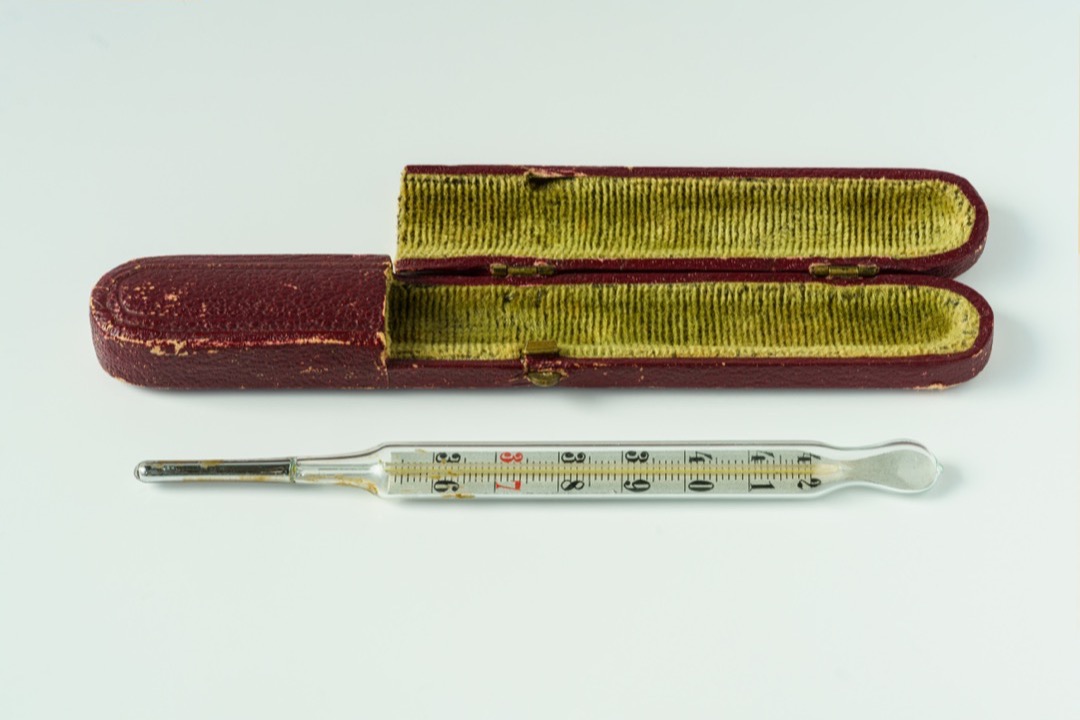
The question of digital versus mercury thermometer seems settled — digital thermometers have largely replaced mercury devices in homes, clinics, and schools across the United States. But the reasoning behind this shift is worth understanding in detail, because it touches on toxicology, regulatory history, measurement physics, and practical clinical use in ways that most online comparisons gloss over.
After two decades of clinical practice and thousands of patient encounters where temperature measurement was a first-line decision tool, I want to give you the complete picture: how each type works, what the accuracy data actually shows, why mercury was phased out, how to handle it safely if you still have one, and which thermometer belongs in your medicine cabinet today.
If you are ready to skip ahead to our product recommendations, our guides to the best forehead thermometers and best infrared thermometers cover the top digital options available right now. For those who want the full clinical context, read on.
How Each Type Works
Understanding the technology behind each thermometer type is the starting point for evaluating any accuracy or usability claim.
Mercury Thermometers: Thermal Expansion
A mercury thermometer is a sealed glass tube partially filled with liquid mercury. The tube narrows at one point — the constriction — above the mercury reservoir at the bulb end. When the bulb is exposed to body heat, mercury expands and rises through the constriction into the calibrated column above it. The constriction is engineered to prevent the mercury from falling back down as the thermometer is removed from the measurement site, allowing you to read the temperature at your leisure.
The relationship between mercury’s volume and temperature is predictable across the clinical range and has been documented to laboratory precision since the 18th century. This is why mercury became the reference standard for temperature measurement and held that position for over two centuries.
Mercury thermometers have no moving electronic parts, require no power source, and do not drift from calibration under ordinary storage conditions. Their primary limitation is that they require time — a minimum of three minutes for a valid oral reading, and up to five minutes for axillary — because mercury must reach thermal equilibrium with the measurement site.
Digital Thermometers: NTC Thermistor Technology
Modern digital thermometers use a negative temperature coefficient (NTC) thermistor — a semiconductor resistor whose electrical resistance decreases predictably as temperature increases. The thermistor is embedded in the probe tip and connected to a microprocessor that reads the resistance value, applies a calibration equation, and displays the corresponding temperature in Fahrenheit or Celsius.
Because the thermistor responds to temperature changes almost instantly at the circuit level, digital thermometers can complete a reading in 10 to 60 seconds depending on probe design and measurement site. The audible completion beep eliminates the timing guesswork that is one of the largest sources of error with mercury devices.
Digital infrared thermometers — including forehead scanners and tympanic (ear) thermometers — operate on a different principle. Rather than contact measurement, they detect the infrared radiation emitted by body tissue and convert the radiation intensity to a temperature value. These devices complete a reading in one to three seconds with no patient contact required.
Side-by-Side Comparison
| Feature | Digital Thermometer | Mercury Thermometer |
|---|---|---|
| Accuracy (rated) | ±0.2°F (±0.1°C) | ±0.1–0.2°F (±0.05–0.1°C) |
| Measurement time | 10–60 seconds | 3–5 minutes |
| Safety | No toxic materials | Mercury: neurotoxic if broken |
| Ease of use | Beeps when done; easy read | Requires timing; small markings |
| Battery required | Yes (typically 1 × AAA/LR41) | No |
| Breakage risk | Low (plastic housing) | High (glass, mercury release) |
| Legal to sell (US) | Yes, no restrictions | Banned in 14+ states |
| Cost | Low to moderate | Increasingly scarce; legacy devices only |
| Storage | Any orientation | Must be stored in protective case |
| Calibration drift | Possible with age/impact | Minimal under normal conditions |
| Recommended for home use | Yes | No |
Accuracy: Which Reads More Accurately?
This is the question I hear most often, and the honest answer requires separating laboratory accuracy from real-world accuracy.
In laboratory conditions, mercury thermometers have historically achieved tighter tolerances. A certified laboratory mercury standard can reach ±0.1°F (±0.05°C). Consumer-grade clinical mercury thermometers are typically rated at ±0.2°F (±0.1°C). Modern digital probes certified to FDA standards are also rated at ±0.2°F under controlled conditions — statistically equivalent to consumer mercury devices at the clinical grade.
In real-world home use, digital thermometers are more accurate in practice for one key reason: they eliminate user timing error. The most common source of inaccuracy with mercury thermometers is under-timing — most people remove the thermometer before three full minutes have elapsed, resulting in falsely low readings. A digital thermometer with an audible completion beep removes this variable entirely. A 1997 study published in the Journal of Emergency Nursing found that user compliance with mercury thermometer timing instructions was poor in home settings, contributing to clinically significant under-reads.
For the clinical threshold that matters most in practice — determining whether temperature exceeds 100.4°F (38°C), the pediatric and adult threshold for fever — both device types are sufficiently accurate when used correctly. The measurement site, however, makes a larger difference than the thermometer type: rectal measurement is the gold standard for accuracy, oral is reliable in cooperative patients, and axillary readings run 0.5–1°F below true core temperature regardless of which thermometer you use.
Safety and Mercury Toxicity
Mercury is classified by the EPA as a hazardous substance and by the WHO as one of the top ten chemicals of major public health concern. Understanding why matters — both for making the decision to replace a mercury thermometer and for knowing how to respond safely if one breaks.
Why Mercury Is Dangerous
The mercury in a clinical thermometer is elemental mercury — a liquid metal at room temperature with a vapor pressure that causes it to release mercury vapor even at ordinary indoor temperatures. Elemental mercury vapor, when inhaled, is absorbed rapidly through the lungs into the bloodstream and crosses both the blood-brain barrier and the placental barrier.
Neurological effects from acute high-dose exposure include tremors, cognitive impairment, and emotional instability. Chronic low-level exposure — the concern when a thermometer breaks indoors and cleanup is incomplete — is associated with more subtle neurological changes that are particularly concerning for children and developing fetuses. Young children face heightened risk because they breathe air closer to floor level where mercury vapor concentrates, and because their neurological systems are still developing.
A single broken clinical thermometer contains approximately 0.5–0.7 grams of elemental mercury. According to EPA modeling, this amount can elevate indoor air mercury concentrations above the reference concentration of 0.3 micrograms per cubic meter in an enclosed space for 24+ hours under normal room-temperature conditions.
Mercury Spill Cleanup Steps
If a mercury thermometer breaks in your home, do not panic — but do act promptly and correctly. Keep a pair of disposable gloves and a mercury spill kit (or these improvised alternatives) readily accessible if you still have mercury thermometers in the home.
Immediate steps:
- Remove all people and pets from the room immediately. Keep children and pregnant women out during the entire cleanup process.
- Open all windows and doors to the outside to ventilate. Close interior doors to prevent mercury vapor from spreading to other rooms.
- Turn off any central heating or air conditioning systems — HVAC circulation will spread vapor throughout the building.
- Do not use a vacuum cleaner — vacuuming breaks mercury droplets into smaller particles, dramatically increasing vapor surface area and airborne concentration.
- Put on disposable nitrile or latex gloves before handling any mercury-contaminated material.
- Use a stiff piece of cardboard to carefully roll visible mercury beads together into a small pile.
- Use an eyedropper or two pieces of tape to pick up the mercury beads and place them in a sealed plastic bag or airtight container.
- Use damp paper towels (not dry) to wipe the contaminated area, then seal those towels in a second plastic bag.
- Place all cleanup materials — gloves, bags, cardboard — in a labeled bag marked “Mercury — Do Not Throw in Trash.”
- Contact your local household hazardous waste program for proper disposal instructions.
If exposure was significant or symptoms develop (metallic taste, headache, difficulty breathing), seek medical evaluation. For major spills, contact your state environmental agency or the EPA at 1-800-424-8802.
For general home emergency preparedness, a well-stocked first aid kit should accompany any home health monitoring setup — and replacing mercury thermometers is one of the first updates worth making.
Are Mercury Thermometers Legal?
The regulatory history is more layered than most people realize, and the distinction between federal and state law matters practically.
Federal Regulatory Status (EPA/FDA)
At the federal level, the EPA initiated a voluntary phase-out of mercury fever thermometers in 2001 through its Mercury-Free Medical Measurement program, working with manufacturers and retailers to remove mercury thermometers from retail shelves nationwide. This was a voluntary program, not a binding regulation — the EPA does not have statutory authority to ban household thermometer sales under the Clean Air Act alone.
The FDA has jurisdiction over medical devices including thermometers, and while the FDA has not issued a binding prohibition on mercury thermometer sales for individual consumers, it supports the phase-out policy and does not permit new mercury thermometer products to enter the market without regulatory scrutiny. In effect, no new mercury clinical thermometers have been manufactured for the US consumer market in over two decades.
State-Level Bans
State legislatures have moved further than the federal government. As of 2026, laws restricting the sale or distribution of mercury thermometers are in effect in at least the following states: California, Connecticut, Illinois, Indiana, Louisiana, Maine, Maryland, Massachusetts, Michigan, Minnesota, New Hampshire, New York, Rhode Island, and Vermont. Several additional states restrict mercury thermometers in schools, daycares, and healthcare facilities specifically.
The key legal distinction in virtually every state is between sale and possession. No US state currently makes it a criminal offense for a private citizen to possess a mercury thermometer they acquired before restrictions took effect. The laws target manufacture, sale, and distribution — not personal ownership.
However, the practical and ethical recommendation is clear: if you have a mercury thermometer, replace it with a modern digital alternative and dispose of the mercury device properly through a household hazardous waste (HHW) facility — never the regular trash, toilet, or drain.
Proper Disposal
To find a mercury thermometer disposal location near you:
- Visit earth911.com and search “mercury thermometer”
- Contact your local municipal solid waste program or health department
- Many pharmacies in states with phase-out programs accept mercury thermometers for safe disposal
Do not ship mercury thermometers in regular mail — mercury-containing items are regulated as hazardous materials under USPS and FedEx shipping rules.
Which Type Is More Practical for Home Use?
The practical recommendation is unambiguous: a digital thermometer is the right choice for home use in 2026.
The performance case for mercury — marginal improvement in ideal laboratory accuracy — is eliminated in real-world use by user timing error. Meanwhile, the safety risks of mercury are real, the devices are increasingly difficult to source, batteries in digital units last years under normal use, and modern digital thermometers are inexpensive and reliable.
Here is a simple decision matrix:
| Situation | Recommended Thermometer |
|---|---|
| Infant or toddler (rectal measurement) | Digital rectal thermometer |
| Child or adult (oral measurement) | Digital oral probe |
| Contactless screening (multiple people, quick checks) | Non-contact infrared forehead thermometer |
| Monitoring illness progression multiple times daily | Digital oral or tympanic |
| Still have a mercury thermometer at home | Replace it; dispose via HHW program |
The only context in which mercury thermometers retain any legitimate role is in precision laboratory calibration — and those are certified reference instruments handled by trained personnel, not consumer devices.
What Type of Digital Thermometer Should You Buy?
Once you’ve committed to a digital thermometer, the next decision is which type fits your household’s needs. The three main categories each serve different use cases.
Digital oral/rectal probes are the most accurate option for home use. They provide core-temperature readings with minimal site variation and are suitable for all ages — rectal for infants and young children, oral for older children and adults. These are the workhorses of home temperature monitoring.
Infrared forehead thermometers trade a small margin of accuracy for dramatic speed and convenience — a reading in one to three seconds with no probe contact. They are excellent for serial monitoring during illness, for use with sleeping or uncooperative children, and for screening multiple household members quickly. Our comprehensive guide to the best forehead thermometers covers the top-rated options in detail, including the narrow-beam infrared models that produce the most consistent readings.
Tympanic (ear) thermometers measure the infrared radiation from the tympanic membrane, which reflects hypothalamic temperature more directly than skin surface measurement. They are fast, convenient, and accurate in adults and older children, but can produce variable readings in infants under six months due to narrow ear canals. For homes with young children, combining a rectal probe for infants with a forehead scanner for older family members is a practical two-device setup.
Bluetooth-connected thermometers add continuous monitoring and historical logging to standard digital accuracy — particularly useful for monitoring fever trends over a multi-day illness or for caregivers who need remote alerts. Our guide to the best Bluetooth thermometers covers the connected options that pair with iOS and Android for detailed fever tracking.
For broader home health monitoring, thermometer data becomes most clinically useful when combined with oxygen saturation from best pulse oximeters and, for patients with relevant conditions, best glucose monitors — together providing a comprehensive picture of physiological status at home.
How to Choose the Right Digital Thermometer
With digital thermometers confirmed as the right category, the key decision factors narrow to measurement site, age of user, and feature priorities.
Measurement site and accuracy: Rectal measurement is the most accurate site for all ages. If you have an infant in the household, a dedicated digital rectal thermometer is a non-negotiable item. For households with only adults and older children, an oral digital probe provides equivalent accuracy with more comfort.
Age of primary user: Infants under three months — rectal digital is the standard of care per the American Academy of Pediatrics. Children 3 months to 4 years — rectal for highest accuracy, or temporal artery (forehead) as a convenient alternative. Children 4 years and older, and adults — oral digital or tympanic are both appropriate.
Speed versus accuracy tradeoff: Non-contact infrared thermometers sacrifice approximately 0.3–0.5°F of accuracy compared to oral probes under optimal conditions. For most home health decisions, this tradeoff is acceptable. When a precise reading is needed — for example, determining whether an infant’s temperature meets the emergency threshold of 100.4°F rectally — use the most accurate method available.
Hygiene considerations: In multi-person households, disposable probe covers are worth factoring into the cost of an oral/rectal thermometer. Some models include a supply of covers; others require aftermarket purchases. Infrared and forehead thermometers eliminate the probe hygiene question entirely.
Data logging and connectivity: For patients managing chronic illness or for parents monitoring a child through a multi-day fever, a thermometer with a memory function or Bluetooth logging provides clinical context that single-reading devices cannot. See our best Bluetooth thermometers guide for connected options.
Final Verdict
Mercury thermometers are a legacy technology that belongs in the same category as leaded paint and asbestos insulation — historically useful, now replaced by safer alternatives that perform as well or better in every practical context. The accuracy advantage of mercury exists only in controlled laboratory conditions and is eliminated in real-world home use by the timing errors that plague human compliance with three-minute measurement protocols.
The right home thermometer is a modern digital device matched to your household’s age range and use case: a digital rectal probe for households with infants, a digital oral probe for adults and older children, and an infrared forehead thermometer for quick contactless screening. Our guides to the best forehead thermometers and best infrared thermometers will help you navigate the specific models worth considering.
If you still have a mercury thermometer in your medicine cabinet, replace it today — not because possession is illegal, but because the risk-benefit calculation no longer supports keeping one. Contact your local household hazardous waste program for safe disposal, and invest the modest cost of a quality digital thermometer in the reliable, fast, and safe technology that two decades of clinical and regulatory consensus has confirmed as the superior choice.
As always, a thermometer is a screening tool — not a substitute for clinical evaluation. If a temperature reading concerns you, consult your healthcare provider rather than relying solely on home measurement to guide treatment decisions.
Frequently Asked Questions
Which is more accurate — digital or mercury thermometer?
What are the disadvantages of digital thermometers?
Why don't we use mercury thermometers anymore?
What type of thermometer is most accurate for home use?
Is it illegal to own a mercury thermometer?
Related Articles
About the Reviewer

Dr. David Taylor, MD, PhD
Drexel University College of Medicine (MD), Indiana University School of Medicine (PhD)
Dr. David Taylor is a licensed physician and medical researcher who founded BestRatedDocs in 2016. With an MD from Drexel University and a PhD from Indiana University School of Medicine, he combines clinical expertise with a passion for health technology to provide evidence-based product recommendations. Dr. Taylor specializes in health informatics and regularly evaluates medical devices, diagnostic equipment, and therapeutic products to help healthcare professionals and patients make informed decisions.