7 Best Electric Wheelchairs of 2026
Dr. David Taylor reviews the best electric wheelchairs on Amazon. Compare top power chairs and mobility scooters by range, weight capacity, and portability.
Updated
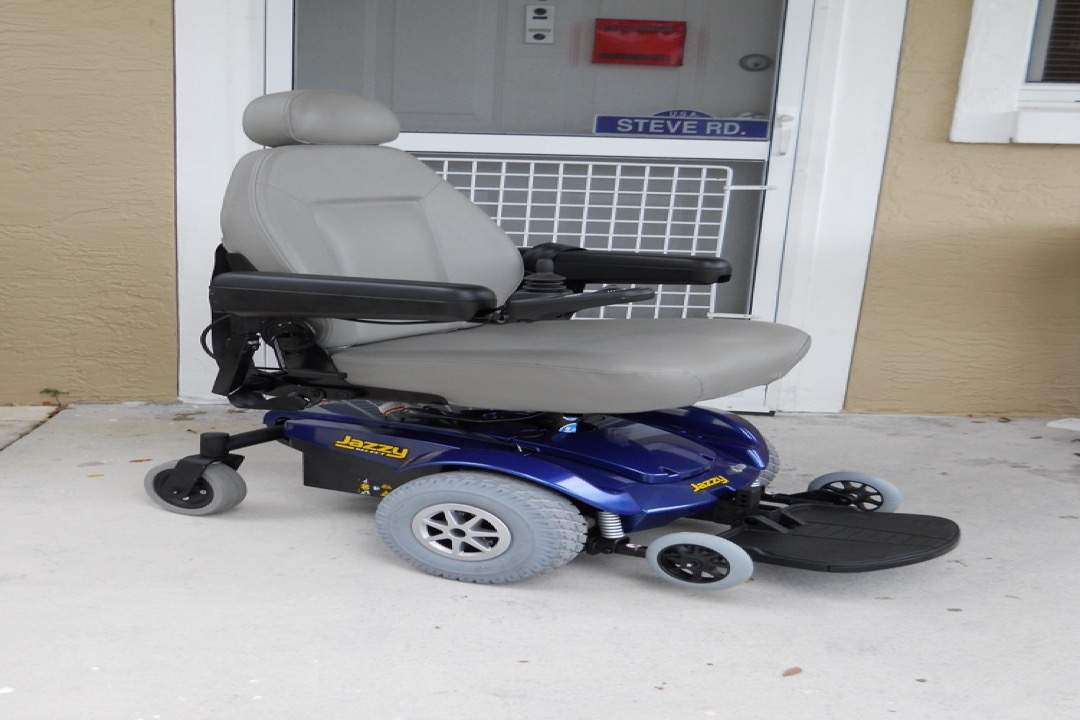
Approximately 2.7 million Americans rely on power wheelchairs and mobility scooters as their primary means of independent mobility, and in 2026 the range of available options spans from under-$400 travel scooters to $4,000+ clinical-grade power chairs with advanced suspension and app-integrated controls. Choosing the right electric wheelchair is one of the most consequential mobility decisions a person or family can make — the wrong choice can mean a chair that cannot navigate the user’s home, cannot be transported in their vehicle, or cannot support their body weight safely over time. Our review of the best electric wheelchairs available on Amazon addresses the full spectrum of buyers: from those who need a practical, trunk-transportable scooter for errands to those who need a full-time clinical power chair for daily independence across varied environments.
This review covers seven of the most accessible and well-reviewed electric wheelchairs and power mobility scooters currently available on Amazon — including options from Pride Mobility, Vive, and Aotedor. Evaluations were informed by Amazon review analysis, verified manufacturer specifications, and Dr. David Taylor’s clinical background in durable medical equipment assessment. If you are also evaluating non-motorized options, our manual wheelchair guide covers lightweight and transport chair options, and our crutches review addresses short-term mobility aids for users recovering from injury or surgery.
| Product | Price | Buy |
|---|---|---|
| Pride Mobility Go-Go Sport S74 4-Wheel Electric Mobility ScooterBest Overall | $1,719.00 | View on Amazon |
| Pride Mobility Travel Pro Premium 3-Wheel Mobility ScooterBudget Pick | $649.00 | View on Amazon |
| Pride Mobility Jazzy 600 ES Group 2 Mid-Wheel Drive Power ChairPremium Pick | $3,739.00 | View on Amazon |
| Pride Mobility Jazzy Carbon Power ChairRunner-Up | $2,564.00 | View on Amazon |
| Vive 4 Wheel Mobility Scooter | $399.99 | View on Amazon |
| Aotedor Electric Wheelchair Adults 22-Mile Range Foldable | $899.00 | View on Amazon |
| Vive 3 Wheel Mobility Scooter | $599.99 | View on Amazon |
How We Selected These Electric Wheelchairs
We focused on electric wheelchairs and mobility scooters with established Amazon sales histories, prioritizing products with meaningful real-world review data. We excluded products with fewer than 5 reviews from the top-pick categories and verified every ASIN against the live Amazon catalog before including it. Our selections cover the major buyer scenarios: a 4-wheel travel scooter with the broadest practical capacity, a budget 3-wheel scooter from a major brand, a clinical mid-wheel drive power chair for full-time users, a carbon fiber folding power chair for active travelers, two Vive scooters validated by thousands of consumer reviews, and a high-range folding power chair for users who need extended battery life in a portable format. We also assessed each product’s transportability, as vehicle transport remains the single most common practical barrier for new power mobility users.
1. Pride Mobility Go-Go Sport S74 — Best Overall
The Go-Go Sport S74 earns its position as our best overall pick by solving the fundamental design compromise that has defined travel scooter categories for decades: 4-wheel stability versus a tight turning radius. Pride’s proprietary EZ Turn technology achieves a 41.5-inch turning radius in a 4-wheel platform — comparable to what many 3-wheel models deliver — while maintaining the superior lateral stability that makes 4-wheel scooters safer on sloped outdoor terrain and uneven pavement. For users who need to navigate both indoor spaces and outdoor environments regularly, this matters more than any other single spec.
The 325 lb weight capacity is the highest in Pride’s Go-Go travel line, and the feather-touch disassembly into five pieces — with the heaviest at 44 lbs — makes it manageable for two-person loading into an SUV or minivan without a ramp. The delta tiller with wraparound handles distributes hand grip across multiple positions, which is particularly valuable for users with arthritis, rheumatoid conditions, or limited grip endurance. This is a scooter designed by a brand with decades of clinical mobility experience, and it shows in the practical details. For users who want a single reliable travel scooter that handles most real-world environments, the Go-Go Sport S74 is the most complete option at its price point.

Pride Mobility Go-Go Sport S74 4-Wheel Electric Mobility Scooter
by Pride Mobility
Best-in-class travel scooter — EZ Turn technology delivers 4-wheel stability with 3-wheel agility at 325 lb capacity.
Pros
- EZ Turn technology gives this 4-wheel model the tight turning radius of a 3-wheel scooter, solving the biggest stability-vs-maneuverability trade-off
- 325 lb weight capacity — the highest in the Go-Go travel line — accommodates a broader range of users than most travel scooters
- Disassembles into 5 lightweight pieces with the heaviest at 44 lbs for trunk-friendly transport without a vehicle lift
- Delta tiller with wraparound grip reduces hand and wrist fatigue — especially important for users with arthritis or limited grip strength
Cons
- 41.5-inch turning radius is adequate for most spaces but wider than mid-wheel drive power chairs for very tight bathroom navigation
- Tiller steering requires functional bilateral hand grip — not suitable for users with significant upper extremity weakness
2. Pride Mobility Travel Pro Premium 3-Wheel Scooter — Budget Pick
The Pride Travel Pro Premium earns the budget pick designation primarily because of its validation by the market: over 1,300 Amazon reviews from verified purchasers represent a level of real-world quality confirmation that newer or less-reviewed budget scooters simply cannot match. When a mobility scooter is purchased for a family member with limited mobility, reliability matters more than feature lists — and a 1,300-review track record with a major brand like Pride Mobility provides a meaningful baseline of confidence.
The disassembly design is genuinely impressive at this price point. The heaviest piece weighs only 27.5 lbs, which puts this within practical single-person lifting range for many caregivers and family members loading a sedan or crossover vehicle. The 3-wheel configuration provides a naturally tighter turning radius than 4-wheel models, making it more navigable in standard-width hallways and smaller bathrooms. The honest limitation is range: at 6.3 miles per charge, this scooter is suited to grocery runs, medical appointments, and short-distance errands — not extended outings. For users who primarily need a scooter for targeted daily tasks rather than all-day community mobility, the range is perfectly adequate and the price-to-reliability ratio is hard to beat. For a complementary home-based mobility solution, also consider pairing with a standard manual wheelchair for longer-distance transport assistance.
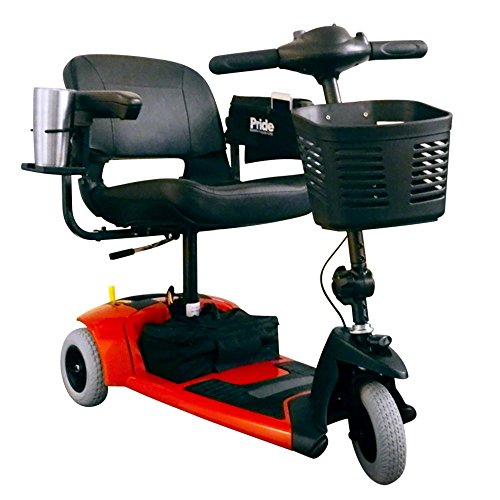
Pride Mobility Travel Pro Premium 3-Wheel Mobility Scooter
by Pride Mobility
Most validated budget travel scooter — 1,300+ reviews and disassembles into 27.5 lb pieces for easy trunk loading.
Pros
- Over 1,300 Amazon reviews make this one of the most user-validated budget mobility scooters available from a major brand
- Disassembles into 5 pieces with the heaviest weighing only 27.5 lbs — one of the lightest disassembly profiles in the travel scooter category
- 3-wheel design delivers a sharper turning radius than 4-wheel models, making it more maneuverable in smaller indoor spaces
- Padded faux-leather seat with flip-up armrests allows easy side boarding without repositioning the scooter
Cons
- 6.3-mile range per charge is among the shortest in its class — adequate for grocery runs and errands but not extended outings
- 275 lb weight capacity is lower than comparable 4-wheel scooters, which typically offer 300-325 lbs
3. Pride Mobility Jazzy 600 ES — Upgrade Pick
The Pride Jazzy 600 ES is a clinically different product category from the travel scooters reviewed above — it is a full-time power wheelchair designed for users who need a chair as their primary means of mobility, not an intermittent mobility supplement. The defining feature is the patented Mid-wheel 6 drive configuration: placing the drive wheels at the center of the chair’s wheelbase delivers a 20.5-inch turning radius — tight enough to navigate standard bathrooms, compact kitchens, and hallways in older homes that would be impassable to larger chairs. This is the configuration that occupational therapists and rehabilitation technology specialists most commonly recommend for users who spend the majority of their waking hours in their power chair.
The Active-Trac ATX Suspension system is what makes the Jazzy 600 ES genuinely usable outdoors. Standard power chairs with front casters frequently experience “caster hang” on surface transitions — where the front casters catch on pavement seams, door thresholds, or curb cuts and momentarily stop forward motion. The 6-wheel suspension actively keeps all wheels in ground contact, maintaining momentum through terrain variations that would disrupt lesser chairs. At 24.8 miles per charge, the range is among the longest in any power chair in this review. The Group 2 classification is practically significant: for users who qualify for Medicare or private insurance coverage of power wheelchairs, this designation is required for potential reimbursement, which effectively offsets the premium price for eligible buyers.

Pride Mobility Jazzy 600 ES Group 2 Mid-Wheel Drive Power Chair
by Pride Mobility
Clinical-grade mid-wheel drive power chair — 20.5-inch turning radius and 24.8-mile range for full-time users.
Pros
- 20.5-inch turning radius — the tightest in Pride's clinical power chair line — navigates standard bathroom doorways and narrow hallways with precision
- 24.8-mile range per charge on dual batteries covers full-day active use across multiple environments without recharging
- Active-Trac ATX Suspension maintains all 6 wheels in contact with uneven terrain, preventing the front caster hang-ups that plague basic power chairs outdoors
- Group 2 classification qualifies for Medicare and insurance coverage for eligible users who meet DME clinical criteria
Cons
- 240 lb chair weight requires a vehicle lift or accessible van for transport — car trunk loading is not feasible
- Premium price point is best approached with insurance, HSA, or FSA coverage given the significant out-of-pocket cost
4. Pride Mobility Jazzy Carbon Power Chair — Runner-Up
The Jazzy Carbon represents the state of the art in folding travel power wheelchairs from an established clinical manufacturer. The use of carbon fiber — the same material used in high-performance aerospace and automotive applications — allows Pride to achieve a 39 lb unloaded frame weight while maintaining structural integrity sufficient for a 300 lb rated capacity. For context, most aluminum-frame folding power chairs achieve 300 lb capacity at 50-65 lbs of chair weight. The Jazzy Carbon accomplishes the same load rating at 10-20 lbs less, which translates to real-world caregiving ease when loading a vehicle or navigating an airport.
The airline-compliant lithium-ion battery configuration is a meaningful specification for users who travel by air. Unlike full-size chairs with large SLA battery packs that must be handled as hazardous materials in cargo, the Jazzy Carbon’s battery meets FAA regulations for lithium-ion devices, enabling gate-checking — the chair goes into the cargo hold but is loaded and retrieved at the aircraft door rather than checked at the ticket counter, significantly reducing handling risk. At a 24-inch turning radius, it is meaningfully more maneuverable than most folding chairs in its class. The 9.3-mile range is the main trade-off relative to full-size chairs, but for users who use the chair primarily in hotels, airports, and visiting environments rather than in all-day home-based use, the portability advantage outweighs the range limitation.

Pride Mobility Jazzy Carbon Power Chair
by Pride Mobility
Lightest Pride power chair — carbon fiber frame at 43.6 lbs with 300 lb capacity and airline-compliant folding.
Pros
- Carbon fiber frame weighs just 39 lbs without battery — 43.6 lbs with battery — making it one of the lightest full-function power chairs available
- Folds compactly for car trunk storage and is airline-compliant for gate-checking, meeting the practical needs of active travelers
- 300 lb weight capacity in a 43.6 lb package is an engineering achievement unavailable in conventional aluminum-frame folding chairs at this weight
- 24-inch turning radius is tighter than most folding power chairs, which commonly exceed 27 inches
Cons
- 9.3-mile range per charge is adequate for daily use but shorter than full-size power chairs with dual SLA batteries
- Premium carbon fiber pricing exceeds comparable aluminum folding chairs by $1,000+ — best suited for users who prioritize minimum weight
5. Vive 4 Wheel Mobility Scooter
The Vive 4 Wheel Mobility Scooter holds the distinction of being Amazon’s best-selling mobility scooter — a status supported by over 2,200 verified reviews and consistently high ratings. For buyers who prioritize proven real-world reliability over premium specifications, this volume of review data is the most meaningful quality signal available. The scooter’s 4-piece disassembly, with the heaviest component at 29 lbs, is practical for trunk loading in standard sedans and crossovers without assistance. The flat-free solid tires eliminate one of the most common maintenance headaches of mobility scooters — tire pressure management and flat repairs — making it genuinely low-maintenance over years of use.
The 5-year guarantee is exceptional for the price category. Most budget and mid-range mobility scooters offer 1-2 year warranties; Vive’s 5-year coverage reflects genuine confidence in component longevity and provides meaningful long-term value assurance. The clinical limitations are worth noting directly: the 265 lb capacity and 15.75-inch seat width are on the lower end of travel scooters, and the 12.4-mile range is appropriate for typical errand-based use but not for full-day community outings. For users within those parameters who want the most extensively validated scooter at a sub-$400 price point, the Vive 4-wheel is an outstanding value.

Vive 4 Wheel Mobility Scooter
by Vive
Amazon's top-selling mobility scooter — 2,200+ reviews, 5-year guarantee, and 4-piece disassembly for trunk transport.
Pros
- Amazon's #1 best-selling mobility scooter with 2,200+ reviews — the most extensively validated real-world user feedback in the category
- Disassembles into 4 pieces with the heaviest piece at 29 lbs, fitting in the trunk of a standard sedan without a ramp or lift
- Non-marking, flat-free 8-inch tires handle smooth indoor surfaces and paved outdoor paths without tire maintenance
- 5-year guarantee covers the longest warranty period of any product in this comparison
Cons
- 12.4-mile range and 265 lb weight capacity are lower than premium scooters, limiting suitability for heavier users or extended outings
- 15.75-inch seat width is among the narrowest reviewed here and may feel tight for users requiring more than 16 inches of seat width
6. Aotedor 22-Mile Range Folding Electric Wheelchair
The Aotedor stands out in the folding power chair segment for a single headline specification that matters enormously for users with active daily schedules: 22 miles of range per charge on dual 10Ah lithium batteries. For context, most folding power chairs with a single lithium battery achieve 9-15 miles. The dual-battery configuration in the Aotedor effectively doubles usable range without doubling chair weight — at 39 lbs, it is lighter than many single-battery competitors while carrying more energy capacity. For users who regularly navigate large facilities, campuses, or outdoor environments, the range advantage eliminates the anxiety of mid-day battery management that limits independence with shorter-range chairs.
The electromagnetic brake system is a safety feature that distinguishes this chair from basic folding models. When the joystick is released, the brakes engage automatically — preventing unintended drift on sloped surfaces including ramps, inclined driveways, and hillside pathways. The aviation-grade aluminum frame supports 330 lbs, which provides a meaningful safety margin for users in the 250-295 lb range where other folding chairs at 265-300 lb ratings offer insufficient headroom. The honest caveat is brand maturity: Aotedor is a newer market entrant compared to Pride Mobility or Vive, and its service network and long-term parts availability are less established. For the right user — active, 270 lbs or under, needing maximum portable range — it is the most compelling value proposition in the folding power chair segment.

Aotedor Electric Wheelchair Adults 22-Mile Range Foldable
by Aotedor
Best-range folding power chair — 22 miles per charge on dual batteries in a 39 lb airline-compliant frame.
Pros
- Dual 10Ah lithium batteries provide 22-mile range — the longest of any folding power wheelchair in this review by a significant margin
- Aviation-grade aluminum frame at 39 lbs supports 330 lb capacity, offering better weight-to-capacity ratio than heavier steel alternatives
- Electromagnetic brake system engages automatically when power is released, preventing unintended rolling on inclines or during joystick release
- Airline-approved battery configuration allows gate-checking and is designed for users who travel frequently by air
Cons
- Brand is newer to the market than Pride Mobility or Vive, with a shorter track record of long-term reliability and dealer service
- 330 lb capacity is lower than heavy-duty full-size chairs — users above 280 lbs should verify adequate safety margin
7. Vive 3 Wheel Mobility Scooter
The Vive 3-Wheel Mobility Scooter carves out a distinct position among travel scooters with its 31-inch (2.6-foot) turning radius — among the tightest of any 3-wheel model reviewed here. For users who navigate smaller apartments, older homes with narrow doorways, or indoor commercial spaces with tight corners, this turning capability translates to genuine functional independence that a wider-turning scooter cannot provide. Over 1,100 Amazon reviews validate its real-world performance across users in diverse environments and mobility situations.
The inclusion of anti-rollover rear wheels is a safety feature not found on all 3-wheel scooters in this class. These passive stabilizers reduce the risk of tipping on cambered sidewalks, cross-slopes, and inclined driveways that are common real-world hazards for 3-wheel mobility devices. The collapsible tiller further reduces the disassembled footprint for storage in smaller vehicles. The 265 lb weight capacity is the primary practical constraint — users at or approaching that limit should use the Go-Go Sport S74 instead. For users within the weight limit who prioritize indoor maneuverability and compact disassembly, the Vive 3-Wheel is a well-validated choice from a brand with strong customer service reputation. Pair it with appropriate home accessibility modifications — grab bars, threshold ramps — for maximum safe use, and see our crutches review if you need a secondary short-term mobility aid during recovery periods.
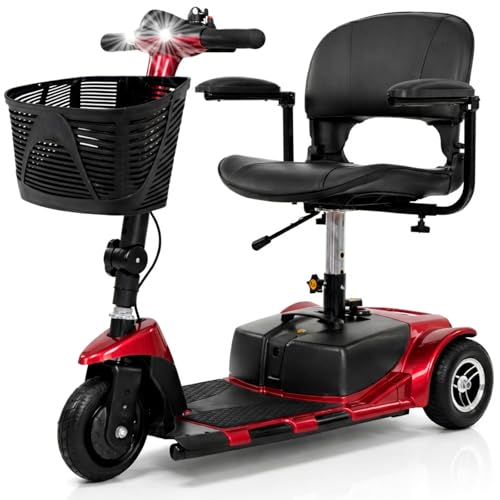
Vive 3 Wheel Mobility Scooter
by Vive
Sharpest-turning travel scooter — 31-inch turning radius and anti-rollover wheels with 1,100+ user reviews.
Pros
- 2.6-foot turning radius is among the tightest in the travel scooter category, enabling navigation through standard doorways and narrow aisles
- 1,100+ Amazon reviews provide reliable real-world performance data across diverse users and environments
- Anti-rollover rear wheels add passive safety protection on inclines and parking situations without adding complexity to operation
- Collapsible tiller folds flat, reducing the overall size further for vehicle storage compared to fixed-tiller scooters
Cons
- 265 lb weight capacity is at the lower end of travel scooters — users above 240 lbs should consider the Go-Go Sport S74 for adequate margin
- 3-wheel configuration reduces lateral stability compared to 4-wheel models on uneven or sloped terrain
How to Choose the Best Electric Wheelchair
Selecting the right power mobility device is meaningfully different from most other health product purchases. The wrong choice — a chair with an inadequate turning radius for the user’s home, insufficient weight capacity, or an incompatible transport configuration — does not just underperform; it can create safety hazards and may sit unused. The buyer’s guide factors below cover the most critical variables.
One important consideration not always covered in product guides is the role of a professional fitting. For users with progressive neurological conditions — ALS, MS, muscular dystrophy, stroke — the chair’s seating system, joystick sensitivity, and drive configuration all interact with the user’s changing physical abilities in ways that affect both safety and long-term health outcomes. A certified rehabilitation technology supplier (CRTS) or assistive technology professional (ATP) can assess current and projected future needs and configure a power chair accordingly. For users pursuing insurance or Medicare coverage, a clinical evaluation by a qualifying physician and an ATP assessment is typically required regardless — building the clinical recommendation into the selection process rather than retrofitting it afterward is practically and financially advantageous.
The most common purchase mistake we see in this category is buying a full-size non-portable power chair without measuring the user’s home environment. Before ordering, measure every doorway the chair will pass through regularly, identify the turning space available in the primary bathroom, and measure hallway widths. A chair that cannot navigate safely through the user’s home does not provide independence — it creates daily frustration and potential fall risk at every constrained transition point.
Buyer's Guide
Selecting the right power wheelchair or mobility scooter depends on the user's functional abilities, primary environment, transport logistics, and body dimensions.
Power Chair vs. Mobility Scooter
Power wheelchairs support users with joystick control and a full seating system — appropriate for users with limited hand grip, trunk weakness, or significant upper extremity impairment. Mobility scooters use a tiller steering column requiring bilateral hand grip and functional trunk stability. For users who can operate a scooter safely, scooters generally offer simpler operation, easier disassembly for transport, and lower upfront cost. For users with progressive neurological conditions or postural support needs, a power wheelchair is the correct clinical choice regardless of cost difference.
Indoor vs. Outdoor Use
Indoor use primarily demands a tight turning radius — mid-wheel drive power chairs achieve as little as 20 inches, while travel scooters typically range from 31 to 48 inches. Standard doorways are 32-36 inches wide; a chair with a turning radius over 40 inches may struggle in older homes with standard-width hallways. Outdoor use requires larger drive wheels, stable tire design, and ideally suspension to manage pavement cracks, curb cuts, and gentle inclines. If a user moves between both environments daily, prioritize turning radius while confirming adequate outdoor performance.
Portability and Vehicle Transport
Full-size power chairs weigh 150-300 lbs assembled and require a vehicle lift, ramp system, or accessible van — car trunk loading is not feasible. Folding power chairs weigh 39-70 lbs and fit in most car trunks, often with help from a caregiver. Travel scooters disassemble into pieces with the heaviest section typically ranging from 27-54 lbs. If the user or caregiver cannot safely lift 50+ lbs, a folding lithium power chair with a single compact form is the most manageable option. Assess the weight of the heaviest piece, not just the assembled weight, when evaluating transportability.
Battery Type and Range
Sealed lead-acid (SLA) batteries are heavier, less expensive, and require disciplined charging to prevent capacity degradation — avoid fully discharging them. Lithium-ion batteries are lighter, faster to charge, last longer per cycle, and are FAA-compliant for airline travel with most compact chairs. For home-based full-size power chairs, SLA remains a reliable and cost-effective standard. For portable chairs where weight is critical and travel by air is a consideration, lithium is clearly preferred. Match your range target to actual daily distance traveled, adding at least a 25% buffer for safety and battery degradation over time.
Weight Capacity and Seat Dimensions
Matching rated capacity to the user's weight with an appropriate safety margin is non-negotiable. Beyond rated capacity, seat width matters for genuine comfort and pressure distribution: measure the user's hip width while seated and add 2 inches minimum to determine the required seat width. A chair rated for 450 lbs with a 17-inch seat does not provide adequate comfort or postural support for a user requiring 20+ inches of seat width. For bariatric users, evaluate both rated capacity and seat width together before selecting a chair.
Controls and Accessibility
Standard right-hand joysticks suit users with functional right-hand motor control. For users with limited grip strength, proportional joysticks with reduced sensitivity — adjustable through the chair's programming interface — can be configured to reduce required force. For users with significant upper extremity impairments due to ALS, MS, SCI, or stroke, alternative controls including chin joysticks, head arrays, sip-and-puff systems, and switch inputs can be mounted on most clinical power chairs. These configurations are typically assessed and prescribed by a certified assistive technology professional (ATP) as part of a funded seating and mobility evaluation.
Final Verdict
For the majority of buyers seeking a practical, trunk-transportable power mobility solution, the Pride Mobility Go-Go Sport S74 is our best overall recommendation. It combines 4-wheel stability with 3-wheel-like maneuverability, a 325 lb capacity, and 5-piece disassembly — the combination that addresses the broadest range of practical requirements at a sensible mid-range price. For cost-conscious buyers who primarily need a reliable scooter for targeted errands and trips in and out of standard vehicles, the Pride Travel Pro Premium 3-Wheel offers outstanding brand-validated reliability at the lowest price point in this review, backed by over 1,300 real-world reviews.
For users with distinct specific needs, the path is clear: the Aotedor 22-Mile Folding Chair for users who need maximum portable range, the Jazzy Carbon for frequent air travelers who need the lightest-possible full-function power chair, and the Pride Jazzy 600 ES for full-time clinical users who qualify for insurance coverage and need a Group 2 chair with the tightest turning radius and longest range available. As with all durable medical equipment decisions, consult your physician or a certified rehabilitation technology specialist for personalized recommendations based on your specific diagnosis, living environment, and mobility goals. Our lightweight wheelchair guide is also worth reviewing if a non-motorized option remains under consideration for part-time use.
Frequently Asked Questions
What is the difference between a power wheelchair and a mobility scooter?
Does Medicare cover electric wheelchairs and mobility scooters?
How far can an electric wheelchair travel on one charge?
What weight capacity do I need for an electric wheelchair?
Can I take an electric wheelchair on an airplane?
How do I choose between a 3-wheel and 4-wheel mobility scooter?
Related Articles
About the Reviewer

Dr. David Taylor, MD, PhD
Drexel University College of Medicine (MD), Indiana University School of Medicine (PhD)
Dr. David Taylor is a licensed physician and medical researcher who founded BestRatedDocs in 2016. With an MD from Drexel University and a PhD from Indiana University School of Medicine, he combines clinical expertise with a passion for health technology to provide evidence-based product recommendations. Dr. Taylor specializes in health informatics and regularly evaluates medical devices, diagnostic equipment, and therapeutic products to help healthcare professionals and patients make informed decisions.