7 Best Wheelchairs of 2026
Dr. David Taylor reviews the best manual wheelchairs on Amazon. Compare top-rated transport and self-propelled chairs by weight, capacity, and value.
Updated
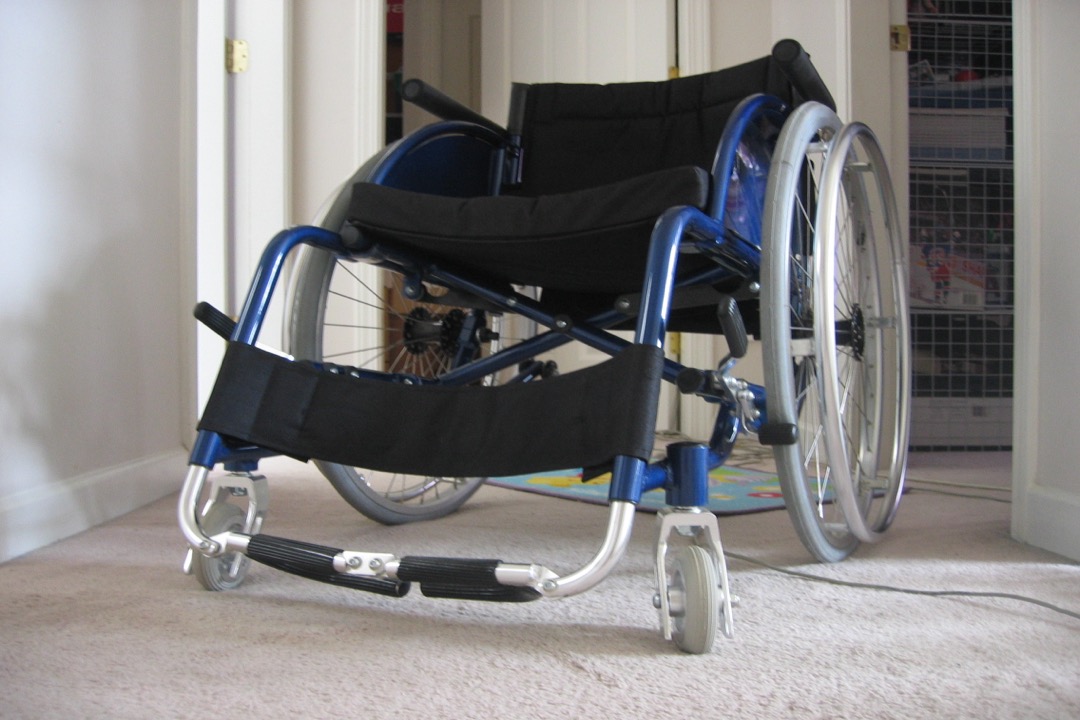
Approximately 5.5 million Americans use wheelchairs as their primary means of mobility, and millions more rely on them for temporary recovery, post-surgical rehabilitation, or caregiving support during daily outings. With dozens of models available on Amazon ranging from sub-$110 transport chairs to precision-engineered ultralight frames, selecting the right wheelchair requires understanding a few critical differences in chair design — not just comparing star ratings. In 2026, we researched and reviewed seven of the best-selling manual wheelchairs available, covering both transport chairs and self-propelled models across a wide range of budgets and weight capacities.
Our evaluations draw on Amazon review analysis, published product specifications, and the clinical perspective of Dr. David Taylor, who has prescribed and evaluated durable medical equipment for patients over his career. We prioritized real-world usability — how the chair performs when loaded into a car trunk, navigated through a hospital corridor, or used daily in a home environment — alongside standard factors like weight capacity and durability.
| Product | Price | Buy |
|---|---|---|
| Drive Medical Lightweight Expedition Transport WheelchairBest Overall | $179.99 | View on Amazon |
| Carex Transport WheelchairBudget Pick | $103.15 | View on Amazon |
| Drive Medical Cruiser III Lightweight WheelchairRunner-Up | $249.99 | View on Amazon |
| Drive Medical Blue Streak Wheelchair | $139.99 | View on Amazon |
| Karman LT-980 Ultra Lightweight WheelchairPremium Pick | $379.99 | View on Amazon |
| NOVA Heavy Duty Bariatric Transport Chair | $439.95 | View on Amazon |
| Medline Lightweight Transport Wheelchair with HandbrakesRunner-Up | $162.99 | View on Amazon |
Transport Chairs vs. Self-Propelled Wheelchairs
Before comparing individual models, the most important decision is chair type. A transport chair has small 8- to 12-inch rear wheels and is designed to be pushed by a caregiver. The user has no ability to move the chair independently. These chairs are typically 15 to 30 lbs lighter and fold more compactly than standard wheelchairs, making them ideal for outings, medical appointments, and travel where a caregiver is always present.
A self-propelled manual wheelchair features large 24-inch rear wheels with a gripping surface the user can push. This design restores independent mobility and is appropriate whenever the user will be alone for any part of the day. Self-propelled chairs are heavier and bulkier to store but give the user full autonomy. For users with limited upper body strength or specific diagnoses, a physical therapist can advise whether a manual self-propelled chair or a power wheelchair is clinically appropriate.
How We Selected These Wheelchairs
We focused our review on the top-selling manual wheelchairs on Amazon with at least 600 verified ratings. For each model we analyzed Amazon review patterns to identify recurring issues, compared stated specifications against user-reported measurements, and assessed the clinical relevance of features such as hand brakes, seat dimensions, and weight capacity ratings. Products were selected to cover the full spectrum of use cases: transport chairs, self-propelled budget models, a bariatric option, and a premium ultralight chair for frequent travelers.
1. Drive Medical Lightweight Expedition Transport Wheelchair — Best Overall
The Drive Medical Expedition is the best-selling transport wheelchair on Amazon for good reason. At 19 lbs complete, it is among the lightest transport chairs available without stepping up to a specialty ultralight frame. The aluminum construction achieves this weight without sacrificing the 300 lb capacity that covers most users, and the flat-free 12-inch rear tires eliminate the risk of roadside flats that affect pneumatic alternatives.
What separates the Expedition from cheaper transport chairs is the inclusion of hand brakes on the caregiver push handles. This detail matters clinically: when a caregiver navigates a ramp, an inclined driveway, or the slope of a parking lot, the ability to modulate descent speed and hold the chair during patient transfers is a meaningful safety feature. Most transport chairs under $150 omit hand brakes entirely. At roughly $180, the Expedition represents a strong value proposition for caregivers who need a chair they can confidently manage across varied terrain.
The chair’s main limitation is one of design, not quality: it is a transport chair. Users with any degree of independent mobility who anticipate periods alone should evaluate a self-propelled model instead.

Drive Medical Lightweight Expedition Transport Wheelchair
by Drive Medical
#1 bestselling transport chair on Amazon — 19 lbs with hand brakes and 12-inch wheels.
Pros
- Lightest transport chair in its class at just 19 lbs — easy to lift into car trunks
- 12-inch rear wheels with curb-climbing capability for navigating uneven surfaces
- Hand brakes give the caregiver slope and descent control, unusual at this price
- Folds compactly enough to fit in most sedan trunks without removing footrests
Cons
- Transport chair only — user cannot self-propel, requires a caregiver to push
- Struggles on thick carpet or deep pile rugs; 12-inch wheels are better suited to hard floors
- Stated 19-inch seat measures closer to 18 inches in practice due to armrest padding
2. Carex Transport Wheelchair — Budget Pick
The Carex Transport Wheelchair earns its place as the best budget pick on the strength of nearly 5,000 Amazon reviews and a price that consistently remains under $110. For families purchasing a transport chair for occasional use — medical appointments, travel, or short-term post-surgical recovery — spending nearly $80 less than the Drive Medical Expedition is a legitimate option when the caregiving environment does not involve hills or ramps where hand brakes would earn their keep.
The steel frame adds weight compared to aluminum competitors, and the 8-inch rear wheels limit outdoor usability on gravel, grass, or curb cuts. On smooth indoor surfaces — hospital corridors, shopping malls, airport terminals — the Carex performs well. The swing-away footrests are removable for close transfers, and the 19-inch seat width accommodates most adults comfortably. For buyers who understand its limitations and use it within those boundaries, it is a reliable and affordable choice.

Carex Transport Wheelchair
by Carex
Most trustworthy budget transport chair at around $103 with nearly 5,000 reviews.
Pros
- Best value under $110 among transport chairs with nearly 5,000 verified reviews
- Wide 19-inch padded seat comfortable for extended outings
- Removable and swing-away footrests simplify transfers in and out of the chair
- Steel frame proves durable under daily use conditions
Cons
- No hand brakes, limiting safe use on slopes or inclines without extra caution
- 8-inch rear wheels limit outdoor use — struggles on gravel, grass, and curbs
- Steel frame adds several pounds compared to aluminum alternatives
3. Drive Medical Cruiser III Lightweight Wheelchair — Runner-Up
The Drive Medical Cruiser III is the most-reviewed self-propelled wheelchair on Amazon, and its 350 lb weight capacity makes it one of the few standard manual chairs that provides meaningful overhead capacity for heavier users without stepping into bariatric pricing. The 20-inch seat width combined with multiple armrest and legrests configurations — including desk-length, full-length, and elevating options — makes it a more adaptable platform than simpler single-configuration competitors.
At 38 lbs, the Cruiser III is not a chair that caregivers will lift in and out of vehicle trunks effortlessly. It is best suited to users who move between home, medical facilities, or accessible vehicles with ramp or lift access, rather than those requiring frequent manual loading into a standard car. The basic nylon upholstery is functional for shorter outings but users spending several hours daily in the chair will benefit from an aftermarket cushion. Despite these limitations, the depth of the review pool — reflecting real-world experience across thousands of users — makes this the most confidence-inspiring self-propelled option in the standard weight range.

Drive Medical Cruiser III Lightweight Wheelchair
by Drive Medical
Most validated self-propelled wheelchair on Amazon — configurable and rated for 350 lbs.
Pros
- 350 lb weight capacity exceeds the 300 lb standard common on most competitors
- Multiple armrest and legrests configurations accommodate a wide range of users
- Most-reviewed self-propelled wheelchair on Amazon with over 6,800 ratings
- Ships largely pre-assembled with minimal setup required
Cons
- 38 lbs is heavy compared to aluminum alternatives — loading into vehicles requires effort
- Basic nylon upholstery provides limited cushioning for all-day seated use
- 24-inch rear wheels navigate carpet less smoothly than hard surfaces
4. Drive Medical Blue Streak Wheelchair
The Blue Streak offers self-propelled independence at under $150, making it the entry point for users who need to move independently but have a constrained budget. The flip-back padded armrests are a practical feature at this price point, simplifying lateral transfers from bed or toilet without requiring armrest removal. The 12.5-inch folded width fits into smaller storage spaces than many competitors.
The steel frame translates to a 41 lb total weight, which is the primary practical drawback. Caregivers with any shoulder or back limitations will find repeated loading into vehicle trunks fatiguing. The chair is best suited to home and facility use where it stays on one level and vehicle transport is infrequent. For users who primarily need independent mobility within a home or care facility, the Blue Streak delivers adequate functionality at a price point that is genuinely accessible.
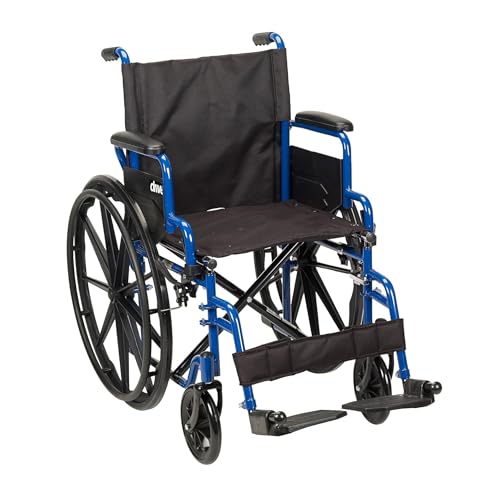
Drive Medical Blue Streak Wheelchair
by Drive Medical
Entry point for self-propelled mobility at under $150.
Pros
- Most affordable entry point for independent self-propelling mobility under $150
- Flip-back padded armrests facilitate lateral transfers without removing the chair arms
- Folds to just 12.5 inches wide for storage in tighter spaces
- Backed by Drive Medical's established reputation in durable medical equipment
Cons
- 41 lbs is among the heaviest steel-framed chairs — a genuine barrier for caregivers loading cars
- Basic upholstery offers minimal padding for users spending extended hours seated
- No hand brakes on the push handles for caregiver slope control
5. Karman LT-980 Ultra Lightweight Wheelchair — Upgrade Pick
For users who travel frequently — whether by car, air, or train — the Karman LT-980’s 13 lb frame is the defining feature. Aircraft-grade aluminum construction achieves this weight while maintaining structural integrity, and the 22-inch pneumatic tires deliver a noticeably smoother ride over sidewalk cracks, threshold transitions, and outdoor surfaces compared to the hard tires on heavier steel-framed chairs.
The 250 lb weight capacity is the most important specification to verify before purchasing — it is lower than the 300 lb standard on most competitors. Users near or above this limit should choose a different chair. The pneumatic tires also require attention: periodic inflation checks and the possibility of punctures are trade-offs for the improved ride quality. At a premium price, the Karman LT-980 is purpose-built for a specific user: one who is under 250 lbs, travels often, and values the convenience of a chair that can be gate-checked or lifted into an overhead bin without physical difficulty.

Karman LT-980 Ultra Lightweight Wheelchair
by Karman Healthcare
For frequent travelers who need the lightest self-propelled chair — 13 lb frame.
Pros
- 13 lb frame is among the lightest self-propelled chairs available at any price
- Aircraft-grade aluminum construction resists corrosion and delivers long-term durability
- 22-inch pneumatic tires absorb road vibration for a smoother outdoor ride
- Folding backrest reduces stored dimensions for airline cabin and vehicle storage
Cons
- 250 lb weight capacity is lower than the standard 300 lb found on heavier-framed chairs
- Pneumatic tires require periodic inflation and are susceptible to punctures
- Premium price reflects the engineering, but not every buyer requires this level of performance
6. NOVA Heavy Duty Bariatric Transport Chair
The NOVA bariatric transport chair is designed for a specific clinical need: transporting patients who exceed the 300 lb capacity of standard chairs. At 400 lbs maximum capacity with a 22-inch seat, it accommodates a wider range of body types, and the reinforced aluminum frame achieves this without the extreme weight penalty common on steel-framed bariatric chairs. The patented locking hand brakes are a standout feature — the mechanism provides both active braking during movement and a positive lock for secure patient transfer, which is clinically important when managing heavier patients on any incline.
The 27-inch chair width requires attention in home environments. Standard interior door openings are 32 inches clear, which provides only 2.5 inches of clearance on each side — enough to navigate most doorways but tight for inexperienced caregivers. Measuring doorways before purchase is strongly advised. At roughly $440, this is a purpose-built tool, not a general-purpose chair, and it excels in the specific scenario for which it was designed.

NOVA Heavy Duty Bariatric Transport Chair
by NOVA Medical Products
Most capable 400 lb transport chair with superior patented hand brakes.
Pros
- 400 lb weight capacity with patented locking hand brakes — the safest bariatric transport chair reviewed
- Reinforced aluminum frame keeps the chair at 27.75 lbs despite the heavy-duty rating
- Flip-up armrests ease lateral patient transfers at bedside, toilet, or vehicle seat
- Anti-tippers are included and pre-installed for added caregiver safety
Cons
- Premium pricing reflects the specialized build but requires a larger purchase commitment
- 27-inch chair width can be tight through standard 32-inch interior doorways
- Transport-only design means the user has no independent propulsion option
7. Medline Lightweight Transport Wheelchair with Handbrakes — Runner-Up
The Medline transport chair occupies a practical middle position: it combines the hand brakes and 12-inch wheels of the Drive Medical Expedition at a price point roughly $15 to $20 lower, while adding a seat belt as standard equipment. The red frame color offers a less clinical aesthetic that some home users prefer. For buyers who find the Drive Medical Expedition out of stock or who want a slight price reduction, the Medline is a legitimate alternative.
Reviewers raise some durability questions around the folding latch mechanism after extended use, and the under-1,000 review count provides a less robust feedback base than the Expedition or Carex. These factors make it a competent runner-up rather than a first recommendation, but for buyers who encounter it at a lower price or need an immediate shipping option, the core specifications are solid.

Medline Lightweight Transport Wheelchair with Handbrakes
by Medline
#2 bestselling transport chair — brakes and 12-inch wheels at a fair price.
Pros
- Combines hand brakes and 12-inch wheels at a mid-range price point between budget and premium
- Distinctive red frame gives a less clinical appearance appreciated by home users
- Seat belt included as standard — an important safety feature omitted by some competitors
Cons
- Some verified reviewers cite long-term durability concerns with the folding latch mechanism
- Under 1,000 reviews compared to several thousand on competing models limits confidence
- 30-day return window is shorter than the Amazon standard for some seller configurations
How to Choose the Best Wheelchair
The buyer’s guide factors above cover the six most important variables. One additional consideration worth highlighting is the caregiving environment. A chair that works well in a new construction home with wide doorways and hard floors may be entirely inappropriate in an older home with 28-inch doorways and thick carpet runners. Before purchasing, walk through the actual spaces the chair will be used in, measure doorway clearances, and identify whether any ramps, slopes, or vehicle transitions will be part of the daily routine. These environmental factors often determine which features matter most.
For users managing a diagnosis that may affect upper body strength or endurance over time — multiple sclerosis, ALS, muscular dystrophy, or post-stroke recovery — consulting a certified rehabilitation technology supplier (CRTS) or physical therapist before purchasing any manual wheelchair is advisable. These specialists can assess whether a manual chair is appropriate or whether a power wheelchair should be considered, and their documentation can support insurance or Medicare reimbursement claims.
Buyer's Guide
Choosing the right wheelchair means matching the chair type, size, and weight rating to the user's daily activities, physical abilities, and caregiving setup.
Wheelchair Type
The first decision is whether the user needs a transport chair (pushed by a caregiver) or a self-propelled manual wheelchair (user operates independently with large rear wheels). Transport chairs are lighter and easier to store but require a second person present at all times. If the user will spend any time alone, choose a self-propelled model.
Seat Width
Measure the widest point of the hips while seated and add 2 inches. A seat that is too narrow creates pressure sores; one that is too wide makes self-propulsion inefficient and increases injury risk on doorways. Standard seats range from 16 to 20 inches. Do not guess — proper fit is a clinical safety concern.
Weight Capacity
Select a chair rated for at least 10 to 15% more than the user's current body weight. Standard chairs are rated at 250 to 300 lbs. If the user is at or near the capacity limit, choose a bariatric model with a reinforced frame — exceeding the rated capacity degrades welds and casters over time and creates fall risk.
Chair Weight
The weight of the wheelchair matters most to the caregiver who loads it into a vehicle. A 38-41 lb steel chair is noticeably harder to lift repeatedly than a 19-26 lb aluminum chair. If the primary caregiver has back or shoulder limitations, aluminum frames in the 19-27 lb range are strongly preferred.
Hand Brakes
Hand brakes on the push handles allow caregivers to control descent on slopes and hold the chair stationary during transfers. They are a meaningful safety feature that many budget transport chairs omit. If the user will be moved in hilly environments or requires frequent vehicle transfers, hand brakes are worth prioritizing.
Folding Mechanism
All the chairs reviewed here use a cross-brace fold for storage. Check the folded dimensions against the storage space available — whether a vehicle trunk, closet, or airplane overhead. Also verify whether footrests must be removed before folding, as this affects how quickly the chair can be stowed in practical use.
Final Verdict
For most caregivers seeking a transport chair, the Drive Medical Expedition is the clear best overall choice. Its 19 lb weight, hand brakes, and 12-inch wheels deliver the best combination of portability and safe caregiving across varied environments, and its position as the Amazon bestseller reflects broad real-world validation. For buyers with a tighter budget who will primarily use the chair on smooth indoor surfaces, the Carex Transport Wheelchair is a reliable choice at significantly lower cost.
Among self-propelled chairs, the Drive Medical Cruiser III stands as the most comprehensively reviewed option for users who need independent mobility, while the Karman LT-980 is worth the premium for users who travel frequently and fall under the 250 lb capacity limit. As always, consult your physician or physical therapist for personalized recommendations based on your specific diagnosis and functional abilities.
Frequently Asked Questions
What is the difference between a manual wheelchair and a transport chair?
How do I measure for the right wheelchair size?
Does Medicare cover wheelchairs?
How much does a wheelchair cost?
What is the weight limit of a standard wheelchair?
Can I take a folding wheelchair on an airplane?
Do I need a prescription to buy a wheelchair?
What is the lightest wheelchair available?
Related Articles
About the Reviewer

Dr. David Taylor, MD, PhD
Drexel University College of Medicine (MD), Indiana University School of Medicine (PhD)
Dr. David Taylor is a licensed physician and medical researcher who founded BestRatedDocs in 2016. With an MD from Drexel University and a PhD from Indiana University School of Medicine, he combines clinical expertise with a passion for health technology to provide evidence-based product recommendations. Dr. Taylor specializes in health informatics and regularly evaluates medical devices, diagnostic equipment, and therapeutic products to help healthcare professionals and patients make informed decisions.