7 Best Reacher Grabber Tools of 2026
Dr. David Taylor reviews the best reacher grabber tools on Amazon. Compare reach length, jaw type, rotating heads, folding, and grip design for arthritis and post-surgery recovery.
Updated
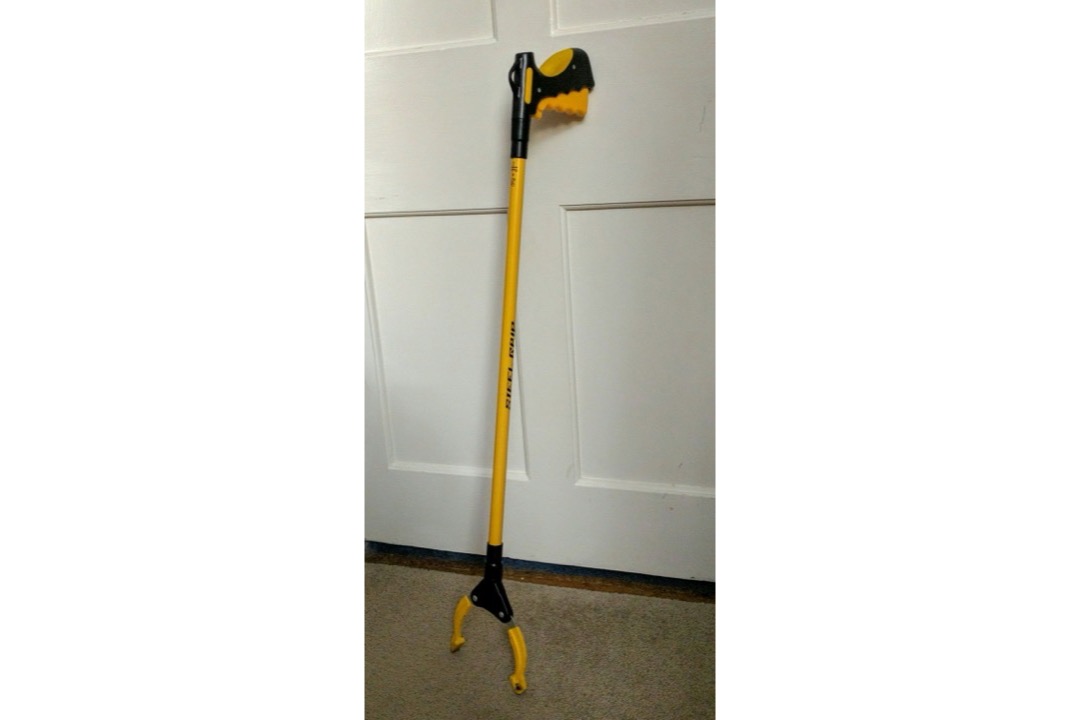
The most common fall I see is also the most preventable: a patient bends to pick up a dropped item — the TV remote, a pill that skittered under the counter, a shoe, a dropped sock — loses their balance over their own feet, and goes down. It sounds almost too ordinary to be dangerous, but falls are the leading cause of injury in adults over 65, and the majority of them happen during exactly these ordinary daily tasks rather than during anything risky. The CDC reports that one in four older adults falls each year. A reacher grabber will not fix balance, strength, or vision — but it eliminates the single bending-and-reaching moment that triggers a disproportionate share of these falls. For a tool that costs about as much as a takeout meal, that is one of the highest-value safety investments a senior household can make.
In this review I evaluate seven of the most popular and best-reviewed reacher grabber tools on Amazon for 2026, judged on the criteria that actually matter clinically: reach length matched to the user’s height, trigger ergonomics for arthritic and weak hands, jaw design for precision and grip, rotating-head usability, folding durability, and overall weight and fatigue. The recommendations are calibrated for several distinct buyers — seniors managing arthritis or general mobility limits, patients recovering from hip or knee replacement who must avoid bending, wheelchair users who need a compact tool, and caregivers stocking a parent’s home. A reacher pairs naturally with the broader fall-prevention plan: after surgery, combine it with bathroom grab bars at the high-risk transfer points, and never lean on a reacher for balance when what you actually need is one of the best walking canes.
Our top picks at a glance: the RMS 2-Pack 32-Inch Rotating-Jaw Grabber earns Best Overall — its one-piece construction removes the fold-hinge failure point, its full-hand trigger is ideal for arthritis, and the 2-pack means a tool is always within reach. The FitPlus PowerGrip T9 wins Best Budget with 96 grip points, a magnetic tip, and a steel-reinforced shaft at a budget price. For tall users or anyone reaching the floor from a high bed, the EZPIK 40-Inch Folding Grabber is the upgrade pick for its extra reach and dual magnets.
| Product | Price | Buy |
|---|---|---|
| RMS 2-Pack 32 Inch Extra Long Grabber Reacher with Rotating JawBest Overall | $36.99 | View on Amazon |
| FitPlus PowerGrip T9 Grabber Reacher Tool, 32" with MagnetBudget Pick | $9.95 | View on Amazon |
| EZPIK Classic 40" Folding Grabber Reacher Tool with Dual MagnetsPremium Pick | $28.95 | View on Amazon |
| Kekoy 36" Grabber Reacher Tool for Seniors, Foldable with 360° Rotating JawRunner-Up | $14.43 | View on Amazon |
| RMS 34 Inch Extra Long Reacher Grabber - Foldable with Rotating JawRunner-Up | $8.98 | View on Amazon |
| GrabRunner Heavy Duty Reacher Grabber Tool, 32" with Magnetic TipRunner-Up | $9.79 | View on Amazon |
| ZAYAD Grabber Reacher Tool, 32"Runner-Up | $8.49 | View on Amazon |
Find the Best Reacher Grabber for Your Need
Jump to the reacher matched to how you will use it:
- Best reacher grabbers overall — our seven top picks, reviewed
- For extra-long reach (36 inches and up) — high shelves and deep-floor retrieval
- For heavy-duty pickups — sturdier build for yard, garage, and trash
- For travel and storage — foldable, packs-small designs
- For elderly and seniors — lightest, easiest-trigger picks
How We Selected These Reacher Grabbers
I evaluated reacher grabbers available on Amazon with strong verified-review pools, focusing on six clinically meaningful criteria: reach length against user height and use position, trigger design against the grip-strength needs of arthritic and post-stroke users, jaw type for what the tool can actually pick up, rotating-head function and locking behavior, folding mechanism durability, and total weight for arm fatigue. I prioritized tools with deep review validation — several of the picks here carry tens of thousands of ratings — and deliberately included a range of price points and form factors so the lineup covers every common buyer. Each reacher in this review serves a specific user profile: durable everyday home use (RMS one-piece 2-pack), value-first first purchase (FitPlus, ZAYAD), extended reach for tall users and high beds (EZPIK 40-inch), compact portability for wheelchairs and travel (Kekoy tri-fold), and maximum stiffness and grip security (GrabRunner). No single reacher is best for everyone, which is why the buying decision starts with how and where you will use it.
How to Choose the Right Length
Reach length is the first decision, and getting it wrong undermines the whole purpose of the tool. A 32-inch reacher is the standard for most ambulatory adults of average height — it lets you pick a dropped item off the floor while standing fully upright, without the forward bend at the waist that causes the fall the reacher is meant to prevent. If you find yourself still leaning forward to close the last few inches, the tool is too short for you.
Taller users — roughly six feet and above — and anyone who needs to retrieve floor items from a high hospital bed, a tall recliner, or a raised chair should step up to a 36 or 40-inch model like the Kekoy or the EZPIK. The extra length closes the gap so you stay upright. Conversely, shorter users and anyone using the reacher primarily from a seated position in a wheelchair or car are often better served by a more compact tool; an over-long reacher used while seated is unwieldy and harder to aim. A simple sizing method: measure from the floor to your hip while standing, then add a few inches of buffer so you are operating within the tool’s range rather than at the very limit of its reach. When you are unsure, 32 inches is the safe default for an average-height adult.
Trigger Design and Grip Strength
If the user has any hand condition — and a great many reacher buyers have arthritis — the trigger matters more than any other feature. There are two broad trigger styles. A narrow two-finger pistol trigger concentrates the entire closing force on one or two finger joints, which is painful and often impossible for hands affected by rheumatoid or osteoarthritis. A full-hand trigger, by contrast, is a wide handle you squeeze with all four fingers; it distributes the load across the larger metacarpophalangeal (MCP) and proximal interphalangeal (PIP) joints, letting the user generate adequate closing force without concentrating stress on the joints least able to bear it. This is precisely why the RMS models, which use a full-hand trigger, are my first recommendation for arthritic users.
Weight is the secondary grip-strength consideration. Holding a reacher extended at arm’s length is itself fatiguing for the wrist and forearm, and that fatigue compounds during longer retrievals. Aim for a tool under 10 ounces — most of the reachers here qualify — to keep arm fatigue manageable. For users with severe grip limitation, an occupational therapist can recommend spring-assisted or powered reachers, though those are uncommon on Amazon and rarely necessary for the average user.
After Hip or Knee Replacement
A reacher is standard equipment in the occupational-therapy discharge kit after joint replacement, and for good reason. Following hip replacement, surgeons typically impose precautions for the first six to twelve weeks: no hip flexion past 90 degrees, and no adduction (crossing the leg) or internal rotation. The ordinary act of bending to pick something off the floor can easily exceed those angles — and in the worst case, exceeding them can dislocate the new joint. A 32-inch or longer reacher lets the patient retrieve dropped objects while standing upright, comfortably within their precautions, instead of bending into a dangerous position.
The reacher also enables the dressing-hook technique: using the jaw to grip the waistband of pants or the top of a sock and pull it up the leg without bending forward, which is otherwise one of the hardest post-op movements. I generally recommend the RMS one-piece model for this period specifically because there is no fold hinge to fail mid-reach when the patient is depending on the tool, but any of the 32-inch-plus reachers here will serve. Pair the reacher with the other standard recovery aids — a sock aid, a long-handled shoehorn, and properly placed grab bars at the toilet and tub — and confirm your individual precautions with your surgeon or physical therapist, since they vary by surgical approach.
Can a Reacher Pick Up a Pill?
This question comes up constantly, and it is more clinically urgent than it first appears. A pill dropped on the floor is a double hazard: bending to retrieve it is a fall risk, and a pill left on the floor is a medication-safety risk — a missed dose, or worse, a pill found by a grandchild or a pet before the patient can retrieve it. So the ability to pick up a pill cleanly is a feature worth getting right.
The key insight is that pills are small, usually round, and almost never metallic — which means a magnetic tip is completely useless for them. Magnets do not attract pills. What picks up a pill reliably is a fine, firm rubber jaw on a rotating head that you can lay flat against the floor and close precisely around the pill. The RMS horseshoe jaws and the better budget rubberized claws like the ZAYAD manage this task well; very soft or very wide jaws tend to push the pill around the floor rather than grip it. The technique: rotate the head so the jaw lies parallel to the floor, position it over the pill, and close gently. If you regularly drop pills, keeping a reacher with a precise jaw right beside your pill organizer is a small habit with a real safety payoff.
Buyer's Guide
A reacher grabber is a deceptively simple tool that does one clinically important job: it removes the bending-and-reaching moment that causes a large share of falls in older adults. Choosing the right one means matching reach length, trigger ergonomics, jaw design, and portability to the user's height, hand strength, and where the tool will actually be used.
Reach Length
Reach length is the first specification to get right. A 32-inch reacher is the standard for ambulatory adults of average height — it allows floor retrieval from a fully upright standing position. Taller users, or anyone reaching the floor from a high bed, recliner, or tall chair, should choose 36 or 40 inches so they are not forced to lean forward and reintroduce the bend the tool is meant to eliminate. Shorter users and seated wheelchair or car users are often better served by a more compact tool, since an over-long reacher used from a seated position becomes hard to control. Measure floor-to-hip standing and add a buffer rather than guessing.
Trigger Design & Grip Strength
The trigger is the feature that most determines whether a reacher is usable for the people who need it most. A full-hand trigger — a wide handle squeezed with all four fingers — spreads the closing force across the MCP and PIP joints and is far gentler on arthritic or weak hands than a narrow two-finger pistol trigger, which concentrates load on one or two joints. For anyone with rheumatoid or osteoarthritis, post-stroke weakness, or general grip limitation, the full-hand trigger is the right choice. Pair it with a tool under 10 ounces to limit the wrist and forearm fatigue of holding the reacher extended during longer retrievals.
Jaw Type
The jaw determines what the reacher can actually pick up. A firm horseshoe-shaped rubberized jaw is the most versatile — it grips both bulky items and small flat objects like coins and pills, and the rubber provides the friction that keeps smooth objects from slipping. Jaws with many small textured grip points add bite on awkward surfaces. Very soft or very wide jaws are gentler on delicate items but less precise for tiny objects. Match the jaw to your most common task: precise rubber jaws for pills and coins, softer claws for fragile or irregular items.
Rotating Head
A rotating head lets you angle the jaw without contorting your wrist — flat against the floor to slide under a low object, vertical to pull a can off a shelf, or any angle in between. A 90-degree locking head covers most needs and holds its position firmly. A 360-degree continuous head adds flexibility for awkward retrievals behind furniture or under a bed, at the cost of a slightly more complex mechanism. For most users a locking 90-degree head is the practical sweet spot; choose 360-degree if you anticipate frequent odd-angle retrievals.
Folding vs Fixed-Length
Folding reachers collapse to roughly half their length for storage in a drawer, bag, wheelchair pouch, or car, which is genuinely useful for travel and tight spaces. The trade-off is that the fold hinge is the most common mechanical failure point — it can develop play, sag, or in cheaper tools collapse mid-use. A one-piece fixed-length reacher eliminates that failure point entirely and is the more durable choice for a tool that lives in one room and gets used many times a day, at the cost of being bulkier to store. Decide based on whether portability or long-term durability matters more for your use.
Magnetic Tip
A magnetic tip on the jaw lifts keys, coins, screws, and other small metal objects without precise jaw positioning — a real daily convenience for anyone who frequently drops keys or hardware. It is worth noting clearly what a magnet does not do: it will not pick up pills, paper, fabric, or any non-metallic object, so a magnet is a supplement to a good jaw, never a substitute for one. If your most common dropped items are keys and coins, prioritize a strong magnet; if they are pills and small non-metal objects, prioritize a precise rubber jaw instead.
Best Reacher Grabbers Overall
These are our seven top picks, reviewed in full below — from the durable one-piece everyday workhorse to a 40-inch long-reach grabber and the most compact folding tool for travel. Below the reviews, the use-case sections match specific picks to how and where you will use the tool.
RMS 2-Pack 32 Inch Extra Long Grabber Reacher with Rotating Jaw — Best Overall
The RMS 2-pack is the reacher I most often recommend, and the reasons are durability and ergonomics. At 4.8 stars across more than 28,000 reviews, it is the highest-rated tool in the category, and that rating reflects a design choice most competitors do not make: the shaft is one continuous piece with no midpoint fold. The fold hinge is the single most common failure point on cheap reachers — it develops play, sags under load, and on the worst tools collapses mid-grip. Eliminating it entirely is why this RMS model holds up where lighter folding reachers wear out.
The full-hand trigger is the other reason I reach for this one first. Squeezing with all four fingers distributes the closing force across the larger hand joints rather than pinching it onto one or two, which is exactly the ergonomics an arthritic or post-stroke hand needs. The 90-degree locking rotating head positions the horseshoe rubberized jaw flat to slide under a low object or vertical to pull something off a shelf, and the rubber jaw grips both bulky items and small flat ones.
The 2-pack format is more clinically thoughtful than it sounds. The reacher only prevents falls if it is within reach when you drop something — and a single tool inevitably ends up in the wrong room. Keeping one on each floor, or one in the bedroom and one in the living room, means the user never has to walk (and bend, and reach) to fetch the very tool meant to spare them that. The honest trade-offs: the one-piece design is bulkier to store and will not tuck into a walker pouch, there is no magnetic tip for keys and coins, and it is the priciest pick here — though the per-unit cost of a 2-pack lands closer to mid-range.

RMS 2-Pack 32 Inch Extra Long Grabber Reacher with Rotating Jaw
by RMS
The reacher I most often recommend — RMS's one-piece rotating-jaw grabber removes the fold-hinge failure point, uses a full-hand trigger ideal for arthritis, and ships two-to-a-pack so a tool is always within reach.
Pros
- Highest-rated reacher in the category at 4.8 stars across more than 28,000 reviews — the most consistently validated pickup tool I found on Amazon
- One-piece non-folding construction eliminates the midpoint fold hinge, which is the single most common failure point on cheaper reachers — nothing to loosen, sag, or collapse mid-grip
- Full-hand trigger distributes squeezing force across all four fingers rather than pinching one or two, which is the right ergonomics for arthritic or weak hands
- Ships as a 2-pack so you can keep one on each floor or in each high-use room — no walking to fetch the tool, which defeats its fall-prevention purpose
Cons
- Non-folding one-piece design is bulkier to store and will not tuck into a walker pouch or travel bag like the folding models
- Priciest pick in this review, though the 2-pack pricing brings the per-unit cost down to roughly mid-range
- No magnetic tip — keys and coins must be grasped with the jaw rather than picked up magnetically
FitPlus PowerGrip T9 Grabber Reacher Tool, 32” with Magnet — Best Budget
The FitPlus PowerGrip T9 is the strongest value pick on the platform because it includes features that genuinely matter at a price low enough to buy two or three. The jaw carries 96 textured grip points, which give real bite on smooth, rounded, or awkward objects that a flat jaw would slide off of. The magnetic tip lifts keys, coins, screws, and small hardware without precise jaw positioning — a daily convenience for anyone who frequently drops their keys. And an internal steel reinforcement bar runs the length of the shaft, cutting the flex and wobble that makes the very cheapest hollow-tube reachers feel imprecise.
With over 52,000 ratings, this is also one of the most-validated reachers on Amazon, which matters at this price point — a deep review pool tells you the tool performs as described across a huge range of real households. For a first reacher, or for stocking several around the house, it is hard to do better for the money.
The honest limitation is the actuating cable. On cable-driven reachers, the cable can stretch and wear after several months of heavy daily use, gradually reducing the jaw’s closing force; the trigger assembly can also loosen and benefit from an occasional screw re-tighten. This is the standard trade-off of an inexpensive reacher — it is not built to the durability standard of the one-piece RMS — and for daily small-item retrieval it remains an excellent buy. For a user who will lean on the tool heavily every day for years, step up to the RMS; for everyone else, this is the value champion.

FitPlus PowerGrip T9 Grabber Reacher Tool, 32" with Magnet
by FitPlus
The best inexpensive reacher on Amazon — 96 grip points, a magnetic tip, and a steel reinforcement bar at a price low enough to buy several, with the cable being the only real long-term wear point.
Pros
- 96 textured grip points across the jaw provide genuine bite on awkward, smooth, or rounded objects that flat-jaw reachers slip off of
- Magnetic tip lifts keys, coins, screws, and other small metal objects without needing to position the jaw — a real daily convenience
- Internal steel reinforcement bar runs the length of the shaft, reducing the flex and wobble that plague the cheapest hollow-tube reachers
- One of the deepest review pools on Amazon at over 52,000 ratings, and cheap enough to make an easy first reacher
Cons
- The actuating cable can stretch and wear after several months of heavy daily use, gradually reducing jaw closing force
- The trigger assembly can loosen over time and benefits from an occasional screw re-tighten
- Lighter-duty than the RMS pick — best for daily small-item retrieval rather than heavier loads
EZPIK Classic 40” Folding Grabber Reacher Tool with Dual Magnets — Upgrade Pick
The EZPIK Classic earns the upgrade slot on reach. At 40 inches, it is the longest reacher in this review, and that length solves a specific problem: tall users who still have to lean forward with a 32-inch tool, and anyone who needs to retrieve floor items from a high hospital bed or a tall recliner without getting up. The extra eight inches keeps these users genuinely upright, which is the whole point. Dual magnetic tips on the jaw catch metal objects from either grip angle, effectively doubling the magnetic pickup zone over single-magnet reachers.
Despite the length, EZPIK kept it portable — it folds down to 16 inches, so the added reach does not cost you storability in a closet, a car trunk, or a bag. The soft rubber claw with a flexible head grips irregular and delicate objects gently without crushing them, which suits users who handle a lot of fragile items.
Two honest trade-offs come with the extra length. The longer lever arm means slightly less closing force at the jaw than a 32-inch tool — physics, not a flaw — so it is marginally less suited to heavier loads. And the softer, more flexible jaw, while gentle on delicate objects, is less precise than a firm horseshoe jaw for tiny targets like a single dropped pill; if pill retrieval is your main use, a firmer-jawed model is the better choice. For tall users and high-bed retrieval, though, the reach advantage is the deciding factor, and this is the tool I would pick.

EZPIK Classic 40" Folding Grabber Reacher Tool with Dual Magnets
by EZPIK
The reach-length upgrade — EZPIK's 40-inch folding grabber is the tool for tall users or for reaching the floor from a high bed, with dual magnets and a 16-inch folded length that keeps it portable.
Pros
- 40-inch reach is the longest in this review — the right tool for tall users and for retrieving floor items from a high hospital bed or recliner without bending
- Dual magnetic tips on the jaw catch metal objects from either grip angle, doubling the effective magnetic pickup zone
- Folds down to 16 inches despite its length, so the extra reach does not cost you storability in a closet, car, or bag
- Soft rubber claw with a flexible head grips irregular and delicate objects gently without crushing them
Cons
- Priciest single-unit reacher here — you pay a premium for the extra length and dual magnets
- The softer, more flexible jaw is less precise than a firm horseshoe jaw for tiny objects like a single pill
- At 40 inches the longer lever arm means slightly less closing force at the jaw than a 32-inch tool
Kekoy 36” Grabber Reacher Tool for Seniors, Foldable with 360° Rotating Jaw — Most Portable
The Kekoy is the reacher I recommend when portability is the priority — for wheelchair users, for travel, and for anyone who needs the tool to disappear into a bag when not in use. Two features set it apart. First, the jaw rotates a full 360 degrees continuously, so you can orient the grip to any angle without releasing and re-gripping — genuinely useful for the awkward retrievals behind furniture or under a bed that a 90-degree head struggles with. Second, the tri-fold design collapses to under 12 inches, the most compact folded length in this entire review, which slips easily into a wheelchair side pouch or a tote bag.
The deep-texture horseshoe rubber jaw paired with a magnetic tip handles both bulky items and small metal objects competently, and the 36-inch length suits taller users or those reaching from a seated position. A practical bonus: this model is explicitly labeled FSA/HSA eligible, which makes reimbursement straightforward if you are paying with a health-spending account and have a qualifying diagnosis.
The trade-offs follow from the design. The tri-fold mechanism adds two lock clips, which are additional mechanical points that can wear or fail over time compared with a single-fold or one-piece tool — the price of that ultra-compact fold. It also costs more than the bare-bones budget reachers, and it is rated for light daily items only, not heavy loads. For the wheelchair user or frequent traveler who values a tool that packs small and rotates freely, those trade-offs are well worth it.

Kekoy 36" Grabber Reacher Tool for Seniors, Foldable with 360° Rotating Jaw
by Kekoy
The most portable rotating reacher — Kekoy's 360-degree jaw and under-12-inch tri-fold make it the right pick for wheelchair and travel use, and it is explicitly FSA/HSA labeled.
Pros
- 360-degree continuous jaw rotation lets you orient the grip to any angle without releasing and re-gripping — useful for awkward retrievals behind furniture or under a bed
- Tri-fold design collapses to under 12 inches, the most compact folded length here, which slips into a wheelchair side pouch or tote bag easily
- Deep-texture horseshoe rubber jaw plus a magnetic tip handles both bulky items and small metal objects competently
- Explicitly labeled FSA/HSA eligible, simplifying reimbursement for buyers with a qualifying diagnosis
Cons
- The tri-fold lock clips are an additional mechanical point that can wear or fail over time compared with a single-fold or one-piece tool
- Pricier than the bare-bones budget reachers, reflecting the rotating jaw and tri-fold mechanism
- Rated for light daily items only — not a heavy-load tool
RMS 34 Inch Extra Long Reacher Grabber - Foldable with Rotating Jaw — Best Lightweight
The single-unit RMS 34-inch model is the answer for a buyer who wants RMS’s well-regarded jaw quality but in a lighter, more compact, lower-cost package than the one-piece 2-pack. It delivers the same horseshoe rubberized jaw that grips both bulky and small flat objects, on a 90-degree locking rotating head, but at under 8 ounces it is the lightest RMS tool here — a meaningful advantage for users who hold the reacher extended for longer retrievals, since arm fatigue is a real limiter for weaker users.
The 34-inch length splits the difference between the standard 32-inch tools and the long-reach 36 and 40-inch models, making it a good fit for taller users who find 32 inches just slightly short without committing to the bulk of a 40-inch reacher. For everyday around-the-house use by an average or taller adult who wants the RMS jaw, this is a sensible, economical choice.
The honest caveat is the fold hinge. Unlike the one-piece 2-pack, this model folds at the midpoint, and that hinge is the part most likely to develop play over time — it is the durability trade-off you accept for the lighter weight and compact storage. There is also no magnetic tip, so small metal objects must be grasped with the jaw. If you want maximum durability, the 2-pack is the better RMS; if you want the brand’s grip in a light, foldable, budget single unit, this is it.
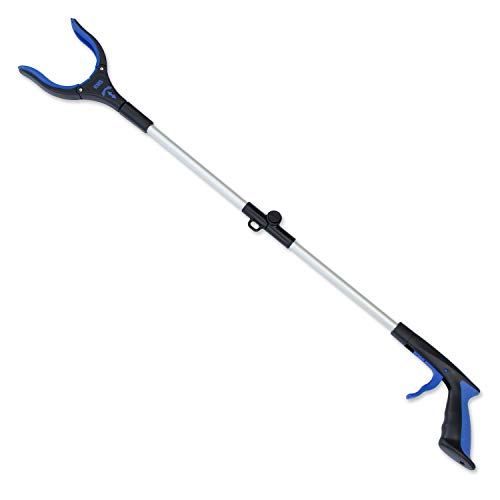
RMS 34 Inch Extra Long Reacher Grabber - Foldable with Rotating Jaw
by RMS
RMS jaw quality in a foldable, lightweight single unit at a budget price — the right pick for taller users who want the brand's grip without the bulk of the one-piece model.
Pros
- Delivers RMS's well-regarded horseshoe rubberized jaw quality in a single-unit folding tool at a budget price point
- Lightest RMS model at under 8 ounces, which reduces arm fatigue for users who hold the tool extended for long retrievals
- 34-inch length suits taller users better than the standard 32-inch reachers without sacrificing much control
- 90-degree rotating, locking head positions the jaw flat to slide under low objects or pick items off a shelf overhead
Cons
- The midpoint fold hinge is less durable than the one-piece RMS 2-pack and is the most likely part to develop play over time
- No magnetic tip — small metal objects must be grasped with the jaw
- Light-to-medium duty only; not intended for heavier loads
GrabRunner Heavy Duty Reacher Grabber Tool, 32” with Magnetic Tip — Sturdiest Build
The GrabRunner stands out for rigidity, which is an underrated quality in a reacher. Most lightweight tools use a single hollow tube that flexes noticeably under load, making the jaw harder to aim precisely. GrabRunner uses a dual-channel aluminum shaft that is markedly stiffer — the tool feels solid and the jaw goes where you point it, with little of the wobble that makes cheaper reachers frustrating for fine retrievals. For a user who wants a folding tool that nonetheless feels substantial, this is the pick.
The fold mechanism is the other standout. Rather than a friction fold that can give way unexpectedly, GrabRunner uses a latch-lock that positively secures the tool in the open position, which prevents the accidental mid-use collapse that affects lesser folding reachers — a real safety and confidence improvement. A strong 8mm magnetic tip reliably lifts keys, coins, and small hardware, and the 360-degree rotating head adapts to any grip angle for tight or awkward spaces.
Two honest notes. The advertised 10 lb capacity is generous marketing — realistically, plan on dependable performance in the 5 to 6 lb range, which is still strong for a reacher. And GrabRunner is a newer brand with a smaller review pool than the established names here, so there is less multi-year durability data, though the stiff aluminum construction and locking fold are encouraging signs. For a buyer who prioritizes a rigid, secure-feeling folding tool with a good magnet, the GrabRunner is the standout.

GrabRunner Heavy Duty Reacher Grabber Tool, 32" with Magnetic Tip
by GrabRunner
The sturdiest folding reacher here — GrabRunner's dual-channel aluminum shaft and latch-lock fold give it a stiffness and security most lightweight tools lack, with a strong magnet for small metal objects.
Pros
- Dual-channel aluminum shaft is noticeably stiffer than single-tube reachers, eliminating the flex and wobble that makes lightweight tools imprecise
- Latch-lock fold mechanism positively locks the tool open, preventing the accidental mid-use collapse that affects friction-fold reachers
- Strong 8mm magnetic tip reliably lifts keys, coins, and small hardware from the floor
- 360-degree rotating head adapts to any grip angle for retrievals in tight or awkward spaces
Cons
- The advertised 10 lb capacity is generous — realistically expect dependable performance in the 5 to 6 lb range
- Newer brand with a smaller review pool than the established names here, so less long-term durability data exists
- Heavier-duty build is marginally less featherweight than the lightest reachers in this group
ZAYAD Grabber Reacher Tool, 32” — Most-Reviewed Best-Seller
The ZAYAD is the category best-seller by sheer volume, with more than 70,000 ratings — the deepest real-world validation pool of any reacher in this review or, as far as I can find, on Amazon. That depth of review history is itself a meaningful data point: a tool used and rated by tens of thousands of households at this consistency does the basic job well. The rubberized anti-slip claw is precise enough to pick up coins, pills, and other small flat objects off a hard floor, which is exactly the everyday task most buyers need.
At under 9 ounces it is genuinely light, which matters most for one specific group: patients in short-term post-surgery recovery whose arm strength is temporarily limited and who need a tool they can manage one-handed without fatigue. For a recovery period of a few weeks to a few months, the ZAYAD’s combination of low weight, low cost, and a competent precise jaw is hard to beat. It folds to roughly 17.7 inches for storage in a drawer, bag, or car door pocket.
The limitations are the standard ones for an inexpensive cable-driven reacher, and the reviews are candid about them. Cable durability is the most common complaint — the actuating cable can wear and slacken after extended heavy use — and the tool drops items reliably only under about 3 pounds, so it is not for heavy loads. Some users also report a trigger squeak over time. For light daily retrieval and short-term recovery use, none of this is disqualifying; for years of daily heavy use, the one-piece RMS is the more durable investment.
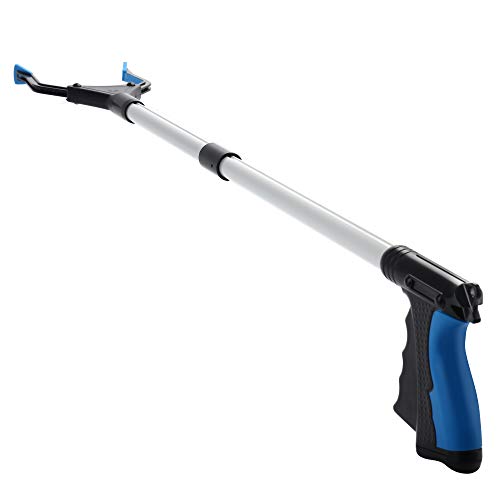
ZAYAD Grabber Reacher Tool, 32"
by ZAYAD
The category best-seller by review volume — ZAYAD's lightweight rubberized claw picks up coins and pills competently and is ideal for short-term post-surgery recovery, with cable wear the main long-term caveat.
Pros
- The single most-reviewed reacher on Amazon at more than 70,000 ratings — the deepest real-world validation pool in the entire category
- Rubberized anti-slip claw is precise enough to pick up coins, pills, and other small flat objects off a hard floor
- Lightweight at under 9 ounces, which makes it easy to handle one-handed during post-surgery recovery when arm strength is limited
- Folds to roughly 17.7 inches for storage in a drawer, bag, or car door pocket
Cons
- Cable durability is the most common complaint — the actuating cable can wear and slacken after extended heavy use
- Drops items reliably only under about 3 pounds; not a heavy-load tool
- Some users report a squeak from the trigger mechanism over time
Best Extra-Long Reacher Grabber (36 Inches and Up)
When you need to reach items on a high shelf, retrieve something from the floor while seated in a tall recliner or hospital bed, or fish an object out from deep under furniture, standard 32-inch reachers force you to lean forward and reintroduce the very bend the tool is meant to prevent. These three longer models close that gap so you stay upright. The EZPIK’s 40 inches is the longest reach here, while the Kekoy and RMS 34-inch models add extra length in a foldable form.
| Product | Price | Buy |
|---|---|---|
| EZPIK Classic 40" Folding Grabber Reacher Tool with Dual MagnetsLongest reach At 40 inches this is the longest tool in the review — reaches high shelves and floor items from a tall bed without bending, with dual magnets for metal | $28.95 | View on Amazon |
| Kekoy 36" Grabber Reacher Tool for Seniors, Foldable with 360° Rotating JawFoldable 36-inch 36-inch reach with a 360° jaw and an under-12-inch tri-fold, ideal for deep-under-furniture retrieval you can still pack away small | $14.43 | View on Amazon |
| RMS 34 Inch Extra Long Reacher Grabber - Foldable with Rotating JawExtra-long value 34-inch foldable single unit with RMS's grippy horseshoe jaw at a budget price — extra length for taller users without the bulk of the one-piece 2-pack | $8.98 | View on Amazon |
Best Heavy-Duty Reacher Grabber
For heavier pickups — a full trash bag, wet laundry, garden debris, or a stack of magazines — grip strength, jaw bite, and shaft stiffness matter more than featherweight handling. These picks hold items securely without the flex and slippage that make lightweight reachers frustrating under load. The GrabRunner leads with its rigid dual-channel aluminum shaft and latch-lock, backed by two dependable long-reach options.
| Product | Price | Buy |
|---|---|---|
| GrabRunner Heavy Duty Reacher Grabber Tool, 32" with Magnetic TipBest heavy-duty Dual-channel aluminum shaft and latch-lock fold give real rigidity, with a strong 8mm magnet — dependable in the 5-8 lb range for yard and garage work | $9.79 | View on Amazon |
| EZPIK Classic 40" Folding Grabber Reacher Tool with Dual MagnetsSturdy long-reach 40-inch dual-magnet reacher whose soft claw grips bulky, irregular objects gently — the long-reach choice for heavier items on high shelves | $28.95 | View on Amazon |
| RMS 2-Pack 32 Inch Extra Long Grabber Reacher with Rotating JawDurable value pair One-piece no-hinge construction and a full-hand trigger deliver the sturdiest everyday grip here, and the 2-pack keeps a heavy-duty tool in every room | $36.99 | View on Amazon |
Best Foldable Reacher Grabber for Travel & Storage
If the reacher needs to live in a car, a travel bag, or a wheelchair side pouch, a folding design that collapses to half its length is essential. These three fold down without giving up reach or grip, so the tool disappears when not in use and is ready when you need it. The Kekoy packs smallest, while the EZPIK and RMS balance folded size against longer reach.
| Product | Price | Buy |
|---|---|---|
| EZPIK Classic 40" Folding Grabber Reacher Tool with Dual MagnetsBest foldable overall Folds to 16 inches from a full 40, so you keep long reach yet still tuck it into a car trunk or closet — dual magnets for keys and coins on the go | $28.95 | View on Amazon |
| Kekoy 36" Grabber Reacher Tool for Seniors, Foldable with 360° Rotating JawCompact 360° jaw Tri-folds to under 12 inches — the most compact fold in this review — and slips into a wheelchair pouch or tote, with a 360° jaw for awkward angles | $14.43 | View on Amazon |
| RMS 34 Inch Extra Long Reacher Grabber - Foldable with Rotating JawFoldable extra-long Folds at the midpoint to a compact, sub-8-ounce package — the lightest foldable RMS, easy to stash in a bag for travel and errands | $8.98 | View on Amazon |
Best Reacher Grabber for Elderly & Seniors
For older adults — especially those with arthritis or reduced grip strength — the priorities shift to light weight, an easy trigger pull, and a jaw that grips reliably on the first squeeze so no retry is needed. A tool that is too heavy or stiff to actuate gets set aside, defeating its fall-prevention purpose. These three are the easiest to handle for weaker hands.
| Product | Price | Buy |
|---|---|---|
| FitPlus PowerGrip T9 Grabber Reacher Tool, 32" with MagnetLightest for weak grip Under 10 ounces with 96 grip points and a magnetic tip — low weight and easy actuation for arthritic hands, plus a huge review base behind it | $9.95 | View on Amazon |
| ZAYAD Grabber Reacher Tool, 32"Easy budget pick Light rubberized claw that picks up coins and pills competently at a bargain price, a simple, unintimidating first reacher for a senior household | $8.49 | View on Amazon |
| Kekoy 36" Grabber Reacher Tool for Seniors, Foldable with 360° Rotating JawRotating jaw for tight spots 360° continuous jaw rotates to any angle without re-gripping, easing retrievals behind furniture or under a bed for users with limited reach and mobility | $14.43 | View on Amazon |
Using a Reacher Safely and Fall Prevention
A reacher prevents falls only if it is used as a reacher — and there is one misuse I see often enough to warn about directly: never use a reacher grabber as a cane, a walking aid, or a balance support. A reacher is a lightweight pickup tool. It is not built to bear weight, it will bend or snap under a leaning load, and a user who reaches for it to steady themselves will go down with the broken tool in hand. If what you actually need is a balance and walking aid, use a proper walking cane sized and fitted for you, not a grabber.
Within its actual job, a few habits make the reacher safer and more effective. Plant your feet in a stable stance before you reach, rather than stretching off-balance toward a distant object — move closer first, then reach. Lift from the elbow rather than swinging the whole arm, which keeps the load controlled. Rotate the head so the jaw meets the object squarely before squeezing. And do not overload the tool: if an item is too heavy and the jaw slips, do not chase it — reposition and try again, or ask for help. Used this way, the reacher does its one job well: it keeps the bending-and-reaching moment out of your day.
Are Reacher Grabbers FSA/HSA Eligible?
In most cases, yes. Reacher grabbers generally qualify as durable medical equipment for FSA and HSA purposes when they are used to manage a diagnosed medical condition — after joint replacement surgery, or for arthritis, mobility limitation, or a back condition that makes bending unsafe. Some products are explicitly labeled FSA/HSA eligible, and the Kekoy model reviewed here is one of them, which simplifies checkout if you are paying directly with an FSA or HSA debit card.
If a particular reacher is not pre-labeled, you can usually still reimburse it by submitting the receipt together with a letter of medical necessity from your physician, occupational therapist, or physical therapist, stating the condition the tool addresses. Keep the receipt and the letter filed together. When the purchase is clearly tied to a medical need — and post-surgical recovery or a documented mobility diagnosis qualifies plainly — reimbursement is typically straightforward. As always, verify the specifics with your plan administrator, since FSA and HSA rules vary by plan. Paying with pre-tax dollars effectively discounts the tool by your marginal tax rate, a meaningful saving on a category where you may be buying two or three.
Final Verdict
For most buyers, the RMS 2-Pack 32-Inch Rotating-Jaw Grabber is the right choice. Its one-piece construction removes the fold-hinge failure point that wears out cheaper reachers, its full-hand trigger is the right ergonomics for arthritic and weak hands, and the 2-pack means a tool is always within reach in the room where you drop something — which is the difference between a reacher that prevents falls and one that sits in the wrong room. It is the reacher I most often recommend to patients and write into recovery plans.
For budget-conscious buyers, the FitPlus PowerGrip T9 delivers 96 grip points, a magnetic tip, and a steel-reinforced shaft for little enough to buy two or three and keep one in every high-use room. For tall users or anyone retrieving floor items from a high bed or recliner, the EZPIK 40-Inch Folding Grabber is the reach upgrade; for wheelchair and travel use, the compact Kekoy tri-fold packs smallest and rotates freely; and for short-term post-surgery recovery, the lightweight, deeply-reviewed ZAYAD is an excellent inexpensive starter.
As with all assistive equipment, the reacher works best as one part of a broader fall-prevention plan. Pair it with properly placed grab bars after surgery, a correctly fitted walking cane for actual balance support — never the reacher itself — and, if mobility is significantly limited, weigh the rollator versus walker decision with your therapist. Keep a first-aid kit accessible for the minor cuts and scrapes that ordinary life still produces. Consult your physician or occupational therapist for a recommendation tailored to your specific diagnosis, height, and hand strength — but for the simple, high-value job of keeping the bend out of your day, a good reacher grabber is one of the easiest safety wins available.
Frequently Asked Questions
What length reacher grabber do I need?
Can a reacher grabber pick up a pill off the floor?
What is the best reacher grabber after hip or knee replacement?
How do I use a reacher grabber tool?
What is the best reacher grabber for arthritic hands?
Related Articles
About the Reviewer

Dr. David Taylor, MD, PhD
Drexel University College of Medicine (MD), Indiana University School of Medicine (PhD)
Dr. David Taylor is a licensed physician and medical researcher who founded BestRatedDocs in 2016. With an MD from Drexel University and a PhD from Indiana University School of Medicine, he combines clinical expertise with a passion for health technology to provide evidence-based product recommendations. Dr. Taylor specializes in health informatics and regularly evaluates medical devices, diagnostic equipment, and therapeutic products to help healthcare professionals and patients make informed decisions.