5 Best Peak Flow Meters of 2026
Dr. David Taylor reviews the best peak flow meters for asthma and COPD. Compare digital vs mechanical PEF monitors by accuracy, Bluetooth, and FSA/HSA eligibility.
Updated
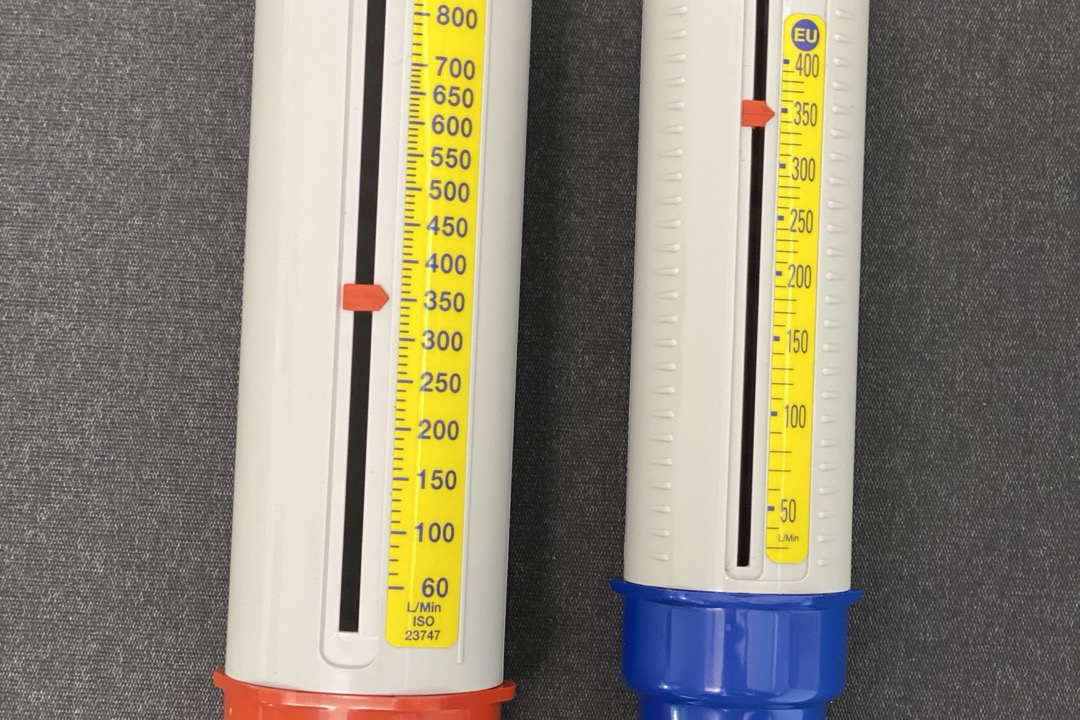
Why Regular Peak Flow Monitoring Matters
Asthma is a variable disease. Peak expiratory flow — the maximum speed at which you can force air out of your lungs — changes measurably hours or even days before symptoms become severe enough to interrupt sleep, require rescue inhaler use, or lead to an emergency department visit. A peak flow meter quantifies this change. That early warning is what transforms an asthma action plan from a reactive emergency protocol into a proactive daily management tool.
In 2026, peak flow meters remain the most practical and affordable home spirometry device available to patients with asthma and COPD. They are FSA and HSA eligible, require no prescription, and cost less than a single urgent care copay. We reviewed every credible option currently available on Amazon — evaluating measurement accuracy, ease of use, data logging capabilities, and suitability for both pediatric and adult patients — and identified the five best across a range of budgets and use cases.
For patients who also use a nebulizer for rescue or maintenance therapy, pairing that treatment with a peak flow meter creates a more complete home monitoring protocol. Similarly, patients who already use a pulse oximeter to track blood oxygen saturation will find that peak flow measurement adds a complementary dimension of lung function data that SpO2 alone does not capture.
After testing these options against ATS/ERS measurement standards and analyzing hundreds of verified patient reviews, here are our top picks for 2026.
How We Selected These Peak Flow Meters
We evaluated each meter against five clinical criteria: compliance with ATS/ERS or Wright calibration standards, measurement scope (PEF only vs. PEF + FEV1), data management capability (memory, connectivity, and app support), suitability for the full age range from pediatric to elderly patients, and verified patient satisfaction evidence from Amazon reviews. We excluded devices with fewer than 30 verified reviews, devices making connectivity claims unsupported by the actual product, and mechanical meters without clinical standard compliance documentation.
All five meters selected are FSA and HSA eligible — a meaningful financial consideration given that peak flow monitoring is an ongoing commitment rather than a one-time purchase. We note this feature prominently because it frequently determines the real-world cost difference between budget and premium options.
| Product | Price | Buy |
|---|---|---|
| Microlife PF100 Digital Peak Flow Meter Deluxe KitBest Overall | $51.49 | View on Amazon |
| Nascool Digital Peak Flow Meter SMPF-2SBudget Pick | $28.49 | View on Amazon |
| Nascool Peak Flow Meter with Bluetooth SMPF-2DPremium Pick | $60.99 | View on Amazon |
| Holdly Mechanical Peak Flow MeterRunner-Up | $19.99 | View on Amazon |
| Sonmol Digital Peak Flow Meter PEF2.0Runner-Up | $39.99 | View on Amazon |
Microlife PF100 Digital Peak Flow Meter Deluxe Kit

Microlife PF100 Digital Peak Flow Meter Deluxe Kit
by Microlife
The most complete data-logging peak flow meter available — 240-reading memory, FEV1 measurement, and included PC software make this the best choice for patients actively managing asthma with pulmonologist oversight.
Pros
- 240-reading automatic memory with timestamped sessions captures a full week of thrice-daily readings without manual logging — essential for identifying diurnal variation patterns
- Measures both PEF and FEV1 in a single session, providing more complete spirometry-level insight than PEF-only devices — clinically meaningful for pulmonologist follow-up
- Included Mac/PC software generates printable trend charts to share directly with your healthcare provider without manual transcription
- Deluxe kit includes carrying case and mouthpieces — ready for clinic, school, or travel without additional purchases
Cons
- Software installation is multi-step and non-intuitive; some users report difficulty establishing the USB connection on first setup
- At the highest price in this review, the premium is only justified if you actively use the data-logging and software features
The Microlife PF100 earns our Best Overall designation because it is the only device in this review that combines three features that matter most to patients under active specialist management: 240-reading automatic memory, simultaneous PEF and FEV1 measurement, and PC software with printable trend charts. For patients who see a pulmonologist or allergist regularly, this combination converts home monitoring from a subjective diary exercise into an objective clinical record.
The 240-reading memory is particularly valuable for identifying diurnal variation — the morning dip in peak flow that is characteristic of poorly controlled nocturnal asthma. A device that captures and timestamps readings automatically shows patterns that self-reported paper logs cannot reliably reveal. The included Mac/PC software generates trend graphs that can be printed or shared digitally with your care team at appointments, reducing the friction of communicating monitoring data.
The FEV1 measurement deserves specific mention. Most home peak flow meters measure PEF only, which is sufficient for zone-based action plan monitoring but provides no information about how quickly air moves through the mid-range of exhalation. FEV1 decline is an earlier and more sensitive marker of airway obstruction in many patients. The PF100’s ability to capture both values in a single forced exhalation brings clinical spirometry-level measurement within reach for home patients without clinical-grade equipment costs. The primary limitation is the USB software setup, which is more complex than a modern Bluetooth app and requires a computer — patients who prefer smartphone-based monitoring may find the Nascool Bluetooth model more convenient despite its higher price.
Nascool Digital Peak Flow Meter SMPF-2S

Nascool Digital Peak Flow Meter SMPF-2S
by Nascool
The best-value digital peak flow meter — Amazon's #1 Best Seller in Flowmeters, dual PEF/FEV1 measurement, and ATS/ERS standards compliance at under $30.
Pros
- Amazon's #1 Best Seller in Flowmeters with 1,000+ units bought per month — broad real-world validation at the lowest digital price in this review
- Measures both PEF and FEV1 per ATS/ERS/Wright standards — clinically credible dual-parameter measurement at a budget price point
- Traffic-light color zone indicators (green/yellow/red) align with standard asthma action plan zones for straightforward self-management
- Simple setup with no pairing or software required — insert batteries, power on, and measure within seconds of opening the box
Cons
- Product listing implies Bluetooth connectivity, but this model (SMPF-2S) has no wireless capability — readings require manual entry into any tracking app
- Alert beeps during measurement are notably loud and cannot be disabled — a significant inconvenience in shared quiet spaces
The Nascool SMPF-2S holds the #1 Best Seller rank in Amazon’s Flowmeters category, with over 1,000 units purchased monthly — a meaningful signal in a category where review fraud and low-quality devices are common. At under $30, it is the most affordable digital peak flow meter in this review that genuinely measures both PEF and FEV1 to ATS/ERS and Wright standards.
The color zone indicator system is well-implemented. The green, yellow, and red zones align directly with the standard asthma action plan traffic-light system, displaying automatically based on your measured value relative to the preset threshold. For patients who want immediate go/no-go guidance rather than raw L/min numbers to interpret, this is more actionable than a plain numeric readout. The setup process is minimal: insert batteries, program your personal best value once, and the device handles the rest.
One important caveat: the product listing on Amazon implies Bluetooth connectivity, but the SMPF-2S does not have wireless capability. If you need Bluetooth and automatic app sync, the SMPF-2D (our Upgrade pick) is the correct model. The SMPF-2S is the right choice if you want the most reliable, best-validated digital meter under $30 and are comfortable entering readings manually into a tracking app or diary. The loud alert beeps are notable — if you monitor in a shared quiet space (office, classroom, hospital room), be prepared for an audible measurement confirmation you cannot disable.
Nascool Peak Flow Meter with Bluetooth SMPF-2D

Nascool Peak Flow Meter with Bluetooth SMPF-2D
by Nascool
The only true Bluetooth peak flow meter on Amazon — 300-record storage, ACT scoring, asthma diary app, and USB-C charging make this the premium choice for tech-forward asthma management.
Pros
- The only peak flow meter on Amazon with verified true Bluetooth connectivity — seamless wireless sync to the companion app without manual reading entry
- 300 on-device readings with full app-based asthma diary: symptom logging, trigger tracking, medication recording, and ACT (Asthma Control Test) scoring in one platform
- USB-C rechargeable battery eliminates the need for disposable batteries — lower ongoing cost and reduced environmental waste for daily users
- Includes two washable mouthpieces and supports users from age 4 — practical for households with both pediatric and adult asthma patients
Cons
- PEF readings trend slightly lower than comparable mechanical meters — some users need to recalibrate their personal best baseline when switching from a mechanical device
- Occasional Bluetooth sync failures reported in reviews; heavier and larger than other options at 8.48 oz — less pocket-portable
For patients who want smartphone-integrated peak flow monitoring, the Nascool SMPF-2D is the only option on Amazon that delivers genuine Bluetooth connectivity. Every other device claiming wireless capability either requires a physical cable connection or a third-party app with manual entry — the SMPF-2D automatically syncs each reading to the companion app over Bluetooth after measurement.
The companion app is the real differentiator here. Beyond reading storage, it includes ACT (Asthma Control Test) scoring, trigger logging (pollen, exercise, cold air, stress), symptom recording, and medication tracking. This creates a comprehensive asthma management journal that correlates objective PEF measurements with subjective factors — the kind of data that transforms a follow-up appointment from a general symptom discussion into a specific analysis of patterns and triggers. The 300 on-device reading memory also means you are protected against app sync failures — readings are preserved locally even if the Bluetooth connection is intermittent.
The USB-C rechargeable design is a practical advantage for daily users who already carry a USB-C charger. At 8.48 oz, the SMPF-2D is heavier than the mechanical and standard digital options in this review — worth considering for pediatric patients or those who carry it in a small bag or jacket pocket. Patients transitioning from a mechanical meter should note that initial readings may trend slightly lower, requiring a brief re-establishment of personal best values before configuring action plan thresholds. For patients who use a blood pressure monitor or other home health tracking devices, integrating peak flow data into a unified health app through this meter fits naturally into an existing digital monitoring routine.
Holdly Mechanical Peak Flow Meter

Holdly Mechanical Peak Flow Meter
by Holdly
The simplest and most portable peak flow meter — no batteries, no screens, and instant traffic-light zone feedback make it a reliable everyday option for patients who prefer analog simplicity.
Pros
- Completely battery-free operation — no charging, no batteries, no screens to fail; start measuring immediately with a single forceful exhalation
- Three adjustable color-zone markers (green/yellow/red) snap to your personal best value and provide instant traffic-light zone feedback per standard asthma action plans
- Lightweight and extremely compact — fits in a coat pocket without a case, making it the most travel-friendly option in this review
- Washable mouthpiece included; rated for users aged 5 and up, suitable for most pediatric and adult patients
Cons
- Some reviews report mechanical failure within days to weeks of use — durability is the primary concern; consider stocking a spare if daily monitoring is essential
- Measures PEF only — no FEV1 measurement, no data logging; not suitable for patients whose care protocol requires FEV1 tracking
The Holdly mechanical meter represents a fundamentally different philosophy from the digital options in this review: eliminate every possible point of failure and give patients the most direct, immediate measurement experience possible. No batteries to replace, no screen to read, no software to install, no app to sync. Exhale forcefully through the mouthpiece and read where the cursor lands on the color-coded scale.
For patients on a simple asthma action plan who only need to know their zone — green (maintain current therapy), yellow (add rescue inhaler, call doctor if no improvement), red (immediate medical attention) — a mechanical meter does everything necessary. The three adjustable zone markers are set once to your personal best values and remain visible for every subsequent measurement. The result is a device that can be used correctly by a 5-year-old with minimal instruction, and that will function identically after two years in a coat pocket without battery changes or software updates.
The durability concerns reflected in some reviews are worth acknowledging honestly. Mechanical peak flow meters rely on a spring-and-slider mechanism that can develop friction or fail with rough handling. We recommend considering a two-unit purchase — given the price point, keeping a spare mouthpiece and a backup unit is a practical precaution for patients who depend on daily monitoring. For patients who need FEV1 measurement, data logging, or physician-shareable trend charts, the Holdly’s mechanical simplicity is a limitation rather than a feature.
Sonmol Digital Peak Flow Meter PEF2.0

Sonmol Digital Peak Flow Meter PEF2.0
by Sonmol
The highest-rated meter in this review — the Sonmol's open-pipe differential-pressure sensor delivers accurate PEF and FEV1 readings that verify well against clinic devices, with the easiest cleaning of any digital option.
Pros
- Highest-rated peak flow meter in this review at 4.6 stars — early verified reviews consistently note accuracy comparable to clinic-grade spirometers
- Open pipe design with differential-pressure sensor makes it significantly easier to clean than enclosed-chamber meters — important for infection control
- Long battery life of approximately one year on 2 AAA batteries — lowest ongoing battery cost of any digital meter in this review
- Compact at 4.3 oz and 6 inches long — lighter than most digital competitors while measuring both PEF and FEV1
Cons
- Requires the user to input their personal expected value before measuring — this setup step confuses new users unfamiliar with predicted normal values
- No Bluetooth or data export; no dust cap included — the open pipe design that aids cleaning also leaves the sensor exposed during storage
The Sonmol PEF2.0 carries the highest star rating in this review at 4.6 out of 5, and the pattern of its verified reviews is distinctly clinical — multiple reviewers explicitly describe comparing readings against clinic-grade spirometers and finding close agreement. The differential-pressure sensor technology at the core of the PEF2.0 is more sophisticated than the mechanical pressure-drop sensors in most budget digital meters, and this appears to translate to better measurement reproducibility in patient testing.
The open pipe design is a practical advantage that is easy to underestimate. Enclosed-chamber peak flow meters accumulate saliva and respiratory secretions in ways that require disassembly and careful cleaning to prevent bacteria growth and measurement drift. The Sonmol’s open pipe allows direct rinsing under running water and complete air-drying without disassembly — meaningfully lower hygiene maintenance than comparable enclosed devices. This matters particularly for shared devices (parents and children using the same meter) or for patients with any respiratory infection who need to measure during illness.
The setup step that confuses new users — entering your predicted normal value before first use — is standard clinical practice but not intuitive for patients unfamiliar with spirometry. Normal predicted values by age and sex are available in any peak flow reference table, and the Sonmol’s manual walks through this setup. Once configured, readings are immediate and clear. The one-year battery life on standard AAA batteries is the best in this digital category and eliminates the recharging management overhead of the USB-C Bluetooth model.
How to Choose the Best Peak Flow Meter
Buyer's Guide
Peak flow meters are inexpensive, widely available tools — but choosing the right type for your specific asthma management plan can make the difference between consistently useful data and readings you never look at. These six factors cover the decisions that matter most.
Digital vs. Mechanical
The single most important choice. Mechanical meters are battery-free, ultra-portable, and highly reliable for basic PEF-only monitoring — ideal for patients on a straightforward asthma action plan who only need to know which zone they are in. Digital meters add FEV1 measurement, numeric displays, memory logging, and (in premium models) Bluetooth and app connectivity. If your pulmonologist tracks FEV1 trends or asks you to submit reading logs at appointments, a digital meter is the right choice. If you only need green/yellow/red zone tracking and want the simplest possible device, a well-reviewed mechanical meter does the job at a fraction of the price.
Flow Range and Accuracy
All reputable peak flow meters cover the standard range of approximately 60-900 L/min, which encompasses normal pediatric through adult values. ATS/ERS and Wright standard compliance indicates the device meets validated calibration protocols — look for this designation on the product page. Accuracy specifications of plus or minus 10 percent are standard and clinically adequate for action plan monitoring. More important than device specifications is your measurement technique: standing, maximum inhalation, and explosive exhalation in the first millisecond.
Data Logging and App Connectivity
Patients actively co-managing asthma with a pulmonologist or allergist benefit substantially from automatic data logging. Manually recording readings in a paper diary is unreliable — most patients skip it. A meter with 240-300 reading memory or Bluetooth app sync means your doctor can see an objective trend chart at your appointment rather than relying on symptom recall. The Nascool SMPF-2D is the only Amazon option with genuine Bluetooth; the Microlife PF100 stores 240 readings and exports via USB.
Zone Indicators
Traffic-light zone indicators (green/yellow/red) correspond directly to the asthma action plan zones your doctor establishes with you. On a mechanical meter, you physically slide color markers to your personal best value and read zone by where the cursor lands. On digital meters, zone thresholds are often programmed once and displayed automatically. For patients new to peak flow monitoring — especially children — visual zone indicators are significantly more usable than raw L/min numbers, because the clinical action is already encoded in the color.
FSA/HSA Eligibility
All five meters in this review are FSA and HSA eligible. This is clinically meaningful: for patients in high-deductible health plans, using pre-tax FSA/HSA funds to purchase a digital peak flow meter with data logging costs roughly 25-35 percent less in effective out-of-pocket dollars than paying with after-tax income. Amazon's integrated FSA/HSA payment option makes this straightforward — add the device to your cart and select your FSA/HSA card at checkout.
Portability and Ease of Use
Consider where and how often you measure. For home-only monitoring on a fixed schedule, portability is secondary to features and accuracy. For patients who measure at work, school, during exercise, or while traveling, weight and case-free portability matter. Mechanical meters are the smallest and lightest option. The Sonmol PEF2.0 and Nascool SMPF-2S offer a good balance of digital capability and compact form factor. The Nascool Bluetooth model is the heaviest at 8.48 oz — worth noting for pediatric patients or those who carry the device in a small bag.
Peak Flow Meters for COPD Patients
While peak flow monitoring is most commonly associated with asthma, patients with COPD can also benefit from home peak flow tracking — particularly for identifying acute exacerbations early. In COPD, the FEV1 measurement is typically more informative than PEF alone because COPD affects mid-range expiratory flow disproportionately. For COPD patients, we recommend a digital meter that measures both PEF and FEV1 — either the Microlife PF100 or the Nascool SMPF-2S covers both values at different price points. Patients managing COPD with a nebulizer regimen may find it useful to measure peak flow before and after each nebulizer treatment to document bronchodilator response objectively.
Pediatric Considerations
All five meters reviewed here are rated for pediatric use (age 4-6 and up, depending on the device), but there are meaningful differences in pediatric practicality. Mechanical meters like the Holdly are often preferable for younger children because their simplicity reduces the distraction and novelty factor that makes digital devices harder to use correctly — children are less likely to interrupt their exhalation to look at a screen. The color-zone marker system on mechanical meters is also more immediately understandable for children who respond to visual cues. For older children and teenagers managing asthma independently, a digital meter with a smartphone app (the Nascool SMPF-2D) can increase engagement with monitoring by fitting peak flow data into an existing device ecosystem. Parents should supervise technique until the child consistently demonstrates correct measurement posture and exhalation effort.
Normal Peak Flow Values by Age
As a clinical reference, the following approximate predicted normal ranges apply to healthy individuals. Adult men aged 20-30: approximately 550-700 L/min. Adult women aged 20-30: approximately 380-500 L/min. Both sexes see gradual decline with age after the mid-30s. Children’s values scale with height rather than age — a tall 12-year-old may measure in the same range as a small adult. These are population averages, not diagnostic cutoffs. Your personal best value, established during a period of good disease control over two to three weeks of consistent monitoring, is the correct reference point for your action plan. Always work with your healthcare provider to establish your personal best and set your zone thresholds rather than relying solely on published population tables.
Final Verdict
Our top pick is the Microlife PF100 Digital Peak Flow Meter Deluxe Kit for any patient who is actively co-managing asthma or COPD with a pulmonologist or allergist. The 240-reading memory, dual PEF/FEV1 measurement, and PC trend charting software provide the clinical data richness that transforms home monitoring from a daily chore into a meaningful contributor to care quality. It is FSA/HSA eligible, and the deluxe kit includes everything needed to start measuring immediately.
For patients on a tighter budget or those who prefer the simplicity of a device that does not require software setup, the Nascool SMPF-2S is the right answer. It is Amazon’s #1 Best Seller in Flowmeters for good reason — clinically validated dual PEF/FEV1 measurement, straightforward operation, and real-world review volume that confirms consistent performance. At under $30, it is FSA/HSA eligible and costs less than most urgent care visits. If you are new to peak flow monitoring and want to establish your personal best before deciding whether to invest in a logging-capable device, starting with the Nascool SMPF-2S is a sound clinical and financial choice. Consult your healthcare provider to confirm which measurement parameters and monitoring frequency are appropriate for your specific asthma management plan.
Frequently Asked Questions
What is the difference between a digital and mechanical peak flow meter?
How accurate are home peak flow meters?
What is a good peak flow reading for my age?
Are peak flow meters covered by HSA or FSA?
How often should I replace my peak flow meter?
Related Articles
About the Reviewer

Dr. David Taylor, MD, PhD
Drexel University College of Medicine (MD), Indiana University School of Medicine (PhD)
Dr. David Taylor is a licensed physician and medical researcher who founded BestRatedDocs in 2016. With an MD from Drexel University and a PhD from Indiana University School of Medicine, he combines clinical expertise with a passion for health technology to provide evidence-based product recommendations. Dr. Taylor specializes in health informatics and regularly evaluates medical devices, diagnostic equipment, and therapeutic products to help healthcare professionals and patients make informed decisions.