11 Best Neti Pots of 2026
Dr. David Taylor, MD, PhD reviews the best neti pots and nasal irrigation systems on Amazon. Ceramic pots, squeeze bottles, and electric irrigators compared, with the water-safety rules most guides skip.
Updated
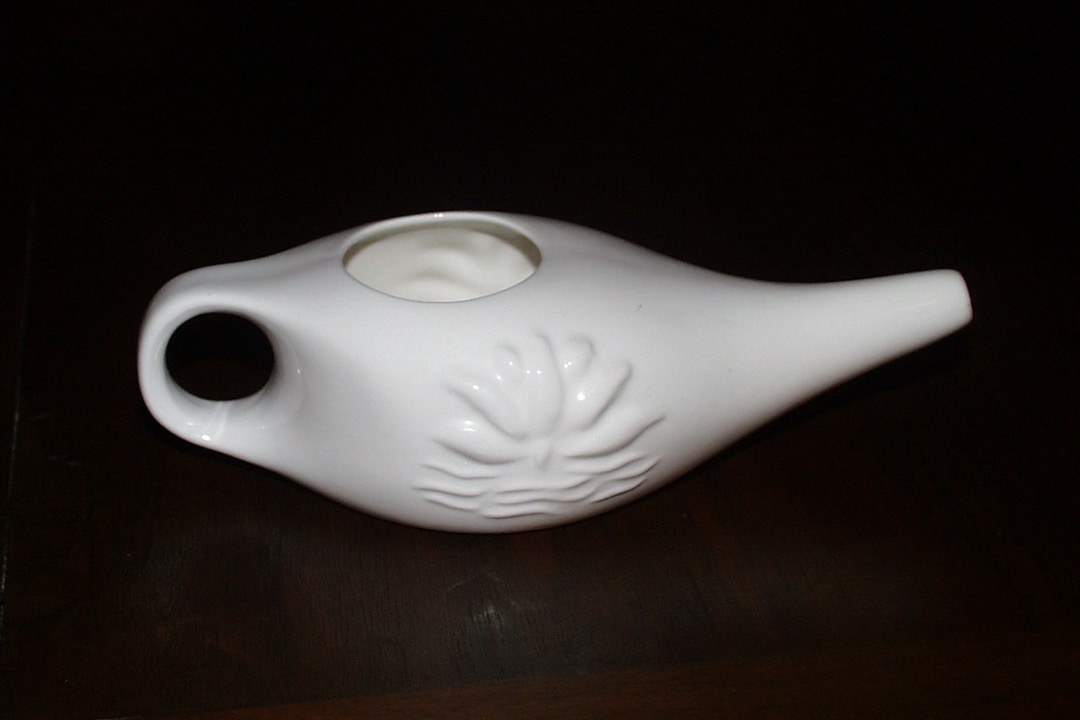
Nasal irrigation is one of the few things in my practice that is cheap, genuinely evidence-supported, and almost always underused. Rinsing with salt water clears mucus, allergens, and inflammatory debris out of the nasal passages mechanically, without a drug and without a prescription. For seasonal allergies, lingering colds, and chronic sinus congestion, it does real work.
It also has one rule that is not optional, and most buying guides bury it. Never put untreated tap water into your nose. Use distilled or sterile water, water you have boiled for 3 to 5 minutes and cooled, or water through a filter rated to trap infectious organisms. I have given that rule its own section below rather than a footnote, because the products themselves are wildly inconsistent about telling you: some listings here spell it out in detail, and others say nothing at all.
One honest note on the word “neti pot.” Strictly, it means the gravity-fed pot with a spout. In practice people use it for the whole category, and the best-performing device for most adults is actually a squeeze bottle, which gives you control over pressure that a pot cannot. So this roundup covers all three formats: traditional pots, squeeze bottles, and powered irrigators. If you specifically want the classic ceramic pot, jump straight to that section. If you are treating allergy symptoms more broadly, our guides to nasal sprays and allergy medicine cover what pairs well with rinsing.
| Product | Price | Buy |
|---|---|---|
| NeilMed Sinus Rinse Complete Sinus Nasal Rinse Kit, 50 Premixed PacketsBest Overall | $11.48 | View on Amazon |
| NeilMed SinuFlo Ready Rinse, 8 fl ozBudget Pick | $9.97 | View on Amazon |
| NeilMed NasaFlo Neti PotRunner-Up | $14.99 | View on Amazon |
| Navage Deluxe Bundle: Nose Cleaner, 30 SaltPods, Caddy, Black BagPremium Pick | $109.95 | View on Amazon |
| Himalayan Chandra Porcelain Neti PotRunner-Up | $11.08 | View on Amazon |
| NeilMed Classic Porcelain Neti Pot with 30 Premixed PacketsRunner-Up | $14.99 | View on Amazon |
| Baraka US Handcrafted Ceramic Neti Pot, 10 ozRunner-Up | $29.95 | View on Amazon |
| NeilMed Sinus Rinse Pediatric Complete Kit, 60 Premixed PacketsRunner-Up | $14.99 | View on Amazon |
| NeilMed HydroPulse Neo Multi-Speed Electric Pulsating Nasal Sinus Irrigation SystemRunner-Up | $49.99 | View on Amazon |
| SinuPulse Elite Pulsating Nasal Irrigation System, 30 SinuAir PacketsRunner-Up | $89.95 | View on Amazon |
| SoulGenie HealthAndYoga QwikFlo Neti Pot Sinus Rinse Kit, 2-PackRunner-Up | $14.95 | View on Amazon |
Find the Best Neti Pot for Your Need
Jump straight to the format you are actually shopping for.
- Overall best neti pot
- Best sinus rinse squeeze bottles
- Best ceramic neti pots
- Best electric neti pots and nasal irrigation machines
- Best neti pots for kids and infants
- More use cases
How I Chose These Neti Pots
I started from the three delivery formats, because that choice matters more than brand: gravity pots, squeeze bottles, and powered irrigators. Within each, I required a currently buyable listing with a genuine new-condition offer, verified directly against Amazon’s catalog rather than taken from a cached figure.
Beyond that, I weighted three things a clinician cares about and most roundups ignore. First, whether the listing itself communicates the water-safety rule, since a device sold without that instruction is actively risky in the hands of a first-time user. Second, whether saline is included and premixed, because incorrect saline concentration is the most common reason people try irrigation once and abandon it. Third, whether the device can be cleaned properly, meaning a mouth wide enough to reach inside.
I excluded stainless steel pots entirely. They are a real category with real search demand, but the best-rated option currently on Amazon sits at 3.9 stars, which is below the bar I will put my name against. I also looked for a genuine glass neti pot and could not find one selling on Amazon; searches for glass return porcelain and steel instead.
Best Neti Pots Overall
These eleven cover every format worth buying, starting with the one I recommend most often.
NeilMed Sinus Rinse Complete Kit: Best Overall
This is the device I hand to most adults who have never irrigated before, and the reasoning is about failure modes rather than features. The two things that make people give up on nasal rinsing are mixing saline at the wrong concentration, which stings badly enough to feel like a mistake, and not delivering enough volume to actually clear anything. The premixed packets eliminate the first. Squeeze delivery eliminates the second, because you set the pressure with your hand instead of hoping gravity and head angle cooperate.
It also happens to be the most reviewed squeeze-bottle kit in this roundup by a wide margin, and that depth matters for a product you put against your nasal passages. The formulation is free of preservatives, iodine, and latex, which is the kind of detail that only matters until it matters a great deal for a reactive patient.
The honest limitation is technique. Reviewers who report solution reaching the ear are almost always describing a head position problem rather than a product defect. Lean forward over the sink, keep your mouth open, and do not tilt your head back. Get that right and this is close to foolproof.

NeilMed Sinus Rinse Complete Sinus Nasal Rinse Kit, 50 Premixed Packets
by NeilMed
The default I recommend to most adults starting nasal irrigation, because it controls the two things beginners get wrong: saline concentration and delivered pressure.
Pros
- Printed directions on the box specify distilled, filtered, or previously boiled water, so the safety rule is impossible to miss
- Squeeze delivery lets you control pressure and volume directly, rather than relying on head tilt alone
- Premixed packets remove every opportunity to mix saline at the wrong concentration
- Formulated without preservatives, iodine, or latex, which matters for sensitive or reactive patients
Cons
- Correct head position genuinely matters, and reviewers who rush it report solution reaching the ear
- Some users report temporary lip, mouth, or throat irritation after a rinse
- The kit ships with a single bottle, so there is no spare while one is drying
NeilMed SinuFlo Ready Rinse: Best Budget
Ready Rinse removes the last remaining chore, which is preparing water at all. The solution arrives premixed, so there is nothing to boil, measure, or cool. For anyone who has been put off irrigation by the logistics, this is the lowest-friction way in, and it is the least expensive option in this roundup.
The trade-off is delivered pressure. It is gentler than a full-size rinse bottle, which is fine for maintenance rinsing and allergy season but underpowered when you are badly congested and want a thorough flush. The other recurring complaint is mundane and real: the seal is difficult to get off, and it comes up in reviews constantly.
I suggest this to two groups. People who want to test whether irrigation helps them before committing to a routine, and people who travel enough that boiling and cooling water is genuinely impractical.

NeilMed SinuFlo Ready Rinse, 8 fl oz
by NeilMed
The lowest-cost option here and the one that removes water preparation entirely, which makes it the easiest way to try irrigation without committing to a routine.
Pros
- Arrives as a premixed solution, so there is no water to boil, measure, or cool
- Listed as free of BPA, drugs, iodine, gluten, and latex
- Reviewers consistently describe it as effective through allergy season for clearing pollen and dust
- Compact enough to keep in a bag or desk drawer without a separate kit
Cons
- The foil and plastic seal is the most common complaint in reviews, and several users find it awkward to remove
- Delivered pressure is gentler than a full-size rinse bottle, which some users want more of during heavy congestion
NeilMed NasaFlo Neti Pot: Runner-Up
If you want an actual neti pot rather than a bottle, this is where I would start. It is a true gravity pot, so the flow is gentler than any squeeze device, which suits people who find pressurized rinsing unpleasant or who have been told to be careful.
What earns it the runner-up slot over the porcelain options is the labeling. The listing states directly to use distilled, micro-filtered, bottled, or previously boiled and cooled water, and not to use untreated tap water. In a category where several products ship with no water guidance at all, a device that tells a first-time user the one thing that could genuinely hurt them is doing real work. The included illustrated instructions are cited repeatedly in reviews as unusually clear.
Being plastic, it survives the drop onto a tile floor that ends a porcelain pot. A minority of reviewers do report seam cracking or leaking despite the unbreakable marketing, so it is not indestructible. Expect the pouring angle to take a few attempts before it stops being messy.

NeilMed NasaFlo Neti Pot
by NeilMed
A true gravity neti pot from the brand with the clearest water-safety labeling in the category, in a material that tolerates being dropped.
Pros
- The listing states plainly to use distilled, micro-filtered, bottled, or previously boiled and cooled water, and not to use untreated tap water
- Gravity delivery is gentler than a squeeze bottle, which suits people who find pressurized rinsing uncomfortable
- Includes illustrated instructions that reviewers single out as unusually clear
- Plastic construction survives a drop onto a bathroom floor, unlike porcelain
Cons
- Despite the unbreakable marketing, a minority of reviewers report cracking or leaking at the seam
- The pouring angle takes practice, and early attempts are frequently described as messy
Navage Nose Cleaner Deluxe Bundle: Upgrade Pick
Navage works differently from everything else here. Rather than relying on gravity or your grip, it uses powered suction to pull saline in one nostril and out the other. Head positioning, the thing that defeats most beginners, stops being a variable at all.
It carries the largest review base of any product in this roundup, it is listed as FDA-cleared for ages 12 and up, and the sealed SaltPod capsules make incorrect saline concentration structurally impossible. There is even a safety interlock that halts the cycle if the pod chamber opens mid-rinse. For someone who has tried a pot and a bottle and could not get on with either, this is the device that tends to finally work.
Two caveats keep it as an upgrade pick rather than a general recommendation. The SaltPods are proprietary, so you are committing to an ongoing consumable cost that a pot with bulk packets does not carry. More importantly, independent review sources report motor and suction failures anywhere from a few months to a few years in, and several reviewers describe water pooling in the battery compartment. It solves a real problem, and you should go in knowing the durability record is mixed.

Navage Deluxe Bundle: Nose Cleaner, 30 SaltPods, Caddy, Black Bag
by Navage
The most expensive device in this roundup and the only one that removes head positioning from the process entirely, at the cost of a proprietary consumable and a mixed durability record.
Pros
- Listed as FDA-cleared and intended for users age 12 and up
- Sealed SaltPod capsules are pre-measured, so saline concentration is fixed by design
- A safety interlock stops the cycle if the SaltPod chamber is opened mid-rinse
- Powered suction pulls solution through both nostrils without requiring any head tilt technique
Cons
- Independent review sources report motor and suction failures within a few months to a few years of ownership
- SaltPods are proprietary, so the device carries an ongoing consumable cost that a pot or bottle does not
- Several reviewers report water pooling in the battery compartment
Himalayan Chandra Porcelain Neti Pot: Best Traditional Porcelain
This is the pot most people picture when they hear the word neti, and it is a good one. Glazed porcelain is non-porous, so unlike plastic it will not take on odor or cloud over after months of use. It holds warm water temperature noticeably longer than a thin plastic pot, which makes the rinse more comfortable than people expect. Owners routinely report the same pot still in service after years.
Two honest reservations. Porcelain chips, and a minority of reviewers report damage in shipping or from knocking it against a sink. And a redesigned, wider spout has made achieving a nostril seal harder for some users, which is a real complaint that shows up more than once.
The third issue is the one I would flag to a beginner: this listing provides no water-safety guidance whatsoever. That is not a defect in the pot, which is well made, but if this is someone’s first irrigation device they will not learn the distilled water rule from the box.

Himalayan Chandra Porcelain Neti Pot
by Himalayan Chandra
The classic porcelain pot most people picture when they hear the word neti, well made and well priced, but sold without the water-safety instructions a beginner needs.
Pros
- Glazed porcelain is non-porous, so it does not hold odor or staining the way plastic can over time
- Reviewers describe the pour as controlled and spill-free once the angle is learned
- Long-term owners report the same pot still in service after many years
- Holds warm water temperature longer than a thin plastic pot, which makes the rinse more comfortable
Cons
- Porcelain chips, and a minority of reviewers report damage in shipping or from sink contact
- A redesigned wider spout makes a nostril seal harder for some users to achieve
- The listing gives no water-safety guidance at all, which is a real omission for a first-time buyer
NeilMed Classic Porcelain Neti Pot: Best Ceramic Starter
This is the porcelain pot I point first-time ceramic buyers toward, for a simple reason: it ships with thirty premixed saline packets. Every other ceramic option here leaves you to source saline separately, which means a new user is mixing their own on day one, which is exactly where the stinging-and-quitting cycle starts.
You get the properties that make people want ceramic in the first place, a non-porous glazed body that stays clean and holds warmth, combined with the water-preparation labeling that NeilMed is consistently good about. The packet supply is generous enough to establish a genuine routine before reordering.
The caveat is evidence depth rather than quality. Its review base is a fraction of what the plastic NeilMed devices have accumulated, so there is less long-run durability data to draw on. And it is still porcelain, so it will still chip against a hard sink edge.
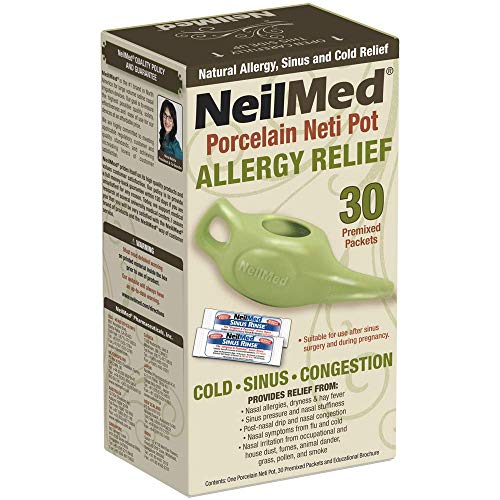
NeilMed Classic Porcelain Neti Pot with 30 Premixed Packets
by NeilMed
The porcelain pot I point first-time ceramic buyers toward, because it ships with the premixed saline that the other ceramic options leave you to source separately.
Pros
- Pairs a porcelain pot with premixed saline packets, so nothing has to be measured by hand
- Comes from the brand whose packaging carries the clearest water-preparation instructions in this category
- Glazed porcelain body is non-porous and easy to rinse clean
- Packet supply is large enough to establish a daily routine before reordering
Cons
- Carries a much smaller review base than the plastic NeilMed devices, so long-run durability data is thinner
- Porcelain still chips if it contacts a hard sink edge
Baraka Handcrafted Ceramic Neti Pot: Best Premium Ceramic
If irrigation has become a daily habit and you want a pot that will outlast a decade of mass-market porcelain, this is the one. It holds the highest average rating of any ceramic pot in this roundup. The handcrafted stoneware body is heavier and sits far more stably on a wet counter than thin porcelain, which sounds trivial until you have knocked a lighter pot into a sink.
Two practical advantages stand out. The stated 10 ounce capacity covers both nostrils in a single fill for most adults, so there is no refilling mid-rinse. And the wide mouth means you can actually get a hand or brush inside to clean it, which narrow-necked decorative pots make genuinely difficult.
It costs roughly twice what the mainstream porcelain pots here do, and it ships without saline. Worth knowing before you read the reviews: the colorway variants share a single pooled review count, so you cannot isolate feedback on the specific color you are buying.
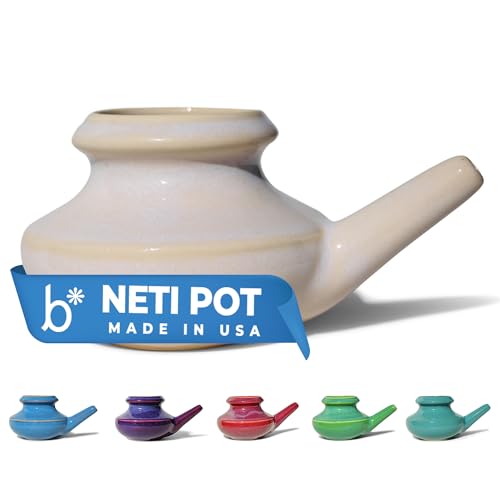
Baraka US Handcrafted Ceramic Neti Pot, 10 oz
by Baraka
The pot to buy if irrigation has become a daily habit and you want something substantial that will outlast a decade of mass-market porcelain.
Pros
- Holds the highest average rating of any ceramic pot in this roundup
- Handcrafted stoneware body is noticeably heavier and more stable on a wet counter than thin porcelain
- A stated 10 oz capacity covers both nostrils in a single fill for most adults
- Wide mouth makes it genuinely easy to reach inside and clean, which narrow-necked pots are not
Cons
- Costs roughly twice what the mainstream porcelain pots here do
- Ships without saline, so packets are a separate purchase
- Colorway variants share a single pooled review count, so per-color feedback cannot be isolated
NeilMed Sinus Rinse Pediatric Kit: Best for Kids
Children are not small adults, and this kit is the clearest illustration of why that matters. It is dosed and sized specifically for children aged two and up rather than being an adult product with a different label, and it holds the highest average rating of any product in this roundup.
What parents report most consistently is acceptance. A child who fights an adult bottle will often tolerate this, largely because the delivered volume and pressure are matched to a smaller nasal passage. Reviews repeatedly describe children breathing and sleeping better through congestion. It is medication-free, so it sits alongside anything a pediatrician has already prescribed rather than competing with it.
The FDA’s position is worth knowing before you buy: some children as young as two can use these devices for nasal allergies if a pediatrician recommends it, but very young children often will not tolerate the procedure. Get the go-ahead first, and stop if it causes ear pain, fever, nosebleeds, or headaches. Once a child is established in a routine, buying loose packets is cheaper than repurchasing the kit.

NeilMed Sinus Rinse Pediatric Complete Kit, 60 Premixed Packets
by NeilMed
A pediatric kit designed around a child's smaller nasal passages and lower tolerance for pressure, which is why it succeeds where a scaled-down adult bottle does not.
Pros
- Holds the highest average rating of any product in this roundup
- Dosed and sized for children aged 2 and up rather than being a relabeled adult kit
- Parents consistently report their children accept it with little resistance
- Medication-free, so it can be used alongside whatever a pediatrician has already prescribed
Cons
- Costs more than buying loose packets once a child is established in a routine
- The listing does not state the bottle's fluid capacity
NeilMed HydroPulse Neo: Best Entry-Level Electric
Pulsating irrigation is a genuinely different mechanism from pouring. The pulsation is the part most often studied for moving stagnant mucus, rather than simply flooding the passage, and for chronic congestion it can do things a gravity pot cannot.
What makes the HydroPulse Neo the right first powered device is the adjustable speed. Powered irrigation is not universally comfortable at first, and being able to start gently and increase pressure as tolerance builds is the difference between persisting and abandoning it. The wand-style handpiece also helps, since you hold a light tip to your face rather than the whole machine. The listing carries explicit water-preparation instructions.
Two limits. The review base is small for a device at this price, so durability evidence is thinner than I would like. And it is corded, which ties it to an outlet and rules it out as a travel device. I suggest this before anyone spends significantly more on a powered unit they may turn out not to tolerate.
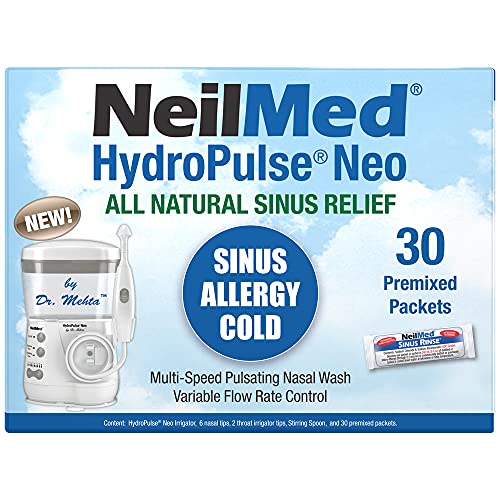
NeilMed HydroPulse Neo Multi-Speed Electric Pulsating Nasal Sinus Irrigation System
by NeilMed
The least expensive way into pulsating irrigation, and the option I suggest before anyone spends more on a powered unit they may not tolerate.
Pros
- Pulsating flow is the mechanism most often studied for moving stagnant mucus, rather than simple steady pour
- Adjustable speed lets you start gently and increase pressure as tolerance builds
- Wand-style handpiece means you hold a light tip, not the whole machine, against your face
- Listing carries explicit distilled, bottled, boiled, or filtered water instructions
Cons
- Review base is small for a device at this price, so durability data is limited
- Corded operation ties it to an outlet and makes it impractical to travel with
SinuPulse Elite: Best for Severe and Post-Surgical Congestion
The SinuPulse Elite is the powered unit I most often see chosen on a surgeon’s recommendation, and the review record supports that positioning. Reviewers report daily use across multiple years, which is the single most meaningful durability signal for a motorized device, and post-sinus-surgery irrigation comes up repeatedly in their accounts.
It carries a stated three-year warranty, and the reservoir is specified as free of BPA and of estrogenic and androgenic activity. The included throat and mist tips extend it beyond straightforward nasal rinsing.
Set against that: one documented complaint describes the unit developing a vibrating or squeaking noise after roughly ten uses, and it has been flagged as a frequently-returned item on at least one other retailer’s listing. Like any counter-top unit it also claims permanent bathroom space. If you are irrigating after sinus surgery, follow your surgeon’s protocol on frequency rather than the box.

SinuPulse Elite Pulsating Nasal Irrigation System, 30 SinuAir Packets
by Health Solutions
The powered unit with the longest warranty and the strongest record of multi-year daily use, and the one most often chosen on a surgeon's advice after sinus surgery.
Pros
- Reviewers report daily use across multiple years, which is the durability signal that matters most on a powered device
- Reservoir is stated to be free of BPA and of estrogenic and androgenic activity
- Repeatedly described by reviewers as effective for post-sinus-surgery irrigation
- Backed by a stated three-year warranty on the unit
Cons
- A documented complaint describes the unit developing a vibrating or squeaking noise after roughly ten uses
- Flagged as a frequently-returned item on at least one other retailer's listing
- Takes up permanent counter space in a way a pot or bottle does not
SoulGenie QwikFlo Travel Neti Pot: Best for Travel
Porcelain does not travel. This two-pack exists for the specific problem of maintaining a rinse routine away from home, and it solves it adequately. The pots are compact enough for a carry-on, the transparent body lets you see the fill level as you go, and shipping two means one can dry while the other is in use, which is the actual constraint when you are living out of a bag.
I am recommending it on portability, and I want to be straightforward about the rest. It carries by far the smallest review base in this roundup, which is thin evidence for anything health-related. It ships with no saline packets. And like the Himalayan Chandra pot, the listing offers no water-safety instructions at all, which matters more on the road, where finding distilled water takes actual planning.
Pack it alongside packets from whichever kit you use at home, and buy distilled water when you arrive rather than improvising at the hotel tap.

SoulGenie HealthAndYoga QwikFlo Neti Pot Sinus Rinse Kit, 2-Pack
by SoulGenie
A light, packable two-pack for keeping a rinse routine going on the road, chosen for portability rather than for its still-limited review history.
Pros
- Compact enough to pack in a carry-on, which the porcelain pots here are not
- Transparent body lets you see the fill level and how much solution remains
- Ships as a two-pack, so one can be drying while the other is in use
- Conical tip is designed to seal against a range of nostril sizes
Cons
- Carries by far the smallest review base in this roundup, which is thin evidence for a health purchase
- Ships with no saline packets
- The listing provides no water-safety instructions whatsoever
Best Sinus Rinse Squeeze Bottles
A squeeze bottle is what I recommend to most adults, and the reason is control. With a gravity pot, delivered pressure is whatever your head angle produces. With a bottle, you set it with your hand, which means you can flush thoroughly when you are badly congested and ease off when you are not. It is also markedly easier to learn. If you have tried a pot and concluded irrigation does not work for you, try this format before giving up on it.
| Product | Price | Buy |
|---|---|---|
| NeilMed Sinus Rinse Complete Sinus Nasal Rinse Kit, 50 Premixed PacketsBest squeeze bottle overall Premixed packets plus hand-controlled pressure, the combination that gets beginners past the two usual failure points | $11.48 | View on Amazon |
| NeilMed SinuFlo Ready Rinse, 8 fl ozBest no-preparation option Arrives premixed so there is no water to boil, measure, or cool, at the lowest cost here | $9.97 | View on Amazon |
| NeilMed Sinus Rinse Pediatric Complete Kit, 60 Premixed PacketsBest squeeze bottle for children Dosed and sized for ages two and up rather than being a relabeled adult bottle | $14.99 | View on Amazon |
Best Ceramic Neti Pots
Ceramic and porcelain are what most people mean when they say neti pot, and there are real reasons to prefer them. A glazed body is non-porous, so it will not cloud or hold odor the way plastic does after a few months, and it keeps the solution warm longer, which makes the rinse more comfortable. The trade is fragility, and the thing to check before buying is whether you can get a hand inside to clean it properly.
| Product | Price | Buy |
|---|---|---|
| NeilMed Classic Porcelain Neti Pot with 30 Premixed PacketsBest ceramic starter The only ceramic pot here that ships with premixed saline, so a first-timer is not mixing their own on day one | $14.99 | View on Amazon |
| Himalayan Chandra Porcelain Neti PotBest traditional porcelain The classic porcelain design, well made and keenly priced, but its listing gives no water-safety guidance | $11.08 | View on Amazon |
| Baraka US Handcrafted Ceramic Neti Pot, 10 ozBest premium ceramic Handcrafted stoneware with a wide, easy-to-clean mouth and the highest rating of any ceramic pot here | $29.95 | View on Amazon |
Best Electric Neti Pots and Nasal Irrigation Machines
Powered irrigation is worth the money in two situations: technique has been your obstacle, or you are managing chronic congestion or recovering from sinus surgery. Note that the two mechanisms are genuinely different and should not be lumped together. Pulsating units drive a rhythmic stream that helps mobilize stagnant mucus. Suction units pull solution through the nasal passage, which removes head positioning from the process entirely.
| Product | Price | Buy |
|---|---|---|
| NeilMed HydroPulse Neo Multi-Speed Electric Pulsating Nasal Sinus Irrigation SystemBest entry-level electric Adjustable speed lets you build tolerance gradually, and it is the least costly way into pulsating irrigation | $49.99 | View on Amazon |
| SinuPulse Elite Pulsating Nasal Irrigation System, 30 SinuAir PacketsBest for severe congestion Stated three-year warranty and a reviewer record of multi-year daily use, often chosen post-surgery | $89.95 | View on Amazon |
| Navage Deluxe Bundle: Nose Cleaner, 30 SaltPods, Caddy, Black BagBest powered suction Removes head positioning entirely via powered suction, with pre-measured sealed saline capsules | $109.95 | View on Amazon |
Best Neti Pots for Kids and Infants
Start with the pediatrician, not the product. FDA guidance is that some children as young as two may use these devices for nasal allergies when a pediatrician recommends it, and that very young children often will not tolerate the procedure. Once you have the go-ahead, the device needs to be matched to a child’s smaller passages and much lower tolerance for pressure. Handing a child an adult bottle and telling them to squeeze gently is the usual mistake. Stop immediately if rinsing causes ear pain, fever, nosebleeds, or headaches.
| Product | Price | Buy |
|---|---|---|
| NeilMed Sinus Rinse Pediatric Complete Kit, 60 Premixed PacketsBest for children aged 2 and up Dosed and sized specifically for children, and the highest-rated product in this roundup | $14.99 | View on Amazon |
| SoulGenie HealthAndYoga QwikFlo Neti Pot Sinus Rinse Kit, 2-PackBest compact pot for older children Small, transparent and light enough for a child to hold steady, though it includes no saline | $14.95 | View on Amazon |
| NeilMed Sinus Rinse Complete Sinus Nasal Rinse Kit, 50 Premixed PacketsBest for teens and older children The standard adult kit, appropriate once a child is old enough to manage pressure themselves | $11.48 | View on Amazon |
Best Neti Pots by Use Case
A few narrower needs, matched to the device that actually fits them.
| Product | Price | Buy |
|---|---|---|
| SoulGenie HealthAndYoga QwikFlo Neti Pot Sinus Rinse Kit, 2-PackBest travel neti pot Compact two-pack that packs flat, so one dries while the other is in use | $14.95 | View on Amazon |
| NeilMed NasaFlo Neti PotBest plastic neti pot Unbreakable plastic gravity pot with the clearest water-safety labeling in the category | $14.99 | View on Amazon |
| NeilMed Classic Porcelain Neti Pot with 30 Premixed PacketsBest neti pot kit with saline included Porcelain pot bundled with thirty premixed packets, so nothing needs measuring | $14.99 | View on Amazon |
Water Safety: The Rule That Is Not Optional
Never use untreated tap water in any of these devices. Tap water is treated to be safe to drink, where stomach acid handles what survives treatment. Your nasal passages have no such defense.
The organism of concern is Naegleria fowleri, an amoeba found in warm fresh water. It is worth being precise about the scale of this risk, because most coverage either ignores it or overstates it. CDC has recorded 167 primary amebic meningoencephalitis cases in the United States between 1962 and 2024, with only four survivors. The overwhelming majority of those infections came from swimming or diving in warm fresh water, not from nasal rinsing. CDC characterizes the rinsing-associated share as a few infections, and the best-documented cluster is two deaths in Louisiana in 2011 linked to neti pots filled with unboiled tap water.
So the honest framing is this: your risk from a single rinse with tap water is very low. It is also entirely avoidable, the infection is nearly always fatal, and a gallon of distilled water costs about a dollar. That asymmetry is why I treat it as a rule rather than a risk to weigh.
Per FDA guidance, acceptable water is distilled or sterile water bought and labeled as such, tap water boiled for 3 to 5 minutes and cooled until lukewarm, or water passed through a filter designed to trap potentially infectious organisms.
Getting the Saline Right
Most people who conclude that irrigation hurts have simply mixed their solution wrong, and almost nobody explains the difference that matters.
Isotonic saline sits at roughly the salt concentration of your own body tissue. It is comfortable, it does not sting, and it is what you want for routine daily or maintenance rinsing. Hypertonic saline is more concentrated than your tissue, so it draws fluid out of swollen membranes. That decongests faster during an acute flare, which is genuinely useful when you are blocked up, but it stings more and is not what you want as a daily habit.
Premixed packets remove the guesswork entirely, which is why I recommend them until you know what your nose tolerates. If you do mix your own, use non-iodized salt without anti-caking agents, and never use plain water with no salt at all, which burns badly. Lukewarm, not hot and not cold, is what makes the difference between a rinse you will repeat and one you will not.
Buyer's Guide
Nasal irrigation works by mechanically flushing mucus, allergens, and inflammatory debris out of the nasal passages with salt water. Every device here does that same job. What separates them is how the solution is delivered, how much control you have over pressure, and how much can go wrong in preparation. Those three things should drive your choice far more than material or price.
Delivery method: gravity, squeeze, or powered
A gravity pot pours solution in under its own weight, so pressure is set by how you tilt your head. It is the gentlest option and the one most people find least intimidating, but it delivers the least force and demands the most technique. A squeeze bottle lets you control pressure directly with your hand, which flushes more thoroughly and is why it is the format I recommend to most adults. A powered unit pulses or suctions the solution through, removing head positioning from the equation entirely, which is the reason to consider one if technique has been your obstacle or if you are irrigating after sinus surgery.
Water safety and preparation
This is the factor that actually matters for your health, and it is independent of which device you buy. Only distilled or sterile water, previously boiled and cooled water, or water through an appropriate filter belongs in any of these devices. Worth knowing when you compare listings: the NeilMed products state this clearly on the packaging, while the Himalayan Chandra pot and the SoulGenie kit say nothing about water safety on their own listings at all. If you are buying for someone who has never irrigated before, that labeling is a genuine safety feature, not marketing.
Saline: premixed packets versus mixing your own
Isotonic saline is roughly the salt concentration of your own tissue, which makes it comfortable for routine daily use. Hypertonic saline is stronger, and it decongests faster during an acute flare because it draws fluid out of swollen tissue, at the cost of more stinging. Almost nobody explains this, which is why people conclude irrigation hurts when they have simply mixed it too strong. Premixed packets remove the variable completely and are worth the small premium until you know what your nose tolerates. Never use plain water without salt, which burns badly.
Material and cleaning
Porcelain and ceramic are non-porous, hold warmth longer, and will not absorb odor, but they chip. Plastic survives being dropped and costs less, but clouds and takes on smell over time and should be replaced every few months. Stainless steel exists but the options currently on Amazon rate poorly enough that I am not recommending one. Whatever you choose, the deciding question is whether you can get your hand or a brush inside it to clean properly, which is why a wide-mouthed pot beats a narrow-necked one.
Capacity and delivered volume
Clinical benefit tracks with delivering enough volume to actually flush the passage, not with the device being full. Around 8 ounces covers both nostrils for most adults, which is what the mainstream bottles and the larger ceramic pots hold. Smaller travel pots mean refilling mid-rinse. Children need substantially less, which is one reason a pediatric kit is a better answer than handing a child an adult bottle and telling them to use less.
Who is actually using it
Match the device to the person. A first-time adult is best served by a squeeze bottle with premixed packets. A child aged two and up needs a pediatric kit and a pediatrician's go-ahead. Someone recovering from sinus surgery should use what their surgeon specifies, which is frequently a pulsating unit. Anyone with ear tubes, a perforated eardrum, or an active ear infection should not be irrigating at all without clearance first.
How to Choose the Best Neti Pot
If you are new to this, buy a squeeze bottle with premixed packets and skip the decision paralysis entirely. It is the format with the least technique to learn, the most control over pressure, and the smallest chance of the two mistakes that make people quit.
Buy ceramic if you already know irrigation works for you and you want something that will not cloud or take on odor, accepting that it can chip. Buy powered if technique has genuinely been the obstacle, or if you are managing chronic sinus disease or recovering from surgery, and follow whatever protocol your surgeon set. Buy the pediatric kit for a child, after speaking with their pediatrician, rather than scaling down an adult device.
Whatever you choose, budget for distilled water alongside it. That is the purchase that actually determines whether this is safe.
Final Verdict
For most adults, the NeilMed Sinus Rinse Complete Kit is the right first purchase. It controls saline concentration with premixed packets and delivered pressure with a squeeze bottle, which are precisely the two variables that determine whether someone sticks with nasal irrigation or abandons it after one stinging attempt. That it also carries the deepest review history of any squeeze-bottle kit here is a useful reassurance rather than the reason to buy it.
If cost is the constraint, SinuFlo Ready Rinse is the least expensive option in this roundup and removes water preparation altogether, which makes it the easiest way to find out whether rinsing helps you before committing to a routine. If you want the traditional pot, start with the NeilMed NasaFlo for its unusually clear safety labeling, or step up to the Baraka handcrafted ceramic if this has become a daily habit.
Whichever you choose, the device matters less than the water you put in it. Get that part right and nasal irrigation is one of the safest, cheapest, and most genuinely useful things you can do for congestion at home. If your symptoms persist beyond a week of daily rinsing, or you are running a fever, that is no longer a rinse problem, and our guides to allergy medicine and steam inhalers cover what else is worth trying before you call your doctor.
Frequently Asked Questions
Can you use tap water in a neti pot?
How often can you use a neti pot?
How do you clean a neti pot?
Can you use a neti pot if you have a deviated septum?
When should you not use a neti pot?
Related Articles
About the Reviewer

Dr. David Taylor, MD, PhD
Drexel University College of Medicine (MD), Indiana University School of Medicine (PhD)
Dr. David Taylor is a licensed physician and medical researcher who founded BestRatedDocs in 2016. With an MD from Drexel University and a PhD from Indiana University School of Medicine, he combines clinical expertise with a passion for health technology to provide evidence-based product recommendations. Dr. Taylor specializes in health informatics and regularly evaluates medical devices, diagnostic equipment, and therapeutic products to help healthcare professionals and patients make informed decisions.