12 Best Foam Rollers of 2026
Dr. David Taylor reviews the best foam rollers for back pain, runners, beginners and deep tissue massage, including vibrating, high-density and travel rollers.
Updated
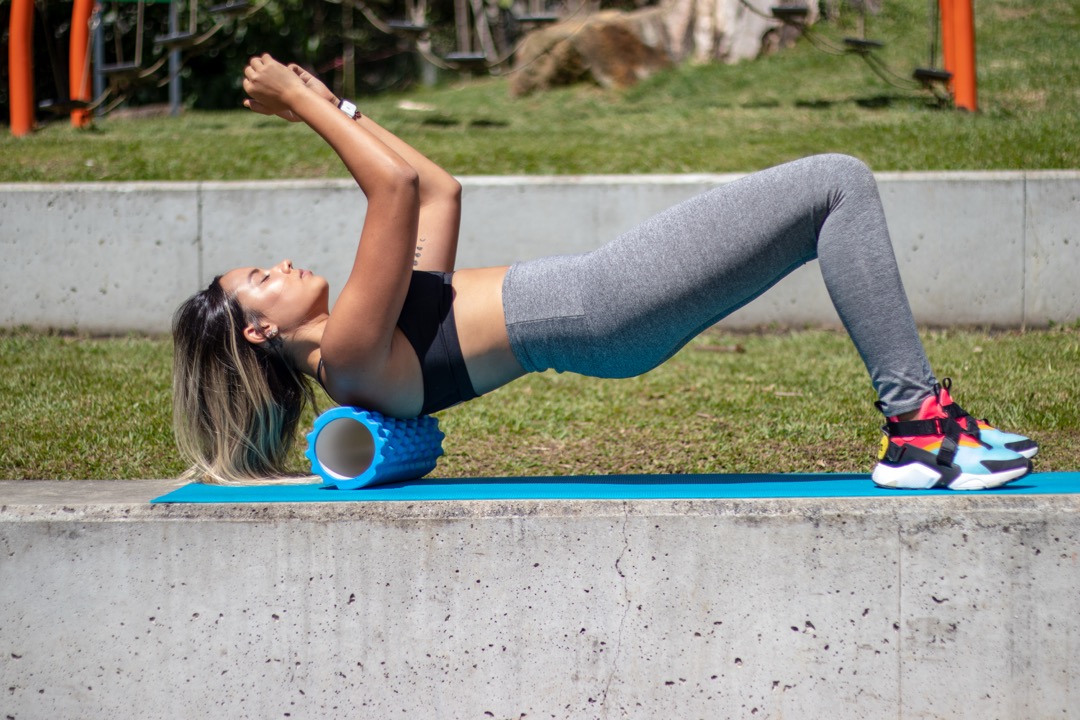
I prescribe foam rolling more often than almost any other piece of home equipment. It is cheap, it is safe for most people, and when it is used properly it loosens tight muscles, eases post-exercise soreness and gives a stiff upper back a little more room to move. I am Dr. David Taylor, and I have reviewed the evidence on self-myofascial release and tested how these rollers actually feel across the density range, from a soft clinic roller to extra-firm textured bumps. The best foam roller for you depends less on brand than on three things: how much pressure your tissue tolerates, where you need to reach, and whether you will use it at home or on the road.
This guide covers 12 rollers that suit those different needs: an all-around grid roller, a budget full-length roller, soft rollers for beginners, high-density and textured rollers for deep tissue work, two vibrating rollers, compact travel picks and a contoured roller built for back pain. If you want stronger percussion than a roller can give, see our guide to the best massage guns. For heat before rolling a stiff back, our best heating pads roundup is a useful companion.
Find the Best Foam Roller for Your Need
Jump straight to the roller matched to how you will use it:
- Best foam rollers overall: all 12 picks, reviewed
- For back pain: spine-safe and soft rollers for upper and lower back pain
- For runners: calves, quads, glutes and the outer thigh
- For beginners: soft density rollers that will not overwhelm you
- High-density: firm rollers that keep their shape
- For deep tissue massage: firm and textured rollers for stubborn knots
- Vibrating: rollers with a built-in vibration motor
- For travel: small foam rollers for a carry-on or gym bag
- More use cases: neck, IT band, calves, Pilates, half rollers and more
How We Chose These Foam Rollers
I started with the rollers that physical therapists, athletic trainers and the major review outlets recommend most often, then narrowed the list to models that are currently in stock and sold new on Amazon in the United States. Each pick had to hold a strong customer rating over a meaningful number of reviews, and I read the critical reviews for recurring durability problems such as flattening, cracking shells and failing charging ports.
I then sorted the field by the factors that change the experience: density, surface texture, length, core material and, for powered models, vibration. A good roundup needs a soft roller and a firm one, a long roller and a short one, and a smooth roller next to a textured one, because a beginner with a sore back and a marathoner with tight calves should not buy the same tool. Every product below is reviewed once in full, and the use-case sections further down compare the best two or three for each need.
A word on the evidence, since you will see bold claims elsewhere. Systematic reviews, including Cheatham and colleagues in 2015 and Wiewelhove and colleagues in 2019, show that foam rolling produces short-term gains in flexibility and a modest reduction in post-exercise soreness, without hurting performance when done before a workout. It does not break up scar tissue or permanently lengthen fascia. The likely mechanism is a nervous system effect that reduces muscle tone and raises pain tolerance. That is still useful, and it is why consistent, moderate rolling beats occasional punishing sessions.
Best Foam Rollers Overall
These are the 12 rollers, each reviewed once in full. The first three cover most buyers: the all-around grid roller, the budget full-length roller and the premium vibrating option.
1. TriggerPoint GRID 1.0 Foam Roller: Best Overall
The GRID 1.0 is the roller I recommend when someone asks for one tool that does everything. Its surface has three zones: wide flat ridges for broad pressure, medium tubes for something firmer, and narrow nodules that press into a tight spot the way a therapist’s fingertips would. Because those zones sit on one roller, you can work a sensitive hamstring on the flat section and a dense glute on the nodules without switching tools.
The construction is the other reason it lasts. Instead of solid soft foam, the GRID wraps EVA foam around a rigid hollow core, so it stays firm after years of body weight rather than sagging in the middle. At 13 inches it fits in a gym bag or a carry-on, and the hollow center will hold socks or a mini band.
The trade-offs are honest ones. The nodules feel intense if you have never rolled before, so beginners should start on the flat zone with most of their weight supported by their hands. And at 13 inches it cannot support your spine lengthwise, which matters for the chest-opening stretches that a 36-inch roller allows.

TriggerPoint GRID 1.0 Foam Roller, 13-Inch
by TriggerPoint
The all-purpose grid roller trainers and physical therapists reach for first: firm, compact and versatile enough to cover every major muscle group.
Pros
- Multi-density grid of ridges and nodules lets you choose broad, medium or pinpoint pressure from one roller
- Hollow core wrapped in EVA foam is firmer than solid soft foam and keeps its shape under daily use
- 13-inch length fits a gym bag or carry-on, and the hollow center can hold socks or a resistance band
- Works for calves, quads, IT band, glutes and the upper back without changing tools
Cons
- Grid nodules feel intense on the first few sessions if you have never rolled before
- Too short to lie on lengthwise for spine-supported stretches
- The foam shell can separate from the core after years of heavy use or heat exposure in a car
2. Amazon Basics High-Density Round Foam Roller: Best Budget
If you want a dependable full-length roller without paying for a brand name, this is it. The 36-inch length is its main advantage over shorter rollers: you can lie on it lengthwise with your head and tailbone supported, let your arms fall open, and get a gentle stretch across the chest and front of the shoulders. That position is a mainstay of posture work for people who spend the day hunched over a desk, and it pairs well with the exercises in our best posture correctors guide.
The roller is made of molded polypropylene, firm enough to keep its round shape and smooth enough to spread pressure evenly. Smooth surfaces are the safest place to start for back work, because they do not concentrate force on a single point near the spine.
It does have limits. A smooth surface cannot dig into a stubborn knot, and polypropylene beads can dent or pit after a year or more of heavy daily use. For most households, though, it covers the basics well and has a long track record behind it.
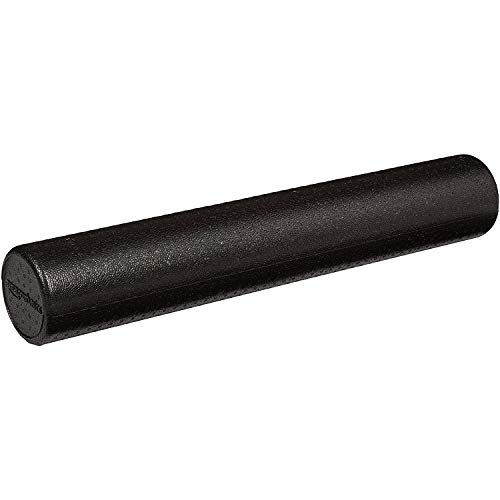
Amazon Basics High-Density Round Foam Roller, 36-Inch
by Amazon Basics
A plain, firm, full-length roller that does the fundamentals well and supports the whole back for spine and posture work.
Pros
- Full 36-inch length supports the whole spine for lengthwise chest-opening and thoracic stretches
- Firm molded polypropylene holds its round shape rather than flattening in the middle
- Smooth surface spreads pressure evenly, which suits sore backs and first-time users
- Wipes clean in seconds and weighs little, so it is easy to move around a living room
Cons
- No texture, so it cannot dig into a specific knot the way a grid or bump roller can
- Polypropylene beads can dent or pit after a year or more of heavy daily use
- A 36-inch roller is awkward to store in a small apartment or pack for travel
3. Hyperice Vyper 3 Vibrating Foam Roller: Upgrade Pick
The Vyper 3 adds a high-torque motor with three vibration speeds to a contoured roller. The practical benefit is comfort: vibration seems to dampen the pain signal from firm pressure, so people tolerate a firmer roll for longer. Small trials have found modest additional gains in range of motion and pressure tolerance compared with an identical roller switched off, which matches what most users report.
The contoured surface keeps pressure off the spine and bony areas, the battery lasts around two hours, and it is approved as carry-on luggage. The app offers guided warm-up and recovery sessions, which helps people who otherwise roll aimlessly.
My caveats are cost and design choices. This is a premium device, sessions stop automatically after 10 minutes, and its Amazon review history is shorter than that of the long-running rollers here. Buy it if you roll daily and find firm pressure hard to tolerate. If you are curious about vibration but not committed, the FITINDEX below is the lower-cost way to try it.
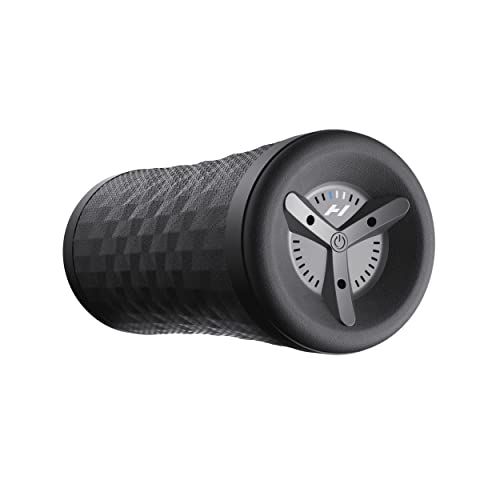
Hyperice Vyper 3 Vibrating Foam Roller
by Hyperice
The premium vibrating roller for athletes who want vibration's extra comfort during firm rolling and will pay for a polished, app-connected tool.
Pros
- Three speeds of high-intensity vibration from a 34-watt motor make firm pressure easier to tolerate
- Contoured shape keeps pressure off the spine and other bony areas
- Cordless with roughly two hours of battery life and approved as a carry-on
- Pairs with the Hyperice app for guided warm-up and recovery sessions
Cons
- The most expensive roller in this guide by a wide margin
- Each session stops automatically after 10 minutes, which annoys people who roll longer
- Needs about five hours to charge fully
4. RumbleRoller Original Density Textured Foam Roller: Runner-Up
The RumbleRoller looks unlike any other roller here: its surface is covered in firm, flexible bumps rather than ridges or grids. Those bumps press into the tissue between muscle groups much like a therapist’s thumbs, then bend slightly as they cross a bony edge, which is why the pressure feels deep without feeling like rolling on a rolling pin.
The blue Original density is the gentler of the brand’s two levels and is intended as the step up from a conventional roller. At 31 inches it covers both legs at once or the full upper back. It is my choice for people with dense, tight legs and glutes who find smooth rollers too mild.
Do not make it your first roller. Even the Original density is far more intense than smooth foam, and the most common complaint from new users is that it simply hurts. Use short, light passes, support your weight with your hands, and stop if you feel any sharp or burning pain.
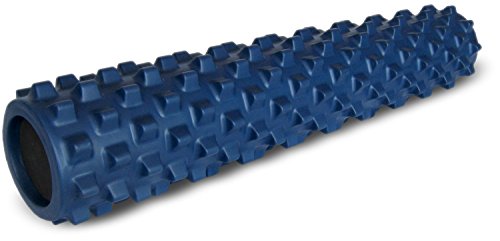
RumbleRoller Original Density Textured Foam Roller, 31-Inch
by RumbleRoller
The textured roller for people who have outgrown smooth foam and want deeper, more targeted pressure on tight legs, glutes and back.
Pros
- Firm but flexible bumps press into tissue the way a therapist's thumbs do, then bend around bony edges
- Full 31-inch length covers both legs at once or the whole upper back
- Original density is the gentler of the brand's two firmness levels, a sensible first step into textured rolling
- Bump pattern holds its shape over years of use
Cons
- Still far more intense than a smooth roller; most first-time users need to start on short, light passes
- Bulky and heavy compared with 12- to 18-inch rollers
5. OPTP PRO-Roller Soft Density Foam Roller: Best Soft Foam Roller
OPTP makes equipment for physical therapy clinics, and its soft PRO-Roller is the roller I suggest for beginners, older adults and people with sensitive or recently injured tissue. The soft density foam gives noticeably under your body weight, which lets you learn to relax onto the roller instead of tensing against it. That matters, because a muscle that is guarding against pain does not release.
It is made from closed-cell EVA, which does not soak up sweat and wipes clean, and the heat-molded foam resists the gradual flattening that cheap open-cell rollers develop. The 36-inch length supports the whole spine for lengthwise lying and for the thoracic extension exercises many physical therapists prescribe.
The limits are predictable. Tight, muscular athletes will find the pressure too light, and you pay more than you would for a plain firm roller. For the right person, that gentleness is the whole point.

OPTP PRO-Roller Soft Density Foam Roller, 36 x 6-Inch
by OPTP
A physical-therapy-grade soft roller that lets beginners and people with sore backs learn to roll without bracing against pain.
Pros
- Soft closed-cell EVA gives a gentle first experience for beginners, older adults and sensitive tissue
- Closed-cell foam does not absorb sweat and wipes clean, which suits clinics and shared home use
- 36-inch length supports the full spine for lengthwise lying and thoracic extension
- Heat-molded construction resists the slow flattening that cheap open-cell rollers suffer
Cons
- Soft foam gives too little pressure for very tight, muscular athletes
- Pricey for a smooth, untextured roller
- A 36-inch roller takes up real floor or closet space
6. ProsourceFit High-Density Foam Roller, 12-Inch: Best Compact High-Density
This ProsourceFit is a firm, no-frills high-density roller in a compact 12-inch length. Expanded polypropylene keeps its shape under pressure, the listing rates it to 300 pounds, and the water-resistant surface is easy to keep clean. The short length is ideal for calves, the soles of the feet and forearms, and it fits in almost any bag.
Because it is firm and smooth, it suits people who have already been rolling for a while and want consistent pressure without texture. New users may find it uncomfortable, and the 12-inch body cannot cover the back. The same foam is sold in longer sizes if you later want full-length support.

ProsourceFit High-Density Foam Roller, 12-Inch
by ProsourceFit
A firm, compact high-density roller for calves, feet and travel bags, at a price that makes it an easy second roller.
Pros
- High-density expanded polypropylene stays firm under body weight and is rated to 300 pounds
- 12-inch size is ideal for calves, forearms, feet and travel
- Water-resistant EPP is hygienic and easy to wipe down
- Same firm foam is sold in 18, 24 and 36-inch lengths if you want a longer roller later
Cons
- Firm enough that new users may find it uncomfortable on the first try
- Too short to cover the full back or to lie on lengthwise
- Edges can chip if the roller is dropped or kicked around on hard floors
7. FITINDEX Vibrating Foam Roller: Best Value Vibrating Roller
The FITINDEX is the more accessible way to try vibration. It offers five intensity settings, which is helpful because you can start at the lowest level and increase it as your tolerance improves. Its surface has three wave-pattern zones of different density, so you can choose gentler or firmer contact, and it charges by USB-C with over two hours of use per charge on the highest setting.
The 11.4-inch body travels well and suits calves, quads, hamstrings and forearms. The finish feels more like a consumer gadget than a clinical tool, and some owners report that the charging port cover loosens over time. As a way to learn whether vibration helps you before investing more, it does the job.

FITINDEX Vibrating Foam Roller with 5 Speeds
by FITINDEX
A capable vibrating roller with more speed settings than most, for readers who want to try vibration without paying flagship money.
Pros
- Five vibration intensities let you start low and build up as tolerance improves
- Three wave-pattern zones of different density on one roller
- USB-C charging and over two hours of use per charge on the highest setting
- Compact 11.4-inch body fits a gym bag
Cons
- Motor and finish feel more like a consumer gadget than a clinical tool
- Charging-port cover can loosen with repeated use
- Too short for back work that needs a full-length roller
8. RumbleRoller Extra Firm Compact Foam Roller: Best Firm Travel Roller
This is the RumbleRoller’s black extra-firm bump pattern in a 12-inch compact size. It delivers the deepest pressure of any roller in this guide, and the short length packs into a carry-on, which makes it a favorite of athletes who travel to events and still want serious deep tissue work on calves, hamstrings and glutes.
It is not for everyone. Beginners, older adults and anyone with fragile skin or easy bruising should choose something softer. Experienced rollers who find standard foam too mild will appreciate it.
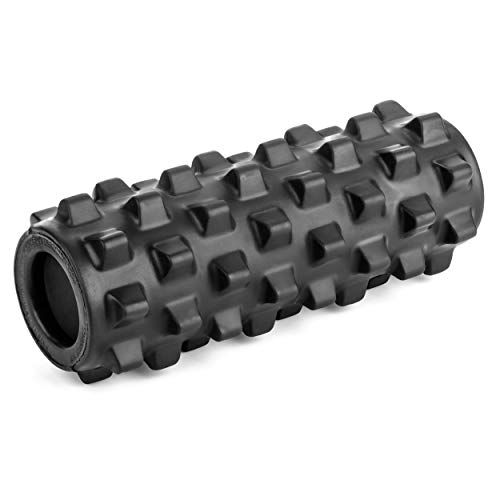
RumbleRoller Extra Firm Compact Foam Roller, 12-Inch
by RumbleRoller
The brand's extra-firm bumps in a 12-inch travel size, for experienced rollers who want deep tissue work away from home.
Pros
- Extra firm bumps deliver the deepest pressure of any roller in this guide
- 12-inch compact size packs into a carry-on or gym bag
- Bumps flex around bone, so the pressure goes into muscle rather than onto the shin or hip
- Ideal for calves, hamstrings, glutes and the soles of the feet on the road
Cons
- Too aggressive for beginners, older adults or anyone with fragile skin
- Short length means one leg at a time
9. Rollga Medium Density Ergonomic Foam Roller: Best for Back Pain
The Rollga solves the main problem with rolling a sore back on a standard cylinder: pressure on the spine itself. Its patented profile has a recessed center channel with raised zones on either side, so the spine rests in the channel while the muscles alongside it take the pressure. Medium density keeps it approachable for people whose backs already hurt.
It also works well between the shoulder blades and on the neck, where a round roller tends to slide or press on bone. Positioning takes a few sessions to learn, and for straight calf or hamstring rolling a round roller feels more natural. For readers with chronic back pain, it is the design I would choose first. If back pain is your main issue, a back brace or a TENS unit can complement rolling during flare-ups.

Rollga Medium Density Ergonomic Foam Roller
by Rollga
A contoured roller built around the spine, which makes it the most back-friendly design here for people with chronic upper or lower back pain.
Pros
- Patented contoured profile cradles the spine between two raised zones instead of pressing on the vertebrae
- Medium density is approachable for people whose backs are already sore
- The raised ends reach the muscles beside the spine and between the shoulder blades
- Also works on the neck, legs, arms and feet
Cons
- Shape takes a few sessions to learn; positioning matters more than with a plain cylinder
- Less natural for straight-line calf and hamstring rolling than a round roller
10. Gaiam Restore Textured Foam Roller, 18-Inch: Best for Runners
Runners need a roller for the calves, quads, glutes and the outer thigh, used often and carried easily. The Gaiam Restore fits that routine. Its textured tread adds grip and a little pinpoint pressure without the intensity of bumps, the medium density is comfortable enough for daily use, and the 18-inch length handles quads and glutes while still fitting in a running bag.
Heavier users may notice the medium foam flattening sooner than firmer EVA rollers, and very tight, high-mileage legs may want more bite. For most recreational runners it is a sensible everyday roller. Pair it with supportive footwear inserts from our best orthotic insoles for running guide if shin or arch pain is part of the picture.
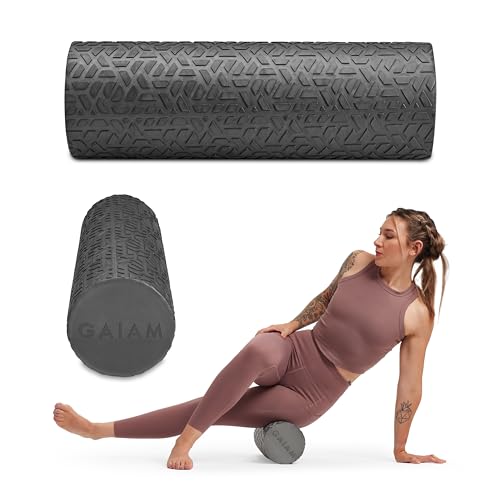
Gaiam Restore Textured Foam Roller, 18-Inch
by Gaiam
A practical, medium-density textured roller that fits a runner's routine for calves, quads, glutes and the outer thigh.
Pros
- Textured tread adds grip and pinpoint pressure without the intensity of a bump roller
- 18-inch length is long enough for quads and glutes yet still portable
- Medium density suits daily pre-run and post-run rolling
- Light enough to toss in a car or running bag
Cons
- Medium foam can flatten sooner than firmer EVA rollers under heavier users
- Texture may feel too mild for very tight, high-mileage legs
11. TriggerPoint CORE Foam Roller, 18-Inch: Best for Pilates and Yoga
The CORE is a solid-core EVA roller with a gentle multi-density grid. It sits between a soft roller and the firmer GRID 1.0: enough texture to feel targeted, not so much that it distracts during Pilates or yoga moves. Solid EVA resists the softening polypropylene rollers show over time, and the 18-inch length works for most muscle groups.
Very sensitive users may still prefer a true soft roller, and lengthwise spine work needs the 36-inch version. As a durable, moderate roller for studio-style exercise and general recovery, it is a reliable choice.
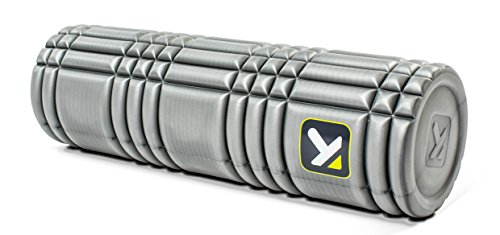
TriggerPoint CORE Foam Roller, 18-Inch
by TriggerPoint
A durable, moderately firm roller with a gentle grid that suits Pilates, yoga and people moving up from a soft roller.
Pros
- Solid-core EVA resists the softening that polypropylene rollers develop over time
- Gentle multi-density grid gives a little texture without the bite of the GRID 1.0
- 18-inch length works for most muscle groups and for Pilates and yoga moves
- Includes access to TriggerPoint's free instructional video library
Cons
- Firmer than a true soft roller for very sensitive users
- Not long enough for lengthwise spine work; that needs the 36-inch version
12. CanDo Heavy Duty EVA Half-Round Foam Roller: Best Half Foam Roller
A half foam roller has a flat base and a curved top, so it cannot roll away. Physical therapists use them for balance and proprioception training, calf stretches with the forefoot on the curve, and supported lying stretches where a full round roller feels unstable. Placed crosswise under the neck or upper back with a folded towel, it gives a gentle, stable support that many people with tension find easier than a round roller.
The CanDo is made from high-density EVA, firm but smooth, in a full 36-inch length. Remember that a half roller is not a massage tool: you cannot roll on it the way you would on a round one. Buy it as a complement to a round roller, not a replacement.

CanDo Heavy Duty EVA Half-Round Foam Roller, 6 x 36-Inch
by CanDo
A stable half-round roller for balance training, rehab exercises and supported neck and upper back stretches.
Pros
- Flat base cannot roll away, which makes it stable for balance work and gentle neck or back support
- High-density EVA is extra firm yet smooth to the touch
- Full 36-inch length supports the spine for lying stretches
- Durable enough for multi-user clinic and gym use
Cons
- A half roller cannot be used for traditional rolling massage
- Firm EVA may feel hard under the head and neck without a towel
Best Foam Roller for Back Pain
For back pain, the goal is to relax the muscles around the spine without pressing directly on the vertebrae. Never roll the lower back on a round roller: the lumbar spine has no rib cage to protect it, and rolling there can strain spinal joints. Work the glutes, hips and upper back instead, which often relieves lower back tension indirectly. Choose a contoured or soft roller, keep pressure moderate, and stop if pain radiates down a leg. A 36-inch smooth roller is also useful for lying lengthwise to open the chest and upper back.
| Product | Price | Buy |
|---|---|---|
| Rollga Medium Density Ergonomic Foam RollerBest for back pain Center channel cradles the spine while the raised sides work the muscles beside it | $44.99 | View on Amazon |
| OPTP PRO-Roller Soft Density Foam Roller, 36 x 6-InchBest soft roller for sore backs Soft closed-cell foam lets a painful back relax instead of bracing | $61.99 | View on Amazon |
| Amazon Basics High-Density Round Foam Roller, 36-InchBest full-length budget roller 36-inch smooth roller for lengthwise chest and upper back stretches | $24.14 | View on Amazon |
Best Foam Roller for Runners
Runners mostly roll the calves, quads, hamstrings, glutes and the outer thigh. A medium-firm or textured roller between 12 and 18 inches covers all of them and fits in a car or running bag. Roll the muscles around the IT band, the quads and glutes, rather than grinding on the band itself, which is dense connective tissue that does not stretch. Brief rolling before a run and longer sessions after hard workouts fit most training plans.
| Product | Price | Buy |
|---|---|---|
| Gaiam Restore Textured Foam Roller, 18-InchBest for runners Medium-density textured tread suits daily calf, quad and glute rolling | $20.75 | View on Amazon |
| TriggerPoint GRID 1.0 Foam Roller, 13-InchBest firm grid for runners Firm grid with three zones reaches tight calves and glutes | $39.95 | View on Amazon |
| FITINDEX Vibrating Foam Roller with 5 SpeedsBest vibrating roller for runners Five vibration speeds for a quick pre-run warm-up | $79.99 | View on Amazon |
Best Foam Roller for Beginners
Beginners do best on a soft foam roller with a smooth or gently textured surface. Firm and textured rollers make new users tense against the pressure, which defeats the purpose. Start with your hands and feet taking much of your weight, roll slowly at roughly an inch per second, and spend 30 to 60 seconds per area. Move up to a firmer roller only once the soft one feels easy.
| Product | Price | Buy |
|---|---|---|
| OPTP PRO-Roller Soft Density Foam Roller, 36 x 6-InchBest for beginners Soft density foam is the gentlest introduction to rolling | $61.99 | View on Amazon |
| TriggerPoint CORE Foam Roller, 18-InchBest next step up Gentle grid and medium firmness once soft foam feels easy | $24.99 | View on Amazon |
| Amazon Basics High-Density Round Foam Roller, 36-InchBest basic full-length roller Smooth, full-length roller that covers the fundamentals | $24.14 | View on Amazon |
Best High-Density Foam Roller
A high-density foam roller keeps its shape under body weight and delivers consistent, firm pressure. It suits experienced users and heavier people, who can flatten softer foam within months. High-density rollers come in two main materials: expanded polypropylene, which is light and firm, and EVA, which is more durable. Either works well; choose the length based on where you will use it.
| Product | Price | Buy |
|---|---|---|
| ProsourceFit High-Density Foam Roller, 12-InchBest compact high-density roller Firm EPP in a 12-inch size, rated to 300 pounds | $13.27 | View on Amazon |
| Amazon Basics High-Density Round Foam Roller, 36-InchBest full-length high-density roller 36-inch high-density polypropylene for back and full-body work | $24.14 | View on Amazon |
| CanDo Heavy Duty EVA Half-Round Foam Roller, 6 x 36-InchBest high-density half roller Extra-firm high-density EVA with a stable flat base | $37.50 | View on Amazon |
Best Foam Roller for Deep Tissue Massage
Deep tissue rolling needs either a firm surface or a textured one that concentrates pressure. Bump rollers like the RumbleRoller press between muscle fibers and into fascia more than grid patterns do, while the GRID’s nodules offer a middle ground. Deep pressure is for healthy, conditioned tissue: avoid it over bruises, varicose veins or recent injuries, and do not hold one spot for more than about 30 seconds.
| Product | Price | Buy |
|---|---|---|
| RumbleRoller Original Density Textured Foam Roller, 31-InchBest for deep tissue massage Firm, flexible bumps dig into tight legs and glutes | $74.95 | View on Amazon |
| RumbleRoller Extra Firm Compact Foam Roller, 12-InchBest extra-firm option Extra firm bumps for experienced rollers | $49.95 | View on Amazon |
| TriggerPoint GRID 1.0 Foam Roller, 13-InchBest grid alternative Nodule zone gives targeted pressure with less bite | $39.95 | View on Amazon |
Best Vibrating Foam Roller
A vibrating foam roller combines pressure with a motor-driven vibration that makes firm rolling more comfortable. The evidence suggests modest extra benefit over a plain roller, mostly in short-term range of motion and pain tolerance. Battery life, number of speeds and noise matter more in daily use than headline motor specs.
| Product | Price | Buy |
|---|---|---|
| Hyperice Vyper 3 Vibrating Foam RollerBest vibrating foam roller Three speeds, contoured shape and app-guided sessions | $209.00 | View on Amazon |
| FITINDEX Vibrating Foam Roller with 5 SpeedsBest value vibrating roller Five speeds and three density zones in a compact body | $79.99 | View on Amazon |
Best Travel Foam Roller
A travel foam roller should be 13 inches or shorter, light, and firm enough to be useful without a full home setup. Small foam rollers cannot support the whole back, so they are best for calves, hamstrings, glutes, feet and forearms. Hollow designs earn extra points because they double as storage in a suitcase.
| Product | Price | Buy |
|---|---|---|
| TriggerPoint GRID 1.0 Foam Roller, 13-InchBest travel foam roller Hollow 13-inch grid roller that packs socks inside | $39.95 | View on Amazon |
| RumbleRoller Extra Firm Compact Foam Roller, 12-InchBest extra-firm travel roller 12-inch extra-firm bumps for deep work on the road | $49.95 | View on Amazon |
| ProsourceFit High-Density Foam Roller, 12-InchBest compact budget roller Firm 12-inch EPP that fits any bag | $13.27 | View on Amazon |
Best Foam Rollers by Use Case
Here are the best foam rollers by use case for the more specific needs readers ask about most, each with a one-line reason.
| Product | Price | Buy |
|---|---|---|
| Amazon Basics High-Density Round Foam Roller, 36-InchBest 36-inch foam roller Long foam roller for full-spine lengthwise stretches | $24.14 | View on Amazon |
| CanDo Heavy Duty EVA Half-Round Foam Roller, 6 x 36-InchBest half foam roller Flat base for balance work and stable neck support | $37.50 | View on Amazon |
| Rollga Medium Density Ergonomic Foam RollerBest foam roller for neck Contoured channel avoids pressing on the cervical spine | $44.99 | View on Amazon |
| Gaiam Restore Textured Foam Roller, 18-InchBest textured foam roller Tread texture adds grip without bump-roller intensity | $20.75 | View on Amazon |
| RumbleRoller Extra Firm Compact Foam Roller, 12-InchBest spiky foam roller Firm bumps for experienced rollers who want maximum bite | $49.95 | View on Amazon |
| TriggerPoint GRID 1.0 Foam Roller, 13-InchBest foam roller for IT band Firm grid works the quads and glutes around the IT band | $39.95 | View on Amazon |
| RumbleRoller Original Density Textured Foam Roller, 31-InchBest foam roller for muscle knots Flexible bumps sink into stubborn knots in legs and glutes | $74.95 | View on Amazon |
| OPTP PRO-Roller Soft Density Foam Roller, 36 x 6-InchBest foam roller for thoracic spine Soft 36-inch roller for gentle thoracic extension | $61.99 | View on Amazon |
| TriggerPoint CORE Foam Roller, 18-InchBest Pilates foam roller Gentle grid suits Pilates and yoga sequences | $24.99 | View on Amazon |
| ProsourceFit High-Density Foam Roller, 12-InchBest foam roller for calves Firm 12-inch roller pins tight calves one leg at a time | $13.27 | View on Amazon |
Buyer's Guide
The right foam roller depends on how much pressure your tissue tolerates, which body areas you need to reach and where you will use it. These six factors decide most purchases.
Density and Firmness
Soft rollers spread pressure gently and suit beginners, older adults and sore backs. A medium density foam roller is the everyday middle ground for most people. High-density and extra-firm rollers suit experienced athletes with dense, muscular legs. Start softer than you think you need: rolling should feel like firm massage, never like bracing against pain, and you can always move up a density later.
Surface Texture
Smooth rollers give even pressure and are the safest choice for the back and for first-time users. Grid and tread textures add grip and moderate pinpoint pressure. Bump and spiky textures, like the RumbleRoller, dig into stubborn spots and fascia but can bruise sensitive tissue. If you are unsure, buy smooth or gently textured first.
Length
A 36-inch roller supports the whole spine, lets you lie on it lengthwise for chest and thoracic stretches, and covers both legs at once. An 18-inch roller handles most muscle groups and is easier to store. A 12 or 13-inch roller travels well and targets calves, feet and forearms, but it cannot support the full back.
Core and Material
Expanded polypropylene (EPP) is light, firm and inexpensive but can dent over time. Closed-cell EVA resists sweat and holds its shape longer. A hollow foam roller with a rigid plastic core, like the TriggerPoint GRID, stays firm for years and packs small items inside. Molded bump rollers keep their pattern well but weigh more.
Vibration
Vibrating rollers add a motor that makes firm pressure feel more tolerable. Small trials suggest modest extra gains in range of motion and pain tolerance compared with a plain roller, not a different category of result. Vibration is worth paying for if you roll daily and struggle with discomfort; otherwise a well-chosen standard roller does most of the work.
Your Health and Goals
Foam rolling is self-applied myofascial release, and most of its benefit comes from relaxing muscle tone and improving short-term flexibility. If you have back pain, choose a roller that avoids direct spinal pressure, such as a contoured or soft model. If you take blood thinners, have osteoporosis, neuropathy, varicose veins or a history of blood clots, ask your doctor before you start and favor a soft roller.
How to Choose the Best Foam Roller
Start with your tolerance. If you have never rolled, have a sore back or are older, choose a soft or medium smooth roller. If you already roll and find it too gentle, step up to high-density or textured. Then match the length to where you will use it: 36 inches for spine work and home use, 18 inches for most muscle groups, and 12 to 13 inches for travel.
Use it often and gently rather than rarely and hard. Roll each area for 30 to 90 seconds, breathe slowly, avoid joints and bony prominences, and never roll the lower back, the front of the neck or the outside of the knee. For extra resistance work that strengthens the muscles you are rolling, see our best resistance bands guide.
Final Verdict
The TriggerPoint GRID 1.0 is the best foam roller for most people. Its three-zone surface adjusts from gentle to firm, its hollow core keeps it firm for years, and its compact size goes anywhere. If you want a full-length roller for spine and posture work on a budget, the Amazon Basics High-Density Round Foam Roller covers the fundamentals. If you roll daily and struggle with discomfort, the Hyperice Vyper 3 adds vibration that makes firm pressure easier to tolerate.
For back pain, choose the Rollga or a soft roller and keep pressure off the lumbar spine. For deep tissue work, the RumbleRoller is the step up. Whichever you buy, foam rolling is a useful adjunct to stretching, strength work and sleep, not a substitute for them, and new or worsening pain deserves an evaluation by your doctor or a physical therapist. If you have a persistent problem spot, a massage gun can reach areas a roller cannot.
Frequently Asked Questions
Does a foam roller help sore muscles?
Can you use a foam roller for hip flexors and hamstrings?
Is it safe to use a foam roller during pregnancy?
Who should not use a foam roller?
How long should you foam roll each muscle group?
Related Articles
About the Reviewer

Dr. David Taylor, MD, PhD
Drexel University College of Medicine (MD), Indiana University School of Medicine (PhD)
Dr. David Taylor is a licensed physician and medical researcher who founded BestRatedDocs in 2016. With an MD from Drexel University and a PhD from Indiana University School of Medicine, he combines clinical expertise with a passion for health technology to provide evidence-based product recommendations. Dr. Taylor specializes in health informatics and regularly evaluates medical devices, diagnostic equipment, and therapeutic products to help healthcare professionals and patients make informed decisions.