7 Best Acupressure Mats of 2026
Dr. David Taylor reviews the best acupressure mats on Amazon. Compare spike density, materials, and size with honest clinical evidence and safety guidance.
Updated
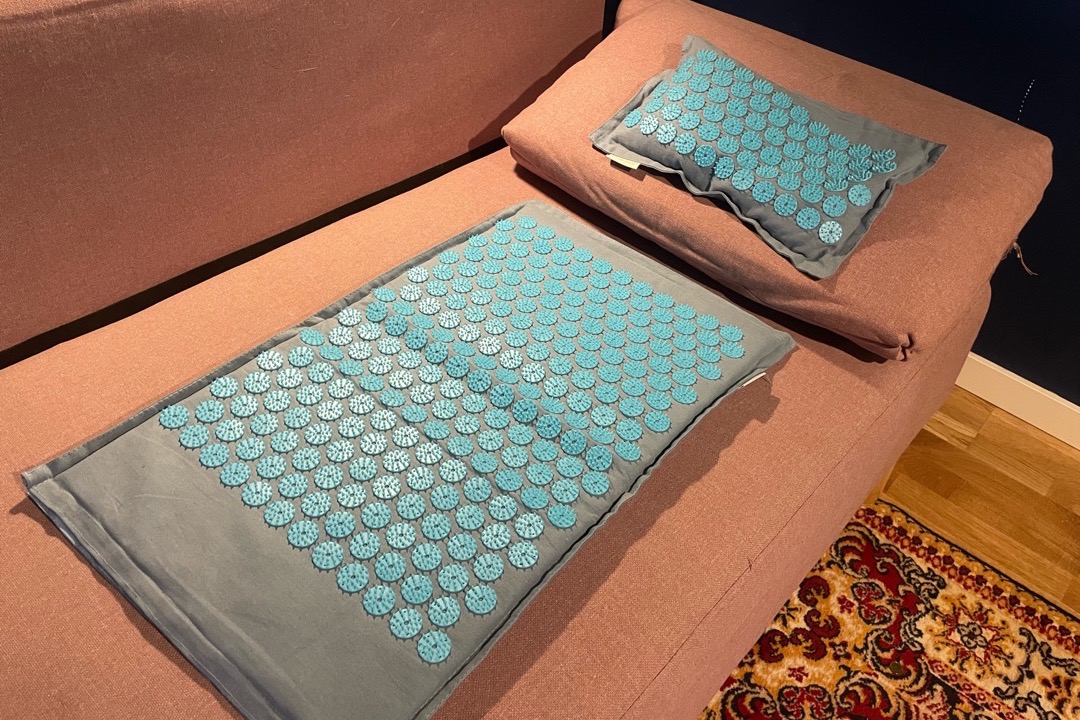
Acupressure mats — the foam pads studded with hundreds of plastic spikes that ask you to lie directly on top of them — occupy an unusual place in the home wellness landscape. They look medieval. They feel, on first contact, genuinely uncomfortable. And yet they have quietly built one of the most loyal user bases of any non-pharmacological pain and stress-reduction tool, with the category bestseller accumulating more than 52,000 Amazon reviews over a decade of consistent daily use by real patients. For patients with chronic low back pain, recurring muscle tension, or difficulty unwinding before sleep, they are worth taking seriously — provided you understand what the evidence actually says and which safety considerations apply to your situation.
From a clinical mechanism standpoint, acupressure mats likely work through at least three overlapping pathways. The first is Gate Control Theory, proposed by Melzack and Wall in the 1960s, which holds that non-painful sensory input (like the diffuse pressure from hundreds of small spikes) competes with and partially blocks pain signals at the level of the spinal cord before they reach the brain. The second is diffuse noxious inhibitory control, or DNIC — localized mildly noxious stimulation triggers a centrally mediated descending pain-inhibition response that reduces pain perception throughout the body. The third is endorphin release, which the pressure stimulation appears to trigger after about 10 to 15 minutes of contact. These mechanisms are well-established in pain neuroscience; what is less well-established is the magnitude and durability of benefit for any specific condition.
The evidence, honestly graded: randomized controlled trials on acupressure mats are limited in number and often small. Existing studies show improved patient-reported outcomes for chronic low back pain, stress, and sleep quality with regular use, but the overall evidence base is moderate rather than robust. These mats are wellness devices, not FDA-cleared medical devices — we should not overstate what they can do. What Dr. Taylor tells his patients is this: if you have chronic muscle tension, trouble winding down in the evening, or mild to moderate recurring back pain, an entry-level mat used for 20 minutes a day for two or three weeks will tell you whether it helps you specifically. For many patients, it does. For some, it does not. The downside risk is low and the cost is modest. Worth a try, especially when paired with other modalities like a quality heating pad or targeted TENS therapy for acute episodes.
One practical note before the product breakdown: acupressure mats are generally eligible for FSA and HSA reimbursement when used to treat a diagnosed condition such as chronic back pain, fibromyalgia, or insomnia, provided you obtain a letter of medical necessity from your physician. None of the seven competing articles we analyzed on this topic mention this — it is a meaningful financial lever that can reduce effective cost by 20 to 35%. Keep your Amazon receipt.
| Product | Price | Buy |
|---|---|---|
| ProsourceFit Acupressure Mat and Pillow SetBest Overall | $25.59 | View on Amazon |
| XiaoMaGe Acupressure Mat and Pillow Set with Bag — Large SizeBudget Pick | $26.99 | View on Amazon |
| ShaktiMat Acupressure MatPremium Pick | $99.00 | View on Amazon |
| DoSensePro Extra-Long 29" Acupressure Mat & Pillow SetRunner-Up | $41.99 | View on Amazon |
| ProsourceFit Ki Natural Linen Acupressure Mat and Pillow SetRunner-Up | $69.99 | View on Amazon |
| UNMERA Eco Linen Acupressure Mat and Pillow SetRunner-Up | $54.99 | View on Amazon |
| Dakini Acupressure Mat and Pillow Set with Mini PadRunner-Up | $49.95 | View on Amazon |
Find the Right Acupressure Mat for Your Goal
Every mat here is used the same way — you lie or stand on the spikes for 10 to 20 minutes — so the right pick comes down to intensity, size, and materials rather than a different product for each symptom. Jump to what fits you:
- Best acupressure mats overall — our seven picks reviewed
- Which mat for your goal — beginners, intensity, back and sciatica, natural materials, full body
- Using a mat for sleep, stress, or headaches? Any pick works — see the evidence and how-to-use sections below, plus the FAQs.
How We Chose These Acupressure Mats
Our selection process prioritized real-world validation: most picks carry review pools in the thousands, sustained star ratings at or above 4.2, and documented longevity data for established brands. We weighted spike intensity tier carefully — a category that ranges from gentle beginner-appropriate stimulation to the distinctly intense ShaktiMat — and made sure our picks cover the full spectrum. Materials were a secondary but important filter: we included options at every material tier from inexpensive cotton-and-foam to premium linen-and-coconut-fiber. Brand continuity and warranty terms were factored in for users making a longer-term commitment, particularly at the premium tier. All seven mats have verified Amazon availability as of this review.
Best Acupressure Mats Overall
These are the seven mats that earned a place in this guide, each reviewed in full below. The ProsourceFit is my best overall pick for most people; the decision table after the reviews then matches specific goals — a gentle start, maximum intensity, back and sciatica coverage, natural materials, or a full-body set — to the right pick from this same lineup.
1. ProsourceFit Acupressure Mat and Pillow Set — Best Overall
The ProsourceFit is our best overall pick because it gets the fundamentals right at a price point that removes the risk of the purchase. 52,000 Amazon reviews is an extraordinary depth of validation — at that scale, individual variance matters far less than aggregate performance, and the 4.2-star rating represents real consistency across a decade of daily users. The mat-and-pillow combination covers shoulders through mid-lumbar plus cervical acupressure in a single purchase, which is sufficient for the majority of users we see in clinic with non-specific back and neck tension.
The 6,210 spike count across the mat and pillow sits squarely in the medium-density tier, which is the right tier for first-time users. The stimulation is intense enough to engage Gate Control mechanisms and trigger the characteristic warming and relaxation response after 10 to 15 minutes, but not so intense that new users abandon it after one session. The cotton cover is removable and machine-washable, which matters for daily users who sweat or share the mat across household members. The carry bag — often an afterthought on competitors — makes the mat practical to bring to work, a hotel room, or a weekend trip.
The primary limitation is spike feel: the spikes are on the softer side, which means the deepest tissue engagement tails off somewhat after the first 15 to 20 minutes as spike compression sets in. For a beginner, this is effectively irrelevant. For an experienced user who has already adapted to standard mats, it can be a reason to step up to the ShaktiMat. The included pillow is also more compact than the mat itself, which can limit cervical coverage for users with broader shoulders who want to engage the upper trapezius simultaneously. These are minor issues in the context of the overall value proposition.

ProsourceFit Acupressure Mat and Pillow Set
by ProsourceFit
The bestseller for a reason — it puts a proven, beginner-friendly mat within reach of anyone curious about acupressure therapy.
Pros
- Amazon's #1 best-selling acupressure mat with over 52,000 reviews — the most real-world validation in the category
- Medium-density 6,210 points across mat and pillow delivers enough stimulation for beginners and experienced users alike
- Cotton cover over plant-based foam is washable, lightweight, and accommodates most sleep and living-room surfaces
- Carry bag included makes travel practical for hotel rooms, office breaks, and in-laws' guest rooms
Cons
- Spikes are on the softer side, so experienced users may find deep stimulation tails off after 15 to 20 minutes
- The included pillow is more compact than the mat — users with broader shoulders may find neck support limited
2. XiaoMaGe Acupressure Mat and Pillow Set — Budget Pick
The XiaoMaGe earns the budget pick for one simple reason: it is the rare budget option that does not feel like a compromise. At the same price as the ProsourceFit, XiaoMaGe delivers a slightly larger 28-inch mat, a complete three-piece set with mat, pillow, and carry bag, and a credible 4.3-star rating across more than 3,700 reviews. For users on a tight budget — or those who want a second mat for a different room, a travel bag, or a household member — this is the clearest value in the category.
The larger footprint matters more than most users expect. Two extra inches of length covers a meaningful portion of the lumbar spine that a 26-inch mat leaves exposed, which is particularly useful for users with referred pain from the lumbosacral region. The cotton-blend cover has a linen-look finish that is aesthetically nicer than pure cotton at this price point. The non-woven foam fill is lightweight and holds shape adequately over six to twelve months of daily use, though not as indefinitely as coconut fiber.
The two caveats: spike rigidity is slightly below the ProsourceFit standard, which reduces the intensity ceiling for experienced users who have already adapted to stronger stimulation, and XiaoMaGe is a newer brand without the decade of longevity data that ProsourceFit or ShaktiMat carry. Neither is disqualifying for the budget tier, but users planning to make acupressure a permanent part of a chronic pain management routine may be better served by stepping up to the standard ProsourceFit or the ShaktiMat. For short-term trial or occasional use, the XiaoMaGe is excellent.

XiaoMaGe Acupressure Mat and Pillow Set with Bag — Large Size
by XiaoMaGe
The budget pick that doesn't cut corners — a full three-piece set with a larger mat than the top pick, for practically the same money.
Pros
- Large mat footprint covers more of the posterior chain than standard-sized competitors for the same price
- Complete three-piece set — mat, pillow, and carry bag — under thirty dollars is the best absolute-dollar value in this review
- Cotton cover and non-woven foam fill is lightweight and washable by hand, with a linen-look finish
- A solid star rating across a deep review base signals consistent out-of-the-box quality at this price point
Cons
- Spike rigidity is slightly lower than ProsourceFit, reducing intensity for experienced users who have adapted to stronger stimulation
- Newer brand with less long-term durability data than decade-old competitors like ProsourceFit and ShaktiMat
3. ShaktiMat Acupressure Mat — Upgrade Pick
The ShaktiMat is the premium choice, and the additional spend is genuinely justified for a specific user profile: experienced acupressure users who have adapted to standard-mat stimulation and want something meaningfully more intense, or first-time buyers who want the best-built mat in the category and plan to use it daily for years. The ABS plastic spikes are sharp, and ShaktiMat offers the mat in three intensity levels (the Level 2 model reviewed here carries 6,000 spikes). The stimulation is something new users often describe as initially shocking but that experienced users find more effective for engaging deep fascia and the characteristic endorphin response.
The build is the real story. A certified organic cotton cover sits over a foam inner, and the mat is handmade in India, where the brand says its craftspeople and raw materials are based. At 29 by 16 inches it gives the back a long run of spikes, and the brand backs every mat with a 5-year limited warranty, which is a meaningful commitment for a product meant for daily use over years. ShaktiMat has made acupressure mats since 2014, which is rare in a category otherwise dominated by white-label manufacturers operating under different brand names.
Two caveats for the ShaktiMat. First, the intensity is genuinely more than a first-time user needs or wants — Dr. Taylor does not recommend it as a starter mat. Build up to it on a ProsourceFit or UNMERA first. Second, the pillow is sold separately, which pushes the total set cost appreciably above the reviewed mat price. For users who want a complete set at this quality tier, the ProsourceFit Ki reviewed below is a more economical alternative at a slightly lower intensity.

ShaktiMat Acupressure Mat
by ShaktiMat
The premium pick for users who want maximum stimulation and an organic cotton cover, backed by a 5-year warranty.
Pros
- Sharp ABS plastic spikes deliver the intense stimulation experienced acupressure users look for, in three intensity levels
- Certified organic cotton cover over a foam inner, handmade in India
- Thousands of five-star reviews from committed daily users citing durability of five-plus years of regular use
- Backed by a 5-year limited warranty from an established acupressure brand founded in 2014
Cons
- Significantly more intense than standard mats — not appropriate for first-time users, who should start on a ProsourceFit-tier mat
- Pillow sold separately, adding cost for users who want full head-and-neck coverage in a set
- Higher price point can be hard to justify until a user is confident they will integrate daily use into their routine
4. DoSensePro Extra-Long 29” Acupressure Mat — Best for Tall Users and Sciatica
The DoSensePro is the clear choice for two specific populations: users over six feet tall, and users whose pain patterns extend into the glutes and upper hamstrings, which is typical of sciatica and lumbar radiculopathy. Three extra inches of mat length may sound minor, but for a tall user it is the difference between a mat that reaches mid-back and a mat that covers the full posterior chain in a single lie-down. That coverage matters clinically because sciatic nerve irritation is often reproduced by pressure on the piriformis and glute medius regions, which a standard 26-inch mat leaves entirely unaddressed.
The included hot-and-cold gel pack is the feature that elevates this mat beyond a size variation. Contrast therapy — alternating heat and cold applied to an acupressure-stimulated area — is a standard rehabilitation protocol for chronic muscle tension and subacute injury. Having a compatible gel pack included at no extra cost makes the DoSensePro a one-purchase solution for patients whose treatment plan involves multiple thermal modalities. For users also dealing with chronic back pain, consider pairing the DoSensePro with a supportive back brace during active hours to extend the benefit beyond session time.
The trade-offs are modest. The polyester-cotton blend cover is slightly less breathable than pure cotton during long sessions, though this matters more for summer use than winter. The included pillow is smaller than the mat, which is a pattern across this price tier — users wanting full cervical engagement should consider a supplementary cervical neck pillow or the separately sold ShaktiMat pillow.

DoSensePro Extra-Long 29" Acupressure Mat & Pillow Set
by DoSensePro
Best for tall users and sciatica — the extra 3-inch length reaches the glutes, and the included hot/cold pack extends the therapy options.
Pros
- 29-inch length covers the full lumbar and gluteal region in a single lay-down — uncommon at this size in the category
- Hot and cold gel pack included at no extra cost adds a contrast-therapy modality that pairs well with acupressure
- Full set with mat, pillow, hot/cold pack, and carry bag makes this a one-purchase solution for sciatica or chronic low-back pain
- Non-toxic ABS plastic spikes at reasonable density work for both beginners and intermediate users
Cons
- Cover is a polyester-cotton blend rather than pure cotton — slightly less breathable during longer sessions
- Included pillow is smaller than the mat, so users who want combined cervical acupressure may need to purchase a separate pillow
5. ProsourceFit Ki Natural Linen Acupressure Mat — Best Natural Materials Pick
The ProsourceFit Ki is what happens when ProsourceFit, the volume leader in this category, releases a premium-materials version of its standard mat. The natural linen cover and coconut fiber fill put it in the premium materials tier at roughly half the price of the ShaktiMat and with a lifetime warranty that is genuinely rare in the acupressure category. For users specifically motivated by sustainable materials — chemical sensitivities, allergies to synthetic foam off-gassing, or a general preference for natural fibers in items that contact bare skin for 20 minutes a day — the Ki is an excellent choice.
The spike count and density are identical to the standard ProsourceFit at 6,210 points, so users moving from the standard mat to the Ki will not notice a difference in stimulation intensity. What they will notice is the feel and weight. The linen cover has a textured, substantive feel that most users prefer aesthetically, and the coconut fiber fill gives the mat a more settled, heavier quality that helps it stay in place during use. The lifetime warranty is a meaningful practical benefit: if the cover wears out or the fill shifts after years of use, ProsourceFit will replace it.
The two drawbacks: natural linen is not machine-washable and requires spot cleaning, which some users find less convenient for a daily-use item, and the price is roughly double the standard ProsourceFit without a dramatic difference in clinical outcome. Users who are not specifically motivated by materials or warranty should save the money and buy the standard ProsourceFit. Users who are specifically motivated by materials or warranty have no better choice at this price point.

ProsourceFit Ki Natural Linen Acupressure Mat and Pillow Set
by ProsourceFit
Best natural-materials pick — linen cover, coconut fiber fill, and a lifetime warranty from a trusted brand.
Pros
- Premium natural linen cover with coconut fiber fill — no plastic foam in the mat body, unlike most ProsourceFit models
- Lifetime warranty from an established brand is rare in the acupressure category and meaningful for daily users
- 4.5-star rating signals strong satisfaction from the users who chose it over the standard ProsourceFit
- Natural materials make it a better choice for users with chemical sensitivities or allergies to synthetic foam off-gassing
Cons
- Natural linen is less machine-washable than cotton — spot cleaning is recommended, which some users find less convenient
- Nearly twice the price of the standard ProsourceFit without a dramatic difference in clinical performance
6. UNMERA Eco Linen Acupressure Mat — Best for Beginners
The UNMERA is our recommendation for users who have never tried acupressure before and are genuinely worried the stimulation will be too much. Its lower spike count and slightly softer stimulation tier makes the first session accessible in a way that more aggressive mats are not, and the 4.7-star rating across more than 700 reviews is the highest satisfaction metric in this entire review. That combination — gentler starting intensity plus unusually consistent user satisfaction — is exactly what a first-time user needs.
The natural linen cover over coconut fiber fill places the UNMERA in the premium materials tier without the premium-tier price. For a user who expects to use an acupressure mat once or twice a week rather than daily, the UNMERA’s materials and build quality will easily last several years. The carry bag and generous mat size make it equally suited for home living-room use and occasional travel. Pair regular acupressure sessions with posture correction during work hours for users whose back pain is driven primarily by prolonged sitting and forward head posture — the combination addresses both symptom and cause.
The limitation is that experienced users who have already adapted to standard or high-intensity mats will find the UNMERA underwhelming after a few weeks. This is not a mat for a user who has been doing daily ShaktiMat sessions for a year and wants something comparable. It is exactly the right mat for a user who has never lain on a spike pad before and wants to start somewhere they will not abandon after one session.

UNMERA Eco Linen Acupressure Mat and Pillow Set
by UNMERA
Best for beginners — gentler stimulation, the highest rating in the category, and natural materials at a reasonable price.
Pros
- Lower spike count delivers gentler stimulation — the best starting point for users who have never tried acupressure before
- Highest rating in this review at 4.7 stars across more than 700 reviews indicates unusually consistent user satisfaction
- Linen cover with natural coconut fiber fill fits well alongside other natural-materials bedding and yoga gear
- Generous mat size and included carry bag make it equally suited for home living-room use and travel
Cons
- Experienced acupressure users may find the lower-intensity stimulation underwhelming after they have adapted
- Smaller brand with limited longevity data compared to ProsourceFit or ShaktiMat
7. Dakini Acupressure Mat and Pillow Set with Mini Pad — Best Full-Body Pick
The Dakini rounds out our list with the most complete physical toolkit in this review: a full mat, a pillow, and a mini pad designed for targeted acupressure on areas the full mat cannot reach effectively — the soles of the feet, the forearms, and specific trigger points like the upper trapezius or piriformis. This three-piece set is genuinely useful for users who want a more versatile acupressure tool rather than a single-modality back-and-neck mat.
The mini pad is the differentiator. Plantar acupressure on the soles of the feet is a distinct therapeutic application from back acupressure, and a full-size mat is not practical for that use. Similarly, forearm acupressure for users with tennis elbow, computer-related forearm tension, or de Quervain’s tenosynovitis is much easier with a small portable pad than a full mat. For users who want to extend acupressure therapy beyond the back, the Dakini set is effectively a mat plus two targeted therapy tools in one purchase. For users looking for complementary myofascial release, consider pairing with a massage gun for acute trigger point work.
The materials are solid — an organic cotton cover, a foam-free mini pad, and a roll-up strap that bundles all three pieces for travel — and the rating has held steady in the mid-fours. Spike count is the highest here at 12,830 across the set, which spreads body weight over more contact points rather than concentrating it. Be clear-eyed about the evidence, though: this is the thinnest review pool in the guide, and long-term durability at three- to five-year time horizons is far less established than for ProsourceFit or ShaktiMat. For users who prioritize product versatility over maximum brand longevity data, the Dakini is an excellent choice.

Dakini Acupressure Mat and Pillow Set with Mini Pad
by Dakini
Best full-body pick — three-piece set with a mini pad for targeted acupressure, the highest spike count here, and a sensible price.
Pros
- Three-piece set including a mini pad enables targeted treatment on feet, forearms, or small body areas that the full mat cannot reach
- Full-body kit covers back, neck, and targeted acupressure in one purchase — useful for users who want a complete therapeutic toolkit
- Highest total spike count in this review at 12,830 points across the three pieces, spreading load rather than concentrating it
- Organic cotton cover and a foam-free mini pad, with the brand funding reforestation through a OneTreePlanted partnership
Cons
- Shorter review history than most competitors — long-term durability remains less established
- Mini pad stimulation intensity may be more than some users expect on sensitive areas like the soles of the feet
Which Acupressure Mat Should You Choose?
Because every mat delivers the same basic stimulation, the choice is about matching intensity, coverage, and materials to your body and your goal rather than picking a different device for each symptom. If you are new to spike mats, start gentler and work up; if you have used one before and want a deeper release, go firmer. For back and sciatica coverage a longer mat keeps the lumbar spine and glutes on the spikes, and if synthetic foam bothers you, a natural-fiber mat avoids it. Here is how the lineup maps to the most common goals:
| Product | Price | Buy |
|---|---|---|
| UNMERA Eco Linen Acupressure Mat and Pillow SetBest for beginners Gentler, forgiving spikes to build tolerance before going firmer | $54.99 | View on Amazon |
| ShaktiMat Acupressure MatBest for max intensity Sharp ABS spikes and three intensity levels for experienced users ready to go firmer | $99.00 | View on Amazon |
| DoSensePro Extra-Long 29" Acupressure Mat & Pillow SetBest for back & sciatica Extra-long 29-inch mat keeps the lower back and glutes on the spikes | $41.99 | View on Amazon |
| ProsourceFit Ki Natural Linen Acupressure Mat and Pillow SetBest natural materials Linen cover and coconut-fiber fill with no synthetic foam off-gassing | $69.99 | View on Amazon |
| Dakini Acupressure Mat and Pillow Set with Mini PadBest for full-body use Three-piece set covers back, neck, and feet in one session — the most spikes here | $49.95 | View on Amazon |
To use a mat for sleep, stress, or a tension headache, any of these picks works — the difference is placement and timing, not the product, which the how-to and evidence sections below cover.
Buyer's Guide
The right acupressure mat matches spike intensity to your experience level, materials to your preferences, and size to your body type — six factors separate a mat you will actually use daily from one that ends up in the closet after a week.
Spike Count and Density
Total spike count ranges from about 6,000 on a standard mat to nearly 13,000 on a three-piece set that adds a pillow and a mini pad. Density per square centimeter matters more than total count — higher density distributes pressure across more contact points, which feels sharper but can paradoxically be more tolerable because no single spike takes the full body weight. Beginners should start with medium density (ProsourceFit, UNMERA) and only move to high density once they can comfortably tolerate 20-minute sessions.
Cover and Fill Materials
Cotton covers are the standard and are machine-washable, affordable, and breathable. Natural linen covers on the ProsourceFit Ki and UNMERA are premium options with better feel and sustainable sourcing but require spot cleaning, and organic cotton on the ShaktiMat and Dakini splits the difference between the two. Fill materials matter for weight, breathability, and environmental impact: plant-based foam is lightweight and inexpensive; coconut fiber is heavier, more eco-friendly, and maintains its shape better over years of use. If chemical sensitivities or allergies are a concern, stick with linen-and-coconut-fiber combinations.
Mat Size and Body Fit
Standard mats measure 26 inches long, which covers shoulders to mid-lumbar for most adults of average height. Taller users, users over six feet, or anyone with sciatica that radiates into the glutes will benefit from the extended 29-inch length of the DoSensePro. Width is more standardized at 17 inches, which accommodates most body types. Match mat size to the anatomy you actually want to treat — if your symptoms are primarily upper back and neck, a standard mat works; if lumbar and gluteal, prioritize length.
Pillow and Accessory Inclusion
A pillow adds cervical acupressure, which is particularly useful for tension headaches, upper trapezius tightness, and the suboccipital region. Six of the seven mats reviewed here include a pillow. The ShaktiMat sells its pillow separately, which increases total cost but allows users to choose a pillow style matched to their neck anatomy. Mini pads (Dakini) extend treatment to feet, forearms, and targeted trigger points. Carry bags are standard and make the mat portable for travel or hotel use.
Washability and Care
Cotton covers are removable and machine-washable on gentle cycle, cold water — important for users who will sweat during sessions or share the mat across household members. Linen covers typically require spot cleaning with a damp cloth; check the specific manufacturer's guidance. Most spike plastic itself can be wiped with a mild disinfecting spray. Regular washing of the cover every 1 to 2 weeks of daily use prevents oil buildup and extends mat life. Dry flat rather than in a dryer to preserve foam or coconut fiber fill.
FSA/HSA Eligibility and Price Tier
Acupressure mats are eligible for FSA and HSA reimbursement with a letter of medical necessity from your physician. The ProsourceFit standard and the XiaoMaGe sit at the most accessible price points — excellent starting points for patients who want to try acupressure therapy without significant commitment. The ShaktiMat represents a premium tier justified by build quality, sharper spikes and a 5-year warranty for serious long-term users. For users with funded FSA accounts, even the premium tier becomes materially more affordable when pre-tax dollars are applied.
What Does the Evidence Actually Say?
The honest summary: the evidence base for acupressure mats is moderate in quality and limited in quantity, and should be understood in that context. A 2011 German randomized controlled trial published in Forschende Komplementarmedizin compared an acupressure mat against standard care in patients with chronic neck and back pain, and found significant reductions in patient-reported pain at four weeks of daily 15-minute sessions. A small 2012 Swedish study found improvements in self-reported sleep quality and anxiety scores. Subsequent research has been inconsistent in methodology — some open-label, some with inadequate blinding, many with small sample sizes — which limits the strength of the overall conclusions.
What the evidence consistently shows: patient-reported improvements in perceived muscle tension, stress, and sleep onset are reliable across studies, patient populations, and clinical settings. What the evidence does not show: specific disease-modifying effects on structural conditions like herniated discs, spinal stenosis, or radiculopathy. Acupressure mats are a symptom-management and wellness tool, not a cure for anatomically defined pathology. In Dr. Taylor’s clinical practice, he positions them as an adjunct to — not a replacement for — physical therapy, medication, and appropriate workup of new or worsening pain.
How to Use an Acupressure Mat
The standard protocol is 15 to 30 minutes per session, once daily, for a trial period of at least two weeks before evaluating effect. First-time users should start with 10 minutes through a thin shirt rather than on bare skin — the stimulation is distinctly more intense directly on skin and can discourage continued use if introduced too aggressively. By session three or four, most users can move to bare skin, which is where the full therapeutic effect is generally felt.
Lie flat on your back with the mat positioned so your shoulder blades through your mid-back contact the spikes. If using a pillow, let it support the cervical spine and base of the skull. The first three to five minutes are typically the most uncomfortable — this is normal, and the sensation reliably shifts as the body’s endorphin response begins. A warming, spreading sensation typically appears around the 10-minute mark, which is a sign that peripheral vasodilation and pain modulation are engaging. Breathing deeply and relaxing your body weight onto the mat accelerates this transition. Avoid using an acupressure mat within 30 minutes of a large meal, while under the influence of alcohol, or in bed immediately before sleep if you are still in the acclimation phase — the stimulation can be activating rather than relaxing for new users.
Who Should Avoid Acupressure Mats
Acupressure mats are generally safe for healthy adults, but several populations should exercise additional caution or avoid use entirely.
Anticoagulant users: Patients on warfarin, apixaban, rivaroxaban, dabigatran, or chronic aspirin therapy will typically see more prominent red marks (petechiae) after sessions than unmedicated patients. Start with 5 to 10 minutes over a thin shirt, monitor for marks that persist beyond 30 to 60 minutes, and discontinue and consult your physician if you see true bruising, skin breakdown, or any signs of bleeding.
Active skin conditions: Avoid use over areas with active eczema flares, psoriasis plaques, open wounds, surgical sites that have not fully healed, sunburn, or any form of cellulitis or skin infection. The spikes can introduce bacteria into broken skin and worsen local inflammation.
Peripheral neuropathy: Patients with diabetic neuropathy, chemotherapy-induced neuropathy, or other conditions causing altered sensation cannot reliably gauge stimulation intensity. Reduced sensation increases the risk of excessive pressure causing tissue damage without the pain feedback that would normally trigger repositioning. Discuss use with your neurologist before proceeding.
Pregnancy: We recommend avoiding acupressure mats during pregnancy. Traditional Chinese medicine identifies several acupressure points — SP6 (Spleen 6), LI4 (Large Intestine 4), BL60 (Bladder 60), GB21 (Gallbladder 21), and CV3 (Conception Vessel 3) — as contraindicated in pregnancy. The non-targeted nature of mat use means you cannot reliably avoid these points. Additionally, prolonged supine position in the third trimester can compress the inferior vena cava. Resume use after delivery.
Varicose veins, DVT history, or active DVT: Avoid mat use directly over areas with prominent varicose veins or a history of deep vein thrombosis. Discuss with your vascular specialist if you have a known clotting disorder.
Implanted devices: While acupressure mats do not produce electrical current like TENS units do, patients with recent spinal surgery, pacemaker leads, or hardware should confirm safety with their surgeon before use.
Acupressure Mat vs. TENS Unit vs. Heating Pad — A Quick Decision Framework
These three modalities address overlapping symptoms through fundamentally different mechanisms, and most patients benefit from understanding when each is the right choice.
An acupressure mat is best for generalized muscle tension, stress reduction, sleep onset, and chronic low-level back or neck tightness. It is a passive, whole-region stimulation tool that requires 15 to 30 minutes of lying still. Its value is cumulative — daily use over several weeks typically produces more benefit than occasional use.
A TENS unit is best for targeted, acute pain management. It allows precise pad placement over a specific sore area, titratable intensity, and use during active hours while sitting, working, or doing light activity. It is ideal for an acute flare-up of knee osteoarthritis, a muscle strain after a heavy workout, or targeted sciatica pain.
A heating pad is best for muscle spasm, stiffness, and warming cold or inflamed tissue to increase local blood flow. Heat is especially useful before physical therapy exercise or movement, and as a pre-treatment before acupressure or TENS sessions. Many patients combine a heating pad for the first 10 minutes of a session with an acupressure mat for the next 20, which is a perfectly reasonable stacked protocol.
Most patients we see in clinic benefit from having at least two of these three. They are inexpensive enough that one does not need to choose, and they address genuinely different clinical situations.
What Those Red Marks Mean
New users are often alarmed by the red marks that appear on their skin after a session. In the majority of cases, these marks represent normal capillary hyperemia — temporary pressure-induced vasodilation that signals the expected local circulatory response to acupressure stimulation. These marks should fade within 30 to 60 minutes after a session and should not be accompanied by pain, tenderness, or bruising.
Persistent marks that remain for several hours, marks that darken to a bruise appearance, localized pain after a session, or any skin breakdown warrant reducing session intensity or duration. For patients on anticoagulant medication, petechiae (small pinpoint red dots) may appear more easily than on unmedicated skin; this is not automatically concerning but should be tracked. If petechiae persist beyond an hour, appear after shorter or lower-intensity sessions than previously tolerated, or are accompanied by bruising elsewhere on the body, discuss with your prescribing physician — this can occasionally be an early sign that anticoagulation dosing has drifted too aggressive.
Final Verdict
For most users curious about acupressure therapy, the ProsourceFit Acupressure Mat and Pillow Set is the best overall choice in 2026. Its combination of 52,000 Amazon reviews, a proven beginner-to-intermediate stimulation level, cotton cover, included pillow and carry bag, and a price under thirty dollars makes it the lowest-risk, highest-probability-of-success entry point into acupressure. For users on a tighter budget, the XiaoMaGe delivers comparable core functionality at roughly the same price with a larger footprint.
For experienced users wanting maximum stimulation and an organic cotton cover, the ShaktiMat is the genuine premium choice and worth the upcharge for long-term daily users. For tall users and sciatica patients, the DoSensePro’s 29-inch length and included hot/cold pack is the right specific-application pick. And for absolute beginners who want the gentlest entry point into acupressure with highest-rated consistency, the UNMERA Eco Linen is our go-to recommendation. As always, consult your physician before beginning any new pain management protocol, particularly if you are on anticoagulant therapy, managing a chronic condition, or pregnant. For users whose back pain is driven by underlying lumbar instability, pair mat use with a supportive lumbar support pillow during seated work hours to extend the benefit across the day.
Frequently Asked Questions
Do acupressure mats actually work?
Are acupressure mats FSA or HSA eligible?
Can I use an acupressure mat if I take blood thinners?
Acupressure mat vs TENS unit — which should I choose?
Is it safe to use an acupressure mat during pregnancy?
Can an acupressure mat help with sleep and anxiety?
Do acupressure mats help with weight loss?
Related Articles
About the Reviewer

Dr. David Taylor, MD, PhD
Drexel University College of Medicine (MD), Indiana University School of Medicine (PhD)
Dr. David Taylor is a licensed physician and medical researcher who founded BestRatedDocs in 2016. With an MD from Drexel University and a PhD from Indiana University School of Medicine, he combines clinical expertise with a passion for health technology to provide evidence-based product recommendations. Dr. Taylor specializes in health informatics and regularly evaluates medical devices, diagnostic equipment, and therapeutic products to help healthcare professionals and patients make informed decisions.