7 Best Crutches of 2026
Dr. David Taylor reviews the best crutches on Amazon. Compare axillary, forearm, and hands-free models by fit, comfort, and clinical safety for post-surgery recovery.
Updated
Crutches are among the most prescribed mobility aids in outpatient orthopedic medicine, and they are also among the most frequently misused. The combination of rushed hospital discharges, minimal fitting instruction, and a bewildering range of consumer products — from $30 standard aluminum pairs to $250 ergonomic forearm systems — means patients frequently leave with the wrong crutch type, the wrong size, or both. The clinical consequences range from minor discomfort to a well-documented neurological complication called crutch palsy, caused by radial nerve compression from crutches adjusted too tall with weight borne through the armpit rather than through the hands.
At Best Rated Docs, we take crutch selection seriously because the stakes are real. Dr. David Taylor has reviewed crutch products through the lens of post-surgical patient care — evaluating not just comfort and price, but the clinical appropriateness of each design for specific injury types, recovery durations, and user populations. For this guide, we evaluated seven crutches across the major design categories: standard axillary, ergonomic forearm, hands-free knee, folding axillary, pivoting forearm, platform, and single-unit configurations. Whether you are recovering from a week post-ankle-surgery or managing a permanent ambulatory need, there is a specific right answer in this review.
After analyzing product specifications and thousands of verified user reviews, here are our top picks across crutch types and use cases. Read on for our complete clinical evaluation of each model.
How We Chose These Crutches
Our selection criteria began with clinical appropriateness — every product in this review is a legitimate medical device suitable for a specific patient population, not a cosmetically differentiated version of the same design. We then evaluated each product on five criteria: structural integrity and weight capacity ratings, ergonomic design and nerve-safety features, height adjustability range, padding and comfort materials, and the volume and quality of verified Amazon user reviews as a proxy for real-world reliability. Products were selected to represent the full spectrum of crutch types, user needs, and price points, from a $29 single-crutch option to a $250 ergonomic forearm system with integrated shock absorption.
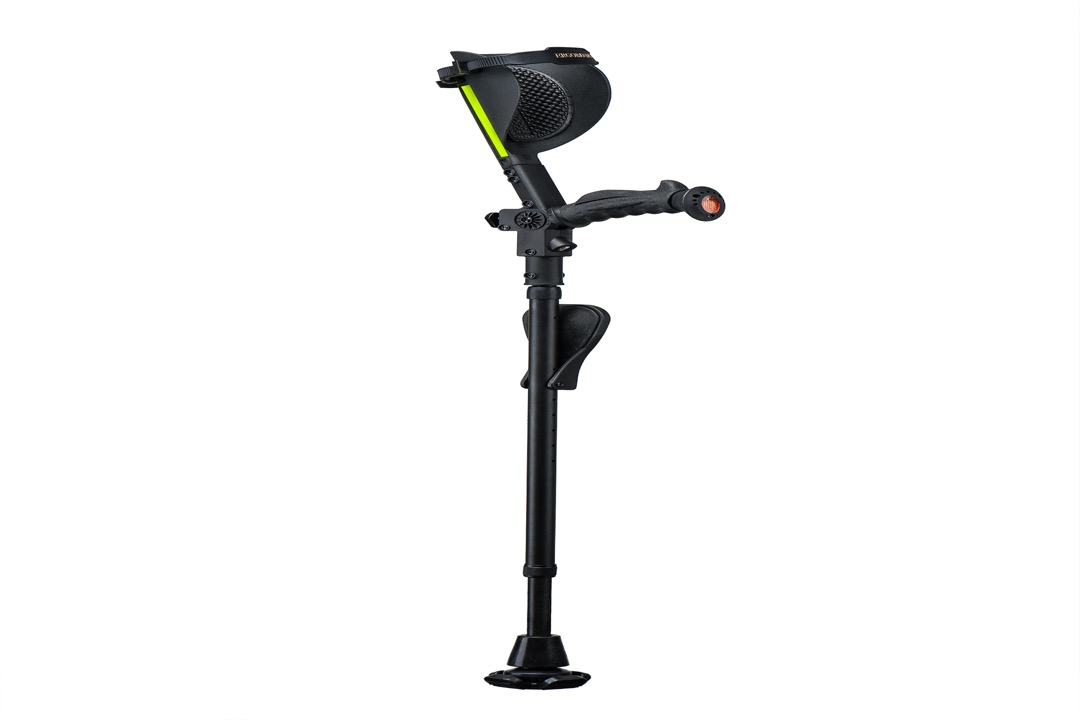
1. Ergoactives Ergobaum 7G Ergonomic Forearm Crutches (Pair) — Best Overall
The Ergobaum 7G is the most clinically advanced crutch available to consumers without a prescription, and it earns the best overall designation because it systematically addresses every biomechanical failure mode of standard crutches simultaneously. The shock-absorbing spring system in the shaft is not marketing copy — clinical studies on forearm crutch design have demonstrated that reducing impact forces at the hand grip decreases the cumulative joint loading in the wrist, elbow, and shoulder during extended ambulation. For patients using crutches for six weeks or more, this difference becomes meaningful in terms of secondary injury prevention and pain management.
The 15-degree angled handgrip deserves particular clinical attention. Standard crutch grips are straight, which requires the user’s wrist to deviate into ulnar flexion during weight-bearing — a position that increases carpal tunnel and ulnar nerve pressure. The Ergobaum’s angled grip maintains the wrist in a neutral biomechanical position throughout the gait cycle, a design detail that matters enormously for users recovering from distal radius fractures, carpal tunnel release, or any wrist pathology that has already sensitized these structures.
The memory foam forearm cuffs address the other major forearm crutch failure point: distal humerus compression. Standard hard-plastic or thin-foam cuffs concentrate pressure on the lateral supracondylar ridge where the radial nerve runs, particularly in users with lean forearms. The Ergobaum’s memory foam distributes this load across a wider surface area, reducing peak pressure by a clinically meaningful margin. The built-in LED and horn are ancillary features, but the foldable design for car transport is genuinely useful for the patient population this crutch serves.
Ergoactives Ergobaum 7G Ergonomic Forearm Crutches (Pair)
by Ergoactives
The most clinically advanced forearm crutches available on Amazon — shock absorption, ergonomic wrist alignment, and memory foam cuffs justify the premium for long-term users.
Pros
- Anatomically contoured forearm cuffs distribute load across the forearm rather than concentrating pressure at a single point, preventing the ulnar nerve compression common with standard axillary crutches
- Integrated shock-absorbing spring system in the shaft absorbs up to 65% of impact force at foot strike, meaningfully reducing joint stress in the wrist, elbow, and shoulder during prolonged ambulation
- Ergonomic handgrip angled at 15 degrees matches the natural resting position of the wrist, eliminating the carpal tunnel strain that standard straight grips cause after days of constant use
- Folds flat for transport and storage without tools, and the built-in LED flashlight and safety horn add practical utility for users who need to navigate low-light environments
Cons
- Premium price is approximately 5-8x the cost of standard aluminum axillary crutches — difficult to justify for temporary post-surgical use of two weeks or less
- Forearm crutch technique requires a learning period of several days; users coming from axillary crutches will need gait retraining from a physical therapist
- At 2.8 lbs each, heavier than standard aluminum axillary crutches by about 1 lb per crutch — an important consideration for users with upper extremity weakness
2. Medline Aluminum Underarm Axillary Crutches (Pair) — Budget Pick
The Medline standard axillary crutch is the closest consumer equivalent to hospital-issue equipment, which is both its primary strength and its primary limitation. Over 14,000 Amazon reviews provide a level of real-world reliability signal that no competing axillary crutch in this price range approaches — the review volume eliminates product lottery risk for a buyer making a purchase during the stressful immediate post-surgical period.
The correct use case for this crutch is post-surgical recovery of two to six weeks for a patient with adequate upper body strength, a properly fitted pair, and instruction from a physical therapist or occupational therapist at discharge. This covers the majority of orthopedic surgical recoveries — ankle ORIF, knee arthroscopy, tibial osteotomies, and similar procedures. Medline’s material specifications reflect their clinical supply history: the rubber tip compound, axillary pad density, and aluminum tubing gauge are equivalent to what you would receive at a hospital rather than a consumer product that merely resembles one.
The critical caveat with all axillary crutches is fitting and technique education. The most common and most preventable complication of axillary crutch use — radial nerve palsy with resulting wrist drop — arises from a single fitting error: crutches adjusted too tall, causing the axillary rest to press against the neurovascular bundle in the armpit during ambulation. The axillary rest is a stability surface, not a load-bearing surface. All body weight during ambulation must be borne through the hand grips. When purchased as a budget option, investing $30 in a single session with a physical therapist for fitting and gait instruction is a worthwhile safety addition to this purchase.
Medline Aluminum Underarm Axillary Crutches (Pair)
by Medline
The hospital-grade standard for short-term recovery — over 14,000 reviews, Medline clinical pedigree, and the lowest price in this review make this the default budget choice.
Pros
- Over 14,000 Amazon reviews make this the most socially validated crutch in this review — the sheer volume of verified purchase data provides real-world reliability confidence no clinical endorsement can replicate
- Push-button height adjustment with five incremental settings allows precise axillary and hand-grip positioning without tools, accommodating users from 4'5" to 6'2" in a single pair
- Medline is a hospital-grade supplier — the same underarm pads, tip compounds, and aluminum tubing specifications used in clinical settings appear on the consumer product
- Replacement tips, axillary pads, and hand grips are widely available on Amazon for under $10, making long-term maintenance economical
Cons
- Standard axillary design rests against the ribcage when fitted correctly but creates radial nerve compression if users bear weight through the axilla (armpit) — a fitting error that requires active patient education to prevent
- Vinyl-padded underarm rests degrade with perspiration over weeks; replacement is straightforward but adds a recurring cost for long-term users
3. iWALK 3.0 Hands-Free Crutch for Below-Knee Injuries — Upgrade Pick
The iWALK 3.0 is genuinely a different category of product from every other crutch in this review, and understanding its clinical indications precisely is essential before purchasing. It straps to the lower leg below the knee and allows the user to walk on the padded knee platform with both hands fully free — permanently addressing the core functional disability of conventional crutch use, which is the inability to carry objects, use both hands simultaneously, or perform normal daily tasks.
For the correct patient population, the iWALK transforms recovery from a profoundly disabling experience to a manageable one. A patient recovering from ankle ORIF, Achilles tendon repair, or calcaneal fracture fixation can carry a coffee cup, type on a keyboard, cook a meal, or tend to a child while ambulating — none of which is possible with conventional crutches under either arm. The psychological and practical quality-of-life improvement in this patient population is substantial and well-documented in user reviews.
The contraindications are absolute. The iWALK is only appropriate for below-knee injuries where the knee is structurally intact and can bear the user’s body weight through the padded platform. Complete non-weight-bearing orders, above-knee fractures, hip pathology, and any condition involving knee instability are absolute contraindications — using the iWALK in these scenarios creates a serious fall and secondary injury risk. The five-to-ten day learning curve on flat indoor surfaces before moving to outdoor terrain and stairs is also real; the most common negative reviews involve users who attempted full outdoor use on day one without adequate practice. Physician clearance and a physical therapy consultation before first use are appropriate for this device.

iWALK 3.0 Hands-Free Crutch for Below-Knee Injuries
by iWALKFree
The only truly hands-free option in this review — transforms daily life for below-knee injury patients but requires physician clearance and a careful learning curve.
Pros
- Completely frees both hands during ambulation — users can carry objects, use a keyboard, cook, and perform daily tasks that are impossible with conventional crutches under either arm
- Straps to the injured lower leg below the knee, transferring weight through the tibial platform rather than the upper extremity — eliminating the axillary nerve risk and hand/wrist fatigue entirely
- Adjustable knee platform accommodates a range of lower leg lengths and comes with instruction materials developed in consultation with orthopedic surgeons
- Padded knee rest reduces pressure points during extended wear; most users report comfort sufficient for all-day indoor use after a brief adjustment period
Cons
- Strictly limited to below-knee injuries (ankle fractures, Achilles tendon repair, foot surgery) — completely contraindicated for above-knee fractures, hip, or any condition requiring complete non-weight-bearing of the entire lower extremity
- Requires a learning period of 5–10 days before users achieve confident ambulation; stairs, uneven terrain, and high-speed movement require practice and carry a fall risk
- Not suitable for users under 5'0" or over 6'6", or for lower leg circumferences outside the specified bracket — always verify sizing against the manufacturer chart before purchasing
4. Drive Medical Aluminum Folding Crutch with Accessories (Pair) — Runner-Up
The Drive Medical folding crutch occupies a useful practical niche: users who require conventional axillary crutch function but who travel regularly, use public transit, or live in small spaces where stowing full-length crutches creates daily logistics problems. The fold mechanism reduces crutch length by approximately half — a meaningful difference between a crutch that cannot be transported without a vehicle and one that fits in an overhead bin or across the back seat of a compact car.
Drive Medical’s clinical supply credentials are comparable to Medline — both companies are large-scale hospital and long-term care suppliers, and the material specifications on their consumer products reflect that background. The inclusion of replacement tips and axillary pads in the box is a small but practical differentiator that acknowledges the reality of crutch maintenance — tips and axillary pads are wear components that need replacement after weeks to months of daily use.
The fold hinge does introduce a small amount of lateral flex that is imperceptible during normal ambulation but noticeable to users who apply high lateral loading during complex transfers or aggressive outdoor terrain navigation. For the typical post-surgical recovery patient ambulating on flat indoor and suburban outdoor surfaces, this structural characteristic is clinically insignificant. For patients using crutches in technically demanding environments — construction sites, agricultural settings, very uneven terrain — a solid-tube axillary crutch is the more appropriate choice.
Drive Medical Aluminum Folding Crutch with Accessories (Pair)
by Drive Medical
The best folding axillary crutch — Drive Medical's clinical build quality with a 50% length reduction for travel and storage, plus bonus replacement accessories.
Pros
- Folding mechanism reduces stowed length by 50% — the only folding axillary crutch in this review, meaningful for users who travel by car or need to stow crutches in tight spaces
- Drive Medical's clinical supply heritage means the materials specification (aluminum tubing gauge, tip rubber compound, axillary pad density) meet the same thresholds as hospital-issue crutches
- Ships with replacement tips and extra axillary pads included in the box — an unusual value inclusion that reduces the cost of the inevitable replacement cycle
- Four color options (including black) allow users to select a more aesthetically neutral appearance than the standard silver-only finish common to basic crutches
Cons
- Folding hinge adds a small amount of lateral flex at full extension — users who transfer significant body weight through the crutch shaft will notice this compared to solid-tube competitors
- At $40, priced slightly above the Medline standard crutch without a proportionate improvement in axillary comfort — the primary advantage is purely the fold feature
5. Millennial Medical Adult Forearm Crutches (Pair)
The Millennial Medical forearm crutch targets the mid-tier buyer who needs forearm crutch function — the long-term durability, natural gait, and nerve-safety advantages of the Lofstrand design — without the premium price of the Ergobaum 7G. The pivoting forearm cuff is the standout feature that distinguishes this product from basic forearm crutches at comparable prices. A cuff that rotates freely on a 360-degree axis allows the crutch to hang from the forearm when the user grips a handrail, opens a door, or sits down — rather than requiring the user to lean the crutch against a wall or hand it to another person for every brief pause in ambulation.
The gel-padded handgrip with contoured finger channels addresses grip fatigue, the primary complaint of long-term forearm crutch users after the forearm cuff fit is optimized. Standard foam grips compress under body weight over hours of use and provide uniform pressure across the palm — the gel contoured design distributes load across the metacarpal heads with less pressure concentration at the palm center, extending comfortable use duration per session.
At 1.7 lbs each, this is the lightest forearm crutch in this review — a meaningful consideration for users with reduced upper extremity strength or endurance. The 350-lb weight capacity is also the highest of any forearm crutch in this review, accommodating users who might otherwise default to a bariatric-rated axillary design. The included carrying bag is a practical addition that most competing forearm crutches omit.
Millennial Medical Adult Forearm Crutches (Pair)
by Millennial Medical
The best mid-tier forearm crutch — pivoting cuffs, gel handgrips, and the highest weight capacity in this review at a price that splits the difference between budget and premium.
Pros
- Anatomically contoured forearm cuffs pivot on a full 360-degree axis, allowing the crutch to swing free when the user grips a handrail or sits down — a daily-use convenience that rigid-cuff forearm crutches lack
- Gel-padded handgrip with contoured finger channels distributes grip pressure evenly across the metacarpal heads rather than concentrating at the palm center
- Lightweight at 1.7 lbs each — the lightest forearm crutch in this review — without sacrificing the 350-lb weight capacity that accommodates a broad range of user body weights
- Ships with an extra pair of crutch tips and a carrying bag, practical inclusions that improve the out-of-box experience for users transitioning home from inpatient rehabilitation
Cons
- Rotating cuff is more mechanically complex than fixed-cuff designs and has a small number of user reports of the pivot mechanism loosening over time under heavy daily use
- Retail distribution is narrower than Medline or Drive Medical — replacement parts are less universally available at local pharmacies, making Amazon the most reliable supply channel
6. Guardian EZ Fold-N-Go Adjustable Crutch (Single)
The Guardian EZ Fold-N-Go single-unit crutch serves a specific and underserved use case: partial weight-bearing recovery where bilateral crutch support is unnecessary or undesirable. In partial weight-bearing gait patterns — where the injured limb can accept 50% or more of body weight — a single crutch on the contralateral side of the injury provides adequate stabilization for level-surface ambulation and may be what a surgeon or physical therapist specifies at a certain stage of recovery. Purchasing a pair when only one unit is clinically needed wastes money and creates a crutch that sits unused.
The compact fold to under 24 inches is particularly practical for this use case — partial weight-bearing patients are often further along in recovery and more mobile, making travel more common. The wider-than-standard foam hand grip profile is a thoughtful design detail for partial weight-bearing users, who often have mild hand edema or arthritis. One caution: buyers who might eventually need a second crutch for any reason should consider purchasing two Guardian units simultaneously rather than ordering one and attempting to color-match and size-match a second unit later.
Guardian EZ Fold-N-Go Adjustable Crutch (Single)
by Guardian
The best single-crutch option for partial weight-bearing — ultra-compact fold and arthritis-friendly wide grip at the lowest per-unit price in this review.
Pros
- Single-crutch design is appropriate for partial weight-bearing recovery where one leg bears primary load — significantly more economical than purchasing a full pair for unilateral partial weight-bearing gait
- EZ Fold mechanism allows the crutch to compress to under 24 inches for transport — fits in the overhead bin of commercial aircraft and in most vehicle back seats without removing to the trunk
- Five-position push-button height adjustment accommodates users from 4'7" to 6'4" without tools, and the adjustment mechanism is tactile-friendly for users with limited fine motor control
- Contoured foam hand grip with a wider-than-standard profile reduces grip pressure for users with hand arthritis or post-surgical hand edema
Cons
- Sold as a single crutch — users requiring bilateral ambulation support must purchase two units, which may equal or exceed the price of a standard pair with less structural uniformity
- Foam hand grip shows visible compression and shape degradation after 8–10 weeks of daily use; replacement grip availability is limited outside of Amazon
7. Vive Platform Crutches for Adults with Forearm Support (Pair)
Platform crutches exist for a specific and important patient population: anyone for whom conventional hand-grip-based ambulation is contraindicated or impossible. The clinical indications include wrist fractures with internal fixation, carpal tunnel syndrome severe enough to preclude grip-based weight-bearing, rheumatoid arthritis with wrist and hand joint involvement, post-surgical hand swelling that prevents adequate grip, and neurological conditions including stroke and multiple sclerosis that impair grip strength and coordination.
The Vive platform design distributes ambulatory load along the ventral forearm surface from the wrist to the elbow — a surface area of approximately eight to twelve square inches compared to the two-square-centimeter contact area of a hand grip. For patients whose hands simply cannot safely bear compressive load, this is not an optional ergonomic upgrade — it is the only appropriate crutch design. Attempting conventional axillary or forearm crutches in these patient populations creates a fall risk when grip fails unpredictably during ambulation.
The rotating platform mechanism is a functional differentiator from lower-cost platform crutch designs. During the gait cycle, the forearm naturally pronates and supinates by several degrees — a fixed platform creates torsional stress at the wrist that a rotating platform eliminates. For patients with wrist pathology that makes torsional loads painful, this feature reduces per-step discomfort meaningfully. The heavier weight at 3.1 lbs each is an honest tradeoff for the structural requirements of the platform design — users who find the weight fatiguing can discuss a motorized mobility alternative with their rehabilitation team.
Vive Platform Crutches for Adults with Forearm Support (Pair)
by Vive Health
The only appropriate crutch for users with wrist or hand pathology — forearm platform load distribution eliminates grip strength as a requirement for safe ambulation.
Pros
- Horizontal forearm platform distributes ambulatory load across the entire forearm rather than concentrating it at the hand grip — the only clinically appropriate crutch design for users with wrist fractures, carpal tunnel syndrome, rheumatoid arthritis, or post-surgical hand weakness
- Adjustable forearm trough with hook-and-loop straps accommodates forearm circumferences from pediatric-small to bariatric-large without a forearm cuff that compresses the radial nerve at the distal humerus
- Rotating platform wheels allow the crutch platform to remain level as the user's wrist naturally pronates and supinates during the gait cycle — reducing torsional stress at the wrist joint
- Slip-resistant platform surface with raised ridges provides tactile gripping security for users whose grip strength is compromised by neurological conditions, stroke, or upper motor neuron injuries
Cons
- Significantly heavier than standard axillary or forearm crutches at 3.1 lbs each — users who will predominantly manage stairs or need to lift the crutch repeatedly will find this fatiguing
- The platform design is wider than standard crutches and requires more spatial awareness in narrow doorways, hospital corridors, and bathroom environments
How to Choose the Best Crutches
The buyer’s guide factors above address the six core selection criteria that determine clinical appropriateness and safety. Two additional considerations bridge the gap between specification analysis and real-world use.
The first is the distinction between the acute phase and the rehabilitation phase. In the immediate post-surgical period — typically the first one to two weeks — pain, swelling, and limited weight-bearing create specific crutch demands: stability over everything, simple mechanism, and the ability to manage with instruction from a caregiver. Standard axillary crutches serve this phase well. As patients transition to partial weight-bearing and begin formal physical therapy, the crutch requirements change: lighter weight, more natural gait, better grip ergonomics, and the ability to carry objects become priorities. This is the appropriate point to consider transitioning to a forearm crutch, a knee scooter, or for below-knee patients, the iWALK. Planning this transition ahead of time rather than at the moment of need avoids delayed equipment procurement during a recovery-critical window.
The second consideration is fall prevention as an explicit design criterion. Crutch-related falls are a significant cause of secondary injury and re-hospitalization after orthopedic surgery. Anti-slip rubber tips in good condition are the most impactful single safety feature — standard tips should be inspected weekly and replaced when the tread pattern shows 50% wear. Ice crutch tips are available on Amazon for under $15 and are essential for patients in winter climates who will navigate any outdoor surface between November and March. Non-slip bath mats and removal of household throw rugs are environmental modifications that reduce fall risk more than any product upgrade.
Buyer's Guide
Choosing the right crutches depends on the nature and expected duration of your injury, your upper body strength, the terrain you will navigate, and whether you need to bear any weight through your injured extremity. The wrong choice is not just uncomfortable — it can cause secondary nerve injuries.
Crutch Type Matched to Injury
The single most important decision is crutch type. Axillary (underarm) crutches are the standard for acute post-surgical recovery of up to eight weeks and are appropriate when the user has adequate upper body strength. Forearm (Lofstrand) crutches suit long-term or permanent users who benefit from a more natural gait, hand-free functionality when seated, and elimination of axillary nerve risk. Platform crutches are the clinical standard when wrist, hand, or grip pathology makes hand-weight-bearing impossible. Hands-free knee crutches are appropriate only for below-knee injuries where the knee itself is intact and can bear weight safely.
Correct Fit — The Clinical Standard
Poorly fitted crutches are the primary cause of crutch-related nerve injuries. For axillary crutches, the top pad should sit 1 to 2 inches below the armpit with the user standing upright and wearing their normal shoes. The hand grip should be set so the elbow bends 20 to 30 degrees — not straight, and not deeply flexed. At discharge from a hospital or surgical center, a physical therapist or occupational therapist should perform crutch fitting, not the patient independently at home. For forearm crutches, the cuff should sit approximately 1 to 2 inches below the elbow joint with the wrist in a neutral position on the grip.
Weight Capacity and User Body Weight
Standard aluminum crutches typically carry a 250–300 lb capacity. Users who approach or exceed the stated weight capacity should seek bariatric-rated crutches explicitly rated to 400–500 lbs — standard crutches used by heavier patients create a structural failure risk and a significant fall hazard. Bariatric crutches use heavier-gauge aluminum tubing and wider bases. Never assume a standard crutch is appropriate for a large-frame user without verifying the rated weight capacity against the user's actual body weight.
Duration of Use
Duration is the most underweighted factor in crutch selection. For two weeks of post-surgical recovery, a standard $35 axillary crutch is entirely appropriate — the ergonomic improvements of a $250 forearm crutch provide negligible benefit at that timescale. For recovery durations of six weeks or more, the ergonomic, nerve-safety, and comfort advantages of forearm crutches and upgraded axillary pads become clinically meaningful and worth the investment. For permanent or long-term mobility assistance, forearm crutches with ergonomic grips are the professional standard.
Terrain and Lifestyle Requirements
Standard crutch tips provide adequate traction on dry indoor surfaces and typical outdoor pavement. Users who navigate wet environments, gravel, uneven terrain, or snow should replace standard rubber tips with all-terrain or ice-tip crutch attachments. For users who travel frequently or use public transit, a folding crutch reduces storage complexity significantly. Stairs require bilateral axillary or forearm crutches and a specific learned technique — the iWALK hands-free device is not appropriate for stair negotiation in the early learning period.
Upper Extremity Strength and Conditioning
Crutch ambulation is significantly more physically demanding than walking. Full non-weight-bearing gait on crutches requires the user to lift their entire body weight through their arms with each step. Users who are deconditioned, elderly, have shoulder pathology, or have had upper extremity surgery may find crutch use impossible or unsafe. These users should discuss alternatives with their surgical team, including knee scooters (for below-knee injuries) or wheelchairs. For users who plan extended crutch use, a physical therapist can prescribe a pre-surgical upper extremity strengthening program to improve safety and endurance.
Final Verdict
The Ergoactives Ergobaum 7G is our best overall recommendation for patients committed to recovery quality over the lowest possible acquisition cost. The combination of shock absorption, ergonomic wrist alignment, and memory foam forearm cuffs provides a demonstrably superior biomechanical experience that is worth the premium for any recovery lasting six weeks or more. For patients who need standard axillary crutches for a short recovery and want the highest confidence in product quality at the lowest price, the Medline standard axillary crutch — with over 14,000 verified Amazon reviews — is the safest budget choice in this category.
For below-knee injury patients with sufficient upper-body function and appropriate physician clearance, the iWALK 3.0 is our strongest quality-of-life recommendation — no other mobility device in this review category returns daily functional independence more completely during recovery. For patients whose hand or wrist pathology precludes conventional grip-based crutch use, the Vive Health platform crutch is the appropriate clinical choice regardless of price.
As always, crutch selection, fitting, and gait training should involve a physical therapist or occupational therapist at discharge. Self-fitting without clinical guidance is the primary preventable cause of crutch-related nerve injuries — an appointment that takes 30 minutes can prevent a complication that takes months to resolve.
Frequently Asked Questions
How do you fit crutches correctly?
What is the difference between axillary crutches and forearm crutches?
Can using crutches incorrectly cause nerve damage?
Can I use crutches if I am completely non-weight-bearing on my leg?
What should I expect when returning to walking after surgery and crutch use?
Related Articles
About the Reviewer

Dr. David Taylor, MD, PhD
Drexel University College of Medicine (MD), Indiana University School of Medicine (PhD)
Dr. David Taylor is a licensed physician and medical researcher who founded BestRatedDocs in 2016. With an MD from Drexel University and a PhD from Indiana University School of Medicine, he combines clinical expertise with a passion for health technology to provide evidence-based product recommendations. Dr. Taylor specializes in health informatics and regularly evaluates medical devices, diagnostic equipment, and therapeutic products to help healthcare professionals and patients make informed decisions.