11 Best Creatine Supplements of 2026
By Dr. David Taylor, MD, PhD Updated
Jump to our top picks ↓
Creatine monohydrate is one of the most studied sports supplements there is, and for once the research and the marketing point the same way. Taken at 3 to 5 g a day, it raises the creatine stored in muscle, and over weeks of training that shows up as a little more strength, a little more lean mass and slightly better recovery between hard sets. When patients ask me about creatine, my answer is usually short: plain monohydrate, a standard daily dose, and a product that has been tested by someone other than the company selling it.
That last part is where most buyers go wrong. Creatine is cheap to make and easy to sell, and the market is crowded with near-identical tubs. A 2022 analysis of creatine products sold on Amazon found that only about 8 percent carried any third-party certification. Independent testing since then has turned up gummies with no measurable creatine in them at all. So the label claim alone is not enough. If you want to check a product yourself, our guide on how to read a supplement label shows what to look for.
For 2026 I compared 11 creatine supplements across powders, capsules and gummies. My top pick is Thorne Creatine Powder: single-ingredient micronized monohydrate with NSF Certified for Sport testing. The picks below cover tighter budgets, Creapure sourcing, vegan diets, older adults, pill takers and athletes in tested sports.
Find the Best Creatine for Your Goal
Jump to your situation:
- Best creatine supplements overall
- Best creatine for men
- Best creatine for muscle gain
- Best creatine pills
- Best creatine for seniors
- Best Creapure creatine
- Best cheap creatine
- Best creatine for brain health
- More use cases
How I Chose These Creatine Supplements
I started with one rule: creatine monohydrate only. It is the form behind almost all of the strength, muscle and safety data, and no other form has been shown to work better. From there I ranked products on five things.
- Third-party certification. NSF Certified for Sport, Informed Sport and Informed Choice each screen for banned substances, and NSF also checks that the label matches the contents. I gave certified products a clear edge.
- Dose per serving. I checked how many grams of creatine each serving delivers and how many capsules or gummies that takes.
- Independent lab results. Where a brand’s creatine had been bought off the shelf and tested by an outside lab, I weighed that result.
- Cost per serving. I worked out the cost of a 5 g dose for every product, because tub size alone hides large differences.
- Availability. Every product was confirmed live and buyable on Amazon when this page was updated.
I left out blends that bury creatine in a pre-workout formula, products that lead with HCl or other forms, and listings whose label could not be matched to a real supplement facts panel.
Best Creatine Supplements Overall
Each of the 11 products reviewed in turn, starting with the one I recommend to most adults.
Best Overall: Thorne Creatine Powder
Thorne makes a product that does one thing and documents it well. Each scoop is 5 g of micronized creatine monohydrate and nothing else: no flavoring, no sweetener, no flow agents. The tub carries NSF Certified for Sport, which means the finished product is tested against its label and screened for substances banned in competitive sport. For a recreational lifter that is reassurance about purity. For a college or professional athlete, it is often a requirement.
Buyers consistently say it dissolves quickly in water or coffee and leaves no taste, which matters more than it sounds, because the product you can take without noticing is the one you keep taking. I also like that a standard scoop is the standard dose, so there is nothing to calculate.
The trade-off is cost. Thorne charges a premium per serving over the plain budget tubs below, and you are paying mostly for the brand’s testing record and consistency rather than a different molecule. If budget is tight, the BulkSupplements pick carries the same certification for much less. One buyer reported a tub close to its expiry date, so check the date when yours arrives.

Thorne Creatine Powder
by Thorne
Clean, certified, single-ingredient monohydrate from a brand with a long record of third-party testing: the creatine I would point most adults to first.
Pros
- NSF Certified for Sport, so lots are screened for banned substances and checked against the label
- Single ingredient: micronized creatine monohydrate with no fillers, flavors or sweeteners
- Buyers say it dissolves quickly and has no taste in water, coffee or a shake
- A standard 5 g scoop, so the daily dose needs no arithmetic
Cons
- Costs noticeably more per serving than the plain monohydrate tubs from BulkSupplements or Nutricost
- At least one buyer reported a tub close to its expiry date, so check the date when it arrives
Best Budget: BulkSupplements NSF Certified Micronized Creatine
This is the pick I suggest to anyone who wants creatine to be boring and inexpensive. It is single-ingredient micronized monohydrate, and it carries NSF Certified for Sport, the same certification as the premium tubs on this page. The brand’s creatine powder also passed SuppCo’s 2025 independent lab test, which bought products off the shelf rather than accepting samples from manufacturers.
The powder is very fine and dissolves easily in water. The compromises are all about presentation. It typically arrives in a resealable pouch rather than a sturdy tub, the label is plain, and there is little in the way of brand story or extras. None of that changes what is inside.
For most people taking 3 to 5 g a day for general strength or healthy aging, this is the best value on the page. Thorne ranks above it for consistency and packaging. The creatine inside is the same molecule.

BulkSupplements NSF Certified Micronized Creatine
by BulkSupplements
Certified, lab-checked monohydrate for much less per serving than the premium brands: the value pick for anyone who simply wants plain creatine.
Pros
- NSF Certified for Sport, the same certification carried by the premium tubs on this page
- The brand's creatine powder passed SuppCo's 2025 independent lab test
- Very fine micronized powder that dissolves easily in water
- One of the lowest costs per 5 g serving on this page
Cons
- Comes in a resealable pouch rather than a rigid tub, which makes daily scooping a little clumsier
- Plain, functional packaging with little information beyond the label
Upgrade Pick: Momentous Creatine Monohydrate Powder
Momentous designs its range for competitive athletes, and its creatine follows that pattern. It is plain monohydrate with NSF Certified for Sport testing, vegan, unflavored and dosed at a standard 5 g. If you compete in a tested sport and want a premium product from a brand that builds for competitive athletes, this is a sensible choice.
Most buyers describe it as tasteless and easy to add to water, coffee or a protein shake. Reports on mixing in cold liquid are less consistent. A few people find it settles in ice water, and I would stir it longer or mix it in room-temperature liquid first.
I rank it behind Thorne because the two are very close on what matters and Thorne has the longer testing record. Choose Momentous if you prefer the brand or already use its protein. There is no clinical reason to pay more for it over the budget pick.

Momentous Creatine Monohydrate Powder
by Momentous
A certified, vegan monohydrate from a brand built around competitive athletes, for buyers who want premium packaging and sport-grade testing.
Pros
- NSF Certified for Sport, a common requirement for college and professional athletes
- Vegan and unflavored, with nothing added beyond creatine monohydrate
- Buyers describe it as tasteless in water, coffee or a protein shake
- Standard 5 g serving with 90 servings per container
Cons
- Priced at the premium end of plain monohydrate
- Mixed reports on how well it dissolves in cold liquid; stirring longer or using room-temperature liquid helps
Runner-Up: Optimum Nutrition Micronized Creatine Powder
Optimum Nutrition’s creatine has been on gym shelves for a very long time, and it has the largest review base of any product on this page. That depth of feedback is useful. Problems with a batch, a seller or a formula change tend to show up quickly when this many people buy the same tub. It is sold and shipped by Amazon, and the 120 servings make it the longest-lasting powder here.
It is micronized monohydrate at 5 g per scoop, enrolled in the Informed Choice program. That is real banned-substance screening, but it is a lighter check than NSF Certified for Sport, which also verifies label content. For a beginner who just wants a trusted name and a low cost per serving, the difference rarely matters. For a tested athlete, I would choose one of the NSF picks.
The main complaint is texture. Several buyers say it settles and feels gritty in plain water. It mixes far better in a shake or yogurt, which is how many people take it anyway.

Optimum Nutrition Micronized Creatine Powder
by Optimum Nutrition
The familiar monohydrate with a deep record of buyer feedback and a low cost per serving, a sound first creatine for most beginners.
Pros
- The largest review base of any product on this page, from a long-running sports nutrition brand
- 120 servings per container, more than any other powder here
- Enrolled in Informed Choice, a banned-substance screening program
- Sold and shipped by Amazon
Cons
- Several buyers say it settles and feels gritty in plain water; it mixes better in a shake
- Informed Choice screens for banned substances but does not certify label content the way NSF Certified for Sport does
Best Creapure Pick: Bare Performance Nutrition Pure Creatine by Creapure
Bare Performance Nutrition uses Creapure, the branded monohydrate made in Germany by AlzChem, and adds Informed Sport certification on top. Informed Sport tests every batch for banned substances before it is released, which is a tighter schedule than most screening programs. If you want both a documented raw material and batch-level testing, this tub has both.
It is vegan, unflavored and single ingredient, and it mixes into water or a shake without adding a flavor. A minority of buyers say it does not fully dissolve, which is common to unflavored monohydrate and usually solved by more liquid or more stirring.
The downsides are cost and size. It costs more per serving than most powders here, partly because Creapure costs more to source, and it holds 60 servings rather than the 90 to 120 of most tubs. I see it as a choice for people who value the paperwork. The creatine itself is no stronger.

Bare Performance Nutrition Pure Creatine by Creapure
by Bare Performance Nutrition
Creapure monohydrate with batch-level Informed Sport testing, for buyers who want a well-documented supply chain and accept the higher cost.
Pros
- Made with Creapure, a German-made monohydrate produced to tight purity specifications
- Informed Sport certified, which tests every batch for banned substances before release
- Vegan, unflavored and single ingredient
- Mixes into water or a shake without adding a flavor of its own
Cons
- Higher cost per serving than most powders on this page, partly because of the Creapure raw material
- Only 60 servings per container, so it runs out sooner than most tubs
- A minority of buyers say it does not fully dissolve
Best Creapure Value: Sports Research Creatine with Creapure
Sports Research offers Creapure for less per serving than the BPN tub and gives you 90 servings instead of 60. The brand’s creatine powder also passed SuppCo’s 2025 independent lab test, which is more direct evidence about the finished product than the Creapure name alone provides.
Buyers say it mixes smoothly and has no taste. It is 5 g per serving, single ingredient and unflavored.
Be clear about what the label does and does not say. The listing describes it as third-party tested but does not name the testing program, and there is no sport certification. For most people that is fine, given the outside lab result. If you are subject to drug testing in sport, pick a product with NSF Certified for Sport or Informed Sport instead.

Sports Research Creatine with Creapure
by Sports Research
A lower-cost route to Creapure with independent lab results behind the brand, short only on a named sport certification.
Pros
- Made with Creapure monohydrate from AlzChem in Germany
- The brand's creatine powder passed SuppCo's 2025 independent lab test
- 90 servings per container, more than the other Creapure pick on this page
- Buyers say it mixes smoothly, and it is unflavored
Cons
- The listing says third-party tested but does not name the testing program
- No sport certification, so athletes in drug-tested sports should choose a certified product
Best Vegan Pick: Naked Nutrition Pure Micronized Creatine
Creatine monohydrate is made synthetically, so almost every powder is vegan. What makes this pick relevant to plant-based eaters is the evidence, not the label. People who eat little or no meat or fish start with lower creatine stores in muscle, and studies suggest they tend to respond more to supplementation. A clean, low-cost daily powder is a sensible addition to a vegan diet.
Naked keeps it simple: micronized monohydrate, no additives, 5 g per serving and 100 servings per tub. Buyers say it dissolves in water, coffee and shakes. The listing shows NSF Certified testing. Note the wording. That is NSF’s general contents certification, not NSF Certified for Sport, so it is a strong choice for everyday use but not the one I would hand an athlete in a tested sport.
If you want Creapure sourcing, look at the two Creapure picks above. Otherwise this is an easy, low-cost daily creatine.

Naked Nutrition Pure Micronized Creatine
by Naked Nutrition
A clean, vegan, NSF Certified monohydrate at a low cost per serving, the natural pick for plant-based eaters, who tend to start with lower creatine stores.
Pros
- Vegan and single ingredient, with no additives or flavoring
- The listing shows NSF Certified testing
- Buyers say it dissolves in water, coffee and shakes
- 100 servings of 5 g, with a low cost per serving
Cons
- The listing says NSF Certified, not NSF Certified for Sport, so it is not the pick for athletes in drug-tested sports
- Plain monohydrate only, with no Creapure option if you want that sourcing
Best for Loading: Nutricost Micronized Creatine Powder
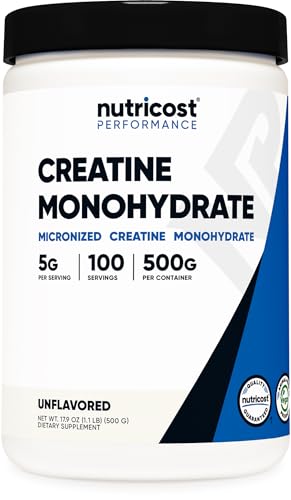
Nutricost prints loading-phase directions on the label next to the daily maintenance dose, which helps people who want to fill their muscle stores in a week rather than a month. The powder is micronized, unflavored and single ingredient, with 100 servings of 5 g.
The listing shows no third-party certification, which would normally push a product off my list. What keeps it here is that the brand’s creatine powder passed SuppCo’s 2025 independent lab test, alongside BulkSupplements and Sports Research. That is a meaningful outside check, though it covers one batch rather than an ongoing program.
It is sold by a third-party seller rather than Amazon, so check the seller name before you buy. Some buyers report clumping after the tub is opened. Keep the lid tight and the scoop dry, and break up any lumps before measuring.
Nutricost Micronized Creatine Powder
by Nutricost
Lab-checked monohydrate with clear loading directions and a low cost per serving, a practical choice for a first loading week.
Pros
- The brand's creatine powder passed SuppCo's 2025 independent lab test
- The label includes loading-phase directions alongside the daily maintenance dose
- 100 servings of 5 g, with a low cost per serving
- Micronized, unflavored and single ingredient
Cons
- No third-party certification shown on the listing
- Sold by a third-party seller rather than Amazon
- Some buyers report clumping once the tub has been opened
Best Capsules: Optimum Nutrition Micronized Creatine Capsules
Some people will never take a powder. For them, these capsules are the cleanest answer I found: micronized monohydrate in gelatin capsules from the same brand as the runner-up powder, enrolled in Informed Choice screening.
The dose math matters. Two capsules give 2.5 g, so a full 5 g dose takes four large capsules a day. The bottle of 300 lasts 75 days at that dose. Take them with a meal and a full glass of water. The capsules are gelatin, so they are not suitable for vegetarians or vegans.
You pay for the convenience. Gram for gram, the capsules cost far more than the same brand’s powder. If swallowing four capsules is what gets you to take creatine every day, that cost is reasonable. If you can tolerate a powder stirred into coffee, the powder is the better buy.

Optimum Nutrition Micronized Creatine Capsules, 300 Count
by Optimum Nutrition
The straightforward capsule choice from a trusted brand, as long as four capsules a day does not put you off.
Pros
- No mixing, measuring or texture, which suits people who dislike powders
- Enrolled in Informed Choice banned-substance screening
- Micronized creatine monohydrate from a long-established brand
- 300 capsules per bottle, enough for 75 days at a full 5 g dose
Cons
- A full 5 g dose takes four large capsules
- Gelatin capsules, so not suitable for vegans or vegetarians
- Costs far more per gram of creatine than the same brand's powder
Budget Capsules: Nutricost Micronized Creatine Capsules
Nutricost’s capsules cost less per gram of creatine than the Optimum Nutrition capsules, and the 750 mg size makes it easy to adjust the dose. The listed serving is four capsules for 3 g, which is a reasonable maintenance dose on its own. For a full 5 g, you need about seven capsules.
Older buyers often mention how much easier a pill is than a powder, which matches what I hear from patients who struggle with gritty drinks. The trade-offs are the same as the powder from this brand: no certification on the listing, and a third-party seller. The capsules are gelatin.
I would choose these for someone content with 3 g a day, or for someone who wants to try creatine without committing to a powder habit.

Nutricost Micronized Creatine Capsules, 500 Count
by Nutricost
The value capsule, best for someone content at 3 g a day or willing to take a handful of pills.
Pros
- Costs less per gram of creatine than the Optimum Nutrition capsules
- 500 capsules per bottle
- 750 mg capsules make it easy to adjust the daily dose
- Older buyers often mention how much easier a pill is than a powder
Cons
- Four capsules supply only 3 g, so a 5 g dose takes about seven capsules
- No third-party certification shown on the listing
- Gelatin capsules, sold by a third-party seller
Best Gummy: Create Creatine Monohydrate Gummies
Gummies are the riskiest creatine format to buy, and I explain why in the lab results section below. Create is here because it is one of the few gummies with evidence behind it. The listing shows NSF Certified for Sport, and in SuppCo’s 2025 test it measured slightly above its 4.5 g label claim per serving of three gummies.
The same test found significant creatinine, a sign that some of the creatine in the gummy had broken down. That is a known problem with moist, chewable formats. Create’s result was also questioned earlier: NOW Foods reported it under claim in its own 2024 testing, and Create disputed that with lab data of its own. I treat it as the best of a weak format rather than a match for powder.
It is pectin-based, sweetened with allulose and comes in several flavors. It also costs much more per gram than any powder on this page. Choose it only if a gummy is the format you will actually take.

Create Creatine Monohydrate Gummies, Watermelon
by Create
The one gummy here with both a sport certification and a passing independent lab result, at a steep premium per gram.
Pros
- A chewable format for people who will not take powders or pills
- NSF Certified for Sport shown on the listing
- Measured slightly above its 4.5 g label claim in SuppCo's 2025 lab test
- Pectin-based, sweetened with allulose, and sold in several flavors
Cons
- The same test found significant creatinine, a sign that some of the creatine had broken down
- Costs much more per gram of creatine than any powder on this page
- Three gummies supply 4.5 g, slightly under the usual 5 g dose
Best Creatine for Men
Men looking for creatine usually want the same thing: more strength from the same training. Any well-made monohydrate at 3 to 5 g a day does that job, so I focused on value and trust. The same advice holds if you are searching for the best creatine for men over 50. Strength and muscle decline with age, and creatine combined with resistance training helps slow that loss. Men over 50 should read the seniors section below too, and mention the supplement to their doctor, because it changes how one common kidney blood test reads.
| Product | Price | Buy |
|---|---|---|
| Optimum Nutrition Micronized Creatine PowderBest for most men A long-trusted brand with the largest review base on the page, sold by Amazon, and the most servings of any powder here | $27.99 | View on Amazon |
| BulkSupplements NSF Certified Micronized CreatineBest certified value NSF Certified for Sport monohydrate with a passing independent lab result, for men who want certification on a budget | $19.97 | View on Amazon |
| Naked Nutrition Pure Micronized CreatineBest plant-based option NSF Certified vegan monohydrate for men who eat little meat and start with lower creatine stores | $21.99 | View on Amazon |
Best Creatine for Muscle Gain
The best creatine for building muscle is the one with a full, accurate 5 g dose that you take every day alongside progressive resistance training. Creatine lets you do slightly more work in each session, and that extra work is what drives muscle gain. Without training, it adds water to muscle and little else. Use our one-rep max calculator to set loads, and track progress with the lean body mass calculator rather than the scale, since early creatine weight is mostly water.
| Product | Price | Buy |
|---|---|---|
| Thorne Creatine PowderBest for building muscle Certified, single-ingredient 5 g scoops that make daily consistency easy | $44.00 | View on Amazon |
| Nutricost Micronized Creatine PowderBest for a loading start Loading directions on the label for lifters who want full muscle stores within a week | $21.50 | View on Amazon |
| Bare Performance Nutrition Pure Creatine by CreapureBest Creapure option Creapure monohydrate with Informed Sport batch testing for lifters in tested sports | $34.99 | View on Amazon |
Best Creatine Pills
Creatine capsules suit people who dislike powders or want a dose they can carry. Creatine tablets are less common on Amazon, and most products sold as pills are capsules. The catch is dose. Capsule sizes run from 750 mg to about 1.25 g, so a 5 g dose takes four to seven pills depending on the product. Read the serving line, not the front of the bottle. The Optimum Nutrition capsules give 2.5 g per two capsules, so four make 5 g. The Nutricost capsules give 3 g per four, so a full dose takes about seven.
| Product | Price | Buy |
|---|---|---|
| Optimum Nutrition Micronized Creatine Capsules, 300 CountBest creatine capsules Four capsules give a full 5 g dose, with Informed Choice screening | $49.99 | View on Amazon |
| Nutricost Micronized Creatine Capsules, 500 CountBest value capsules Costs less per gram than the Optimum Nutrition capsules; good for a 3 g daily dose | $26.50 | View on Amazon |
Best Creatine for Seniors
For older adults, the main reason to take creatine is to hold on to muscle. Sarcopenia, the gradual loss of muscle mass and strength with age, raises the risk of falls and loss of independence. Trials in older adults show that creatine combined with resistance training improves strength and lean mass more than training alone. Diet matters too. A 2025 review led by Richard Kreider estimated that about 70 percent of roughly 1,500 adults aged 65 and over ate less creatine than recommended, largely because they eat less meat and fish.
The best creatine supplement for seniors is a certified, easy-to-take monohydrate. Pair it with enough protein (see our best protein powders for seniors) and two or three strength sessions a week, which can be as simple as a set of resistance bands at home. Check with your doctor first if you have kidney disease or take diuretics or diabetes medicines.
| Product | Price | Buy |
|---|---|---|
| Thorne Creatine PowderBest for most older adults Certified, tasteless powder that disappears into morning coffee or oatmeal | $44.00 | View on Amazon |
| Optimum Nutrition Micronized Creatine Capsules, 300 CountBest for those who prefer pills No mixing needed; four capsules with a meal give a full dose | $49.99 | View on Amazon |
| Naked Nutrition Pure Micronized CreatineBest low-cost daily option NSF Certified monohydrate at a low cost per serving for daily long-term use | $21.99 | View on Amazon |
Best Creapure Creatine
Creapure is a branded creatine monohydrate made in Germany by AlzChem, produced to tight purity specifications for creatinine and other by-products. It is an ingredient standard, not a finished-product certification. A Creapure tub tells you where the raw material came from. It does not tell you how the finished product was handled or tested. If you want the best creatine with Creapure, look for both the Creapure name and an outside test of the finished tub.
| Product | Price | Buy |
|---|---|---|
| Bare Performance Nutrition Pure Creatine by CreapureBest Creapure with batch testing Every batch tested by Informed Sport, at a higher cost per serving | $34.99 | View on Amazon |
| Sports Research Creatine with CreapureBest Creapure value More servings per tub, backed by a passing independent lab result for the brand | $36.95 | View on Amazon |
Best Cheap Creatine
The best and cheapest creatine form is plain monohydrate powder, with the lowest cost per gram of any form. A 2022 analysis of 175 creatine products on Amazon found that monohydrate cost about half as much per gram as other forms, while having the stronger evidence. Affordable does not have to mean untested. The picks below all carry either a certification or a passing independent lab result, and each delivers 5 g per scoop at a low cost per serving. Skip flavored blends and “advanced” forms. You pay more for less studied creatine.
| Product | Price | Buy |
|---|---|---|
| BulkSupplements NSF Certified Micronized CreatineBest affordable certified creatine NSF Certified for Sport at one of the lowest costs per serving on the page | $19.97 | View on Amazon |
| Nutricost Micronized Creatine PowderBest affordable lab-tested creatine Passed SuppCo's 2025 lab test, with loading directions on the label | $21.50 | View on Amazon |
| Optimum Nutrition Micronized Creatine PowderBest affordable big-brand creatine Sold by Amazon with Informed Choice screening and the most servings of any powder here | $27.99 | View on Amazon |
Best Creatine for Brain Health
The brain uses creatine too, and interest here is growing. Small, short trials and recent reviews suggest modest benefits for memory and mental tiredness. The effects are most consistent in older adults, in people who eat little meat, and during sleep deprivation. The evidence is still early, and I would not take creatine for brain health alone. No product is formulated specifically for the brain. What matters is a pure monohydrate taken at the same dose every day, so choose a clean, tested product you can take consistently.
| Product | Price | Buy |
|---|---|---|
| Thorne Creatine PowderBest for daily cognitive use Certified single-ingredient monohydrate that is easy to take every day | $44.00 | View on Amazon |
| Momentous Creatine Monohydrate PowderBest premium certified option NSF Certified for Sport and vegan, for those who want premium sourcing | $42.99 | View on Amazon |
| Sports Research Creatine with CreapureBest Creapure option Creapure raw material with a passing independent lab result for the brand | $36.95 | View on Amazon |
Best Creatine by Use Case
A few more situations come up often. Here is the creatine I would choose for each.
| Product | Price | Buy |
|---|---|---|
| Momentous Creatine Monohydrate PowderBest NSF certified creatine Premium NSF Certified for Sport monohydrate, vegan and unflavored | $42.99 | View on Amazon |
| Naked Nutrition Pure Micronized CreatineBest vegan creatine Single-ingredient vegan powder with NSF Certified testing | $21.99 | View on Amazon |
| Optimum Nutrition Micronized Creatine PowderBest creatine for beginners A trusted name, sold by Amazon, with a low cost per serving | $27.99 | View on Amazon |
| Nutricost Micronized Creatine PowderBest creatine for weight gain Creatine adds water to muscle, typically a kilogram or two early on, not fat | $21.50 | View on Amazon |
| Create Creatine Monohydrate Gummies, WatermelonBest flavored creatine Watermelon gummies with a sport certification and a passing lab result | $39.98 | View on Amazon |
| BulkSupplements NSF Certified Micronized CreatineBest creatine for athletes NSF Certified for Sport at a price that suits a full season of daily use | $19.97 | View on Amazon |
What Independent Labs Found in Creatine Gummies
Most creatine roundups take label claims at face value. Recent testing shows why that is a mistake for gummies.
In June 2025, SuppCo bought 11 creatine products off the shelf, five powders and six gummies, and sent them to an ISO 17025-accredited lab. All five powders passed: BulkSupplements, Nutricost, Sports Research, NatureBell and Jocko Fuel. Each measured between 98 and 101 percent pure creatine, with creatinine well under 50 parts per million and no heavy-metal concerns.
The gummies were a different story. Four of the six failed:
- EcoWise and Vidabotan had no detectable creatine.
- DivinusLabs and Happyummmm contained about 0.5 percent and 0.09 percent of a standard dose.
- Create (4.59 g against a 4.5 g label) and Force Factor (6.3 g against a 5 g label) passed, but both showed significant creatinine, a sign that some creatine had broken down.
This was not the first warning. In 2024, NOW Foods, a supplement maker that competes in this market, tested 12 gummy brands in its own lab and reported that about half were under their label claim. Create disputed its result with its own outside lab data.
Two caveats are fair. Each product was tested from a single batch, and both testers are commercial companies. Even so, the pattern is consistent. Creatine is stable as a dry powder and less stable in a moist, chewable gummy, and a gummy has little room for a full dose.
My advice is simple. Powder is the reliable format. If you want a gummy, buy one with published third-party testing, and treat an unusually cheap gummy as a warning sign.
Buyer's Guide
Creatine is one of the simplest supplements to buy well, once you know which details on the label matter. These are the six I check.
Creatine Form
Buy creatine monohydrate. It is the form used in nearly all of the research on strength, muscle and safety, and the NIH Office of Dietary Supplements notes that other forms, including creatine HCl, ethyl ester and buffered creatine, have not been shown to work better. Micronized creatine is still monohydrate: the particles are milled finer so it mixes more easily, but the molecule is the same.
Third-Party Certification
Supplements are not approved by the FDA before sale, so independent testing is the main check on what is in the tub. NSF Certified for Sport verifies label content and screens for substances banned in sport. Informed Sport tests every batch for banned substances before release. Informed Choice screens samples for banned substances on a regular schedule but tests less often. Plain NSF Certified covers label content without the sport screening.
Dose per Serving
The research dose for daily use is 3 to 5 g of creatine monohydrate. Most powders give 5 g in one scoop. Capsules and gummies often give less per serving, so read the supplement facts panel for the grams per serving and the number of capsules or gummies that takes. Our guide on how to read a supplement label walks through the panel line by line.
Purity and Creapure
Good monohydrate is close to pure creatine with very little creatinine, dicyandiamide or heavy metal contamination. Creapure is a branded monohydrate made in Germany by AlzChem to tight purity specifications. It is a raw-material standard, not a test of the finished product, so a certification or independent lab result still tells you more about the tub in your hand.
Cost per Serving
Divide the price by the number of 5 g servings, not by the tub size. Plain monohydrate powder is the cheapest way to buy creatine, and a 2022 analysis of creatine sold on Amazon found it cost about half as much per gram as other forms. Capsules and gummies usually cost more per gram for the same molecule, and gummies often several times more.
Format
Powder gives the full dose for the least money and mixes into water, coffee or a shake. Capsules suit people who dislike texture or travel often, but a 5 g dose usually means four to seven capsules. Gummies are the easiest to take and the least reliable, based on recent independent testing. Choose the format you will take every day, because consistency matters more than anything else.
How to Take Creatine
The NIH Office of Dietary Supplements describes two ways to start, and both end in the same place.
- Loading: 20 g a day, split into four 5 g doses, for 5 to 7 days, then 3 to 5 g a day to maintain.
- No loading: 3 to 6 g a day from the start. Muscle stores reach the same level in about 3 to 4 weeks.
Loading is faster but more likely to upset the stomach, which is why the dose is split. Most people can skip it.
Timing matters far less than consistency. Morning, evening, before or after training: pick the time you will remember and stick with it. Our guide on when to take supplements covers how to fit it alongside others you take. If creatine upsets your stomach, take it with food. There is no need to cycle off creatine. Stores fall back to baseline over several weeks once you stop.
Creatine works best alongside adequate protein. Our protein intake calculator gives a daily target based on your weight and activity. Drink normally. Creatine does not dehydrate you, but if you train hard in the heat, fluids and electrolytes matter, and our best electrolyte powders can help there.
Is Creatine Safe? What I Tell Patients
For healthy adults, creatine monohydrate has one of the best safety records of any supplement. The International Society of Sports Nutrition’s 2017 position stand concluded that doses of up to 30 g a day for up to five years have been safe and well tolerated in healthy people and in several patient groups. The only side effect reported consistently was weight gain. A 2025 review led by Richard Kreider pooled more than 680 trials with over 12,800 participants given creatine and found side effects no different from placebo.
Water weight
Most people gain a kilogram or two in the first few weeks. That is water drawn into muscle cells, not fat, and it is part of how creatine works.
Kidneys
This is the concern I hear most. Creatine raises blood creatinine, the marker labs use to estimate kidney function, because some creatine breaks down into creatinine. That can make a healthy kidney look worse on paper. It is a lab artifact, not damage. Tell your doctor you take creatine before any blood test. If a result is borderline, cystatin C is a cleaner test of kidney function for creatine users.
Hair
The worry traces back to a small 2009 study that reported a rise in DHT and never measured hair. A 2025 randomized trial in the Journal of the International Society of Sports Nutrition gave 45 resistance-trained men either creatine or placebo, and 38 completed it. After 12 weeks of 5 g a day, there was no difference in DHT, the DHT-to-testosterone ratio, or hair measures.
Who should check with a doctor first
Talk to your doctor before starting creatine if you:
- have chronic kidney disease or reduced kidney function
- take diuretics or NSAIDs such as ibuprofen regularly
- take glucose-lowering medicines
- are pregnant or breastfeeding
- are under 18
Final Verdict
For most adults, Thorne Creatine Powder is the creatine to buy. It is pure micronized monohydrate in a standard 5 g scoop, with NSF Certified for Sport testing behind it. If cost matters most, BulkSupplements NSF Certified Micronized Creatine carries the same certification and a passing independent lab result for much less per serving.
Whatever you choose, keep it simple: monohydrate, 3 to 5 g a day, every day, with resistance training and enough protein. If you are building a broader supplement routine for later life, our guide to essential vitamins and supplements for seniors is a good next read.
Frequently Asked Questions
Is creatine safe for your kidneys?
Does creatine cause hair loss?
What is the best creatine for teens?
Is creatine HCl better than creatine monohydrate?
Is creatine good for weight loss?
Are creatine gummies as good as powder?
Related Articles
About the Reviewer

Drexel University College of Medicine (MD), Indiana University School of Medicine (PhD)
Dr. David Taylor is a licensed physician and medical researcher who founded BestRatedDocs in 2016. With an MD from Drexel University and a PhD from Indiana University School of Medicine, he combines clinical expertise with a passion for health technology to provide evidence-based product recommendations. Dr. Taylor specializes in health informatics and regularly evaluates medical devices, diagnostic equipment, and therapeutic products to help healthcare professionals and patients make informed decisions.