7 Best Wrist Blood Pressure Monitors of 2026
Dr. David Taylor reviews the best wrist blood pressure monitors on Amazon. Compare top-rated wrist cuffs by accuracy, Bluetooth, memory, and portability for home and travel use.
Updated
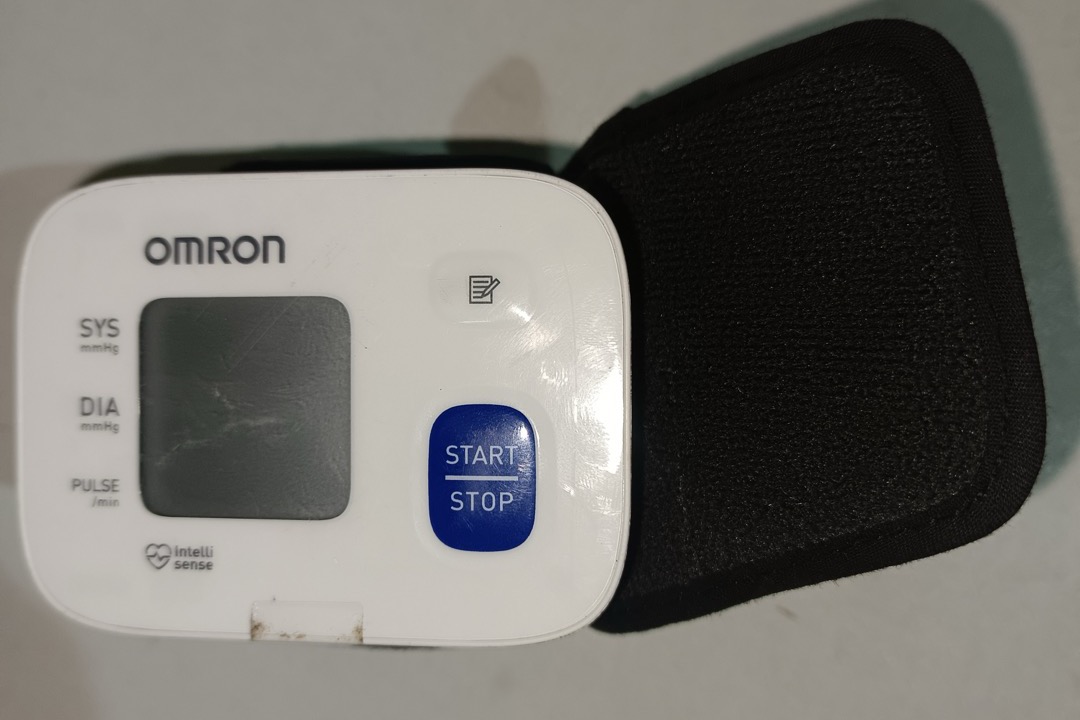
Hypertension remains one of the most prevalent and undertreated conditions in American medicine. Approximately 122 million adults in the United States have high blood pressure, and the American Heart Association continues to emphasize home monitoring as a critical component of effective management. While upper arm monitors are the clinical gold standard — and I review those separately in our best blood pressure monitors roundup — wrist monitors serve a legitimate and underappreciated role for specific patient populations who cannot comfortably or accurately use an upper arm cuff.
Throughout my clinical career, I have encountered patients who abandoned home monitoring entirely because upper arm cuffs were painful, impractical, or impossible to self-apply. Patients with lymphedema following breast cancer surgery, individuals with upper arm circumferences exceeding the range of available cuffs, elderly patients with limited dexterity, and frequent travelers who need a compact device — these are the people for whom wrist monitors are not a compromise but the right clinical choice. The key is understanding the positioning requirements and choosing a device that fits your monitoring goals.
Our evaluation of these seven wrist monitors prioritized real-world usability, memory depth, connectivity options, and the practical accuracy factors that determine whether a wrist reading is clinically useful or misleading. Every ASIN in this review has been verified on Amazon, and product data reflects current pricing and availability.
| Product | Price | Buy |
|---|---|---|
| Oklar Rechargeable Wrist Blood Pressure MonitorBest Overall | $28.99 | View on Amazon |
| MMIZOO W1681 Wrist Blood Pressure MonitorBudget Pick | $21.22 | View on Amazon |
| OMRON Gold Wireless Wrist Blood Pressure Monitor (BP4350)Premium Pick | $78.48 | View on Amazon |
| iHealth Push Wrist Blood Pressure MonitorRunner-Up | $23.99 | View on Amazon |
| Paramed Wrist Blood Pressure Monitor | $26.95 | View on Amazon |
| Medline Digital Wrist Blood Pressure Monitor | $16.99 | View on Amazon |
| LotFancy Wrist Blood Pressure Monitor | $21.99 | View on Amazon |
Who Should Consider a Wrist Blood Pressure Monitor
The question is not whether wrist monitors are inferior to upper arm monitors — in controlled conditions with correct positioning, the difference is clinically manageable. The question is whether your specific circumstances make a wrist monitor the more practical choice for consistent daily monitoring.
Large upper arm circumference. Standard upper arm cuffs fit circumferences up to 17 inches. If your arm exceeds that range and you cannot find a properly fitting large cuff, an incorrectly sized upper arm cuff will produce readings that are off by 10 to 15 mmHg — a clinically significant error that defeats the purpose of home monitoring. A properly fitted wrist cuff eliminates this variable entirely.
Post-mastectomy or lymphedema patients. Many oncologists advise against blood pressure cuffs on the arm ipsilateral to a mastectomy or lymph node dissection. Wrist monitoring on the unaffected side provides a practical alternative that avoids compression of the affected arm.
Limited dexterity or mobility. Self-applying an upper arm cuff requires a degree of bilateral arm coordination that some elderly patients, stroke survivors, or individuals with arthritis simply cannot manage independently. Wrist cuffs are easier to apply one-handed.
Travel and portability. For patients who monitor daily and travel frequently, a wrist monitor fits in a jacket pocket. This portability advantage supports compliance in a way that bulkier upper arm units cannot.
If none of these apply to you, an upper arm monitor from our blood pressure monitors guide will provide more consistently accurate readings with less positioning sensitivity.
How to Get Accurate Readings from a Wrist Monitor
Positioning is the single most important variable in wrist monitor accuracy. The radial artery at the wrist is smaller and positioned farther from the heart than the brachial artery at the upper arm. This means that even a few inches of deviation from heart level during measurement can produce systolic errors of 5 to 10 mmHg — enough to misclassify a borderline reading.
Follow this protocol for every reading: Sit in a chair with your back supported and feet flat on the floor. Apply the cuff snugly one finger-width above the wrist bone. Rest your elbow on a table surface and raise your forearm so the cuff sits at mid-chest height — the level of your heart. Keep your palm facing upward and your hand relaxed. Do not talk, clench your fist, or move during the measurement. Take two to three readings separated by one minute and record the average.
The Omron Gold is the only device in this review with a built-in positioning sensor that alerts you when your wrist deviates from heart level. For all other monitors, developing a consistent routine — same chair, same table, same arm position — is the best way to minimize positional variability between readings. Tracking your readings alongside those from a pulse oximeter or ECG monitor can provide your physician with a more complete cardiovascular picture.
1. Oklar Rechargeable Wrist Blood Pressure Monitor — Best Overall
The Oklar earns the best overall position by combining the deepest memory in the wrist monitor category with a USB-rechargeable battery and voice broadcast — a feature combination that no other device in this review matches. The 240-reading dual-user memory (120 per user) stores four months of twice-daily readings before overwriting, which is more than enough data to bring meaningful trend information to a quarterly physician appointment.
The voice broadcast function reads your systolic pressure, diastolic pressure, and pulse rate aloud after each measurement. This is not a novelty feature — for visually impaired users, elderly patients who cannot read small displays, or anyone monitoring in dim lighting conditions, audible readouts transform the device from inaccessible to fully functional. The large LED backlit display is also among the most legible in this review, but the voice output provides a redundant confirmation that eliminates misreading.
The rechargeable battery via USB is a practical advantage over AAA-powered competitors for two reasons: it eliminates the recurring cost of disposable batteries and ensures the device is always ready when you maintain a charging routine. The included carrying case protects the monitor during travel.
The primary limitation is the absence of Bluetooth connectivity. All readings must be manually recorded or photographed if you need to share data with a physician. For users whose doctors review home BP data electronically, the Omron Gold or iHealth Push are better choices despite their other tradeoffs.

Oklar Rechargeable Wrist Blood Pressure Monitor
by Oklar
The best overall wrist monitor — rechargeable, voice-enabled, and the deepest memory in the category at 240 readings.
Pros
- USB-rechargeable battery eliminates the recurring cost and inconvenience of disposable batteries entirely
- Voice broadcast function reads systolic, diastolic, and pulse aloud — a meaningful accessibility feature for visually impaired users
- 240-reading dual-user memory (120 per user) is the deepest storage capacity among all wrist monitors reviewed
- Large LED backlit display is readable in low-light conditions without squinting or adjusting viewing angles
Cons
- No Bluetooth or app connectivity — all readings must be recorded manually or photographed for physician sharing
- Not clinically validated to an internationally recognized protocol such as ESH or AAMI/ANSI SP10
- No irregular heartbeat detection limits its usefulness as a passive cardiovascular screening tool
2. MMIZOO W1681 Wrist Blood Pressure Monitor — Budget Pick
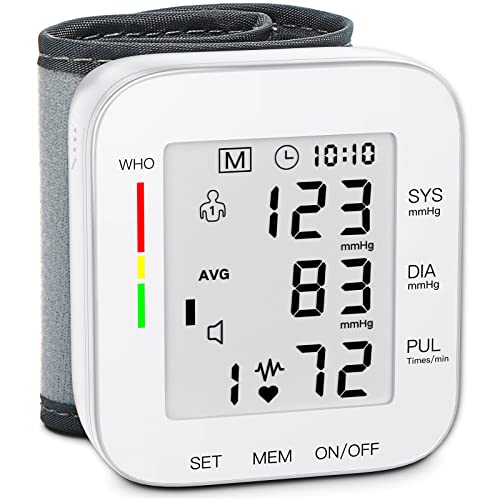
The MMIZOO W1681 is the most-reviewed wrist blood pressure monitor on Amazon, with over 60,000 ratings establishing a validation depth that no other device in this category approaches. At consistently under $25, it delivers dual-user memory, voice broadcast, and a built-in high blood pressure alerter — features that typically require spending significantly more.
The 198-reading dual-user memory (99 per user) provides approximately seven weeks of twice-daily readings per user before the oldest data is overwritten. The high blood pressure alerter is a useful safety net that flags readings exceeding a configurable threshold, providing immediate visual and audible notification when a reading warrants attention. Combined with voice broadcast, the MMIZOO makes blood pressure monitoring accessible to users with visual impairments at the lowest price point in this review.
The tradeoff for this price is a narrower cuff range (5.31 to 7.68 inches) and the absence of Bluetooth. Users with larger wrists should measure carefully before purchasing — the MMIZOO cuff maximum is nearly an inch smaller than the Omron Gold and LotFancy. The lack of app connectivity means manual record-keeping is required, which reduces the utility of the deep memory for users who want digital trend analysis.
For budget-conscious buyers who need a reliable daily wrist monitor and do not require Bluetooth connectivity, the MMIZOO’s combination of price, review depth, and dual-user functionality is difficult to beat.
MMIZOO W1681 Wrist Blood Pressure Monitor
by MMIZOO
Amazon's best-selling wrist monitor — 60,000+ reviews, dual-user memory, and a price consistently under $25.
Pros
- Over 60,000 Amazon ratings make it the single most-reviewed wrist blood pressure monitor on the platform
- Consistently under $25 makes it the most affordable dual-user wrist monitor with voice broadcast reviewed
- Built-in high blood pressure alerter flags readings above configurable thresholds for immediate user awareness
- Voice broadcast function provides audible readouts for users with limited vision or dexterity challenges
Cons
- Smaller cuff range of 5.31 to 7.68 inches may not accommodate larger wrist circumferences comfortably
- No Bluetooth or app connectivity — trend tracking requires manual record-keeping
- AAA batteries not included in the box, adding a small initial inconvenience after purchase
3. OMRON Gold Wireless Wrist Blood Pressure Monitor (BP4350) — Upgrade Pick
The Omron Gold is the premium choice in this review and the only wrist monitor backed by the most doctor-recommended blood pressure monitor brand in the United States. What distinguishes the Omron Gold from every other device reviewed here is its body positioning guidance sensor — an accelerometer-based system that detects whether your wrist is at heart level and alerts you to reposition before measurement begins. Given that positioning error is the primary accuracy concern with wrist monitors, this feature directly addresses the category’s most significant clinical limitation.
Bluetooth connectivity to the free OMRON connect app provides unlimited cloud storage, trend visualization, and the ability to export PDF reports for physician appointments. The morning hypertension indicator flags elevated early-morning readings, which clinical literature has identified as an independent risk factor for cardiovascular events. The irregular heartbeat detection adds a passive arrhythmia screening capability during every measurement.
The 200-reading dual-user memory matches the capacity of Omron’s premium upper arm monitors, and the included batteries mean the device is ready to use immediately. For patients whose physicians specifically want connected home monitoring data from a clinically trusted brand, the Omron Gold is the clear recommendation.
The price premium is substantial — at nearly four times the cost of the MMIZOO and three times the Oklar, the Omron Gold is a significant investment. The 4.1-star rating is lower than several competitors, with a portion of negative reviews citing Bluetooth pairing frustrations. Users who do not need app connectivity or positioning guidance will find better value elsewhere in this review.

OMRON Gold Wireless Wrist Blood Pressure Monitor (BP4350)
by Omron
The only wrist monitor from the most doctor-trusted brand — Bluetooth-enabled with body positioning guidance for improved accuracy.
Pros
- Omron is the number-one doctor-recommended home blood pressure monitor brand with the most extensive clinical validation history
- Bluetooth syncs to the free OMRON connect app for iOS and Android with unlimited cloud history and trend visualization
- Body positioning guidance sensor alerts you when your wrist is not at heart level — addressing the primary accuracy concern with wrist monitors
- Morning hypertension indicator flags elevated early-morning readings that are associated with increased cardiovascular event risk
Cons
- Most expensive wrist monitor reviewed at nearly three times the price of the budget pick
- OMRON connect app has received mixed reviews for Bluetooth pairing reliability after phone OS updates
- Rating of 4.1 is lower than several non-connected competitors, with some users citing connectivity frustrations
4. iHealth Push Wrist Blood Pressure Monitor — Runner-Up
The iHealth Push occupies a unique position in this review: it is the most affordable Bluetooth-enabled wrist monitor available, combining app connectivity, USB recharging, and a travel-compact form factor at a price under $25. For users who want digital tracking without paying Omron Gold prices, the iHealth Push represents the most accessible entry point into connected wrist monitoring.
The free iHealth app provides unlimited cloud storage, trend graphing, and the ability to share readings with family members or physicians through the app interface. The advanced inflation technology applies cuff pressure gradually rather than in a single rapid compression, which multiple reviewers describe as noticeably more comfortable than competing devices — a meaningful quality-of-life improvement for users who measure twice daily.
The USB-rechargeable battery and compact profile make the iHealth Push the strongest travel monitor in this review. It charges from any USB source, fits in a jacket pocket, and connects to your phone automatically for seamless data logging while away from home.
The limitations are real. The 4.0-star rating is the lowest in this review, and with fewer than 2,500 reviews, the user-validation base is thin compared to the MMIZOO or Oklar. Single-user memory limits household sharing. For users who prioritize proven reliability over connectivity, the Oklar or MMIZOO offer stronger track records.

iHealth Push Wrist Blood Pressure Monitor
by iHealth
The most affordable Bluetooth wrist monitor — rechargeable, travel-sized, and paired with iHealth's free unlimited cloud app.
Pros
- Bluetooth connectivity with the free iHealth app at a price point that undercuts most connected wrist monitors by a wide margin
- USB-rechargeable battery keeps ongoing costs at zero — no disposable batteries to replace
- Advanced inflation technology applies gradual pressure for a noticeably more comfortable measurement experience
- Compact travel-friendly design with a slim profile that fits easily in a carry-on bag or jacket pocket
Cons
- Rating of 4.0 is the lowest among all wrist monitors reviewed, suggesting more frequent user-reported issues
- Fewer than 2,500 reviews provides less user-validation depth than competing models with tens of thousands of ratings
- Single-user memory of 99 readings with no dual-user option limits usefulness for shared household monitoring
5. Paramed Wrist Blood Pressure Monitor
The Paramed delivers irregular heartbeat detection at a mid-range price — a feature typically reserved for the Omron Gold at three times the cost. With over 25,000 Amazon reviews, it has the third-deepest user-validation base in this review, and the ratings consistently highlight the reliability and readability of the large LCD display.
The included batteries and carrying case mean the Paramed is functional immediately after delivery with no additional purchases required. The 90-reading single-user memory provides approximately six weeks of twice-daily readings before overwriting. For a single user who wants irregular heartbeat screening alongside standard blood pressure monitoring without Bluetooth complexity, the Paramed is a straightforward and well-validated option.
The single-user limitation is the most notable constraint. Couples sharing a device will overwrite each other’s readings unless they manually track which entries belong to which user. The absence of Bluetooth and voice broadcast also limits the Paramed’s accessibility compared to the Oklar or MMIZOO.

Paramed Wrist Blood Pressure Monitor
by Paramed
A well-reviewed mid-range wrist monitor with irregular heartbeat detection and batteries included — ready to use out of the box.
Pros
- Irregular heartbeat detection provides a passive screening flag during every measurement — uncommon at this price point
- Over 25,000 Amazon reviews establish a deep user-validation base that supports the reliability of the measurement data
- Batteries and carrying case included in the box — no additional purchases required to begin monitoring immediately
- Large LCD display with clear number formatting is easy to read without reaching for reading glasses
Cons
- Single-user memory limited to 90 readings — no dual-user profiles for shared household use
- No Bluetooth or app connectivity for digital record-keeping or physician data sharing
- No voice broadcast feature, which reduces accessibility for visually impaired users
6. Medline Digital Wrist Blood Pressure Monitor
Medline is a name that most consumers do not recognize but most healthcare professionals do — the company supplies medical products to hospitals, nursing homes, and clinics across the United States. That institutional credibility extends to this consumer wrist monitor, which offers the widest cuff range (5.3 to 8.4 inches) and the lowest price in the review.
The two-year warranty is double the standard one-year coverage offered by most competitors, reflecting Medline’s institutional approach to product support. For users who want to test whether wrist monitoring works for their routine before investing in a premium device, the Medline’s low price and wide cuff range make it an ideal trial device.
The feature set is deliberately basic: 60 readings of single-user memory, no voice broadcast, no Bluetooth, and no irregular heartbeat detection. This is a device designed to do one thing — measure blood pressure at the wrist — without additional features that add cost. For users who need a simple, affordable wrist reading and nothing more, the Medline delivers that with the backing of a trusted medical supply brand.

Medline Digital Wrist Blood Pressure Monitor
by Medline
A hospital-grade brand at the lowest price reviewed — wide cuff range and a 2-year warranty for basic wrist monitoring needs.
Pros
- Medline is a trusted medical supply brand used in hospitals and clinical settings across the United States
- Widest cuff range in this review at 5.3 to 8.4 inches accommodates larger wrist circumferences than most competitors
- Two-year manufacturer warranty provides longer coverage than the standard one-year warranties offered by most wrist monitors
- Lowest price in this review makes it an accessible entry point for users testing whether wrist monitoring works for them
Cons
- Only 60 readings of single-user memory — the shallowest storage in this review
- No voice broadcast, no Bluetooth, and no irregular heartbeat detection — the most basic feature set reviewed
- Fewer than 6,000 reviews provides less user-validation depth compared to category leaders
7. LotFancy Wrist Blood Pressure Monitor
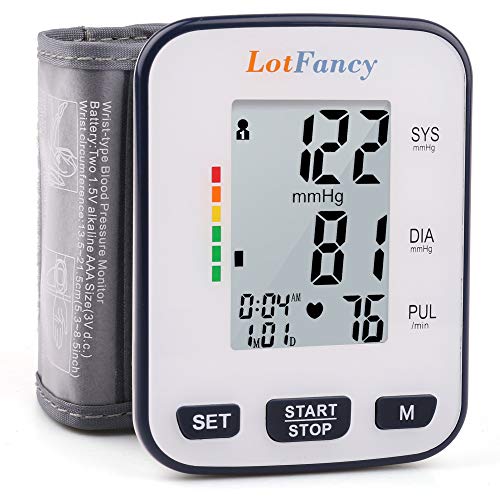
The LotFancy rounds out this review with a compelling combination of features at a budget price: FSA/HSA eligibility, irregular heartbeat detection, auto-averaging of the last three readings, and the widest cuff range tied with the Omron Gold at 5.3 to 8.5 inches. The FSA/HSA eligibility is a genuine financial advantage — buyers can purchase with pre-tax health spending account funds, effectively reducing the cost by their marginal tax rate.
The auto-averaging function is clinically meaningful. Single blood pressure readings are inherently variable, and the American Heart Association recommends averaging multiple readings for more reliable trend data. The LotFancy automates this by computing and displaying the mean of your last three measurements, providing a smoothed data point without requiring manual calculation.
The 120-reading dual-user memory (60 per user) provides roughly two months of twice-daily readings per user. Irregular heartbeat detection adds passive arrhythmia screening during each measurement. For health-spending-account holders who want a feature-rich wrist monitor without Bluetooth, the LotFancy offers the strongest value proposition in this review.
LotFancy Wrist Blood Pressure Monitor
by LotFancy
The best FSA/HSA-eligible wrist monitor — irregular heartbeat detection, auto-averaging, and a wide cuff range at a budget price.
Pros
- FSA and HSA eligible — purchasable with pre-tax health spending account funds, reducing effective out-of-pocket cost
- Irregular heartbeat detection provides a passive arrhythmia flag that most budget wrist monitors omit
- Automatic averaging of the last three readings smooths single-reading variability for more reliable trend tracking
- Widest cuff range tied with the Omron Gold at 5.3 to 8.5 inches, accommodating a broader range of wrist sizes
Cons
- AAA batteries not included in the box — a minor inconvenience when unboxing
- No Bluetooth or app connectivity for digital record-keeping or data sharing with physicians
- Fewer than 3,000 reviews limits the user-validation depth compared to top-selling competitors
Wrist vs. Upper Arm Monitors: The Clinical Perspective
The American Heart Association recommends upper arm monitors for home blood pressure monitoring, and for most patients, that guidance is correct. Upper arm readings are taken at the brachial artery, which sits closer to heart level during a standard seated measurement and is less affected by positioning variability. Our best blood pressure monitors guide covers the top upper arm options in detail.
However, the clinical literature does not condemn wrist monitors — it qualifies them. Studies published in the Journal of Clinical Hypertension and Hypertension Research have demonstrated that wrist monitors can produce clinically acceptable readings when positioning is controlled. The European Society of Hypertension has noted that validated wrist monitors are an acceptable alternative when upper arm measurement is impractical.
The practical takeaway: if you can comfortably and consistently use an upper arm monitor, do so. If upper arm monitoring is impractical for any of the reasons discussed above, a wrist monitor used with disciplined positioning is vastly preferable to no monitoring at all. Uncontrolled hypertension remains the leading modifiable risk factor for stroke, heart attack, and kidney disease — the worst outcome is abandoning home monitoring because the available device does not work for your body.
Buyer's Guide
Selecting the right wrist blood pressure monitor means balancing portability and ease of use against the positioning discipline required for accurate readings. The six factors below will help you identify which device matches your monitoring needs.
Accuracy and Positioning
Wrist blood pressure monitors are inherently more position-sensitive than upper arm models. The radial artery at the wrist is smaller and farther from the heart, which means even small deviations from heart-level positioning can shift readings by 5 to 10 mmHg. The Omron Gold is the only wrist monitor reviewed here with a built-in body positioning guidance sensor that alerts you when your wrist is not at heart level. If you do not choose the Omron Gold, you must develop a consistent self-positioning routine — same chair, same arm position, same time of day — to produce reliable trend data over time.
Cuff Size and Fit
Wrist cuffs vary in their circumference range, and an improperly fitting cuff will produce inaccurate readings regardless of device quality. Most wrist monitors fit circumferences between 5.3 and 7.7 inches, but the Omron Gold and LotFancy extend to 8.5 inches. Measure your wrist circumference at the point where you would wear the cuff — just above the wrist bone — and verify the measurement falls within the device's stated range before purchasing. Users with very thin or very thick wrists should pay particular attention to the minimum and maximum ranges listed in each product's specifications.
Memory and Multi-User Support
Memory capacity ranges dramatically across wrist monitors — from 60 readings on the Medline to 240 on the Oklar. If you are tracking twice-daily readings, a 60-reading memory fills in one month; a 240-reading memory lasts four months before overwriting begins. Dual-user support matters for couples sharing a device. The Oklar, MMIZOO, Omron Gold, and LotFancy all offer dual-user profiles, while the iHealth Push, Paramed, and Medline are single-user only. Match memory depth and user profiles to your household's actual monitoring routine.
Bluetooth and App Connectivity
Only two wrist monitors in this review — the Omron Gold and iHealth Push — offer Bluetooth connectivity to smartphone apps. Connected monitors eliminate manual record-keeping and provide trend visualization, averaging, and exportable reports for physician visits. If your doctor has asked you to share home monitoring data, or if you want to track progress digitally alongside other health metrics, Bluetooth is worth prioritizing even at a higher price. For users who prefer a simple press-and-read experience without app management, the non-connected monitors reviewed here are reliable and significantly less expensive.
Power Source
Wrist monitors use either disposable AAA batteries or USB-rechargeable batteries. The Oklar and iHealth Push are USB-rechargeable, eliminating ongoing battery costs and ensuring the device is always ready when plugged in regularly. The remaining models use two AAA batteries, which typically last 200 to 300 readings. For travel use, rechargeable models are more convenient — you can charge from a laptop or portable battery pack. For users who prefer the simplicity of swapping batteries without worrying about charging cycles, AAA-powered models are the more straightforward option.
Irregular Heartbeat Detection
Three wrist monitors in this review — the Omron Gold, Paramed, and LotFancy — include irregular heartbeat detection that flags potential rhythm irregularities during measurement. This feature does not diagnose atrial fibrillation or other arrhythmias, but a pattern of repeated flags across multiple readings is a clinically meaningful signal worth discussing with your physician. If passive cardiovascular screening during routine blood pressure monitoring is important to you, prioritize one of these three models. For users whose primary concern is blood pressure tracking without arrhythmia screening, this feature is a secondary consideration.
Final Verdict
For most users seeking a wrist blood pressure monitor, the Oklar Rechargeable delivers the best combination of memory depth, rechargeable convenience, voice accessibility, and value. Its 240-reading dual-user memory outpaces every competitor in this review, and the USB-rechargeable battery eliminates ongoing costs.
Budget buyers who want Amazon’s most-validated wrist monitor should choose the MMIZOO W1681 — over 60,000 reviews provide unmatched confidence in the device’s day-to-day reliability. For users who need Bluetooth connectivity and physician data sharing from the most trusted brand in blood pressure monitoring, the Omron Gold is the clear upgrade despite its premium price.
Whichever device you choose, remember that consistency in positioning and measurement timing matters more than the device itself. Take readings at the same time each day, in the same position, and share your log with your physician at every visit. Home monitoring is only valuable when it produces data that influences clinical decisions — and that requires both a reliable device and a disciplined routine. If you are building a comprehensive home health monitoring setup, pairing your wrist monitor with a pulse oximeter and a smart bathroom scale gives your physician the most complete picture of your cardiovascular and metabolic health.
Frequently Asked Questions
Are wrist blood pressure monitors as accurate as upper arm monitors?
Who should use a wrist blood pressure monitor instead of an upper arm model?
How should I position my wrist for the most accurate blood pressure reading?
Do I need Bluetooth on my wrist blood pressure monitor?
How often should I replace my wrist blood pressure monitor?
Related Articles
About the Reviewer

Dr. David Taylor, MD, PhD
Drexel University College of Medicine (MD), Indiana University School of Medicine (PhD)
Dr. David Taylor is a licensed physician and medical researcher who founded BestRatedDocs in 2016. With an MD from Drexel University and a PhD from Indiana University School of Medicine, he combines clinical expertise with a passion for health technology to provide evidence-based product recommendations. Dr. Taylor specializes in health informatics and regularly evaluates medical devices, diagnostic equipment, and therapeutic products to help healthcare professionals and patients make informed decisions.