7 Best Stool Softeners of 2026
Dr. David Taylor reviews the best stool softeners on Amazon. Compare top OTC options by mechanism, onset time, cost per dose, and safety for daily use.
Updated
Constipation affects an estimated 42 million Americans — roughly 16% of the adult population — making it one of the most common gastrointestinal complaints in primary care. Among adults over 60, that figure climbs to 33%. And in 2026, a new driver is adding millions more to that total: GLP-1 receptor agonists like semaglutide (Ozempic, Wegovy) and tirzepatide (Mounjaro), which slow gastric emptying as a core mechanism of action, trigger constipation in 20–30% of users. The result is that more patients than ever are looking for reliable, safe, and affordable OTC bowel management — and the pharmacy aisle is more confusing than ever, with dozens of products using similar language to describe meaningfully different mechanisms.
At BestRatedDocs.com, we approach OTC pharma reviews the same way we approach medical devices: with clinical rigor and transparency. For this guide, we evaluated seven of the top-selling stool softeners and laxatives on Amazon, drawing on Dr. David Taylor’s clinical experience in evaluating pharmaceutical-grade OTC products, analysis of the gastroenterology literature on docusate efficacy and osmotic agents, and a review of thousands of verified Amazon user reviews. Our goal is to give you the same level of clarity your gastroenterologist would — including some honest assessments of where certain products’ marketing has outpaced the clinical evidence.
After reviewing all seven products, here is what matters most: not every “stool softener” is the right tool for every situation. Understanding the mechanism of the product you are taking — and matching it to your clinical need — is the most important decision in this category. The comparison table below gives you the key variables at a glance.
How We Selected These Products
Our selection criteria prioritized products with at least 10,000 verified Amazon reviews, meaningful differentiation in mechanism or clinical application, and documented safety profiles. We deliberately included products across all three major bowel-management mechanisms — emollient (docusate), osmotic (PEG 3350), and stimulant/combination — to give readers a complete picture of the category. We also specifically included options for the highest-need populations: pregnant women, post-surgical patients, GLP-1 users, and chronic daily users managing long-term constipation. Products were assessed for clinical mechanism, onset time, long-term safety profile, cost-per-dose, and FSA/HSA eligibility.
One important note on the clinical evidence: a landmark 2011 controlled trial by Tarumi et al. found docusate sodium to be no better than placebo for chronic constipation in a hospice population — a finding that has meaningfully shifted gastroenterologist preferences toward osmotic agents like PEG 3350 for established chronic constipation. We include docusate products on this list because they remain the appropriate choice for mild and preventive use, and because the clinical evidence for their role in post-surgical and postpartum constipation is well-established. But we flag the efficacy limitation clearly so readers can make an informed choice.
1. MiraLAX Laxative Powder — Best Overall
MiraLAX is not technically a stool softener — it is an osmotic laxative — but it earns the Best Overall designation for a clear clinical reason: it is the product gastroenterologists actually recommend for chronic constipation, and its clinical evidence base substantially outweighs that of docusate softeners for established constipation. Polyethylene Glycol 3350 works by drawing water into the colon via osmotic pressure, softening stool and increasing colon motility without stimulating nerve endings or causing cramping. The Rome Working Group consensus guidelines identify PEG as a first-line treatment for chronic constipation in adults — a designation no docusate product holds.
In real-world use, MiraLAX’s key advantages are predictability and tolerability. The tasteless, odorless powder dissolves completely in any liquid — water, juice, coffee — without altering the flavor, which matters enormously for daily compliance. There is no urgency or cramping, and the 1–3 day onset is predictable enough that patients can time their dose to suit their routine. With 4.8 stars across more than 41,000 reviews — the highest rating of any product in this category — the user experience data strongly aligns with the clinical evidence. For anyone managing ongoing constipation rather than trying to prevent it, MiraLAX is the appropriate starting point before escalating to prescription options.
The one honest limitation is cost-per-dose relative to bulk docusate products. If your goal is daily preventive use over months, the cost adds up. But for actual treatment of established constipation — which is what MiraLAX is designed for — the clinical payoff justifies the investment.

MiraLAX Laxative Powder for Gentle Constipation Relief
by MiraLAX
The #1 bestselling OTC laxative in America with 4.8 stars across 41,000+ reviews — MiraLAX's clinically proven osmotic mechanism makes it the go-to gastroenterologist recommendation when gentle softeners aren't enough.
Pros
- Most effective non-stimulant OTC option — gastroenterologist first-line recommendation for chronic constipation
- Tasteless, odorless powder dissolves completely into any beverage without altering flavor
- No cramping or urgency — gentle and predictable results in 1–3 days
- Strongest clinical evidence of any OTC laxative for chronic constipation per Rome Working Group consensus
Cons
- Powder format requires measuring and mixing — less convenient than softgels or capsules
- Higher cost per dose than docusate softeners, which matters for long-term daily users
2. Amazon Basic Care Docusate Sodium 100mg — Budget Pick
The Amazon Basic Care stool softener is the easiest recommendation we make in this category: it is molecularly identical to Colace — the same 100mg docusate sodium active ingredient, the same pharmaceutical-grade manufacturing standards — at a small fraction of the price. Hospital pharmacies have made this exact substitution for decades, and bedside nurses in post-surgical wards across the country recommend it by name when patients ask whether the generic is equivalent to Colace. The answer is yes, and the 42,000+ verified reviews confirm it.
Docusate sodium works as an emollient laxative, reducing surface tension at the oil-water interface within the stool to allow water and fats to penetrate. The result is a softer, more easily passed stool without triggering colonic contractions. This makes it appropriate for two clinical scenarios where it has clear, proven value: daily preventive use in patients at elevated constipation risk (post-surgical, on opioids, on iron supplements, elderly), and mild, intermittent constipation where a gentle intervention is preferred over a more powerful osmotic or stimulant agent. If you are managing a heating pad alongside a muscle injury that requires opioid pain medication, starting docusate preventively the day you begin the narcotic is the right clinical move.
The main limitation is one of mechanism: if you already have established, symptomatic constipation, docusate alone may not resolve it. Patients expecting docusate to work like MiraLAX will be disappointed. Use it as a preventive tool or for mild cases; reach for MiraLAX or the Colace 2-in-1 when you need active treatment.
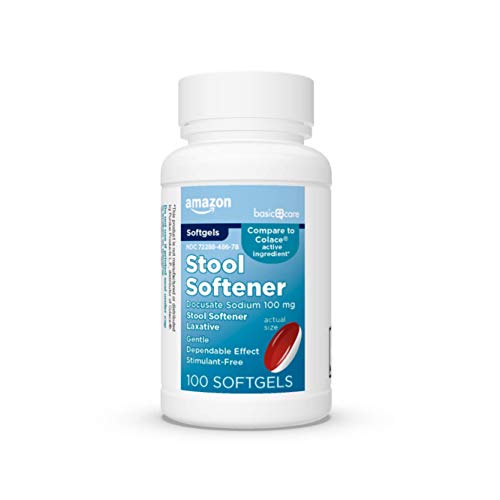
Amazon Basic Care Stool Softener, Docusate Sodium 100mg Softgels
by Amazon Basic Care
Amazon's store-brand delivers the same docusate sodium as Colace in an easy-to-swallow softgel for a fraction of the name-brand cost — the best value stool softener available, confirmed by 42,000+ reviews.
Pros
- Clinically identical to Colace at a fraction of the price — same 100mg docusate sodium, same pharmaceutical grade
- Recommended by hospital nurses as the go-to generic alternative for post-surgical and postpartum patients
- Small, easy-to-swallow softgels with no aftertaste or odor
- No cramping or urgency — gentle enough for daily preventive use over weeks or months
Cons
- Contains dyes — not suitable for patients with dye sensitivities or pediatric use requiring dye-free formulations
- Not effective for severe constipation — works by softening stool only, not by stimulating colonic motility
3. Colace Stool Softener 100mg Capsules — Upgrade Pick
Colace is the brand that invented the stool softener category. Launched in the 1950s, it has been the docusate product OB/GYNs and surgeons have written on discharge paperwork for over 60 years. The clinical profile is identical to the Amazon Basic Care generic — 100mg docusate sodium, same onset, same mechanism — but Colace carries something the generic does not: the brand recognition that creates physician confidence and patient compliance. When a patient’s discharge instructions say “take Colace,” they take it. When it says “take docusate sodium 100mg (generic),” some patients hesitate.
For certain populations, the upgrade is worth considering beyond just brand recognition. Colace’s manufacturing standards, quality control processes, and supply chain reliability are those of a dedicated pharmaceutical company whose entire commercial identity rests on this product category. For pregnant women following OB/GYN guidance, post-surgical patients discharged with specific Colace instructions, or anyone who simply wants the name-brand peace of mind — the product is the established standard and the clinical record is unimpeachable.
It is worth noting that for dye-sensitive patients or those managing pregnancy where avoiding unnecessary additives is a priority, Colace Clear (our runner-up pick) is the clinically preferred formulation from the same manufacturer. The standard Colace 100mg contains dye; the Clear formulation does not. Both are available in similar count sizes and are FSA/HSA eligible.

Colace Stool Softener 100mg Capsules, Docusate Sodium
by Colace
The gold-standard name-brand docusate recommended by OB/GYNs and surgeons for 60 years — clinically identical to generics but carrying the physician trust and brand recognition that matters to many patients.
Pros
- #1 doctor-recommended stool softener brand — trusted in hospitals and clinical settings for over 60 years
- OB/GYNs and surgeons specifically recommend Colace for pregnancy, postpartum recovery, and post-surgical care
- Reliable, consistent formula from an established pharmaceutical manufacturer with rigorous quality standards
- Widely available in retail pharmacies — easy to supplement locally if you need it before Amazon delivery
Cons
- Significantly more expensive than clinically identical generics — price premium reflects brand recognition, not superior efficacy
- Contains dyes — use Colace Clear for dye-sensitive patients or pregnant women who prefer dye-free formulations
4. Colace Clear 50mg Dye-Free — Runner-Up
Colace Clear was specifically developed to address the needs of populations for whom the additives in standard stool softeners are a concern. The dye-free, preservative-free formulation is the product OB/GYNs reach for when managing constipation during pregnancy — a condition that affects up to 40% of pregnant women due to the combined effects of progesterone (which slows GI motility), prenatal iron supplementation (a potent constipation trigger), and mechanical pressure from the growing uterus. The 50mg dose is deliberately gentle, designed as an introduction to docusate therapy or for mild presentations where the standard 100mg dose is more than necessary.
The clear softgel formulation has a practical daily-use advantage worth noting: in a multi-drug pill organizer — common among pregnant women managing prenatal vitamins, iron, omega-3s, and other supplements — a visually distinct, transparent softgel is easy to identify and confirm you have taken. This is a minor feature but one that reduces missed doses in complex supplement regimens. Pair it with a quality pill organizer for the most reliable adherence.
The primary limitation is dose — 50mg may simply not be sufficient for patients with more than mild constipation. If Colace Clear is not providing relief within 72 hours at one softgel daily, the appropriate next step is either increasing to the 100mg dose (two Colace Clear softgels, or switching to standard Colace) or transitioning to MiraLAX. As with all medications during pregnancy, consult your OB/GYN before adjusting dose or changing products.

Colace Clear Stool Softener, Dye-Free, Docusate Sodium 50mg
by Colace
Colace's dye-free, preservative-free formula in clear softgels — the top pick for postpartum women, pregnant patients, and anyone with dye sensitivities who needs the gentlest possible stool softener option.
Pros
- Only major dye-free and preservative-free docusate stool softener option on the market
- Lowest available dose (50mg) for gentle introduction to therapy or mild, intermittent constipation
- Specifically recommended by OB/GYNs during pregnancy and after cesarean or vaginal delivery
- Clear softgel is easy to visually identify and distinguish in a multi-medication pill organizer
Cons
- Lower 50mg dose may be insufficient for moderate-to-severe constipation — standard dose is 100mg
- Highest cost per milligram of active ingredient among docusate options on this list
5. Colace 2-in-1 Stool Softener Plus Stimulant Laxative
The Colace 2-in-1 is the product that reflects what actually happens in clinical practice when a stool softener alone is not enough. After orthopedic surgery, abdominal procedures, or any hospitalization where narcotic pain medication is prescribed, the standard bowel protocol in most US hospitals involves this exact dual combination: docusate sodium plus a senna stimulant laxative. The docusate softens the stool to make it easier to pass; the senna triggers the colonic muscle contractions that opioids have suppressed. Neither mechanism alone is sufficient for opioid-induced constipation — the combination is.
The clinical rationale for the 6–12 hour onset window is practical: patients take the tablet at bedtime and expect a bowel movement the following morning. This predictability is what hospital discharge protocols are designed around, and it is what distinguishes the 2-in-1 from docusate-only products for active constipation management. The senna component (sennosides 8.6mg) is a well-studied stimulant laxative with an excellent short-term safety profile. The limitation, stated clearly: senna is not for indefinite daily use without physician guidance. The stimulant mechanism is appropriate for weeks, not months. If you require ongoing bowel management beyond four to six weeks, transition to a docusate-only regimen or MiraLAX and involve your physician.

Colace 2-in-1 Stool Softener Plus Stimulant Laxative Tablets
by Colace
The dual-action docusate-plus-senna combination hospitals send patients home with after surgery — its faster onset and two-pronged mechanism makes it the right choice when a stool softener alone is insufficient.
Pros
- Dual-action formula softens stool AND stimulates colon motility for more reliable relief than softener alone
- Faster onset (6–12 hours) compared to softener-only products (12–72 hours) — predictable timing for next-day relief
- Standard post-surgical hospital combination — the exact dual-drug regimen prescribed after orthopedic and abdominal procedures
- First-line choice for opioid-induced constipation, which requires both softening and stimulant mechanisms to overcome narcotic gut
Cons
- Stimulant component (senna) is not appropriate for long-term unsupervised daily use — dependency risk with extended use
- Cramping is possible, especially at higher doses — more side effects than pure stool softeners
6. Kirkland Signature Stool Softener 400 Count
Kirkland’s 400-count docusate 100mg is the Costco private-label product that chronic daily users and family caregivers have embraced for years. The value proposition is straightforward: same 100mg docusate sodium, same pharmaceutical-grade manufacturing, delivered in a 400-count bottle that lasts a daily user for over a year. At 4.7 stars across 18,000+ reviews, the quality control record is strong and consistent.
The product is especially relevant for two populations: elderly patients managing chronic constipation who require daily docusate long-term to prevent fecal impaction, and family caregivers managing multiple household members’ bowel regimens who benefit from having a reliable large supply on hand. For elderly patients, constipation is not merely uncomfortable — untreated chronic constipation in older adults significantly increases the risk of fecal impaction, which can require manual disimpaction or even hospitalization. A daily docusate regimen is frequently part of a geriatric bowel management program for exactly this reason.
The shipping caveat is worth taking seriously: Kirkland softgels have a documented melting problem when exposed to heat during summer shipping. If you are ordering in June through August, opt for expedited shipping or buy locally at Costco. For orders placed in cooler months, the standard Amazon listing is reliable.

Kirkland Signature Stool Softener 100mg, 400 Softgels
by Kirkland Signature
Kirkland's 400-count docusate at the lowest cost per softgel is the ultimate bulk buy for chronic daily users — same pharmaceutical-grade formula as Colace at a small fraction of the cost.
Pros
- 400 softgels for around $12 — the lowest cost-per-dose among all docusate products on this list
- Highest rating (4.7 stars) among bulk docusate products with 18,000+ reviews confirming consistent quality
- Trusted Costco private label brand with pharmaceutical-grade quality control equivalent to name-brand alternatives
- Large supply lasts months — ideal for chronic daily users, caregivers managing multiple patients, or family households
Cons
- Sold via third-party marketplace sellers — not always Amazon Direct, which can affect shipping reliability and return policy
- Known softgel melting issue during summer shipping — best ordered in cooler months or with expedited delivery
7. HealthA2Z Stool Softener 400 Count
HealthA2Z is the newer entrant in the bulk docusate category, and it has earned its 4.7-star rating by competing directly on the two metrics that matter most to the chronic daily user: price-per-softgel and Prime shipping reliability. Unlike the Kirkland listing, HealthA2Z ships via Amazon Fulfillment, which means consistent Prime delivery windows, easy returns through Amazon’s standard process, and no third-party seller variability. For a medication you are taking daily, the logistical reliability of knowing your supply will arrive on schedule matters more than people initially expect.
The HealthA2Z formulation is particularly well-suited for two emerging populations. First, GLP-1 medication users — those taking semaglutide or tirzepatide for diabetes or weight management — who experience chronic constipation as a medication side effect and need a long-term, affordable bowel management solution. Second, high-protein dieters on ketogenic or carnivore regimens, who frequently encounter constipation due to low fiber intake and may need daily docusate supplementation over months. In both cases, a cost-effective bulk supply with reliable Prime delivery reduces the friction of maintaining a consistent daily regimen. Monitoring your overall health while on these regimens pairs well with other tools like glucose monitors to track metabolic response.
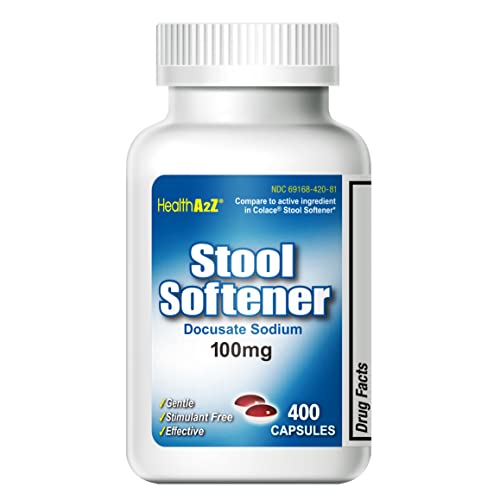
HealthA2Z Stool Softener, Docusate Sodium 100mg, 400 Count
by HealthA2Z
HealthA2Z delivers Prime-guaranteed bulk docusate at the lowest per-softgel price on Amazon — the best choice for chronic daily users who want Kirkland-tier value with the reliability of Amazon Fulfillment shipping.
Pros
- Lowest price-per-softgel among Amazon-Fulfilled Prime products — no third-party seller shipping uncertainty
- Distinctive red and white capsules are easy to identify and distinguish in a multi-medication pill organizer
- Available in 100, 400, and 800-count sizes for flexible purchasing based on usage needs
- Well-tolerated by GLP-1 medication users and high-protein dieters who are particularly prone to constipation
Cons
- Less recognized brand than Colace, Amazon Basic Care, or Kirkland — fewer years of established market presence
- Mild gas or loose stool reported by a small minority of reviewers, particularly at initiation of therapy
How to Choose the Best Stool Softener
The buyer’s guide factors below cover the core decision criteria in detail. But one overarching framework is worth stating explicitly: the choice between a stool softener and a laxative is not always obvious, and confusing the two is the most common reason patients are dissatisfied with their OTC bowel management experience.
Stool softeners (docusate) are appropriate for: prevention of constipation before it develops (starting opioids, post-surgery, iron supplements), mild and intermittent constipation in otherwise healthy adults, and long-term daily maintenance in elderly patients with chronic soft-stool requirements. What they are NOT for: resolving established, symptomatic constipation in a reasonable timeframe.
Osmotic laxatives (MiraLAX) are appropriate for: treating established constipation that has already developed, managing GLP-1-associated constipation where transit slowing is significant, and as the clinically proven first-line intervention per gastroenterology guidelines. They are also the appropriate choice if you have been using docusate for several days without resolution.
Combination stool softener + stimulant (Colace 2-in-1) is appropriate for: opioid-induced constipation, post-surgical management, and situations where you need reliable relief within a specific time window. Not appropriate for long-term unsupervised daily use.
Understanding this framework before you purchase saves frustration. If you are unsure which category applies to your situation, the FAQ section below addresses the most common clinical questions — including the GLP-1 constipation question that virtually no competitor in this category has addressed.
Buyer's Guide
Choosing the right stool softener depends on the underlying cause of your constipation, how quickly you need relief, your tolerance for side effects, and whether you need a product safe for special circumstances like pregnancy or post-surgical recovery.
Mechanism of Action
Stool softeners (docusate) work by emulsifying stool, drawing water and fats in to soften it — gentle but modest in effect, and questioned for chronic constipation by recent clinical evidence. Osmotic agents (PEG 3350) work by pulling water into the colon via osmotic pressure — more reliably effective for established constipation and now the first-line recommendation per gastroenterology guidelines. Stimulant laxatives (senna, bisacodyl) trigger direct muscle contractions — fast and effective but not appropriate for long-term unsupervised daily use. Combination products (docusate + senna) offer both softening and stimulant effects, which is why hospitals use them post-operatively. Matching the mechanism to your clinical need avoids wasted time and money on the wrong product type.
Onset Time
Docusate softeners work gradually over 12–72 hours — they are preventive tools, not rescue therapy. If you need relief today, a docusate-only product will not deliver it. Osmotic PEG agents typically work in 1–3 days at standard doses. The Colace 2-in-1 (docusate + senna) works in 6–12 hours, which is why it is the hospital discharge standard. For acute constipation with discomfort, start with the combination product or MiraLAX; once resolved, transition to daily docusate to prevent recurrence. Matching the onset time to your urgency prevents frustration.
Long-Term Safety
Docusate sodium has a decades-long safety record and is not associated with dependence, electrolyte disturbances, or weakening of bowel function at standard doses. PEG 3350 (MiraLAX) has also demonstrated a strong safety profile and is used long-term in both adults and children under physician supervision. Stimulant laxatives, including senna, carry a warning against long-term daily use without medical guidance due to the theoretical risk of cathartic colon — a condition where the colon becomes reliant on external stimulation. For any chronic constipation requiring daily medication, evaluation by a physician is appropriate regardless of the product chosen.
Special Circumstances
Several populations require specific product selection. During pregnancy, dye-free docusate (Colace Clear) is preferred. After surgery or childbirth, the docusate-plus-senna combination is the hospital standard for managing opioid-induced and post-procedural constipation. For GLP-1 medication users (Ozempic, Mounjaro, Wegovy), osmotic agents like MiraLAX are more effective than softeners alone given the severity of transit slowing. For elderly patients prone to fecal impaction, preventive daily docusate reduces emergency interventions. For patients on calcium channel blockers, iron supplements, or opioids — all of which cause constipation — discuss the appropriate bowel regimen with your prescribing physician.
Formulation
Softgels and capsules are the most convenient format and easiest to swallow for most adults. Powder (MiraLAX) requires measuring and mixing but offers precise dose adjustment and is useful for patients who have difficulty swallowing pills. Tablets (Colace 2-in-1) are larger and may be difficult for elderly patients with dysphagia. Dye-free formulations (Colace Clear) eliminate artificial colorants, which is relevant for dye-sensitive patients and pregnant women who prefer to minimize additives. Consider swallowability, daily routine compatibility, and any ingredient sensitivities when selecting a format.
HSA/FSA Eligibility
All seven products on this list are HSA and FSA eligible under the CARES Act. Using pre-tax benefit dollars can meaningfully reduce the out-of-pocket cost, especially for higher-priced items like MiraLAX or brand-name Colace. Amazon's dedicated FSA/HSA store automatically flags eligible products and accepts FSA/HSA debit cards at checkout. If you have unused FSA funds that expire at year-end, stocking up on a bulk docusate option like Kirkland 400-count or HealthA2Z 400-count is a practical way to use your benefits before they expire. HSA funds do not expire and can be invested, making them even more valuable for ongoing medical supply purchases.
Final Verdict
For most adults managing active or chronic constipation, MiraLAX is our best overall pick and the clinical gold standard — its osmotic mechanism is first-line per gastroenterology guidelines, and its 4.8-star rating across 41,000+ reviews reflects a level of consumer satisfaction that matches the clinical evidence. It is the product to reach for when you need reliable resolution of established constipation, not just prevention.
For daily preventive use or mild intermittent constipation on a budget, Amazon Basic Care Docusate Sodium 100mg delivers clinical equivalence to Colace at a fraction of the cost. Hospital nurses recommend it by name, and the 42,000+ reviews confirm the real-world experience matches the pharmacological equivalence.
For those who prefer the established name-brand — particularly patients following OB/GYN or surgeon discharge instructions specifying Colace, or pregnant women seeking the physician-trusted formulation — Colace 100mg Capsules remains the industry standard with a 60-year clinical track record.
As with all gastrointestinal medications, chronic constipation requiring regular OTC intervention deserves a physician evaluation. Constipation can be a symptom of thyroid dysfunction, pelvic floor disorders, colorectal pathology, or medication side effects — conditions where treatment of the underlying cause is more appropriate than indefinite OTC bowel management. Use these products for acute management and short-term needs, and consult your physician or gastroenterologist for any constipation that has been present for more than three weeks or that does not respond to first-line OTC therapy.
Frequently Asked Questions
What is the difference between a stool softener and a laxative?
Is it safe to take a stool softener every day?
What is the best stool softener for use during pregnancy?
What is causing constipation from GLP-1 medications like Ozempic and Mounjaro?
Are stool softeners FSA and HSA eligible?
Related Articles
About the Reviewer

Dr. David Taylor, MD, PhD
Drexel University College of Medicine (MD), Indiana University School of Medicine (PhD)
Dr. David Taylor is a licensed physician and medical researcher who founded BestRatedDocs in 2016. With an MD from Drexel University and a PhD from Indiana University School of Medicine, he combines clinical expertise with a passion for health technology to provide evidence-based product recommendations. Dr. Taylor specializes in health informatics and regularly evaluates medical devices, diagnostic equipment, and therapeutic products to help healthcare professionals and patients make informed decisions.